
1. Mazda MX-5 Kyoto Miyama Autumn Drive: The Philosophy of Driving in Japan
For nearly a decade, my life was dictated by the rhythmic, sharp click of the conductor’s watch and the steady, iron-on-iron rumble of the Kintetsu Railway. I knew every curve of the rails, every precise second of the timetables, and every station platform scattered across Kansai. Trains in Japan are a marvel of human engineering and punctual efficiency—there is no denying that. But as a former train conductor who eventually traded the guard’s cap for a steering wheel, I can tell you a secret that standard travel itineraries will never reveal: the real Japan begins where the tracks end.
When you ride a train, you are a passive observer of a fixed corridor. You stare out of clean glass windows at high-rise concrete, passing suburban houses, and distant blue peaks that remain forever out of reach. You arrive precisely when expected at heavily populated hubs, swept along by the tidal flow of commuting crowds. It is smooth, efficient, and entirely sanitized.
To truly experience Japan—to smell the damp cedar mist rolling down steep ravines, to feel the ambient temperature drop as you climb into ancient mountain passes, and to stop at a roadside farm stand because the aroma of roasting chestnuts caught your window rolled down—you need four wheels, three pedals, and an open stretch of asphalt.
This is the philosophy of driving in Kansai. Osaka serves as the ultimate neon-soaked jumping-off point, a sprawling metropolis bursting with energy, street food, and vibrant urban culture. Yet, less than an hour north of Osaka's urban loop lies an entirely different dimension: the forested ridges and hidden valleys of Northern Kyoto and Miyama.
Miyama (美山), literally translated as "Beautiful Mountains," is a world preserved in time. Far removed from the crowded bus lines of Arashiyama and the densely packed shrines of Gion, Miyama represents Secret Japan. It is a region defined by ancient thatched-roof kayabuki farmhouses, winding river passes carved through primeval cryptomeria forests, and rural communities living in rhythm with the changing seasons.
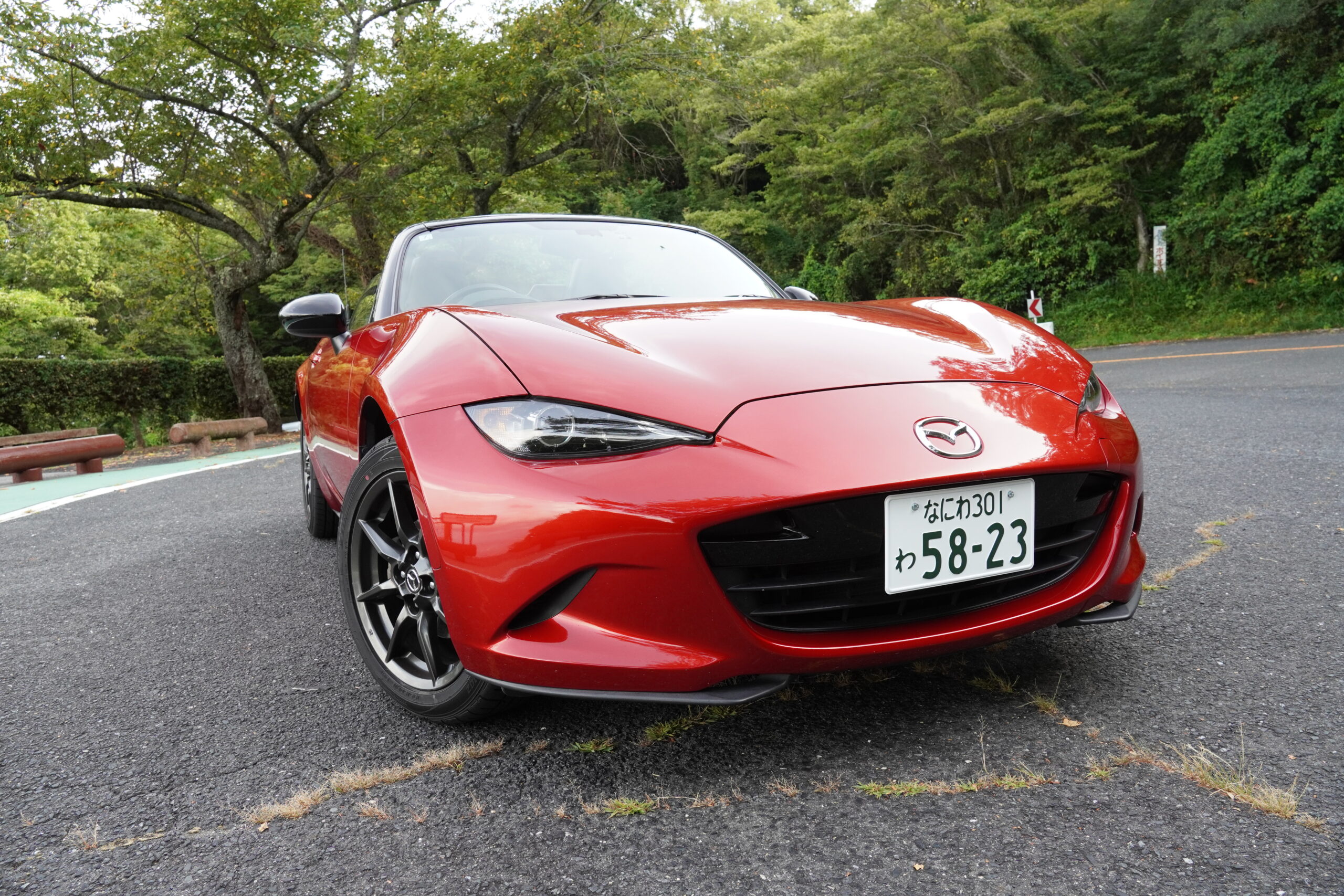
When autumn rolls across the Kansai highlands, these mountains explode into a fiery palette of crimson Japanese maples (momiji), golden ginkgo trees, and amber oaks. Traversing these mountain roads in a lightweight, driver-focused machine like the Mazda MX-5 Roadster (ND) turns a simple trip into a visceral sensory experience.
The ND Roadster is built around the Japanese concept of Jinba Ittai—the unity of horse and rider. Weighing barely a metric ton, with a naturally aspirated engine, a short-throw six-speed manual gearbox, and rear-wheel drive, the MX-5 does not conquer the road through brute force. Instead, it dances through it. On the narrow, twisting tōge (mountain passes) connecting Osaka to Miyama, every throttle blip, every heel-toe downshift, and every precise steering input connects you directly to the landscape.
By stepping out of the train carriage and sliding into a sports car cockpit, you cease being a spectator. You become an explorer in control of your own journey, unlocking a version of Japan that few international travelers ever get to see.

2. Mazda MX-5 Kyoto Miyama Autumn Drive: The 2-Day Itinerary Deep Dive
Day 1: Escaping the Neon Grid to the Ancient Forest Roofs of Miyama
08:00 AM – Osaka Departure & Urban Breakout
The morning sun glints off the low-slung, sculpted hood of your Mazda MX-5 as you fire up the engine in central Osaka. The crisp morning air carries a cool edge, signaling a prime autumn day. Unlatch the soft top, drop it back with a swift one-handed motion, and let the morning breeze fill the cabin.
Leaving the city grid behind, head north on Route 423. As you leave the elevated highways and concrete canyons of Osaka Prefecture, the industrial suburban sprawl rapidly dissolves. Within thirty minutes, the road begins to tilt upward, carving into the steep, tree-covered foothills of the Hokusetsu mountain range.
09:15 AM – The Ascent Through Hokusetsu and Route 423
As you climb higher, the concrete barriers yield to towering bamboo groves and dense Japanese cedar forests. Route 423 is a favorite route for local motoring enthusiasts, offering a blend of long sweeping turns and tight hairpins.
In the MX-5, the steering feels instantly alive, communicating every texture of the asphalt straight to your palms. Downshifting into 3rd gear for a sweeping right-hander, the revs pick up, matching the engine's throatiness with the ambient whisper of rustling autumn leaves overhead. The temperature drops noticeably, crisp and pine-scented. You pass small rural hamlets where morning smoke curls gently from terracotta-roofed houses, setting the pace for the journey ahead.
10:30 AM – Pitstop: Michi-no-Eki Extension & Kameoka Valley
Crossing the prefectural border into Kyoto, you descend into the mist-veiled Kameoka Basin. Keep left and pause briefly at a local Michi-no-Eki (roadside station) along Route 372 or Route 19. Take a moment to grab a hot canned coffee—a staple of Japanese road trips—from a vending machine, and take in the morning atmosphere. Local farmers are setting out crates of freshly harvested matsutake mushrooms, sweet potatoes, and deep-red persimmons.
Re-entering the cockpit, press northward via Route 19. This stretch follows the pristine Yura River, sweeping through forested canyons. The road surface here is exceptionally smooth, allowing you to establish a rhythmic flow. Heel-toe down to 2nd gear, set the front tires into the apex, and feel the rear-wheel-drive bias push you cleanly out of the corner as the trees overhead form a natural tunnel of burning oranges and bright yellows.
12:30 PM – Arrival at Miyama Kayabuki no Sato (The Thatched Village)
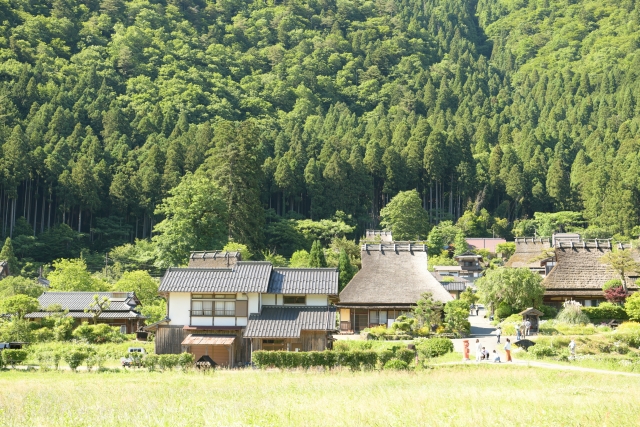
Around noon, turn onto Route 38, bringing you into the heart of Miyama and arriving at Kayabuki no Sato (茅葺きの里). Park the MX-5 in the visitor lot near the riverbank. Sitting against a backdrop of steep, forested mountain ridges, this village preserves one of the highest concentrations of traditional thatched-roof farmhouses in Japan.
Unlike open-air museums, Kayabuki no Sato is a living village. Thirty-nine of the fifty building structures feature thick roofs made of thatched kaya (miscanthus grass), built using architectural techniques refined over centuries.
Take an hour to walk through the narrow stone paths. The contrast between the rich, dark-brown mossy thatch, the bright red maple leaves overhangs, and the drying persimmons hanging under the eaves creates a timeless scene. The air smells of sweet hearth smoke (irori) and damp earth.
01:30 PM – Traditional Lunch: Miyama Handmade Soba & Wild Game
For lunch, head to a small village eatery such as Saika or Kita Soba. Order a bowl of hand-rolled Miyama Juwari Soba (100% buckwheat noodles) served with seasonal vegetable tempura—featuring wild mountain herbs (sansai), maitake mushrooms, and local pumpkin.
If available, sample local specialties like grilled sweetfish (Ayu) caught from the clean waters of the Yura River, or a savory dish of wild boar (Inoshishi) simmered with sweet local miso. The clean, earthy flavors of rural Kyoto offer a refreshing change from urban dining.
03:00 PM – The Deep Mountain Loop: Route 368 & The Edge of Ashiu Forest
After lunch, slide back into the driver's seat for an afternoon exploration of Miyama’s outer passes. Take Route 38 east toward the edge of the Ashiu Primary Forest, one of the largest remaining old-growth deciduous forests in western Japan.
Here, the asphalt narrows into single-lane technical sections where trees form a dense canopy overhead. Sunlight filters through the yellow and red leaves, splashing dappled light onto the hood of the roadster. The MX-5 shines brightly on these narrow stretches; its compact dimensions allow you to position the car with precision while navigating gentle crests and moss-edged curves.
Listen to the note of the 2.0-liter SkyActiv engine echo off the rock faces. Stop briefly at a roadside pullout near the headwaters of the Yura River to take in the quiet rustle of falling leaves drifting onto the glass surface of the stream.
05:30 PM – Check-in at a Traditional Rural Ryokan
As twilight sets in and the cool mountain air turns crisp, head toward your evening accommodation—a historic Ryokan or converted Kayabuki farmhouse stay within the Miyama valley.
Park the MX-5 under the eaves of the lodge. Upon stepping inside, you are welcomed by the soothing warmth of Tatami mats and the steady glow of an Irori (sunken hearth). Slip into a soft cotton Yukata and ease into an outdoor hot spring bath (Rotenburo). Floating beneath the autumn sky, with stars appearing above the mountain silhouettes, the quiet of rural Kyoto settles in.
07:00 PM – Kaiseki Dinner: Feast of the Mountain Harvest
Dinner at the ryokan is a multi-course multi-sensory journey (Kaiseki) celebrating the autumn harvest:
Appetizer: Marinated wild mushrooms with sesame curd and ginkgo nuts.
Soup: Clear dashi broth featuring local river fish and soft tofu.
Grill Course: Local Kyoto beef (Kyoto-Gyu) or wild duck cooked over hot charcoal at your table.
Rice Course: Freshly harvested autumn rice cooked with sweet chestnuts (Kuri-gohan).
Pair the meal with a glass of locally brewed junmai sake from nearby Funai District, and rest up for tomorrow's coastal mountain run.

Day 2: Traversing Mountain Ribbons to the Coastal Marvels of Tango
08:30 AM – Morning Cold Start & Route 162 North
Wake early to the sound of mountain streams and birdsong. After a hearty breakfast of grilled salmon, rolled omelet (Tamagoyaki), miso soup, and steamed rice, check out and return to the roadster. Wipe the morning dew off the bodywork, drop the roof, and fire up the engine.
Your target for the morning is the legendary Route 162, also known by local drivers as the Shuzan Kaido. Historically a trade route carrying fresh seafood from the Japan Sea to the ancient capital of Kyoto, today it serves as one of the finest driving roads in Japan.
09:30 AM – The Shuzan Kaido & The Ascent to Onyu Pass
Heading north on Route 162, the asphalt turns into a series of flowing curves that trace the mountain contours. The MX-5 feels right in its element here. The balanced weight distribution keeps the body flat and composed through sweeping S-bends.
If you choose a brief detour toward the border of Fukui Prefecture via the higher mountain spurs, you can tackle the climbing turnpikes up toward Onyu Pass (遠敷峠). On clear autumn mornings, this high elevation offers breathtaking views over the sea of clouds (Unkai) filling the lower valleys, with vivid autumn colors draping the mountain slopes.
11:30 AM – Emerging at the Sea of Japan
Leaving the high ridges behind, head northwest as Route 162 descends toward the coast, meeting the Sea of Japan around Obama Bay before connecting across toward the Tango Peninsula.
The road transitions from mountain passes to coastal highways, where deep blue waters lap against dark volcanic sea rocks. Drive with the top down, letting the crisp ocean breeze replace the forest mist. The contrast between bright autumn trees clinging to coastal cliffs and the vast sea horizon is stunning.
01:00 PM – Amanohashidate (The Bridge to Heaven)
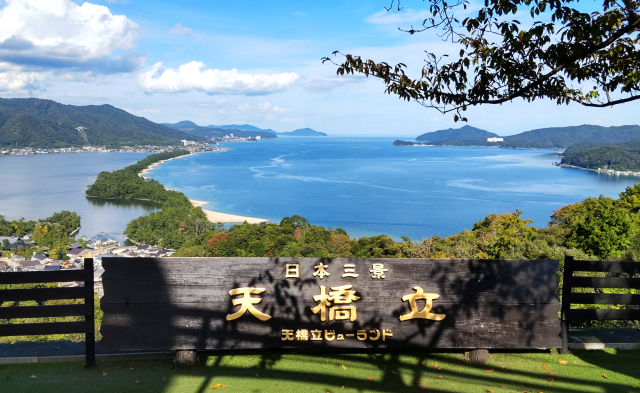
Arrive at Amanohashidate (天橋立), renowned as one of Japan’s "Three Scenic Views" (Nihon Sankei). This natural feature is a 3.3-kilometer-long sandbar naturally paved with over 8,000 pine trees, stretching cleanly across Miyazu Bay.
Park the MX-5 and take the cable car or chairlift up to Kasamatsu Park on the northern side of the bay. From the observation deck, perform the traditional Matanokoki—leaning forward and looking at the sandbar upside-down between your legs. From this perspective, the tree-lined bar appears to float in mid-air, resembling a green dragon flying through the sky.
02:00 PM – Coastal Seafood Feast
After taking in the view, enjoy a fresh seafood lunch at a coastal restaurant near the bay. Fall is the official start of the crab season along the Japan Sea.
Order a Kaisen-don (fresh seafood bowl topped with sweet botanical shrimp, sea urchin, local yellowtail, and crab meat) or grilled turban shell (Sazae). The quality of the seafood here is superb, benefiting from the cold, nutrient-rich currents of the Japan Sea.
03:30 PM – Ine no Funaya (The Floating Boat Houses of Ine)
Continue thirty minutes north along the scenic coastal route to Ine Town (伊根町). Ine is famous for its unique architecture: over 230 Funaya (boat houses) lined up side-by-side along the quiet, sheltered bay.
These two-story wooden structures feature a water garage on the ground floor to dock fishing vessels directly inside, with living quarters built on the upper floor.
Park the car near the historic harbor and take a walk along the quiet street. The dark-stained cedar siding of the homes, set against the calm green waters of the bay, offers a memorable photo backdrop for your trip. Stop at Mukai Shuzo, a local sake brewery located right on the water's edge, managed by one of Japan's few female head brewers, known for producing a unique red-hued sake made from ancient purple rice (Eko no Matsu).
05:00 PM – The Sunset Run via Kyoto Jukan Expressway
As the sun drops toward the western mountains, casting a golden hue over the waters of Ine Bay, it is time to turn back toward Osaka.
Join the Kyoto Jukan Expressway at Miyazu. The expressway provides a direct, well-paved route cutting back through the central mountain range via long, modern tunnels.
Cruising south in the MX-5, heater blowing warm air around your legs with the roof down and the night sky above, offers a great end to the drive. Watch the mountain shadows fade into darkness as the sparkling lights of the Osaka skyline appear on the horizon.
07:30 PM – Arrival in Osaka
Re-enter the Osaka city limits around 7:30 PM, completing a 350-kilometer autumn road trip loop. Pull back into the rental base, hand over the keys, and reflect on a drive that captured the essence of Japan's hidden countryside.
3. Mazda MX-5 Kyoto Miyama Autumn Drive: Expert Advice & Cultural Nuances
Driving through Japan's rural backroads offers a wonderful travel experience, but understanding local driving etiquette and roadside culture will make your trip far smoother and more rewarding.
The Culture of Michi-no-Eki (Roadside Stations)
Japan’s network of over 1,100 Michi-no-Eki is a driver's best friend. Far more than basic rest stops, these facilities serve as community hubs showcasing regional pride.
Local Produce: Farmers bring fresh morning harvests directly to these markets. In Miyama, look for local chestnut pastes, wild honey, and fresh dairy products (Miyama milk soft-serve ice cream is a local favorite!).
Driver Refreshment: Clean facilities, free regional maps, local snack stalls, and hot/cold drink vending machines make these perfect pitstops every 1-2 hours.
Mountain Road Etiquette (Tōge Etiquette)
When driving winding mountain roads like Route 162 or Route 38, keep these unspoken rules in mind:
Pulling Over: Local delivery trucks or eager local drivers in mini-trucks (Kei trucks) may approach behind you. Use the designated pull-out bays (Yuzuri-ai-bandi) to let faster traffic pass safely.
The "Thank You" Hazards: If a driver lets you merge or pass, briefly flash your hazard lights twice. This simple gesture (Aisatsu) is universally understood and appreciated across Japan.
Cornering Lines: Always keep firmly to your lane. Mountain roads can narrow unexpectedly, and local timber trucks require wide birth around blind corners. Mirrored signposts are installed at every blind turn—use them!
4. Mazda MX-5 Kyoto Miyama Autumn Drive: Detailed Logistics & Pre-Trip Tips
Navigating Japanese roads in a manual transmission JDM sports car is straightforward once you understand the core logistics.
Navigating Japan’s Toll Roads: The ETC Card
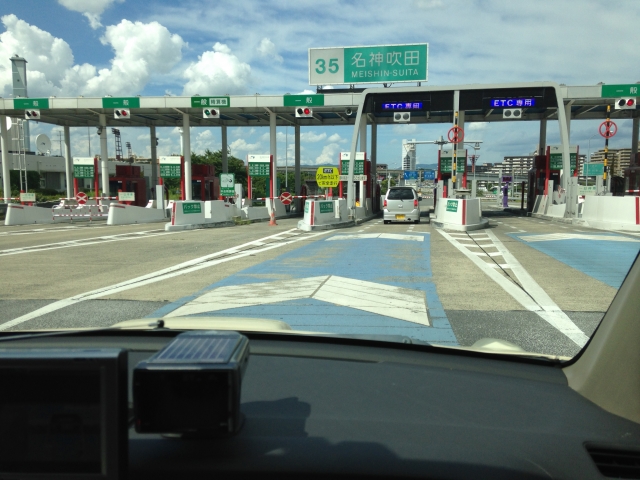
Japan’s expressway system relies heavily on ETC (Electronic Toll Collection).
Ensure your rental car comes equipped with an ETC reader.
Rent an ETC card directly from your rental car supplier. This allows you to drive through dedicated blue ETC lanes at toll plazas without stopping to pay cash, with all toll charges calculated and settled upon returning the vehicle.
Fueling Up: The Gas Station Guide
Gas stations in Japan are either Full Service (フル) or Self Service (セルフ).
When pulling into a full-service station for your Mazda MX-5:
Roll down your window and say: "Haioku, Mantan, Keshokai" (High-Octane, Full Tank, Credit Card).
The attendant will guide your parking, clear your tank cap, fill the car, wipe your windshield, and present the payment terminal.
The Pure Joy of Driving a JDM Manual in Japan
Driving a lightweight manual car like the Mazda MX-5 ND in its home country is a true enthusiast's dream. The ND's pedal placement is perfectly aligned for heel-toe downshifting, the clutch bite point is intuitive, and the short-throw shifter clicks into gear with mechanical precision. Navigating elevation changes and shifting gears while listening to the exhaust note echo through forest canyons turns every kilometer into a memorable experience.
5. Mazda MX-5 Kyoto Miyama Autumn Drive: Comprehensive FAQ
Q1: What documentation do I need to legally drive in Japan?
A: You must present three valid documents at the time of rental:
Your Original Driver’s License from your home country.
An International Driving Permit (IDP) issued under the 1949 Geneva Convention.
Note: IDPs issued under the 1968 Vienna Convention are not accepted in Japan.
Passport holders from Switzerland, Germany, France, Belgium, Monaco, and Taiwan require an official translation of their license by JAF (Japan Automobile Federation) instead of an IDP.
Your physical Passport.
Q2: Is driving a manual transmission car in Japan difficult for visitors?
A: Japan drives on the left side of the road, meaning the driver’s seat is on the right, and you shift gears with your left hand. However, the pedal layout (Clutch, Brake, Accelerator from left to right) remains identical worldwide. The Mazda MX-5 is exceptionally easy to adapt to, thanks to its forgiving clutch and smooth engine response.
Q3: How are the mountain road conditions in Miyama during Autumn?
A: Autumn (October to late November) usually brings dry, clear, and ideal driving weather to Kansai. Road surfaces are well-maintained. However, watch for damp leaves on shaded mountain passes, and drive carefully during morning mists. Snow gear is generally not required in Miyama until late December.
6. Mazda MX-5 Kyoto Miyama Autumn Drive: The Final Thoughts
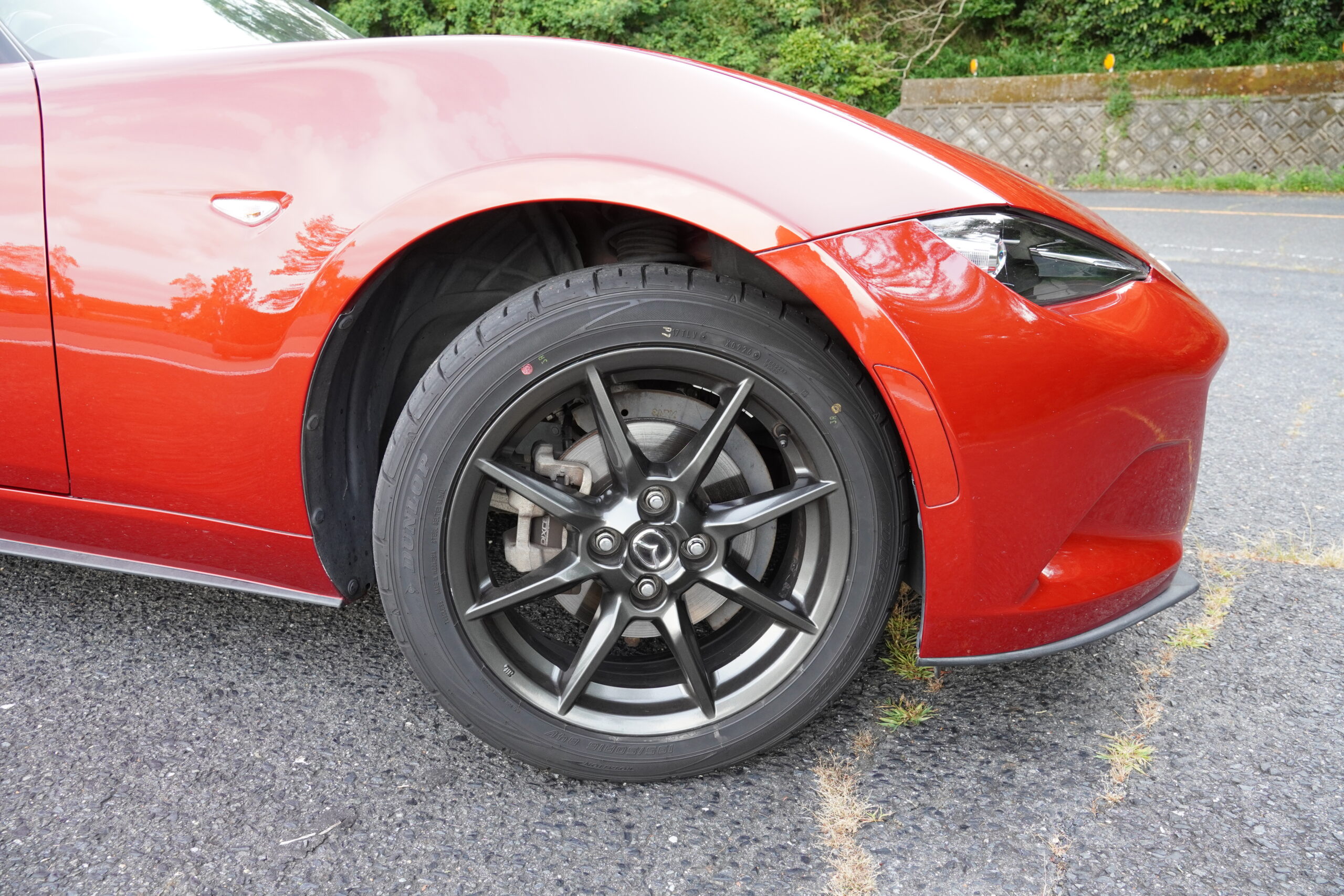
The standard tourist paths of Japan offer wonderful historical sights, but they show you only one side of the story. The true spirit of Japan—its quiet mountain valleys, ancient rural architecture, misty cedar forests, and winding coastal highways—is best discovered behind the wheel.
At Omoresho Car Rental Osaka Chuo (おもしろレンタカー大阪中央店), we believe that the car you drive should be just as memorable as the destinations you visit. Located conveniently in central Osaka, we specialize in offering pristine, enthusiast-grade JDM machines—including the iconic Mazda MX-5 ND Roadster, the Toyota 86, and the Subaru BRZ.
Whether you are looking to master the mountain twisties of Route 162, explore the historic thatched roofs of Miyama, or cruise along the Japan Sea coastline, our team is dedicated to helping you plan your drive. Our cars are meticulously maintained, fully equipped with ETC units, and ready for your next adventure.
Don't just travel through Japan—drive it.
Reserve your sports car with Omoresho Car Rental Osaka Chuo today, drop the top, and set off on an autumn road trip you will remember for a lifetime.