
Unveiling Secret Naramachi: A JDM Driver's Gourmet & Traditional Architecture Odyssey
奈良町, グルメ, 食べ歩き, 町家カフェ, 伝統建築-The Philosophy of Driving in Japan
For years, I navigated the intricate web of tracks and timetables, the rhythmic rumble of steel on steel a constant companion. As a former conductor for Kintetsu Railways, I witnessed Japan's unparalleled efficiency in motion, guiding countless travelers through the country's heartland. And I stand by it: Japan's public transportation network is a marvel, a symphony of precision and punctuality. Yet, after my shifts, when the uniform was shed and the open road called, a different kind of freedom emerged – a freedom that trains, for all their glory, can never truly offer.
Imagine, for a moment, the rigid predictability of a train journey. You see the world from a predetermined window, stop at designated stations, and follow a schedule dictated by hundreds of thousands. While efficient, it's a curated experience, a grand tour of the well-trodden. But what about the whisper of the wind through a bamboo grove just beyond the station? What about that tiny, unassuming cafe tucked away down a cobblestone alley, or the panoramic vista from a mountain pass that no railway line could ever conquer?
This, my friends, is the realm of the automobile, the true key to unlocking what I call "Secret Japan." From the vibrant, pulsating energy of Osaka, our starting point in the Kansai region, the opportunities for vehicular adventure are boundless. The bullet train might whisk you from city to city in mere hours, but it bypasses the soul of the landscape, the delicate nuances of local life, the serendipitous discoveries that define genuine exploration. To truly understand Japan, to feel its ancient pulse and taste its hidden flavors, you must drive. You must take the wheel of a machine engineered for pleasure, like a Toyota 86 or Subaru BRZ, and let its responsive chassis guide you off the beaten path.
Driving in Japan isn't just about getting from point A to point B; it's a communion with the land. It’s about the subtle shift in the air as you ascend a mountain pass, the exhilarating symphony of the engine as you carve through a winding road, the unexpected beauty of a roadside shrine veiled in moss. It’s about the ability to chase the fading light of a sunset over the Seto Inland Sea, or to pull over spontaneously for a local treat at a family-run shop in a village barely marked on the tourist maps. This is where the magic happens, where the stories are born, and where Japan truly reveals itself – not as a destination of landmarks, but as a living, breathing tapestry of experiences, waiting to be discovered by those bold enough to grasp the steering wheel and forge their own path. Leave the railway lines to me; for your ultimate Japanese adventure, the road awaits.
奈良町, グルメ, 食べ歩き, 町家カフェ, 伝統建築-The 2-Day Itinerary: Deep Dive
Prepare yourselves, adventurers, for an immersive journey into the heart of Nara. This isn't just a trip; it's an expedition designed to tantalize your senses, challenge your spirit, and reveal the profound beauty of Japan beyond its well-worn facade. At the helm of your chosen steed – a meticulously maintained Toyota 86 or Subaru BRZ – you'll experience a symphony of tradition, taste, and the sheer joy of driving. Buckle up; Naramachi awaits!
Day 1: Osaka's Urban Pulse to Naramachi's Ancient Embrace
08:00 AM – The Grand Departure from Osaka:
The morning air in Osaka is crisp, alive with the promise of adventure. Your 86 or BRZ, gleaming under the first rays of the sun, purrs with anticipation. The moment you slide into the driver's seat, the world shifts. The ergonomic cockpit, the precisely weighted steering wheel, the short-throw shifter – every element screams performance. You feel the connection instantly. A deep breath, a twist of the key (or push of a button), and the boxer engine awakens with a guttural growl, a promise of the journey ahead. Today, we escape the urban jungle and chase history.
08:15 AM – Navigating the Concrete Veins:
The initial drive out of Osaka is a fascinating transition. You'll navigate the city's efficient expressways, a testament to modern Japanese engineering. The multi-lane highways gracefully curve and elevate, offering fleeting glimpses of the city waking up – towering skyscrapers reflecting the morning light, distant mountains hazy on the horizon. The 86/BRZ feels planted and agile, its low center of gravity making lane changes smooth and confident. Even on the highway, the car communicates, the road texture subtly transmitted through the chassis, keeping you engaged.
09:00 AM – The Gateway to Ancient Lands:
As you transition from the bustling expressways onto Route 308 (or a similar scenic route if 308 feels too challenging for a first timer, though a JDM driver might relish it), the landscape begins its subtle transformation. The concrete canyons give way to rolling hills, then verdant forests. The pace slows just a touch, the road narrowing as if inviting you into a more intimate dialogue with the land. This is where the 86/BRZ truly comes alive. The winding sections, gentle at first, become a dance between machine and driver. Each turn is an invitation, each brake application a precise command, the engine note rising and falling with your inputs. You’re not just driving; you’re conducting a symphony of motion, the car responding with an eagerness that electrifies the senses.
09:45 AM – First Glimpse of Nara:
The modern sprawl gradually recedes, replaced by glimpses of traditional tiled roofs and the rich green of distant forests. You're entering the ancient heartland. The geological narrative of Nara is one of gentle valleys nestled amidst low mountains, a landscape that has fostered human settlement and cultural development for millennia. The roads here often follow natural contours, leading you deeper into its historical embrace.
10:00 AM – Arrival in Naramachi: Finding Your Anchor:
Parking in Naramachi requires a bit of foresight, but strategically located car parks (more on this later) are available on the periphery. The moment you step out of your 86/BRZ, the air itself feels different. Cooler, perhaps, carrying the faint scent of old wood and earth. The thrum of the engine fades, replaced by a symphony of gentle sounds: distant temple bells, the rustle of leaves, the murmur of local conversation. Naramachi, the old merchant district of Nara, unveils itself as a living museum. Its narrow, winding streets are lined with beautifully preserved machiya, traditional wooden townhouses that have stood for centuries. The architecture, characterized by dark timber, intricate lattice work (koshi), and tile roofs, speaks of a bygone era, of resilience and meticulous craftsmanship. The very stones beneath your feet whisper tales of merchants, artisans, and generations of life.
10:30 AM – The Art of Naramachi Exploration:
Forget the rush. Naramachi demands a slower pace. Begin by simply wandering. Let your eyes linger on the intricate details of the machiya. Notice the varying patterns of the koshi, each signifying different types of shops or residences. The warm, earthy tones of the wood, weathered by time, create a harmonious streetscape. Many machiya are now charming boutiques, galleries, or cafes, preserving their historic facades while embracing new life within. The narrow alleys, often leading to hidden courtyards or tiny shrines, are an invitation to get lost – in the best possible way. The sun dapples through overhead wires and eaves, painting shifting patterns on the aged paving stones. This isn't just sightseeing; it's an immersion into a tangible past.
11:30 AM – First Taste of Naramachi Gourmet – The Street Food Symphony:
Naramachi is a paradise for the discerning palate, especially for those who love to eat on the move. Your first culinary stop should be for mochi. But not just any mochi – seek out a specialty shop where it’s pounded fresh. The rhythmic thud of mallets on glutinous rice dough is a hypnotic sound, a performance in itself. The resulting mochi is incredibly soft, warm, and subtly sweet, often filled with rich red bean paste (anko). The texture is an ethereal cloud, melting on your tongue. Next, perhaps a senbei, a savory rice cracker. From delicately grilled versions seasoned with soy sauce to more elaborate ones adorned with nori or sesame, these crunchy delights offer a satisfying contrast to the mochi. The air carries a medley of aromas – sweet soy, toasted rice, brewing tea – each enticing you further into the food exploration. The vibrant colors of fresh produce and artisanal sweets spill from open storefronts, a feast for the eyes before it's a feast for the stomach.
12:30 PM – A Traditional Lunch in a Machiya:
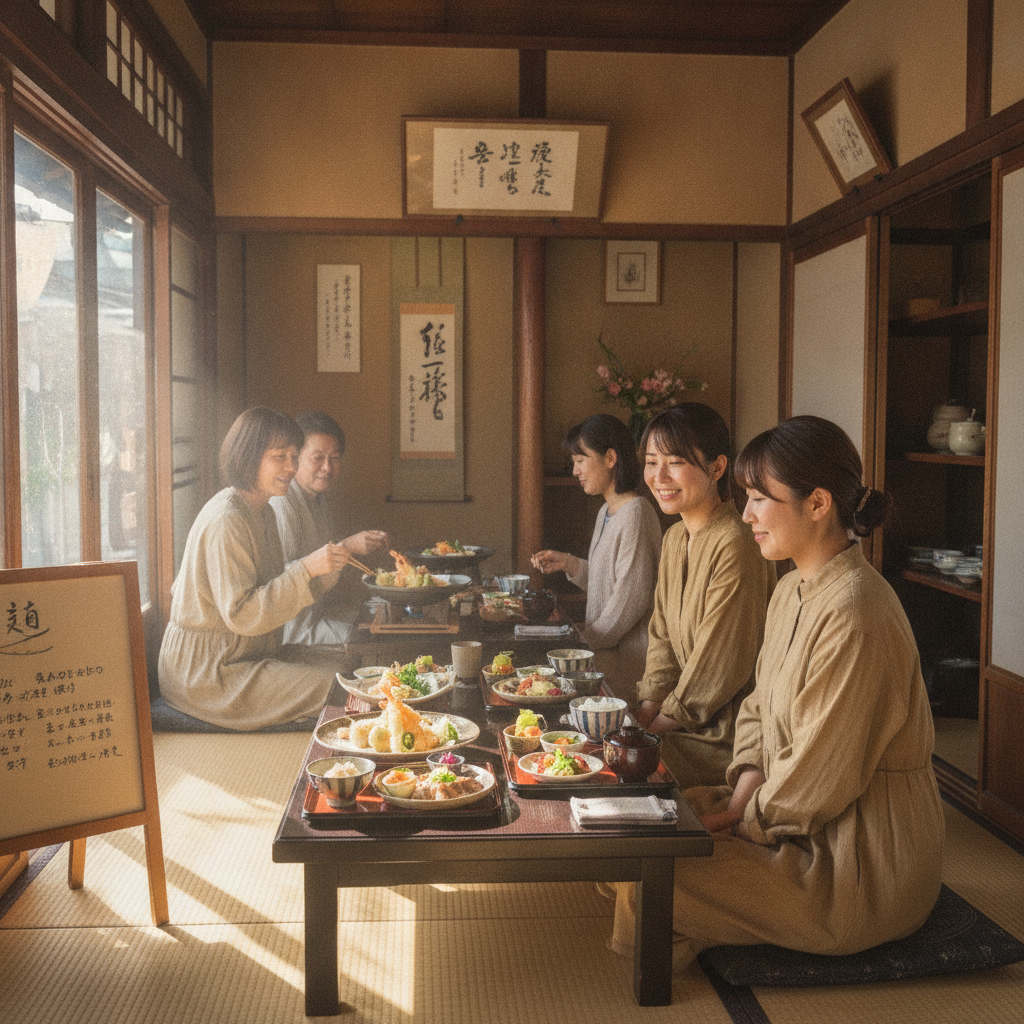
For lunch, choose a restaurant housed within a renovated machiya. The ambiance alone is worth the experience. The low ceilings, the dark wooden beams, the soft light filtering through paper screens (shoji) create an atmosphere of serene elegance. Many offer traditional set meals (teishoku), featuring local ingredients. Imagine a platter of fresh Nara vegetables, perhaps some delicate tempura, a serving of flavorful simmered dishes, and perfectly steamed rice, accompanied by clear, umami-rich miso soup. The flavors are clean, balanced, and comforting – a true reflection of Japanese culinary philosophy. The gentle hum of conversation, the clink of porcelain, and the quiet efficiency of the staff complete this quintessential Japanese dining experience. It's not just a meal; it's a moment of cultural appreciation.
02:00 PM – The Tranquility of a Machiya Cafe:
After lunch, the perfect antidote to walking is a visit to one of Naramachi's exquisite machiya cafes. These hidden gems are often tucked away behind unassuming entrances, opening into beautifully serene spaces with tatami mat seating or quaint Western-style tables. The aroma of freshly brewed coffee, often painstakingly drip-brewed, or the delicate scent of roasted green tea (hojicha) hangs in the air. The hushed atmosphere invites contemplation. Here, you can truly slow down, sip your drink, and absorb the timeless beauty of the surroundings. The light filters in through the garden windows, illuminating dust motes dancing in the air, creating a tableau of peaceful tranquility. Pair your beverage with a traditional Japanese sweet (wagashi) – an artistic confection often inspired by the seasons – or a slice of homemade cake. It's a sanctuary from the outside world, a moment to reflect on the layers of history that surround you.
03:30 PM – Discovering Hidden Artisans and Crafts:
Naramachi isn't just about food; it's a hub for traditional crafts. As you delve deeper into its labyrinthine alleys, you’ll discover small workshops specializing in items like Nara-style lacquerware, hand-dyed textiles, or intricate wood carvings. The artisans here often work in their storefronts, allowing you to observe their meticulous craft firsthand. The scent of wood shavings or fresh lacquer might waft from an open doorway. These are not mass-produced souvenirs but pieces imbued with soul and generations of skill. Interacting with these artisans, even with limited Japanese, is a rewarding experience, a direct connection to Japan’s enduring dedication to beauty and craftsmanship. You might find a unique treasure, a tangible memory of your journey.
05:00 PM – Sunset Strolls and Pre-Dinner Relaxation:
As the sun begins its descent, casting long shadows down the narrow streets, Naramachi takes on a golden, ethereal glow. The warm light bathes the ancient wooden facades, deepening their hues. This is a magical time for a final, leisurely stroll, perhaps revisiting a favorite spot or discovering a new corner. The gentle sounds of evening life begin – shopkeepers closing their doors, the distant murmur of people heading home. Before dinner, you'll head to your chosen accommodation. For this journey, I recommend a traditional ryokan or a modern hotel on the periphery that offers a blend of comfort and local flavor. The experience of donning a yukata, soaking in a soothing Japanese bath (ofuro), and preparing for an evening of culinary delight is an integral part of the Japanese travel experience.
07:00 PM – Naramachi's Evening Delights: A Culinary Revelation:
Dinner in Naramachi promises to be an unforgettable experience. Opt for a restaurant specializing in refined Japanese cuisine or a local izakaya for a more lively atmosphere. If you choose the former, prepare for a multi-course kaiseki-style meal, a true art form. Each dish is a delicate masterpiece, presenting seasonal ingredients with exquisite presentation. The flavors are subtle yet profound, the textures varied and intriguing. The setting, perhaps a private room with a garden view, enhances the sense of occasion. Alternatively, a bustling izakaya offers a more convivial experience, with a wider array of small, flavorful dishes (yakitori, sashimi, karaage) and a selection of local sake or beer. The lively chatter, the clinking of glasses, and the warm, inviting atmosphere provide a perfect end to a day of exploration. The tastes linger on your palate, a testament to Naramachi's deep culinary heritage.
09:00 PM – Night in Naramachi:
As darkness fully descends, Naramachi transforms once more. The gas lanterns cast a soft, ambient glow on the streets, highlighting architectural details that might have been missed during the day. The district becomes quieter, more intimate. A final stroll under the moonlight, the air cool and fragrant, allows for quiet reflection. The ancient town, having shared its daytime secrets, now offers a peaceful embrace, preparing you for another day of discovery. Your accommodation offers a comfortable sanctuary, whether it’s the quiet simplicity of a tatami room or the modern comforts of a well-appointed hotel room. The memories of the day, a kaleidoscope of sights, sounds, and tastes, slowly lull you to sleep.
Day 2: Deeper Dives, Scenic Drives & Homeward Bound
08:00 AM – Naramachi Morning Rituals & Breakfast:
Wake to the gentle sounds of Naramachi. Enjoy a traditional Japanese breakfast at your ryokan, typically featuring grilled fish, miso soup, steamed rice, pickles, and an assortment of small, savory dishes. It's a nourishing and deeply satisfying start to the day, preparing you for more adventures. If you opted for a hotel, seek out a local cafe for a lighter, Western-style breakfast if you prefer, but don't miss the opportunity to observe the town come alive in the morning light, as shopkeepers begin to prepare for the day.
09:00 AM – Revisiting History: A Less-Traveled Path:
Today, we'll delve into a slightly less-traveled aspect of Naramachi. Instead of the main tourist thoroughfares, seek out the smaller, more residential lanes. Here, you'll find even older machiya, still lived in by local families, offering a glimpse into everyday life. Look for the distinctive traditional signs of businesses that have operated for generations. Perhaps visit a small, unassuming temple or shrine tucked away in a quiet corner – a local guardian, far from the grand scale of Todaiji, but imbued with a serene, personal spirituality. These places often hold stories untold in guidebooks, their air thick with history and quiet devotion. The geological stability of the Nara basin has allowed these structures to stand for centuries, a testament to their enduring design.
10:30 AM – The Culinary Quest Continues: Unique Local Delights:
Before leaving Naramachi, there’s one more culinary stop. Search for a shop specializing in kakinoha-zushi, a regional Nara specialty. This is sushi wrapped in persimmon leaves, which imparts a subtle, earthy fragrance and acts as a natural preservative. Typically containing mackerel or salmon, it’s a delightful, unique flavor that speaks to Nara’s culinary ingenuity and connection to its natural surroundings. It’s perfect for a light second breakfast or a snack to carry with you. Alternatively, hunt for some local Nara pickles (tsukemono), known for their unique fermentation processes and distinct flavors – a perfect souvenir for the gourmand.
11:30 AM – Embracing the Open Road: Ascent to a Scenic Vista:
Now, it's time to let the 86/BRZ stretch its legs again. We're not merely leaving Naramachi; we're embarking on a short, exhilarating drive to a nearby scenic spot that offers a panoramic perspective of the region. This spot is deliberately chosen for its accessibility by car and the sheer joy of the winding road leading up to it. As you depart Naramachi, the traditional buildings gradually give way to more open landscapes, then the initial slopes of the surrounding hills. The air cools, the engine note changes as you climb. The smooth asphalt ribbons, carved into the ancient geological formations, invite a spirited drive.
The 86/BRZ comes alive on these roads. The steering is direct and communicative, allowing you to place the car precisely through each apex. The suspension, firm yet compliant, absorbs imperfections while keeping the chassis flat and composed. This isn't about raw power; it's about balance, precision, and the exhilarating feedback that connects driver and machine. Each gear change is crisp, each corner a satisfying arc. The smell of distant pine forests mixes with the faint scent of warm asphalt. The engine sings a higher note, urging you onward and upward.
12:30 PM – A Breath-taking Panorama and Al Fresco Lunch:
Upon reaching the summit, the reward is immediate and profound. The entire Nara basin stretches out beneath you, a patchwork of green fields, clustered towns, and the distant silhouette of ancient temples. On a clear day, the visibility is astonishing, revealing the subtle undulations of the Kansai landscape. The air at this elevation is invigorating, often carrying a gentle breeze. Find a suitable spot, perhaps a designated viewpoint, and savor the tranquility. This is the Japan that public transport simply cannot deliver – an expansive, unhindered vista that commands awe. For lunch, unwrap the kakinoha-zushi you picked up earlier or enjoy a simple bento box purchased from a local convenience store on the way up. Eating with such a view is an experience in itself, a moment of profound connection between nature, history, and the journey you've undertaken.
02:00 PM – The Scenic Descent and Homeward Journey:
The descent from the viewpoint is just as engaging, offering a different dynamic for the 86/BRZ. Now, engine braking becomes your ally, the car's balanced weight distribution ensuring stability as you carve down the winding roads. The views unfold in reverse, offering new perspectives of the landscape you ascended earlier. The light has shifted, casting different shadows, painting the scenery in new hues. It's a final, exhilarating dance with the car before you rejoin the main arteries back towards Osaka. The drive back is a time for reflection. The miles melt away as you recount the day's discoveries, the flavors tasted, the sights beheld. The 86/BRZ remains a comfortable and engaging companion, making even the highway stretches enjoyable with its precise handling and responsive engine. The distinct engine note, a comforting thrum, accompanies you back to the bustling heart of Kansai.
04:00 PM – The Return to Osaka: A Sense of Accomplishment:
As the familiar skyline of Osaka reappears on the horizon, there's a profound sense of accomplishment. You haven't just visited Naramachi; you've immersed yourself in it, tasted its soul, and navigated its surrounding beauty on your own terms. The car, your steadfast companion, has not merely transported you but has been an integral part of the experience, enhancing every twist and turn, every ascent and descent. You've experienced Secret Japan, tasted its hidden gems, and understood the true philosophy of driving in this incredible country.
奈良町, グルメ, 食べ歩き, 町家カフェ, 伝統建築-Expert Advice & Cultural Nuances
Embarking on a JDM adventure in Japan requires more than just a map and a full tank; it demands an understanding of the subtle cultural nuances that make Japanese driving so unique. Drawing from my years traversing this nation by road and rail, I offer these insights to enrich your journey and ensure seamless navigation.
The Allure of the "Michi-no-Eki" (Roadside Stations):
Forget the soulless rest stops you might be accustomed to. Japan's Michi-no-Eki are cultural institutions, vibrant hubs that are an absolute must for any road tripper. More than just a place to refuel and stretch your legs, each Michi-no-Eki is a unique showcase of its local area. You'll find meticulously clean restrooms, often equipped with advanced facilities that would impress even the most discerning traveler. But the real treasure lies in their local produce markets and specialty shops. This is where you'll discover the true culinary heart of a region – freshly harvested vegetables, artisanal snacks, regional delicacies, and handcrafted souvenirs that you won't find anywhere else. Imagine biting into a perfectly ripe peach picked that morning, or sipping on a locally brewed sake while overlooking a misty valley. The Michi-no-Eki are also fantastic places to find unique, often bizarre, local soft-serve ice cream flavors – a challenge and delight for the adventurous palate. Many also feature small museums, observation decks, or even hot springs. They are community anchors, offering a genuine interaction with local life that's often missed on faster routes.
Unearthing Hidden Gems: Go Where the Locals Go:
The charm of driving your 86/BRZ is the freedom to deviate. While Naramachi itself is a well-known jewel, the surrounding areas, especially when accessed by car, hold countless hidden treasures. How do you find them? My advice: look for smaller, less prominent signs outside the main tourist zones, often written primarily in Japanese. These could point to a tiny, centuries-old shrine nestled deep within a bamboo grove, a family-run soba noodle shop with just three tables, or a small, picturesque village known for a unique craft. Don't be afraid to take a detour down a promising-looking lane (provided it's paved and seems accessible). Many of my most cherished memories of Japan were born from these spontaneous explorations. Engage with locals at Michi-no-Eki or small shops; a simple "Koko ni nani ga oishii desu ka?" (What's delicious here?) or "Omoshiroi tokoro wa doko desu ka?" (Where's an interesting place?) can open doors to experiences far beyond any guidebook.
Navigating Japanese Roads: A Masterclass in Politeness and Precision:
Driving in Japan is, in many ways, an extension of its societal values: politeness, order, and precision. Here are some key points:
- Left-Hand Traffic: Japan drives on the left. This might take a little adjustment for those accustomed to right-hand traffic, but the clarity of road markings and the general courtesy of other drivers make it surprisingly easy to adapt.
- Speed Limits: Generally lower than in many Western countries (often 40-60 km/h in urban areas, 80-100 km/h on expressways). Adhere strictly to them. Speed cameras are common and traffic enforcement is vigilant.
- Patience and Courtesy: Aggressive driving is rare and frowned upon. Expect other drivers to be courteous, yield appropriately, and signal well in advance. Return the favor.
- Road Signs: Major road signs are typically in both Japanese and English. However, venturing into more rural areas will see Japanese-only signs. Investing in a good GPS (many rental cars have multi-language options) is invaluable.
- Tolls: Japan's expressways are toll roads. They are impeccably maintained but can be expensive. An ETC card (Electronic Toll Collection) is highly recommended for seamless travel.
- Pedestrian Priority: Pedestrians always have the right of way, especially at crossings. Be extra vigilant in residential areas and near schools.
Embrace the challenge, trust in the impeccable infrastructure, and you’ll discover that driving in Japan isn't just a means to an end; it's an enjoyable and integral part of the adventure.
奈良町, グルメ, 食べ歩き, 町家カフェ, 伝統建築-[Detailed Logistics & Pre-Trip Tips]
To truly savor your Naramachi odyssey in an 86 or BRZ, understanding the logistical intricacies of driving in Japan is paramount. From tolls to fuel, and the sheer exhilaration of a manual transmission JDM, let’s ensure you’re fully prepared for the road ahead in 2026.
ETC Cards: Your Expressway Express Pass (2026 Update):
As of 2026, the Electronic Toll Collection (ETC) system is virtually universal on Japan's expressways. Trying to navigate toll booths without one can be a slow, cumbersome affair, especially for foreign drivers unfamiliar with the system and language. An ETC card allows you to pass through designated ETC lanes seamlessly, automatically deducting the toll from the card. This not only saves time but often offers slight discounts on toll fees. When renting your JDM, absolutely request an ETC card. It will be slotted into a reader in your vehicle, and you simply drive through. You’ll hear a polite Japanese voice confirm your passage and the fee. The system is incredibly efficient, making long-distance travel a breeze.
Fueling Up: The "Mantan" Experience:
Japanese gas stations are generally immaculate and highly efficient. You'll encounter two main types: full-service and self-service. If you opt for a full-service station (distinguishable by staff attending the pumps), the experience is surprisingly delightful. Drive up, and an attendant will guide you. Simply say, "Mantan, regyura onegaishimasu," (Full tank, regular please) or point to the regular fuel option. They will often clean your windows, check your tires, and even give you a small towel for your hands! Payment is typically by cash or credit card. Self-service stations are clearly marked, and most have English instructions on the pump, but a basic understanding of "regular" (レギュラー), "high-octane" (ハイオク), and "diesel" (軽油) is useful. The nozzles are color-coded: red for regular, yellow for high-octane. Always confirm the fuel type for your 86/BRZ before pumping – typically it will be regular or high-octane gasoline.
Parking Prowess in Naramachi and Beyond:
Naramachi, with its narrow historic streets, is best explored on foot. Public parking lots, both multi-story and ground-level, are strategically located on the periphery of the district. These are usually well-signed in English and Japanese. Expect to pay an hourly or daily rate. For day trips to Naramachi, parking in these dedicated lots is the most convenient and respectful option. In more rural areas or at Michi-no-Eki, parking is generally abundant and often free. Always look for designated parking areas and avoid parking on narrow residential streets, as this can cause significant inconvenience for locals.
The Exhilaration of Driving a JDM (MT Car):
This is where the adventure truly ignites. Sliding into the cockpit of an 86 or BRZ, feeling the precise weight of the clutch, the satisfying engagement of the short-throw shifter, and the immediate, visceral response from the boxer engine – it's an experience that transcends mere transportation. As an ex-train conductor, I appreciate precision engineering, and these cars are masterpieces. The 86/BRZ isn't about brute force; it's about balance, feedback, and driver engagement. On the winding roads leading to Naramachi's scenic vistas, the car becomes an extension of yourself. You feel every subtle change in road texture, every nuance of grip. The engine's distinctive thrum is a constant, exhilarating soundtrack. Rev-matching downshifts into a tight corner, feeling the car rotate perfectly around its axis, then feeding in power as you apex and blast out – it’s a symphony of mechanical poetry. For those who truly love driving, an MT JDM in Japan is an unparalleled, deeply rewarding experience, connecting you to the road and the landscape in a way no automatic, generic rental car ever could.
奈良町, グルメ, 食べ歩き, 町家カフェ, 伝統建築-[Comprehensive FAQ]
Preparing for a road trip in Japan often brings a unique set of questions. Here’s a comprehensive guide to ensure your Naramachi driving adventure is as smooth as the winding roads you’ll traverse:
Q: What documents do I need to drive in Japan?
A: To legally drive in Japan, you need three essential documents:
- An International Driving Permit (IDP) issued under the 1949 Geneva Convention. This must be obtained in your home country BEFORE you travel to Japan.
- Your original driver's license from your home country.
- Your passport.
These three documents must be carried with you at all times while driving. Please note that an IDP from the 1968 Vienna Convention or permits issued in countries not party to the 1949 Geneva Convention are not valid for driving in Japan. Some countries (e.g., Germany, France, Switzerland, Belgium, Taiwan) have specific agreements with Japan and require a Japanese translation of their domestic license along with their original license and passport, instead of an IDP. Always verify your country's specific requirements before your trip.
Q: What about car insurance?
A: All rental cars in Japan come with mandatory basic liability insurance. This covers third-party bodily injury and property damage. However, it typically includes an deductible (excess) for damages to the rental vehicle itself. We highly recommend purchasing additional insurance (often called a CDW - Collision Damage Waiver, or similar) to waive this deductible. This provides peace of mind in case of an accident and is a small price to pay for significant protection.
Q: I’m nervous about driving a manual transmission (MT) car. Should I still rent one?
A: If you have prior MT experience, even if it's been a while, Japan's well-maintained roads and generally disciplined drivers make it an excellent place to rekindle that joy. The 86/BRZ is an incredibly forgiving and engaging car to drive, with a smooth clutch and precise shifter. If you've never driven an MT or are very uncomfortable, an automatic transmission is an option, though you'd miss out on some of the direct engagement. For the true JDM enthusiast, however, the MT is part of the allure. Consider practicing in your home country before your trip if you're feeling rusty.
Q: What are the road conditions like in winter?
A: While our Naramachi itinerary focuses on areas less prone to heavy snow, winter conditions can affect mountainous routes, even in Kansai. If traveling during the colder months (December to March), be aware that roads at higher elevations may be icy or snow-covered. Rental companies can provide winter tires (studless tires) for an additional fee, which are essential for safe driving in snowy or icy conditions. In extreme conditions, tire chains might be required by law on certain mountain passes. Always check weather forecasts and road conditions before embarking on a winter journey, and if you are inexperienced with winter driving, consider rescheduling your trip or sticking to major routes.
Q: Are there any specific road rules I should be aware of?
A: Beyond driving on the left, remember that it's illegal to use a handheld mobile phone while driving. U-turns are often restricted (look for signs). Always come to a complete stop at railway crossings, even if the barrier is up and no train is in sight, and listen for warnings. And as mentioned, pedestrians always have absolute priority.
奈良町, グルメ, 食べ歩き, 町家カフェ, 伝統建築-The Final Call: CTA
You’ve seen Naramachi through the eyes of a true Japan connoisseur, a former train conductor who found freedom and revelation behind the wheel of a JDM legend. You've imagined the ancient streets, savored the hidden culinary delights, and pictured yourself carving through scenic roads in the spirited Toyota 86 or Subaru BRZ.
This isn't just a fantasy; it's an attainable reality. If your soul yearns for the authentic, the adventurous, and the unparalleled thrill of discovering Japan on your own terms, then the time to act is now. Forget the crowded tour buses and rigid train schedules. Embrace the open road, the exhilarating connection to a precision-engineered machine, and the freedom to explore at your own pace.
To turn this dream into your next unforgettable journey, there’s only one choice. We are the specialists, the passionate enthusiasts who understand your desire for an authentic JDM experience. Led by an ex-Kintetsu railway conductor, we offer a fleet of meticulously maintained JDM vehicles, including the legendary 86 and BRZ, many with manual transmissions and custom touches, ready to ignite your adventure.
Are you ready to truly drive Japan?
Book your ultimate JDM adventure and unlock the secrets of Naramachi and beyond. Visit Omoshiro Rent-a-car Osaka Chuo today and let us put you in the driver’s seat of your Japanese odyssey. Your 86 or BRZ awaits.
