
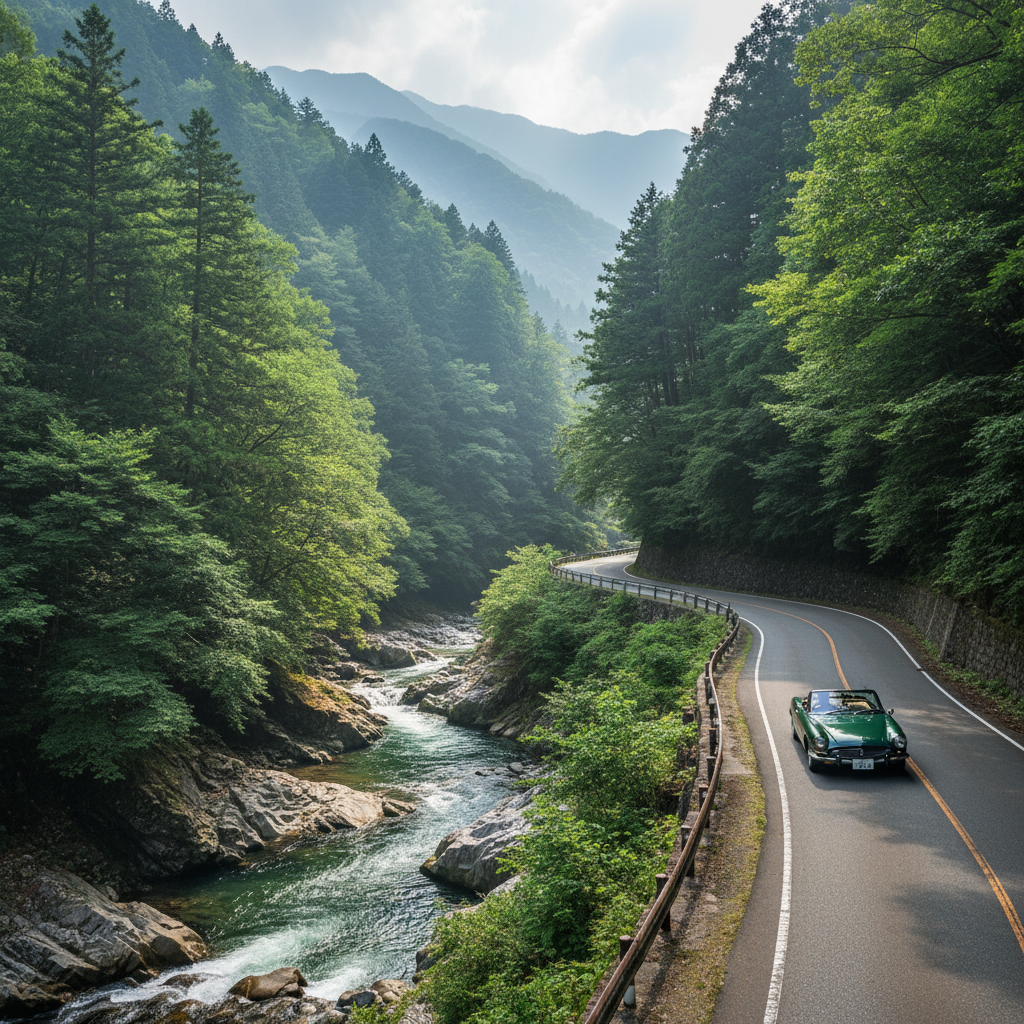
Forget what you think you know about experiencing Japan. For years, as a Kintetsu train conductor, I witnessed countless travelers whisked from city to city, observing Japan’s incredible landscapes from a blur of bullet train windows. While efficient, undeniably, this mode of travel offers but a fleeting glimpse, a curated performance of the nation. But I’m here to tell you, as a man who’s driven every winding road from Hokkaido to Kyushu, and now runs a JDM rental business in Osaka, that the true, untamed soul of Japan reveals itself only when you take the wheel.
Driving in Japan, especially from the vibrant hub of Osaka, is not merely transportation; it’s a philosophy. It’s about freedom, immersion, and the unparalleled thrill of discovering what I call 'Secret Japan' – places public transport simply cannot reach. Picture this: the crisp morning air, the subtle growl of a perfectly tuned Toyota 86 or Subaru BRZ beneath you, the open road beckoning. No schedules, no crowded platforms, just you, the machine, and the boundless potential of an adventure waiting to unfold. From Osaka, you're perfectly positioned to dive headfirst into the dramatic, sacred landscapes of Yoshino-Kumano National Park, an area teeming with ancient history, geological wonders, and vistas that will etch themselves onto your soul. This isn't just about getting from point A to point B; it’s about the exhilarating journey, the spontaneous stops, the hidden shrines nestled deep in cedar forests, the panoramic ocean views accessible only by car. It’s about feeling the road beneath you, tasting the local flavors, and hearing the whisper of the wind through mountains untouched by mass tourism. The freedom to chase a fleeting sunset over the Pacific, to linger at a serene waterfall, or to simply pull over and breathe in the pure mountain air – these are the moments that define an authentic Japanese adventure. And with a responsive JDM, every curve becomes a dance, every uphill climb an invigorating challenge. This is how you truly connect with Japan, beyond the guidebooks and the well-trodden paths.
Yoshino-Kumano National Park, Drive, Nature, Scenery - The 2-Day Itinerary: Deep Dive
This isn't just a trip; it's a pilgrimage for the senses, a symphony of asphalt, ancient history, and raw, untamed nature. Prepare to immerse yourself in the heart of Yoshino-Kumano National Park, where every turn of the wheel in your trusty 86 or BRZ unlocks a new layer of wonder. This 2-day itinerary is meticulously crafted to maximize your thrill, your discoveries, and your connection with a Japan few ever experience.
Day 1: Osaka's Urban Embrace to Kumano's Sacred Depths
7:00 AM - 7:30 AM: Osaka Departure - The Engine's First Roar
The city lights of Osaka still twinkle faintly in the pre-dawn glow as you settle into the low-slung, ergonomic cockpit of your Toyota 86 or Subaru BRZ. The rich, sporty scent of the interior, the tactile satisfaction of the steering wheel, the precise short throw of the manual shifter – it all hums with anticipation. A twist of the key, and the 2.0-liter Boxer engine awakens with a purposeful growl, a promise of the adventure ahead. With the city slowly coming to life, you navigate the initial streets, the car feeling nimble and eager, heading south out of the metropolis. The early start ensures open roads, a canvas for your driving artistry.
7:30 AM - 9:00 AM: Expressway Serenity - Heading South
As you merge onto the Hanshin Expressway, then transition to the Hanwa Expressway heading towards Wakayama, the city skyline recedes into your rearview mirror, replaced by the gradually unfolding rural tapestry of Kansai. The roads are impeccably smooth, a testament to Japanese engineering. The 86/BRZ cruises effortlessly, its refined suspension soaking up the miles while still communicating every subtle texture of the road. The morning sun begins its ascent, casting golden light over the distant mountain ranges. This is your mental recalibration, a smooth transition from urban dynamism to the tranquil rhythm of the countryside, preparing you for the wild beauty ahead.
9:00 AM - 9:30 AM: Refreshment Stop - Kishiwada Service Area
A quick, invigorating stop at a 'service area' (SA) like Kishiwada is a quintessential Japanese road trip experience. Pull your JDM into a spacious parking spot and step out. The air is already fresher, carrying hints of the sea. Grab a steaming can of coffee from a vending machine – a ritualistic start to any Japanese morning drive – or savor a freshly made onigiri from the food court. Observe the microcosm of Japanese travel: families on outings, truck drivers taking a break, fellow adventurers. It's a vibrant, efficient hub, yet offers a moment of calm before plunging deeper into the journey.
9:30 AM - 12:00 PM: The Gateway to Wakayama - Winding Towards Kumano
Back on the road, you leave the expressway, and the true driving begins. The character of the roads transforms dramatically as you enter the mountainous interior of Wakayama Prefecture. Prefectural Route 424 and later, parts of Route 311, become your playground. The 86/BRZ, designed for precisely this kind of driving, comes alive. The steering is telepathic, the chassis exquisitely balanced. You find yourself in a harmonious dance with the tarmac, flowing through sweeping corners, the engine note a low, confident growl as you maintain momentum. Ancient cedar and cypress forests begin to close in, their dark green canopy filtering the sunlight into dappled patterns on the asphalt. The air grows noticeably cooler, carrying the scent of rich earth and damp moss. This is your initial immersion into the raw, untamed beauty that defines Yoshino-Kumano National Park, a prelude to the sacred landscape.
12:00 PM - 1:00 PM: Lunch in Hongu - A Taste of the Mountains
Deep within the remote village of Hongu, find a small, unpretentious eatery, perhaps a humble soba or udon shop. These establishments, often family-run for generations, serve food imbued with the spirit of the land. Imagine a bowl of steaming soba noodles, their earthy flavor enhanced by crystal-clear mountain water, served with local sansai (wild mountain vegetables). The atmosphere is quiet, rustic, a complete contrast to Osaka's bustle. The taste is pure, nourishing, and deeply satisfying, providing energy for the afternoon's explorations. You feel a profound connection to the simplicity and authenticity of rural Japan.
1:00 PM - 3:00 PM: Kumano Hongu Taisha & Oyunohara - Sacred Ground & Spiritual Resonance
Just a short, contemplative drive from lunch, you arrive at the revered Kumano Hongu Taisha. Park your 86/BRZ in a discreet lot – the car almost seems to humble itself in the presence of such ancient power. You ascend a majestic stone staircase, flanked by towering, moss-covered cedars that seem to touch the sky. The very air here feels charged, imbued with centuries of pilgrimage and prayer. The vermillion shrine, rebuilt after a devastating flood, stands as a testament to resilience and faith. Beyond the shrine, a short walk leads you to Oyunohara, the original, expansive site of the shrine. Here, amidst a vast expanse of riverbed, stands the colossal Otorii gate – the largest torii gate in the world. It’s a breathtaking sight, a stark, powerful silhouette against the sky, a monumental marker of a sacred past. Stand beneath it, feel the immense spiritual energy, and gaze at the surrounding mountains, understanding why this place has drawn seekers for over a millennium. The deep green of the surrounding forest, the vibrant red of the gate, the ancient stones – it's a feast for the eyes and the soul.
3:00 PM - 5:00 PM: Doro-kyo Gorge - Nature's Masterpiece & Driving Nirvana
From Hongu, the road to Doro-kyo Gorge is a driver's dream, a symphony of tight curves and exhilarating straights that trace the contours of the rugged landscape. Your 86/BRZ eagerly carves through these roads, its precise handling allowing you to place it exactly where you want. The engine note rises and falls with each gear change, a mechanical heartbeat in harmony with the natural pulse of the mountains. Doro-kyo itself is a geological marvel, a dramatic V-shaped gorge carved by the Kumano River over millennia. Towering, sheer cliffs of an almost impossibly dark green plunge into emerald-clear waters. You can gaze down from various viewpoints, utterly mesmerized by the scale and pristine beauty. Perhaps you'll catch a glimpse of a traditional jetboat navigating the narrow stretches, but the true magic is in the raw, untouched power of the landscape. The crisp, cool air, the scent of damp rock and pristine water, the visual spectacle of sunlight playing on the cliffs – it’s a profound encounter with Japan’s ancient wilderness.
5:00 PM - 6:00 PM: Check-in Near Nachikatsuura - Coastal Serenity Beckons
As the sun begins its gentle descent, painting the sky in hues of orange and purple, you make your way towards your accommodation near Nachikatsuura. The drive shifts from mountain passes to roads that hint at the nearby Pacific. Your chosen ryokan or minshuku, perhaps nestled on a hillside overlooking the bay or tucked away in a quiet village, offers a warm, traditional welcome. The soothing aesthetics of sliding shoji doors and tatami mats instantly calm the spirit. The silence, broken only by the distant murmur of waves or the rustle of leaves, is a welcome balm after a day of sensory exhilaration.
6:00 PM - 7:00 PM: Onsen Bliss - Rejuvenation for Body and Soul
Before dinner, indulge in the ultimate Japanese relaxation: an onsen bath. Strip away the day's fatigue as you sink into the mineral-rich, piping hot waters. The steam rises, cleansing not just the body but the mind. Feel your muscles, engaged by the day's exhilarating drive, slowly unwind. The serene atmosphere, the warmth permeating your very core – it's a ritual of purification and rejuvenation, preparing you for a restful evening and another day of adventure.
7:00 PM - 9:00 PM: Dinner - A Culinary Voyage
Tonight’s dinner is a highlight. If you’re near Nachikatsuura, a fishing port, expect an exquisite array of fresh seafood. Perhaps a traditional kaiseki meal, a multi-course culinary journey, where each dish is a miniature work of art – delicate sashimi, perfectly grilled local fish, crisp tempura, and subtle broths. The presentation is as important as the taste, a feast for both the eyes and the palate. Alternatively, a local eatery might offer a hearty, soul-warming nabe (hot pot) or grilled unagi (eel). Pair it with local sake, savoring the nuanced flavors and reflecting on the day’s profound journey. The tastes are clean, distinct, and utterly Japanese, a perfect close to an extraordinary day.
9:00 PM onwards: Stargazing & Repose
After dinner, perhaps a quiet stroll under a sky unpolluted by city lights. The sheer number of stars visible in this remote corner of Japan is breathtaking. The night air is cool and fragrant. Return to your room, sink into your futon on the tatami, and drift into a deep, contented sleep, the day’s stunning vistas and thrilling drives replaying in your mind.
Day 2: Coastal Majesty, Ancient Pagodas, and the Road Home
7:00 AM - 8:00 AM: Sunrise & Traditional Breakfast
Awake refreshed, perhaps to the sight of the sun rising over the Pacific, painting the sky with fiery hues. A traditional Japanese breakfast awaits: grilled fish, miso soup, fluffy rice, pickles, and perhaps tamagoyaki (rolled omelet). It's a light yet satisfying start, fueling you for the day's coastal adventures and the final leg of your journey. The quiet efficiency of the service, the understated elegance of the setting – it's a gentle transition into the day.
8:00 AM - 10:00 AM: Kumano Nachi Taisha & Nachi Falls - The Thunderous Cascade
Your 86/BRZ makes light work of the winding ascent to the sacred complex of Kumano Nachi Taisha. Park your car and begin the walk through ancient forest paths, the air growing thick with humidity and the increasing roar of a distant waterfall. Suddenly, through a clearing in the towering trees, you catch your first glimpse: the iconic sight of the vibrant vermillion Sanju-no-to (three-story pagoda) framed against the dramatic backdrop of Nachi Falls – Japan’s tallest single-drop waterfall, plunging over 133 meters into a mystical basin below. It’s an unforgettable spectacle, a powerful synthesis of human faith and raw natural power. Explore the shrine, admire the pagoda, and feel the sheer force of the water as you stand at its base. The vibrant colors of the shrine, the deep green of the surrounding forest, and the stark white roar of the waterfall create a sensory explosion. This is a place where nature's grandeur meets profound spirituality.
10:00 AM - 12:00 PM: Coastal Drive - Route 42's Majestic Embrace
Now, prepare for one of Japan’s most exhilarating coastal drives: National Route 42. As you descend from Nachi, the Pacific Ocean unfurls before you, a vast expanse of shimmering sapphire. This is where the 86/BRZ truly comes into its own. The road hugs the dramatic coastline, offering a thrilling series of sweeping curves, elevation changes, and breathtaking vistas. The sun glints off the waves, the salt-laced air streams through your open windows, and the confident hum of your JDM's engine becomes the soundtrack to an unforgettable experience. The car feels perfectly planted, responding to every steering input with precision, making you feel utterly connected to the road and the surrounding majesty. Pull over at scenic overlooks to capture the sheer scale of the ocean, stretching endlessly to the horizon. This drive is pure automotive poetry.
12:00 PM - 1:00 PM: Hashigui-iwa Rocks & Coastal Lunch
Continuing along Route 42, you’ll encounter the geological marvel of Hashigui-iwa Rocks near Kushimoto. These striking formations, a series of some 40 pillar-like rocks stretching into the sea, look like the remnants of a bridge built by giants. Geologically fascinating, they are remnants of volcanic activity and erosion, an artistic collaboration between fire and water. The dramatic sight, especially with the waves crashing around them, is a perfect photo opportunity. For lunch, find a small, unpretentious seafood shack in Kushimoto. Here, the catch of the day is king. Imagine succulent, freshly grilled fish, perhaps some local shellfish, or a simple yet incredibly flavorful sashimi bowl, all enjoyed with the sound of the ocean as your backdrop. The simplicity and freshness are unparalleled, a true taste of coastal Japan.
1:00 PM - 3:00 PM: Shirahama's Coastal Wonders - Senjojiki & Sandanbeki
As you continue north along the coast, the landscape transitions towards the more famous white sands of Shirahama, but not before revealing more dramatic natural artistry. Make a stop at Senjojiki, meaning 'Thousand Tatami Mats,' a vast expanse of eroded sandstone formations that stretch flat into the ocean. It's a surreal landscape, where you can walk out onto the rock formations, feeling the power of the Pacific waves crashing against them. Just nearby is Sandanbeki, a magnificent cliff face that drops 50 meters straight down into the sea. Descend by elevator into the Sandanbeki Cave, an ancient hideout for pirates, to witness the thunderous waves crashing against the cave walls from within. The contrast of the stark white cliffs, the deep blue sea, and the echoing roar of the ocean is utterly captivating. These natural wonders are easily accessible with your JDM, offering unparalleled views and a deeper appreciation for the geological forces that shaped this region.
3:00 PM - 6:00 PM: The Homeward Bound Drive - Reflecting on the Journey
With memories of ancient shrines, thundering waterfalls, and exhilarating coastal roads fresh in your mind, it's time to begin the return journey to Osaka. You'll gradually transition from the scenic coastal routes back onto the efficient expressways. This final leg is a perfect opportunity for reflection. The hum of the 86/BRZ's engine becomes a comforting rhythm as you eat up the miles. Recall the feeling of the steering wheel in your hands on a particularly challenging mountain pass, the taste of local mountain vegetables, the incredible scent of cypress forests, the vibrant colors of the shrines, and the vastness of the Pacific. You've not just seen Japan; you've felt it, tasted it, driven through its very soul. The car, your steadfast companion, has become an extension of your will, making every mile a part of the adventure. As the urban sprawl of Osaka slowly reappears on the horizon, there's a deep satisfaction of a journey truly and intimately experienced.
6:00 PM - 7:00 PM: Osaka's Welcoming Glow
As twilight deepens, you arrive back in Osaka. The city, now fully illuminated, sparkles with energy, a stark contrast to the natural serenity you’ve just left. The journey concludes, but the memories, the sensations, and the profound connection to Japan forged over these two days will linger, a testament to the unparalleled experience of driving through its hidden heart.
Yoshino-Kumano National Park, Drive, Nature, Scenery - Expert Advice & Cultural Nuances

Embarking on a Japanese road trip in your Toyota 86 or Subaru BRZ is an adventure of a lifetime, but understanding a few cultural nuances and expert tips will elevate your experience from great to truly unforgettable. As someone who's spent years traversing this nation by road and rail, I can tell you that the subtle details make all the difference.
The Enchantment of Michi-no-Eki (Roadside Stations)
Forget the generic service stations you might be used to. Japan's Michi-no-Eki are cultural institutions, vibrant hubs that are far more than just rest stops. Pull your 86/BRZ into one of these, and you'll discover a microcosm of local life. They are treasure troves of regional produce – from freshly picked fruits and vegetables to artisanal sweets, unique local crafts, and specialty snacks you won't find anywhere else. Often, they feature excellent, affordable restaurants serving local delicacies. It's not just a place to stretch your legs; it's an opportunity to dive into the regional identity, support local communities, and discover culinary surprises. I encourage you to make frequent, spontaneous stops; you never know what hidden gem you’ll unearth.
Savoring Local Flavors: Hidden Culinary Gems
While the major tourist areas have their share of restaurants, the true magic of Japanese cuisine often lies in the unassuming, local eateries tucked away in smaller towns. My advice? Look for places bustling with local families and workers, even if their exteriors are modest. These are often where you’ll find the most authentic, soul-satisfying meals at incredibly reasonable prices. Don't be afraid to try 'teishoku' (set meals) which offer a balanced and delicious selection of dishes. For dinner, an 'izakaya' (Japanese gastropub) in a non-touristy area offers a fantastic atmosphere for sampling various small dishes and local sake. The adventure of ordering, even with a language barrier, is part of the fun, often leading to delightful culinary discoveries that truly represent the region.
Mastering the Japanese Road: Etiquette and Awareness
Japanese roads are renowned for their safety and the courtesy of their drivers. Embrace this ethos: drive defensively, maintain generous following distances, and always be polite. Yielding to pedestrians and cyclists is paramount. In rural areas and on mountain passes, roads can become surprisingly narrow, sometimes barely wide enough for two cars to pass. Be extra vigilant on blind curves and be prepared to slow down or even stop to allow oncoming traffic to navigate. Wildlife, particularly deer and wild boar, can be a hazard in the national park areas, especially at dawn and dusk. Drive with caution and respect for the natural environment. While the 86/BRZ is a joy on winding roads, always prioritize safety and local speed limits.
Parking Prowess
In cities and popular tourist spots, parking is typically well-organized and often metered. Look for 'coin parking' lots, which are abundant and usually clearly marked. In more rural areas, parking might be less formal, often next to shrines, temples, or viewpoints. Always ensure you're not blocking traffic or local access. Having some 100-yen coins handy for older meters is a good idea, though most modern parking lots accept cards or IC cards.
The Onsen Ritual: Post-Drive Bliss
After a long day of driving your 86/BRZ through exhilarating roads, there’s no greater reward than a traditional Japanese onsen (hot spring). It’s not just a bath; it’s a cultural ritual. Remember to cleanse thoroughly before entering the communal baths. While tattoos are sometimes restricted in public onsens, many ryokans offer private onsens or are becoming more accommodating. The soothing, mineral-rich waters will melt away any muscle fatigue, leaving you completely rejuvenated and ready for another day of exploration.
Respect for Nature and Sacred Sites
Yoshino-Kumano National Park is not just a beautiful landscape; it's a sacred region steeped in ancient traditions. Always show respect for temples, shrines, and the natural environment. Dress modestly when visiting religious sites, remove your shoes where indicated, and refrain from loud conversations. When exploring natural areas, adhere to 'leave no trace' principles – pack out everything you pack in. Your thoughtful approach ensures these pristine and sacred places remain protected for generations to come.
Yoshino-Kumano National Park, Drive, Nature, Scenery - Detailed Logistics & Pre-Trip Tips
Navigating Japan by car, especially with a JDM legend like the Toyota 86 or Subaru BRZ, offers an unparalleled sense of freedom and discovery. To ensure your adventure through Yoshino-Kumano National Park is seamless, here's some practical advice based on my years of experience both on the tracks and the open roads of Japan.
Understanding Japan's Road Network (2026 Perspective)
Japan boasts an incredibly efficient and well-maintained road network. Expressways (高速道路, kōsoku-dōro) are fast, smooth, and typically less congested outside of major city rush hours. Google Maps and other navigation apps are remarkably accurate and reliable for real-time traffic updates and route planning. While major cities experience predictable rush hour traffic, the roads once you venture into Wakayama and the Yoshino-Kumano region tend to be much freer flowing, allowing you to truly enjoy the performance characteristics of your 86/BRZ.
The ETC Card: Your Expressway Lifeline
An ETC (Electronic Toll Collection) card is an absolute game-changer for driving in Japan. Instead of fumbling for cash or credit cards at toll booths, an ETC card allows you to pass through dedicated gates without stopping, automatically deducting the toll from a linked account. Most reputable rental car companies, including those specializing in JDM vehicles, offer ETC cards for rent with your vehicle. I highly recommend securing one. It drastically reduces travel time and stress, especially if you're unfamiliar with the Japanese toll gate system. Just drive through the purple ETC lane, listen for the beep, and continue your journey.
Fueling Up: A Cultural Experience at the Gas Station
Gas stations in Japan offer a unique blend of efficiency and customer service. You'll primarily encounter two types: full-service (サービスステーション, sābisu sutēshon) and self-service (セルフ, serufu). At full-service stations, attendants will typically guide you into the pump, clean your windows, and even offer to dispose of your trash. To request a full tank of regular gasoline, simply say, "Mantan, regyura- onegaishimasu" (満タン、レギュラーお願いします). If your 86/BRZ demands high-octane, ask for "Mantan, haioku onegaishimasu" (満タン、ハイオクお願いします). The polite and attentive service is a cultural highlight in itself. Self-service stations are straightforward, with clear instructions often available in English on the pump screens. Most stations accept major credit cards, but having some cash is always a good backup, especially in more rural areas.
The Thrill of a JDM (MT Car)
Driving an 86 or BRZ, especially a manual transmission (MT) model, is not just about getting around; it’s about engaging with the road on a deeply satisfying level. This is where my passion as a JDM rental owner truly shines. The precise, short throws of the shifter, the responsive clutch, the visceral feedback from the steering wheel – it's a direct connection to the machine. On the winding roads of Yoshino-Kumano National Park, you'll appreciate the perfect balance and agility of these vehicles. Downshifting with a perfectly rev-matched blip before a tight corner, feeling the car settle, and then powering out smoothly – these are the moments that truly define the JDM driving experience. It's exhilarating, demanding, and incredibly rewarding, transforming a simple drive into a dynamic, intimate dance with the asphalt and the surrounding landscape.
Parking Smarts
While Michi-no-Eki and major attractions usually have ample parking, smaller towns and popular spots might require a bit of savvy. Look for blue signs with a "P" for parking. Coin parking lots are common in urban areas, and many newer ones accept credit cards or IC cards. Always pay attention to parking signs, as rules can vary, and avoid parking illegally, which can result in fines and towing. In remote areas, you might find informal parking areas, but ensure you’re not blocking any private access or local roads.
Yoshino-Kumano National Park, Drive, Nature, Scenery - Comprehensive FAQ
Planning an epic driving adventure through Japan’s Yoshino-Kumano National Park inevitably brings questions. Here are some of the most common inquiries from intrepid travelers and car enthusiasts, addressed with expert insight.
Do I need an International Driving Permit (IDP) to drive in Japan?
Absolutely. To drive legally in Japan, you will need a valid International Driving Permit (IDP) issued by a signatory country of the 1949 Geneva Convention, your national driver's license, and your passport. Ensure your IDP is valid for at least one year from your arrival date and is issued by an authorized organization in your home country (such as AAA in the US or the AA in the UK). It is crucial to carry all three documents with you at all times when driving. Some countries have specific agreements with Japan, so always verify the latest requirements for your specific nationality before your trip.
What about car insurance?
Comprehensive insurance is a non-negotiable must-have for peace of mind while driving in Japan. Reputable rental car companies include basic liability and collision damage waiver (CDW) as standard. However, I highly recommend opting for additional coverage, such as a non-operation charge (NOC) waiver, which covers lost income to the rental company if the vehicle requires repairs. Always review your rental agreement thoroughly and understand what is and isn't covered before you depart. This extra layer of protection allows you to fully immerse yourself in the driving experience without undue worry.
I'm nervous about driving a manual transmission (MT) car in Japan. Any advice?
It's natural to feel a bit apprehensive if you're not accustomed to driving a manual, or if it's been a while. However, Japan's impeccably smooth roads and generally polite drivers create an excellent environment for enjoying an MT car like the 86 or BRZ. My best advice: if you're not completely confident, practice before your trip. Get comfortable with clutch control and gear changes. Once you're on the road, take your time, get used to the car's feel, and don't rush. The satisfaction of mastering the manual on Japan's incredible winding roads is immense – it’s a connection to the vehicle that an automatic simply cannot replicate. Start on less crowded roads, and you'll soon find a rhythm.
What are the road conditions like in winter, especially in the national park?
While the coastal areas of Yoshino-Kumano National Park generally experience milder winters, the mountainous interior can and does receive snow and ice. If you are planning a winter trip (roughly December to March), it is absolutely essential to check weather and road conditions daily. Many mountain passes may require studless tires or even snow chains, and some may be temporarily closed. Reputable rental companies will equip vehicles with appropriate tires if you indicate you'll be driving in snowy regions. For the most pleasant and unrestricted driving, I recommend visiting Yoshino-Kumano in spring (cherry blossoms!), summer (lush greenery, refreshing rivers), or autumn (spectacular fall foliage).
Will my GPS work, or should I get a portable Wi-Fi device?
Your smartphone's GPS (e.g., Google Maps, Apple Maps, Waze) will work exceptionally well in Japan, offering reliable navigation and real-time traffic updates. However, relying solely on your phone's data can quickly drain your battery. I highly recommend renting a portable Wi-Fi device (often available from your rental car company or at airports) or purchasing a local SIM card. This ensures you have consistent, high-speed internet access for navigation, researching spontaneous stops, translating menus, and staying connected, without worrying about international roaming charges or data caps. While many rental cars have built-in navigation systems, they are often in Japanese, making your phone a more user-friendly choice.
Yoshino-Kumano National Park, Drive, Nature, Scenery - The Final Call: CTA
You've journeyed through ancient forests, felt the spray of a thundering waterfall, and carved exhilarating curves along an endless ocean vista. You’ve tasted the subtle flavors of mountain cuisine and found serenity in sacred sites. This isn't just a trip you've read about; it's a vibrant tapestry woven with the threads of adventure, culture, and the sheer joy of driving. To truly experience Japan – to feel its pulse, hear its whispers, and uncover its hidden heart – you need to be in control of your own destiny, behind the wheel of a machine that truly connects with the road.
Ready to carve your own path through Japan's hidden gems? To feel the surge of a finely tuned Toyota 86 or Subaru BRZ as you navigate ancient pilgrimage routes and ocean-kissed roads? To experience the true soul of Japan, not as a passive observer, but as an active participant, a true adventurer?
Your unforgettable Japanese driving adventure begins not with a train ticket, but with a key. As an ex-train conductor who traded rails for asphalt, and now runs a dedicated JDM rental service, I know what makes a truly exceptional journey. We specialize in providing the very vehicles that will transform your trip into an epic saga: iconic JDM cars, meticulously maintained, many with manual transmissions for the purest driving experience. Our team, deeply knowledgeable about Japan's roads and automotive culture, is ready to equip you for the journey of a lifetime.
Visit Omoshiro Rent-a-Car Osaka Chuo today and unlock your Japanese driving adventure. Your 86 or BRZ awaits, ready to be your companion on a journey into the wild, sacred, and utterly spectacular heart of Japan. The open road beckons – answer its call!
