
1. Driving in Osaka and Nose: The Ultimate Philosophy of Freedom
For decades, the standard narrative sold to international visitors traveling through Japan’s Kansai region has been built entirely around rail infrastructure. You purchase a rail pass, board a pristine high-speed train, and move along fixed steel corridors connecting Osaka, Kyoto, and Nara.
Having spent years working directly within the railway industry as a train conductor for Kintetsu—one of Japan’s most extensive private rail networks—I possess a profound, insider respect for the precision and efficiency of Japanese public transit. I know every signal call, every timetable nuance, and every inch of track that weaves through the urban sprawling heart of western Japan. Train travel in Japan is an engineering marvel. But as a railway professional and a lifelong automotive enthusiast who has driven tens of thousands of kilometers across every prefecture, I will tell you an undeniable truth: the real Japan begins where the tracks end.
When you rely exclusively on trains, your perception of Japan is strictly curated by civil planners. You experience cities from station concourses and view nature through double-pane safety glass at 100 kilometers per hour. You are bound to fixed departure schedules, crowded platforms, and pre-packaged tourist hubs designed to handle thousands of commuters per hour. You miss the subtle gradient shifts of ancient mountain passes, the smell of damp cedar forests misting over asphalt at sunrise, and the unscripted magic of discovering centuries-old mountain hamlets tucked into valleys where no tracks could ever be laid.
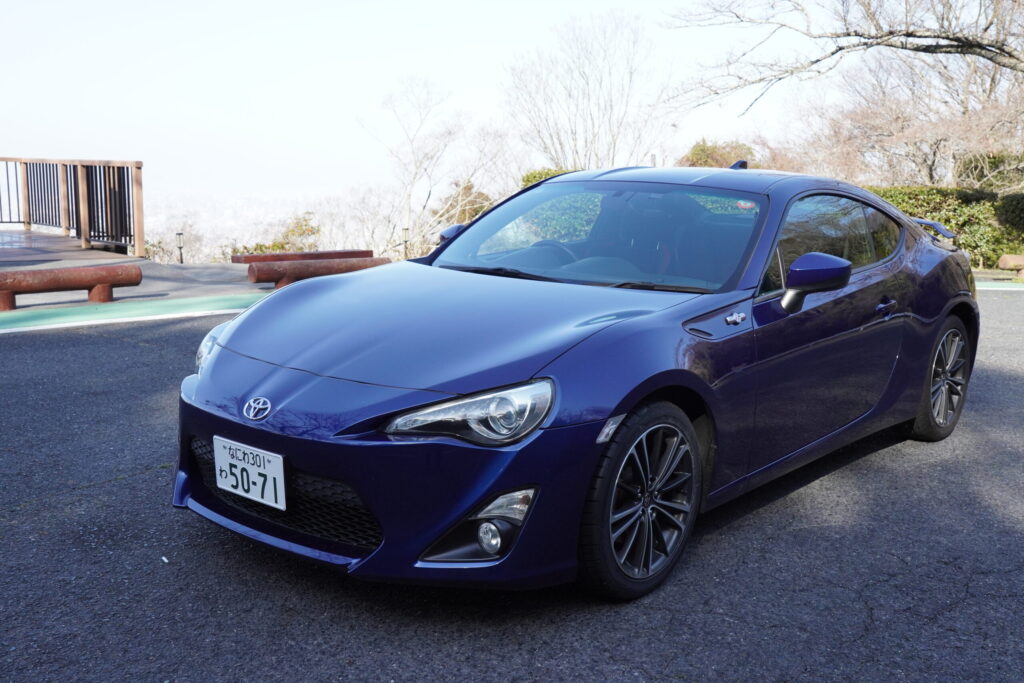
This is the philosophy of "Secret Japan." It is an immersive, tactile world accessible only to those who take the wheel. By selecting Osaka as your base and choosing a lightweight, rear-wheel-drive sports machine like a Toyota 86 or Subaru BRZ, the city transforms from a mere rail transit junction into an explosive launchpad for epic automotive journeys.
Nose (pronounced No-say), located in the northernmost tip of Osaka Prefecture, represents the absolute antithesis of downtown Osaka's neon-drenched gridlock. Known historically as the "Thick Forest of Kansai," Nose features a dramatic landscape sculpted by ancient volcanic activity, dense forest canopies, sharp ridgelines, and terraced agricultural valleys. Yet, despite being less than an hour's drive from central Osaka, it remains virtually untouched by mainstream international tourism.
To truly understand why driving an iconic JDM (Japanese Domestic Market) sports car through Nose is superior to any train ride, you must analyze the mechanics of the machine itself. A Toyota 86 is built on a light chassis, a low center of gravity provided by its naturally aspirated boxer engine, and an intimate driver-to-asphalt connection. On a train, you are a passive passenger accelerated by electric motors along fixed paths. Behind the wheel of an 86 on a winding Japanese touge (mountain pass), you become an active participant in the landscape. Every subtle turn of the steering wheel, every rev-matched downshift into third gear, and every feedback pulse through the pedal box creates an adrenaline-infused harmony between driver, machine, and road.
Driving out of Osaka’s urban maze early in the morning toward the quiet mountain passes of Nose offers an intoxicating contrast. Within 45 minutes, elevated expressways give way to sweeping double-lane country highways, which quickly narrow into technical, twisty mountain climbs. You leave behind the rhythmic clack-clack of rail tracks for the crisp, raw mechanical mechanical bark of a high-revving boxer engine echoing off granite rock faces and towering bamboo groves.
This guide is engineered specifically for travelers who refuse to settle for the cookie-cutter tourist itinerary. If you are an automotive enthusiast, an adventurer, or a traveler seeking to experience Japan through a lens of total independence, this deep-dive exploration of Nose will reframe how you view travel in the Kansai region.

2. The 2-Day Ultimate Driving Itinerary: Deep Dive into Nose and Beyond
Day 1: The Mountain Ridge, Technical Passes, and Ancient Forests
06:30 AM – The Dawn Escape from Osaka
The city of Osaka is still asleep as you turn the key or push the start button of your Toyota 86. The flat-four engine fires up with a distinctive, mechanical idle that settles into a confident, low rumble. Early morning is the golden hour for driving out of the metropolis. Navigating the Hanshin Expressway Route 11 (Ikeda Route) northbound, the elevated tarmac carries you past quiet urban districts as the sky shifts from deep indigo to pale morning rose.
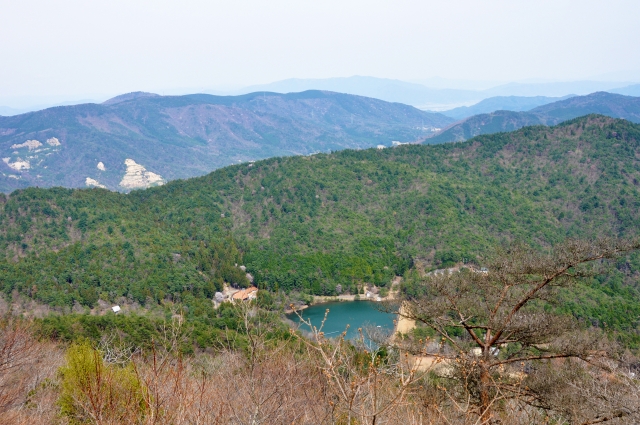
As you clear the urban fringes of Ikeda City, the concrete skyline abruptly collapses behind you, replaced by the towering green contours of the Hokusetsu Mountain Range. The ambient temperature drops noticeably. Crack your window slightly to catch the crisp morning air infused with sweet pine and damp earth. Route 173 unfolds before you—a smooth, wide arterial tarmac that curves naturally along the contours of the Inagawa River.
07:30 AM – Conquering Mount Kenbi (Kenbizan)
Leaving Route 173, you pivot onto the narrow technical ribbons of Prefectural Route 4. This is where the Toyota 86 immediately displays its legendary heritage. The road climbs sharply toward the slopes of Mount Kenbi.
Mount Kenbi is a rugged geological structure composed largely of ancient granite and hornfels rock, formed millions of years ago through intense igneous intrusion. This hard rock composition created steep, unforgiving ridges and sharp vertical drops—meaning the civil engineers who constructed these roads had to trace the tight natural topography rather than blasting flat lines through it.
Here, the driving experience becomes hypnotic.
- Second gear, 4,500 RPM: You tilt the 86 into a tight hairpin turn. The hydraulic-like feedback from the rack-and-pinion steering informs your hands of every micro-texture in the pavement.
- Apex reached: Squeeze the throttle. The rear-wheel-drive layout gently pushes the chassis out of the corner with razor-sharp balance, the mechanical limited-slip differential ensuring maximum traction without a hint of slop.
- Third gear shift: The snick-snick engagement of the manual transmission box is short, crisp, and intensely satisfying.
The morning light pierces through dense canopies of Japanese cedar (sugi) and cypress (hinoki), casting zebra-striped patterns of sun and shadow across the damp asphalt. The scent of ozone, cool earth, and warm brake pads creates an unforgettable sensory atmosphere.
09:00 AM – Morning Reflection at Gyokuzo-ji Temple
Perched high on the slopes of Mount Myoken within the Nose district lies Gyokuzo-ji, a tranquil Nichiren Buddhist temple dating back centuries. Parking the 86 in the small gravel area at the edge of the grounds, you are greeted by total silence, punctuated only by the cooling tink-tink-tink of your car’s exhaust manifold contract in the mountain chill.
Step out onto the temple grounds. The air is thick with incense and fresh mountain mist. Gyokuzo-ji offers an expansive panoramic viewpoint overlooking the entire Nose basin. Looking back south, you can see the distant, haze-covered outline of Osaka Bay—a stark reminder of how far you have driven into wilderness in under two hours. Take thirty minutes to walk the stone pathways, past moss-covered stone lanterns (toro) and ancient cedar trees whose trunks are wrapped in sacred shimenawa ropes.
10:30 AM – The Technical Descent: Route 601 and Noma Pass
Re-entering the cockpit, adjust your seating position, buckle up, and prepare for one of the most technical driving stretches in northern Osaka: Prefectural Route 601 passing through the Noma Pass (Noma-toge).
This stretch of road is a masterclass in tight, rhythmic cornering. The lane narrows significantly, bounded on one side by rocky cliff faces and on the other by traditional wooden guardrails and drainage channels (utsumizo). Driving an 86 here highlights the immense advantage of a compact sports coupe over an oversized modern SUV or luxury cruiser. The nimble 1,200 kg frame flickers between left and right transitions effortlessly.
Focus entirely on heel-and-toe downshifting as you approach technical chicane entries:
- Brake firmly with the ball of your right foot on the center pedal while clutching in with your left foot.
- Blip the throttle with the right side of your right heel to match engine revs as you drop from 3rd to 2nd gear.
- Release the clutch smoothly—the engine roars, revs match instantly, and the chassis stays perfectly unsettled and balanced entering the turn.
12:00 PM – Lunch: Local Wild Boar Soba and Mountain Delicacies
By noon, the physical engagement of mountain driving demands fuel for the driver. Pull into a traditional roadside soba-ya nestled in the heart of rural Nose. These family-run establishments operate out of renovated kominka (traditional thatch-roofed wooden farmhouses) that have stood for over a century.
Order the local specialty: Inoshiro Soba (buckwheat noodles served in a rich, steaming broth topped with thinly sliced wild boar meat harvested from the local Hokusetsu mountains) alongside seasonal mountain vegetable tempura (sansai). The flavor profile is earthy, deep, and deeply comforting—the gamey richness of the boar balanced perfectly by fresh grated local horseradish (wasabi) and handcrafted buckwheat noodles cooked to firm perfection.
02:00 PM – The Giant Zelkova Tree of Noma (Noma no Oseki)
After lunch, take a short 10-minute drive along Route 477 to visit one of Japan's most awe-inspiring natural monuments: the Noma no Oseki. This is a massive, 1,000-year-old Zelkova tree (Keyaki) that stands over 38 meters tall with a trunk circumference exceeding 14 meters.
Historically recognized as a sacred natural spirit shrine (Shinto animism), this majestic living giant once formed part of a dense shrine forest that shielded the local valley from fierce winter winds blowing down from the Tamba Mountains. Standing beneath its expansive green canopy, listening to the wind rustling through hundreds of thousands of leaves, offers a profound sense of temporal perspective. It has stood in this exact valley through the rise and fall of samurai clans, the construction of modern Japan, and the evolution of the very roads you are carving today.
04:00 PM – Check-in at a Traditional Ryokan in Nose Valley
As evening approaches and the sun drops behind the western mountain ridges, drive toward your evening sanctuary: a secluded riverside ryokan (traditional Japanese inn) hidden deep in the Nose countryside.
Park your sports car, slip off your driving shoes, and step into traditional tatami-matted rooms smelling softly of woven rush grass. Transition directly into a hot, mineral-rich onsen (hot spring bath). Soaking in outdoor wooden tub (rotenburo) filled with thermal waters while watching mist roll down the forested slopes is the ultimate muscular recovery after a day of spirited heel-and-toe driving.
07:00 PM – Kaiseki Dinner: Earth and Harvest
Dinner at the ryokan is a multi-course Kaiseki banquet celebrating the agricultural bounty of Nose. Feast on locally cultivated black beans (Tamba Kuro-mame), charcoal-grilled river trout (Ayu) dusted with coarse sea salt, and tender local beef cooked over hot river stones right at your table. Pair the meal with fresh, cold mountain water or locally brewed sake crafted from Nose's pristine alpine run-off.

Day 2: Border Crossings, Hidden Valleys, and the Return Stream
07:00 AM – Early Riser’s Fog Drive
Wake up before sunrise. The true car enthusiast knows that the best road conditions occur when the rest of the world is asleep. Step outside into the chilly morning air, where a dense blanket of mountain fog (Giri) clings to the valley floor.
Fire up the Toyota 86. The cold start exhaust note echoes crisply off the valley walls. Route 477 heading north toward the Hyogo Prefecture border is your playground. In the early morning mist, visibility drops to 30 meters, requiring total concentration. Your headlights slice through the swirling white vapor as the road weaves alongside pristine mountain streams. As you gain elevation, you break through the cloud layer into brilliant, crystal-clear morning sunlight—a phenomenon known as Unkai (Sea of Clouds).
09:00 AM – The Historic Boundary: Yamashita and the Old Silver Mines
Drive south along Route 173 toward the historic district near the border of Nose and Tada. This region was once home to the famous Tada Silver and Copper Mine (Tada Ginzan), which supplied silver to the Tokugawa Shogunate during the Edo Period (1603–1867).
Navigate narrow village thoroughfares framed by preserved dark-wood merchant buildings and whitewashed plaster storehouses (kura). The low ride height and crisp proportions of the Toyota 86 allow you to negotiate these micro-lanes with complete confidence—a task that would be nerve-wracking in a wide luxury vehicle. Take time to photograph the sleek, modern Japanese coupe against the backdrop of centuries-old black-timber architecture.
11:00 AM – Exploration of Hitokoto Shrine & Rural Country Roads
Head deeper into the rural agricultural grid of Nose's southern valley along Route 104. Here, wide expanses of emerald-green rice paddies stretch out toward forested mountain footings. The roads here feature smooth, sweeping s-bends and gentle elevation dips that allow you to maintain a steady momentum in 4th gear.
Stop briefly at Hitokoto Shrine, a quaint, quiet Shinto sanctuary tucked inside a grove of towering Japanese cedar trees. Local legend holds that the deity of this shrine grants a single, sincere wish ("Hitokoto" translating to "a single word"). For an automotive traveler, the wish is almost always the same: open roads, clear skies, and perfect mechanical harmony.
01:00 PM – Local Farm-to-Table Lunch
Locate a rural cafe converted from a former agricultural granary. Enjoy a rustic lunch consisting of locally grown organic rice cooked in traditional iron kettles (hagama), fresh farm eggs with deep amber yolks, homemade miso soup, and seasonal pickled vegetables harvested that morning from surrounding plots.
03:00 PM – The Sunset Run: Ruts and Curves of Miyama Boundary Pass
Before turning back toward the neon lights of Osaka, execute one final, epic driving leg: the northern loop connecting Nose to the border of Kyoto's Miyama region.
This stretch of highway features wide-radius, banked turns that test lateral tire grip and chassis rigidity. The Toyota 86 thrives here. Maintain balanced throttle through long sweeping corners, feeling the suspension load up predictably on the outer springs while the steering wheel communicates exact tire slip angles. As the afternoon sun begins its descent, golden sunlight streams through the mountain passes, illuminating the dashboard and turning the tarmac ahead into a shimmering ribbon of bronze.
06:00 PM – The Urban Return to Osaka
Joining the Hanshin Expressway southbound, the tranquil quiet of Nose gives way to the pulsating energy of Osaka at night. The transition from pristine mountain wilderness to multi-level elevated highways lit by vibrant neon signs is surreal.
Cruising back into central Osaka, you realize that you have experienced a version of Japan that 99% of international travelers miss entirely. You didn't just visit Kansai—you drove it, carved its mountain passes, felt its topography through your hands and feet, and unlocked its most sacred rural secrets from the driver's seat of an legendary Japanese sports car.
3. Expert Advice & Cultural Nuances of Driving in Rural Japan
Driving in Japan is an immensely rewarding experience, but it operates under a unique cultural framework built around mutual respect, extreme politeness, and specific roadside infrastructure. To travel like a seasoned local expert, you must understand these essential cultural and mechanical nuances.
The Magic of "Michi-no-Eki" (Roadside Stations)
One of the absolute greatest triumphs of Japanese driving infrastructure is the Michi-no-Eki system. Established in the early 1990s, these are not ordinary highway rest stops or basic gas station plazas. They are government-designated, community-operated roadside sanctuaries designed to showcase local regional culture, agriculture, and culinary arts.
When driving through Nose, a visit to Michi-no-Eki Kurusu no Sato Nose is mandatory. Located along Route 173, this hub serves as the cultural center of the district.
- Fresh Farm Markets: Local farmers drop off freshly harvested produce every morning—look for local chestnuts (Nose Kuri), shiitake mushrooms grown on oak logs, and artisanal black bean jams.
- Regional Culinary Stalls: Sample freshly cooked kuro-mame soft-serve ice cream, fried seasonal croquettes, and hot canned coffee from vending machines.
- Driver Amenities: Spotlessly clean, 24/7 restrooms, comprehensive route maps detailing local mountain pass conditions, and spacious parking areas where local Japanese car enthusiasts often gather on weekends to showcase immaculate vintage cars and tuned JDM sports machines.
Etiquette on Narrow Mountain Passes (Touge)
When driving technical backroads in rural areas like Nose, you will frequently encounter single-lane stretches (Sukai-line or narrow Ken-do) where two cars cannot pass simultaneously without cooperation.
- Passing Bays (Evacuation Bays): Watch for wide cutouts in the asphalt marked with blue signs or white hash lines. If you see a oncoming vehicle, pull into the nearest bay on your left to let them pass.
- The "Thank You" Flash: If a local driver pulls into a bay to yield the right-of-way to you, acknowledge their courtesy as you pass by giving a single short tap of your horn or a brief double-blink of your hazard lights (hazard thank-you). This simple gesture is universally understood across Japan's driving community and marks you immediately as an respectful, educated traveler.
- Yielding to Faster Locals: Local delivery drivers or mountain residents who know every corner of these roads may appear behind you quickly. If a car catches up to your rear bumper, simply flick your left turn signal on, pull over slightly at the next wide cutout, and let them pass cleanly.
4. Detailed Logistics & Pre-Trip Tips for the Modern JDM Driver
Navigating Japanese roads in 2026 is remarkably smooth and high-tech, provided you master a few fundamental logistical elements before turning the ignition key.
The Electronic Toll Collection (ETC) System
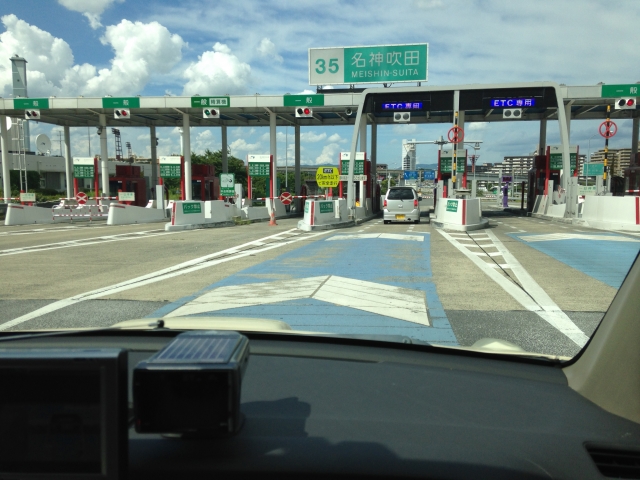
Japan's expressway network—including the Hanshin Expressway leaving Osaka—utilizes a fully automated toll system known as ETC (Electronic Toll Collection).
- How it Works: Your rental vehicle comes equipped with an ETC card reader unit (typically located inside the glovebox or beneath the steering column). An active ETC smart card is inserted into this slot.
- Navigating Gates: As you approach expressway toll plazas, look for lanes clearly marked with purple ETC signs. Reduce your speed to 20 km/h as you enter the lane. The roadside sensor reads your card, the gate opens automatically, and the toll is logged digitally.
- Why You Need It: ETC cards save significant time, eliminate the need to handle physical cash at toll booths, and provide automatic discounts on weekend and off-peak highway travel across Japan.
Mastering Japanese Gas Stations (Gasorin Stand-o)
Refueling your rental sports car in Japan is an easy process once you know the vocabulary. Japanese gas stations are divided into two main categories: Full Service (Furu) and Self Service (Serufu).
Fuel Types & Color Coding
At every gas station in Japan, fuel pumps are strictly color-coded across all brands:
- Red Handle = Regular Octane (Regura) – Standard unleaded fuel (89-91 RON).
- Yellow Handle = High Octane / Premium (Hai-oku) – High-octane fuel (98-100 RON). Mandatory for performance JDM cars like the Toyota 86 / BRZ to prevent engine knock and ensure full power output!
- Green Handle = Diesel (Keiyu) – Diesel fuel for commercial trucks and diesel passenger cars.
Essential Japanese Phrases for Full Service:
When pulling up to a full-service station, a attendant in a uniform will direct you to a stall with energetic hand gestures:
- "Hai-oku, Mantan, Keshu-ketsuzai" = "High-Octane, Full tank, Credit card payment."
- "Mantan" (満タン) is the magic word meaning "Fill it up to the brim."
- The attendant will often hand you a damp towel to wipe down your dashboard while they wash your windshield and side mirrors free of charge.
Parking Regulations and Navigation Tips
- Back-In Parking Culture: In Japan, cars are almost universally parked by reversing into parking stalls (back-in parking). This ensures that when you leave, you pull forward into active traffic lanes with maximum field-of-view safety. The Toyota 86 features excellent side mirror visibility and compact dimensions, making precise reverse parking effortless.
- Navigation: Modern Japanese rental cars come equipped with multi-language GPS units. The easiest way to input destinations is using MapCodes or Telephone Numbers rather than typing complex Japanese street addresses. Google Maps on a mounted smartphone also provides flawless, turn-by-turn guidance across rural Kansai backroads.
5. Comprehensive FAQ for International Drivers
Q: What driving documents are required to rent and drive a sports car in Japan?
To legally drive a vehicle in Japan, you must present two primary documents alongside your valid passport at the time of pickup:
- Your Original Driver’s License issued by your home country.
- An International Driving Permit (IDP) issued under the 1949 Geneva Convention on Road Traffic.
Crucial Note: IDPs issued under the 1968 Vienna Convention are NOT accepted in Japan. Ensure your issuing authority (such as AAA in the United States, RAC/AA in the UK, or CAA in Canada) explicitly issues a 1949 Geneva Convention permit.
Drivers holding licenses from specific nations including Switzerland, Germany, France, Belgium, Monaco, and Taiwan do not use an IDP. Instead, they must carry an official Japanese translation of their native license provided by the Japan Automobile Federation (JAF) or their respective country’s embassy/consulate in Japan.
Q: Is driving a manual transmission (MT) sports car like the Toyota 86 difficult on Japanese roads?
If you have basic manual driving proficiency, driving a Toyota 86 in Japan is an absolute dream. The clutch pedal action is light, progressive, and forgiving, with clear bite-point communication. The mechanical gear selector is remarkably precise, preventing accidental gear mis-engagements. Because Japan drives on the left side of the road, the driver’s seat is on the right (RHD), meaning you will shift gears with your left hand. Most drivers adapt to left-hand gear shifting within 15 to 20 minutes of relaxed driving.
Q: What are the winter road conditions in Nose, and do I need snow tires?
While central Osaka rarely receives snowfall, the northern mountain district of Nose experiences lower temperatures due to higher elevation. Between late December and early March, morning frost, black ice, and occasional snow showers can occur on shaded mountain passes (touge). If traveling during these winter months, renting a vehicle equipped with studless winter tires (snow tires) is highly recommended for maximum safety and traction.
Q: What is the speed limit policy in Japan?
Speed limits in Japan are generally lower than in Western nations:
- Urban/City Streets: 30 km/h to 50 km/h.
- Rural Mountain Roads: 40 km/h to 50 km/h.
- National Expressways: 80 km/h to 100 km/h (with select modern sections rated up to 120 km/h).
Focus on smooth driver inputs, precise cornering lines, and rev-matching dynamics rather than excessive top speeds. The joy of driving a Toyota 86 on a mountain pass comes from chassis balance and cornering agility within legal, safe boundaries.
6. The Final Thoughts: Lock In Your Ultimate JDM Adventure
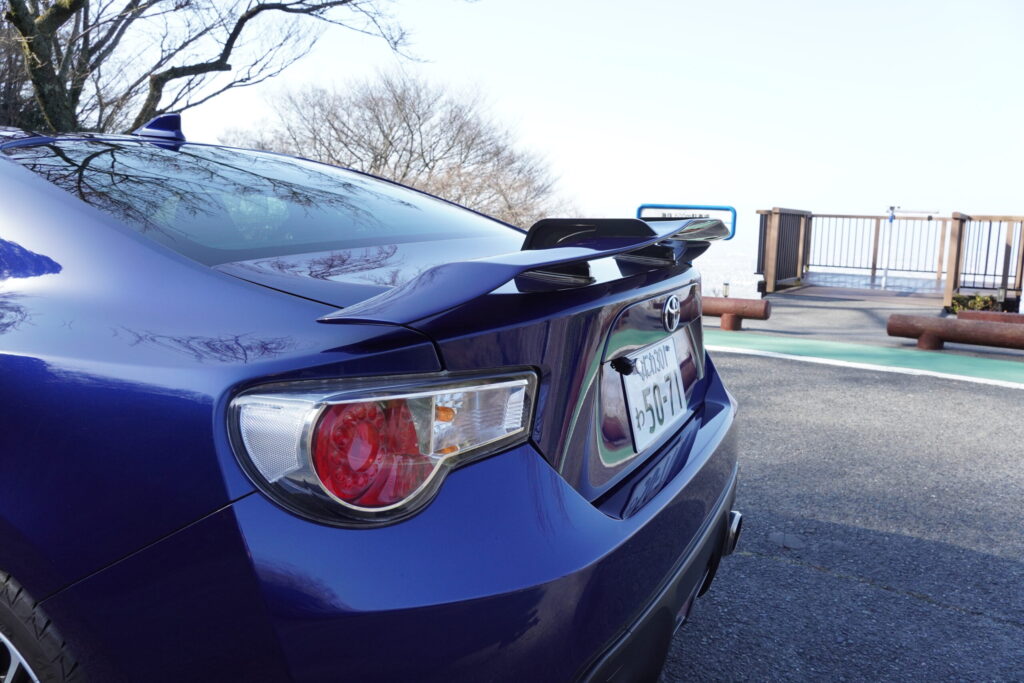
The train platforms of Shin-Osaka and Kyoto will always be there—crowded with tourists clutching paper tickets, waiting shoulder-to-shoulder for scheduled departures, seeing Japan through tinted windows along pre-determined rail corridors.
But you didn't travel halfway across the world to follow the crowd. You came to experience the real, unscripted Japan. You came to feel the cool morning mist of the Hokusetsu mountains, to smell the rich woodsmoke of ancient mountain villages, and to hear a naturally aspirated boxer engine sing as you heel-and-toe into a crisp mountain hairpin.
The secret winding roads of Nose are waiting for you. All you need is the right key in your hand.
When you are ready to stop being a passive passenger and become the driver of your own Japanese journey, step away from the standard rental booths and connect with the true automotive passion built into the heart of Osaka.
Make your way to Omoren Osaka Chuo (Omoresha Rent-a-Car Osaka Central). Operated with the deep mechanical knowledge and relentless dedication of former railway professionals and die-hard JDM car enthusiasts, Omoren Osaka Chuo offers a curated fleet of pristine, enthusiast-grade Japanese sports cars—including immaculate manual-transmission Toyota 86 and Subaru BRZ models maintained to absolute perfection.
Don't leave your Kansai story on the train tracks. Reserve your manual JDM sports machine at Omoren Osaka Chuo today, turn the key, and claim the open roads of Japan for yourself.