
Unveiling Nara's Untamed Beauty: The Philosophy of Driving in Japan
For two decades, the rhythmic clang of closing train doors and the steady hum of electric motors were the soundtrack to my life as a Kintetsu train conductor. I traversed the arteries of Kansai, witnessing the daily ebb and flow of Japan from a perspective few ever achieve. And while the Shinkansen offers unparalleled efficiency and local lines connect bustling city centers, I'm here to tell you that the true, pulsating heart of Japan—the 'Secret Japan'—remains tantalizingly out of reach for those confined to the rails.
Why, you ask, would a former conductor advocate so passionately for the open road? Because the train, by its very nature, is a conqueror of land, a linear path designed to connect points A and B with speed and precision. It carves tunnels through mountains, bridges over rivers, and often bypasses the very pockets of raw, unfiltered beauty that lie just beyond the station platform. Public transport, for all its convenience in urban sprawl, becomes a straitjacket when the call of the wild whispers from the Japanese Alps, the hidden coastal roads, or the ancient, moss-draped valleys of Nara.
From the vibrant heart of Osaka, a city synonymous with culinary delights and neon-lit nights, the allure of Japan's lesser-known wonders is immense. Yet, if your adventure is limited to train lines, you'll find yourself trapped in a tourist bubble, circling the same well-trodden paths. The essence of a truly immersive Japanese experience lies in the freedom to diverge, to follow a winding road that promises nothing but untamed beauty and the thrill of discovery. Imagine the scent of pristine forest air replacing the manufactured breeze of an air-conditioned carriage, the panoramic sweep of a mountain pass unfolding before you instead of a fleeting glimpse from a window.
Driving in Japan, especially from a bustling hub like Osaka, unlocks a profound sense of exploration. It’s about more than just getting from one place to another; it's about the journey itself. It's about feeling the asphalt beneath your tires, hearing the subtle changes in the engine's note as you ascend a mountain pass, and having the autonomy to pull over at a whim to capture a photograph, savor a local delicacy from an obscure roadside stand, or simply breathe in the sublime serenity of a bamboo grove. This is where the magic happens – where the curated tourist experience gives way to genuine, unscripted adventure. The ability to chase the sunrise over distant peaks, to linger by a crystal-clear stream, or to discover a tiny, family-run ramen shop tucked away in a village where no train track dares to tread – this is the unparalleled charm of a self-driven journey. It's an intimate dance with the landscape, a personal odyssey into the soul of Japan, one mile at a time, revealing secrets that only the open road can whisper.
Today, we're not just taking a trip; we're embarking on a pilgrimage to the soul of Nara’s natural wonders, far beyond the bustling temples and friendly deer. This is for those who crave the exhilarating challenge of the road, the serene embrace of the wilderness, and the unmatched connection that comes from truly driving through a landscape. This is the Japan I know, the Japan I want you to experience – not from a seat on a train, but from behind the wheel of a machine engineered for pure driving pleasure.
Unveiling Nara's Untamed Beauty: The 2-Day Itinerary: Deep Dive

Prepare to ignite your senses, for this isn't merely a road trip; it's a symphony of steel, asphalt, and untamed nature. Our chariot for this two-day odyssey into Nara's exquisite natural heart will be nothing less than the legendary Toyota 86 or Subaru BRZ – a precision-engineered machine that whispers anticipation with every turn of the key. This journey is crafted for those who yearn for the exhilarating curves of a mountain pass, the serene tranquility of ancient forests, and the raw beauty of cascading waterfalls – all destinations that public transport simply cannot reach.
Day 1: The Ascent into Mystical Akame Valley
08:00 AM: Osaka Departure - The Dawn Chorus of Horsepower
The urban sprawl of Osaka slowly awakens as you slip behind the wheel of your chosen JDM marvel, the low rumble of the 86's boxer engine a thrilling counterpoint to the city's burgeoning symphony. The crisp morning air, still touched with the promise of adventure, fills the cabin. As you leave the city limits, the architectural canyons give way to the sprawling plains of Osaka and then the gentle undulations of the countryside. This isn't just a drive; it's a communion. You feel the perfectly balanced chassis respond to your every input, a direct connection between man and machine. The early start ensures we beat any lingering city traffic, allowing us to hit the expressways with minimal fuss, carving a path towards the east. The excitement builds with every kilometer, a sense of anticipation for the natural wonders that await.
09:00 AM: Expressway Glide & Anticipation
The smooth tarmac of the Meihan National Highway unfolds before you. Here, the 86/BRZ settles into a confident cruise, its engine a contented thrumming background to your thoughts. The surrounding landscape begins its subtle transformation – the last vestiges of industrial zones fade, replaced by rolling hills dotted with traditional farmhouses and meticulously cultivated fields. This stretch is a moment for reflection, for letting the initial rush subside, and for appreciating the engineering prowess that makes such journeys effortless. You're not just driving; you're flowing with the landscape, the world a vibrant diorama unfurling outside your perfectly framed view.
10:00 AM: Transition to Winding Roads - The Dance Begins
As we peel off the expressway, the roads narrow and begin their sinuous dance with the terrain. This is where the 86/BRZ truly comes alive. The steering, surgically precise, translates every nuance of the road surface directly to your fingertips. You feel the G-forces gently shift as you navigate sweeping bends, the car pivoting gracefully, almost instinctively. The air changes too, growing fresher, carrying the faint scent of damp earth and distant pine. The tarmac, though occasionally patched, remains remarkably well-maintained, a testament to Japan’s meticulous infrastructure. Each corner is an invitation, a challenge met with effortless poise, reminding you why a purpose-built driver's car is the ultimate companion for such an adventure. The verdant canopy begins to thicken overhead, hinting at the deeper immersion into nature that awaits.
11:00 AM: Arrival at Akame 48 Waterfalls - Gateway to the Mystic
You arrive at the parking area for the Akame 48 Waterfalls, the 86/BRZ purring softly after its spirited drive. Even here, the air is noticeably cooler, infused with the scent of ancient forest and the distant murmur of rushing water. The Akame 48 Waterfalls – Akame Shijūhattaki (赤目四十八滝) – isn't merely a collection of cascades; it's a sacred valley, once a training ground for Ninja, where the natural world and spiritual history intertwine. Geologically, this area is a testament to millions of years of volcanic activity and erosion, forming a dramatic gorge through which the Takigawa River plunges, carving out a spectacular series of falls and pools from solidified lava flows. The unique rock formations, worn smooth by eons of water, tell a story of immense geological power. The vibrant green moss clinging to ancient stones and the towering Japanese cedars create an atmosphere of profound tranquility and timelessness. Before even beginning the hike, you feel an overwhelming sense of stepping back in time, away from the modern world.
12:00 PM: Forest Bathing & First Impressions - Fudo-daki Waterfall
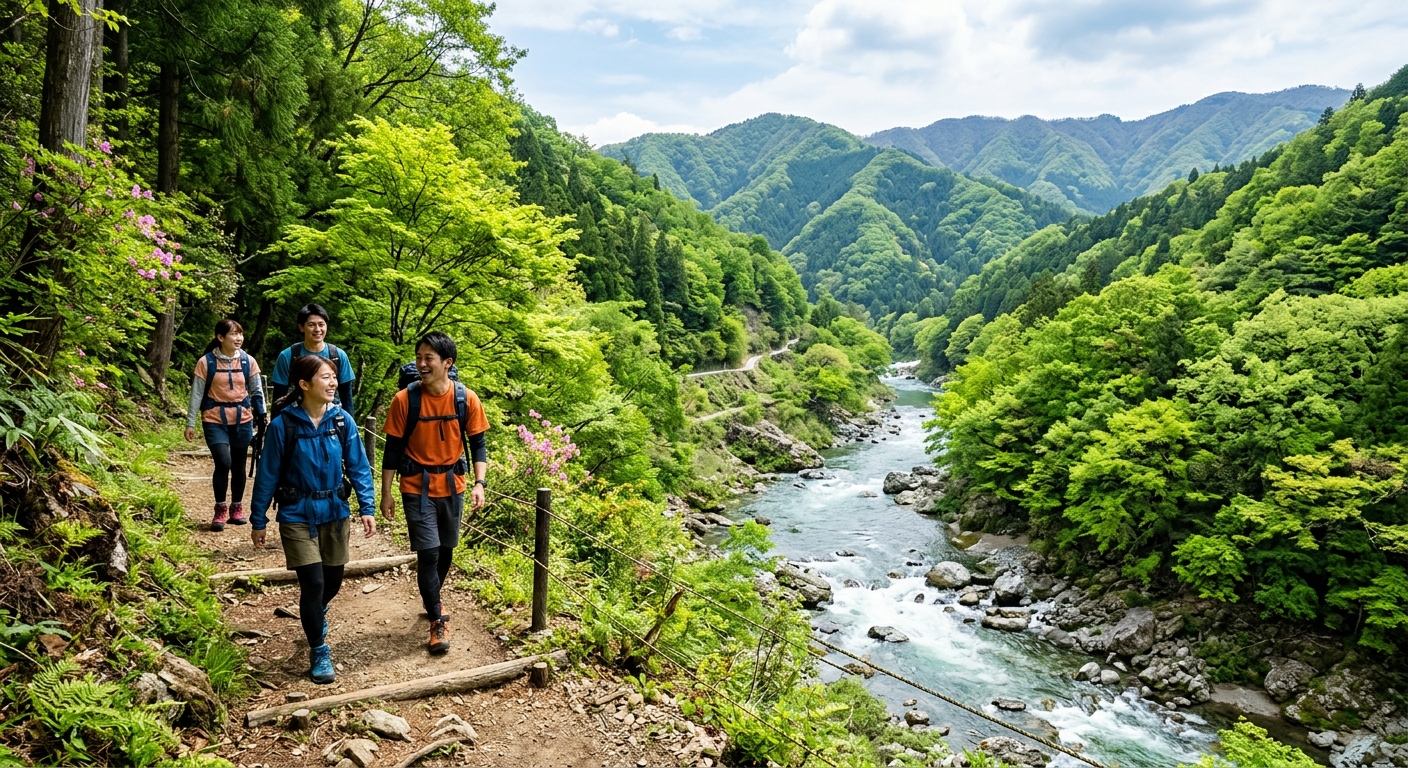
The initial stretch of the hiking trail from the entrance is a gentle, paved path, easing you into the forest's embrace. The term "forest bathing" (森林浴, shinrin-yoku) truly comes to life here. The air is dense with phytoncides – natural aerosols emitted by trees – known for their therapeutic effects. The sounds of human activity quickly fade, replaced by the gentle rustle of leaves, the chirping of unseen birds, and the increasing roar of water. Your senses awaken. The vibrant emerald green of the mosses, the deep forest greens of the trees, and the clear, almost fluorescent blue-green of the river water create a stunning palette. The path leads you to the first significant waterfall, Fudo-daki. Its powerful plunge, framed by towering rock faces, is an awe-inspiring introduction. The cool mist on your skin, the thunderous sound, and the sheer visual spectacle are an immediate immersion into nature's grandeur. This is just the beginning.
01:00 PM: Deep into the Valley - Senju-daki & Nunobiki-daki
The trail becomes more rugged, winding alongside the Takigawa River. You encounter Senju-daki (Thousand-Hand Waterfall), a delicate cascade that spreads like a veil over a broad rock face, its waters resembling countless threads of silk. Just beyond, Nunobiki-daki (Cloth-Draping Waterfall) descends majestically in a single, powerful sheet, a testament to the raw force of nature. The path requires careful footing in places, traversing wooden walkways and occasional stone steps, but it's never overly strenuous for anyone with reasonable fitness. The geological story of the valley continues to unfold, with each rock formation and pool displaying the relentless artistry of water. The sheer cliffs on either side create a sense of being enveloped by the earth, a primal connection to the very foundations of the land. Take a moment to truly listen – to the symphony of falling water, the subtle creak of the forest, the distant calls of unseen wildlife.
02:00 PM: The Heart of the Falls - Benten-daki & Ryūsen-daki
Further along, the valley opens slightly to reveal Benten-daki, named after Benzaiten, the goddess of water, music, and wealth. This waterfall flows gracefully, embodying a feminine elegance in contrast to some of the more forceful cascades. The path here offers excellent vantage points for photography, allowing you to capture the interplay of light and shadow on the water. Shortly after, Ryūsen-daki (Dragon Spring Waterfall) captivates with its dynamic flow, reminiscent of a dragon descending from the heavens. The water here feels particularly pure, invigorating. The air is cool and moist, a perfect balm for weary lungs. The sense of peace here is profound, a quiet reverence for the enduring power of this ancient land. You feel the forest's breath, a living entity surrounding you.
03:00 PM: Beyond the Main Path - Exploring Hidden Corners
While the main trail is clearly marked, the beauty of Akame lies in its nooks and crannies. If time and energy allow, venture slightly off the main path where smaller, unnamed cascades tumble down mossy rocks, or where hidden shrines dedicated to water deities are nestled. These detours, often less frequented, offer a deeper sense of solitude and discovery. Each one feels like a personal secret, a reward for the adventurous spirit. The geological complexity of the valley becomes even more apparent in these secluded spots, with smaller tributaries and unique rock formations revealing themselves. The deep, rich hues of the forest floor, a tapestry of decaying leaves and vibrant fungi, provide a striking contrast to the rushing water.
04:00 PM: Reflecting by the Water's Edge & Departure
As the afternoon sun begins its descent, casting long shadows through the valley, find a tranquil spot by the river’s edge. The smooth, cool stones invite you to sit and simply absorb the raw beauty. The sounds of the waterfalls, which were initially a thundering symphony, now feel like a calming lullaby. The air, still fresh and cool, invigorates your entire being. This is the essence of forest bathing – a complete immersion, a detoxification of the soul. Reluctantly, you begin your walk back towards the entrance, the memories of the cascades, the ancient trees, and the pristine river etched firmly in your mind. The descent from the higher points of the trail offers new perspectives on the waterfalls, revealing their grandeur once more before you re-emerge from the mystical valley.
05:00 PM: Scenic Drive to Overnight Stay
Rejuvenated, you climb back into the 86/BRZ. The engine responds with eager urgency, a perfect match for your invigorated spirit. The drive to our overnight accommodation, a traditional ryokan nestled in the quiet mountains of the Iga region, is another opportunity to savor the winding roads. The late afternoon light bathes the landscape in a golden glow, illuminating the verdant hillsides and distant peaks. The scent of forest still lingers in the air, a natural perfume accompanying you. The responsiveness of the 86/BRZ on these less-trafficked, undulating roads is pure joy – a direct, unadulterated connection to the road. The sense of "driver's car" is palpable, as you effortlessly navigate the curves, the manual transmission (if you chose it) making you an integral part of the machine.
06:00 PM: Ryokan Check-in & Relaxation
The serene beauty of your ryokan welcomes you. Stepping out of the 86/BRZ, the engine cooling with soft ticks, you're greeted by the soothing silence of the mountains, broken only by the chirping of cicadas or the distant croak of frogs. The traditional architecture, the gentle bowing of the staff, and the tranquil gardens immediately melt away any lingering fatigue. The first order of business: a restorative soak in the onsen. The mineral-rich hot spring water works its magic, soothing tired muscles and calming the mind. As you immerse yourself, surrounded by steam and the tranquil sounds of nature, you reflect on the day's adventures, the raw beauty of Akame etched into your memory. This quiet moment of reflection, a profound appreciation for Japan’s dual embrace of thrilling adventure and serene tranquility, is a perfect end to the active day.
07:00 PM: Kaiseki Dinner - A Culinary Journey
The evening culminates in a exquisite kaiseki dinner, a multi-course culinary masterpiece that is as much art as it is food. Each dish, meticulously prepared with seasonal, local ingredients, is a delicate balance of flavors, textures, and visual appeal. From fresh sashimi caught in nearby rivers to perfectly grilled mountain vegetables and subtly flavored broths, every bite is a revelation. The presentation is stunning, often mirroring the natural beauty outside, bringing the landscape onto your plate. Paired with local sake, this meal is a celebration of Japan's profound respect for nature and culinary craftsmanship. The conversation flows easily, perhaps recounting the day's exhilarating drive and the majestic waterfalls, all within the intimate setting of your private dining room or a quiet tatami space.
08:00 PM onwards: Stargazing & Tranquility
After dinner, step outside. Far from city lights, the night sky explodes with a dazzling display of stars, a celestial tapestry rarely seen in urban areas. The silence of the mountains is profound, broken only by the gentle sounds of the night. It's a humbling experience, a reminder of the vastness of the universe and the small, beautiful corner of it you've just explored. Retire to your futon, laid out on the tatami floor, and drift off to sleep, the day's adventures and the promise of more tomorrow filling your dreams. The fresh mountain air and the comfortable quiet ensure a deep, restorative sleep, preparing you for another day of exploration.
Day 2: Hidden Trails, Panoramic Views & The Homeward Drive
08:00 AM: Traditional Japanese Breakfast & Morning Serenity
Awake refreshed to the gentle filtered light of the morning. A traditional Japanese breakfast awaits – steamed rice, miso soup, grilled fish, various pickles, and fresh local vegetables. It's a nourishing and wholesome start to the day, providing sustained energy for our next adventure. The quiet elegance of the ryokan, bathed in the soft morning light, offers a moment of peaceful contemplation. You sip on green tea, gaze at the perfectly manicured garden, and feel a deep sense of connection to the timeless traditions of Japan. The sounds are of nature – birdsong, the distant murmur of a stream, the rustle of bamboo – a stark contrast to the city's waking clamor.
09:00 AM: Checkout & Scenic Drive to Murou-ji Temple Area
With renewed vigor, you bid farewell to the ryokan. The 86/BRZ eagerly awaits, its engine firing up with a familiar, reassuring growl. Our destination this morning is the Murou-ji Temple area, a place of profound historical and natural significance, often overlooked by mainstream tourists. The drive takes us through more captivating mountain roads, the asphalt winding like a ribbon through dense cedar forests and picturesque hamlets. The 86/BRZ feels perfectly at home on these roads, its nimble handling and responsive engine making every curve a pleasure. The air is crisp and cool, carrying the scent of rich earth and ancient wood. The "Secret Japan" truly reveals itself on these roads – panoramic vistas of untouched valleys, fleeting glimpses of rural life, and the thrill of simply driving through a pristine landscape.
10:00 AM: Murou-ji Temple - A Sanctuary in the Cedars
Murou-ji Temple (室生寺) is an architectural and spiritual marvel, nestled deep within a thick cedar forest. Unlike many temples, it was built on a mountainside, requiring you to ascend a stone staircase through ancient trees. Its unique "women's Kōya" designation (historically, women were forbidden from entering Mt. Kōya) makes it a significant cultural landmark. The five-story pagoda, Japan's smallest and oldest outdoor pagoda, stands majestically amidst the towering cedars, an indelible image of serene beauty. The geological setting is equally impressive, with the temple structures seemingly growing organically from the rocky terrain, integrating seamlessly with the natural environment. The deep green hues of the moss-covered stones and ancient trees, combined with the rich vermilion of some temple buildings, create a stunning visual tapestry.
11:00 AM: Forest Bathing & Hiking around Murou-ji
Beyond the main temple complex, a network of trails invites further exploration into the surrounding forest. This is another prime opportunity for extended forest bathing. The air here feels incredibly clean and pure, saturated with the therapeutic essence of the cedars. The trails vary in difficulty, some offering gentle strolls beneath the ancient canopy, others leading to higher viewpoints that provide breathtaking panoramic views of the surrounding mountains and valleys. The soundscape is dominated by the gentle rustle of leaves, the chirping of unseen birds, and the soft murmur of distant streams. It's a chance to truly disconnect, to let the ancient energy of the forest wash over you, a profound sense of peace settling in your soul. The sunlight filtering through the dense canopy creates dancing patterns on the forest floor, a mesmerizing interplay of light and shadow.
12:00 PM: Local Lunch - Taste of the Mountains
After your exploration, seek out one of the small, family-run eateries near the temple entrance or in a nearby village. These establishments offer simple, honest mountain cuisine that reflects the local bounty. Think freshly made soba or udon noodles, perhaps with wild mountain vegetables (sansai), or local freshwater fish expertly grilled. These are not gourmet restaurants, but places where the food is prepared with care and tradition, offering an authentic taste of rural Japan. The warmth of the hospitality, often from elderly proprietors, adds to the charm, making it a memorable culinary interlude. This is the Japan you won't find on tourist brochures, a true local experience.
01:00 PM: Scenic Route towards Sakurai - The Yamato Highlands
With bellies full and spirits lifted, we embark on the next leg of our journey. Instead of retracing our steps, we take a different scenic route, cutting through the Yamato Highlands towards the city of Sakurai. This drive offers a varied landscape, moving from dense forest to more open, agricultural vistas dotted with ancient burial mounds (kofun), silent testaments to Nara's deep historical roots. The 86/BRZ continues to impress, effortlessly handling the changing road conditions, from tight village streets to open stretches that invite a more spirited drive. The panoramic views from certain elevated sections of the road are simply stunning, offering expansive scenes of rural Nara stretching to the horizon. The engine's eager hum is a constant, enjoyable companion.
02:00 PM: A Glimpse of History & Final Nature Views
As we pass through the Sakurai area, we get a fleeting glimpse of its historical significance – the cradle of ancient Japan. While our focus remains on nature, the historical backdrop adds another layer to the experience. We might take a short detour to a particularly scenic overlook, perhaps one offering views of the Miwa mountain range, considered one of Japan's most sacred mountains and a place of deep spiritual significance. The opportunity to pause, stretch, and absorb one last sweeping view of Nara's natural beauty, framed by ancient mountains, is invaluable. The air, though now tinged with the faint scent of civilization, still carries the freshness of the highlands. It's a moment to internalize the journey, to recognize the profound connection you've made with this land.
03:00 PM: Expressway Return - Reflections on the Road
We rejoin the expressway for the return journey to Osaka. The 86/BRZ, having proven its mettle on the winding mountain passes, now cruises with relaxed efficiency. The drive back is a time for reflection. The memories of cascading waterfalls, ancient cedar forests, and the thrill of navigating challenging roads flood your mind. You feel a profound sense of accomplishment, having truly "unlocked" a part of Japan that many visitors never experience. The subtle roar of the road beneath you, the perfect ergonomics of the cockpit, and the satisfaction of a journey well-driven fill the cabin. This isn't just about the destinations; it's about the pure, unadulterated joy of the journey, the freedom of the open road.
04:00 PM: Osaka City Limits - The Urban Re-entry
As the city lights of Osaka begin to appear on the horizon, slowly growing in intensity, there's a bittersweet feeling. The wilderness adventure gives way to the familiar hum of urban life. The skyscrapers rise once more, signaling the end of our exhilarating escapade. The transition from serene mountain roads to multi-lane urban arteries is swift, but the confidence gained from piloting the 86/BRZ through Nara's rugged terrain makes navigating city traffic feel effortless. The car, a testament to Japanese engineering, handles the concrete jungle with the same grace it exhibited on mountain passes. The vibrant energy of Osaka is a welcome re-entry point, but the calm and clarity of the mountains linger within you.
05:00 PM: Return to Rental Location & Farewell
You arrive back at the rental location, the 86/BRZ having performed flawlessly, a trusty companion throughout this epic journey. As you step out, you're not just returning a car; you're concluding a chapter of extraordinary exploration. The experience of driving a true JDM icon through Japan's hidden natural landscapes is etched into your memory, a testament to the unparalleled freedom and joy that only a self-driven adventure can provide. The thrill of the drive, the awe of the waterfalls, the peace of the forests – all coalesce into a profound appreciation for Japan's untamed beauty. You've seen the 'Secret Japan', not through a train window, but through the windscreen of an enthusiast's machine.
Unveiling Nara's Untamed Beauty: Expert Advice & Cultural Nuances
Beyond the itinerary, a truly authentic Japanese road trip thrives on understanding the subtle cultural threads woven into the fabric of the nation's highways and byways. My years as a conductor gave me an appreciation for Japan's intricate systems, but my time on the road revealed the soul of its local communities. When you're driving a JDM legend like the 86/BRZ, you're not just a tourist; you're a temporary participant in Japan's vibrant driving culture.
The Michi-no-Eki: More Than Just a Rest Stop
Forget the soulless rest stops of other countries. Japan's "Michi-no-Eki" (道の駅) – literally "Roadside Station" – are cultural hubs, veritable treasure troves of local flavor and community pride. Each one is unique, a microcosm of its surrounding region. While they offer impeccably clean restrooms and ample parking for your 86/BRZ, their true charm lies in the direct-from-farm produce stalls. You'll find seasonal fruits and vegetables, often picked that very morning, at prices far lower than in city supermarkets. Look for local crafts, specialty sweets, and quirky souvenirs that genuinely reflect the area's heritage. Many Michi-no-Eki also boast excellent local restaurants, serving dishes prepared with regional ingredients. It’s not uncommon to find a ‘Michi-no-Eki’ with a foot bath (ashiyu) fed by a local hot spring, or a small museum showcasing the area’s history. Plan to stop at several; they are integral to experiencing the local pulse and a fantastic way to stretch your legs, refuel (both yourself and your car), and uncover hidden gems that guidebooks often miss.
Hidden Local Eateries: A Taste of Authenticity
While Michi-no-Eki offer great food, the real culinary adventures lie off the main roads, in the small towns and villages you'll pass through. My personal rule of thumb: look for places packed with local cars, especially older, well-maintained Japanese models. These are often small, unassuming establishments – a ramen shop tucked away on a side street, a family-run soba noodle house, or a tiny teishoku (set meal) restaurant. Don't be intimidated by the lack of English menus; a friendly smile and pointing at what others are eating often works wonders. These are the places where grandmothers still cook traditional recipes, where ingredients are sourced from local farms, and where the prices are incredibly reasonable. The flavors are authentic, unpretentious, and deeply satisfying. This is where you’ll find the true soul of Japanese cuisine, far removed from the tourist traps.
Driving Etiquette & Local Peculiarities
Japan boasts some of the safest roads in the world, largely due to meticulous planning and a deep-seated respect for rules. Drive on the left, of course. Speed limits are strictly enforced, but ‘traffic flow’ speed is generally accepted – don't be the slowest car, but certainly don't speed excessively. Pay close attention to road signs, especially those indicating slippery surfaces (often leaf-strewn in autumn, or snow/ice in winter) or potential rockfalls in mountainous areas. Be particularly wary of small "keitora" (light trucks) driven by elderly farmers on narrow country roads; they often hug the left side but can be unpredictable. When someone flashes their hazard lights at you after you let them merge, it's a polite "thank you." Also, expect cars to pull over to allow you to pass on narrow roads, and reciprocate the courtesy. The camaraderie among drivers on these winding country roads is a subtle, yet deeply appreciated aspect of the Japanese driving experience, especially when you're in a car that commands respect, like the 86/BRZ. Remember, while the roads can be exhilarating, courtesy and safety are paramount.
Unveiling Nara's Untamed Beauty: Detailed Logistics & Pre-Trip Tips
Mastering the logistics of driving in Japan can seem daunting at first glance, but with a little expert guidance, it becomes part of the adventure. As someone who has spent countless hours on Japan's roads, both on rails and on wheels, I can assure you it's a remarkably organized and user-friendly experience, especially in 2026. And when you add the thrill of a JDM machine like the 86/BRZ into the mix, every practical detail just adds to the anticipation.
Navigating Japan's Expressways: The ETC Card System
By 2026, the Electronic Toll Collection (ETC) system is virtually indispensable for smooth expressway travel. While cash lanes still exist, they are slower and can be confusing. An ETC card, usually provided with your rental car, allows you to breeze through toll gates without stopping, much like an EZ-Pass or E-ZPass system. The card is inserted into a reader on the dashboard of your 86/BRZ, and a polite voice (in Japanese, usually followed by English) confirms the transaction. Total tolls are tallied and charged automatically. It's efficient, saves time, and prevents fumbling for exact change at a busy toll booth. Always ensure your rental comes with an ETC card – it's a non-negotiable for serious road-tripping.
The Art of Refueling: "Mantan!"
Japanese gas stations are a marvel of efficiency and service. Many are full-service, especially in rural areas. Pull up to the pump in your gleaming 86/BRZ, and an attendant will often greet you with a bow. The magic word you need is "Mantan!" (満タン), which means "full tank." You'll typically be asked "Regular?" (レギュラー, Regyura) for regular unleaded, or "High-Octane?" (ハイオク, Haioku) for premium. Given our performance machine, "Haioku, Mantan, onegai shimasu!" (ハイオク、満タン、お願いします!) – "Premium, full tank, please!" – will be your phrase. Attendants will often clean your windows, check your tires, and even direct you back onto the road with flags. It’s a level of service that makes refueling a pleasant interaction rather than a chore. Self-service stations (セルフ, Serufu) are also common, identifiable by the prominent "Self" sign. The touch screens usually have English options, making them easy to navigate.
Parking Wisdom: Where to Stash Your JDM Jewel
Parking in cities can be tight and expensive, often utilizing multi-story automated garages. However, in the rural areas and near natural attractions like Akame, parking is usually straightforward. Look for designated parking lots (駐車場, Chūshajō). Many smaller attractions might have limited free parking, while larger ones will have paid lots. Remember to pay attention to signs – some smaller lots use "ticket machines" where you pay before exiting, or "pay-and-display" systems where you purchase a ticket and place it on your dashboard. Always park your 86/BRZ carefully and respectfully within the marked lines. Japanese drivers are fastidious about their parking, and following suit helps maintain the smooth flow and courtesy of the local environment. On winding mountain roads, designated "parking areas" (駐車場) or "rest areas" (休憩所) are specifically designed for scenic overlooks or short breaks, rather than just pulling over on the shoulder.
The Unadulterated Joy of Driving a JDM (MT Car)
For the true enthusiast, driving a JDM manual transmission (MT) car like the Toyota 86 or Subaru BRZ is an experience transcending mere transport. It's a primal connection, a dance between driver, machine, and road. The precise, short throws of the shifter, the perfectly weighted clutch pedal, and the immediate response of the engine to your throttle inputs create an exhilarating feedback loop. On the winding roads leading to Akame Valley or through the Murou mountains, this connection becomes even more profound. You're not just guiding the car; you're becoming an extension of it. Heel-and-toe downshifts before a hairpin bend, feeling the surge of power as you exit a corner, the subtle growl of the boxer engine echoing off the mountainsides – these are the moments that elevate a simple road trip into an unforgettable automotive pilgrimage. The tactile engagement, the mastery required, and the sheer thrill of extracting the car's potential on Japan's perfectly engineered roads are what make driving a JDM MT car an unparalleled joy for any true car lover. It's about skill, passion, and the pure, unadulterated pleasure of driving.
Unveiling Nara's Untamed Beauty: Comprehensive FAQ
Navigating the practicalities of an international road trip can spark numerous questions. Here are the answers to the most common queries, ensuring your JDM adventure through Nara's natural heart is seamless and stress-free.
Do I need an International Driving Permit (IDP)?
Absolutely. To drive legally in Japan, you will need an International Driving Permit (IDP) issued under the 1949 Geneva Convention. This must be presented along with your valid domestic driving license and your passport. Without all three documents, you will not be able to rent or drive a car. It's crucial that your IDP is issued by the same country as your domestic license and is still within its one-year validity period. Always check the specific requirements of your home country regarding IDP issuance before your trip.
What about car insurance?
All rental cars in Japan come with mandatory basic insurance, which covers third-party liability for bodily injury and property damage. However, for complete peace of mind, it's highly recommended to opt for additional coverage, such as a Collision Damage Waiver (CDW), which limits your financial responsibility for damages to the rental vehicle itself. Many rental companies also offer non-operation charges (NOC) insurance, covering lost revenue if the car is out of service due to an accident. Always clarify the extent of coverage with your rental provider to ensure you're fully protected on your journey through Japan's stunning landscapes.
I'm nervous about driving a manual transmission (MT) JDM car. Should I?
If you have some experience with MT cars, even if it's been a while, the Toyota 86 or Subaru BRZ are incredibly forgiving and rewarding cars to drive. Their light clutch, precise shifter, and excellent feedback make them a joy to operate. Japan's roads are generally well-maintained, and traffic is disciplined, offering an ideal environment to reacquaint yourself with manual driving. If you're a complete novice, however, it might be best to stick to an automatic transmission for your first Japanese road trip, as navigating unfamiliar roads and left-hand traffic alongside learning MT could be overwhelming. But for those with a bit of MT muscle memory, the exhilaration of driving a performance JDM car through Japan's winding roads is an experience not to be missed!
What are the road conditions like in winter, especially in mountainous Nara?
While this itinerary focuses on warmer seasons, if you plan a winter trip to mountainous regions like those around Akame or Murou, be prepared for snow and ice. Winter tires or snow chains are absolutely essential during the colder months (typically December to March) and often legally required in certain areas. Mountain roads can become treacherous quickly, and some passes may even close due to heavy snowfall. Always check local weather and road conditions before heading into the mountains during winter. Rental cars can often be equipped with winter tires upon request, so make sure to specify this when booking if your trip falls within the winter period. The thrill of a winter mountain drive is undeniable, but safety must always come first.
Is navigation easy with English?
Yes, modern rental cars in Japan are almost universally equipped with GPS navigation systems that offer English language support. These systems are incredibly accurate and will guide you efficiently to your destinations. It's also advisable to have a backup, such as Google Maps on your smartphone, especially for finding smaller, local eateries or unique spots. Ensure your phone has a data plan or consider renting a pocket Wi-Fi device for reliable internet access on the go. Between the in-car GPS and your smartphone, you'll find navigating Japan's roads surprisingly straightforward, even in remote areas.
Unveiling Nara's Untamed Beauty: The Final Call
You’ve traversed the undulating expressways, skillfully danced through the serpentine mountain passes, and plunged deep into the mystical valleys where ancient cedars whisper secrets and waterfalls sing their timeless melodies. You’ve felt the pulse of Japan, not through a curated window, but directly through the steering wheel of a machine born for exhilaration. The aroma of pristine forests, the taste of authentic mountain cuisine, the visual tapestry of vibrant greens and powerful cascades – these are the indelible marks of a journey far beyond the ordinary.
This isn’t just a trip; it’s a transformation. You haven’t simply seen Nara’s natural wonders; you've experienced them with every fiber of your being, in a way that only the unbridled freedom of the open road, piloted by a true driver's car, can provide. The ‘Secret Japan’ has unveiled itself to you, a tapestry of raw beauty and profound serenity that few ever witness.
Are you ready to trade the predictable for the profound? To feel the perfect balance of a Toyota 86 or Subaru BRZ as it carves through a verdant mountain pass? To chase the thrill of discovery and the serenity of untouched nature? This isn't just an invitation; it's a calling to adventure.
Your unforgettable Japanese road trip begins now. For the ultimate JDM driving experience, featuring meticulously maintained manual transmission vehicles and custom-tuned machines curated by a former Kintetsu conductor who understands the heart of Japanese roads, there's only one choice. Ignite your passion and book your adventure today. Your 86/BRZ is waiting at Omoshiro Rent-a-Car Osaka Chuo Store, ready to unlock the secrets of Japan, one exhilarating mile at a time. The road beckons; answer its call.
