
For decades, international travelers have been conditioned to see Japan through a very specific lens: high-speed bullet trains gliding smoothly past Mount Fuji, crowded train platforms, and carefully timed subway connections. As a former conductor for the Kintetsu Railway, one of Japan’s largest private rail networks, I spent years living and breathing that iconic system. I know the rhythm of the rails intimately—the sharp whistle of the air brakes, the precise cadence of station announcements, and the pure efficiency of a network that runs down to the exact second.
Rail travel in Japan is a marvel of human engineering. However, it operates on a fixed track. When you step off the platform, you step directly into the flow of mass tourism. You follow the same footpaths as thousands of other visitors, wait in the same queue for the local bus, and experience the landscape through a framed window glass at 100 miles per hour.
When I stepped away from the conductor’s cab, traded my uniform for a set of car keys, and started driving through the winding backroads of Kansai, my entire perspective shifted. I discovered a side of Japan that train schedules completely erase—a realm of hidden mountain passes, fog-shrouded temple gates, quiet coastal turns, and roads that seem tailor-made for people who truly love to drive.
This is the philosophy of Secret Japan.
Nowhere is this contrast starker than in Kyoto—specifically in Arashiyama, a district famed for its towering Bamboo Grove and the historic Togetsukyo Bridge. Most tourists arrive at Arashiyama packed like sardines inside a commuter train from Kyoto Station. They walk the main commercial strip in a dense crowd, take a quick photo at the bridge, and head back before sunset.
By taking the wheel of an iconic Japanese driver's car—specifically the lightweight, rear-wheel-drive Toyota 86—you transform a standard sightseeing trip into an immersive driving adventure. Starting from Osaka, you bypass the crowded transit hubs and chart your own course through rural mountain passes, scenic toll roads like the Arashiyama-Takao Parkway, and secret viewpoints high above the Sagano valley.
In a Toyota 86, every shift of the crisp 6-speed manual gearbox connects you directly to the road. The low seating position, perfectly balanced chassis, and responsive naturally aspirated boxer engine turn every bend in the tarmac into a moment of pure engagement. You are no longer just looking at Japan; you are feeling its topography through the steering wheel.

2-Day Itinerary: The Deep Dive into Arashiyama & Beyond
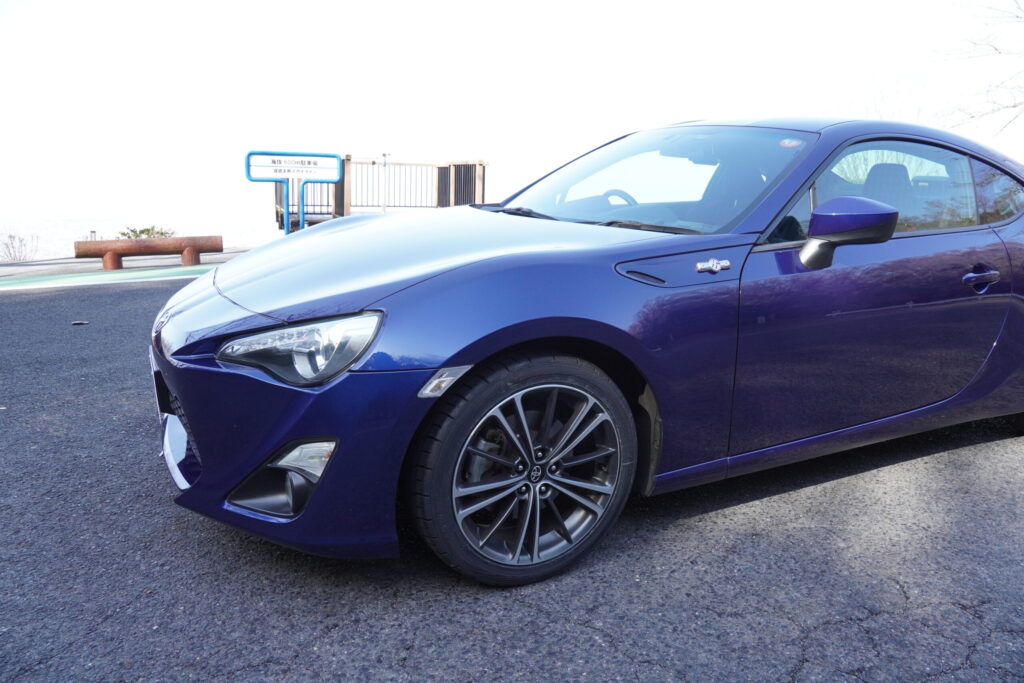
To truly experience Arashiyama and its surrounding mountain routes, a single afternoon is never enough. This detailed two-day itinerary takes you from the bustling grid of Osaka into the misty peaks and winding passes of Western Kyoto.
OSAKA START → Route 171 / Meishin Expressway → Highway 9 → Arashiyama-Takao Parkway → Central Arashiyama → Sagano Backroads → Northern Kyoto Passes → OSAKA RETURN
DAY 1: Into the Misty Valleys of Western Kyoto

07:00 AM – Departure from Osaka
Your journey begins early in Osaka. Settling into the low-slung bucket seat of the Toyota 86, you press the starter button. The 2.0-liter boxer engine fires up with a distinct, mechanical rumble. Adjust your mirrors, engage first gear, and feel the light, precise clutch pick up as you roll out onto the city streets.
Leaving Osaka at dawn allows you to beat the heavy morning commuter traffic. Heading northeast via Route 171 toward Kameoka and Kyoto, the urban sprawl slowly dissolves into rolling hills. As the tires warm up, the 86’s direct steering offers immediate feedback, signaling that you’ve left the flat city basin behind.
08:30 AM – The Winding Approach: Route 423 to Kameoka
Instead of taking the direct highway, deviate onto Route 423 toward Kameoka. This stretch of tarmac carves through dense cedar forests and countryside villages. Morning fog frequently hangs low over the rice fields, casting an otherworldly atmosphere across the asphalt.
The Toyota 86 feels completely in its element here. With its 50/50-feeling weight distribution and low center of gravity, the car settles smoothly into sweeping mid-speed corners. heel-and-toe downshifting into second gear for tighter hairpins rewards you with a crisp blip of the throttle, sending a warm exhaust note echoing off the surrounding rock faces.
09:45 AM – Arashiyama-Takao Parkway (South Gate Entrance)
Before descending into the main town of Arashiyama, turn off toward the Arashiyama-Takao Parkway, a privately operated toll road that winds along the crest of the mountains overlooking the Hozu River.
- History & Topography: Opened in 1972, this 10.7-kilometer drive was specifically built to showcase the natural beauty of Kyoto's northwestern mountains. The road traces ridge lines carved by millions of years of tectonic activity and river erosion.
- Driving Experience: This is a driver's paradise. The pavement is well-maintained, featuring smooth asphalt, banked turns, and sudden elevation shifts. In the 86, keep the engine revs up between 4,000 and 6,000 RPM, where the boxer engine delivers its most linear power response.
10:30 AM – Shobu Tani Pond Observatory
Pull into the Shobu Tani Pond parking area along the parkway. Here, surrounded by lush maple and pine trees, the surface of the pond acts as a natural mirror reflecting the sky.
Step out of the car and take in the crisp, mountain air—a stark contrast to the humid urban air of Osaka. Listen to the cooling ping of the 86’s exhaust manifold as the engine rests. Walk up to the nearby lookout point for a panoramic view over Kyoto Basin. On clear mornings, you can see all the way to the southern mountain ranges bordering Nara.
[Arashiyama-Takao Parkway]
 ├── Shobu Tani Pond (Quiet Mirror Lake)
 ├── Kiyotaki Observation Deck (View of Hozu River Gorge)
 └── Takao Terminal (Gateway to Ancient Mountain Temples)
11:45 AM – Lunch: Mountain Wild Vegetable & Soba Dining in Takao
At the northern terminus of the parkway lies Takao, an area historically revered as a secluded retreat for Buddhist monks. Park your car and head down to a local riverside restaurant.
Order a steaming bowl of Handcrafted Ju-wari Soba (100% buckwheat noodles) accompanied by crispy Mountain Vegetable Tempura (sansai), featuring wild fern sprouts, shiso leaves, and seasonal bamboo shoots harvested directly from the surrounding hills. The earthy, savory broth and fresh textures provide the perfect mid-day fuel for a full day of driving.
01:15 PM – Descending to Central Arashiyama
Rejoin the main route and descend toward central Arashiyama via the winding back roads. As you approach the floor of the Sagano valley, the dense forest opens up to reveal traditional wooden storefronts, tiled roofs, and small ceramic workshops.
02:00 PM – Crossing the Historic Togetsukyo Bridge
Slow your pace as you approach the iconic Togetsukyo Bridge ("Moon Crossing Bridge").
- History: Originally built in 836 AD during the Heian Period by the Buddhist monk Dōshō, the bridge earned its romantic name when Emperor Kameyama remarked during a full moon night that the moon appeared to be crossing the bridge itself. While reinforced with modern concrete foundations today, the wooden balustrades retain their traditional aesthetic.
- Sensory Details: As you drive slowly across the wooden structure in the 86, you hear the deep, continuous roar of the Oi River flowing underneath. The contrast between the cutting-edge Japanese sports car engineering beneath you and the 1,200-year-old architectural landmark ahead creates a unforgettable sensation.
+-------------------------------------------------------------------+
|                     TOGETSUKYO BRIDGE AT A GLANCE                 |
+-------------------------------------------------------------------+
|  Original Construction: 836 AD (Heian Period)                    |
|  Total Length: ~155 meters                                        |
|  Key Viewing Highlights: Arashiyama Mountain / Hozu River Line   |
+-------------------------------------------------------------------+
03:30 PM – The Sagano Bamboo Grove & Tenryu-ji Temple
Park the car at a secure, long-term parking lot on the outskirts of the central district (avoiding the tight, pedestrian-heavy inner lanes). Walk toward the famous Sagano Bamboo Grove.
Entering the grove during late afternoon offers a unique visual treat. As the sun dips toward the western ridges, shafts of golden light filter through the dense canopy of green bamboo stalks, which reach heights of over 20 meters. Listen closely to the rustling sound of the bamboo swaying in the wind—a sound officially recognized by the Japanese Ministry of the Environment as one of the "100 Soundscapes of Japan."
Afterward, step into Tenryu-ji Temple, a UNESCO World Heritage site established in 1339. The temple’s Sogenchi Garden retains its original 14th-century design, framing the peaks of Mount Arashiyama as a natural backdrop in a classic landscape design technique known as Shakkei ("borrowed scenery").
06:00 PM – Check-in at a Traditional Ryokan in Saga-Arashiyama
Check into a traditional Japanese inn (ryokan) situated along the banks of the Hozu River. After settling into your tatami-matted room, slide into an open-air thermal bath (onsen). The warm, mineral-rich water soothes your legs and shoulders after hours of manual driving, while the sound of the river lulls you into total relaxation.
07:30 PM – Dinner: Multi-Course Kaiseki Feast
Enjoy an exquisite multi-course Kaiseki dinner served directly in your room. The meal celebrates seasonal Kyoto ingredients:
- Yudofu: Silken tofu simmered in a light kelp broth, serving as a staple of Arashiyama's temple cuisine.
- Ky-yasai: Heirloom vegetables unique to Kyoto, such as Kamo eggplant and Manganji sweet peppers, grilled over charcoal.
- Freshwater Sweetfish (Ayu): Salt-grilled over open coals, offering a delicate, clean flavor.

DAY 2: Hidden Mountain Passes & The North Kyoto Circuit
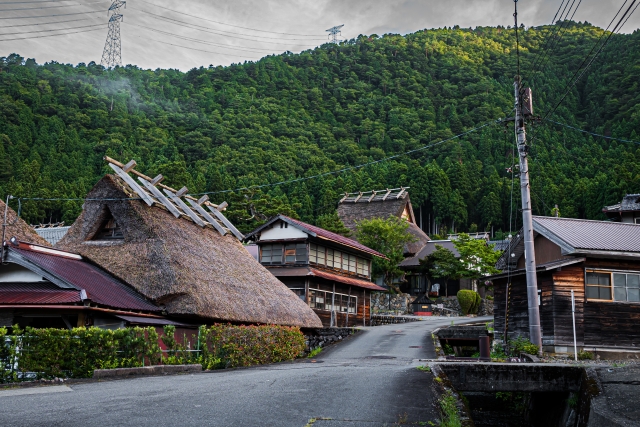
SAGA-ARASHIYAMA → Route 162 (Zhouzan Highway) → Miyama Thatched Village → Route 477 Pass → OSAKA
06:30 AM – Morning Run through the Arashiyama Bamboo Shadows
Wake up before the crowds arrive. Step into the Toyota 86 for a brief early-morning drive along the outer perimeter of Sagano while the morning mist still lingers over the empty asphalt. The cool, dense morning air allows the 86’s engine to breathe freely, giving every touch of the accelerator a crisp, sharp feel.
08:30 AM – Traditional Breakfast & Checkout
Return to your ryokan for a balanced breakfast of grilled salmon, miso soup, seasoned rice, and pickled vegetables. Pack your bags, load them into the surprisingly spacious trunk of the 86 (which can easily accommodate two full-sized suitcases when the rear seats are folded flat), and check out.
09:30 AM – Conquering Route 162 (The Zhouzan Highway)
Head north out of Arashiyama onto Route 162, known locally as the Zhouzan Highway. This road is legendary among Japanese sports car enthusiasts and motorcycling communities.
- Topography: Route 162 snakes up into the Kitayama mountains, threading through dark cedar forests and sweeping up switchbacks toward high-altitude tunnels.
- Driving Dynamics: The mechanical precision of the Toyota 86 shines bright on this route. The steering rack conveys every subtle change in road texture, allowing you to trace smooth lines through sweeping turns. The pedal layout is positioned perfectly for rev-matching downshifts, making the physical act of driving deeply satisfying.
11:30 AM – The Time-Capsule Village of Miyama (Kayabuki no Sato)
Follow Route 162 north until you reach Miyama, a remote valley famous for having one of the highest concentrations of traditional thatched-roof farmhouses (Kayabuki) in Japan.
Park at the village entrance and stroll through this living agricultural community. Unlike overcrowded tourist spots, Miyama remains a quiet, working village where locals tend to vegetable gardens and maintain centuries-old roofing traditions.
01:00 PM – Lunch: Miyama Chicken & Buckwheat Delicacies
Stop at a local eatery in Miyama for a bowl of Miyama Jidori Don—locally raised free-range chicken simmered with farm-fresh eggs over a bowl of steamed rice, seasoned with local sansho pepper that leaves a mild, tingling freshness on the palate.
02:30 PM – The Return Leg via Route 477: Technical Hairpins
Begin your journey back toward Osaka by switching to Route 477. This route is narrower, more technical, and far less traveled than main arterial highways.
Here, the compact dimensions of the Toyota 86 become its greatest strength. On narrow mountain passes where larger luxury sedans feel bulky, the 86 fits cleanly within its lane. Navigating tight hairpins requires precise turn-in and controlled throttle modulation, making you feel completely connected to the machine.
+-------------------------------------------------------------------+
|                  DRIVING DYNAMICS: TOYOTA 86                      |
+-------------------------------------------------------------------+
|  Engine: 2.0L Naturally Aspirated Boxer-4                         |
|  Layout: Front-Engine, Rear-Wheel Drive (RWD)                     |
|  Chassis Balance: ~53/47 Front-to-Rear Distribution               |
|  Highlights: Low center of gravity, highly tactile manual shift   |
+-------------------------------------------------------------------+
05:00 PM – Evening Sunset at Minoh Scenic Outlook
As you approach the northern borders of Osaka Prefecture, take a slight detour toward the Minoh Mountain road. Pull over at an elevated viewing area as the sun begins to set. Looking south, the lights of Osaka’s skyline begin to flicker to life against a purple and orange sky—a stunning conclusion to two days of pure driving through the mountain heartlands of Kyoto.
Expert Advice & Cultural Nuances for Driving in Japan
Driving in Japan is a smooth and enjoyable experience, but it comes with its own unique set of cultural norms and etiquette that every foreign traveler should understand.
The Wonder of "Michi-no-Eki" (Roadside Stations)
Unlike standard highway service plazas found in North America or Europe, Japan’s Michi-no-Eki (Roadside Rest Stations) are cultural destinations in their own right. Created to promote local agriculture and rural tourism, these facilities are scattered throughout the countryside.
- Local Produce & Culinary Specialties: Every Michi-no-Eki sells fresh, hyper-local agricultural products that you cannot find in city supermarkets. In the Kyoto mountain region, look for fresh chestnut sweets, local green teas, house-made soft-serve ice cream (kuromitsu black sugar or matcha flavors), and artisanal pickles.
- Facilities: They offer clean, free 24/7 restrooms, local tourist maps, and wide parking spaces—making them the ideal spot to take a break during a long mountain drive.
Local Etiquette on Narrow Roads
When navigating two-lane mountain passes around Arashiyama and northern Kyoto, you will occasionally encounter sections where the road narrows down to a single lane.
- Passing Bays (Yuzuri-ai): Pay attention to wider cutouts along the roadside. If you notice a faster local driver approaching behind you, pull into one of these bays, flash your hazard lights once, and let them pass cleanly.
- The "Thank You" Hazard Flash: If another driver stops to let you pass through a narrow pinch-point, give two quick flashes of your hazard lights after passing them. This universally recognized gesture of gratitude keeps driving polite and stress-free.
Detailed Logistics & Pre-Trip Tips (2026 Edition)
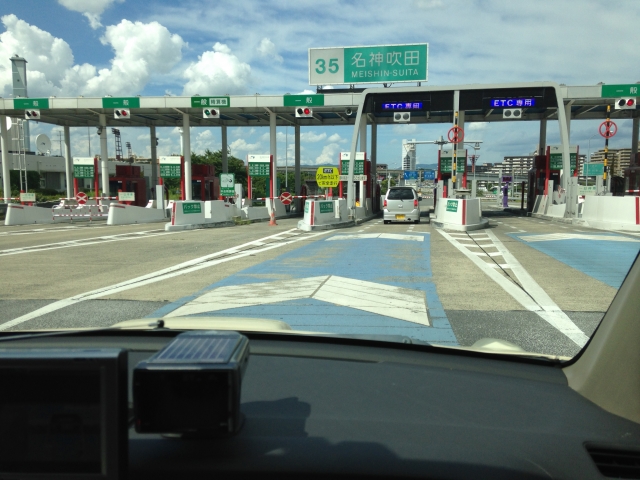
Navigating Japan’s road system in 2026 is seamless if you prepare the right tools before turning the key.
Electronic Toll Collection (ETC) Cards
Japan’s expressway network relies on an automated toll system called ETC (Electronic Toll Collection). Most modern toll gates no longer have physical booths for cash transactions.
- Ensure your rental car comes equipped with an ETC card reader.
- Rent an active ETC card from your rental provider at pickup. All highway tolls will automatically log onto the card, allowing you to breeze through expressways without stopping to pay cash.
                  [APPROACHING TOLL PLAZA]
                             │
            ┌────────────────┴────────────────┐
            ▼                                 ▼
      [ETC ONLY GATE]                 [CASH / MANUAL]
   (Blue signs / 20 km/h)          (Green signs / Stop)
            │                                 │
   • Card registered in slot       • Pay cash or credit card
   • Gate opens automatically      • Expect longer queues
Navigating Gas Stations ("Mantan!")
Fueling up in Japan is straightforward once you know the basic terminology. Gas stations are divided into Full Service (Furuserビス) and Self Service (Serufu).
At a full-service station, an attendant will guide you to a pump with hand gestures. Roll down your window and use these essential phrases:
- "Regular Mantan, Onegaishimasu" = "Full tank of regular gasoline, please."
- "High-Octane Mantan, Onegaishimasu" = "Full tank of premium/high-octane gasoline, please." (Recommended for performance cars like the Toyota 86).
- "Kashikoma-rimashita" = "Understood."
At full-service stops, attendants will often clean your windshield, offer to take your trash, and guide you back into traffic when you pull out.
Parking Guidance in Arashiyama
Parking in central Kyoto and Arashiyama requires strategy:
- Avoid street parking; always use designated Coin Parking lots.
- Pay attention to maximum daily limits (Nuki-futa or Max Yen) posted on lot signs to avoid unexpected high fees.
- Park slightly away from the main commercial strip to save money and keep your car safe from narrow street foot traffic.
Comprehensive FAQ
Q1: What permits do I need to drive legally in Japan?
To drive in Japan, you must possess a valid International Driving Permit (IDP) issued under the 1949 Geneva Convention, alongside your valid physical home country driver's license and your passport.
- Important Note: IDPs issued under the 1968 Vienna Convention are NOT accepted in Japan. Citizens from specific countries (such as Switzerland, Germany, France, Taiwan, Belgium, and Monaco) must carry an official Japanese translation of their native license provided by the Japan Automobile Federation (JAF) or their respective embassy, rather than an IDP.
Q2: Is driving a Manual Transmission (MT) sports car like the 86 difficult on Japanese roads?
Driving a manual transmission car in Japan is remarkably intuitive thanks to well-maintained road surfaces, clear signage, and courteous drivers. Because Japan drives on the left side of the road, the steering wheel is on the right side, meaning you will shift gears with your left hand. Most drivers adapt within 15 to 20 minutes of trigger time.
Q3: How are mountain road conditions in winter around Kyoto?
From late December through February, mountain passes in northern Kyoto (such as Route 162 and Route 477) can experience snow and ice accumulation. If traveling during these winter months, ensure your rental car is fitted with studless winter tires (snow tires).
The Final Thoughts: Take the Wheel of Your Journey
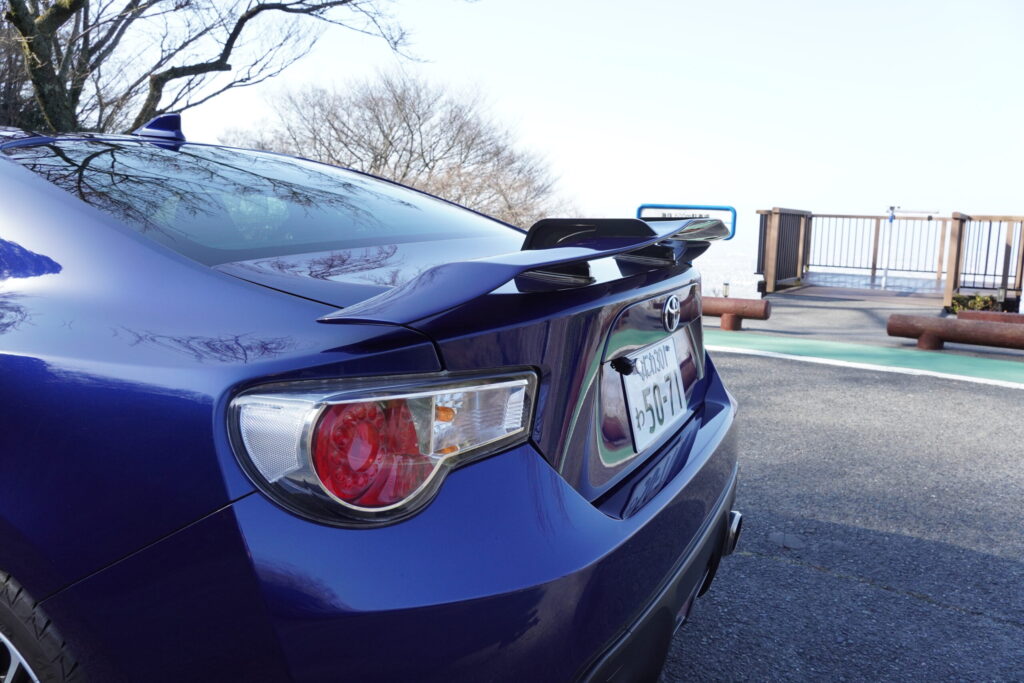
Japan is a country of deep contrasts—where centuries-old temples stand in quiet harmony with the cutting edge of modern automotive engineering. While millions of tourists will see Kyoto from the crowded aisles of a train carriage or a tourist bus, you have the opportunity to experience it from behind the wheel of an iconic Japanese sports car.
Feel the feedback of the road through the steering wheel, listen to the crisp note of a finely tuned engine revving through mountain passes, and discover the hidden valleys, peaceful temples, and winding roads that train tracks will never reach.
Your journey into the heart of real Japan begins the moment you turn the key.
Ready to start your driving adventure through Arashiyama and beyond?
Reserve your high-performance, meticulously maintained Toyota 86 or sports car from Omoren Osaka Chuo (Omoshiro Rent-a-Car Osaka Chuo) today. Located conveniently in Osaka, we specialize in offering pristine Japanese domestic market (JDM) performance cars to enthusiasts and travelers who demand more from their journey.
👉 Book your car now at Omoren Osaka Chuo and unlock the road to Secret Japan!