
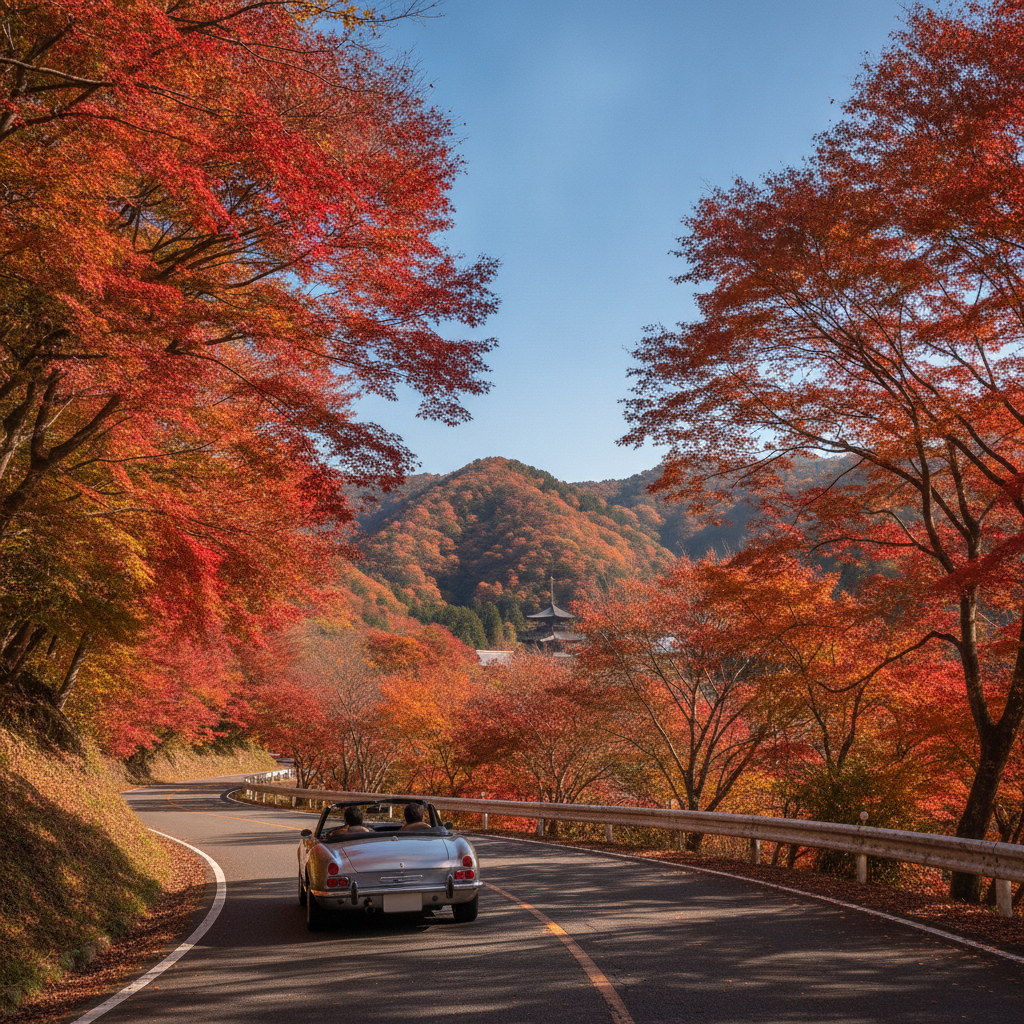
Ah, Japan. A land often celebrated for its unparalleled public transport, its bullet trains slicing through landscapes with surgical precision, its intricate web of local lines connecting every conceivable corner. And indeed, as an former conductor for Kintetsu Railways, I spent years navigating those very steel arteries, witnessing the nation's rhythmic pulse from a unique vantage point. Yet, for all its efficiency and punctuality, the train follows a predefined path, a rhythm dictated by schedules and stations. It offers glimpses, yes, but rarely grants immersion.
But then, there's the road. And when that road is embraced by a precision-engineered Japanese Domestic Market (JDM) vehicle, a perfectly balanced machine like the 86 or BRZ, an entirely different Japan reveals itself. This isn't just transport; it's an odyssey, a key to unlocking the nation's deepest secrets, its hidden veins of culture and breathtaking beauty that lie stubbornly beyond the reach of any railway line or bus route. From Osaka, the vibrant, pulsating heart of Kansai, your true Japanese adventure begins not on a sterile platform, but on an open road, where every curve whispers a new discovery.
The charm of driving from Osaka is multifaceted. It offers unparalleled flexibility, allowing you to chase the fleeting light of dawn across a mountain pass, linger at a roadside stand selling improbably sweet local produce, or simply pull over to absorb a vista that momentarily steals your breath. Public transport is a symphony of efficiency; driving is a jazz improvisation, spontaneous and utterly personal. It allows you to delve into the 'Secret Japan' – a Japan that tourists rarely see. These are the ancient pathways carved through primeval forests, the tiny hamlets nestled in forgotten valleys, the remote shrines clinging to mist-shrouded peaks, accessible only by a ribbon of asphalt that winds with the land itself. These are the realms where time slows, where the rustle of autumn leaves or the guttural purr of a flat-four engine are the dominant sounds, echoing against centuries of history. To experience this Japan, to truly feel its pulse and inhale its essence, a car is not merely an option – it is an imperative.
And what a car to choose! The 86 or BRZ isn't just a vehicle; it's an extension of your will, a partner in exploration. Its responsive steering, its perfectly weighted pedals, its eager, rev-happy engine – these aren't just specifications; they're invitations to engage, to participate actively in the unfolding landscape. You're not merely observing through a train window; you're feeling the texture of the road, smelling the crisp mountain air, choosing your own pace, your own detours. You become an active participant in the journey, each downshift and throttle blip a conversation with the machine and the magnificent environment it carries you through. It’s an immersion, a profound connection that transcends mere sightseeing. Today, we peel back the layers of ancient Nara, venturing beyond its iconic deer parks and grand temples, to a realm where autumn paints the mountains in fiery hues, culminating in the mystical, unparalleled beauty of Tanzan Shrine. Prepare for an unforgettable symphony of speed, scenery, and soul.
奈良の秋, 紅葉, ドライブ, 絶景, 談山神社-The 2-Day Itinerary: Deep Dive
Prepare yourself for an odyssey into the heart of Japan's autumnal splendor, a journey meticulously crafted to tantalize your senses and ignite your driving passion. This isn't just a trip; it's a meticulously choreographed dance between man, machine, and magnificent nature, designed to unlock Nara's hidden beauty from the driver's seat of an 86 or BRZ.
Day 1: The Ascent into Autumn's Embrace
8:00 AM - 9:00 AM: Osaka Departure - The JDM Awakening
The dawn breaks over Osaka, a city still shaking off its slumber, yet already humming with anticipation. This is where your adventure truly begins. You approach the 86 or BRZ, its sleek lines glinting under the morning sun. The subtle scent of leather and performance plastics fills the cabin as you slide into the perfectly sculpted seat. The shifter, a short-throw masterpiece, fits snugly in your palm. Twist the key, or push the start button, and the 2.0-liter boxer engine awakens with a purposeful growl – a low, resonant thrum that promises excitement. The controls are intuitive, a testament to Japanese engineering, designed to become an extension of your body. We navigate the initial urban arteries of Osaka, the concrete jungle gradually giving way to wider suburban avenues. The 86/BRZ feels nimble, eager, its direct steering cutting cleanly through the morning traffic. This is the prelude, the gentle warm-up before the true exhilaration begins, as the city slowly recedes in your rearview mirror, replaced by the promise of open roads and ancient landscapes.
9:00 AM - 10:30 AM: Highway to Ancient Lands - Kashiwara & Sakurai
As we leave the sprawl of Osaka, the scenery transforms. We merge onto the Minami-Hanna Road, a swift artery that smoothly transitions from elevated urban expressways to more pastoral landscapes. The initial sense of containment gives way to horizons dotted with distant, hazy mountains. The flat-four engine settles into a comfortable cruising rhythm, its distinctive burble a constant, reassuring companion. You'll notice the roads are impeccably maintained, a characteristic of Japanese infrastructure that makes driving a sheer pleasure. We pass through Kashiwara, hinting at the historical depth of the region, before eventually veering onto Route 165, which begins to trace the historical Yamato Plain. This is the cradle of Japanese civilization, an area steeped in myth and imperial history, though for now, it remains a verdant, rolling landscape. The air, already noticeably fresher than the city, hints at the elevation we will soon gain. The 86/BRZ eats up the miles effortlessly, a silent, comfortable beast awaiting its true challenge.
10:30 AM - 12:00 PM: The Yamato Plateau Winding Roads - Omiwa Jinja Vicinity
Now, the real fun begins. We peel off the main thoroughfare, swapping the relative straightness of Route 165 for the more intimate, undulating prefectural roads that snake through the Yamato Plateau. This is where the 86/BRZ truly comes alive. The roads here are a symphony of gentle sweeps and tighter hairpins, perfectly suited to the car's balanced chassis and precise steering. Each input through the wheel translates instantly into a smooth arc, the car's low center of gravity gluing it to the asphalt. This region, ancient and mystical, is characterized by rolling hills that are, in fact, the weathered remnants of geological uplifting, forming the backdrop for some of Japan's oldest shrines. You'll start to catch your first significant glimpses of autumn foliage – isolated bursts of fiery crimson and vibrant gold against the deeper greens of cedar and cypress. The sun, climbing higher, filters through the leaves, creating a dappled light show on the asphalt. The engine note rises and falls with your throttle inputs, a mechanical heartbeat resonating with the very landscape. A brief stop at a small, unassuming overlook – perhaps with a view of Mount Miwa, sacred and imposing – allows you to stretch your legs and breathe in the crisp, cool air, the scent of damp earth and distant woodsmoke filling your lungs. This is the essence of 'Secret Japan', revealed one exhilarating curve at a time.
12:00 PM - 1:30 PM: Sakurai for a Local Lunch - Taste of Yamato
After the exhilarating drive, hunger calls. We descend slightly into the town of Sakurai, a charming historical hub known for its culinary heritage. Forget the chain restaurants; our quest is for authentic, local flavor. We seek out a small, unpretentious eatery, perhaps one tucked away down a side street, identifiable by its unassuming exterior and the aroma of freshly prepared food. Here, you'll discover the simple perfection of Nara cuisine. One must-try is Miwa Somen, delicate wheat noodles, often served chilled in a light, savory broth with seasonal garnishes. Its ethereal texture and subtle flavor are a revelation. Another local delicacy is Kakinoha-zushi, sushi wrapped in persimmon leaves. The leaves impart a faint, earthy aroma and act as a natural preservative, creating a unique taste experience with cured mackerel or salmon. Each bite is a journey into Yamato's culinary soul – fresh, artfully presented, and deeply satisfying. The ambiance is typically quiet, perhaps with the gentle clatter of chopsticks and hushed conversations, allowing you to fully appreciate the simple, exquisite flavors that reflect the bounty of the land.
1:30 PM - 2:30 PM: The Approach to Tanzan Shrine - Driving into History
With appetites sated, we embark on the final, majestic approach to Tanzan Shrine. This leg of the journey, following scenic routes like the Sakurai Tanzan Line (often parts of Route 370), is perhaps the most visually stunning and rewarding for the driver. The road gradually begins its ascent into the mountains, narrowing slightly, becoming more intimate. We are now truly immersed in a dense, ancient forest, the trees reaching skyward, their autumn raiment a spectacular display. The canopy above transforms into a breathtaking tunnel of fiery reds, brilliant oranges, and deep golden yellows. Sunlight, filtering through this vibrant stained-glass ceiling, casts shifting patterns of light and shadow on the road ahead. The 86/BRZ responds beautifully to the increasingly frequent twists and turns. You'll find yourself instinctively downshifting for the sharper corners, the engine's satisfying blip-blip on the rev-match a testament to its engaging character. The sound of the boxer engine, usually a subdued thrum, now echoes slightly in the quiet valley, a harmonious counterpoint to the rustling leaves. With every winding kilometer, the sense of anticipation builds. You're not just driving; you're gracefully carving your way through a living tapestry of history and natural grandeur, feeling the ancient spirit of Japan beckoning you deeper into its autumnal embrace.
2:30 PM - 5:00 PM: Tanzan Shrine - A Kaleidoscope of Crimson and Gold
Finally, you arrive at Tanzan Shrine, nestled like a jewel amidst the mountains. The ease of parking your 86/BRZ close to the entrance, a luxury often denied by public transport, immediately highlights the advantage of your chosen mode of travel. Stepping out, the air is cool and crisp, carrying the subtle scent of damp earth and distant incense. Tanzan Shrine is a place of profound historical and aesthetic significance. Founded in 678 AD, it commemorates Fujiwara no Kamatari, a pivotal figure in the 7th-century Taika Reform, which laid the foundations for Japan's centralized imperial system. This site, where Kamatari and Prince Naka no Oe are said to have discussed the reforms, exudes an aura of ancient power and spiritual gravitas.
The shrine itself is a spectacle of vibrant vermilion architecture, its intricate wooden structures standing in stunning contrast to the surrounding natural beauty. But in autumn, it transforms into an almost otherworldly realm. The grounds of Tanzan Shrine are renowned as one of Nara's most breathtaking autumn leaf viewing spots, and for good reason. From late October to late November, the entire valley explodes in a riot of color. Japanese maples (momiji) and other deciduous trees blanket the slopes and courtyards in a breathtaking sea of crimson, fiery orange, and golden amber. Walk the winding paths, and you'll find yourself utterly enveloped by color. Sunlight, filtering through the dense canopy of leaves, creates a dazzling, ever-changing play of light and shadow, illuminating the foliage with an ethereal glow. The gentle rustle of leaves underfoot is the only sound, punctuated by the occasional chime of a wind bell or the hushed awe of fellow visitors.
The centerpiece of Tanzan Shrine is its thirteen-story pagoda, the only one of its kind in Japan. Painted in striking vermilion and standing tall against the backdrop of the vibrant autumn leaves, it is an architectural marvel and a photographer's dream. Its intricate carvings and elegant lines speak of centuries of craftsmanship and devotion. Explore the various halls, each adorned with detailed artistry and imbued with a sense of peace. The Main Hall, the Prayer Hall, and the surrounding structures offer endless opportunities for contemplation and appreciation of traditional Japanese aesthetics. Look closely at the geological features around the shrine – the gently sloping hills, the stratified rock formations hinting at millions of years of natural processes that sculpted this tranquil sanctuary. Every corner you turn reveals a new masterpiece of nature and human artistry, each view more breathtaking than the last. The sheer saturation of color here is an assault on the senses, in the best possible way. It’s an experience that transcends mere sightseeing, touching something deeper within, a profound connection to Japan's spiritual and natural heritage.
5:00 PM - 6:00 PM: Sunset Drive & Check-in - A Ryokan in the Mountains
As the sun begins its gentle descent, casting a soft, golden glow across the valley, we reluctantly depart from Tanzan Shrine. The autumn leaves, now illuminated by the low-angled light, seem to glow with an intensified inner fire, painting the receding landscape in hues of deep amber and molten gold. The drive away is just as picturesque as the approach, offering new perspectives on the changing light. We head towards a secluded ryokan nestled deeper within the mountainous regions of Nara, perhaps in the tranquil Uda or Yoshino area, chosen specifically for its authentic Japanese charm and serene setting. The roads become even more winding and intimate, requiring focused but enjoyable driving. The 86/BRZ, with its precise handling, makes light work of these rural roads, its engine humming a contented tune. This transition from the vibrant energy of the shrine to the quiet contemplation of the drive is a beautiful way to decompress. As we arrive at the ryokan, the last vestiges of twilight paint the sky in soft pastels, and the quiet dignity of your traditional accommodation welcomes you, promising respite and comfort after a day of exhilarating exploration.
6:00 PM - 8:00 PM: Ryokan Experience & Dinner - Culinary Retreat
Stepping into a traditional Japanese ryokan is like entering a sanctuary where time itself slows down. You're greeted with warm hospitality, perhaps a cup of green tea in your tastefully appointed room, complete with tatami mats and sliding shoji screens. The anticipation of dinner is a significant part of the experience. A multi-course kaiseki dinner awaits, a culinary art form that celebrates seasonality, local ingredients, and exquisite presentation. Each dish is a miniature masterpiece, meticulously arranged to delight both the eye and the palate. Expect an array of delicate flavors – fresh river fish, locally sourced autumn vegetables, savory broths, and perhaps a perfectly grilled cut of Yamato beef. The ingredients are often foraged or harvested nearby, reflecting the bounty of the mountains and the changing season. It's not just a meal; it's a performance, a thoughtful progression of textures and tastes. If your ryokan boasts an onsen (hot spring), this is the perfect time to indulge. The soothing warmth of the mineral-rich waters eases any lingering tension from the day's driving, preparing you for a night of deep, peaceful slumber amidst the profound quietude of the Japanese countryside. The only sounds are the gentle rustle of the wind and perhaps the distant chirping of crickets.
8:00 PM Onwards: Stargazing & Reflection
After the luxurious bath and a satisfying meal, the evening invites reflection. Step outside, away from any ambient light. In these remote mountain regions, the night sky is often a breathtaking canvas of a million stars, unobscured by urban light pollution. The air is cool and crisp, perhaps carrying the faint scent of cedar. It's a moment for profound peace, a chance to truly connect with the vastness of the universe and the ancient land beneath your feet. Reflect on the day's journey: the exhilarating curves of the road, the fiery beauty of Tanzan Shrine, the subtle flavors of the local cuisine. The satisfaction of having explored deeply, of having gone beyond the well-trodden paths, is immense. This is the reward of the 'Secret Japan' – moments of pure, unadulterated beauty and tranquility that nourish the soul and deepen your appreciation for this incredible country.
Day 2: Hidden Valleys and Return to Reality (with detours)
8:00 AM - 9:00 AM: Ryokan Breakfast & Morning Drive
Awake to the gentle sounds of the ryokan, refreshed and eager for more exploration. A traditional Japanese breakfast awaits – often a healthy and delicious spread of grilled fish, miso soup, rice, pickles, and perhaps some seasonal vegetables. It's a light yet fortifying start to the day. The morning air outside is invigoratingly crisp, perhaps with a hint of mist still clinging to the distant peaks. Your 86 or BRZ sits patiently, its sleek form glistening with dew, ready for another day of spirited driving. The engine fires up with that familiar, eager growl, a promising prelude to the adventures that lie ahead. Today, we delve even deeper into Nara's hidden gems, places that truly embody the 'Secret Japan' philosophy, far from the tourist crowds.
9:00 AM - 11:00 AM: Murō-ji Temple - A Secluded Mountain Sanctuary
Rather than revisiting a popular spot, our path leads us to Murō-ji Temple, a secluded and utterly captivating sanctuary often referred to as 'Kōyasan for women' due to its historical openness to female pilgrims when Mount Kōya was restricted. The drive to Murō-ji is an experience in itself. The roads become increasingly narrow and winding, carving their way through dense, ancient cedar forests. The 86/BRZ thrives here, its compact dimensions and agile handling making every turn a joy. The responsiveness of the steering allows you to place the car precisely, feeling connected to every undulation of the asphalt. This road isn't just a means to an end; it's an integral part of the discovery, a winding path that slowly unveils the temple's hidden beauty.
Upon arrival, you'll immediately feel a profound sense of tranquility. Murō-ji is renowned for its harmonious integration with nature, its structures gracefully blending into the mountainous landscape. The approach involves climbing a series of ancient stone steps, often shrouded in a soft, green moss that seems to hum with centuries of history. In autumn, the surrounding deciduous trees – maples, gingkoes, and oaks – ignite in a brilliant display of reds, oranges, and yellows, creating a stunning contrast with the deep greens of the cedars and the subdued hues of the temple buildings. The highlight is undoubtedly the Five-Storied Pagoda, a national treasure and the smallest outdoor five-storied pagoda in Japan. Nestled deeply within the forest, it exudes an ethereal beauty, especially when framed by the vibrant autumn leaves. Its graceful lines and weathered wood speak of ancient times and enduring spirituality. Explore the Main Hall (Kondō), the Miroku-dō, and the Okunoin (Inner Sanctuary) further up the mountain, each offering unique architectural details and a powerful sense of serenity. The geological setting – the temple built on a steep, forested slope – dictated its unique layout, with structures arranged along the contours of the land rather than in a rigid grid. The sheer quietude, broken only by the rustling leaves and the chirping of birds, offers a deeply meditative experience, a true escape into 'Secret Japan.'
11:00 AM - 1:00 PM: Scenic Route through Uda - Forgotten Paths & Vistas
Leaving the peaceful embrace of Murō-ji, we embark on a scenic drive through the Uda region, a less-traveled expanse of Nara Prefecture. This area is characterized by its rolling hills, pristine forests, and scattered agricultural fields, offering a glimpse into rural Japanese life untouched by mass tourism. The routes here, often smaller prefectural roads or continuations of Route 370, are a driver's paradise. They are impeccably surfaced but challenging, with a delightful mix of sweeping curves, elevation changes, and tight hairpins – all perfectly suited to the communicative chassis of the 86/BRZ. You'll find yourself constantly engaged, the car's precise steering and responsive engine making every kilometer an active pleasure. The landscape is a constant companion, with panoramic vistas opening up around every bend – valleys ablaze with autumn colors, distant mountain ranges shrouded in a delicate haze, and clear streams carving their way through ancient rock. Keep an eye out for spontaneous stops: a small, rustic waterfall cascading down a moss-covered cliff, a local farm stand selling plump, juicy persimmons or sweet potatoes, or simply a breathtaking viewpoint that demands you pull over and absorb the beauty. The pure joy of driving the 86/BRZ through such diverse and captivating terrain is undeniable, a feeling of absolute freedom and connection with the heart of Japan.
1:00 PM - 2:30 PM: Lunch & Local Delights - Uda's Culinary Secrets
As midday approaches, we seek out another authentic culinary experience within the Uda region. This is where the 'Michi no Eki' (Roadside Station) culture truly shines, or perhaps a small, family-run eatery identified by its unassuming exterior and the enticing aromas wafting from within. In Uda, the focus is often on fresh, seasonal produce and simple, hearty meals. You might find a charming soba (buckwheat noodle) restaurant, serving handcrafted noodles in a fragrant dashi broth, perhaps with tempura made from local vegetables. Alternatively, a rustic teishoku (set meal) featuring locally raised chicken or pork, accompanied by freshly steamed rice and pickled greens, offers a deeply satisfying and authentic taste of the region. These places aren't about Michelin stars; they're about genuine flavors, warm hospitality, and a connection to the land. You might even have a chance for a simple, polite interaction with the local owners, adding a touch of personal connection to your journey. The freshness and simplicity of the ingredients, combined with traditional preparation, make for a memorable and utterly delicious lunch, fueling you for the final leg of your autumnal adventure.
2:30 PM - 4:00 PM: The Return Journey - Reflections and Farewell to the Mountains
With satisfied bellies and invigorated spirits, we begin the gradual return journey towards Osaka. This doesn't mean retracing our exact steps; wherever possible, we seek out alternative routes, allowing for new perspectives and further exploration. The mountainous roads of Uda slowly transition into the more open landscapes of central Nara. The autumn colors, though now viewed from a different angle, remain breathtaking – the last fiery glimpses of maples clinging to distant slopes, the golden glow of rice fields waiting for harvest. The hum of the 86/BRZ engine, once a harbinger of excitement, now takes on a more contemplative tone, a steady companion as you reflect on the wonders absorbed. This is a time to consolidate memories: the exhilarating curves of the roads, the spiritual tranquility of Tanzan Shrine and Murō-ji, the simple perfection of local meals, and the profound beauty of Japan's hidden corners. The drive becomes a moving meditation, each kilometer bringing you closer to the city but also etching the raw beauty of Nara's autumn deeper into your memory. The car handles the journey effortlessly, a testament to its reliability and engaging character, allowing you to fully immerse yourself in the journey's end.
4:00 PM - 5:00 PM: The Approach to Osaka - Urban Horizon
As the afternoon wanes, the topography begins to flatten, and the unmistakable signs of civilization grow more frequent. We rejoin the major expressways, gradually accelerating towards the urban pull of Osaka. The city skyline, initially a distant smudge on the horizon, slowly sharpens into focus – a dazzling array of steel and glass towers reaching for the sky. This transition, from the serene, ancient mountains to the bustling, hyper-modern metropolis, is stark yet invigorating. It underscores the incredible diversity of Japan, a nation where centuries of tradition and cutting-edge innovation coexist in harmonious contrast. The 86/BRZ, which was so perfectly at home carving through mountain passes, now navigates the multi-lane highways with equal grace, its reserves of power making overtaking smooth and effortless. The sense of accomplishment is palpable: you've not just traveled; you've explored, discovered, and truly experienced a Japan that few ever see. The engine's final, soft thrum as you near your destination signals the end of an unforgettable driving adventure, but the memories forged on those autumnal roads will linger long after.
奈良の秋, 紅葉, ドライブ, 絶景, 談山神社-Expert Advice & Cultural Nuances

Having spent countless hours traversing Japan's diverse landscapes, both by rail and road, I've cultivated a deep appreciation for the subtleties that transform a good trip into an extraordinary one. Here's how to truly unlock the soul of Japan on your drive.
The 'Michi no Eki' Culture: More Than Just a Stop
Forget everything you know about roadside rest stops. Japan's 'Michi no Eki' (Roadside Stations) are cultural hubs, culinary showcases, and mini-markets all rolled into one. They are not merely places to stretch your legs or grab a quick coffee; they are destinations in themselves. Each Michi no Eki is unique, reflecting the local culture and produce of its region. Here, you'll discover an astounding array of fresh, locally grown fruits and vegetables – perfectly ripe seasonal produce that often can't be found in city supermarkets. You'll find artisanal souvenirs crafted by local residents, unique regional snacks, and often a restaurant serving delicious, authentic dishes made with local ingredients. Many even feature clean, modern restrooms, information centers with local maps, and sometimes even onsen or art galleries. Make it a point to stop at several; they are perfect opportunities to refuel – both yourself and the car – absorb local flavor, and truly connect with the heart of rural Japan. They are microcosms of the local community, offering an invaluable glimpse into the rhythm of life outside the major urban centers.
Unearthing Hidden Local Gems: Beyond the Tourist Trails
The beauty of driving a JDM car in Japan is the freedom to deviate. While major attractions are wonderful, some of the most profound experiences lie just slightly off the beaten path. Keep an eye out for small, unassuming restaurants or cafes, often indicated by a simple noren (traditional fabric curtain) at the entrance, or a handwritten sign. These are often family-run establishments where the food is prepared with generations of love and tradition, far surpassing anything you'll find in a tourist trap. Don't be afraid to pull over if you spot a charming-looking soba shop, a tiny bakery, or a roadside stand selling seasonal fruits like sweet, succulent mikan (tangerines) in autumn. Trust your instincts; these spontaneous stops are often where authentic interactions and unforgettable culinary moments happen. You'll know them by the local cars parked outside, the simple, honest decor, and the genuine warmth of the proprietors. These are the places where you'll truly taste and feel the 'Secret Japan.'
Driving Etiquette & Safety: Navigating with Respect
Japan's roads are generally of excellent quality, meticulously maintained, and clearly signposted. However, understanding local driving nuances is key. Speed limits are strictly enforced, and often lower than what many Western drivers are accustomed to. Patience is key; rushing gains you little and risks much. Japanese drivers are overwhelmingly courteous and respectful. Mirror this behavior: use turn signals well in advance, maintain a safe following distance, and avoid aggressive maneuvers. Overtaking should always be done safely and only when completely clear. Pedestrians always have the right of way, especially in residential areas or near schools; be extra vigilant. When navigating mountain roads, as you will on this Nara itinerary, expect them to be narrow and winding. Your 86/BRZ will revel in these curves, but respect their inherent challenges. Use engine braking, especially with a manual transmission, to manage your speed and reduce wear on your brakes. Be acutely aware of oncoming traffic, particularly on blind corners. In rural Nara, wildlife – particularly deer – can be a hazard, especially at dawn and dusk; drive defensively. For navigation, a good GPS system (either built-in to the car or a smartphone app like Google Maps or Waze) is invaluable. For accuracy in rural areas, inputting phone numbers or MapCodes (a unique location identifier) is often more reliable than addresses. Drive with confidence, but always with respect for the road and your fellow travelers.
奈良の秋, 紅葉, ドライブ, 絶景, 談山神社-[Detailed Logistics & Pre-Trip Tips]
Beyond the romance of the open road lies the practical side of driving in Japan. As someone who has operated everything from heavy trains to nimble JDM sports cars, I understand the intricacies. Here’s a breakdown of what you need to know to ensure a seamless, exhilarating experience in 2026.
The 2026 Traffic Situation: Navigating Modern Japan
Japan’s road network is among the best in the world, characterized by smooth surfaces and clear signage. In 2026, while traffic volumes have steadily increased, the infrastructure largely keeps pace. Major city routes, particularly around Osaka, can experience congestion during peak rush hours (typically 7:00 AM - 9:00 AM and 5:00 PM - 7:00 PM on weekdays, and around popular tourist spots on weekends). However, once you transition to the expressways and especially the prefectural roads leading into mountainous Nara, traffic thins considerably, allowing for a more fluid and enjoyable drive. The general rule remains: utilize expressways for speed and efficiency between regions, but actively seek out and cherish the winding prefectural roads for the truly scenic and engaging driving experiences. Real-time traffic information is readily available via car navigation systems and smartphone apps, allowing you to anticipate and bypass any unexpected slowdowns.
The ETC Card: Your Key to Seamless Tolls
An Electronic Toll Collection (ETC) card is not just a convenience; it is an absolute must-have for a hassle-free driving journey in Japan. Without an ETC card, you'd be navigating cash-only toll booths, fumbling for change, and significantly slowing your progress. The ETC system allows for automated toll payments as you pass through dedicated ETC lanes on expressways, eliminating stops and ensuring a smooth, uninterrupted flow. This is particularly advantageous on longer journeys and when transitioning between different expressway networks. Most reputable JDM rental agencies, including ours, offer ETC cards for rent alongside your vehicle. Ensure you request one when booking; it will transform your expressway experience from a potential headache into a series of seamless transits, allowing you to focus on the road and the unfolding scenery.
Japanese Gas Stations: A Unique Cultural Experience
Pulling into a Japanese gas station, especially a full-service one, can be a delightful step back in time. While self-service stations are becoming more common, many still offer a full-service experience – a charming throwback for many Western drivers. The attendants are incredibly polite and efficient. When you pull up, they'll often direct you to a pump with precise hand signals, then ask about your fuel preference. The magic phrase is "Mantan!" (満タン), meaning "full tank!" For fuel type, you'll typically choose between "Regular" (レギュラー - pronounced 'reguraa') or "High-Octane" (ハイオク - pronounced 'haioku'). Your 86 or BRZ will likely require High-Octane fuel. The attendants will fill your tank, often clean your windows, and sometimes even offer to dispose of any trash. Payment can be made with cash or credit card. It's more than just a refueling stop; it's a brief, polite interaction that adds a unique cultural flavor to your road trip, a small but memorable part of the Japanese service experience.
Parking Tips: Navigating Tight Spaces with Grace
Parking in Japan, especially in cities and popular tourist areas, is generally well-organized but can sometimes be tight. Look for 'Coin Parking' (コインパーキング), which are automated, pay-by-the-hour parking lots. They are ubiquitous and relatively straightforward to use, often requiring you to take a ticket upon entry and pay at a machine before exiting. In rural areas, particularly at Michi no Eki or smaller attractions, parking is often free and more spacious. When in doubt, follow signage or use your car's navigation system to find designated parking areas. The compact dimensions and excellent maneuverability of your 86 or BRZ are a distinct advantage in Japan's sometimes snug parking spots. You'll appreciate its precise steering and visibility when backing into a tight space, making parking far less stressful than with a larger vehicle.
The JDM (MT) Driving Experience: A Communion with the Road
This is where the heart of your Japanese adventure truly beats. Driving a JDM manual transmission car like the 86 or BRZ in Japan is not just transport; it's a communion. It's an immersive, visceral experience that connects you directly to the road, the machine, and the landscape unfolding around you. Feel the satisfying weight of the clutch pedal, the precise, mechanical snick of the short-throw shifter as you engage each gear. Hear the distinctive growl of the boxer engine as it responds instantly to your throttle input, building revs with eager enthusiasm. The direct feedback through the steering wheel tells you exactly what the front tires are doing, allowing you to place the car with pinpoint accuracy through mountain passes and sweeping curves. This isn't just about speed; it's about engagement, the rhythm of shifting, braking, and accelerating becoming a fluid dance. The exhilaration of perfectly executing a heel-and-toe downshift for a tight hairpin turn, feeling the car balance perfectly as you power out, is an unmatched reward. It elevates driving from a chore to an art form, allowing you to fully appreciate the engineering prowess of these Japanese icons against the breathtaking backdrop of their homeland. It’s a dance, a conversation between man and machine, against a backdrop of unparalleled beauty, creating memories that will resonate long after the engine cools.
奈良の秋, 紅葉, ドライブ, 絶景, 談山神社-[Comprehensive FAQ]
Planning an international driving trip often comes with its own set of questions and concerns. Here, I address some of the most common queries to ensure you're fully prepared for your JDM adventure in Japan.
International Driving Permit: What You Need
To drive legally in Japan, you absolutely need an International Driving Permit (IDP) based on the 1949 Geneva Convention. This is a crucial document and must be presented alongside your valid domestic driving license from your home country and your passport. It serves as an official translation and certification of your domestic license. Please ensure your IDP is issued by an authorized agency in your home country (e.g., AAA in the US, AA in the UK) before you travel. It must be valid for your entire stay, and typically, an IDP itself is valid for one year from its issue date. You must carry your original domestic driving license and your passport at all times while driving in Japan. Without these three documents, you will not be able to rent a car, and you will be driving illegally.
Insurance: Peace of Mind on the Road
Comprehensive insurance is a non-negotiable component of any car rental in Japan and is always included with our JDM vehicle rentals. This typically covers basic third-party liability, vehicle damage (with a deductible, or excess), and personal injury. While basic coverage provides a solid foundation, we highly recommend reviewing the specific terms of your rental agreement for full details. For additional peace of mind, inquire about optional waivers that can reduce or eliminate the deductible, protecting you from significant out-of-pocket expenses in the unlikely event of an accident. Your safety and financial security are paramount.
Manual Transmission Driving Anxiety: Embrace the Challenge
If you're comfortable and proficient with manual transmission (MT) driving, Japan's beautifully maintained and engaging roads are a dream come true for your 86 or BRZ. The precise gearboxes and responsive engines of these JDM machines make driving a true joy. However, if you're a bit rusty or new to MT, the prospect of navigating unfamiliar roads in a foreign country can be daunting. My advice: practice before your trip. The rewards of mastering an MT on Japan's diverse terrain – from city streets to winding mountain passes – are immense, offering an unparalleled connection to the driving experience. While modern MTs are forgiving, confidence is key, especially on the challenging and rewarding mountain roads. Embrace the challenge; the exhilaration is well worth it.
Winter Driving: Be Prepared for Seasonal Changes
While this itinerary focuses on the glorious autumn season, it's important to be aware of Japan's distinct seasonal changes. If your travel plans extend into late autumn or early winter (typically December to March), mountainous regions of Nara, especially at higher elevations, can experience snow and ice. Always check local weather forecasts diligently before embarking on a drive during these months. Our vehicles can be equipped with appropriate winter tires or snow chains if required, but advanced notice is essential for arrangement. If you are unfamiliar or uncomfortable with driving in snowy or icy conditions, it's advisable to stick to major, well-maintained routes or consider adjusting your itinerary. Caution and preparedness are paramount for safe winter driving in Japan.
奈良の秋, 紅葉, ドライブ, 絶景, 談山神社-The Final Call: CTA
As the engine cools and the last vestiges of autumn's fiery embrace fade into memory, you'll carry with you more than just photographs. You'll have memories forged on winding roads, tastes savored in hidden villages, and a profound, visceral connection to Japan's ancient heart. This isn't just a trip; it's an odyssey, an exploration of self and country, propelled by the spirit of the open road and the exhilaration of a true driver's car.
The 'Secret Japan' I spoke of? It's not a myth. It's real, it's accessible, and it's waiting for you, eager to reveal its layers of beauty, history, and unparalleled driving pleasure. And the perfect partner for this unforgettable adventure? A precision-engineered JDM machine, a meticulously maintained 86 or BRZ, ready to translate every input into pure, unadulterated driving joy. Its nimble chassis, communicative steering, and eager boxer engine are designed to dance with Japan's diverse landscapes, making every journey a masterpiece.
Don't just dream of this adventure. Make it a reality. Embark on your unforgettable autumn journey to Nara and Tanzan Shrine, and discover a Japan far beyond the guidebooks. Secure your piece of JDM perfection – be it an exhilarating 86 or a responsive BRZ – and prepare to write your own chapter in Japan's incredible story. Visit Omoshiro Rent-a-Car Osaka Chuo today and let your ultimate Japanese driving adventure begin. The mountains are calling, and your JDM legend awaits.
