
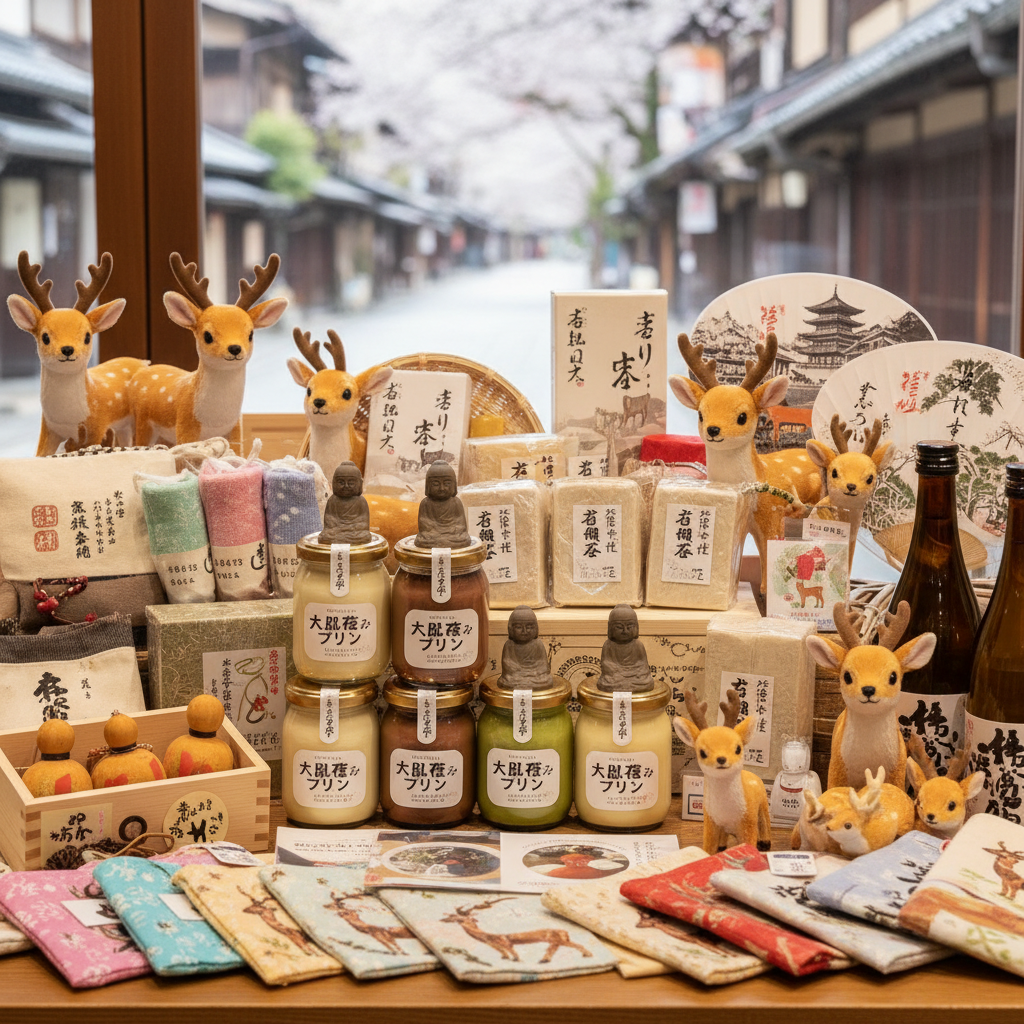
Nara Souvenirs, Deer Goods, Yoshino Kuzo, Daibutsu Pudding - The Philosophy of Driving in Japan
For decades, I spent my days conducting trains for Kintetsu, traversing the steel veins that crisscross Kansai. The rhythm of the tracks, the precise schedules, the familiar stations – it all imbued me with a profound understanding of Japan’s remarkable public transport network. Yet, after years spent watching the fleeting landscapes from a conductor’s vantage point, a deeper truth began to unfurl: the train, while efficient, is merely a prologue to the real Japan. It delivers you to the doorstep of the known, but it rarely invites you beyond the threshold.
This is where the asphalt calls. This is where the true adventure begins. Driving in Japan, particularly from a vibrant hub like Osaka, isn't just about getting from point A to point B; it's an immersive philosophy, a kinetic meditation on discovery. While the Shinkansen whisks you through a blur of rice paddies and urban sprawl, a JDM icon like an 86 or BRZ allows you to taste every curve, feel every gradient, and breathe in the nuanced aromas of the countryside as you ascend into mist-shrouded mountains or trace the emerald arteries of ancient forests. Public transportation, for all its unparalleled punctuality, dictates your pace and path. It funnels you into well-trodden corridors, presenting you with a curated, often sanitized, version of the country. But Japan, in its infinite wisdom, reserves its most profound secrets for those willing to venture off the beaten path, those who dare to turn down a narrow, winding road that seemingly leads to nowhere.
This is the concept of “Secret Japan.” It’s not just about isolated temples or obscure villages, although those are certainly part of it. It’s about the serendipitous encounters, the roadside “michi-no-eki” offering local crafts and produce found nowhere else, the tiny, unassuming restaurant serving a regional delicacy perfected over generations, or the breathtaking vista that simply doesn't appear in any guidebook or on any train map. It’s about the sheer joy of piloting a finely-tuned machine through landscapes that shift from bustling cityscapes to serene pastoral scenes, from bamboo groves to cedar forests, all within a single tank of fuel. Imagine the thrill of discovering the authentic source of Nara's famed deer goods, not just in a tourist shop, but from a artisan whose family has crafted them for centuries. Picture yourself savoring the silken, ethereal texture of true Yoshino Kuzo in a mountain village steeped in its production, far from the urban clamor. Envision pulling into a local patisserie, guided by intuition and the rumble of your 86, to find the freshest, most exquisitely crafted Daibutsu Pudding, a regional treasure that tastes all the more profound for the journey undertaken to find it.
From Osaka, the gateway to Kansai, the possibilities are boundless. The “Secret Japan” awaits just beyond the city limits, accessible only by the freedom of four wheels. It's a Japan that demands your active participation, your curiosity, and your willingness to embrace the unexpected. It’s a journey that doesn't just show you sights; it carves indelible memories into your soul. Forget the fixed schedules, the crowded platforms, the fleeting glimpses. Embrace the open road, the exhilarating hum of the engine, and the promise of a Japan unveiled, piece by authentic piece, only for you.
Nara Souvenirs, Deer Goods, Yoshino Kuzo, Daibutsu Pudding - The 2-Day Itinerary: Deep Dive

Prepare to unleash the spirit of adventure. Our destination: a two-day odyssey from the pulsating heart of Osaka to the ancient tranquility of Nara and the verdant majesty of Yoshino. This isn't just a tour; it's a sensory immersion, a pilgrimage fueled by the intoxicating blend of JDM performance and Japan's untold beauty. Our chariot for this unforgettable expedition will be either the nimble Toyota 86 or its Subaru counterpart, the BRZ – a precision instrument designed to connect you to the road, to the landscape, and to the very essence of driving.
Day 1: From Urban Canvas to Ancient Whispers and Mountain Delights
8:00 AM - 9:00 AM: The Osaka Ignition & The Urban Symphony
The morning sun, still low, casts long shadows across Osaka's awakening cityscape as you settle into the low-slung bucket seat of your 86. The cabin is minimalist, driver-focused, a taut symphony of function and form. A twist of the key, a prod of the start button, and the 2.0-liter boxer engine rumbles to life – a throaty growl that promises exhilaration. The manual transmission offers a satisfying mechanical clunk as you slot it into first gear. Exiting Osaka, we navigate the arterial expressways – the Hanshin Expressway in particular – a marvel of modern engineering that snakes above the city. This initial stretch is a test of precision and patience, the city’s pulse resonating through the chassis. Observe the towering apartment blocks giving way to industrial zones, then slowly transitioning to suburban sprawl, a fascinating cross-section of modern Japanese life. The concrete jungle, though dense, provides an engaging warm-up for the hands and feet, a rhythmic dance between clutch, accelerator, and brake as you gradually escape the urban embrace.
9:00 AM - 10:30 AM: Carving Towards Nara & The Green Expanse
As we leave the multi-layered spaghetti of Osaka behind, the expressways (likely the Kinki Expressway merging into the Nishi-Meihan Expressway) begin to open up. The cityscape recedes, replaced by broader vistas of verdant hills and scattered rural communities. This is where the 86 truly begins to breathe. The road smooths out, allowing for confident acceleration and precise lane changes. The engine note rises to a satisfying hum, the direct steering offering reassuring feedback through the leather-wrapped wheel. This section of the drive isn't just transit; it's a gradual decompression, a shedding of urban urgency. The geological tapestry of the region starts to reveal itself – the rolling hills of the Ikoma mountain range, ancient volcanic remnants softened by millennia of erosion, now blanketed in dense forestry. Keep an eye out for “mikan” (mandarin orange) orchards clinging precariously to the slopes, a testament to agricultural resilience in challenging terrain. The air, even through the vehicle’s ventilation, begins to taste fresher, carrying hints of earth and damp leaves.
10:30 AM - 12:00 PM: Nara Park & The Benevolent Wild
Arriving in Nara, the transition from expressway to local roads is seamless. Park your 86 – perhaps near the Nara Prefectural Office or a discreet lot a short walk from the main park – and step into a different epoch. The air immediately fills with a unique symphony: the rustling of ancient trees, the murmur of excited visitors, and the soft, almost reverent “koro koro” (muttering) of Nara’s most iconic residents – the deer. These aren't just animals; they are messengers from another time, revered as divine envoys. Their presence is utterly captivating. Walk among them, feel their velvet noses nudge your hand, observe their gentle – yet sometimes surprisingly insistent – interactions. This encounter immediately contextualizes “deer goods.” You're not just buying a trinket; you're taking home a piece of this living, breathing, ancient connection. Seek out the small, often family-run stalls nestled around the park selling “shika senbei” (deer crackers). Here you’ll find not only the crackers but also a delightful array of deer-themed souvenirs: intricately carved wooden deer, soft plush toys, delicate stationery adorned with deer motifs, and even “sake” bottles shaped like deer. Each item, whether whimsical or refined, carries the spirit of these gentle creatures. The vibrant green of the park, punctuated by the ochre and vermillion of ancient temple structures, creates a stunning backdrop, the scent of fresh grass mingling with the subtle aroma of incense from nearby Todai-ji.
12:00 PM - 1:00 PM: Todai-ji Temple & The Grandeur of Faith
A short, picturesque walk through the park brings you to the gates of Todai-ji. The sheer scale of the Nandaimon Gate, with its colossal guardian statues (Niō), is breathtaking, a powerful statement of historical grandeur. Passing through, the vast expanse of the temple grounds unfolds, culminating in the Daibutsuden (Great Buddha Hall) – a wooden structure of such colossal proportions it still holds the record as one of the largest wooden buildings in the world. Stand before the Daibutsu (Great Buddha) itself – a serene, bronze deity whose eyes seem to hold millennia of wisdom. The air inside the hall is cool, thick with history and the hushed reverence of countless visitors. The ancient wooden pillars emit a faint, earthy aroma, grounding you in the profound spiritual legacy of this place. This powerful experience makes the regional delicacy of “Daibutsu Pudding” all the more intriguing – a delightful, contemporary homage to this monumental spiritual symbol. While we’ll hunt for the definitive Daibutsu Pudding later, this initial encounter with its namesake primes the senses.
1:00 PM - 2:00 PM: Lunch in Nara & A Taste of Tradition
For lunch, venture beyond the immediate tourist traps around Todai-ji. Explore the charming “Naramachi” district – a maze of narrow, winding streets lined with traditional “machiya” (townhouses), many converted into quaint cafes and restaurants. Here, you can find local Nara specialties like “chagayu” (tea porridge), “kakinoha sushi” (persimmon leaf-wrapped sushi), or robust “udon” and “soba” noodles. The ambiance is one of quiet elegance, a gentle hum of conversation, the clinking of porcelain. The subtle flavors of Nara, often less assertive than Osaka's bold cuisine, invite a meditative appreciation, a perfect counterpoint to the morning’s grand explorations.
2:00 PM - 3:30 PM: The Ascent to Yoshino & The Winding Road's Embrace
It's time to re-engage with your 86. Point the nose south towards Yoshino. This drive is where the “Secret Japan” truly begins to reveal itself. The well-maintained national roads gradually give way to more intimate, winding prefectural routes. The 86, with its perfectly balanced chassis and low center of gravity, comes alive on these roads. Every input – steering, throttle, brake – is met with an immediate, eager response. The engine's growl shifts to a more urgent, joyous bark as you climb, the tachometer dancing with enthusiasm. The scenery transforms dramatically: manicured parklands yield to dense, ancient cedar forests. The road itself becomes a character in our story – a ribbon of asphalt unspooling through a geological masterpiece. Yoshino, renowned for its cherry blossoms, sits within a mountainous region characterized by deeply carved valleys and steep, forested slopes – remnants of ancient tectonic forces and relentless erosion. The curves are often blind, demanding respect and precision, a rhythmic dance between apex and exit. The air grows cooler, crisper, carrying the scent of pine and damp earth. You might even catch glimpses of fast-flowing mountain streams, their waters sparkling like shattered diamonds in the dappled sunlight. This is not just a drive; it’s a communion with the road, an intimate dialogue between man, machine, and nature.
3:30 PM - 5:00 PM: Yoshino Town & The Kuzo Revelation
Upon arriving in Yoshino, particularly the Kami-Senbon (upper thousand cherry trees) area or the historical district around Kinpusen-ji Temple, you'll feel an immediate shift in atmosphere. This isn't the bustling energy of Nara; it's a profound tranquility, an ancient spiritual aura. Yoshino is the birthplace and spiritual heartland of “Shugendo,” a syncretic religion combining ancient mountain worship with Buddhism and Taoism. The imposing Kinpusen-ji Zaōdō Hall, a magnificent wooden structure, looms majestically over the town, its weathered timbers echoing centuries of devotion. But our primary quest here is “Yoshino Kuzo.” Yoshino is legendary for producing the highest quality “kuzu” (arrowroot starch) in Japan, painstakingly extracted from the roots of wild arrowroot plants that thrive in these mountains. Wander through the town's charming streets and you'll discover traditional “kuzoya” (kuzu shops) that have been perfecting their craft for generations. Step inside, and you might witness the “kuzu-neri” (kuzu kneading) process – a mesmerizing display of skill as the translucent starch is transformed into its characteristic silky-smooth dessert. Taste “kuzukiri” – translucent kuzu noodles served chilled with a sweet “kuromitsu” (brown sugar syrup), or “kuzu-mochi” – delicate, jiggly cubes, often dusted with “kinako” (roasted soybean flour). The texture is extraordinary: ethereal, almost melt-in-your-mouth, yet possessing a subtle chewiness. It's a taste that embodies the purity and quiet artistry of rural Japan, a profound culinary experience rooted in the very earth of Yoshino. Each spoonful is a revelation, a testament to the journey you've made to discover it.
5:00 PM - 6:00 PM: Evening Stroll & Mountain Serenity
As the afternoon wanes, the light softens, bathing the ancient cedars of Yoshino in a golden glow. Take a leisurely stroll through the quiet backstreets, past traditional inns and small, family-run shops. The air, crisp and clean, carries the faint scent of woodsmoke and damp earth. The only sounds are the rustling of leaves and the occasional distant crow. The feeling is one of profound peace, a stark contrast to the modern world. This is the Japan that most tourists never see, a timeless realm accessible only to those who choose to seek it out by car. Reflect on the day's discoveries – the playful deer, the towering Buddha, the sublime kuzu – each a reward for your adventurous spirit.
6:00 PM - 7:00 PM: Check-in & Relaxation
Head to your accommodation. Yoshino offers a range of options, from traditional “ryokan” (Japanese inns) to modern hotels, many with stunning mountain views. Choose a place that allows you to fully immerse yourself in the mountain tranquility. Enjoy the simple luxury of a “onsen” (hot spring bath) if available, letting the mineral-rich waters soothe your muscles after a day of driving and exploring. The quiet comfort provides a perfect opportunity to truly unwind.
7:00 PM onwards: Dinner & Local Flavors
For dinner, seek out a local eatery in Yoshino. Many “ryokan” offer exquisite “kaiseki” (traditional multi-course dinner) meals featuring seasonal ingredients from the surrounding mountains and rivers. You might savor “ayu” (sweetfish) grilled over charcoal, wild vegetables foraged from the slopes, or hearty mountain stews. The flavors are clean, honest, and deeply comforting, a true taste of the Yoshino region. As the stars emerge, brilliant against the inky blackness of the mountain sky, the quiet hum of your 86, parked securely nearby, is a comforting reminder of the freedom and adventure that awaits tomorrow.
Day 2: From Sacred Mountains to Pudding Perfection & The Return Drive
8:00 AM - 9:00 AM: Breakfast & Morning Reverence
Begin your day with a traditional Japanese breakfast, often a delicate array of rice, miso soup, grilled fish, and various side dishes. The simple, nourishing meal is a perfect way to prepare for another day of exploration. After breakfast, take a moment to absorb the morning atmosphere of Yoshino. The mountain air is invigorating, and the first rays of sunlight piercing through the cedars create a magical, almost spiritual glow. This is the “Sacred Japan” in its purest form.
9:00 AM - 10:30 AM: Yoshino's Hidden Corners & Nature's Embrace
Before departing Yoshino, delve a little deeper into its natural beauty. Drive your 86 along the winding roads that lead to lesser-known viewpoints or hiking trails. While the main town is a spectacle, the true essence of Yoshino lies in its profound connection to nature. Perhaps visit the Yoshino Mikumari Shrine, an elegant structure nestled in the Upper Thousand Cherry Trees area, offering panoramic views of the surrounding mountains – a breathtaking tapestry of green that changes hue with every season. The drive itself is rewarding, the 86 effortlessly carving through the mountainous terrain, its precise handling instilling confidence on every curve. The sensory experience is heightened: the fresh scent of cedar, the cool mountain breeze through the open window, the satisfying rumble of the engine as you ascend and descend. This is a chance to simply drive for the pleasure of it, to appreciate the engineering marvel beneath you as it harmonizes with the natural world.
10:30 AM - 12:00 PM: Descent and the Road to Nara & Anticipation
Begin your descent from Yoshino, tracing the same captivating roads you ascended yesterday, but now with a fresh perspective. The engine provides satisfying engine braking through the gears, the exhaust burbling delightfully. As you transition from the narrow mountain passes back onto the wider prefectural and national roads, the landscape gradually flattens out, the deep valleys giving way to broader river plains. This is a good time to reflect on the mountain serenity and anticipate the next culinary delight: Daibutsu Pudding. The drive is smooth and efficient, allowing you to enjoy the changing scenery and the pure joy of driving your JDM machine.
12:00 PM - 1:00 PM: Nara & The Pudding Quest
Re-entering Nara, your mission is clear: find the Daibutsu Pudding. While many souvenir shops might carry it, the true quest is to find the freshest, most authentic version. Navigate the city streets, perhaps exploring areas slightly off the main tourist drag. Parking in Nara can be a bit challenging, but with a nimble 86, you’ll find smaller, more discreet lots or even street parking (always check signs for restrictions!). This is where local knowledge, or a quick search on your smartphone for reputable local patisseries or souvenir stores specializing in fresh regional sweets, comes into play. The anticipation builds as you approach the rumored locations.
1:00 PM - 2:00 PM: The Daibutsu Pudding Experience & Sweet Satisfaction
Finally, you locate your prize! Daibutsu Pudding, with its iconic – often stylized – image of the Great Buddha on its packaging, is a deceptively simple yet profoundly satisfying dessert. The texture is key: incredibly smooth, velvety, almost silken, a testament to high-quality ingredients and meticulous preparation. The flavor is a delicate balance of rich milk, sweet caramel, and perhaps a hint of vanilla or egg yolk, yet it avoids being overly sweet. It's comfort in a small jar, a delicious embodiment of Nara's charm. Savor it slowly, perhaps finding a quiet park bench with a view of the city or a traditional garden. This isn't just dessert; it's a cultural punctuation mark, a sweet memory intrinsically linked to the monumental Buddha you visited and the city itself. The act of seeking it out, of making it part of your driving journey, enhances its flavor tenfold.
2:00 PM - 3:30 PM: Last Souvenirs & Nara's Hidden Treasures
With the Daibutsu Pudding enjoyed, take some time to explore any other Nara souvenirs you might have missed. Beyond the deer goods, Nara is also famous for “Nara-zuke” (pickled vegetables in sake lees), traditional “fukin” (hand towels) with charming patterns, and delicate “ichibori” wooden carvings. Wander through the “Higashimuki Shotengai” (shopping arcade) or explore the side streets near Nara Park for more unique finds. This is your chance to pick up those last-minute gifts or personal mementos, each one imbued with the stories of your adventure. The beauty of having your own vehicle is the freedom to purchase a few extra items without worrying about luggage constraints on public transport.
3:30 PM - 5:00 PM: The Homeward Bound Drive & Reflections
It's time to direct the 86 back towards Osaka. The return journey is a time for reflection, for savoring the experiences of the past two days. The engine, having served you faithfully through mountains and cityscapes, maintains its steady rhythm. The driving feels more intuitive now, the car an extension of your will. As the landscape slowly shifts back from rural tranquility to suburban bustle, then eventually to the neon glow of Osaka’s urban sprawl, you carry with you not just souvenirs in your trunk, but indelible memories forged on the open road. The winding mountain passes of Yoshino, the gentle deer of Nara, the profound taste of kuzu and pudding – these aren't just snapshots; they are deeply felt experiences, earned through the exhilarating act of driving. The setting sun, perhaps casting dramatic hues of orange and purple across the western sky as you approach Osaka, provides a fittingly cinematic backdrop to the conclusion of your epic journey.
Nara Souvenirs, Deer Goods, Yoshino Kuzo, Daibutsu Pudding - Expert Advice & Cultural Nuances
Having traversed the breadth of Japan countless times, first by rail and then extensively by road, I’ve absorbed invaluable insights into the intricacies of Japanese travel, especially when driving. It’s more than just knowing the rules of the road; it’s about understanding the unspoken rhythms, the subtle cultural cues that unlock a deeper, more authentic experience.
One of the true gems of Japan’s road network is the “Michi-no-Eki” (Roadside Station). These aren't your typical highway rest stops. Imagine a fusion of a farmer’s market, a local crafts shop, a regional restaurant, and a clean, well-appointed rest area, all rolled into one. Michi-no-Eki are fiercely proud of their local identity. As you journeyed towards Yoshino, stopping at a Michi-no-Eki would have offered you a chance to sample unique “Yoshino Kuzo” products – perhaps a different brand of “kuzukiri” or innovative kuzu-based snacks you wouldn't find in a mainstream store. They often feature “gensanbutsu” (locally produced goods) that are seasonal and incredibly fresh. For Nara, you might find specific “deer goods” crafted by local artisans from a particular area, or even “Daibutsu Pudding” variations from a lesser-known patisserie that prides itself on its unique recipe. Always take the time to explore a Michi-no-Eki; they are microcosms of regional pride and culinary innovation, perfect for discovering authentic, often surprising, souvenirs.
Beyond the well-trodden paths, Japan harbors a treasure trove of “hidden local gems.” These are the places locals frequent, the unassuming eateries or small craft shops that don't make it into international guidebooks. To find them, keep your eyes open for “noren” (traditional fabric shop curtains) that look slightly worn but inviting, or small parking lots filled with local cars. Trust your instincts, and don’t be afraid to venture down a charming side street. Sometimes, the best “kakinoha sushi” in Nara isn’t in a glossy restaurant but a humble take-out shop in Naramachi. The finest “Yoshino Kuzo” might be sold from a tiny, centuries-old shop nestled deep in the Yoshino mountains, its entrance barely marked. Engage with locals if you can – a simple “Oishii resutoran wa doko desu ka?” (Where is a delicious restaurant?) can open doors to culinary delights you’d never discover otherwise. Remember, a polite bow and a genuine smile go a long way.
Driving in Japan, while liberating, also demands a respectful awareness. Roads are impeccably maintained, but they can be narrow, particularly in older towns and mountainous areas. Always be mindful of pedestrians and cyclists, especially on smaller roads. “Kei-trucks” (mini-trucks) are ubiquitous in rural areas and are often driven by elderly farmers, so exercise caution on blind corners. Speed limits are strictly enforced, and Japanese drivers, while generally courteous, expect adherence to traffic laws. Lane discipline is paramount, and passing on the left is the norm on multi-lane highways. Crucially, pay attention to the “ETC” lanes on expressways; if you don't have an ETC card (which I'll discuss), you must use the general lanes marked “一般” (Ippan) to pay cash or by card. Finally, always allow extra time for your journeys. Even with efficient highways, unexpected traffic or the urge to stop at a captivating scenic point or a tempting Michi-no-Eki will inevitably arise. Embrace these detours; they are the very essence of driving “Secret Japan.”
Nara Souvenirs, Deer Goods, Yoshino Kuzo, Daibutsu Pudding - Detailed Logistics & Pre-Trip Tips
Embarking on a Japanese road trip, especially one that takes you into the heart of regions renowned for “Nara souvenirs,” “deer goods,” “Yoshino Kuzo,” and “Daibutsu Pudding,” requires a solid understanding of local logistics. As of 2026, Japan’s road network remains one of the world’s finest, but some specific nuances can make or break your driving experience.
Traffic and Road Conditions (2026): Major city expressways like those in Osaka can experience significant congestion during rush hours (typically 7-9 AM and 5-7 PM). Plan your departure and return to avoid these peaks for a smoother start and finish. Once outside urban centers, traffic generally lightens. Mountain roads, such as those leading to Yoshino, are well-maintained but can be narrow and winding. During winter, some higher-altitude passes may require snow tires or chains, which are typically not necessary for the Nara-Yoshino route unless there's an unusual heavy snowfall. Always check local weather and road conditions if traveling in colder months. Japan drives on the left, and vehicles are right-hand drive, so allow yourself time to adjust if you’re accustomed to driving on the right.
ETC Card System: The Electronic Toll Collection (ETC) system is a game-changer for expressway travel. It allows for seamless, non-stop payment at toll gates, often at a discounted rate compared to cash. To use ETC, you need an ETC card, which is usually provided by Japanese rental companies. When approaching a toll gate, ensure you’re in an ETC-dedicated lane (marked green with “ETC”). If you don't have an ETC card, you MUST use the general lanes (marked “一般” or “General”) and pay with cash or a credit card. Attempting to pass through an ETC lane without a card will cause delays and potential fines.
Japanese Gas Stations: This is where things get interesting. “Mantan” (満タン) is the magic word. When you pull into a full-service gas station (which are still quite common, especially in rural areas), simply say “Mantan onegaishimasu!” (満タンお願いします! – “Fill it up, please!”). The attendant will usually ask if you want “Regular” (レギュラー), “High-Octane” (ハイオク), or “Diesel” (軽油 - keiyu). For an 86 or BRZ, you’ll typically want “High-Octane.” They’ll pump the gas, clean your windows, check your tires, and often guide you back onto the road with military precision and a polite bow. It’s a small, delightful cultural experience in itself. Many modern stations are self-service; these will have touchscreens to select fuel type and payment. Don't be shy to ask for help if you’re unsure – a simple “Sumimasen” (Excuse me) usually suffices.
Parking Prowess: In cities like Nara, parking can be a bit tight. Look for multi-story parking garages or coin-operated lots (“Times Parking” and “Park 24” are common brands). Always check the rates – they can vary significantly. In rural areas like Yoshino, parking is generally easier, often with dedicated lots for attractions or free street parking (again, always check for signs). With a compact JDM sports car like an 86 or BRZ, maneuvering into tighter spots is a breeze, giving you an advantage over larger vehicles. Always ensure you’re parked legally to avoid fines or towing.
The JDM (MT Car) High: Driving an 86 or BRZ with a manual transmission in Japan is an experience elevated beyond mere transportation. This isn't just a car; it's a driver’s instrument. The short-throw shifter, the perfectly weighted clutch, the direct steering – every element is designed to connect you to the road. On the winding roads leading to Yoshino, the car comes alive. You’ll find yourself heel-and-toe downshifting into corners, the engine rev-matching with a satisfying “braap,” then smoothly accelerating out, feeling the grip and balance through the seat of your pants. It’s a symphony of mechanical engagement, a visceral thrill that transforms every mile into an active participation, not a passive journey. It makes the hunt for the most authentic “Yoshino Kuzo” or the freshest “Daibutsu Pudding” an integral part of the adventure, not just the destination.
Nara Souvenirs, Deer Goods, Yoshino Kuzo, Daibutsu Pudding - Comprehensive FAQ
As a seasoned traveler and car enthusiast, I understand the common anxieties and questions that arise before an adventure like driving through Japan to discover its unique culinary and cultural treasures. Here are some comprehensive answers to frequently asked questions:
Do I need an International Driving Permit (IDP) to drive in Japan?
Yes, absolutely. To drive legally in Japan, you must have an International Driving Permit (IDP) issued under the 1949 Geneva Convention, along with your valid driving license from your home country, and your passport. It's crucial that your IDP is based on the 1949 Geneva Convention; IDPs issued under other conventions (like the 1968 Vienna Convention) are not recognized in Japan. Always carry all three documents (IDP, home country license, passport) with you when driving. Please verify that your home country is a signatory to the 1949 Geneva Convention before applying for your IDP.
What about car insurance?
When you rent a car from a reputable company in Japan, comprehensive insurance is almost always included in the rental package. This typically covers third-party liability, vehicle damage, and personal injury. However, it's wise to confirm the specific coverage details, deductibles (called “jiko mensen” or “CDW” - Collision Damage Waiver), and any exclusions with your rental provider. Some offer additional “non-operation charges” (NOC) waivers that cover costs if the car needs repairs and cannot be rented to others. It's highly recommended to understand your coverage fully before driving off.
I'm worried about driving a Manual Transmission (MT) car. Is it difficult in Japan?
If you're comfortable driving an MT car in your home country, you'll generally adapt quickly to driving one in Japan. The main difference will be driving on the left side of the road with a right-hand drive vehicle. The gear shift pattern is the same, but you'll be shifting with your left hand. The 86 and BRZ are renowned for their forgiving clutches and precise shifters, making them excellent cars for enjoying manual driving. Take some time in a quiet parking lot to familiarize yourself with the car's feel and the left-hand shifting before heading onto busier roads. The joy of piloting a true JDM manual sports car through Japan's scenic routes is unparalleled.
What are the road conditions like in winter, especially in mountainous areas like Yoshino?
While the Nara and Yoshino areas are not as prone to heavy, persistent snow as some northern regions of Japan, winter conditions can occur. From December to March, temperatures can drop, and light snowfall is possible, especially in the higher elevations of Yoshino. If you are traveling during these months, it is essential to check local weather forecasts just before and during your trip. Rental cars usually come equipped with standard tires, but if snow or ice is predicted, consider requesting snow tires (スタッドレスタイヤ - “studless tires”) from your rental company, or carrying snow chains. Many mountain roads may have warning signs or even temporary closures during heavy snowfall. For the specific itinerary mentioned, a general winter visit might involve chilly but clear roads, however, always err on the side of caution and prioritize safety.
Can I use my smartphone for navigation?
Yes, smartphone navigation apps like Google Maps work exceptionally well in Japan, offering reliable directions, real-time traffic updates, and even public transport options. Rental cars often come with built-in navigation systems, which can also be useful, though they might be in Japanese. A portable Wi-Fi device or a local SIM card is highly recommended to ensure continuous data access for navigation and communication throughout your trip.
Nara Souvenirs, Deer Goods, Yoshino Kuzo, Daibutsu Pudding - The Final Call: CTA
You’ve tasted the promise of “Secret Japan” – the exhilarating winding roads to Yoshino, the ancient whispers of Nara, the profound delight of authentic “Yoshino Kuzo,” the charming innocence of “deer goods,” and the sweet, comforting embrace of “Daibutsu Pudding.” This isn't just a fantasy; it's a tangible reality, waiting for you to seize it. Forget the crowded trains and the predictable itineraries. It's time to chart your own course, to feel the asphalt beneath your wheels, and to discover a Japan that truly resonates with the adventurous spirit.
The journey itself is the destination, and the vehicle is your trusted companion. Imagine the satisfying click of the manual shifter in your hands, the intoxicating growl of a Subaru BRZ or Toyota 86 as it carves through a mountain pass, the cool breeze of the Japanese countryside through your window. This isn't merely sightseeing; it's an immersion, a visceral connection to the land and its people, one curve, one local delicacy, one unforgettable moment at a time. Are you ready to trade the ordinary for the extraordinary? Ready to experience the true thrill of Japanese driving culture while uncovering treasures like Nara’s iconic souvenirs, the exquisite Yoshino Kuzo, and the delightful Daibutsu Pudding?
Your Japanese driving adventure begins not with a ticket, but with a reservation. For the ultimate freedom, unparalleled JDM performance, and a meticulously maintained fleet of manual transmission icons like the Toyota 86 and Subaru BRZ, there’s only one choice. Ignite your passion for Japan and for driving. Secure your unforgettable journey today with Omochi Rent-a-Car Osaka Chuo branch. The road less traveled beckons, and your perfect JDM companion awaits.
