
Wakayama Kinan-The Philosophy of Driving in Japan
For years, I viewed Japan through the strict, fixed geometry of steel rails. As a former train conductor for Kintetsu Railway, my life was measured in millimeters and fractions of a second. I admired the absolute precision of Japanese public transit—the mechanical ballet of Limited Express trains carving through mountain passes, transporting millions with silent, clockwork perfection. But when you are bound to a steel track, your world is dictated by someone else’s timetable. You see the misty, emerald-capped peaks of the Kii Peninsula through a double-paned window at 110 kilometers per hour, powerless to stop when a shaft of morning sunlight pierces the canopy or when a tantalizing, twisty asphalt ribbon branches off into an ancient cedar forest.
It wasn't until I stepped out of the conductor's cab, strapped myself into a lightweight Japanese sports car, and spent years traversing every mountain pass from Hokkaido to Kyushu that I unlocked the true soul of Japanese travel: "Secret Japan."
When traveling from Osaka, most international visitors fall into the predictable rhythm of the golden route—hopping on the Shinkansen to Kyoto, Nara, or Kobe. They experience a curated, hyper-convenient, yet highly sanitized version of the country. But real adventure in Japan begins where the train lines end.
The southern region of Wakayama Prefecture, known as Kinan (紀南), is a prime example of why you need a car. Kinan is a jagged, raw wilderness where towering sacred mountains meet the churning deep-blue waters of the Pacific Ocean. Its geography is notoriously rugged, sculpted by ancient volcanic activity, tectonic uplifts, and relentless ocean swells. While train lines like the JR Kinokuni Line hug parts of the coastline, they cannot take you up into the intoxicating hairpin bends of the Ryujin Skyline, nor can they deposit you at isolated coastal fishing villages where the morning catch is grilled over charcoal minutes after landing.
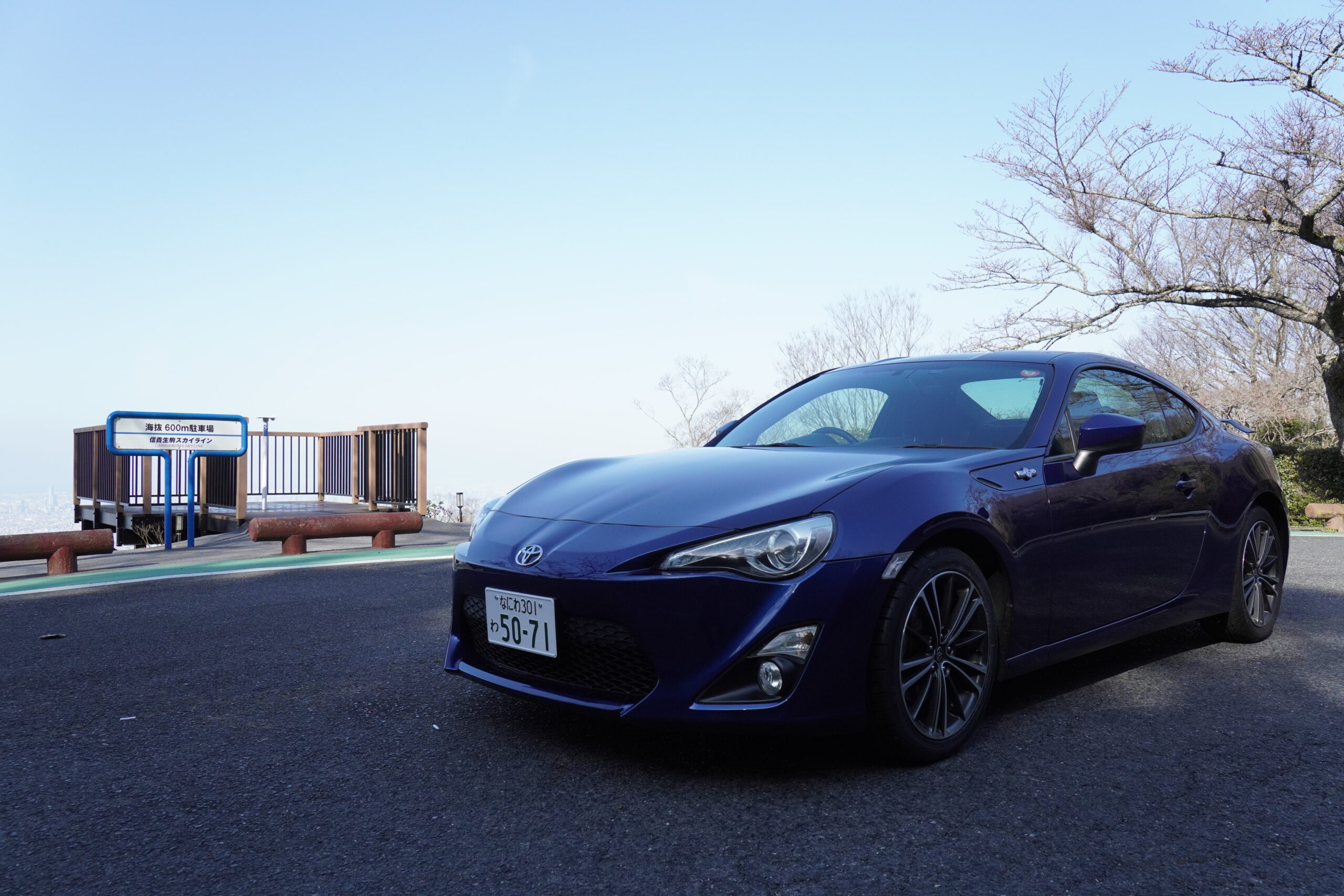
To truly experience Kinan, you need dynamic mechanical feedback. You need a machine that communicates with you through the soles of your feet and the palms of your hands. You need a pure, naturally aspirated Japanese sports car—specifically, the iconic Toyota 86 or Subaru BRZ, or the telepathic Mazda Roadster (ND MX-5).
Driving a front-engine, rear-wheel-drive JDM sports car through the mountain passes of Wakayama is not merely transportation; it is an active cultural dialogue. The short-throw 6-speed manual shifter, the perfectly weighted hydraulic-feel steering, and the low-slung seating position bring you into direct physical contact with the topography of Japan. Every elevation change, every off-camber apex, and every textured asphalt surface becomes an intimate sensory experience. You are no longer just observing the landscape; you are actively driving it.

Wakayama Kinan-The 2-Day Itinerary: Deep Dive
Day 1: Escaping the Urban Grid to the Sacred Coastal Frontier
07:00 AM – Departure from Central Osaka
The journey begins in the quiet early morning light of Osaka. As the city slumbers, you slip into the body-hugging bucket seat of your Toyota 86. Depressing the clutch pedal, you press the engine start button. The 2.0-liter boxer engine fires to life with a mechanical bark, settling into a smooth, purposeful idle. You adjust your mirrors, engage first gear with a satisfying, notched click, and merge onto the Hanshin Expressway.
Leaving the concrete jungle of Osaka behind, you head south towards the Hanwa Expressway (E26/E42). As the urban sprawl gradually yields to rolling green hills, the road begins to open up. The Toyota 86 glides effortlessly at highway cruising speeds, its low center of gravity providing rock-solid stability.
08:30 AM – Crossing into Wakayama & The Coastal Transition
Passing through the long tunnels that cut through the Izumi Mountain Range, you officially enter Wakayama Prefecture. The horizon widens, revealing tantalizing glimpses of the Kii Channel. Take the Yuasa-Gobo Road southbound. Air filling the cabin changes—the urban exhaust fumes are replaced by the crisp, salty tang of sea breeze mixed with the resinous scent of pine trees.
09:30 AM – The Twisties of Shiranami Highway & Minabe Coast
Departing the expressway at Minabe, you join Route 42, transitioning directly onto the coastal secondary roads. This is where the Toyota 86 begins to shine. You downshift into third gear, heel-and-toeing to rev-match the boxer engine. The exhaust note rises to a raspy pitch as you navigate the sweeping curves of the coastline. To your right, the ocean surges against dark basalt cliffs; to your left, mountains rise abruptly from the shoreline.
10:30 AM – Engetsu Island (Takashima) & Shirahama Coastal Sweep
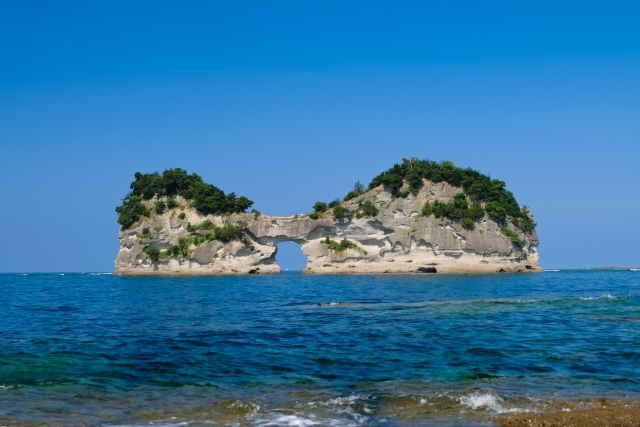
Arriving in Shirahama, bypass the crowded beach resorts and take the coastal loop road toward Engetsu Island. This iconic sandstone rock formation features a natural circular arch carved out by millennia of wave action.
The road here winds tightly around rocky inlets. Steering the 86 through these low-speed technical turns reveals the perfection of its front-midship chassis balance. The front end bites precisely into each turn with zero body roll, while the rear suspension subtly rotates, keeping the car glued to the tarmac. You park along the ocean spray barrier to take in the view: brilliant turquoise water crashing against golden rock faces under a vast blue sky.
11:30 AM – Sandanbeki Cliffs & Senjojiki Geopark
A short 10-minute drive south brings you to Senjojiki ("Thousand Tatami Mats"), a massive plateau of soft, multi-layered sandstone sloping into the Pacific Ocean. Just down the road are the formidable Sandanbeki Cliffs—a vertical wall of rock rising 50 meters above the crashing waves.
Historically, these sea caves served as a hidden staging ground for the Kumano Navy during the Heian period (794–1185). Stepping out of the low cockpit of the 86, the wind whips past your ears as you listen to the rhythmic, thunderous roar of the swells slamming into the cavern walls below.
01:00 PM – Coastal Lunch: Fresh Katsuo & Local Seafood in Susami
Continuing south along National Route 42, the road hugs the jagged perimeter of the Kii Peninsula. Enter the quiet coastal town of Susami, famed for its local Katsuo (skipjack tuna) caught using traditional pole-and-line fishing techniques (Kenken-ryo).
Stop at a local roadside diner perched directly above the breaking surf. Order the Katsuo no Tataki set meal. The skipjack is lightly seared over straw flames, leaving the center cool, tender, and deep crimson. Served with fresh garlic slices, chopped green onions, and a splash of citrusy ponzu sauce made from local Jabara fruit, the flavor is an explosion of savory umami and bright acidity. Accompanied by steaming hot Japanese rice, fresh miso soup cooked with local seaweed, and homemade pickles, it is the ultimate fuel for a day behind the wheel.
02:30 PM – Route 42 Coastal Sprint to Kushimoto & Cape Shionomisaki
With lunch finished, you return to the driver's seat. Route 42 between Susami and Kushimoto is one of the premier coastal driving roads in all of Japan. The asphalt is smooth, wide, and rhythmic, featuring long, sweeping turns that mirror the curvature of the bays.
Here, you can hold fourth gear, letting the 86's engine hum right in its sweet spot around 4,000 RPM. The chassis soaks up the gentle undulations of the coastal road, delivering a sense of effortless flow. To your right lies the vast expanse of the Pacific Ocean, stretching uninterrupted toward the equator.
By 03:15 PM, you reach Cape Shionomisaki—the southernmost point of Japan's main island of Honshu. Drive through the manicured grassy plateau to the white stone Shionomisaki Lighthouse, erected in 1869 under the guidance of British engineer Richard Henry Brunton. Standing at the cliff edge, you look out over a 270-degree panorama of open ocean, where the dark blue waters of the Kuroshio Current sweep past the coast.
04:30 PM – Hashigui-iwa Rocks & Sunset at Nachikatsuura
Leaving Cape Shionomisaki, a short drive brings you to Hashigui-iwa Rocks. This extraordinary geological landmark consists of roughly 40 monolithic rock pillars standing in a straight, 850-meter-long line pointing toward Oshima Island. Legend attributes their creation to the great Buddhist monk Kobo Daishi, who supposedly attempted to build a stone bridge across the sea in a single night. In reality, these pillars are the erosion-resistant remains of ancient volcanic dikes exposed by the sea.
As the late afternoon sun begins its descent, the sky turns shades of deep orange, violet, and burnt gold. The silhouettes of Hashigui-iwa cast long, dramatic shadows over the shallow tidal flats.
06:00 PM – Evening Arrival in Nachikatsuura: Onsen & Seafood Feast
Drive the final coastal leg into Nachikatsuura, a famous hot spring port town known for having the highest tuna yield in Japan. Check into a traditional ryokan (Japanese inn) situated along the bay.
After dropping off your luggage, change into a yukata and soak in an open-air geothermal bath (rotenburo) carved directly into natural seaside cliff caverns. The hot, mineral-rich thermal water soothes tired driving muscles while the cool ocean breeze washes over your face.
For dinner, indulge in a multi-course Kaiseki feast featuring prime cuts of raw, un-frozen Maguro (tuna)—from delicate, sweet Akami (lean meat) to rich, buttery Otoro (fatty belly tuna) that melts instantaneously on your tongue—paired with local dry sake brewed using pristine mountain spring water from the Kumano forests.

Day 2: The Sacred Mountains, Hairpin Passes & High-Altitude Ridge Driving
06:30 AM – Dawn Ride to Kumano Nachi Taisha & Nachi Falls
Wake before sunrise to experience the sacred side of Kinan in absolute tranquility. The morning air in the valley is cool, crisp, and thick with scent of cedar and wet stone.
Startup the 86; the cold engine hums quietly in the crisp morning air. You climb Prefectural Route 46, a narrow, ascending ribbon of asphalt that weaves up into the misty mountains of Nachi.
Arriving at the parking area near Nachi Falls, you hike up the stone steps framed by ancient, towering Sugi (Japanese cedar) trees. Emerging from the forest, you are greeted by one of the most iconic sights in Japanese history: the brilliant vermillion three-story pagoda of Seiganto-ji Temple standing alongside Nachi Falls—Japan’s tallest single-tiered waterfall, dropping 133 meters down a sheer cliff face. With no crowds present, the only sound is the deep, resonant roar of cascading water echoed through the sacred amphitheater of the mountains.
08:30 AM – The Ancient Kumano Kodo Forest Highway (Route 311)
Returning to your car, you point the nose of the 86 toward the interior mountain ranges via National Route 311. This road runs parallel to the ancient Kumano Kodo pilgrimage routes that emperors and ascetics have walked for over a thousand years.
Route 311 is an absolute dream for drivers. Built with wide lanes, excellent sightlines, and high-grip asphalt, it carves through deep river valleys alongside the crystal-clear waters of the Oto River. Here, you can push the 86 through second- and third-gear corners. The balance of the car allows you to pick your line with millimeter precision. Tap the brakes, turn in, feel the front tires load up, hit the apex, and roll smoothly onto the throttle as the chassis settles gracefully into the exit.
10:30 AM – Kumano Hongu Taisha & The World’s Largest Torii Gate
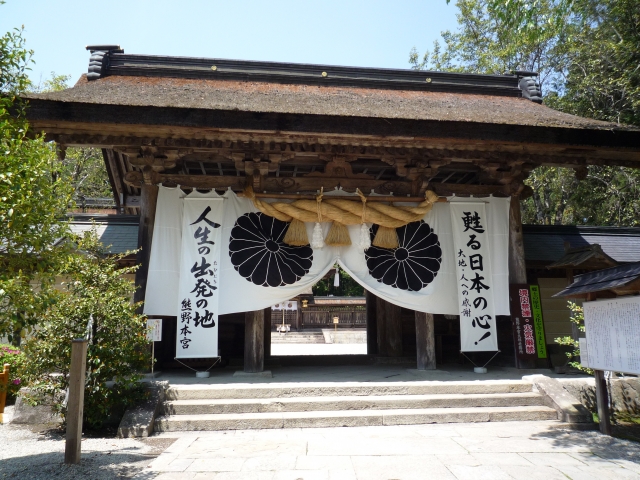
Arrive at Kumano Hongu Taisha, the spiritual center of the Kumano Shrine network. After visiting the main wooden shrine compound nestled deep in the forest, walk down to Oyunohara—the original shrine site located on a sandbar at the confluence of the Kumano and Oto rivers. Standing guard over this holy plain is the Oyunohara Torii, the largest Shinto gate in the world, towering 33.9 meters high against a backdrop of lush green mountains.
12:00 PM – Mountain Fuel: Wild Boar Ramen & Meharizushi in Totsukawa
Head north onto Route 168, crossing into the rugged mountain valleys of Totsukawa. Stop at a rustic village eatery frequented by local forestry workers and mountain drivers.
Order a bowl of local Inoshishi (wild boar) ramen served alongside Meharizushi. Meharizushi is a traditional Kinan bento staple—warm, seasoned rice mixed with minced pickled mustard greens, wrapped tightly in a large, savory pickled mustard leaf. The dish is clean, earthy, and satisfying. The wild boar ramen features a rich, dark soy broth simmered for hours with local wild herbs, topped with tender, smoky slices of boar meat that provide a rich contrast to the crispness of the pickled rice wrap.
01:30 PM – The Peak Driver’s Road: Koya-Ryujin Skyline (Route 371)
Now comes the absolute climax of the trip for any driving enthusiast: the legendary Koya-Ryujin Skyline (National Route 371).
Connecting the hot spring village of Ryujin Onsen to the sacred mountain monastery city of Mount Koya, this 42-kilometer ridge-line highway sweeps along the crests of the Kii Mountain Range at elevations exceeding 1,000 meters. Originally built as a toll road, its layout features a dizzying array of high-speed sweepers, tight hairpins, rapid direction changes, and dramatic off-camber elevation drops.
Shift down into second gear. The lightweight 86 thrives in this environment. As you climb higher, the dense lower forest gives way to high-alpine birch and dwarf bamboo. The air grows noticeably cooler. Negotiating the endless series of curves, you enter a state of pure driving flow:
Brake hard before the turn-in point while blipping the throttle to downshift.
Rotate the car smoothly toward the clipping point.
Feed in the power, feeling the rear differential lock up and drive you out of the exit.
The mechanical symmetry between driver, car, and road becomes absolute. Panoramic views of mist-shrouded peaks stretch endlessly on both sides of the ridge—a sea of green ridges floating above valleys filled with soft clouds.
03:30 PM – Mount Koya (Koyasan): The Sacred Sanctuary on the Mountain Top
The Koya-Ryujin Skyline culminates at Mount Koya (Koyasan), the world headquarters of the Shingon sect of Esoteric Buddhism, founded in 816 AD by the monk Kobo Daishi.
Park the car in the high-altitude basin and walk through Okunoin Cemetery, Japan's largest and most sacred graveyard. Over 200,000 stone stupas, lichen-covered monuments, and ancient cedar trees line the 2-kilometer stone path leading to Kobo Daishi's mausoleum. Thousands of brass lanterns flicker softly in the dim, cool mountain forest, creating an atmosphere of quiet reverence that contrasts with the exhilarating adrenaline of the ridge drive you just completed.
05:00 PM – Descent via Mount Koya Touge & Return to Osaka
Begin the final descent down the northern slopes of Mount Koya via Route 480. This technical mountain descent features tight, rhythmic downhill switchbacks where smooth footwork and light trail-braking keep the car's weight balanced across the front axle.
Reaching the valley floor at Katsuragi, join the Keinawa Expressway and transition back onto the Hanwa Expressway toward Osaka.
07:00 PM – Re-entering Osaka
As the neon lights of Osaka's skyline appear on the horizon, you transition back into the city rhythm. You have traversed over 500 kilometers of coastal highways, mountain passes, and historic routes—discovering a side of Japan that train passengers will never know.
Wakayama Kinan-Expert Advice & Cultural Nuances
Driving through regional Japan requires a distinct understanding of local road culture, unwritten etiquette, and unique infrastructure features that make road trips here so rewarding.
The Magic of Michi-no-Eki (Roadside Stations)
Japan’s government-designated roadside rest stops, known as Michi-no-Eki (道の駅), are far more than ordinary highway gas stations. They are hyper-local cultural hubs designed to support regional economies and road travelers alike.
In Kinan, stops like Michi-no-Eki Susami or Michi-no-Eki Sanpin-Nawa are destinations in their own right. Here, you will find clean public rest facilities, emergency information centers, and market stalls selling farm-fresh produce harvested that very morning by local villagers. In Wakayama, look out for fresh Natsumikan (summer oranges), hand-crafted Umeboshi (pickled salted plums), artisanal soy sauces from Yuasa (the birthplace of Japanese soy sauce), and hot street-food snacks like freshly fried octopus cakes.
Navigating Narrow Mountain Passes (The "Kokudou" Reality)
While major arterial routes like Route 42 and Route 311 are wide and beautifully maintained, entering deep mountain shortcuts can occasionally lead you onto single-lane asphalt roads known colloquially as Kokudou (酷道, literally "cruel national routes").
When navigating these narrow mountain passes:
Watch the Convex Mirrors: At every blind mountain corner, curved silver convex mirrors are installed on posts. Look up into the mirror before entering the bend to check for oncoming forestry trucks or local drivers.
Use Passing Bays: If you meet an oncoming vehicle on a single-lane road, the driver closest to a wider cutout section (Lump) should reverse or pull over to let the other pass.
Watch for Falling Rocks and Debris: Mountain roads in Wakayama can have small fallen rocks or tree branches after heavy rainfall. Keep your eyes scanning the road surface ahead, not just the horizon.
Driving Etiquette & Unwritten Rules
The Gratitude Flash: When a local driver pulls slightly to the left to let your faster sports car pass on a mountain climb, flash your hazard lights twice after merging back in front. This double-flash is the universal Japanese road signal for "Thank you."
Speed Limits vs. Traffic Flow: Speed limits in Japan are conservatively posted (often 40–50 km/h on mountain roads and 80 km/h on expressways). Drive smoothly, match the ambient flow of traffic, and prioritize safety over aggressive driving.
Yielding on Narrow Bridges: In rural valleys, single-lane bridges often lack traffic lights. The car closer to the bridge entrance generally has right-of-way, but eye contact and a polite hand wave go a long way.
Wakayama Kinan-[Detailed Logistics & Pre-Trip Tips]
Navigating Japanese roads smoothly requires a clear understanding of practical logistics, modern highway payment systems, and vehicle operation nuances.
Expressways & The ETC Card System
Japan’s toll expressways are world-class, but cash payment lanes at toll booths can be slow and cumbersome.
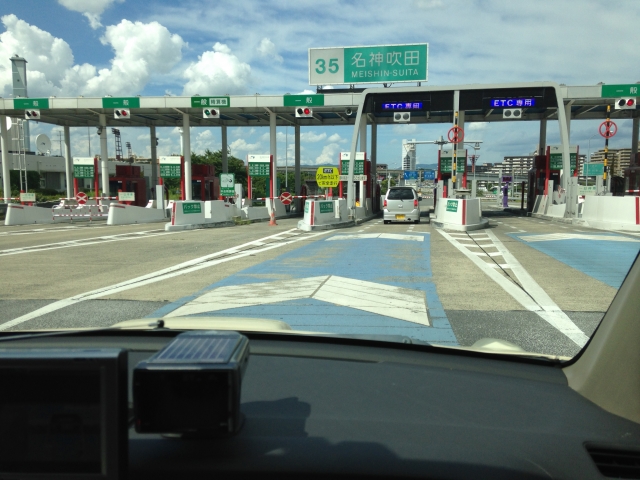
When renting your JDM sports car, always request an Electronic Toll Collection (ETC) Card. The ETC card fits into a specialized card reader concealed within the car's glovebox or center console. As you approach an expressway toll gate, select the purple ETC Only lane. Reduce your speed to 20 km/h; the overhead sensor will chime, read your card, open the barrier gate automatically, and log your toll electronically. Upon returning the car to the rental branch, your card is read, and you can settle all accrued toll fees in one quick credit card transaction.
Navigating Japanese Gas Stations (Full Service vs. Self Service)
Gas stations (Gasorin Stand) in Japan come in two main formats:
Full Service (フル): Attendants will guide you to a pump with hand signals. Open your fuel door, roll down your window, and state three things:
Fuel Type: All JDM sports cars like the Toyota 86, Subaru BRZ, and Mazda Roadster require High Octane fuel (ハイオク - Hai-oku).
Quantity: Say "Mantan" (満タン) for a full tank.
Payment Method: State "Credit Card" or "Cash" (Kyasshu).
Note: Attendants will often hand you a damp towel to wipe your dashboard while they clean your windshield and mirror glass free of charge.
Self Service (セルフ): Select your language on the touch screen (English is widely available). Choose High Octane (designated by the YELLOW nozzle handle). Insert your credit card or cash into the payment slot, ground yourself on the static electricity touch pad, fill the tank until the pump clicks off automatically, and collect your receipt and change.
Parking Rules in Rural & Urban Areas
Always Reverse-Park: In Japan, back-in parking is standard practice everywhere—from convenience stores to hotel parking lots. It ensures safe, clear visibility when pulling back out into traffic.
Convenience Stores: Stopping at a Lawson or Seven-Eleven for coffee or snacks allows for short-term parking in designated bays in front of the store.
Overnight Hotel Parking: Always confirm whether your hotel offers guest parking (Chōshajō). In traditional towns like Katsuura, some historic inns use off-site gravel lots nearby.
The Pure Joy of Manual Driving in Japan
Operating a manual transmission (MT) JDM sports car on Japan's mountain passes is a tactile pleasure that modern automatic vehicles simply cannot replicate. The lightweight pedal feel, clear bite point on the clutch, and tight throw of a short-shifter make rev-matching on downshifts extraordinarily rewarding. Hearing the mechanical rasp of a high-revving Japanese engine echo off mountain canyon walls is an experience that stays with you long after the trip ends.
Wakayama Kinan-[Comprehensive FAQ]
Q1: What driving license documentation do I need to rent and drive a car in Japan?
To drive legally in Japan, visitors must present three documents at the rental counter:
Your valid Original Driver's License from your home country.
An official International Driving Permit (IDP) issued under the 1949 Geneva Convention on Road Traffic.
Your valid Passport.
Crucial Note: IDPs issued under the 1968 Vienna Convention or other treaties are not accepted in Japan. Visitors from countries such as Switzerland, Germany, France, Belgium, Monaco, and Taiwan must provide an official Japanese translation of their home driver's license created by an authorized body (such as JAF) instead of an IDP. Always verify your country's specific treaty agreement prior to travel.
Q2: What insurance coverage is necessary for renting a JDM sports car?
Comprehensive insurance is essential for complete peace of mind when navigating unfamiliar roads and tight mountain passes. Full coverage packages typically include:
Collision Damage Waiver (CDW): Waives your financial liability for damage caused to the vehicle in an accident.
Non-Operation Charge (NOC) Cover: Protects you from paying flat-rate business interruption fees charged by the rental company while a damaged vehicle is undergoing repairs or cleaning.
Select full-coverage insurance options that eliminate deductible costs entirely so you can focus on enjoying your drive.
Q3: I haven't driven a manual transmission (MT) car in a few years. Is it difficult to adjust to driving a manual on Japanese roads?
Japanese vehicles are right-hand drive (RHD), meaning you will sit on the right side of the cabin and operate the gear shift lever with your left hand.
While this can feel unfamiliar for a few minutes if you come from a left-hand drive country, the pedal layout (Clutch - Brake - Accelerator from left to right) remains identical worldwide. Modern Japanese sports cars like the Toyota 86, Subaru BRZ, and Mazda Roadster feature light clutch pedal efforts, smooth gear engagements, and hill-start assist features that prevent stalling on steep inclines. A quick 10-minute familiarization drive through quiet side streets is usually all it takes to build complete confidence.
Q4: What are the road conditions like during winter in Wakayama Kinan?
Coastal areas of Kinan (Shirahama, Kushimoto, Katsuura) enjoy a warm, mild subtropical climate and rarely receive snow or ice, making them ideal year-round driving destinations.
However, high-altitude inland mountain passes—specifically the Koya-Ryujin Skyline and the upper elevations around Mount Koya—can experience sub-zero temperatures, black ice, and heavy snowfall between late December and early March. If traveling during mid-winter, check road reports in advance, ensure your rental car is equipped with studless winter snow tires, or stick to the coastal routes.
Wakayama Kinan-The Final Thoughts
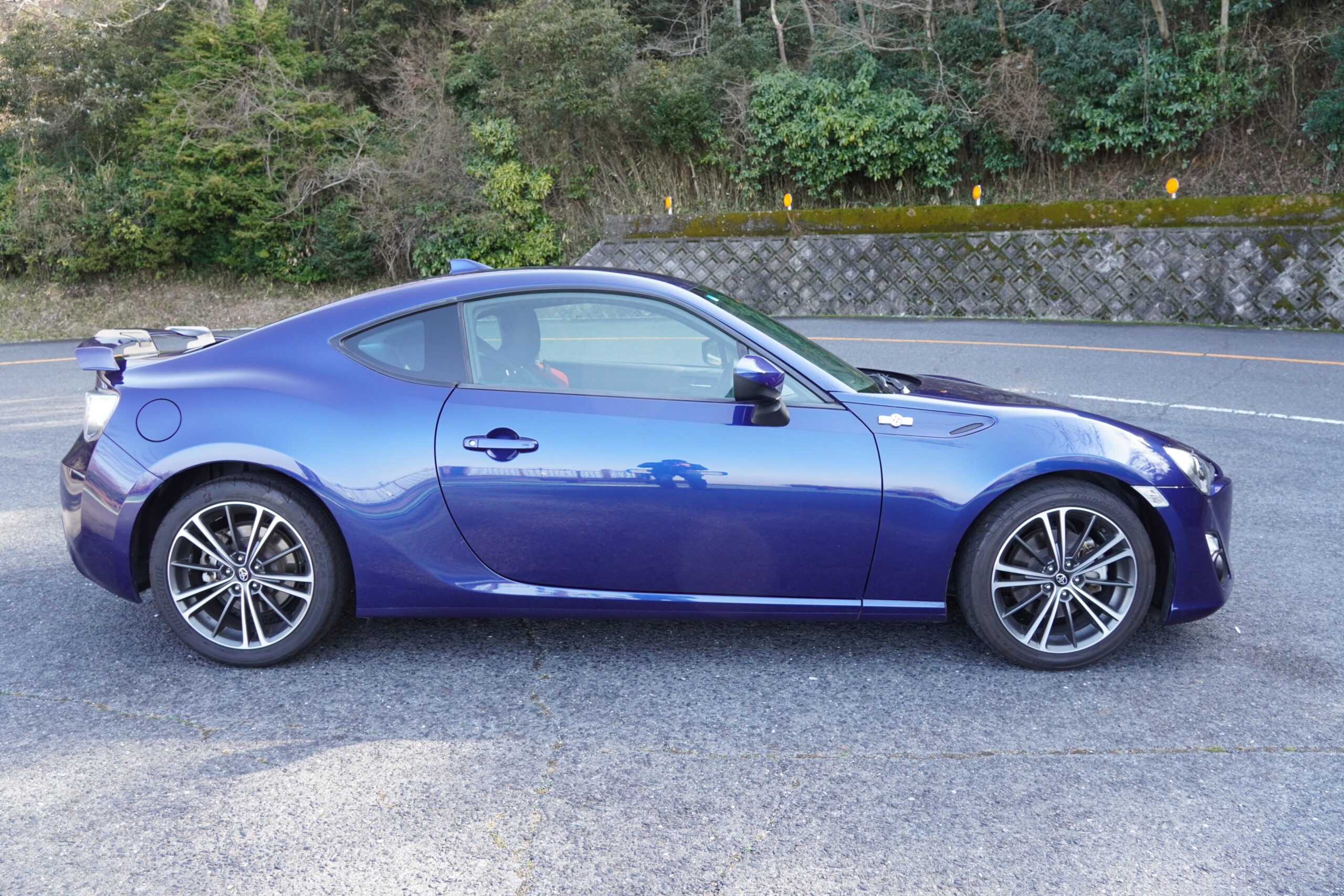
Japan is a country of profound contrasts—where ancient spiritual traditions exist side-by-side with cutting-edge engineering. While train travel offers a efficient window into its urban centers, the true soul of Japan lies hidden along its coastal cliff highways, misty cedar passes, and quiet fishing ports. It lies waiting in the places where rails do not go.
To unlock this hidden world, you don't just need a rental car; you need a machine crafted for pure driving pleasure. You need to feel the balance of a perfectly engineered chassis beneath you, hear the roar of a naturally aspirated engine, and take absolute control of your own journey.
When you are ready to trade rigid train schedules for total freedom, start your journey at Omoreshi Rent-a-Car Osaka Central Branch (おもしろレンタカー大阪中央店).
Specializing in meticulously maintained JDM sports cars—including pure manual transmission Toyota 86s, Subaru BRZs, and Mazda Roadsters—Omoreshi Rent-a-Car offers the ultimate fleet for discerning automotive enthusiasts and international travelers alike. Located conveniently in Osaka, it serves as your launchpad directly into the legendary coastal routes and mountain passes of Kansai and Kinan.
Reserve your JDM sports car today, grab your ETC card, turn the key, and discover the real Japan on your own terms. Your open road is waiting.