
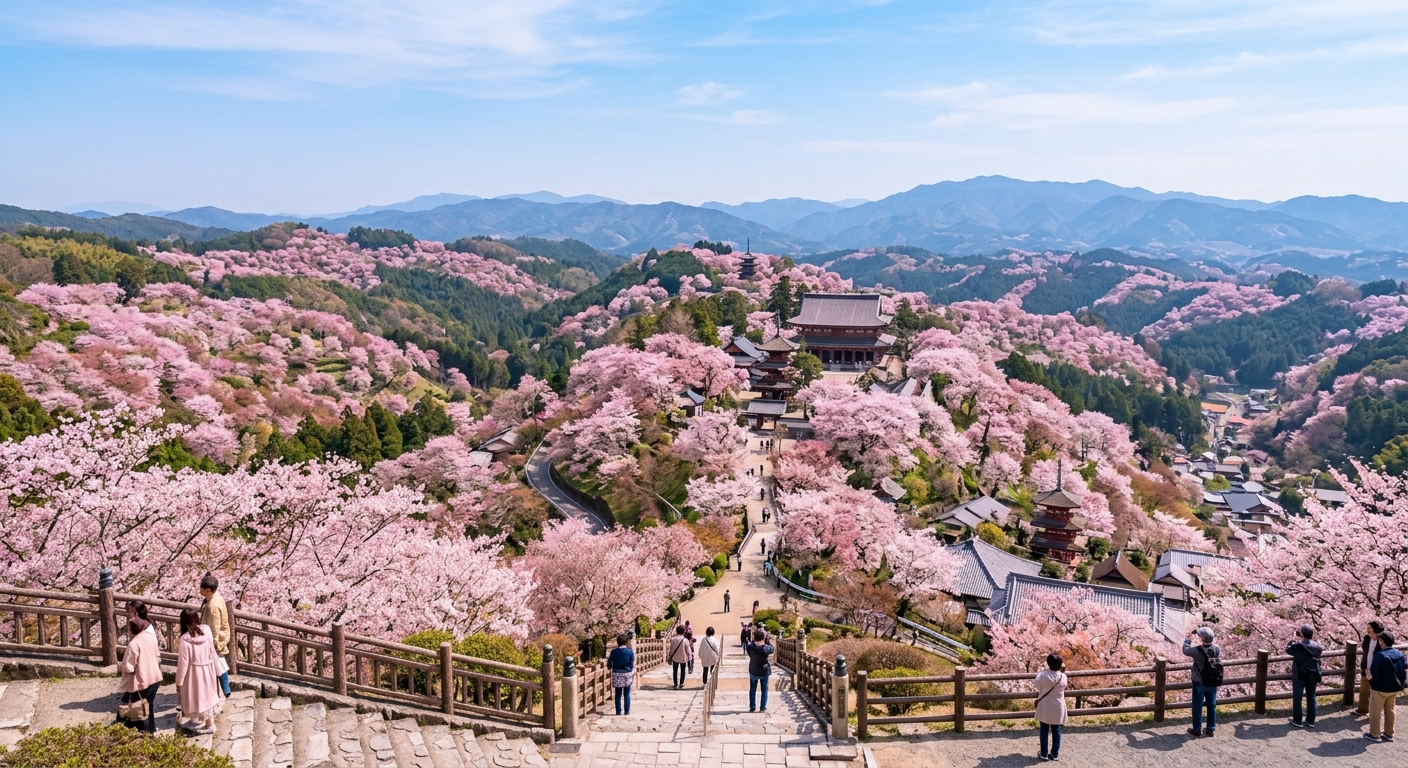
Yoshino-yama, Cherry Blossoms, Senbonzakura, Spectacular Views, Driving – The Philosophy of Driving in Japan
As a former Kintetsu train conductor, I’ve spent countless hours traversing Japan's steel arteries, witnessing its magnificent landscapes unfold from a meticulously scheduled, iron-clad perspective. There’s a profound beauty in the rhythmic clickety-clack, the fleeting glimpses of temples and rice paddies framed by a window, the communal hum of shared journeys. But let me tell you, as a man who has also explored every winding pass and hidden coastal road from Hokkaido to Kyushu, the train, for all its charm and efficiency, can only ever offer a curated glimpse. It's a grand symphony, played on an established stage. But true exploration, the kind that ignites the soul and carves indelible memories, demands a different instrument: your own two hands on a steering wheel, the road stretching out before you, and the raw power of a JDM machine beneath you.
When you’re exploring the Kansai region, with Osaka as your vibrant starting point, the allure of the automobile becomes undeniable. Public transport, while impeccable, confines you to its pre-ordained routes and timetables, stripping away the spontaneity that is the very essence of adventure. The true magic of Japan, its 'Secret Japan,' lies not along the Shinkansen lines or the well-trodden tourist paths, but in the valleys whispering ancient tales, the mountain passes that demand skill and reward with unparalleled vistas, and the unassuming local eateries where grandmothers serve generational recipes.
Imagine this: the intoxicating scent of cherry blossoms carried on the crisp mountain air, not as a fleeting scene from a train window, but as an immersive experience as you carve through a winding road, the engine of your 86 or BRZ singing in perfect harmony with the chirping of unseen birds. The exhilaration of downshifting into a tight hairpin, the precise steering input, the feeling of the car responding instantly to your every command – this is not just transportation; it's a profound connection to the landscape, a dance between man, machine, and nature. It's the freedom to chase the perfect light, to pull over at a moment's notice to capture a breathtaking vista, or to stumble upon a tiny, centuries-old shrine that isn't in any guidebook.
Driving in Japan isn't merely about getting from A to B; it's about the journey itself becoming the destination. It's about peeling back the layers of a country often perceived through a lens of efficiency and order, to reveal its wild, untamed heart. It's an act of defiance against the mundane, a declaration that you seek more than just sightseeing – you seek immersion, challenge, and discovery. And for those who truly appreciate the art of driving, who yearn for the tactile feedback of a manual transmission and the balanced chassis of a performance machine like the 86 or BRZ, the roads of Japan offer an unparalleled playground. Forget the scheduled stops and the crowded platforms; it's time to chart your own course and unlock the Japan that only the open road can reveal.
Yoshino-yama, Cherry Blossoms, Senbonzakura, Spectacular Views, Driving – The 2-Day Itinerary: Deep Dive
Prepare yourself. This isn't just a trip; it's an odyssey into the heart of Japan's most celebrated spring spectacle, a symphony of engineering, nature, and raw human emotion. We will chase the ethereal beauty of Yoshino-yama's Senbonzakura – the 'Thousand Cherry Trees' – not from the comfort of a tour bus, but from the driver's seat of an exquisitely balanced JDM machine. Our chariot? A nimble 86 or BRZ, its flat-four engine eager to tackle the legendary mountain roads. This is your definitive 2-day, 1-night itinerary, crafted for the true enthusiast.
Day 1: Osaka to the Heart of the Sakura Kingdom
7:00 AM: Osaka Departure – The Dawn of an Adventure
The city of Osaka, still stirring from its slumber, will be our launchpad. The air is crisp, carrying the faintest scent of morning coffee and the promise of adventure. Your 86 or BRZ sits poised, its lines sleek, its engine a low growl of anticipation. Take a moment. Adjust the seat, check your mirrors, feel the solid click of the manual shifter. This is where the connection begins. We'll bypass the usual rush hour, heading south-east, aiming for the Kinki Expressway, then seamlessly transitioning onto the Minami-Hanna Road, and finally, the Route 309, which will lead us directly into Nara Prefecture.
The initial stretch of expressway is a ballet of modern engineering, wide lanes and smooth tarmac. But even here, in the relatively calm prelude, the 86/BRZ hints at its prowess. The responsive steering, the immediate feedback from the road – it's a stark contrast to the numbing isolation of larger, softer vehicles. The journey to Yoshino isn't merely a point-to-point transit; it's a gradual immersion, the urban sprawl slowly giving way to verdant hills and a sense of profound calm. This initial drive, clocking in at around 1.5 to 2 hours, is your chance to truly bond with the machine, to understand its nuances before the real challenge and reward begins.
9:00 AM: Approaching Yoshino – The Winding Ascent Begins
As we transition from the broader highways onto Route 169, the landscape begins its dramatic transformation. The roads narrow, the curves tighten, and the true character of our JDM companion comes to life. This is where the magic of the 86/BRZ’s balanced chassis and precise steering truly shines. You’ll feel the car lean into the bends with an almost telepathic connection, the low center of gravity ensuring stability even as the gradients increase. The exhaust note, a subtle burble at lower RPMs, deepens into a purposeful growl as you confidently navigate the ascents, the engine effortlessly pulling through the gears.
The history of these roads is as rich as the soil they traverse. For centuries, pilgrims have journeyed to Yoshino-yama, a sacred mountain revered for its spiritual significance and, of course, its unparalleled cherry blossoms. These very paths, now paved, once echoed with the footsteps of emperors, poets, and monks. As you ascend, imagine the arduous journeys of those who came before you, their determination mirroring your own as you conquer each curve. The geological features of Yoshino are fascinating: a complex interplay of ancient igneous and sedimentary rocks, sculpted over millennia, giving rise to the dramatic slopes that cradle the famous cherry trees.
10:00 AM: Yoshino-yama Base & Parking – Strategy is Key
Upon reaching the base of Yoshino-yama, the scene is likely to be bustling. Parking during cherry blossom season requires foresight and a dash of strategic thinking. There are designated parking areas, often located slightly off the main pilgrimage route, with shuttle buses connecting to the upper areas. However, for the true driver, a more direct approach might be appealing. Some smaller, private lots are available closer to the Shimo Senbon (Lower Thousand Cherry Trees) area, though they fill up quickly. Look for signs, or follow local traffic controllers' directions. The exhilaration of the drive is still fresh, but now, the mountain itself awaits.
10:30 AM – 12:30 PM: Shimo Senbon to Naka Senbon – The Blossom Cascade
Stepping out of the car, the air is suddenly thick with the intoxicating, sweet perfume of cherry blossoms. Shimo Senbon is your first encounter with Yoshino’s legendary beauty, a sprawling canvas of pink and white cascading down the slopes. This area, easily accessible from the lower parking lots, offers a breathtaking introduction. Walk along the pathways, allowing yourself to be enveloped by the sheer volume of blossoms. The pathways here are relatively gentle, perfect for stretching your legs after the drive. Look back down the valley for stunning panoramic views where the cherry blossoms merge with the distant mountains, a painter’s dream of soft pastels.
As you continue your ascent, either on foot or by a local shuttle, you'll reach Naka Senbon (Middle Thousand Cherry Trees). Here, the concentration of trees intensifies, and the scenery becomes even more dramatic. Explore Kinpusenji Temple’s Zao-do Hall, a magnificent wooden structure and a UNESCO World Heritage site, its imposing presence a stark contrast to the delicate blossoms surrounding it. Take your time to appreciate the intricate details of its architecture, a testament to centuries of devotion. The scent here is a richer, more concentrated version of the lower slopes, a heady mix of blossoms and ancient wood.
12:30 PM – 1:30 PM: Lunch in Naka Senbon – Savoring Local Flavors
Naka Senbon offers a plethora of local eateries, from humble noodle shops to more refined restaurants. Seek out a spot that specializes in kuzukiri (chilled arrowroot noodles with black sugar syrup) or kakinoha-zushi (persimmon leaf sushi), a regional delicacy where mackerel or salmon sushi is pressed in a persimmon leaf, imparting a subtle aroma and flavor. The taste of the fresh spring water, often served alongside, is pure and invigorating. This isn't just sustenance; it's a communion with the local culture, a moment to refuel amidst the splendor. Imagine the vibrant colors of the sushi against the delicate pink backdrop outside – a feast for all senses.
1:30 PM – 4:00 PM: Kami Senbon & Oku Senbon – Ascending to Elysium
The ascent continues to Kami Senbon (Upper Thousand Cherry Trees) and, for the truly dedicated, Oku Senbon (Inner Thousand Cherry Trees). This is where the views become truly legendary, where the 'Senbonzakura' concept is most vividly realized. From the Hanayagura Viewpoint in Kami Senbon, you’ll witness an unparalleled spectacle: an entire mountain covered in a dense, undulating tapestry of cherry blossoms, stretching as far as the eye can see. It's an ethereal panorama that will steal your breath away, a moment of profound beauty that words struggle to capture. The air here, at this altitude, feels purer, cooler, carrying a sharper, more delicate fragrance of the blossoms.
The paths leading to Oku Senbon are less crowded, offering a more serene experience. Here, the cherry trees are wilder, older, their gnarled branches reaching towards the sky, their blooms a deeper shade of pink. This area evokes a sense of ancient Japan, a timeless beauty. The roads that lead to these higher vantage points, though no longer directly accessible by private car during peak season, are a testament to the thrilling drives you’ve experienced so far. Imagine the sheer joy of navigating these very curves in your 86/BRZ, the precision and feedback from the steering wheel as you'd trace each bend, the engine's response mirroring your own excitement. The historical context here is palpable; many ancient hermits and ascetics sought enlightenment in these very groves.
4:00 PM – 6:00 PM: Evening Descent & Check-in – A Traditional Retreat
As the afternoon light begins to soften, casting long shadows across the mountain, make your way back down to your chosen accommodation. Yoshino offers a range of traditional ryokan and guesthouses, many with stunning views or charming gardens. Checking into a ryokan is an experience in itself: the gentle greeting, the scent of tatami mats, the quiet elegance of your room. Take a moment to unwind, perhaps soak in a traditional Japanese bath (onsen if available), letting the day's awe-inspiring sights slowly sink in.
7:00 PM: Traditional Dinner – A Culinary Delight
A multi-course kaiseki dinner at your ryokan is not merely a meal; it’s an art form. Each dish, meticulously prepared and exquisitely presented, celebrates local, seasonal ingredients. Expect delicate mountain vegetables, fresh river fish, and perhaps a succulent cut of local beef. Pair it with some local sake, a clean and crisp complement to the flavors. The atmosphere is one of quiet contemplation, a stark contrast to the dynamic drive earlier in the day. This is a moment to fully immerse yourself in Japanese hospitality, savoring every taste, every texture, every carefully arranged detail.
9:00 PM: Night Cherry Blossoms (Yozakura) – A Nocturnal Dream
If your visit coincides with the period when the Yozakura (night cherry blossoms) are lit up, a short evening stroll is an absolute must. The cherry trees, bathed in gentle light, take on an entirely different, almost mystical quality. The delicate pinks and whites glow against the inky blackness of the night sky, transforming the familiar landscape into a surreal, dreamlike realm. The air is cooler, carrying a more intense fragrance of the blossoms. It's a serene, almost spiritual experience, a perfect capstone to a day of unparalleled beauty.
Day 2: Yoshino's Hidden Gems & The Return Drive
7:00 AM: Morning Serenity & Traditional Breakfast
Wake to the gentle sounds of the mountain and the soft morning light. A traditional Japanese breakfast, often featuring grilled fish, rice, miso soup, and an array of small, savory dishes, awaits. It’s a nourishing and contemplative start to the day, preparing you for the next leg of your adventure. Sip on green tea, gaze out at the morning view from your window, and reflect on the beauty you witnessed yesterday.
8:30 AM – 11:00 AM: Oku Senbon's Tranquil Trails & Secret Spots
Today, we delve deeper into Yoshino-yama, exploring areas often overlooked by the casual tourist. Head back towards Oku Senbon, but this time, venture onto the smaller, less-trodden hiking trails. The car enthusiast might appreciate the subtle changes in gradient, the challenging ascents, and the panoramic views from these higher, more remote spots. Discover hidden temples like Saigyo-an, a hermitage nestled deep in the forest, where the famous poet Saigyo lived and composed his verses inspired by the cherry blossoms. The air here is filled with the scent of pine and damp earth, a grounding contrast to the sweetness of the blossoms. The silence is profound, broken only by the rustling of leaves and the occasional bird call.
These are the paths where your 86/BRZ, if allowed to roam, would feel most at home. The sense of precision, of being connected to the road, is paralleled by the feeling of being connected to nature on these winding trails. The geology here reveals itself in weathered rock formations and ancient trees, roots clinging tenaciously to the steep slopes. Each turn on the trail offers a new perspective of the mountains, a new angle on the sea of pink blossoms. This is the 'Secret Japan' I speak of, places that reward those willing to venture beyond the obvious.
11:00 AM – 12:00 PM: Exploring Yoshimizu Shrine – A Historical Gem
Descend back to Naka Senbon to visit Yoshimizu Shrine, a fascinating site with a rich history. This shrine offers one of the most iconic views of the Senbonzakura, a sweeping vista across the mountainside that is truly unforgettable. It also boasts a small museum containing artifacts related to Emperor Go-Daigo and Toyotomi Hideyoshi, both of whom visited Yoshino-yama. Stand on the veranda, imagine the historical figures who once admired this exact view, and feel the weight of centuries of history and natural beauty converging.
12:00 PM – 1:00 PM: Lunch & Souvenirs in Yoshino Town
Before beginning our journey back, enjoy a final lunch in Yoshino town. Explore some of the local shops for souvenirs. Yoshino is famous for its Yoshino cedar wood products, a testament to the region’s rich forestry. Look for intricate wooden crafts, delicious local confectionery like sakura mochi (cherry blossom rice cakes), or exquisite green tea. This is also a good opportunity to try kuzu udon, another local specialty using arrowroot starch for a unique texture.
1:00 PM – 2:00 PM: The Descent – A Driver's Delight
It's time to re-engage with our 86/BRZ. The descent from Yoshino-yama is just as exhilarating as the ascent, but with a different rhythm. Now, it’s about managing momentum, smooth braking, and precise steering inputs as gravity assists your journey. The winding roads, once a challenge to climb, become a joyful dance down the mountain. The engine braking, combined with the excellent feel of the pedals, allows for a fluid, engaging descent. You'll feel the car’s balance, its eagerness to change direction, and the satisfying way it communicates the road surface through the steering wheel. This is where the true enthusiast finds their zen, becoming one with the machine and the road.
2:00 PM – 4:00 PM: Scenic Route Back to Osaka – Capturing Final Moments
Instead of retracing our exact steps, let’s take a slightly different route back, perhaps incorporating a section of scenic Route 370. This road offers a different perspective of the Nara countryside, meandering through charming villages and alongside tranquil rivers. The light will have shifted, painting the landscape in different hues – perhaps a soft, golden glow illuminating the distant mountains. This is your chance to really enjoy the drive, to open up the 86/BRZ on some gentler curves, feeling its linear power delivery and responsive throttle. The sensory experience is profound: the lingering scent of blossoms, the hum of the engine, the vibrant greens of the rice paddies, and the warmth of the afternoon sun on your arm. This return journey is a time for reflection, for letting the memories of Yoshino-yama solidify into an unforgettable experience.
4:00 PM – 5:00 PM: Arrival in Osaka – A Journey Fulfilled
As the familiar cityscape of Osaka reappears on the horizon, there’s a sense of accomplishment. You haven't just visited Yoshino-yama; you've conquered it, explored its depths, and experienced its magic from a perspective few ever truly embrace. The hum of the 86/BRZ's engine becomes a comforting rhythm, a testament to the thousands of revolutions that carried you through this unforgettable adventure. You’ve not only seen the legendary cherry blossoms, but you've also woven yourself into the fabric of Japan’s scenic backroads and rich history, all from the driver's seat of a truly exceptional machine.
Yoshino-yama, Cherry Blossoms, Senbonzakura, Spectacular Views, Driving – Expert Advice & Cultural Nuances
Navigating Japan's roads and culture as a foreign driver is an enriching experience, but it comes with its own set of nuances. Beyond the obvious beauty of Yoshino-yama, there's a tapestry of local customs and hidden gems that can elevate your trip from a mere drive to a profound cultural immersion. My years as a Kintetsu conductor, observing countless travelers, combined with my extensive driving across Japan, have given me a unique perspective on unlocking these secrets.
The Michi-no-Eki Phenomenon: More Than Just a Rest Stop
Forget everything you think you know about rest stops. In Japan, a 'Michi-no-Eki' (道の駅) or 'Roadside Station' is a cultural institution. They are strategically placed along scenic routes and offer far more than just bathrooms and vending machines. Each Michi-no-Eki is a proud showcase of its local area. You'll find hyper-fresh, locally sourced produce – often picked that morning – unique regional snacks, handcrafted souvenirs, and sometimes even small museums or art galleries dedicated to the area's heritage. For the adventurous palate, many Michi-no-Eki feature food stalls or restaurants serving regional specialties that you won't find anywhere else. Imagine pulling over and discovering a delicacy crafted from mountain vegetables unique to Nara, or a perfectly grilled skewer of local chicken. It's an opportunity to truly taste the region, to interact with local vendors, and to discover unique gifts that tell a story. Don't rush past them; embrace the Michi-no-Eki as an integral part of your Japanese driving adventure. They are vibrant hubs of local life and flavor.
Unearthing Culinary Treasures: Local Eateries
While Yoshino-yama has its share of tourist-oriented restaurants, the true gastronomic gems are often hidden in plain sight, frequented by locals. How do you find them? Look for establishments that seem unassuming, perhaps with a handwritten menu (though Google Translate is your friend!). Watch for cars parked haphazardly or bicycles outside – these are often indicators of a beloved local spot. Don't be afraid to venture a few streets off the main tourist drag. Many of these places specialize in one or two dishes, perfecting them over generations. In Yoshino, beyond the renowned kakinoha-zushi and kuzukiri, keep an eye out for small noodle shops serving handmade soba or udon with dashi broth prepared with local water, offering a clean, comforting flavor profile that speaks of generations of culinary tradition. The joy of finding such a spot, sharing a meal with locals, is an authentic experience that mass tourism rarely offers.
Driving with Respect: Navigating Japanese Roads
Japanese drivers are renowned for their courtesy and adherence to rules. Mirror this behavior. Speed limits are strictly enforced, and cameras are common, especially in tunnels and on expressways. On mountain roads like those around Yoshino, be mindful of local drivers who are intimately familiar with the twists and turns. While an 86/BRZ offers superb handling, always drive within your limits and be respectful of other road users. Blind corners on narrow mountain passes require extra caution. If a local driver wants to pass, it's polite to slow down slightly or indicate for them to overtake when safe. Lane discipline is excellent, and indicators are used appropriately. Honking is rare and generally only used in emergencies or as a quick, polite warning. When parking, always stick to designated spots, even if it means walking a little further. Parking etiquette is strict, and illegal parking can lead to fines or even towing. Remember, you're not just driving a car; you're representing a respectful visitor experiencing Japan.
Seasonal Considerations: Beyond the Blossoms
While this itinerary is tailored for the peak cherry blossom season (typically late March to mid-April, depending on the year), it's important to note that Yoshino-yama is beautiful year-round. However, if you plan to visit outside of spring, be aware of specific conditions. Summer (July-August) can be hot and humid, but the lush greenery is spectacular. Autumn (October-November) offers breathtaking foliage, a fiery counterpoint to the spring blossoms. Winter (December-February) can bring snow to the higher elevations, making some roads challenging or impassable without appropriate tires or chains. Always check local road conditions before venturing into mountainous areas, especially outside of peak spring and autumn.
Yoshino-yama, Cherry Blossoms, Senbonzakura, Spectacular Views, Driving – Detailed Logistics & Pre-Trip Tips
Embarking on a JDM road trip through Japan requires a little preparation, but the rewards far outweigh any minor complexities. As someone deeply familiar with both the mechanics of Japanese vehicles and the intricacies of its road system, allow me to guide you through the practicalities, ensuring your focus remains on the sheer exhilaration of the drive.
The ETC Card: Your Gateway to Seamless Expressways
Forget fumbling for change at every toll booth. The Electronic Toll Collection (ETC) system is an absolute necessity for stress-free expressway driving in Japan, especially in 2026. Most rental cars equipped for foreign visitors will come with an ETC card reader. Make sure to specifically request an ETC card from your rental provider. When you approach an ETC gate, simply slow down, and the antenna will read your card, lifting the barrier automatically. The toll charges are then either paid at the end of your rental period or charged directly to your credit card. Using ETC not only saves time but often provides discounts on tolls, making it economically sensible. It keeps the flow of traffic smooth and allows you to keep your hands on the wheel and your eyes on the road, where they belong.
Fueling Up: "Mantan" and Octane Levels
Japanese gas stations offer an interesting blend of tradition and modernity. You'll encounter both full-service and self-service stations. At full-service stations, simply pull up, roll down your window, and say "Mantan de onegaishimasu" (満タンでお願いします), which means "Please fill it up completely." The attendant will handle everything, often cleaning your windows and even giving you a friendly wave as you depart. It's a charming aspect of Japanese hospitality. For self-service stations, look for the green nozzle for regular gasoline (レギュラー, regyuraa) and the red nozzle for high-octane (ハイオク, haioku). For our 86 or BRZ, which thrives on premium fuel for optimal performance, you'll want the red nozzle. The pumps are often touchscreen, with English options available. Payment is typically by credit card or cash. Always remember to check your fuel gauge and plan your stops, especially on longer mountain routes where stations can be sparse.
Parking Prowess: Mastering Tight Spaces
Japanese parking spaces, particularly in urban areas or popular tourist spots like Yoshino-yama, can be notoriously compact. The precise dimensions of the 86/BRZ become a distinct advantage here. Always aim for designated parking lots, even if they require a short walk or a shuttle ride. Many popular areas have multi-story parking garages, often with automated systems. If you're parking in a smaller lot or on the street, ensure you're not blocking any driveways or obstructing traffic. When backing into a spot, utilize your side mirrors and, if equipped, the rearview camera. The key is patience and precision. Never assume you can just pull over; always look for marked parking bays. Expect to pay for parking in most tourist areas and cities; cash and sometimes IC cards are accepted. The small size and nimble handling of the 86/BRZ make navigating and parking in these tight spots far less daunting than with a larger vehicle.
The JDM (MT Car) Experience: A Symphony of Engagement
Driving a JDM manual transmission car like the 86 or BRZ in Japan is not just an activity; it's a communion. For the uninitiated, the thought of an MT might be intimidating, but trust me, the reward is immeasurable. The 86/BRZ is renowned for its communicative chassis, direct steering, and perfectly weighted clutch. Each shift, each rev-match, each brake application becomes an integral part of the driving ballet. As you carve through the winding roads of Yoshino-yama, you won't just be driving; you'll be feeling every nuance of the road, every change in gradient, every shift in the car's balance. The precise short-throw shifter, the immediate throttle response from the naturally aspirated flat-four engine – it all culminates in an incredibly engaging and exhilarating experience. This isn't a passive journey; it's an active partnership between driver and machine, allowing you to truly extract the joy and thrill from Japan’s stunning driving roads. It's about feeling the road, hearing the engine, and commanding the machine with your own hands and feet. It transforms a scenic drive into a high-performance art form.
Yoshino-yama, Cherry Blossoms, Senbonzakura, Spectacular Views, Driving – Comprehensive FAQ
Embarking on an international driving adventure naturally brings questions. Here are the answers to some of the most common inquiries I receive, drawing from my experience in the rental car business and my extensive travels across Japan.
Do I need an International Driving Permit (IDP) to drive in Japan?
Absolutely. To drive in Japan, foreign visitors from countries that are parties to the 1949 Geneva Convention on Road Traffic, such as the United States, Canada, the UK, Australia, and many European nations, must possess an International Driving Permit (IDP) issued in their home country. This IDP must be presented along with your valid domestic driving license and your passport. For countries like Germany, France, Switzerland, Belgium, and Taiwan, which are not parties to the 1949 Geneva Convention but have a separate agreement with Japan, a Japanese translation of your domestic license issued by the Japan Automobile Federation (JAF) or your country’s embassy/consulate in Japan is required, alongside your original license and passport. Always ensure your IDP is issued by an authorized organization in your home country (e.g., AAA in the US, CAA in Canada, Post Office in the UK) and is valid for the duration of your stay. Driving without the correct documentation can lead to severe penalties, including fines and potential deportation.
What about insurance?
Comprehensive insurance is paramount. Most reputable rental car companies in Japan, including ours, offer basic compulsory insurance as part of the rental package. However, I strongly recommend opting for additional coverage, often referred to as a Collision Damage Waiver (CDW) or similar, to reduce your deductible (the amount you're liable for in case of damage). This peace of mind is invaluable, especially when driving on unfamiliar roads. Check if your personal travel insurance or credit card offers any car rental coverage, but always confirm what it entails for international rentals and if it covers exotic or JDM vehicles. Ensure you understand the terms and conditions of your rental agreement regarding insurance before you drive off.
I'm nervous about driving a manual transmission (MT) car. Is it too challenging?
The 86/BRZ is an incredibly forgiving and rewarding manual transmission car to drive, even for those who might be a little rusty. The clutch is light, the shifter is precise, and the engine's linear power delivery makes smooth engagement straightforward. If you have some prior experience with MT, even if it's been a while, you'll likely adapt quickly. However, if you've never driven a manual before, Japan's busy roads and mountainous terrain are probably not the ideal place for your first lesson. I highly recommend getting some practice on an MT car in your home country before your trip if you're feeling apprehensive. The joy of truly connecting with a JDM car on these roads is unmatched, so a little practice will unlock a world of driving pleasure.
What are the road conditions like during cherry blossom season?
During the cherry blossom season (typically late March to mid-April), road conditions around Yoshino-yama are generally excellent. The weather is usually mild and pleasant, and roads are clear of snow and ice. However, as it is a mountainous region, expect winding, sometimes narrow roads, and be prepared for potential fog, especially in the early mornings or evenings. Rainfall can occur, so ensure your wipers are in good condition and drive cautiously on wet surfaces. Traffic can be heavy during peak viewing times, so patience is key. Always check local weather forecasts before heading out, and be mindful of other drivers, cyclists, and pedestrians, especially in crowded areas.
Are there any specific road rules I should know?
Drive on the left side of the road, just like in the UK or Australia. Speed limits are strictly enforced (generally 60 km/h on regular roads, 80-100 km/h on expressways). All passengers must wear seatbelts. It is illegal to use a handheld mobile phone while driving. Drunk driving laws are extremely strict, with zero tolerance. Pedestrians always have the right of way. Traffic lights are often horizontal. Many intersections have supplementary 'right turn' (or 'left turn' if applicable) arrows. Familiarize yourself with common road signs, as many are pictorial but some might have Japanese text (though major tourist routes often have English translations). Google Maps with its driving directions and real-time traffic updates is an invaluable tool.
Yoshino-yama, Cherry Blossoms, Senbonzakura, Spectacular Views, Driving – The Final Call: CTA
You’ve seen it, haven't you? The vision of Yoshino-yama’s Senbonzakura, not as a static postcard, but as a living, breathing landscape unfolding before you. You’ve felt the hum of the engine, the precise response of the steering, the intoxicating scent of blossoms carried on the mountain air. This isn’t a passive dream; it’s an invitation, a challenge to break free from the conventional and truly immerse yourself in the heart of Japan.
The spirit of adventure calls, demanding more than just a fleeting glance. It demands engagement, exhilaration, and the raw, unfiltered experience of the open road. And there’s only one way to truly answer that call: with the perfect machine, a JDM masterpiece engineered for performance and passion. Forget the predictable, the crowded, the ordinary. Your journey into the 'Secret Japan' of breathtaking vistas and winding, rewarding roads begins now.
I, a former Kintetsu conductor who understands the pulse of this nation and a current enthusiast who lives for the thrill of the drive, can personally guarantee you an unparalleled experience. My team at Omoshiro Rent-a-Car Osaka Chuo-ten specializes in exactly what you need: meticulously maintained manual transmission vehicles, authentic JDM legends, and custom-tuned machines like the 86 and BRZ, all ready to become your trusted companion on this unforgettable odyssey. Don't just dream of the ultimate Japanese road trip; make it a reality.
Book your adventure today, and let’s unlock the exhilarating beauty of Japan, one exhilarating curve at a time.
