
The Philosophy of Driving in Japan: Beyond the Rails
As a former Kintetsu Railway conductor, I spent years watching the Japanese countryside streak past the window of a train cabin at governed speeds, constrained by fixed tracks, rigid timetables, and designated platforms. Don't get me wrong—Japan’s rail network is an engineering marvel. It is precise, efficient, and clean. But rail travel inherently keeps you on a prescribed corridor. It delivers you to the places where millions of people have already been, precisely when the schedule dictates you should be there.
When I traded the conductor's cap for the steering wheel, my entire understanding of Japanese travel shifted. I spent years driving every corner of the archipelago, eventually establishing a JDM (Japanese Domestic Market) sports car rental business in Osaka. What I discovered on four wheels—specifically behind the wheel of an analog, driver-focused machine like the Subaru BRZ or Mazda Roadster—is what I call "Secret Japan."
Secret Japan does not exist along the Shinkansen lines or outside major train terminals. It hides in the folds of dense pine-forested mountains, along ridge-line toll roads carved out of granite, in misty river valleys where public buses run only twice a day, and inside ancient hot spring villages tucked deep within Wakayama Prefecture.
Starting your journey in Osaka gives you the ultimate contrast. One moment you are navigating the neon-lit, grid-locked urban pulse of Kansai; an hour later, the asphalt narrows, the elevation rises, and the pavement begins to twist into a ribbon of pure driver engagement.
When you drive a sports car into the mountains, the vehicle becomes an extension of your senses. You are not merely a passive observer behind glass; you feel the weight transfer through the suspension as you apex a tight hairpin, hear the metallic rasp of a naturally aspirated engine echoing off cedar-lined canyon walls, and smell the crisp, sulfurous air of a centuries-old hot spring village long before you pull into town.
Taking a car—especially a proper manual JDM sports car—transforms a simple vacation into an active expedition. It affords you the total freedom to pull over at an unnamed mountain lookout as dawn breaks over a sea of clouds, to explore mountain passes (toge) engineered for those who truly love the art of driving, and to access sacred, tranquil retreats that train tracks simply cannot reach.

The 2-Day Wakayama Expedition: Deep Dive Itinerary
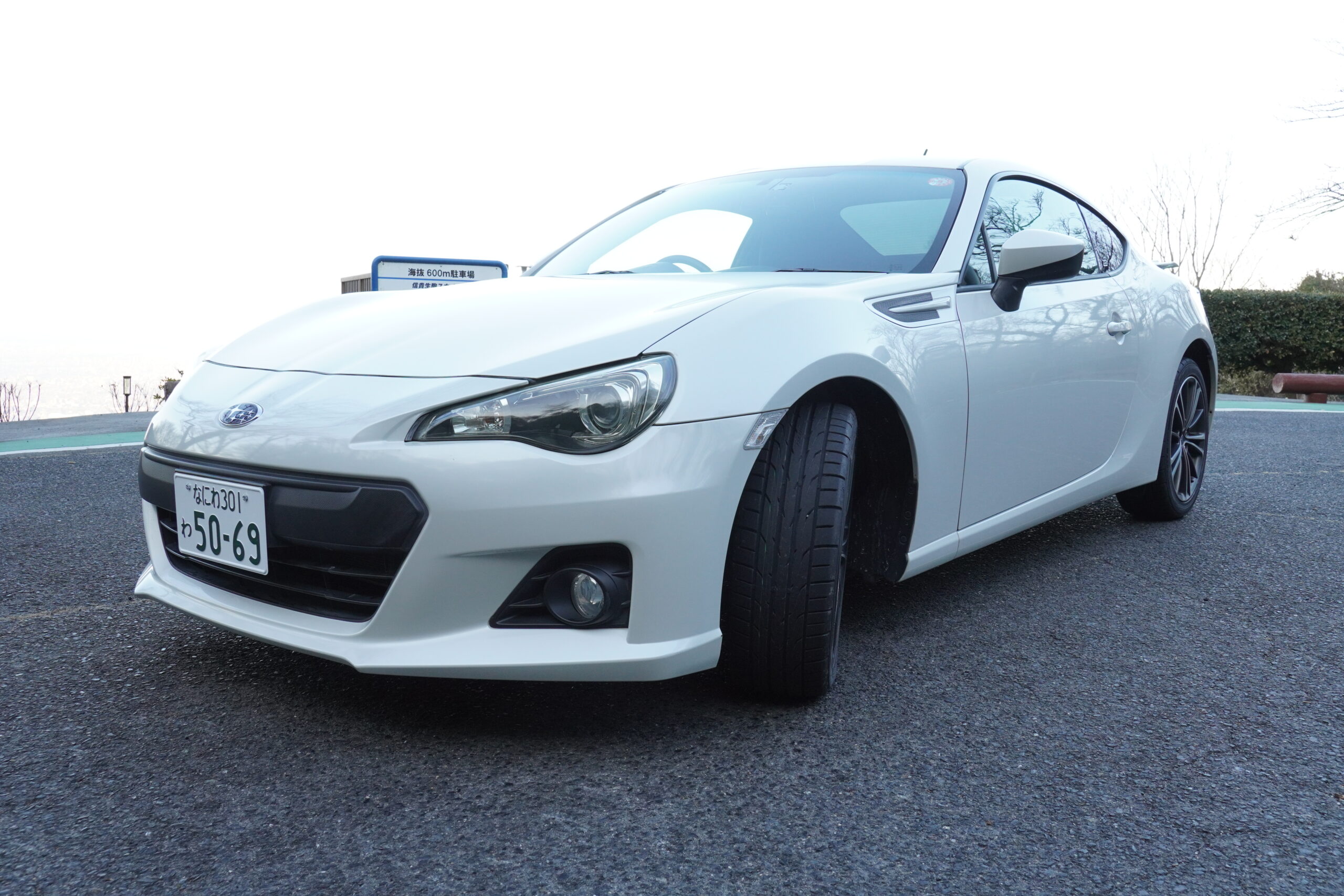
To truly experience the legendary roads and pristine nature of Wakayama, this two-day itinerary takes you from the bustling hub of Osaka into the heart of the sacred Kii Peninsula via the world-renowned Koya-Ryujin Skyline, concluding with an immersive stay at the secluded hot spring sanctuary of Ryujin Onsen.
Day 1: The Ascent to Sacred Heights and the Crest of the Kii Mountains
08:00 AM – Departure from Osaka: Urban Grid to Mountain Foothills
Your journey begins early in Osaka. Settling into the low-slung bucket seat of a Subaru BRZ, you adjust your mirrors and grasp the leather-wrapped manual shifter. The engine fires up with a distinct boxer thrum. Navigating the morning pulse of Osaka’s Hanshin Expressway, you head south toward Wakayama via the Hanwa Expressway. As the skyline of Osaka fades in your rearview mirror, the flat urban sprawl quickly gives way to the rolling green foothills of the Izumi Mountains.
09:30 AM – The Gateway Gate: Route 480 and the Climbing Twisties
Leaving the highway at Katsuragi, you transition onto Route 480. This is where the mundane highway cruising ends and the emotional drive begins. Route 480 snakes up toward Mount Koya (Koyasan), climbing through dense pine forests and mountain villages. The tarmac here is immaculate, featuring a rhythmic series of medium-speed sweepers and rising third-gear corners.
In the Subaru BRZ, the ultra-low center of gravity pays immediate dividends. As you work through the gears, heel-toeing down into sharp left-handers, the communicative steering translates every nuance of the road surface directly to your palms. The air cooling through the vents changes noticeably—shifting from warm highway air to crisp, pine-scented mountain mist.
11:00 AM – Arrival at Koyasan: The Sacred Plateau
You emerge from the winding climb onto the high mountain plateau of Mount Koya, sitting at an elevation of roughly 800 meters. Founded in 816 AD by the monk Kukai (Kobo Daishi), Koyasan is the spiritual center of Shingon Buddhism. Park your car near Danjo Garan, the central temple complex, where brilliant vermilion pagodas contrast sharply with the emerald canopy of ancient Japanese cedars.
Take an hour to walk through Okunoin Cemetery, the grandest mausoleum in Japan. A two-kilometer stone path winds beneath towering 500-year-old cedar trees, flanked by over 200,000 moss-covered stone stupas and statues of Jizo, the guardian deity of travelers. The atmosphere here is thick with history, reverence, and profound stillness.
01:00 PM – Fueling the Driver: Shojin Ryori Lunch
Before tackling the technical mountain pass ahead, sit down for a traditional Shojin Ryori (Buddhist vegetarian cuisine) lunch at one of the local temple dining halls. The meal is an artful exercise in balance and simplicity: delicate sesame tofu (koma-dofu), seasonal mountain vegetable tempura, simmered daikon radish, and savory miso broth. It leaves you feeling refreshed and focused rather than heavy—ideal preparation for an intense afternoon of spirited driving.
02:15 PM – Hitting the Legend: The Koya-Ryujin Skyline (Route 371)
Now comes the main event for driver enthusiasts: the Koya-Ryujin Skyline. Stretching roughly 42 kilometers along the ridge line connecting Mount Koya to Ryujin Village, this former toll road is widely regarded as one of the premier driving roads in East Asia.
Carved directly along the spine of the Kii Mountain Range, the skyline offers a relentless sequence of off-camber curves, sweeping ridges, dramatic elevation shifts, and tight hairpin bends. As you clear the outskirts of Koyasan, the trees clear, exposing wide-open panoramas of overlapping, blue-hued mountain peaks extending to the horizon.
Here, the engineering of a JDM icon like the BRZ comes alive. Downshifting into second gear for a tight right-hand hair-pin, the front end bites with precision. You roll onto the throttle early out of the apex, letting the naturally aspirated engine rev freely up toward its redline, its boxer exhaust tone echoing off the rocky rock faces. The road flows naturally with the topography, rewarding smooth steering inputs and precise pedal work.
03:30 PM – Pit Stop at Goma-dan Tower
Near the highest point of the pass sits the Goma-dan Tower lookout point (elevation 1,372 meters). Pull the car into the designated parking area—a famous gathering spot for local motorcycle riders and sports car purists from across Kansai.
Climb the wooden observation tower for a breathtaking 360-degree vista over the UNESCO World Heritage Sacred Mountains of the Kii Range. On a clear day, the distant glint of the Pacific Ocean is visible to the south. Take time to let the brakes and tires cool down while enjoying a hot canned coffee from the vending machines, soaking in the camaraderie of fellow motorists admiring each other's machines.
04:30 PM – The Descent into the Valley of Beauty: Ryujin Onsen
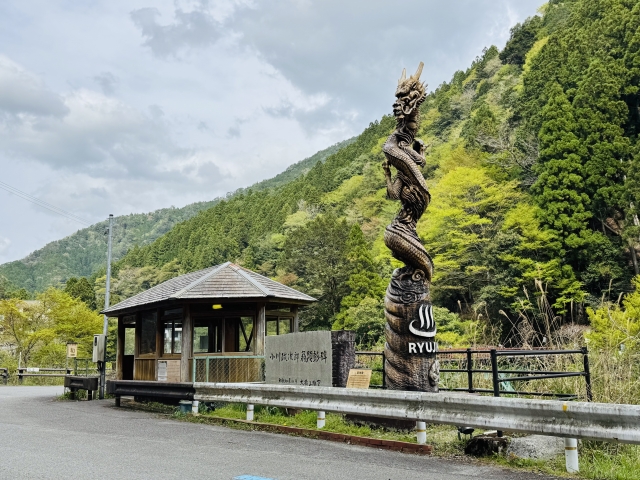
From Goma-dan, the road descends sharply into the secluded valley of the Hidakagawa River. The route tightens, hugging cliff sides under a canopy of old-growth timber before leveling out alongside the crystalline, emerald waters of the river.
By late afternoon, you pull into Ryujin Onsen. Nestled deep in a narrow river gorge, this historic hot spring village feels entirely untouched by modern commercialization. Wood-framed traditional ryokan (Japanese inns) line the riverbanks, their paper lanterns flickering to life as dusk settles over the valley.
06:00 PM – Check-in, Thermal Healing, and Kaiseki Feast
Check into a traditional riverside ryokan such as Ryujin Onsen Kamigoten, an inn originally built in 1639 by the local feudal lord of the Kishu Clan.
Strip away the fatigue of the road by stepping into the famous thermal waters of Ryujin Onsen. Ranked alongside Kawayu and Shin-Ryujin as one of Japan’s "Top Three Beauty Baths" (Bihin-no-yu), the natural spring water is extraordinarily rich in sodium bicarbonate. The water feels silky, almost lotion-like against the skin, soothing worked muscles and leaving your skin refreshed. Sit in the outdoor bath (rotenburo) as the cool mountain air touches your face and the rushing sound of the Hidakagawa River fills the night.
Follow your bath with an exquisite multi-course Kaiseki dinner served in your room or private dining area. The feast highlights local mountain delicacies: wild sweetfish (ayu) grilled over charcoal with coarse sea salt, tender local Kumano beef cooked on a hot stone plate, wild boar hotpot (botan nabe), and fresh mountain herbs gathered from the surrounding slopes. Pair the meal with a crisp local Wakayama sake before turning in for a deep, restful sleep on plush futons laid out over fragrant tatami mats.

Day 2: River Gorges, Pacific Views, and the Coastal Loop
08:00 AM – Traditional Breakfast and Morning Dip
Wake up to the gentle sounds of the river. Before breakfast, take a quick morning soak in the thermal baths to wake up your senses. Breakfast is a hearty, traditional spread featuring Chagayu (green tea rice porridge)—a local Wakayama specialty—alongside grilled salmon, tsukemono (pickles), fresh tamagoyaki (rolled omelet), and local miso soup.
09:30 AM – Morning Sprint down Route 29: Following the Hidakagawa
Checking out of your ryokan, step back into the cockpit of your sports car. The morning air in the canyon is crisp and dense, perfect for internal combustion efficiency. You head south on Route 29, following the curves of the Hidakagawa River toward Tanabe.
Unlike the high-altitude ridge lines of the Skyline, Route 29 is an intimate, flowing valley road. The tarmac winds through small agricultural hamlets, timber yards, and citrus groves clinging to hillside terraces. The chassis of your sports car telegraphs every ripple of the road, encouraging a brisk, rhythmic driving pace as you slice through morning shadows and golden patches of sunlight filtering through the trees.
11:00 AM – Exploration of Shirahama Coastal Formations
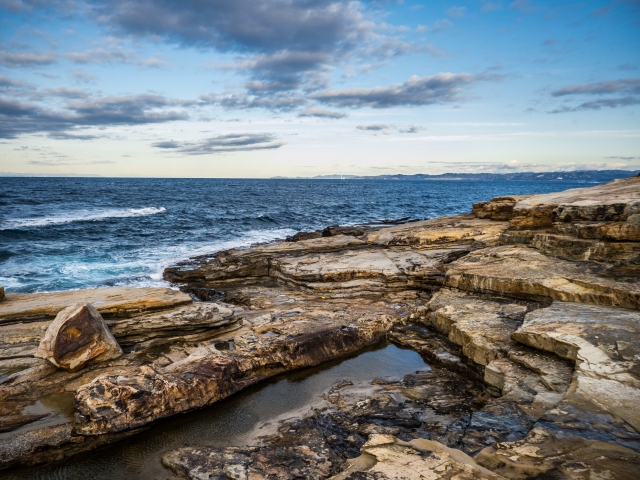
Reaching the coastal city of Shirahama, the landscape transitions dramatically from deep mountain forests to sweeping Pacific coastlines. Head directly to Senjojiki ("Thousand Tatami Mats"), a vast plateau of soft, tiered sandstone rock formations carved out by millennia of pounding Pacific waves. Walk out onto the broad rock platforms, feeling the salt spray and watching waves crash against the eroded cliffs.
Just a five-minute drive down the coastal road lies Sandanbeki Cliffs, a dramatic 50-meter-high sheer rock wall stretching for two kilometers along the ocean. Take the high-speed elevator down into the subterranean Sandanbeki Cave, an ancient sea cave once used as a hidden shelter by the legendary Kumano Navy during the Heian Period. Deep inside, the sound of the ocean swells booming against the cavern walls is deafening and awe-inspiring.
01:00 PM – Seafood Feast at Tore Tore Market
For lunch, drive to Tore Tore Market, the largest seafood market in the Kansai region, operated by the local fisheries cooperative. The energy inside is electric. Fishmongers shout out the catch of the day, while skilled chefs break down massive Pacific bluefin tuna in live butchering demonstrations.
Select your lunch directly from the stalls: fresh bluefin tuna sashimi bowls (maguro don), grilled sea urchin, king crab legs cooked over open flame, and sweet local scallops. Grab a seat in the open market dining area to enjoy a sea-to-table lunch of unmatched freshness.
02:30 PM – Coastal Cruising on Route 42 and the Minabe Plum Groves
Leaving Shirahama, head north along Coastal Route 42 toward Minabe. This stretch of road offers sweeping ocean vistas on your left, with gentle coastal sweepers allowing for a relaxed yet engaging driving pace. Drop the windows down—or drop the top if you are piloting a Mazda Roadster—to take in the fresh ocean breeze and the smell of saltwater mixed with blooming flora.
Minabe is world-famous as the heartland of Nanko-ume (premium Japanese plums). The hillsides are blanketed in vast plum orchards. Pull over at a roadside farm stand to sample authentic Umeboshi (pickled plum), plum preserves, or buy a bottle of non-alcoholic craft plum syrup as a takeaway gift.
04:00 PM – The Return Highway Leg via Hanwa Expressway
At the Minabe Interchange, merge back onto the Hanwa Expressway for the journey north back toward Osaka. As the late afternoon sun dips low over the Kii Channel to your left, casting a golden hue across the pavement, settle the car into a steady sixth-gear cruise.
The transition from tight mountain passes to open highway gives you time to reflect on the diversity of the terrain covered in just 36 hours: from ancient temple plateaus and high-altitude ridge passes to deep river valleys, thermal hot springs, and rugged Pacific ocean cliffs.
06:30 PM – Arrival in Osaka: City Lights and Refueling
Arrive back in the neon-lit metropolis of Osaka as the city lights illuminate the highway overpasses. Pull into a local gas station near your drop-off point to refuel the tank, completing your epic 400-kilometer loop of Wakayama’s finest roads and secret hideaways.
Expert Advice & Cultural Nuances: Mastering the Japanese Road
Navigating Japan’s backroads by sports car is immensely rewarding, but it requires an understanding of localized driving culture, highway systems, and unique roadside infrastructure.
The Culture of Michi-no-Eki (Roadside Stations)
One of the absolute highlights of driving in rural Japan is the network of Michi-no-Eki (Roadside Rest Areas). Far from the sterile concrete highway rest stops found in the West, Michi-no-Eki are vibrant cultural hubs designed to support local agricultural economies.
Each station is entirely unique to its municipality, featuring:
Local Produce Markets: Freshly harvested mountain vegetables, regional fruits (such as Wakayama’s famous mandarins and plums), and artisanal preserves.
Regional Street Food: Quick-serve stalls selling unique local treats like Mehari-zushi (rice balls wrapped in pickled mustard green leaves), wild boar sausage, and fresh soft-serve ice cream made with local milk or regional flavors like green tea and plum.
Driver Stamp Rallies: Most stations feature a collectible commemorative rubber stamp (eki-stamp). Local drivers carry dedicated stamp books to document their road trips across Japan.
When driving the Koya-Ryujin route, make sure to stop at Michi-no-Eki San-San Ryujin, located right along the Hidakagawa River. It is the perfect place to grab local crafts, drink fresh mountain spring water, and pick up regional snacks.
Hidden Culinar Gem: The Shokudo Experience
While tourist guidebooks often direct travelers to formal restaurants in major hubs, the best food along mountain passes is found at unassuming, family-run Shokudo (casual eateries). Look for small wooden buildings featuring faded Noren (fabric curtains) hung over the front door.
Inside, you will often find an elderly couple cooking up comfort food that has nourished local woodcutters and drivers for decades. Order regional specialties like Katsu Curry (crispy pork cutlet over rich curry rice), Sansa Soba (buckwheat noodles topped with wild mountain ferns), or Wakayama Ramen—characterized by a rich, savory broth made from a hybrid of rich pork bone (tonkotsu) and dark soy sauce (shoyu).
Mountain Pass (Toge) Etiquette & Safety
Driving the winding mountain roads (toge) of Wakayama in a sports car is a thrill, but local mountain etiquette must be observed at all times:
Yielding to Faster Locals: Local delivery trucks, Kei-vans driven by residents, and experienced local drivers often know every curve of these roads intimate. If a vehicle approaches quickly behind you, signal left and pull slightly onto a turnout (daipitsusho) to let them pass smoothly.
Blind Corners & Mirrors: Japanese mountain passes are equipped with round, convex yellow mirrors at almost every blind corner. Train your eyes to check these mirrors before entering tight bends to spot oncoming traffic, cyclists, or maintenance vehicles.
Sounding the Horn: On extremely narrow single-lane mountain sections marked with signs reading "警笛鳴らせ" (Keiteki Narase - Sound Horn), lightly tap your horn before entering blind single-lane corners to alert drivers coming from the opposite direction.
Wildlife Awareness: Deep in the Kii Mountains, wildlife is abundant. Watch for Japanese macaques (monkeys), Kamoshika (serow/goat-antelopes), and Inoshishi (wild boars)—especially during early morning and dusk hours along forested stretches like the Koya-Ryujin Skyline.
Detailed Logistics & Pre-Trip Tips
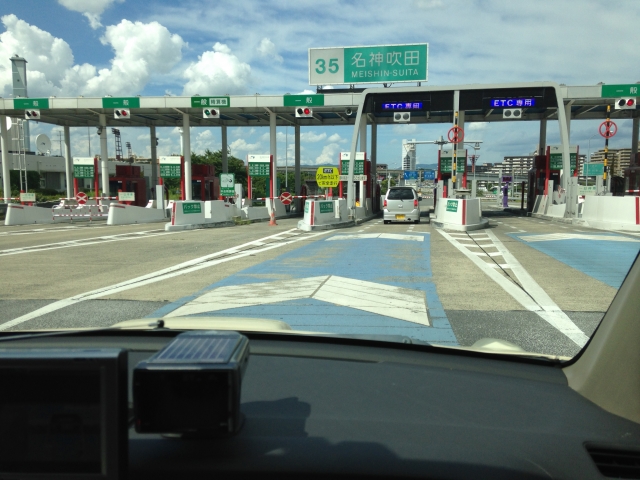
Planning a smooth road trip through Japan involves understanding local toll systems, fuel procedures, parking rules, and the unique mechanics of driving a manual JDM vehicle.
Navigating Japan’s Toll Roads & The ETC System
Japan boasts one of the most sophisticated expressway networks in the world, but almost all major expressways (like the Hanshin and Hanwa Expressways) require tolls.
ETC (Electronic Toll Collection): Expressways use an automated toll system called ETC. When renting your sports car, ensure you request an ETC Card. The card is inserted into a reader unit located inside the vehicle’s glove box or center console.
Using Toll Gates: As you approach a highway toll plaza, navigate to the lane clearly marked "ETC" in purple lettering. Drive through the barrier at a speed of 20 km/h or less; the gate will automatically read your card, beep, and lift the barrier. The accumulated tolls are calculated and settled conveniently when you return the vehicle to the rental store.
Manual Toll Lanes: If you do not have an ETC card, you must use the lanes marked "一般" (General) in green lettering, where you will pull a physical paper ticket upon entry and pay via cash or credit card at the exit booth.
Mastering Japanese Gas Stations (GS)
Fueling up in Japan is straightforward once you understand the basic terminology and station types.
Gas stations in Japan are divided into Full Service (Full) and Self Service (Self).
At a Full-Service Station:
Attendants will guide you into the bay with hand signals. Open your window and use these key Japanese phrases:
"High-Octane, Mantan, Negai-shimasu" (Premium Fuel, Full Tank, Please). High-octane fuel (often marked in red or yellow handles) is mandatory for performance JDM engines like the BRZ and Mazda Roadster to prevent engine knock and ensure maximum power delivery.
"Cash" or "Credit Card": State your payment method.
The attendants will often wipe your windows and mirrors with a towel and hold out a small trash basket for you to clear out any cab garbage. As you leave, an attendant will guide you into traffic—bow slightly and say "Arigato gozaimasu!"
At a Self-Service Station:
The automated touch-screen terminals usually feature an English language toggle button on the main screen. Select High-Octane (ハイオク - Haioku), choose Full Tank (満タン - Mantan), insert your credit card or cash bill, dispense your fuel, and retrieve your change receipt from the payout machine.
Parking Etiquette in Rural and Urban Japan
Back-In Parking: In Japan, reversing into parking spaces is universally standard practice. It ensures maximum visibility and safety when exiting into active traffic or pedestrian zones.
No Street Parking: On-street parking is virtually nonexistent across Japan. Always park inside designated parking lots (Coin Parking garages marked with a large "P" symbol, or dedicated facility parking lots).
Wheel Stops: Most Japanese parking spaces feature concrete wheel stops. Reversing slowly until your rear tires make gentle contact with the stops ensures your vehicle is perfectly aligned within the bay.
The Thrill of the Manual JDM Cockpit
Driving a manual JDM sports car like a Subaru BRZ or Mazda Roadster (ND) on Japanese mountain passes offers a visceral, analog experience that modern automatic commuter cars simply cannot match:
The Subaru BRZ: Featuring a low-slung 2.0L or 2.4L boxer engine, short-throw 6-speed manual transmission, and rear-wheel drive chassis dynamics, the BRZ offers exceptional balance, razor-sharp front-end turn-in, and communicative steering.
The Mazda Roadster (ND MX-5): Famous for its Jinba Ittai ("horse and rider as one") engineering philosophy, the lightweight Roadster offers quick revs, a lightning-fast manual shifter, perfect 50:50 weight distribution, and open-top motoring that immerses you completely in the smells and sights of the surrounding mountain forests.
Executing a crisp heel-toe downshift into a third-gear mountain sweeper, matching the revs perfectly as the exhaust note echoes off canyon walls, is an unforgettable driver’s high that will linger long after your holiday ends.
Comprehensive FAQ for International Drivers
Q1: What driver’s license documentation is required to rent and drive a car in Japan?
To legally rent and drive a motor vehicle in Japan, visitors must present all three of the following documents at the rental counter:
Your original valid Physical Driver’s License issued by your home country.
A valid International Driving Permit (IDP) printed under the 1949 Geneva Convention on Road Traffic. The IDP must be a physical booklet issued by an authorized motoring association (such as AAA in the USA, CAA in Canada, or RAC/AA in the UK) prior to your trip.
Your original valid Passport.
Crucial Note on IDP Validity: Paper printouts, digital PDFs on smartphones, or international permits issued under the 1968 Vienna Convention are NOT accepted under Japanese law. Drivers holding licenses from specific countries that do not issue Geneva 1949 IDPs (such as Switzerland, Germany, France, Taiwan, Belgium, and Monaco) must instead present an official Japanese translation of their native driver's license issued by the Japan Automobile Federation (JAF) or their nation’s embassy in Japan.
Q2: Is rental insurance included, and what coverage should I select?
Standard vehicle rentals in Japan include basic third-party liability coverage required by law. However, when renting specialized sports cars or JDM performance vehicles, it is highly recommended to select full comprehensive collision coverage, including a Non-Operation Charge (NOC) Waiver. The NOC waiver protects you from out-of-pocket fees charged by the rental company to cover business interruption costs if the vehicle requires repair or cleaning following an incident.
Q3: I haven't driven a manual transmission vehicle in a while. Is it difficult to adjust to driving a manual sports car on the left side of the road in Japan?
Japan drives on the left side of the road, meaning the driver’s seat is on the right side of the vehicle. For international drivers accustomed to left-hand drive vehicles, operating the manual gear shifter with your left hand may feel unfamiliar for the first 15 to 30 minutes.
However, modern JDM sports cars like the Subaru BRZ and Mazda Roadster feature extremely forgiving clutch pedals, precise gear gates, and clear hill-start assist features. Because pedal positioning (clutch-brake-throttle from left to right) remains completely identical worldwide, muscle memory takes over quickly. Starting your trip on major expressways before entering tight mountain passes gives you ample time to get comfortably acquainted with the controls.
Q4: What are the winter road conditions like along the Koya-Ryujin Skyline?
During late spring, summer, and early autumn (May through October), road conditions along the Koya-Ryujin Skyline are ideal for sports car driving. However, because the skyline runs along high-altitude mountain ridges reaching nearly 1,400 meters above sea level, conditions change dramatically during winter (December through March).
Snowfall, black ice, and sub-zero temperatures are common along high-elevation stretches of Route 371 during winter months, and portions of the Koya-Ryujin Skyline may be subject to overnight closures or mandatory tire-chain requirements. If planning a trip between December and March, always check mountain weather reports, confirm seasonal road closures, and request winter tires on your rental vehicle.
The Final Thoughts: Turn the Key to Your Ultimate Japan Adventure
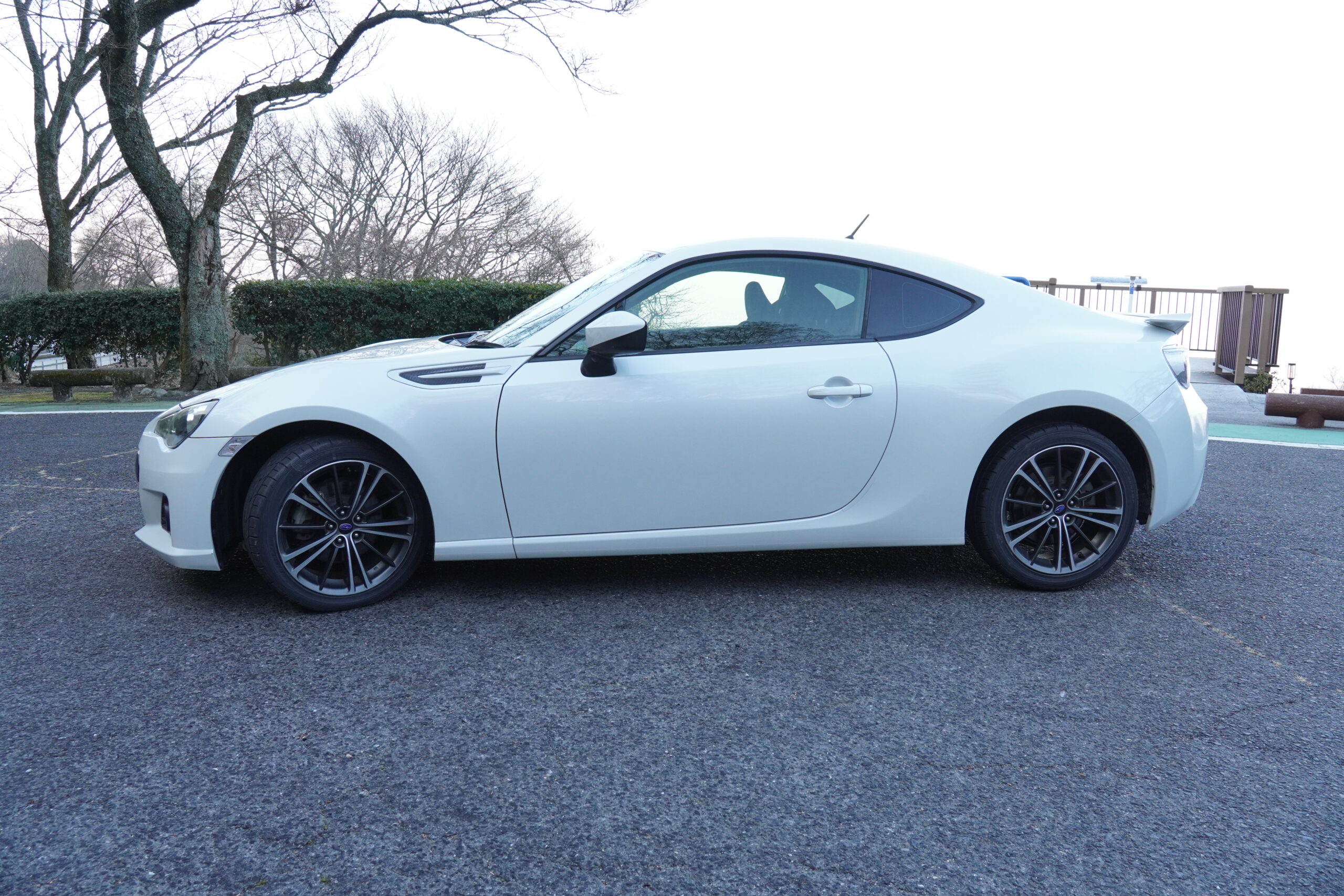
Traveling through Japan should never be confined to looking out of a train window at fixed horizons, bound to strict timetables and crowded station platforms. The true soul of Japan—its ancient mountain sanctuaries, secluded thermal valleys, historic village pass ways, and pristine driving tarmac—awaits those brave enough to grab the steering wheel and head into the mountains.
Imagine dropping into a bucket seat, grasping a leather-bound manual shifter, firing up a finely tuned Japanese engine, and setting off from Osaka toward the ridge lines of the Koya-Ryujin Skyline. Feel the crisp mountain air, soak in the restorative waters of Ryujin Onsen, and conquer some of the finest driving roads on Earth at your own pace.
When you are ready to turn this ultimate driving dream into reality, your journey begins in Osaka.
At Omoren (Omeshiro Rent-a-Car) Osaka Central Store, we specialize in providing passionate travelers and driving enthusiasts with meticulously maintained, legendary JDM sports cars—including the pure, driver-focused Subaru BRZ, Toyota 86, and Mazda Roadster (ND). Conveniently located in the heart of Osaka, our English-speaking staff will equip you with complete road trip guidance, ETC cards, comprehensive insurance coverage, and the exact JDM key that unlocks Secret Japan.
Don't just visit Japan—drive it. Reserve your JDM sports car at Omoren Osaka Central Store today, buckle up, and experience the road of a lifetime!