
1. Driving in Japan: The Philosophy of Freedom Beyond the Rails
For over a decade, I wore the crisp uniform of a conductor on the Kintetsu Railway line, watching the landscape of Kansai slice past through polished glass windows. I loved the rhythm of the rails—the precision of fixed schedules, the mechanical hum of electricity flowing through overhead lines, and the quiet dignity of Japanese train travel. Trains are the blood vessels of Japan's urban body, connecting million-strong cities with effortless punctuality. But as a train conductor, I also lived with a constant, unspoken reality: rails are fixed. They go where they are told to go. The platforms dictate where you stop, and the timetable dictates when you leave. Beyond the manicured station plazas lay vast, shadowy mountains, hidden valleys, ancient shrine villages, and winding mountain passes that the train tracks could never touch.
When I stepped away from the railways to pursue my deep love for JDM (Japanese Domestic Market) sports cars and drive across every corner of the Japanese archipelago, my understanding of travel shifted completely. I discovered the real "Secret Japan"—a world inaccessible to mass tourism, coach buses, and commuter rail passes.
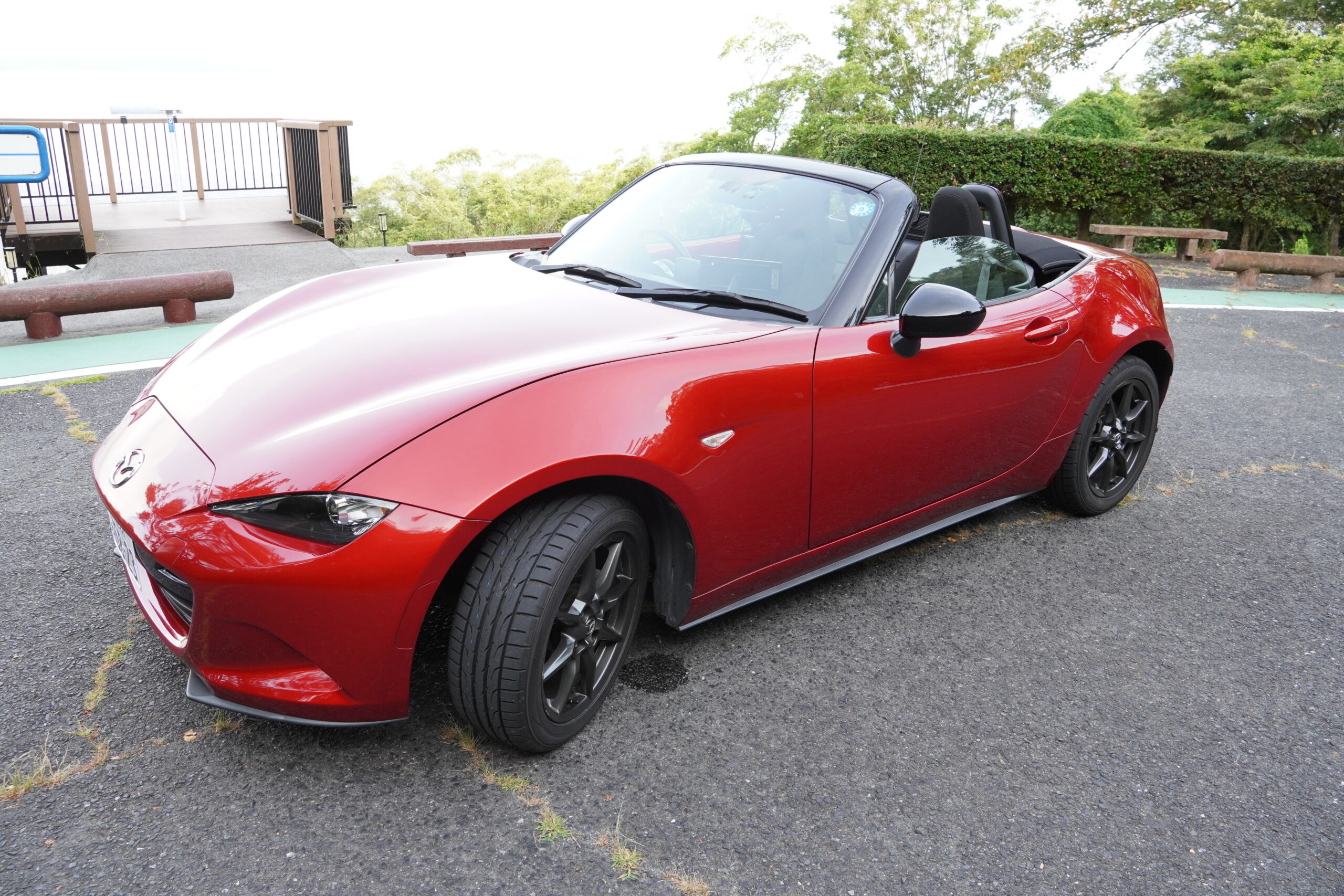
Osaka is the undisputed culinary and cultural heartbeat of Western Japan, but if you rely solely on trains to explore beyond its neon border, you miss the true spirit of Kansai. Trains will take you to Nara Park, where thousands of tourists crowd around tame deer to take photos. But a light, manual JDM sports car—like a lightweight Mazda MX-5 Roadster (ND) or a razor-sharp Toyota 86 / Subaru BRZ—will carry you south into the misty cradle of Japanese civilization: Asuka Village.
Asuka is where the Japanese state was born in the 6th and 7th centuries. It is a region of ancient megalithic tombs, quiet rice paddies terraced into steep hillsides, and narrow backroads that trace the curves of ancient rivers. When autumn arrives, Asuka turns into a living canvas. The golden rice stalks heavy with grain ripple under the autumn breeze, framed by fiery red higanbana (spider lilies) along the embankment paths, while cool, crisp mountain air washes through the valley.
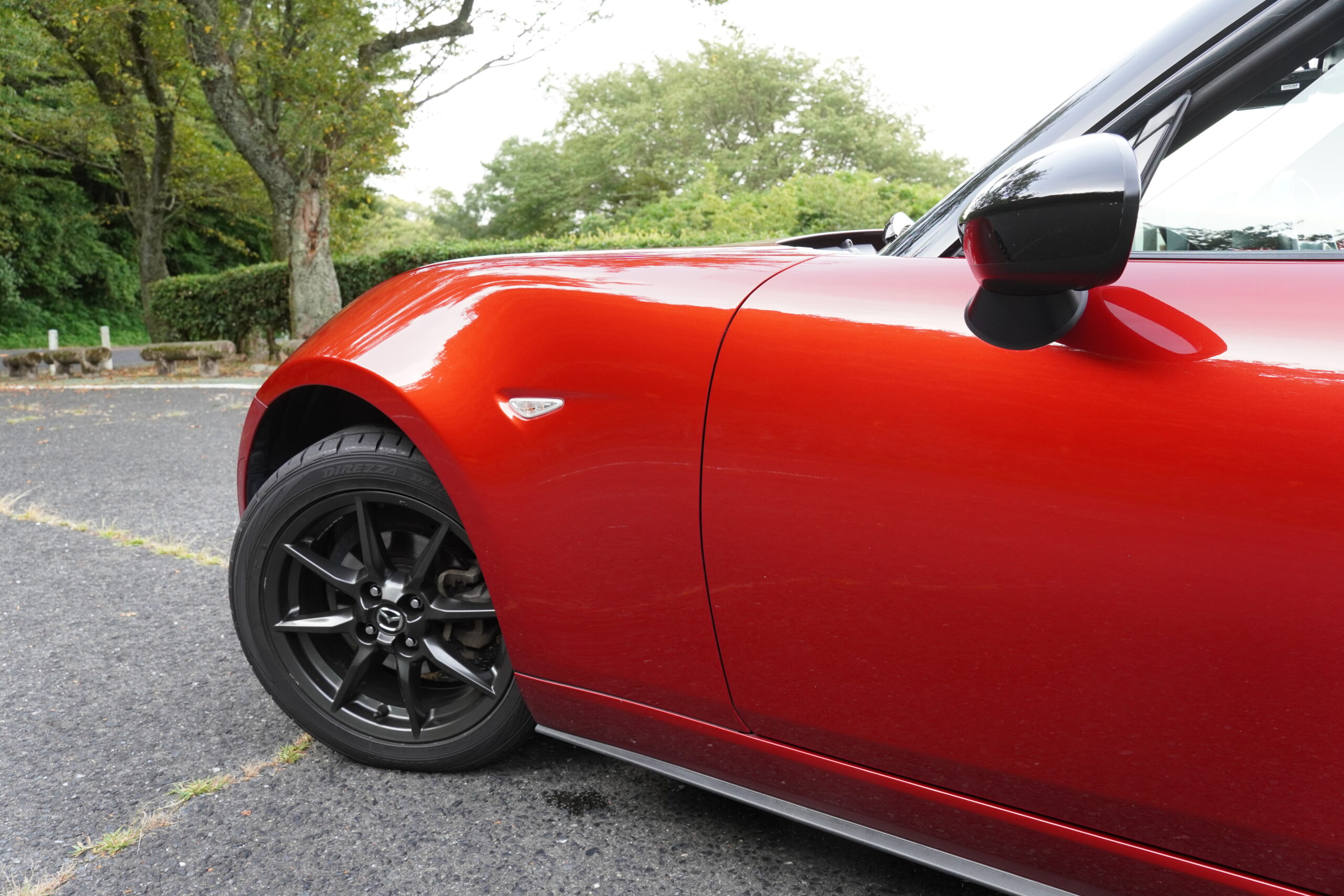
Navigating this terrain requires more than just transportation; it requires a machine that responds to your touch. The Mazda MX-5 ND, with its lightweight chassis, manual transmission, and short-throw shifter, turns the journey into a physical dialogue between driver, machine, and road. Lowering the soft top on a crisp October morning, feeling the warmth of the autumn sun, and hearing the tactile metallic click of every gear shift engages all five senses in a way no train ride ever could. Driving a JDM sports car into Asuka transforms travel from simple sightseeing into pure, unadulterated freedom.

2. The Ultimate 2-Day Asuka Autumn Road Trip: Detailed Itinerary
Day 1: Departing Osaka to the Ancient Heart of Asuka
08:00 AM – Departure from Central Osaka
Your journey begins early in the morning in central Osaka. Slipping behind the wheel of a manual Mazda MX-5 ND Roadster, the cabin wraps snugly around you. Turn the ignition key, and the 1.5-liter Skyactiv-G engine settles into a smooth, purposeful idle. Depress the firm clutch, slot the short-throw shifter into first gear, and ease out into the morning streets of Osaka. You navigate past urban arterial routes, head toward the Hanshin Expressway system, and transition seamlessly onto the Nishi-Meihan Expressway heading east toward Nara.
09:15 AM – Crossing Mount Ikoma via the Hanshin Expressway
As the concrete jungle of Osaka recedes in your rearview mirror, the road ascends into the foothills of Mount Ikoma, the natural mountain wall separating Osaka Plain from the Nara Basin. The expressway sweeps through wide, elevated curves. In the MX-5, the steering wheel offers immediate feedback through your palms, communicating every nuance of the tarmac. The crisp autumn breeze enters the cabin, carrying the faint scent of cedar forests and mountain moisture.
10:00 AM – Transition to Route 169 South & Entry into Asuka
Exiting the expressway, you transition onto Route 169, heading south into the southern Nara Basin. The bustling suburbs give way to traditional wooden machiya houses with black tiled roofs, narrow stone-lined gutters, and small vegetable plots. As you cross the border into Asuka Village, speed limits drop, roads narrow, and time feels as though it slows down.
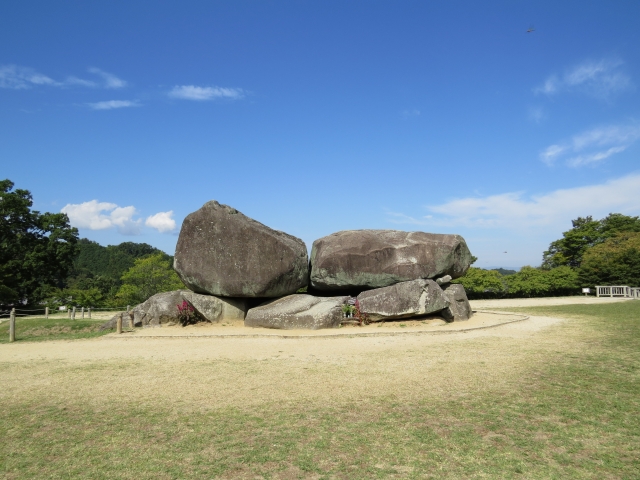
10:30 AM – Ishibutai Kofun (The Stone Platform Tomb)
Your first major stop is the iconic Ishibutai Kofun, the massive 7th-century megalithic stone tomb believed to be the resting place of Soga no Umako, a powerful political figure of the Asuka period.
Walking around this colossal stone structure, you notice the massive granite slabs fitted together without mortar. In mid-autumn, the surrounding park is dotted with deep red higanbana flowers and fiery cosmos blossoms, providing a stark visual contrast against the dark gray granite.
12:00 PM – Lunch: Local Asuka Nabe at a Traditional Rest Area
Drive a short distance along the rural roads to a traditional local restaurant nestled beside a historic farmhouse. Order Asuka Nabe, a rich local hot pot dish with roots stretching back over 1,300 years to when court nobles cooked chicken in a flavorful broth made from fresh milk, dashi stock, ginger, and local vegetables. Accompanied by freshly harvested autumn rice, the warm broth rejuvenates you after your morning drive.
01:30 PM – Inabuchi Rice Terraces (Inabuchi no Tanada)
From the restaurant, drive south up the narrow winding roads following the Asuka River to reach the Inabuchi Rice Terraces.
Road Character: A narrow, single-to-1.5-lane tarmac winding along steep hillside contours.
Driving Strategy: Keep the MX-5 in 2nd gear, using precise throttle modulation and smooth steering inputs to navigate blind corners.
Visual Highlights: Over 300 terraced paddy steps cascading down the valley. In mid-to-late autumn, the terraces form a golden staircase bathed in afternoon sunlight, bounded by vibrant red spider lilies along the stone retaining walls.
Park your car in designated parking areas and walk along the agricultural footpaths, listening to the soft rustle of ripe rice ears in the mountain wind.
03:30 PM – Asukadera Temple & The Ancient Great Buddha
Drive back down into the central flatlands to visit Asukadera, established in 596 AD as Japan's first full-scale Buddhist temple. Inside stands the Asuka Daibutsu, a bronze Buddha statue cast in 609 AD that has survived fires, lightning strikes, and centuries of turbulence. The quiet courtyard smells of cedar incense, and the late afternoon sun casts long shadows across the wooden floors.
05:00 PM – Sunset Run: Tanzan Shrine Winding Route
Before heading to your accommodation, experience one of the finest driving stretches in Nara: the climb up toward Tanzan Shrine.
The Route: A technical, uphill winding tarmac road lined with Japanese maple (momiji) and Japanese cedar (sugi).
Driving Experience: Heel-and-toe downshifts entering tight hairpins, feeling the rear-wheel-drive balance of the MX-5 push you smoothly out of every apex.
Atmosphere: As the sun sets, rays of golden light pierce through the autumn canopy, lighting up red and orange maple leaves floating on the damp asphalt.
06:30 PM – Check-In: Historic Ryokan in Yoshino / Asuka Foothills
Check into a historic wooden ryokan (traditional Japanese inn) nestled in the foothills. Slide into a piping hot onsen (hot spring bath) to soothe your muscles after a day behind the wheel, followed by an elaborate kaiseki dinner featuring autumn delicacies: grilled river trout, matsutake mushroom soup, crisp persimmons, and local Nara sake.

Day 2: Hidden Mountain Passes, Ancient Shrines, and Coastal Sweepers
08:00 AM – Morning Mountain Drive: The Fog of Mount Yoshino
Wake early to crisp mountain air. After a breakfast of warm miso soup, rice, and grilled salmon, fire up the MX-5. Drive up toward the lower ridge of Mount Yoshino. In autumn, early morning mists hang low over the deep green gorges, creating a mystical, ethereal landscape. The roads are quiet, free of tourist traffic, allowing you to enjoy the mechanical rhythm of manual shifting through sweeping S-curves.
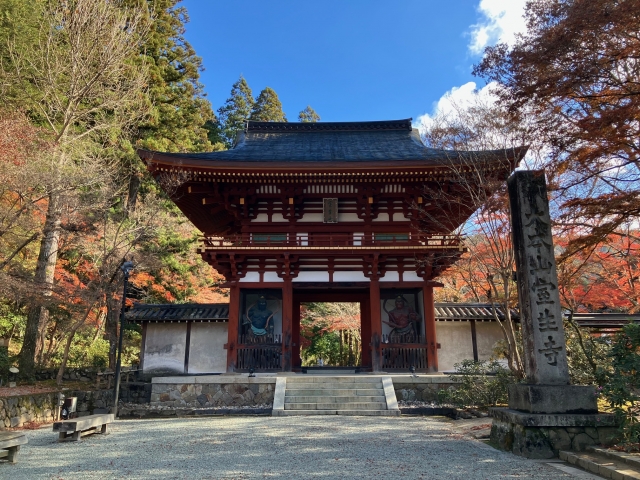
10:00 AM – Murou-ji Temple & The Deep Cedar Forests
Drive northeast via Route 370 toward Murou-ji Temple, historically known as the "Women's Koya" because it welcomed female worshippers when Mount Koya was strictly closed to women.
The quiet atmosphere of Murou-ji, enveloped by towering 300-year-old trees, offers deep spiritual stillness before you embark on the afternoon drive.
12:30 PM – Lunch: Handmade Soba in Uda City
Stop in the historic town of Uda at a traditional wooden shop specializing in Ju-wari Soba (100% buckwheat noodles). Enjoy cold, freshly made buckwheat noodles dipped in a savory dashi sauce, served alongside crispy autumn vegetable tempura featuring local sweet potato, lotus root, and shiso leaves.
02:00 PM – The Scenic Return Run: Yamanobe-no-Michi & Skyline Passes
Begin your return loop toward Osaka by taking the rural backroads paralleling the Yamanobe-no-Michi, considered Japan's oldest documented road in ancient chronicles.
Driving Thrill: Transition onto elevated scenic road stretches overlooking the vast Nara Basin. The MX-5 glides effortlessly along smooth pavement, engine revving freely in 3rd gear through flowing mid-speed curves.
Scenery: Orchards laden with bright orange fuyu persimmons, ancient burial mounds (kofun) framed by golden fields, and clear blue autumn skies.
04:30 PM – Golden Hour Highway Cruise back to Osaka
Join the southern expressways as golden hour illuminates the mountains behind you. Lower the convertible top once more to take in the cool evening air. The engine hums happily at highway cruising speed as the city lights of Osaka begin to twinkle in the distance.
3. Expert Advice & Cultural Nuances of Driving in Rural Japan
Driving in rural Japan is one of the most rewarding travel experiences in the world, but it operates on unspoken cultural etiquette and unique local infrastructure that every international driver should master.
The Wonder of "Michi-no-Eki" (Roadside Stations)
Unlike standard highway service areas, a Michi-no-Eki is a government-designated roadside rest area created to support local rural economies. They are goldmines for road trippers.
When driving through Asuka, stop at Michi-no-Eki Asuka. Here, local farmers deliver fresh produce every morning. Try Nara's famous Kaki-no-Ha Zushi—salted mackerel or salmon sushi wrapped tightly in persimmon leaves, which preserves the fish and imparts a delicate, earthy flavor.
Rural Etiquette and Driving Nuances
Single-Lane Mountain Passes (Kukudou): Many scenic mountain backroads in Nara are narrow single lanes with periodic passing bays (* 退避所 - Taihisho*). If an oncoming vehicle approaches, the driver closer to a passing bay should pull over to let the other pass. A brief flash of high beams or a polite hand gesture is customary to say "Thank you."
The Hazard Light Thank-You: When a driver yields or lets you merge into a tight lane, flash your hazard lights twice. It is the universal Japanese sign of gratitude on the road.
Pedestrian Crossings: Japanese law strictly enforces yielding to pedestrians at unmarked crosswalks. In rural villages, elderly residents and school children frequently cross quiet roads—always maintain a modest speed through village centers.
4. Detailed Logistics & Pre-Trip Tips (2026 Edition)
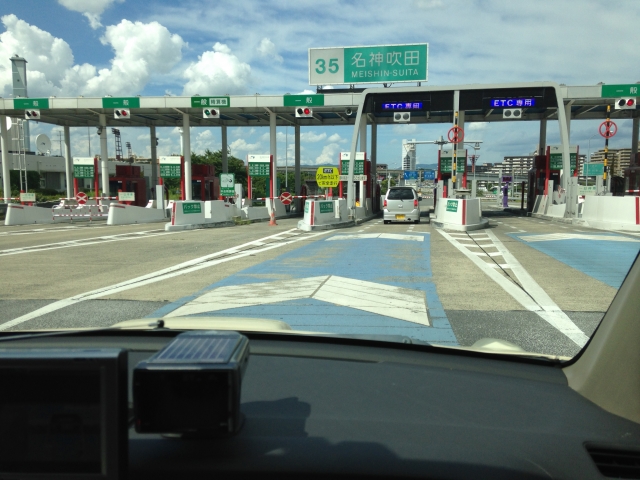
Navigating Japan’s road networks in 2026 is seamless if you prepare the right tools before turning the key.
Expressway Passes and ETC Cards
Expressways in Japan are high-quality but heavily tolled. Manual toll booths accepting cash are increasingly rare or inconvenient.
Fuel Station Etiquette: Mastering "Mantan"
Gas stations in Japan are either Full Service (Furu) or Self Service (Serufu).
For JDM Performance Cars (MX-5, 86, BRZ): Always fill up with High-Octane (ハイオク - Haioku) unleaded fuel (marked by yellow nozzle covers at self-service stations) to protect high-compression engines.
At Full Service Stations: Roll down your window and tell the attendant: "Haioku, Mantan, Kurejitto de" (High-Octane, Full Tank, via Credit Card). They will clear your windshield, offer to take your trash, and guide you safely back onto the road.
Parking Rules in Historic Villages
In historic areas like Asuka, parking outside designated lots is strictly prohibited to preserve historical monuments and narrow farm lanes. Look for green parking symbols (P) near major sites like Ishibutai Kofun or Asukadera. Parking fees generally range from 300 to 500 JPY per day.
5. Frequently Asked Questions (FAQ)
What official documents do I need to rent and drive a car in Japan?
You must present three physical documents at the rental desk:
Your Original Driving License from your home country.
An International Driving Permit (IDP) issued under the 1949 Geneva Convention.
Your valid Passport.
Important Note: IDPs issued under the 1968 Vienna Convention are not accepted under Japanese traffic law. Travelers holding licenses from certain countries (such as Switzerland, Germany, France, Taiwan, Belgium, and Monaco) must carry an official translation of their license issued by the Japan Automobile Federation (JAF) or their nation’s embassy in Japan instead of an IDP. Always verify your eligibility under the 1949 Geneva Convention prior to travel.
Is driving a manual transmission (MT) JDM car difficult on Japanese roads?
Driving in Japan is on the left side of the road, meaning manual cars are right-hand drive (RHD). You will operate the gear shifter with your left hand. However, Japanese roads are exceptionally well-maintained, drivers are courteous, and speed limits are moderate. The pedal layout (Clutch, Brake, Accelerator) remains identical worldwide. After 15 minutes behind the wheel of an intuitive car like the Mazda MX-5, muscle memory takes over.
What about insurance and roadside assistance?
Comprehensive commercial insurance coverage—including Collision Damage Waiver (CDW) and Non-Operation Charge (NOC) protection—is available and strongly recommended. This ensures complete peace of mind while navigating narrow rural routes.
6. The Final Thoughts: Start Your Engine in Osaka
The true soul of Japan does not live along train platforms or crowded tourist corridors. It is found in the quiet morning light hitting the golden rice terraces of Asuka, in the subtle exhaust note echoing off deep cedar forests, and in the sheer thrill of connecting two perfect corners along an empty mountain pass.
When you step off the plane in Osaka, don't limit your journey to a train schedule. Experience Japan from the driver's seat of a real JDM machine.
At Omoren Osaka Central Store (おもしろレンタカー大阪中央店), we share your deep passion for cars and authentic travel. Founded and run by a former Kintetsu train conductor who traded the rails for the freedom of the road, our store specializes in meticulously maintained, sports-oriented JDM rental vehicles—including the legendary Mazda MX-5 Roadster (ND) and Toyota 86 / Subaru BRZ. We provide full English support, ETC card rentals, and personalized route recommendations tailored to car enthusiasts.
Your journey through Secret Japan begins with the press of an ignition button. Reserve your JDM sports car at Omoren Osaka Central Store today, drop the top, and let the roads of Nara redefine your story.