
The true soul of Japan does not exist within the hyper-dense, precision-timed corridors of the Shinkansen system. As a former train conductor for the Kintetsu Railway, I spent years strictly bound to fixed steel rails, operating on schedules measured down to the split second. I knew the exact millimeter where the platform aligned with the train door, and I deeply respected the engineering triumph of Japanese public transit. Yet, every time I looked out of my cab window at the distant, mist-shrouded mountain ridges of Western Japan, I knew that the real magic—the untouched, raw, and authentic Japan—was hidden far beyond the reach of any railway track.
When you rely solely on trains and tourist buses, you are trapped in a curated, high-density bubble. You move from major node to major node along with thousands of other travelers, experiencing the country through double-paned glass and crowded platform gates. But when you step into the cockpit of a lightweight, rear-wheel-drive sports car like the Toyota 86 or Subaru BRZ, the entire geography of Japan opens up before you.
Starting a road trip from Osaka toward the northern coastline of Kyoto Prefecture—specifically the ancient, serene coastal enclaves of Kyotango and the legendary boat houses (Funaya) of Ine—is the ultimate expression of this freedom. Driving northbound away from the sprawling neon grid of Osaka, the urban concrete quickly dissolves into rolling green highlands, which eventually give way to the dramatic, jagged cliffs and cobalt-blue waters of the Sea of Japan.
Public transportation simply cannot give you this experience. To reach Ine by train and bus requires a tedious sequence of transfers, rigid timing, and hours of waiting at windy rural bus stops, forcing you to pack up and leave just as the golden afternoon light hits the bay. In a driver’s car, however, the route itself becomes an integral part of the destination. You gain access to mountain passes (touge) where the pavement curls tightly through dense pine forests, coastal highways carved directly into ocean cliffs, and quiet fishing hamlets where time has stood still for centuries.
This is the philosophy of "Secret Japan"—a realm accessible only to those who take the wheel, downshift into a tight bend, and follow the open road to where the tracks can never take you.

2-Day Itinerary: The Deep Drive from Osaka to Ine & Kyotango
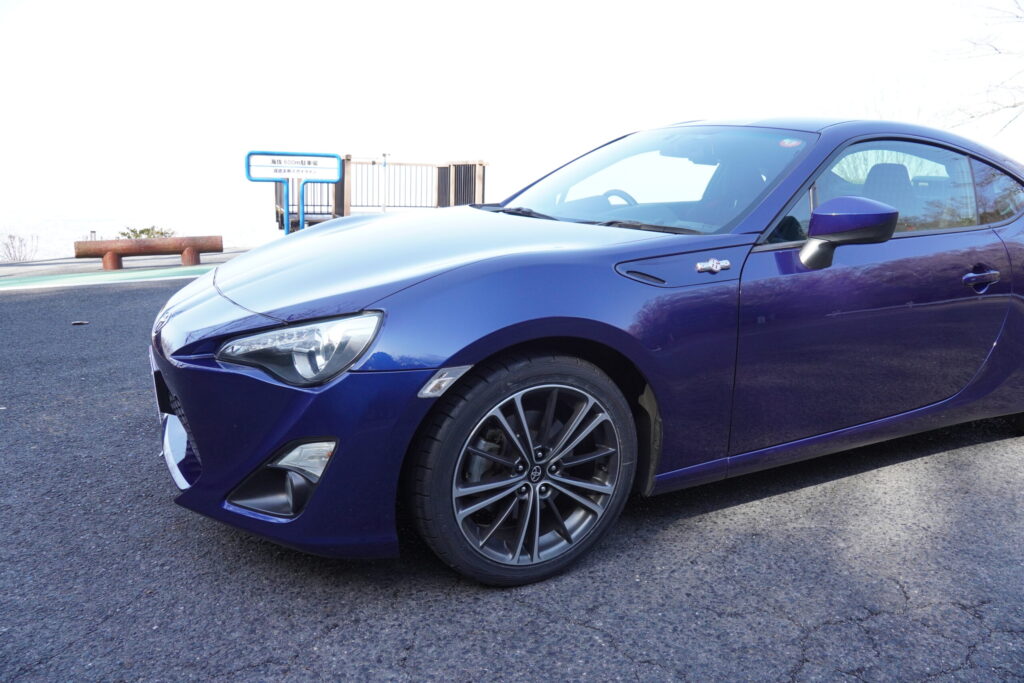
Day 1: The Ridge Passages and the Bay of Floating Houses
07:00 AM – Osaka Departure & The Morning Engine Cold Start
The journey begins in the heart of Osaka as the city is just waking up. There is a visceral magic to starting a high-revving naturally aspirated engine like the 2.0-liter boxer inside the Toyota 86 early in the morning. The deep, mechanical rumble echoes off the concrete parking structures as the oil warms up.
Leaving the city center, you navigate onto the Hanshin Expressway before merging smoothly onto the Chuo-Kinki Expressway northbound. The morning traffic is light. As you slide into the low-slung bucket seats, adjust the three-spoke steering wheel, and slot the short-throw shifter into first gear, the connection between driver, machine, and road is established instantly.
08:30 AM – Climbing the Kyoto Vertical Expressway (Kyoto Jukan)
As you transition onto the Kyoto Jukan Expressway, the suburban landscape vanishes, swallowed whole by the towering, emerald-green peaks of northern Kyoto Prefecture. The highway carves through deep valleys, taking you through a sequence of long, cool tunnels.
In a Toyota 86, these highway sweeps offer a masterclass in chassis stability. The low center of gravity—achieved by the flat-boxer engine layout—keeps the car perfectly planted even at elevated highway speeds. As you pop out of each tunnel, the atmospheric shift is palpable: dense morning fog hangs suspended over mountain riverbeds, and the crisp, clean mountain air flows through the climate vents.
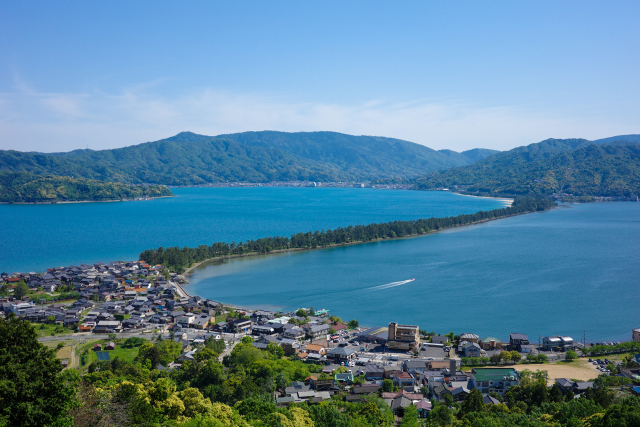
10:15 AM – Miyazu Bay & The Natural Wonder of Amanohashidate
- Distance/Time: ~130 km from Osaka | 1 hour 45 minutes driving
- Coordinates/Area: Miyazu City, Kyoto Prefecture
Leaving the expressway at Miyazu-Fuchu, you are greeted by the crisp, salty air of the Sea of Japan. Your first major landscape milestone is Amanohashidate, historically ranked as one of Japan’s "Three Scenic Views" (Nihon Sankei).
+-----------------------------------------------------------------------+
|                       DAY 1 ROAD TRIP ROUTE                           |
|                                                                       |
|   [ Osaka ] ---> (Kyoto Jukan Expwy) ---> [ Amanohashidate ]          |
|                                                    |                  |
|                                                    v                  |
|   [ Ine Bay / Overnight ] <--- (Route 178) <--- [ Ocean Coastal Pass ] |
+-----------------------------------------------------------------------+
Amanohashidate is a naturally formed, 3.6-kilometer-long sandbar covered in over 8,000 ancient, wind-swept Japanese black pine trees (kuromatsu), stretching straight across Miyazu Bay like a green bridge floating on water. Geologically formed over millennia by coastal currents depositing granite sand from the Noda River, this landform has inspired Japanese poets and landscape painters for over a thousand years.
Instead of staying on the crowded pedestrian strip, you take the 86 up the narrow winding access road to the Kasamatsu Park viewing area on the northern hills. Looking down at the sandbar, you perform the traditional matanoki custom—bending over and viewing the sandbar upside down through your legs. Viewed this way, the strip of land appears like a green dragon flying upward into the sky.
12:00 PM – Coastal Gastronomy: Fresh Sea Bream & Kaisen-don
After taking in the geological scale of Amanohashidate, park the car near the northern shores of Miyazu Bay for an authentic seafood lunch. The Sea of Japan yields exceptional marine life due to its cold, nutrient-rich currents.
Sit down at a rustic, family-run seaside eatery for a bowl of Kaisen-don (freshly harvested sashimi over warm, seasoned rice) featuring locally caught Tai (Sea Bream), Buri (Yellowtail), and sweet ocean shrimp (Amaebi). The fish is sliced thick, sweet to the taste, and served alongside hot miso soup made with locally aged red miso and fresh sea kelp.
01:30 PM – The Coastal Attack: Route 178 to Ine
- Drive Experience: Technical coastal twists, sweeping elevation changes, ocean cliffs.
This is where driving a driver-focused car transforms from transport into pure poetry. Leaving Miyazu, you join Route 178, a legendary coastal highway that hugs the outer perimeter of the Tango Peninsula.
Route 178 Driving Profile:
[Tight Apexes] ---> [Elevation Drop] ---> [Sea Level Straightaway] ---> [Tunnel Exit]
       ^                                                                      |
       +------------------- Heel-and-Toe Downshift (3rd to 2nd) --------------+
Here, the road narrows and begins to rhythmically twist following the jagged contour of the coastline. In the Toyota 86, this road is absolute heaven. You downshift from 4th gear to 3rd, and occasionally into 2nd gear for the tight apexes. The manual transmission offers mechanical, tactile clicks with every gear change, and the pedals are positioned perfectly for heel-and-toe downshifting.
The engine revs freely up past 6,000 RPM, producing an intoxicating mechanical rasp that bounces off the ocean cliffs. To your right, the ocean stretches infinitely toward the horizon, crashing violently into black volcanic rocks below; to your left, sheer rock faces cut into the lush forest. The feedback through the electric power steering is pin-sharp, letting you feel every subtle change in tire traction.
03:00 PM – Entering Ine: The Venice of Japan
As you round a final rocky headland, the ocean swells suddenly vanish, replaced by the mirror-still, emerald waters of Ine Bay. Nestled snugly along a narrow, protected three-kilometer crescent of land are the famous Ine no Funaya (The Boat Houses of Ine).
   +-------------------------------------------------------------------+
   |                       STRUCTURE OF A FUNAYA                       |
   |                                                                   |
   |   +-----------------------------------------------------------+   |
   |   | [2nd Floor] Living Quarters / Tatami Guest Rooms          |   |
   |   +-----------------------------------------------------------+   |
   |   | [1st Floor] Boat Garage / Net Drying / Engine Maintenance |   |
   |   +===========================================================+   |
   |~~~~~~~~~~~~~~~~~~~~~~~~~ Water Level ~~~~~~~~~~~~~~~~~~~~~~~~~~~~~|
   +-------------------------------------------------------------------+
There are approximately 230 of these unique wooden structures lining the bay edge, built directly over the water. Originating in the late Edo Period (1603–1867), a Funaya is a two-story functional architecture solution born out of geographic necessity:
- First Floor: Functions as a covered, water-level garage for fishing vessels, gear storage, and drying nets.
- Second Floor: Serves as the primary residential living quarters or guest rooms.
Because the mouth of Ine Bay is sheltered by a natural offshore island (Kameshima), the tidal range inside the bay is incredibly small—often less than 50 centimeters. This unique geography creates the breathtaking visual illusion that these wooden houses are floating directly on the surface of the sea.
04:30 PM – Sunset Bay Cruise & Local Sake Exploration
Park your car in the central coastal village lot and step out into the quiet air of Ine. The air smells of rich salt water, aged cedar wood, and woodsmoke.
Board a small, traditional wooden sea taxi operated by a local fisherman. As the boat gently hums across the glassy water, you look back at the shoreline to view the Funaya from their intended angle: the water. The dark, weathered cedar facades show the character of generations exposed to sea air.
After your boat ride, walk over to Mukai Shuzo, an extraordinary local sake brewery located right on the water’s edge, operating since 1754. One of the few female-led master breweries in Japan crafts their signature sake, Inejankai, brewed using an ancient cultivar of red rice (Akamai). The resulting sake boasts a striking ruby-red color, a complex fruity aroma, and a crisp, dry finish that pairs perfectly with local seafood.
07:00 PM – Evening Feasting at a Local Minshuku
Check into a traditional seaside Minshuku (guesthouse) or an updated Funaya stay. For dinner, sit down to a multi-course Kaiseki feast showcasing the bounty of the Sea of Japan:
- Ine Buri (Yellowtail): Served both raw as translucent sashimi and seared over hot coals.
- Sazae (Turban Shell): Grilled live over open charcoal with a splash of local soy sauce and sake.
- Tango Rice: Cooked over direct flame in an iron pot, sticky, sweet, and perfectly steamed.
As the night deepens, open your tatami room's seaside windows. The gentle, rhythmic lapping of ocean waves against the wooden stilts beneath your floor acts as a natural lullaby.

Day 2: The Wild Tango Peninsula, Coastal Passes & The Return
06:30 AM – Dawn at the Funaya
Wake up at dawn to experience Ine at its most tranquil. The bay is silent save for the occasional call of black kites soaring overhead and the soft hum of early-morning fishing boats leaving the harbour. The morning light casts a cool, metallic silver sheen across the bay, reflecting off the dark cedar of the boat houses.
08:00 AM – Coastal Assault: Rounding Cape Kyotango
- Route: Route 178 Westbound toward Cape Kyodagami
After a traditional breakfast of grilled mackerel, rice, and miso soup, fire up the 86 once again. Today’s drive takes you around the northernmost tip of the Tango Peninsula along some of the most dramatic coastal roads in Western Japan.
+-----------------------------------------------------------------------+
|                       DAY 2 ROAD TRIP ROUTE                           |
|                                                                       |
|   [ Ine Bay ] ---> (Route 178 West) ---> [ Kyotango Cliffs ]          |
|                                                    |                  |
|                                                    v                  |
|   [ Osaka ] <--- (Ayabe Highway Pass) <--- [ Kamimoto Coast ]         |
+-----------------------------------------------------------------------+
Heading west on Route 178, the road climbs rapidly up the mountainside, offering towering cliffside viewpoints overlooking the expanse of the ocean. The road surface here is exceptional, featuring smooth tarmac with banking curves designed to test a car's chassis dynamics.
With its 50:50 weight distribution feel, the Toyota 86 tracks smoothly through long, sweeping turns. You can feel the rear tires loading up with lateral grip as you push through mid-corner apexes, the light bodyweight allowing effortless directional changes without heavy body roll.
10:00 AM – Kyoga-misaki Lighthouse: The Northern Frontier
- Highlight: Dramatic cliffside walking trails, historic lighthouse, sweeping ocean views.
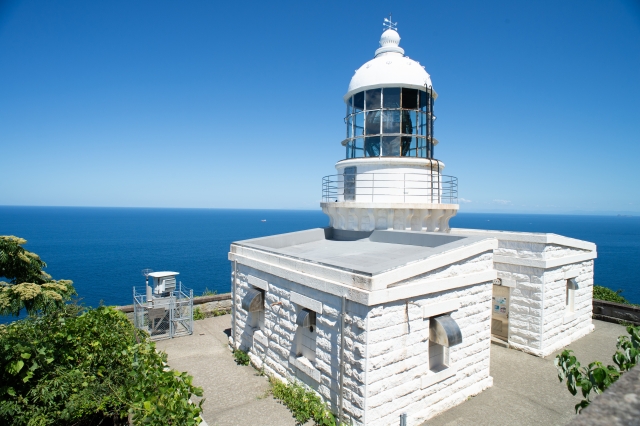
Arrive at Kyoga-misaki Lighthouse, sitting proudly at the absolute northernmost tip of the Tango Peninsula. Built in 1898 from locally quarried granite blocks, this elegant white lighthouse stands atop sheer volcanic basalt cliffs rising 140 meters above the crashing surf.
A short, brisk hike through dense camellia forests brings you to the base of the tower. Standing at the edge of the overlook, you look out across the vast, uninterrupted blue expanse of the Sea of Japan toward the horizon. The sheer geological power of the coastline is humbled only by the isolation of the setting—a dramatic landscape virtually untouchable by standard tour groups.
   Kyoga-misaki Basalt Cliff Profile:
   _________________________________  <-- Overlook Point
   |   |   |   |   |   |   |   |   |
   |   |   |   |   |   |   |   |   |  <-- Hexagonal Basalt Columns
   |___|___|___|___|___|___|___|___|      (Formed by ancient lava flows)
   ~~~~~~~~~~~~~~~~~~~~~~~~~~~~~~~~~  <-- Sea of Japan Crashing Waves
12:30 PM – The Tateiwa monolith and Coastal Delicacies
Drive further down the western coast of the peninsula to the mouth of the Takeno River to witness Tateiwa (Standing Rock). Tateiwa is one of the world's most impressive natural monoliths—a colossal, 20-meter-tall volcanic rock structure made of vertical, columnar jointed basalt that shoots straight up out of the sand dunes where the river meets the sea.
Local mythology tells of a brave prince who trapped an evil demon inside Tateiwa; legend claims that on stormy nights, you can still hear the demon howling against the crashing waves.
For lunch, pull into a small coastal diner serving Taiza Crab (when in season) or fresh local Rock Oysters (Iwagaki). These massive oysters are harvested directly from the clean coastal waters of Kyotango, served fresh with a squeeze of wild Ponzu citrus. They are incredibly creamy, rich, and burst with the clean flavor of the sea.
02:30 PM – Diving Inland: The Mountain Passages of Route 482
Leaving the ocean coast behind, turn inland onto Route 482, cutting directly through the mountainous heart of the Tango Peninsula.
This inland mountain stretch offers a completely different driving personality compared to the coastal highway. The road tightens significantly, threading through dense cedar plantations, ancient mossy bridges, and tiny farming villages with thatched and tiled roofs.
Driving Dynamics Comparison:
+-------------------+-----------------------+-----------------------+
| Terrain           | Coastal (Route 178)   | Mountain (Route 482)  |
+-------------------+-----------------------+-----------------------+
| Speed Range       | Mid to High Speed     | Low to Mid Speed      |
| Corner Style      | Sweeping, Banked      | Tight Hairpins, S-Bends|
| Driver Focus      | Flow & Momentum       | Braking & Steering    |
+-------------------+-----------------------+-----------------------+
Here, the agile nature of the Toyota 86 shines bright. The tight turning radius, responsive throttle, and immediate turn-in response allow you to flick the car effortlessly from left to right through tight hairpin turns. The light mechanical hum of the dual exhausts reflects off the dense pine forest walls, providing an immersive driving soundscape.
05:00 PM – Sunset Break at a Mountain Michi-no-Eki
As afternoon turns to early evening, pull into a mountain Michi-no-Eki (Roadside Station) along the Ayabe-Jukan expressway corridor. Grab a cone of fresh local black-sesame soft-serve ice cream or a hot cup of canned boss coffee from the vending machines.
Watch as the sun sets behind the purple ridgelines of the Kyoto mountains. The mechanical warmth radiates off the hood of your sports car as the exhaust ticking cools down—a moment of quiet reflection before entering the final stretch of your journey.
07:30 PM – Arrival back in Osaka
Join the urban expressways as the neon sky of Osaka reappears on the horizon. From the quiet, wooden water-world of Ine to the high-voltage energy of Osaka's urban landscape, the transition feels like moving between two completely different eras. You arrive back relaxed, recharged, and deeply connected to a side of Japan that few travelers ever get to touch.
Expert Advice & Cultural Nuances of Driving in Japan
Driving through rural Japan is an exceptionally peaceful and civil experience, provided you understand the subtle cultural nuances and road etiquettes that govern life on the pavement.
The Magic of Michi-no-Eki (Roadside Stations)
Do not confuse a Japanese Michi-no-Eki with a basic highway rest stop. These are government-designated, locally operated cultural hubs designed to support rural economies. Each station is unique, featuring:
- Hyper-Local Produce: Freshly harvested regional fruits, vegetables, and specialty preserves sold directly by local farmers.
- Regional Specialties: Gourmet fast food, such as local black beef skewers, regional ramen variations, and artisan ice cream flavors (e.g., chestnut, wild soy sauce, or green tea).
- Clean Restrooms & Info Desks: Pristine public facilities and tourist mapping.
+-----------------------------------------------------------------------+
|                  MICHI-NO-EKI (ROADSIDE STATION) MAP                  |
|                                                                       |
|   [ Fresh Produce Market ]   [ Regional Food Stalls ]  [ Clean Rest ] |
|   - Local Farms              - Black Beef Skewers     - 24/7 Access   |
|   - Specialty Preserves      - Artisan Ice Cream      - Tourist Info  |
+-----------------------------------------------------------------------+
Road Etiquette and Subtle Signals
- The Hazard Light Thank-You: When a driver slows down to let you merge into a lane or yield on a narrow road, flash your hazard lights twice briefy. This is the universal Japanese gesture for "thank you" (Arigatou).
- Narrow Rural Passes (Kura-ai): Mountain passes (touge) often narrow down to a single lane. When encountering an oncoming car, the driver closest to a wide shoulder cutout should pull over and flash their high beams once to invite the other car to pass safely.
- Speed Limits & Flow: Japanese rural speed limits are posted conservatively (often 40 to 50 km/h). Observe local road conditions, adjust your speed responsibly, and drive smoothly to maintain a safe flow of traffic.
Detailed Logistics & Pre-Trip Tips
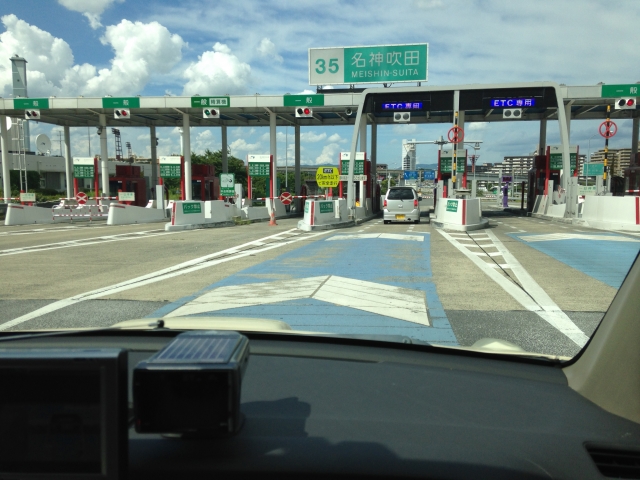
Navigation & Expressways in 2026
Modern road tripping in Japan relies heavily on smooth digital connectivity and proper expressway payment systems.
- ETC Card (Electronic Toll Collection): Ensure your rental vehicle comes equipped with an ETC card reader and an activated ETC card. Japanese toll roads are extensive and expensive; using an ETC card allows you to pass through automated toll gates without stopping to pay cash, saving significant time and offering discount toll rates during off-peak hours.
- Navigation Apps: While built-in Japanese car GPS systems are accurate, combining them with smartphone mapping apps via Apple CarPlay or Android Auto provides up-to-the-minute traffic updates and real-time mountain road closure warnings.
Mastering the Japanese Gas Station (Gasorin Stand)
Refueling in rural Japan is a straightforward process once you know the core terminology. Gas stations are divided into Full-Service (Full) and Self-Service (Self).
+-----------------------------------------------------------------------+
|                     GAS STATION FUEL COLOR CODES                      |
|                                                                       |
|   [ RED NOZZLE ]     ---->  Regular (Unleaded 90+ Octane)             |
|   [ YELLOW NOZZLE ]  ---->  High-Octane / Premium (98+ Octane) *      |
|   [ GREEN NOZZLE ]   ---->  Diesel                                    |
|                                                                       |
|   * Always use Premium / High-Octane for JDM Sports Cars like 86/BRZ  |
+-----------------------------------------------------------------------+
Essential Japanese Fueling Vocabulary:
- "High-Octane" (Hai-okun): High-octane premium gasoline. JDM performance vehicles such as the Toyota 86 or Subaru BRZ strictly require high-octane gasoline (Yellow Nozzle) to operate safely without engine knock.
- "Mantan" (Man-tan): Fill it up completely.
- "Kashu" (Ka-shu): Payment by credit card.
How to Order at a Full-Service Station:
Roll down your window and say to the attendant: "Hai-oku, Mantan, Kard de" (High-Octane, Full Tank, Payment by Credit Card). The attendant will often hand you a damp towel to wipe down your dashboard while they clean your windows and mirrors free of charge!
Comprehensive FAQ
What driving license documents do I need to rent and drive a car in Japan?
To legally drive in Japan, you must present three mandatory documents at the time of vehicle pickup:
- Your original, valid National Driver's License issued by your home country.
- An official International Driving Permit (IDP) issued under the 1949 Geneva Convention.
- Your valid Passport.
Important Note: IDPs issued under the 1968 Vienna Convention are not recognized in Japan. Visitors holding licenses from select countries (such as Switzerland, Germany, France, Taiwan, Belgium, and Monaco) must provide an official Japanese translation of their native license issued by the Japan Automobile Federation (JAF) or their country's official embassy in Japan instead of an IDP. Always verify your country's specific documentation treaties well before traveling.
Is driving a manual transmission (MT) car difficult on Japanese roads?
Not at all! Japanese traffic culture is exceptionally patient, courteous, and highly organized. Road signage is clear, highly visible, and includes English transliterations on all major routes. Driving a manual JDM sports car like a Toyota 86 enhances engagement on scenic mountain passes. If you are comfortable operating a clutch in your home country, you will feel completely at home on Japanese roads.
What are the road conditions like around Kyotango and Ine?
The roads throughout northern Kyoto Prefecture are maintained to world-class standards. Coastal highways and major mountain passes feature high-quality asphalt pavement with clear lane markings and extensive runoff drainage systems. During winter months (December to March), snow tires are mandatory due to localized snowfall from the Sea of Japan; however, during spring, summer, and autumn, driving conditions are dry, clear, and absolute perfection.
The Final Thoughts: Take the Wheel with Omoshiro Rent-a-Car Osaka Central
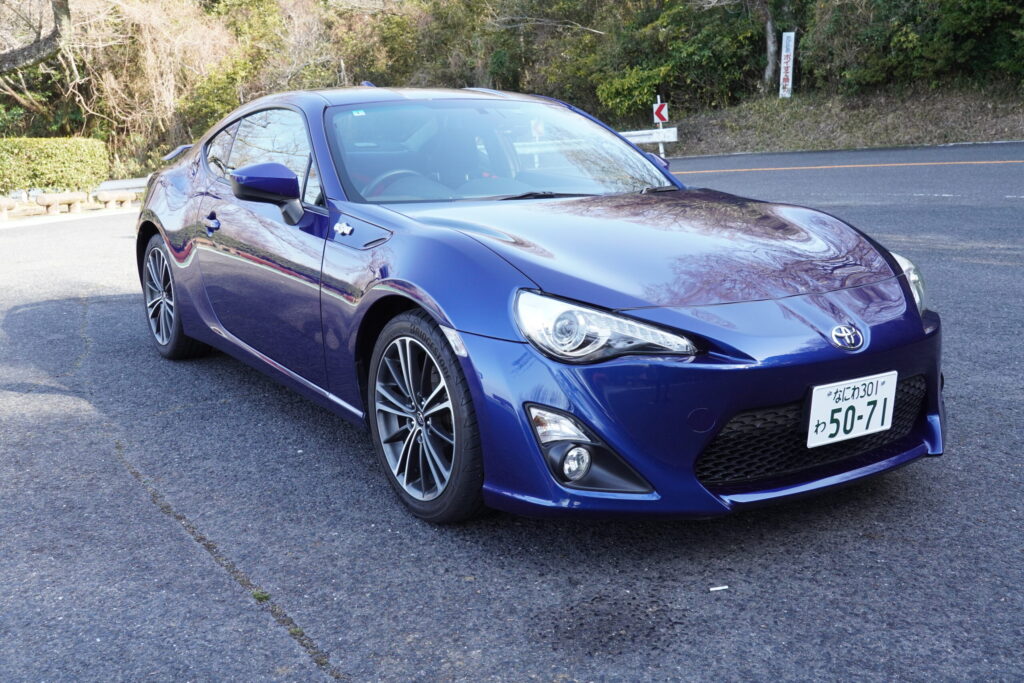
The real Japan does not wait on a train platform. It is waiting for you at the end of an open coastal highway, past the foggy mountain passes, down where the emerald waters of Ine Bay meet the wooden stilts of centuries-old boat houses. You cannot experience the true thrill of these roads from a passenger seat; you need to feel the steering wheel in your hands, the mechanical feedback of a precise manual gearbox, and the crisp sound of a sports car engine pulling up a mountain pass.
When you are ready to write your own legendary Japanese road trip story, make your first stop Omoshiro Rent-a-Car Osaka Central.
Specializing in authentic JDM (Japanese Domestic Market) performance cars, well-maintained enthusiast vehicles, and sports machinery—including the iconic Toyota 86 and Subaru BRZ—Omoshiro Rent-a-Car Osaka Central provides driver-focused rentals tailored specifically for international visitors and automotive enthusiasts. Conveniently located in Osaka, it serves as the ultimate starting line for your journey to Kyotango, Ine no Funaya, and beyond.
Stop following the crowds along the worn tourist paths. Rent your dream JDM machine, downshift into second gear, and discover the thrilling world of Secret Japan today.