
Driving Lake Biwa: The Philosophy of Driving in Japan
For years, I viewed Japan’s geography through a rigid, steel-tinted lens. As a former conductor for Kintetsu Railway, my world was governed by exact seconds, prescribed schedules, and the fixed trajectory of two parallel rails. The Japanese rail network is, without a doubt, a marvel of human engineering—a hyper-efficient artery moving millions across the archipelago with quiet, clockwork precision. But standard train travel imposes invisible boundaries. From a train window, you see the country in framed snapshots, dictated entirely by where the tracks were laid decades ago. You pass breathtaking mountain passes, silent coastal inlets, and ancient cedar groves at ninety kilometers per hour, powerless to pause, explore, or stray off the beaten path.
When I stepped away from the railway uniform and took the wheel to drive across Japan, my perspective fundamentally transformed. I discovered a entirely different country—what I call "Secret Japan." This is the realm that exists beyond the reach of express trains and crowded tour buses. It is found in the quiet ribbon of asphalt that contours an ancient lake at dawn, the secluded mountain pass shrouded in misty fog, and the roadside family-run shokudo (eatery) where the chef still hand-crafts noodles using methods passed down through three generations.
Starting a road trip from Osaka offers the ultimate freedom in Kansai. While Osaka’s vibrant neon avenues and sprawling street-food scene serve as an electric urban backdrop, the true majesty of Kansai reveals itself the moment you navigate past the suburban grid and hit the open road toward Shiga Prefecture. Shiga is anchored by Lake Biwa (Biwako), Japan’s largest and oldest freshwater lake, formed nearly four million years ago.
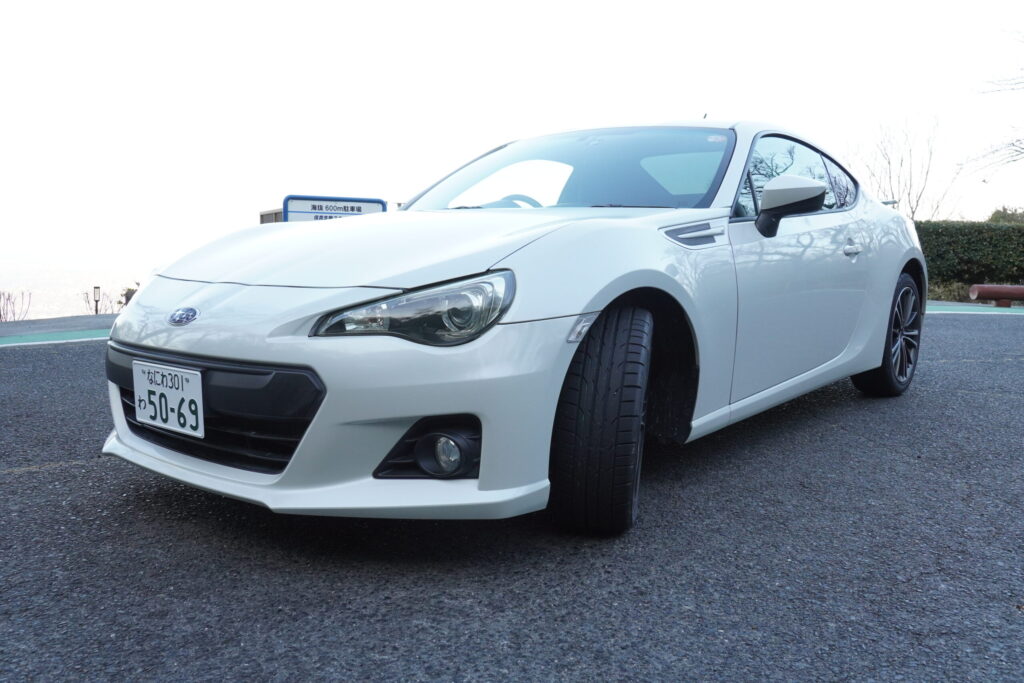
While thousands of international travelers squeeze onto bullet trains headed directly for Kyoto, those who choose to drive unlock the true beauty of Lake Biwa’s coastal road system—the legendary Kogan Doro (Lakefront Avenue). Behind the wheel of a light, front-engine, rear-wheel-drive sports car like the Subaru BRZ or Toyota 86, this journey becomes a masterclass in driving engagement. The crisp, short-throw manual shifter, the instant throttle response of a naturally aspirated boxer engine, and a low center of gravity allow you to feel every nuance of the tarmac beneath you. Driving here is not merely about transportation; it is a soulful, tactile dialogue between driver, machine, and the timeless Japanese landscape.

Driving Lake Biwa: The 2-Day Itinerary (Deep Dive)
Day 1: Departing Osaka, Traversing the East Coast, and Heading North
07:00 AM – Departure from Osaka: Awakening the Boxer Engine
The morning air in Osaka is cool and crisp as you turn the key or press the start button of your Subaru BRZ. The 2.4-liter naturally aspirated flat-four engine fires to life with a satisfying, mechanical rumble. In the quiet morning hour, Osaka’s urban sprawl is just beginning to wake. Settling into the low-slung bucket seats, you feel immediately connected to the chassis. You slide the shifter into first gear, ease off the clutch, and make your way toward the Hanshin Expressway before connecting to the Meishin Expressway, heading northeast toward Shiga Prefecture.
As the high-rises of Osaka fall behind, the concrete jungle gradually gives way to rolling green hills. The BRZ settles into an effortless cruising rhythm on the expressway. Unlike heavy, sanitized modern sedans, the BRZ communicates every road surface change through its steering wheel, keeping you completely engaged even during straightforward highway transit.
08:30 AM – Entering Otsu & The Gateway to Lake Biwa
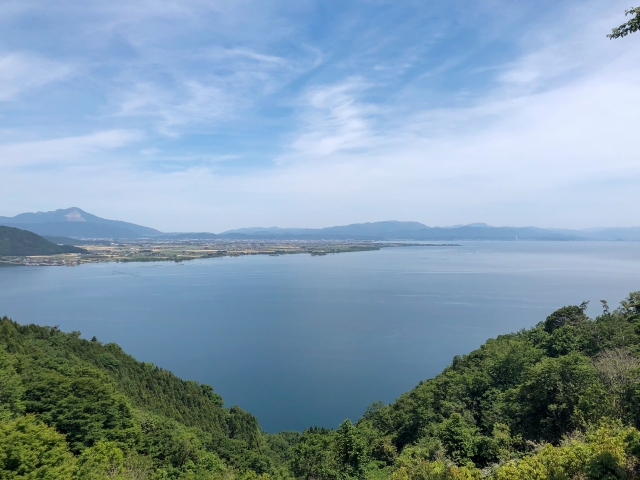
Crossing the threshold into Shiga Prefecture at Otsu, Lake Biwa spreads before you like a vast, liquid mirror. Spanning over 670 square kilometers, Lake Biwa is so immense that its far northern shores vanish into the horizon, giving it the appearance of an inland sea.
You leave the expressway at Otsu and join the southern edge of the Kogan Doro (Shiga Prefectural Route 559). Here, the drive instantly slows its tempo. The lake lies just feet from your passenger window, its calm, dark-blue water reflecting the soft early-morning light. The cool air entering through the open windows carries the subtle, earthy scent of freshwater and mountain pine.
09:15 AM – First Stop: Ukimido (The Floating Temple of Mangetsu-ji)
- Coordinates / Access: Katata, Otsu City (Directly accessible via Route 161/Kogan Doro)
- Historical Significance: Founded in the Heian period by the monk Genshin, Ukimido stands on stilts extending directly into Lake Biwa. It was constructed to offer prayers for lake safety and the salvation of all living beings.
Parking the BRZ in the quiet gravel lot, you walk through a serene garden framed by meticulously manicured Japanese black pines. Passing through the wooden gate, you cross the narrow bridge leading out over the water to the floating pavilion. Standing on the temple wooden deck, surrounded by quiet waters, you can hear the soft, rhythmic lap of waves against the ancient wooden pilings. Looking back toward the shore, the silhouette of your sports car parked against the coastal pines creates a striking contrast between modern automotive design and traditional Japanese aesthetics.
10:30 AM – The Rhythm of the East Coast: Cruising the Kogan Doro (Route 559)
Returning to the driver's seat, you turn the nose of the BRZ north along Route 559, driving parallel to the eastern shore of Lake Biwa. This section of the road is world-renowned among Japanese car enthusiasts for its relaxed, sweeping bends and uninterrupted lakeside vistas.
Here, driving the BRZ is pure joy. As you sweep through light curves, the rear-wheel-drive layout provides incredible balance and neutral handling. The low bonnet allows for exceptional forward visibility, letting you track your line through gentle bends with surgical accuracy. The road glides past small fishing harbors, reed beds fluttering in the breeze, and picturesque rest areas where local car lovers gather on weekends.
12:00 PM – Lunch in Omihachiman: Omi Beef Delicacies
- Location: Omihachiman Historic Merchant District
- Gastronomic Highlight: Omi Gyu (Omi Beef)—one of Japan’s top three wagyu beef brands, alongside Kobe and Matsusaka, boasting a history stretching back over 400 years.
You pull the BRZ into the historic canal town of Omihachiman. Once a bustling commercial hub for Heian and Edo period merchants, the area retains its traditional black-tiled roofs, white-plastered storehouses (kura), and stone-lined canals lined with weeping willows.
For lunch, stop at a traditional restaurant along the canal to experience authentic Omi Beef. Served as a sizzling sukiyaki or lightly seared over binchotan charcoal as steak-don (beef bowl), the meat features intricate marbled fat that melts at body temperature. The rich, savory flavor is paired with locally grown Shiga rice and sweet local soy sauces—a dining experience that recharges both driver and passenger.
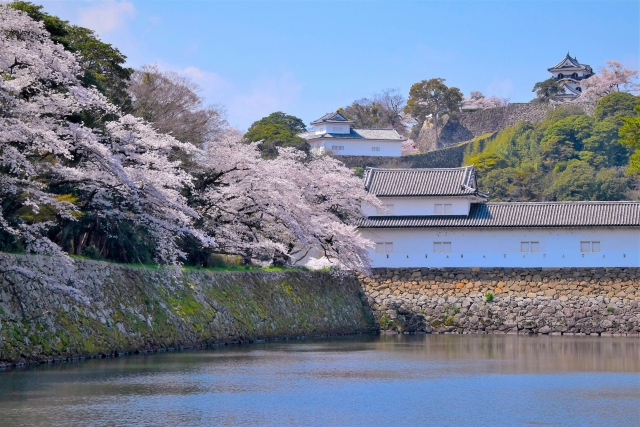
01:30 PM – Exploration: Hikone Castle & The Edo Feudal Realm
- Location: Hikone City, Shiga Prefecture
- Historical Significance: Completed in 1622, Hikone Castle is one of only twelve original, surviving castle keeps (Tenshu) in Japan, designated as a National Treasure.
Leaving Omihachiman, a 30-minute drive north along Route 8 brings you to Hikone. The BRZ handles the urban transitions effortlessly, its precise manual gearbox making stop-and-go navigation around historic town streets completely engaging.
Parking at the base of the castle grounds, you walk up the steep, asymmetrical stone staircases designed to slow down invading samurai forces. The three-story keep stands proudly atop the hill, constructed using timber salvaged from older medieval fortifications. From the top floor, you gain a panoramic 360-degree view of Hikone City, the surrounding mountain range, and the expansive blue expanse of Lake Biwa stretching endlessly to the west.
03:30 PM – Northward Bound: The Sweeping Curves to Nagahama
Leaving Hikone, you head further north toward Nagahama along Route 9. The traffic thins dramatically as you move away from the central urban zones. The landscape transitions into vast emerald-green rice paddies on your right and the wide open waters of Lake Biwa on your left.
As the sun begins its descent, the light shifts to a warm golden hue, reflecting off the polished metallic paint of the BRZ. You downshift into third gear, feeling the engine rev match smoothly, and enjoy the flowing rhythm of the northern lake circuit.
05:30 PM – Golden Hour at Lake Yogo (The Mirror Lake)
- Location: Yogo-cho, Nagahama City (Northern tip of Shiga)
- Geological Feature: A small, isolated lake located just north of Lake Biwa, separated by Mount Shizugatake. Known as the "Mirror Lake" (Kyokosui) due to its calm, glass-like surface.
Navigating up a winding, narrow access road off Route 8, you reach Lake Yogo just as golden hour settles across the valley. Unlike the broad expanses of Lake Biwa, Lake Yogo is enclosed by dense forest-covered mountains. On windless evenings, its surface becomes an absolute mirror, perfectly reflecting the sky, surrounding trees, and mountain ridges.
Park the BRZ along the tranquil perimeter road. The silence here is profound, broken only by the gentle rustle of leaves and the faint cooling "ping" of the hot exhaust pipe under your car. It is a moment of deep stillness—a quintessential "Secret Japan" experience impossible to catch on a fixed train itinerary.
07:00 PM – Dinner & Night Stay: Traditional Northern Ryokan
Check into a lakeside ryokan (traditional Japanese inn) along the northern shore of Nagahama or Lake Yogo. Dinner consists of Kaiseki (traditional multi-course seasonal cuisine), featuring local freshwater fish such as Biwa salmon (Biwa-masu) and seasonal mountain vegetables (sansai). Afterward, soak in an open-air hot spring bath (rotenburo), reflecting on a full day of driving along Japan's historic waterways.

Day 2: The Thrilling West Coast, Okubiwako Parkway, & Mountain Passes
07:30 AM – Morning Engine Start & Coastal Mist
Wake up early to catch the morning fog rising off the northern lake waters. After a traditional breakfast of grilled fish, miso soup, and fresh rice, you load your bags into the surprisingly practical rear cargo area of the BRZ. The engine starts with its characteristic rasp, ready for the most dynamic driving day of the trip.
08:30 AM – The Crown Jewel Drive: Okubiwako Parkway
- Route: Shiga Prefectural Route 512 / 529
- Road Profile: A 18.8-kilometer scenic ridge route winding along the northern peninsula of Lake Biwa. Features sharp elevation changes, technical hairpin curves, and dramatic cliffside views.
This is the stretch of road where the Subaru BRZ truly comes alive. Entering the Okubiwako Parkway, the flat lakeside tarmac gives way to an asphalt climbing route through dense mountain canopy. You drop down to second gear, hit the throttle, and let the 2.4-liter engine sing up toward its 7,500 RPM redline.
The chassis of the BRZ demonstrates its world-class engineering here. The precise steering translates every degree of lock directly to the front tires, holding a clean line through sharp hairpin turns with virtually no body roll. As you crest the ridge, the trees part to reveal high-altitude views of Lake Biwa below, where the deep blue water meets the steep, emerald green mountain slopes.
Note: The Okubiwako Parkway is generally one-way traffic in sections and may close during winter months or severe weather. Always verify local road conditions before driving.
10:30 AM – Tsuzurao-zaki Overlook
- Location: Summit Lookout point along the Okubiwako Parkway
- Highlight: Panoramic views of northern Lake Biwa and Chikubu Island (Chikubushima).
Park at the Tsuzurao-zaki lookout point to take a breath and appreciate the mechanical performance of your car. Looking down from the observation deck, you can trace the twisting ribbons of tarmac you just navigated. Out in the middle of the lake sits Chikubu Island, a sacred site believed since ancient times to be the abode of gods.
12:00 PM – Downshift to Makino: The Metasequoia Avenue
- Location: Makino Town, Takashima City
- Visual Landmark: A breathtaking 2.4-kilometer stretch of straight road lined with approximately 500 Dawn Redwood (Metasequoia) trees.
Leaving the Okubiwako Parkway, head west toward Makino Town. As you approach, you turn onto a road framed by massive, perfectly symmetrical Metasequoia trees. Planted in 1981 as part of a local agricultural initiative, these trees form a natural, towering cathedral arching over the asphalt.
In summer, the needles are a vibrant, fiery green; in autumn, they transform into rich tones of bronze and brick-red; in winter, snow rests on their bare, dramatic branches. Driving the BRZ down this straight corridor is a serene contrast to the technical twists of the Parkway—a moment of pure visual harmony.
01:00 PM – Lunch: Takashima Freshwater Delicacies
- Local Culinary Specialty: Unagi (Freshwater Eel) or Saba-zushi (Mackerel Sushi) along the historic鯖街道 (Saba Kaido / Mackerel Highway).
Stop in Takashima City for lunch along the historic Saba Kaido—the ancient trade route used for centuries to transport fresh seafood from the Sea of Japan to the imperial capital of Kyoto. Sample local Saba-zushi, where rich, vinegar-cured mackerel is wrapped over seasoned rice, or indulge in charcoal-grilled unagi drizzled with a rich, caramelized soy sauce reduction.
02:30 PM – Shirahige Shrine: The Floating Torii Gate of the West
- Location: Ukai, Takashima City (Along National Route 161)
- Historical Significance: Known as the oldest shrine in Shiga Prefecture (founded over 1,900 years ago). Its iconic vermilion torii gate stands directly inside the waters of Lake Biwa.
Driving south down Route 161 along the western shore, you encounter Shirahige Shrine (Shirahige Jinja). Often referred to as the "Itsukushima of Omi," the shrine’s bright red wood gate rises majestically out of the water, framed by the distant peaks of the Hiei mountain range across the bay.
Park safely in the designated shrine parking area across the highway. From the dedicated wooden viewing platform on the shrine grounds, you can capture breathtaking photos of the torii gate standing against the open water.
04:00 PM – Mountain Ascent: The Mt. Hiei Driveway / Oku-Hiei Driveway
- Route: Toll roads connecting Otsu/Takashima to the summit of Mount Hiei
- Driving Profile: A classic Japanese touge (mountain pass) featuring smooth asphalt, technical turns, banked corners, and high elevation changes.
Before returning to Osaka, take a rewarding detour onto the Oku-Hiei Driveway. This mountain road climbs steeply up the flanks of Mount Hiei, home to the legendary Enryaku-ji Temple complex.
Here, you can test the BRZ’s communicative chassis balance once more. Downshifting smoothly into third gear for wide sweeping curves, and second for tight switchbacks, the car clings to the asphalt with incredible agility. The sound of the boxer engine echoes off the stone retaining walls, delivering an authentic Japanese driving experience that no train or bus ride could ever replicate.
06:00 PM – Sunset Descent & Return Journey to Osaka
Cresting the summit of Mount Hiei, you are treated to a sweeping view of Kyoto to the west and Lake Biwa to the east, illuminated by the pink and orange hues of the setting sun.
Descending the mountain, you rejoin the expressway system, setting a direct course back to Osaka. The low-slung sports car cruises effortlessly through the early evening traffic, its headlights cutting through the twilight. You arrive back in Osaka with memories of winding lake roads, ancient temples, coastal mist, and the thrilling hum of a pure driver’s car.
Driving Lake Biwa: Expert Advice & Cultural Nuances
The Magic of Michi-no-Eki (Roadside Stations)
One of the greatest cultural joys of driving in Japan is exploring Michi-no-Eki—government-designated roadside rest stations that are far more than mere gas stops. They serve as showcases for local culture, agriculture, and regional cuisine.
Along Lake Biwa, stops like Michi-no-Eki Biwako-Ohashi Kome-プラザ (Kome Plaza) or Michi-no-Eki Mizudori-Station are essential:
- Fresh Local Produce: Farmers bring freshly harvested fruit, local mushrooms, and regional vegetables daily.
- Exclusive Snacks: Try Biwa-masu soft-serve ice cream, local rice cakes (mochi), or fresh lake fish croquettes.
- Craft Souvenirs: High-quality local pottery, Shiga sake, and handcrafted woodwork unavailable in standard airport shops.
Etiquette & Nuances of Japanese Driving Culture
Driving in Japan is polite, orderly, and highly disciplined. To ensure a seamless road trip, keep these local cultural norms in mind:
- The Hazard Light Thank-You: When a driver yields to let you merge into traffic or turn across a lane, it is customary to flash your hazard lights twice. This simple gesture is universally understood across Japan as a courteous "thank you."
- Strict Speed Limit Adherence: Speed limits in Japan may feel low by Western standards (typically 30–50 km/h in urban/scenic areas, 80–100 km/h on expressways). Be particularly mindful near villages and local school zones.
- Quiet Hours in Residential/Scenic Zones: Japanese car enthusiasts love performance vehicles, but idling loudly or revving engines in small villages or near temple grounds is strongly discouraged. Keep revs low when driving through quiet rural communities.
Driving Lake Biwa: Detailed Logistics & Pre-Trip Tips
Navigation & Expressway Tolls (ETC System)
Navigating Japanese highways requires an understanding of the toll infrastructure:
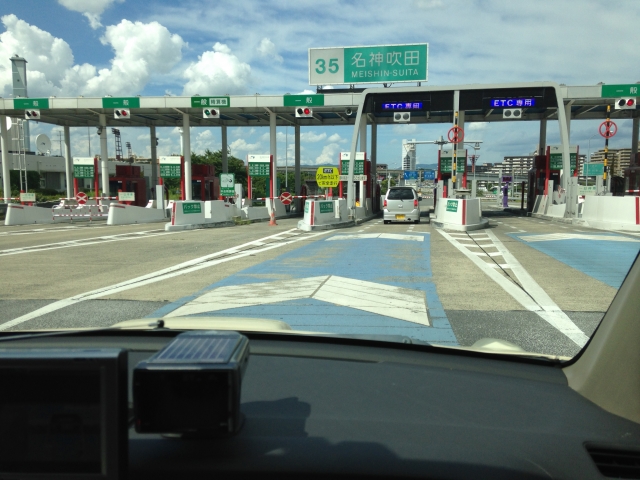
- Electronic Toll Collection (ETC): Japanese expressways use the ETC system. When renting your car, always request an ETC card. This card slides into an onboard reader inside the glovebox or dashboard. When passing through expressway toll gates marked with purple "ETC" signs, drive through at 20 km/h; the barrier opens automatically, and tolls are recorded to your card for easy settlement upon return.
- GPS Navigation: Modern rental vehicles come equipped with high-resolution GPS units. You can input destinations using phone numbers or 7-digit Japanese map codes, making route setting simple even if you do not read Japanese.
Fueling Up: Mastering the Japanese Gas Station
Refueling in Japan is straightforward once you know the basic terminology:
- Station Types:
- Full Service (Mantan): Attendants will guide you to a pump, wipe your windshield, take your payment, and guide you back into traffic.
- Self-Service (Self): Digital touchscreens usually offer an English language toggle option.
- Fuel Types & Color Codes:
- Red Nozzle: Regular Gasoline (Regura)
- Yellow Nozzle: High-Octane / Premium Gasoline (Hai-oku) — Required for performance cars like the Subaru BRZ and Toyota 86!
- Green Nozzle: Diesel (Keiyu)
- Useful Phrases for Full Service:
- "Hai-oku mantan, negai shimasu" ("High-octane, full tank, please.")
- "Credu-katto de" ("By credit card.")
Parking Protocol in Japan
- Back-In Parking: In Japan, reverse parking into spaces is standard practice. It ensures maximum safety when pulling out into traffic later.
- Coin Parking Lots: In small towns and near historic sites, park in marked Coin Parking lots. A small metal flap rises under the car after you park; to leave, enter your space number at the central pay machine, pay the cash or card fee, and the flap will lower.
The Pure Joy of Driving a JDM Sports Car
Choosing a light, focused sports car like the Subaru BRZ or Toyota 86 elevates a scenic drive into an unforgettable journey. Features like a low center of gravity, perfectly balanced chassis dynamics, intuitive pedal positioning for heel-toe downshifts, and responsive steering turn every winding mountain pass into a pure driving experience.
Driving Lake Biwa: Comprehensive FAQ
What driver's license documentation do I need to drive legally in Japan?
To drive legally in Japan, you must present an International Driving Permit (IDP) issued under the 1949 Geneva Convention, alongside your valid physical home country driver's license and your passport.
Note: Drivers holding licenses from specific countries/territories (such as Switzerland, Germany, France, Taiwan, Belgium, and Monaco) must present an official Japanese translation of their native license provided by authorized agencies like JAF (Japan Automobile Federation), rather than an IDP.
Is driving a manual transmission (MT) car in Japan difficult for foreign visitors?
Japan drives on the left side of the road, meaning manual transmission cars have the steering wheel on the right and the gear shifter operated by your left hand. However, the pedal arrangement remains identical worldwide (Clutch - Brake - Accelerator from left to right). The Subaru BRZ features a clear, mechanical gate engagement and a forgiving clutch feel, making the adjustment natural within the first 30 minutes of driving.
What insurance coverage should I carry?
Always opt for full collision damage waiver (CDW) and Non-Operation Charge (NOC) protection when renting a performance vehicle in Japan. This ensures total peace of mind against unexpected road debris, minor parking scrapes, or stone chips along mountain passes.
How are road conditions around Lake Biwa during winter?
While the southern and eastern shores of Lake Biwa remain generally mild year-round, the northern passes (such as the Okubiwako Parkway) and mountain roads (like Mt. Hiei) can experience snow and ice between December and March. Winter tires or snow chains are mandatory during these months.
Driving Lake Biwa: The Final Thoughts
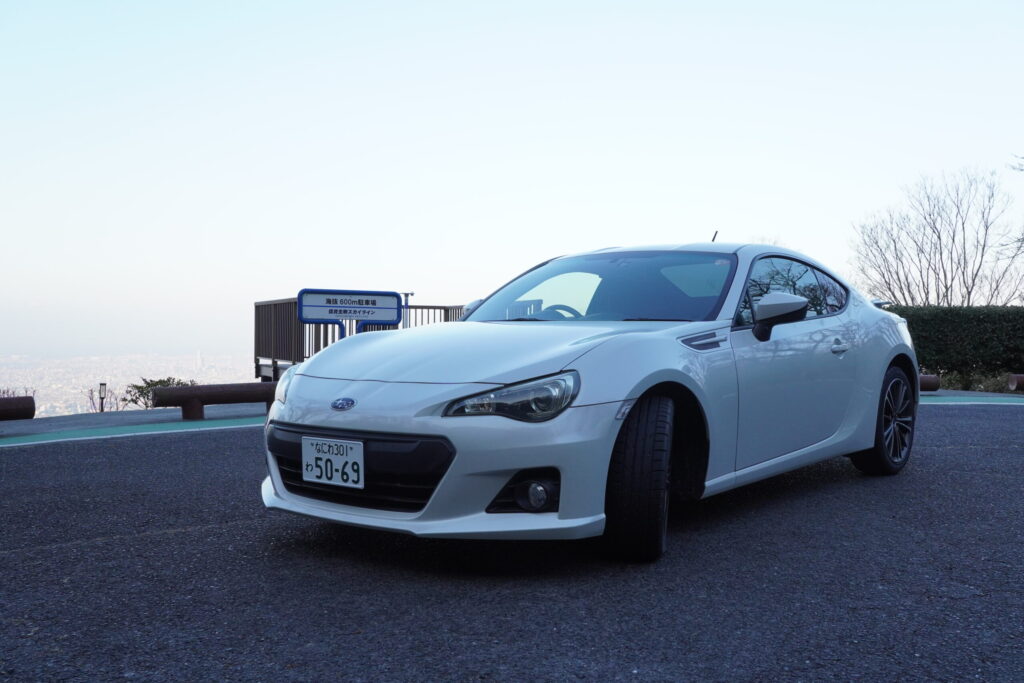
The true spirit of Japan does not reveal itself from the middle seat of a crowded train or the window of a tourist coach. It is discovered out on the open road—in the early morning mist rising off ancient waters, the winding asphalt of mountain passes, and the mechanical harmony of a fine sports car navigating the turns of a lakefront highway.
Lake Biwa offers one of the world's great coastal driving experiences, combining thousands of years of imperial history with world-class asphalt designed for those who truly love to drive.
When you are ready to trade the ordinary tourist trail for the freedom of the open road, your key is waiting in Osaka. Visit Omoresan Rental Car Osaka Chuo Store (おもしろレンタカー大阪中央店) to select your high-performance JDM machine—like the iconic Subaru BRZ or Toyota 86—and embark on your own unforgettable "Secret Japan" adventure. The road is open, the lake is waiting, and the ultimate Japanese driving experience begins the moment you turn the key.