
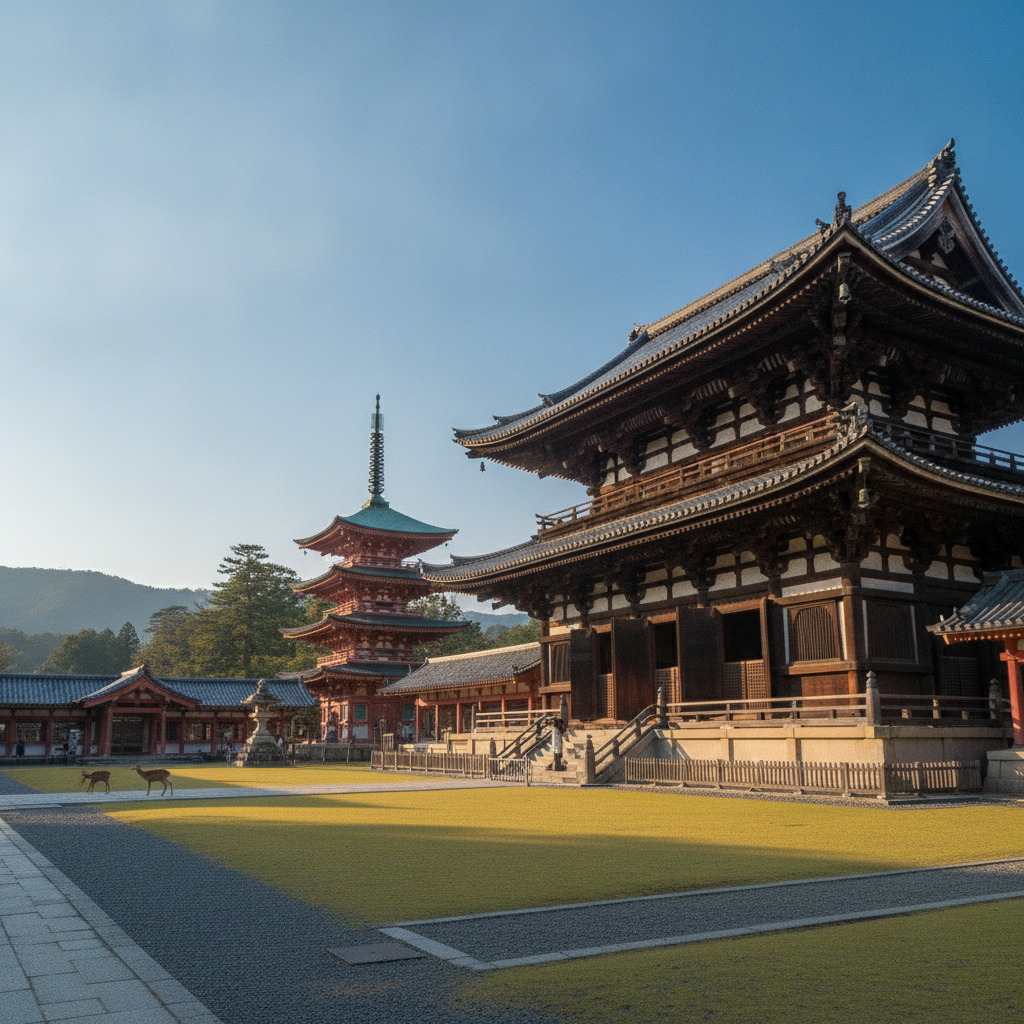
Nara World Heritage, Tour, Todai-ji, Horyu-ji, Kasuga Taisha, Ancient Capital - The Philosophy of Driving in Japan
For years, I navigated the intricate steel arteries of Japan's rail network, a proud Kintetsu conductor, moving countless souls across this beautiful nation with rhythmic precision. The train, a marvel of engineering, offers unparalleled efficiency, a testament to Japanese innovation. It whisks you between urban centers, punctual to the second, providing glimpses of the landscape through a framed window. Yet, even as I commanded those powerful machines, a profound truth slowly dawned on me: the train, for all its undeniable strengths, is a tether. It binds you to its predetermined path, to its designated stations, allowing only the most fleeting of connections with the vast, pulsating heart of Japan.
This is where the allure of the automobile takes hold, where the true spirit of discovery awakens. As a former conductor who has since traversed this entire archipelago by road, and now as a proprietor of a JDM rental fleet in Osaka, I can tell you unequivocally: to truly unlock Japan, to peel back its layers of ancient history, breathtaking natural beauty, and vibrant local life, you must take the wheel. Especially in the Kansai region, with Osaka as your dynamic starting point, a car transforms your journey from a mere transit into an expedition, an intimate dialogue with the land itself.
Think of it not as simply transport, but as liberation. The moment you grasp the wheel of a meticulously tuned machine – say, the iconic Toyota 86 or Subaru BRZ – a new world opens up. No longer are you a passive observer, confined to the views dictated by a railway line or the frantic pace of a tour bus. You become the architect of your own adventure, free to chase the golden light of a mountain sunset, to discover a hidden temple nestled deep in a cedar forest, or to savor the aroma of a roadside ramen shop that no guide book would ever mention. This is the essence of what I call 'Secret Japan' – a realm of serene beauty, untouched tradition, and genuine human connection that remains tantalizingly out of reach for those who cling solely to public transportation.
The tactile feedback of the steering wheel, the precise dance of the pedals, the satisfying snick of a manual gear change as you carve through a winding mountain pass – these are the sensations that forge an unforgettable connection with your surroundings. You don't just see the landscape; you feel its undulations, its texture, its very breath. The crisp, clean air of the countryside fills your lungs, the vibrant hues of the rice paddies and ancient forests paint themselves directly onto your memory, and the throaty growl of a performance engine becomes the soundtrack to your personal odyssey. This is the difference between simply visiting Japan and truly experiencing it, between observing and immersing. It’s a philosophy born from years on the rails and countless more on the open road: while trains connect cities, a car connects you to the soul of Japan.
Nara World Heritage, Tour, Todai-ji, Horyu-ji, Kasuga Taisha, Ancient Capital - The 2-Day Itinerary: Deep Dive

Prepare to ignite your senses and transcend the ordinary. This isn't just a two-day trip; it's a meticulously crafted symphony of history, adrenaline, and cultural immersion, all experienced from the cockpit of a legendary JDM machine – your very own Toyota 86 or Subaru BRZ. From the bustling heart of Osaka, we'll journey into the mystical embrace of Nara, a land where ancient empires whispered and time itself seems to slow. Every turn will be a revelation, every vista a masterpiece, and every drive a celebration of pure motoring joy. Fasten your seatbelt; your ultimate Nara odyssey begins now.
Day 1: From Osaka's Pulse to Nara's Ancient Heartbeat
7:00 AM - 8:00 AM: The Dawn of Adventure from Osaka – Awakening the Beast
The first rays of sunlight pierce through the urban canyon of Osaka, casting long shadows over streets that are just beginning to stir. The city’s low, electric hum is a prelude to the symphony of the day. There's an undeniable thrill that courses through you as you prepare for departure. Today, you're not just a tourist; you're an explorer, a time-traveler, and the master of your own destiny. You arrive to collect your chariot: the sleek, purposeful Toyota 86 or Subaru BRZ. Its low stance, muscular fenders, and aerodynamic lines hint at the performance coiled within. You slide into the supportive bucket seat, the scent of leather and performance plastics filling the cabin. Your hands grip the perfectly sculpted steering wheel, your fingers trace the cool metal of the short-throw shifter. A press of the start button, and the boxer engine awakens with a guttural growl, a promise of exhilarating miles to come. You check the mirrors, adjust your seat, and take a deep breath. The city awaits your departure, but the ancient world calls.
8:00 AM - 9:30 AM: Carving a Path to Ancient Wisdom – Osaka to Nara Prefecture
The initial miles are a dance of precision through Osaka's awakening thoroughfares. The 86/BRZ, nimble and responsive, slices through the light morning traffic with effortless grace. You feel the immediate connection, the almost telepathic response of the chassis to your inputs. Soon, the urban landscape begins to recede, skyscrapers giving way to suburban homes, then quickly to wider, more open roads. You seamlessly merge onto a major expressway like the Kinki Expressway, the boxer engine settling into a confident hum as the speed builds. But we won't stay on the monotonous highway for long. Our path diverges onto Prefectural Route 168, a road that begins to hint at the scenic wonders to come. Rolling hills, still draped in the morning mist, emerge on the horizon. Pockets of vibrant green farmland appear between clusters of traditional Japanese homes. The transition from concrete jungle to verdant countryside is a sensory delight. The air itself feels cleaner, crisper. The 86/BRZ feels alive, eager to stretch its legs, its suspension soaking up the gentle undulations of the road, giving you a sublime sense of control and connection to the asphalt beneath.
9:30 AM - 12:00 PM: Horyu-ji – Time Capsules in Timber, Whispers of the Past
As you approach Horyu-ji, a profound sense of history washes over you. Nestled amidst a meticulously maintained landscape of ancient pines and cedars, the temple complex exudes an almost tangible aura of spiritual weight. The very act of parking the 86/BRZ in the designated lot feels like an intrusion of the modern into the sacred, yet it’s a harmonious one. Stepping out, the air is noticeably cooler, scented with the unique aroma of aged timber and damp earth. This is Horyu-ji, not just a temple, but a living museum, home to the world’s oldest surviving wooden structures, a UNESCO World Heritage site since 1993. Its history stretches back to the early 7th century, founded by Prince Shotoku, a pivotal figure in introducing Buddhism to Japan.
You walk through the imposing Nandaimon (Great South Gate), the massive wooden beams groaning with the weight of centuries. Inside, the serene Central Gate, Chumon, with its unique architectural style, draws you into the inner sanctum. The Kondo (Golden Hall) stands before you, an architectural marvel built in the Asuka period. Its graceful, sweeping roofs and 'entasis' columns – subtly bulging to give an illusion of strength – are a testament to ancient Japanese craftsmanship influenced by continental styles. Beside it, the Goju-no-to (Five-storied Pagoda) pierces the sky, each tier a perfectly proportioned masterpiece. It's not just a pagoda; it's a structural poem, a marvel of seismic engineering that has withstood countless earthquakes for over 1300 years. Imagine the hands that carved these timbers, the faith that guided their construction, the generations that have gazed upon them. The silence here is profound, broken only by the rustle of leaves and the distant chirping of cicadas, a stark, soothing contrast to the hum of Osaka. The geological setting, on a slightly elevated plain within the vast Nara Basin, offered protection from floods and natural disasters, aiding its remarkable preservation. You can almost hear the whispers of monks and emperors carried on the breeze, telling tales of devotion and artistic brilliance. This isn't just seeing history; it's feeling it seep into your very bones.
12:00 PM - 1:00 PM: Local Flavors and Fueling the Soul – Nara’s Culinary Delights
After immersing yourself in the profound quietude of Horyu-ji, your senses, now finely tuned, are ready for another kind of pleasure: local cuisine. Just outside the temple grounds, or a short drive into the nearby town, you'll find charming, unassuming eateries that have served pilgrims and locals for generations. Step into one of these traditional establishments, perhaps a modest noodle shop or a restaurant specializing in Nara's unique culinary heritage. Today, the choice is kakinoha-zushi, a regional specialty of sushi wrapped in persimmon leaves. The delicate aroma of persimmon subtly infuses the vinegared rice and tender mackerel or salmon, creating a flavor profile that is both rustic and refined. Each bite is a miniature cultural lesson. Or perhaps, a steaming bowl of local soba or udon, the rich broth comforting, the noodles perfectly chewy. You sip green tea, the warmth spreading through you, and engage in quiet conversation with the proprietor, a warm smile exchanged. It’s a moment of reflection, a chance to process the timeless beauty of Horyu-ji while fueling your body for the adventures ahead. The taste lingers, a sweet reminder of Nara's understated elegance.
1:00 PM - 2:30 PM: The Road Less Traveled to Nara City – A Driver’s Delight
With body and spirit replenished, it's time to re-engage with your 86/BRZ. Instead of the direct, characterless expressways, we'll choose a more intimate route to Nara City. Prefectural Route 25, or other smaller, scenic roads that skirt the base of the Ikoma mountain range, beckon. This is where the true joy of the 86/BRZ comes alive. The roads here are a symphony of gentle curves and modest ascents, perfectly paved and beautifully maintained, yet devoid of heavy traffic. The engine, a naturally aspirated boxer, responds with eager linearity, its distinctive growl escalating with each precise downshift. You feel the perfect balance of the chassis, the low center of gravity, and the communicative steering that feeds every nuance of the road surface directly into your hands. It’s a dance, a conversation between you and the machine.
The scenery unfolds like a traditional Japanese scroll painting: lush green rice paddies stretch towards distant, misty mountains, interspersed with quaint farmhouses and small, family-run enterprises. You pass through tiny villages where time seems to have stood still, catching glimpses of local life – a farmer tending his fields, children cycling home from school. The air, redolent with the scent of damp earth and blooming wildflowers, rushes through the open windows. Here and there, a series of tighter bends allows you to explore the car's dynamic capabilities, the tires biting into the asphalt, the tail feeling exquisitely composed. This is not about speed; it's about flow, about precision, about the sublime sensation of driving a perfectly balanced sports car through a landscape steeped in ancient history. The engine's note becomes a harmonious part of the experience, echoing off the passing hills, a living testament to JDM engineering.
2:30 PM - 5:00 PM: Todai-ji – A Colossal Testament to Faith and Scale
As you draw closer to Nara City, the landscape once again shifts. Ancient cedars begin to line the roads, and then, a startling, enchanting sight: wild sika deer, revered as messengers of the gods, wander freely through the streets and parklands. They are the welcoming committee to Nara, curious and gentle, eagerly accepting special 'deer crackers' from visitors. You navigate the city’s charming, often narrow, streets with ease, the compact 86/BRZ slipping effortlessly into a parking spot near Nara Park.
The approach to Todai-ji is an experience in itself. You walk beneath the colossal Nandaimon Gate, a national treasure, where two fiercely powerful Nio guardian statues, carved with breathtaking detail, stand watch. Their sheer size and intense expressions are a stark reminder of the temple's enduring spiritual power. Beyond, across a vast gravel expanse, stands the Daibutsu-den (Great Buddha Hall) – an architectural marvel that, despite being rebuilt to two-thirds of its original size in the 17th century, remains the largest wooden building in the world. Its sheer scale is truly humbling, its roofline gracefully soaring towards the heavens.
Inside, an even more staggering sight awaits: the Daibutsu, the Great Buddha, a bronze statue of Vairocana Buddha that rises over 15 meters (nearly 50 feet) tall. Its serene gaze, cast over countless generations, holds an undeniable power. Imagine the immense undertaking of its original construction in the 8th century, an endeavor that nearly bankrupted the nation. Its very existence is a testament to the fervent faith and extraordinary craftsmanship of ancient Japan. The temple’s location, nestled in the Nara Basin, was strategically chosen, protected by surrounding mountains, providing a stable foundation for such monumental construction. You can feel the weight of centuries of prayer, of imperial ambition, of countless lives shaped by this spiritual anchor. The air, thick with the scent of incense, hums with a quiet energy, making the experience profoundly moving. This is not just a building; it is a repository of Japan’s soul.
5:00 PM - 6:30 PM: Kasuga Taisha – Vermillion Splendor and Sacred Forests
A short, picturesque walk through the hallowed grounds of Nara Park, past more gentle deer, leads you to another of Nara's UNESCO treasures: Kasuga Taisha. The atmosphere here is distinctly different from the imposing grandeur of Todai-ji. As you ascend the path, you enter a sacred primeval forest, its ancient cedar trees forming a dense, mystical canopy. Thousands of stone lanterns, moss-covered and weathered by time, line the path, creating an ethereal corridor. The feeling is one of profound serenity and ancient spirituality.
Kasuga Taisha, founded in the 8th century to protect Nara and ensure national prosperity, is a vibrant Shinto shrine. Its most striking feature is the brilliant vermillion lacquer of its buildings, a stark and beautiful contrast against the deep greens of the surrounding forest. The main shrine buildings, rebuilt every 20 years in a ritual known as shikinen sengu (though this practice has now been modified), maintain a pristine, almost ethereal appearance. As you explore, you'll discover hundreds of bronze lanterns hanging within the temple halls, intricately carved and steeped in legend. Twice a year, all these lanterns, both stone and bronze, are lit, creating a truly magical spectacle. The delicate carvings on the wooden structures, depicting mythical creatures and natural motifs, speak volumes about the artistic sophistication of the Heian period. The air here feels pure, charged with the energy of centuries of prayers to the enshrined deities. It's a place where the veil between the ordinary and the divine seems remarkably thin, inviting contemplation and reverence.
6:30 PM - 8:00 PM: A Taste of Nara's Evening Charm – Naramachi’s Culinary Echoes
As twilight descends, casting a soft, golden glow over the ancient capital, your thoughts turn to dinner. Nara offers a more subdued, elegant evening experience compared to the vibrant bustle of Osaka. A perfect choice is to explore the Naramachi district, the old merchant quarter of Nara. Here, narrow lanes are lined with beautifully preserved traditional machiya townhouses, many of which have been converted into charming cafes, artisan shops, and intimate restaurants. The ambiance is one of quiet sophistication, a genuine connection to Nara's past.
Seek out an establishment that offers authentic Nara cuisine. Perhaps a traditional kaiseki meal, a multi-course culinary art form that celebrates seasonal ingredients with exquisite presentation, offering a refined taste of the region. Or, for a more casual yet equally delightful experience, try a local izakaya that specializes in regional sake and small plates, allowing you to sample a variety of local delicacies. Don't forget to try more Nara-zuke, unique pickles that are a staple of the local diet, often featuring melons, gourds, and vegetables preserved in sake lees, offering a distinctively rich and slightly sweet flavor. The quiet chatter, the clinking of glasses, the aroma of savory dishes – these are the subtle joys of a Nara evening, a perfect counterpoint to the day's historical explorations. The soft glow of lanterns illuminating the ancient streets as you stroll, full and content, is a memory you'll cherish.
8:00 PM onwards: Serene Repose in the Ancient Capital – A Ryokan Dream
With your stomach full and your mind enriched, it’s time to retire for the night. The ultimate Nara experience includes staying in a traditional Japanese ryokan. As you step inside, you're enveloped in an atmosphere of tranquil hospitality. The crisp scent of tatami mats fills the air. After checking in, you're shown to your room, often minimalist yet exquisitely appointed, with sliding shoji screens and a low table. Later, the staff will prepare your futon, a plush bed laid directly on the tatami, promising a night of unparalleled comfort. If your ryokan boasts an onsen, take advantage of this quintessential Japanese experience. The mineral-rich hot springs soothe tired muscles, easing away the day’s fatigue and preparing you for another day of exploration. Soaking in the steaming water, perhaps under a canopy of stars, is pure bliss. As you drift off to sleep, the profound silence of Nara surrounds you, a stark contrast to the distant urban hum. You’ll fall asleep with images of colossal Buddhas, vermillion shrines, and winding roads dancing in your mind, the satisfying growl of the 86/BRZ a faint, fond echo.
Day 2: Beyond the Beaten Path and the Thrill of the Return
7:00 AM - 8:30 AM: Morning Calm and a Traditional Breakfast – A Gentle Awakening
Awakening in a Nara ryokan is a serene experience. The first light filters gently through the shoji screens, and the only sounds are the chirping of birds and the gentle rustle of bamboo. There’s no rush, just a profound sense of peace. A traditional Japanese breakfast awaits, a beautiful spread that is as much an art form as it is a meal. Delicate grilled fish, perhaps mackerel or salmon, sits alongside fluffy white rice, savory miso soup, delicate pickles, and perfectly steamed vegetables. Every component is thoughtfully prepared, offering a balanced and nutritious start to your day. You savor each bite, appreciating the subtle flavors and the quiet elegance of Japanese culinary tradition. It’s a moment to reflect on the depth of history you’ve already encountered and to anticipate the new discoveries that await. A brief, contemplative stroll around the ryokan's garden or the immediate neighborhood reveals Nara’s quiet morning beauty, a different facet from its daytime vibrancy.
8:30 AM - 10:30 AM: Kofuku-ji & Isuien Garden – Pagodas, Ponds, and Poetic Landscapes
After breakfast, immerse yourself in a different side of Nara’s charm, one of quiet contemplation and exquisite artistry. First, a visit to Kofuku-ji, another UNESCO World Heritage site and one of Nara’s most prominent temples. Its iconic five-story pagoda, rising gracefully above Sarusawa Pond, is a symbol of Nara itself. While it may not possess the sheer scale of Todai-ji, its elegance and historical significance are undeniable. Founded in the 7th century, Kofuku-ji once boasted over 150 buildings; today, the restored structures and the impressive pagoda offer a glimpse into its past glory. Stroll around the pond, admiring the reflection of the pagoda, a classic Japanese scene.
Then, just a short walk away, lies Isuien Garden, a masterpiece of traditional Japanese landscape design. This meticulously maintained strolling garden, dating back to the 17th century, is renowned for its concept of 'borrowed scenery' (shakkei). It artfully incorporates the distant Todai-ji Nandaimon Gate and the gentle slopes of Mount Wakakusa into its own panoramic views, blurring the lines between the garden's boundaries and the broader landscape. Wander along winding paths, past tranquil ponds filled with koi, over moss-covered bridges, and through groves of ancient trees. Every turn reveals a new, carefully composed vista, a harmonious blend of natural elements and human artistry. The delicate balance, the subtle interplay of stone, water, and foliage, offers a profound sense of tranquility and an appreciation for Japan’s aesthetic sensibilities. It's a perfect antidote to the grandeur of the large temples, offering a more intimate connection with nature and art.
10:30 AM - 1:00 PM: The Call of the Mountains – Into the Yamato Highlands with the 86/BRZ
Now, for the true enthusiast, it's time to truly awaken the spirit of your 86/BRZ. We’ll depart Nara City not by heading directly back to Osaka, but by venturing east or south into the less-explored, yet equally captivating, Yamato Highlands. This is where 'Secret Japan' truly reveals itself, and where the 86/BRZ earns its stripes. Route 37, Route 369, or other prefectural roads like 38 or 80 will take you into a world of verdant mountains, deep valleys, and winding, perfectly paved tarmac. These are the roads less traveled, offering a driving experience that is both exhilarating and deeply immersive.
As you climb higher, the air grows cooler, crisper, carrying the scent of pine and damp earth. The road becomes a ribbon of asphalt, twisting and turning through dense cedar forests. This is where the communicative steering of the 86/BRZ truly shines, allowing you to precisely place the car through each corner. The short-throw shifter clicks into place with satisfying precision as you execute perfect heel-toe downshifts, the boxer engine singing its characteristic tune, a rich, mechanical symphony echoing off the surrounding hillsides. You feel the g-forces, the subtle shift of weight, the incredible grip through sweeping bends. This is not just driving; it's a dynamic conversation between driver, machine, and road. The naturally aspirated engine, revving freely to its redline, delivers power linearly, making it incredibly predictable and rewarding to drive at the limit of adhesion, without feeling overwhelming. This is the essence of JDM driving distilled. Geologically, you're traversing a landscape shaped by ancient volcanic activity and millennia of erosion, revealing dramatic rock formations and deep-cut river valleys. Every vista is a postcard, from distant peaks shrouded in mist to terraced rice paddies clinging precariously to steep slopes, reflecting the sky like countless mirrors. This is the Japan that most tourists never see, a landscape of raw beauty and timeless serenity, best explored with a precision instrument like the 86/BRZ.
1:00 PM - 2:00 PM: Rural Lunch – A Hidden Culinary Gem in the Hills
Deep within these Yamato Highlands, far from the bustling tourist hubs, lies another kind of treasure: the hidden, family-run eatery. Perhaps it's a small, rustic restaurant nestled beside a mountain stream, or a quaint café attached to a local Michi-no-Eki. This is where you’ll taste the true, unadulterated flavors of rural Japan. Forget the chain restaurants; here, the ingredients are often locally sourced, fresh from the surrounding fields and forests. You might discover dishes featuring wild mountain vegetables (sansai), picked fresh that morning, or delicate freshwater fish from a nearby river, grilled simply over charcoal. The hospitality is warm and genuine, a reflection of the close-knit communities that call these hills home. The conversation, though perhaps limited by language, is rich with smiles and gestures. This isn’t just lunch; it’s an authentic encounter with local culture, a moment of true 'Secret Japan' that you’ll carry with you long after the meal is finished. The simple, honest flavors are a perfect complement to the untamed beauty of the landscape outside.
2:00 PM - 4:00 PM: The Homeward Bound Drive with Lasting Memories – Reflection and Exhilaration
With your spirit soaring and your senses reawakened, it's time to begin the leisurely descent from the Yamato Highlands and start your return journey towards Osaka. But this isn't merely a trip back; it’s a victory lap, a final opportunity to savor the sheer joy of driving the 86/BRZ. Choose a route that allows for final scenic views, perhaps along the western edge of the Nara Basin, offering expansive vistas of the ancient capital receding into the distance, or through more winding passes of the Ikoma mountain range. The afternoon light casts long, dramatic shadows across the landscape, painting the familiar scenes in a new, softer palette. The engine hums a consistent, satisfying growl, a steady companion as you effortlessly cover ground. Each sweep of the road, each perfectly executed gear change, is a testament to the journey you've undertaken and the skills you've honed. You reflect on the past two days: the ancient wonders of Horyu-ji and Todai-ji, the serene beauty of Kasuga Taisha and Isuien Garden, and the raw, exhilarating freedom of carving through mountain roads in a JDM legend. It's a blend of history and horsepower, culture and control, that few ever get to experience. The memories are vivid: the scent of cedar, the taste of persimmon sushi, the roar of the boxer engine, and the feel of the asphalt. This drive isn't just a physical journey; it's an internal one, cementing the profound connection you’ve forged with Japan.
4:00 PM - 5:00 PM: The Return to Osaka – Back to the Future
As the urban sprawl of Osaka gradually emerges on the horizon, the transition from serene, ancient landscapes to the bustling rhythm of city life feels almost surreal. The city lights begin to twinkle, a vibrant tapestry against the fading sky. You seamlessly re-enter the flow of Osaka traffic, the 86/BRZ, ever composed, navigating the city streets with ease. There’s a quiet satisfaction, a sense of accomplishment, as you return to your starting point. You haven't just visited Japan; you’ve engaged with it on its own terms, delving deeper than most, forging a profoundly personal connection through the unique lens of a JDM road trip. Returning the 86/BRZ, you might feel a pang of wistfulness, a longing for the open road. But you carry with you not just souvenirs, but stories, sensations, and an indelible understanding of Japan's ancient soul, discovered one exhilarating mile at a time. The adventure may conclude, but the memories will ignite conversations and dreams for years to come.
Nara World Heritage, Tour, Todai-ji, Horyu-ji, Kasuga Taisha, Ancient Capital - Expert Advice & Cultural Nuances
As someone who has spent years on Japan's roads, first as a conductor observing the landscape flash by, and now as a proprietor of JDM vehicles, I've gathered invaluable insights. Beyond the well-trodden paths of guidebooks, there's a nuanced side to Japanese travel, particularly by car, that can elevate your journey from excellent to utterly unforgettable. Embracing these cultural nuances and insider tips will unlock even more of that 'Secret Japan' I speak of.
One of the true gems of Japan for the road-tripper is the 'Michi-no-Eki' (道の駅), or roadside station. These are far more than just rest stops; they are vibrant community hubs, often supported by local governments. Think of them as miniature cultural centers, showcasing the very best of their region. Here, you'll find impeccably clean restrooms, often with heated toilet seats, and vending machines offering everything from hot coffee to local snacks. But the real magic lies in their shops. Michi-no-Eki are treasure troves of local produce – fresh fruits and vegetables straight from nearby farms, often at incredibly reasonable prices. You'll discover unique regional delicacies, artisan crafts, and locally brewed sake or miso that you won't find in major supermarkets. Many also feature excellent, affordable restaurants serving local specialties. They are perfect for a refreshing break, a delicious and authentic meal, and a genuine immersion into the heart of rural Japan. Stopping at a Michi-no-Eki isn't just about resting; it's about connecting with the local community, sampling their bounty, and discovering souvenirs with real meaning.
Beyond the major attractions, Japan hides a wealth of 'hidden local gems' – places that often require the freedom of a car to discover. These are the small ramen shops run by an elderly couple whose recipe has been perfected over decades, the charming family-owned bakeries with queues out the door for their freshly baked goods, or the serene, ancient shrines tucked away on a quiet hillside, their moss-covered stone lanterns whispering tales to only a handful of visitors. My own travels, constantly turning off the main roads and following my instincts, have led me to countless such spots. These are the places where you experience true, unvarnished Japanese hospitality, where the food tastes more authentic, and where interactions with locals are more genuine. Don't be afraid to take a detour if a quaint-looking village or an intriguing sign catches your eye. Sometimes, the most profound discoveries are made when you let serendipity guide your wheels.
When it comes to 'driving etiquette' in Japan, a few key points will ensure a smooth and enjoyable experience. Japanese drivers are, by and large, incredibly polite, patient, and orderly. You’ll rarely encounter aggressive driving. The emphasis is on harmony and safety. Always use your indicators well in advance of a turn or lane change. Maintain a safe following distance, even if others seem to hug bumpers. Speed limits, while seemingly low in some areas, are strictly enforced, often by subtle cameras, so resist the urge to speed. The true joy of driving an 86/BRZ in Japan isn’t about raw speed, but about the precise control and connection it offers on winding roads, allowing you to fully appreciate the scenery. Be particularly mindful of pedestrians and cyclists, especially in smaller towns and residential areas, as they often have the right of way and can appear suddenly. Roads in Japan, even in rural areas, are immaculately maintained, but some can be narrow, so be prepared for occasional tight squeezes, particularly in ancient towns like Nara. Patience, courtesy, and an appreciation for the journey itself will serve you well, ensuring a respectful and rewarding driving adventure.
Nara World Heritage, Tour, Todai-ji, Horyu-ji, Kasuga Taisha, Ancient Capital - Detailed Logistics & Pre-Trip Tips
Embarking on a JDM road trip through Japan requires a bit of pre-planning, but the rewards far outweigh the effort. As a former train conductor who knows the country’s infrastructure intimately and now manages a fleet of custom JDM vehicles, I can offer the precise logistical insights you’ll need for a seamless and thrilling adventure. Let’s prepare you for the roads of 2026.
First, 'traffic conditions.' Japan’s traffic management is incredibly efficient. Major metropolitan areas like Osaka will naturally experience rush hour congestion (typically 7:00 AM to 9:00 AM and 5:00 PM to 7:00 PM), but outside these peak times, traffic flows smoothly. On expressways, especially those leading to Nara, you can expect clear sailing for much of the day. Navigation apps like Google Maps or Waze are highly accurate in Japan and indispensable for real-time traffic updates and route planning. Be aware of major national holidays such as Golden Week (late April to early May), Obon (mid-August), and New Year’s, when domestic travel surges, potentially leading to heavy traffic on all major routes. Planning your departures and arrivals around these periods, or embracing the slower pace, is advisable.
An 'ETC card' (Electronic Toll Collection) is an absolute non-negotiable for expressway travel. This clever system allows you to pass through toll gates without stopping, making for incredibly efficient journeys. You simply drive through the ETC lane, and the toll is automatically deducted. Rental car companies will provide an ETC card, sometimes for a small daily rental fee or a deposit. Trust me, navigating toll booths manually, especially if you don't speak Japanese, can be a confusing and time-consuming ordeal. Having an ETC card is like having a magic pass, smoothing your way across the country’s extensive expressway network and making your road trip infinitely more enjoyable.
Navigating 'Japanese gas stations' is straightforward once you know a few key phrases. Most stations are either full-service or self-service. For full-service, pull up to the pump, and an attendant will quickly greet you. The most important phrase is “Mantan” (満タン), meaning “full tank.” For premium gasoline, essential for your 86/BRZ, ask for “Hai-oku” (ハイオク). For regular, it’s “Regyuraa” (レギュラー). Attendants are incredibly polite and efficient; they'll often ask if you need your windows cleaned or trash emptied. A simple “Arigato gozaimasu” (Thank you very much) is all that’s needed. Self-service stations (セルフサービス) are also common. These usually require you to select your fuel type and payment method (cash or credit card) on a touch screen before you start pumping. Don't be shy to ask for assistance if needed; staff are generally very helpful, even with a language barrier.
'Parking' in Japan, particularly in cities and popular tourist areas, is predominantly paid. Look for signs with a blue 'P' (パーキング) symbol. Most city parking lots are either multi-story garages or coin-operated street-side spots. The 86/BRZ, being a compact sports car, is a huge advantage here, easily fitting into Japan's often tighter parking spaces. Many major attractions like Todai-ji and Horyu-ji have dedicated parking lots, which are usually clearly signposted. In smaller towns and rural areas, free parking might be available, but always confirm the signs. Remember to pay attention to parking duration limits and any specific local regulations.
Finally, let’s talk about the 'JDM (MT car) experience' itself, specifically behind the wheel of a Toyota 86 or Subaru BRZ. This is where the profound difference lies. Driving an automatic is merely operating a vehicle; driving an 86/BRZ with a manual transmission is a direct engagement, a dynamic partnership. The moment you push in the clutch, feel the precise weight of the pedal, and guide the short-throw shifter into first gear, you're not just starting a drive; you’re initiating a dialogue. The naturally aspirated boxer engine, a masterpiece of Subaru engineering, responds with eager linearity, its distinctive thrum filling the cabin. Every rev-match, every perfectly executed heel-toe downshift, every precise input through the communicative steering wheel connects you directly to the asphalt below. The balanced chassis, the low center of gravity, and the finely tuned suspension work in perfect harmony, allowing you to dance through winding roads with unparalleled confidence and joy. It's about feeling the car pivot around you, hearing the engine's song rise and fall, and becoming one with the machine as you explore Japan's ancient roads. This isn't just transportation; it's a visceral, exhilarating experience that deepens your connection to the landscape and the very act of travel. It’s the difference between merely seeing Japan and truly living it.
Nara World Heritage, Tour, Todai-ji, Horyu-ji, Kasuga Taisha, Ancient Capital - Comprehensive FAQ
Planning an adventurous JDM road trip in Japan naturally brings up a few questions. As someone deeply familiar with both driving in Japan and operating a JDM rental business, I’ve compiled answers to the most common inquiries to ensure your journey is as smooth and worry-free as possible.
International Driving Permit (IDP): For those eager to command a JDM icon, ensure you possess the necessary documentation. You will need an International Driving Permit (IDP) issued under the 1949 Geneva Convention, your domestic driver's license, and your passport. Make sure your IDP is valid for at least six months from your entry date into Japan. It's crucial that the IDP is issued by the same country as your domestic license. Always carry all three documents when driving. Japan accepts IDPs from countries that are signatories to the 1949 Geneva Convention. Be aware that some countries issue IDPs valid under the Vienna Convention, which Japan does not currently recognize. Always check your country's specific requirements and ensure your IDP meets Japan's criteria.
Insurance: All rental cars in Japan come with mandatory basic insurance, which covers third-party liability. However, I strongly recommend opting for additional coverage, often called a 'collision damage waiver' (CDW) or 'non-operation charge exemption,' offered by rental companies. This optional coverage typically reduces your deductible (the amount you'd pay out-of-pocket in case of an accident) or covers the non-operation charge if the car requires repair. While Japan's roads are safe, peace of mind is priceless when driving in a foreign country. Always read the terms and conditions carefully.
MT Car Driving Anxiety: If you're accustomed to driving a manual transmission but perhaps feel a little rusty or anxious about driving one on unfamiliar roads, rest assured. Japan's roads are generally well-maintained, and outside of major city rush hours, traffic flows smoothly and orderly. This provides an excellent environment to reacquaint yourself with a manual gearbox. The Toyota 86 and Subaru BRZ, with their forgiving clutches and precise, short-throw shifters, are a joy to operate and incredibly intuitive. I recommend spending a bit of time practicing in a less congested area outside the city before tackling more complex routes. The sense of achievement and connection you gain from mastering an MT car on Japan's scenic roads is immensely rewarding.
Winter Driving: While the Nara region isn't typically known for heavy snowfall, it can experience light snow in the deep winter months (January to February), especially in higher elevations or mountain passes. Major roads are usually cleared quickly. For the specified Nara World Heritage route, which largely sticks to well-maintained roads and moderately elevated areas, winter tires are generally not a necessity unless a specific cold snap or significant snowfall is forecast for your travel dates. Most rental vehicles will be equipped with standard all-season tires. If your itinerary includes venturing into truly snowy or icy mountainous regions during winter, it's crucial to inform your rental company and request specific winter tire equipment or snow chains.
Nara World Heritage, Tour, Todai-ji, Horyu-ji, Kasuga Taisha, Ancient Capital - The Final Call: CTA
You’ve journeyed through ancient empires, felt the profound serenity of sacred forests, and commanded a legendary JDM machine through some of Japan’s most captivating landscapes. This wasn't merely a trip; it was an awakening, a deeply personal odyssey that transcended the typical tourist experience. You’ve touched history, tasted authentic flavors, and felt the exhilarating pulse of the road beneath you. The ancient spirits of Nara have welcomed you, and the spirit of the open road has set you free.
Now, the question isn't 'if' you'll embark on such an adventure, but 'when' and 'how.' Ready to forge your own legend on Japan's ancient roads, with the soul of a true JDM machine beneath you? The keys to your adventure await. As a former Kintetsu conductor who understands the profound difference between efficient transit and soul-stirring discovery, and now as a passionate purveyor of JDM dreams, I personally ensure that your journey begins with the perfect vehicle. At Omoshiro Rent-A-Car Osaka Chuo, we don't just rent cars; we facilitate unforgettable experiences. We specialize in meticulously maintained, custom, JDM, and manual transmission vehicles, including the iconic Toyota 86 and Subaru BRZ – the very machines designed for the kind of immersive, exhilarating travel you’ve just read about. We understand the passion, the precision, and the pure joy of driving. Visit Omoshiro Rent-A-Car Osaka Chuo today and let us equip you for the adventure of a lifetime. Your ultimate JDM Nara odyssey begins here, where every turn reveals a story, and every road leads to discovery.
