
Driving Kyoto Arashiyama in a Subaru BRZ: The Philosophy of Driving in Japan
As a former conductor on the Kintetsu Railway line, I spent years watching the Japanese landscape slide past through rectangular glass windows. Trains in Japan are a marvel of human precision. They run to the second, clacking over steel switches with rhythmic, reassuring efficiency. I loved that job. I loved the metallic smell of the brake shoes, the crisp white gloves, the echo of public announcements through grand railway terminals, and the way the Limited Express trains swept around the foot of Mount Ikoma.
Yet, as a train conductor, I lived inside a rigid track system. A steel railway line dictates where you go, when you arrive, and what you are allowed to see. You watch world-famous landscapes rush by at 110 km/h, tethered strictly to fixed stations and rigid schedules. You see an isolated mountain peak shrouded in dawn mist, an ancient wooden Torii gate tucked at the edge of a dense cedar forest, or a winding ribbon of asphalt disappearing over a ridge into an unmapped valley, but you cannot stop. The train must maintain its schedule. The passengers must arrive on time.
When I stepped off the train platform and traded my conductor's uniform for a set of car keys, my entire perspective on Japanese travel transformed.
Most international travelers visiting Kansai land at Kansai International Airport (KIX), buy a rail pass, and board the Haruka Express straight to Kyoto Station. They merge into an endless stream of tourists moving between crowded bus stops, lugging heavy suitcases through sweltering subway corridors, and jostling for a view of famous temples behind hundreds of smartphone screens. By 10:00 AM, Kyoto’s iconic spots like Arashiyama—the world-renowned bamboo grove and historic riverfront—are swallowed whole by massive tour buses, megaphones, and dense crowds.
When you experience Arashiyama this way, you miss its true soul entirely.
Driving a true JDM (Japanese Domestic Market) sports machine—specifically a rear-wheel-drive, naturally aspirated Subaru BRZ with a crisp 6-speed manual transmission—reclaims the romance of travel. Leaving Osaka in the cool, silent hours before sunrise, you experience a side of Japan that train tickets cannot buy: Secret Japan.
+-----------------------------------------------------------------------+
|                    THE TRAVELER'S DILEMMA IN KYOTO                     |
+-----------------------------------------------------------------------+
|  BY TRAIN / BUS                       |  BY JDM SPORTS CAR (BRZ)      |
|  - Fixed schedules, rigid stops       |  - Absolute freedom of route  |
|  - Arrive with mid-day crowds         |  - Dawn access to empty roads |
|  - Restricted to tourist hubs         |  - Explore hidden mountain passes|
|  - Luggage & transport fatigue        |  - Pure driver engagement     |
+-----------------------------------------------------------------------+
Secret Japan exists in the early morning twilight when the tarmac is damp with dew, the mountain air is sharp and fragrant with pine, and the streets of ancient capitals are completely deserted. It exists in the technical twisties of the Arashiyama-Takao Parkway, where the mechanical symphony of a boxer engine revving past 7,000 RPM echoes against stone cliffs that have stood since the Heian period.
Why Osaka as your launchpad? Osaka is the mechanical heart of Kansai. It connects directly to the Hanshin and Meishin Expressway systems, placing you within striking distance of Kyoto’s northern mountain passes in under an hour. By setting out from Osaka in a lightweight, pure-driver setup like the Subaru BRZ, you combine urban excitement with raw, untamed mountain roads. You are no longer a passive spectator looking out from a train window. You are the conductor of your own journey, modulating the throttle, matching downshifts with heel-toe precision, and carving through landscapes that remain entirely invisible to the average tourist.

Driving Kyoto Arashiyama in a Subaru BRZ: The 2-Day Itinerary (Deep Dive)
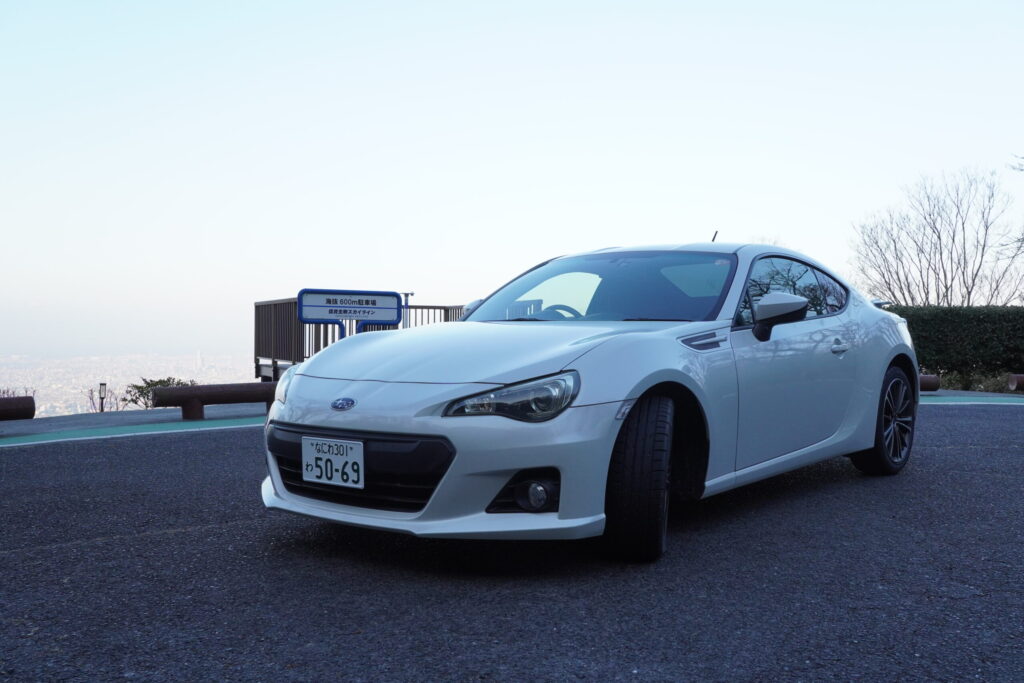
Day 1: Dawn Conquest of Arashiyama & The Northern Mountain Passes
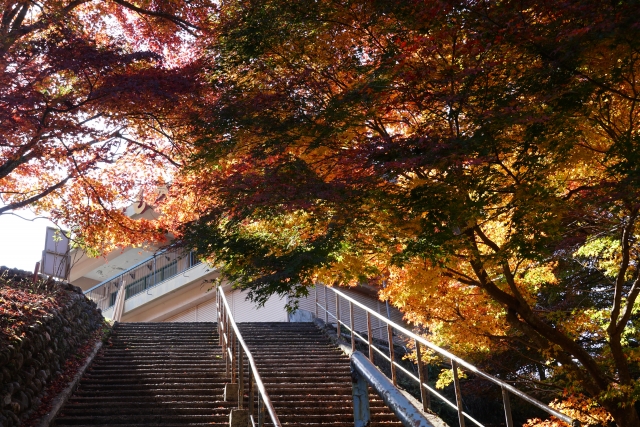
DAY 1 ROUTE AT A GLANCE:
[04:30 AM] Osaka Launch -> [05:30 AM] Togetsukyo Bridge -> [06:00 AM] Bamboo Grove
-> [07:30 AM] Saga-Toriimoto -> [09:00 AM] Arashiyama-Takao Parkway -> [12:30 PM] Miyama
-> [04:30 PM] Kurama & Kibune -> [07:30 PM] Central Kyoto Night
04:30 AM – The Osaka Launch: Mechanical Awakenings
The journey begins while Osaka sleeps. In the dim light of the garage, the Subaru BRZ sits low, its aggressive front fascia and wide rear track hinting at its pure rear-wheel-drive dynamics. Slide into the low-slung bucket seat. The leather and Alcantara grip your frame. The mechanical key ignition wakes the 2.4-liter horizontally opposed FA24 boxer engine. It fires up with a sharp, bass-heavy rasp that quickly settles into a rhythmic, purposeful idle.
Depress the heavy, tactile clutch pedal. The 6-speed shifter engages first gear with a solid, metallic notch.
Leaving central Osaka via the Hanshin Expressway Route 11, the city’s concrete canyons are quiet. Streetlights cast long golden reflections across the asphalt. As you merge onto the Meishin Expressway toward Kyoto, the BRZ glides smoothly. With its ultra-low center of gravity—measuring just 456 mm off the ground—the car feels glued to the road surface. The steering wheel vibrates subtly in your hands, transmitting every textured nuance of the highway tarmac.
05:30 AM – Crossing into Arashiyama: Togetsukyo Bridge in Dawn’s First Light
Exiting the highway at Kyoto-Minami IC, you navigate the empty city avenues heading northwest toward the shadow of Mount Arashiyama. The sky shifts from deep indigo to soft pink and pale amber.
At 05:30 AM, you pull up to the foot of Togetsukyo Bridge (Bridge of the Moon Crossing). First constructed in 836 AD during the Heian period and rebuilt in the 1930s with classic wooden parapets over reinforced concrete, this iconic 155-meter span crosses the pristine Katsura River. During the day, thousands of visitors pack this bridge. Right now, you are the only soul here.
Park nearby and walk out to the center of the wooden deck. The air off the river is ice-cold and crisp, carrying the scents of cedar wood, wet river stones, and mountain moss. The Oi River glistens like polished obsidian under the morning sun. High above, the forested hills of Arashiyama are wrapped in ribbons of low-lying morning mist. The only sound is the roar of water over the river weir and the gentle tick-tick-tick of the BRZ's exhaust cooling down in the morning air.
06:00 AM – The Solitary Bamboo Grove: Early Morning Serenade
A short two-minute drive up the quiet lane brings you to the edge of the world-famous Arashiyama Bamboo Grove (Chikurin no Michi).
Visiting this path at midday means walking shoulder-to-shoulder with selfie sticks. At 06:00 AM, it is a sacred sanctuary. Sunlight pierces through the canopy of towering green stalks, casting golden light beams across the dark dirt path.
When a soft breeze glides down from the Atago mountain range, the giant bamboo stalks sway gently, knocking against one another with a hollow, wooden resonant click—a sound recognized by the Japanese government as one of the "100 Soundscapes of Japan." Stand still in the center of the path. The sheer scale of the green towers rising 20 meters into the sky creates a natural cathedral. This quiet stillness is the true essence of Kyoto, achievable only because you left Osaka before the sun came up.
07:30 AM – Historic Saga-Toriimoto & Early Morning Espresso
Leaving the bamboo grove, point the BRZ north up the narrow preserved street of Saga-Toriimoto. This historic district preserves traditional machiya merchant townhouses and thatched-roof farmhouses from the Meiji period. The street narrows significantly—a classic characteristic of old Japanese road planning designed to slow down horses and carts.
In the BRZ, the ultra-direct 13.5:1 steering ratio makes navigating these tight quarters effortless. You slide past wooden lattices, red stone lanterns, and small moss-covered Jizo guardian statues. At the top of the incline stands the bright vermilion Ichi-no-Torii (First Gate) leading toward Mount Atago.
Stop at a small local coffee roaster opening its wooden shutters for the morning. Sip a rich, dark-roster pour-over espresso as the smell of fresh coffee blends with woodsmoke from burning charcoal fires across the village.
09:00 AM – The Driving Masterclass: Arashiyama-Takao Parkway
Now comes the highlight for any driving enthusiast: the Arashiyama-Takao Parkway. This private toll road winds over 10.7 kilometers through the dense ridges connecting Arashiyama to the mountain village of Takao.
ARASHIYAMA-TAKAO PARKWAY SPECIFICATIONS:
- Length: 10.7 kilometers
- Surface: High-friction asphalt mountain pass
- Key Features: 180-degree hairpins, elevation changes, scenic lookouts
- Ideal Gear Match: 2nd and 3rd gear manual work
As you pass through the toll gate, the road opens into a technical tarmac circuit. The BRZ is in its natural element here. Shift down to 2nd gear. The revs jump to 4,500 RPM, bringing the 2.4-liter engine right into its powerband.
Carve into the first sharp right-hand hairpin. The front tires bite into the asphalt with zero delay. Because the engine sits low and far back in the chassis, body roll is non-existent. You feel the mechanical differential work as you feed power to the rear wheels on exit, the car rotating beneath you with perfect balance.
                                  [Peak Lookout]
                                   /          \
                        (Hairpin 3)            (Hairpin 4)
                           /                      \
      [Toll Gate] -- (Hairpin 1) --------------- (Hairpin 2) -- [Takao Exit]
Stop at the Kiyotaki-gawa Lookout along the parkway. Below you, the clear Kiyotaki River cuts through a sheer V-shaped valley dense with Japanese maple trees (momiji). In autumn, this gorge explodes into fiery reds and golds; in spring and summer, it is a sea of lush emerald green.
11:00 AM – Crossing Kiyotaki Tunnel & The Winding Route to Atago
Exiting the parkway, take the backroads toward the legendary single-lane Kiyotaki Tunnel. This narrow passage, originally carved out for an electric mountain tramway in the 1920s, features traffic light control because cars cannot pass each other inside. The damp stone walls dripping with mountain groundwater create an incredible acoustic soundboard. Roll down the BRZ’s windows, blip the throttle on a downshift, and listen to the crisp exhaust echo through the cavernous gloom.
12:30 PM – Mountain Feast: Miyama Thatched Village (Kayabuki no Sato)
From Takao, head north along Route 162 (the Shuzan Highway). This road is famous among local Japanese sports car drivers and riders. It weaves alongside rushing mountain streams, opening into sweeping third- and fourth-gear curves framed by towering Japanese cedar forests (Sugi).
After an hour of rhythmic driving, arrive in Miyama Kayabuki no Sato. This remote mountain valley retains over 40 traditional thatched-roof houses (kayabuki), preserved just as they were centuries ago.
Pull into a small, family-run roadside kitchen near the river. Order a steaming bowl of handmade Miyama Soba made from locally grown buckwheat, topped with wild mountain vegetables (sansai) harvested from the surrounding hills and crispy freshwater sweetfish (ayu) tempura. The noodles have a firm texture and a deep, nutty aroma that perfectly satisfies your hunger after an intense morning behind the wheel.
03:00 PM – The Ridge Run to Kurama & Kibune
Loop east across Route 367, cutting through forested mountain passes toward the mystical valleys of Kibune and Kurama. This section of the road features tight, technical corners with quick elevation drops. The BRZ’s pedals are positioned perfectly for heel-toe downshifting. As you brake hard into a tight left turn, your right heel taps the accelerator, matching engine revs seamlessly before dropping into second gear.
Arriving in Kibune, the road runs alongside the crystal-clear Kibune River. Red wooden lanterns line the narrow path leading up to Kifune Shrine, dedicated to the deity of water and rain. Walk up the moss-covered stone steps under the shadow of ancient cedar trees. The air here feels thick with history and spiritual energy.
05:30 PM – Sunset at Shogunzuka Mound
Drive south down the flank of Mount Hiei toward central Kyoto, then ascend the Higashiyama Driveway up to Shogunzuka Seiryuden. This elevated peak offers an incredible panoramic view of the entire Kyoto basin.
Park the BRZ at the hilltop overlook. As the sun sinks behind the Western Mountains (Nishiyama), the grid lines of Kyoto’s historic streets begin to glow with golden light. You can trace the path of the Kamo River cutting through the center of the city and spot the dark silhouette of Toji Temple’s five-story pagoda rising above the skyline.
+-----------------------------------------------------------------------+
|                    DAY 1 ITINERARY RECAP & DISTANCE                    |
+-----------------------------------------------------------------------+
|  Total Distance: ~165 km                                              |
|  Driving Highlights: Hanshin Expressway, Arashiyama-Takao Parkway,    |
|                     Route 162 (Shuzan Highway), Higashiyama Driveway  |
|  Key Stops: Togetsukyo, Bamboo Grove, Saga-Toriimoto, Miyama Village,  |
|             Kibune Shrine, Shogunzuka Seiryuden                      |
+-----------------------------------------------------------------------+
07:30 PM – Nightfall: Traditional Ryokan Check-in
Descend from Shogunzuka into the quiet streets of northern Kyoto. Check into a traditional ryokan featuring off-street private parking for your vehicle. Unwind in an onsen (hot spring bath) filled with mineral-rich thermal water, letting the heat soothe your muscles after a full day of dynamic mountain driving. Follow the bath with a multi-course kaiseki dinner featuring delicate Kyoto tofu, seasonal bamboo shoots, and grilled Lake Biwa trout.

Day 2: The Northern Ridge Loop, Lake Biwa & The Return Ride
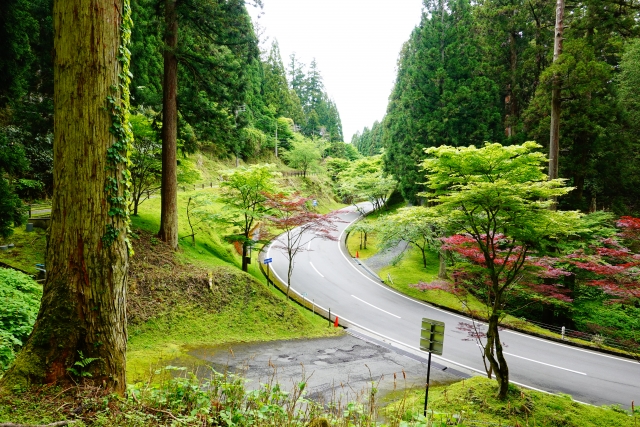
DAY 2 ROUTE AT A GLANCE:
[07:00 AM] Dawn Run Route 367 -> [08:30 AM] Lake Biwa Skyline Drive
-> [11:00 AM] Hiei Zan Driveway -> [01:30 PM] Oharano & Western Hills
-> [04:30 PM] Return Cruise to Osaka -> [06:00 PM] Vehicle Return
07:00 AM – The Fog of Ohara: Morning Mist over Ancient Valleys
Start early on Day 2. Drive north along Route 367 into the valley of Ohara. Morning fog sits heavy over the terraced rice fields and radish patches. The crisp cool air fills the cabin as you sweep past ancient wooden farmhouses. Stop briefly outside Sanzen-in Temple, where moss gardens glow bright emerald under the morning dew.
08:30 AM – Riding the Skyline: The Hieizan & Okubiwako Parkway
From Ohara, cross the border into Shiga Prefecture toward the vast expanse of Lake Biwa—Japan’s largest freshwater lake, formed over four million years ago. Connect to the Hieizan Driveway, a world-class ridge road running along the crest of Mount Hiei.
HIEIZAN DRIVEWAY HIGHLIGHTS:
- Sweeping views of Kyoto City to the West
- Endless vistas of Lake Biwa to the East
- Smooth asphalt with long, flowing high-speed curves
- Cool mountain air and dense forest canopy
This road offers high-speed flowing bends with dramatic cliffside drops. To your left lies the Kyoto basin; to your right, the endless blue water of Lake Biwa stretches to the horizon. The BRZ’s double-wishbone rear suspension works continuously here, keeping the rear chassis settled over mid-corner bumps as you power through long, sweeping corners.
11:30 AM – Lakeside Gastronomy: Omi Beef & Lake Fish
Descend from the ridge to the shore of Lake Biwa near Otsu. Enjoy an extraordinary lunch of Omi Beef (Omi-gyu)—one of Japan’s top three Wagyu brands, alongside Kobe and Matsusaka.
At a lakeside grill, order thin strips of marble-rich Omi beef cooked over red-hot binchotan charcoal. The meat melts on your tongue, releasing a rich, savory umami flavor balanced by freshly grated local horseradish and savory soy sauce. Pair it with rice harvested from the mineral-rich soils along the lake.
01:30 PM – The Hidden Western Hills: Oharano & Yoshiminedera
Head southwest around the southern tip of Kyoto, crossing back into the western mountain foothills near Oharano. This area remains blissfully untouched by big tour groups.
Follow winding farm roads up to Yoshiminedera Temple, a sprawling mountain temple founded in 1029 AD. The road up is steep, featuring dramatic 18% gradients and sharp switchbacks. The BRZ climbs easily, its 2.4-liter engine delivering smooth torque right off the bottom.
At the top, walk through the temple grounds to see the famous "Dragon's Roaring Pine"—a 600-year-old bonsai-style pine tree trained to grow horizontally along wooden trellises for over 37 meters. From the upper temple terrace, you get a incredible view looking back over the entire southern expanse of Kyoto.
+-----------------------------------------------------------------------+
|                    KYOTO'S SECRET WESTERN MOUNTAINS                    |
+-----------------------------------------------------------------------+
|  Spot               | Historical Significance | Driver's Note          |
|---------------------|-------------------------|------------------------|
|  Yoshiminedera      | Founded 1029 AD         | Steep 18% climbs       |
|  Oharano Shrine     | Imperial Patronage      | Narrow rustic lanes    |
|  Takenoko Groves    | Famous Bamboo Shoots    | Tight, technical corners|
+-----------------------------------------------------------------------+
04:30 PM – The Highway Run Back to Osaka
With afternoon light turning warm and red, join the Meishin Expressway at Kyoto-Nishi IC for the comfortable drive back down to Osaka. Cruising in 6th gear, the BRZ is refined, smooth, and relaxed. You sit low in the cockpit, feeling a deep sense of accomplishment as the mountain ridges slip away in your rear-view mirror.
Driving Kyoto Arashiyama in a Subaru BRZ: Expert Advice & Cultural Nuances
Driving in Japan is a deeply satisfying experience, provided you understand the cultural expectations and unique roadway infrastructure that make Japanese driving so distinct.
The Magic of Michi-no-Eki (Roadside Stations)
Forget ordinary highway gas station rest stops. In Japan, Michi-no-Eki (Roadside Stations) are cultural destinations in their own right. Created by the government to support regional economies and offer rest stops for drivers, these facilities feature fresh local produce, artisanal crafts, regional hot food stalls, and clean rest areas.
RECOMMENDED MICHI-NO-EKI NEAR KYOTO:
1. Michi-no-Eki Kyoto Shin-Sobera (Route 162) - Fresh local buckwheat cakes & milk
2. Michi-no-Eki Miyama Fureai Hiroba - Gelato made from fresh local dairy
3. Michi-no-Eki Biwako Ohashi - Panoramic views of Lake Biwa & local freshwater snacks
When driving through the Kyoto mountains, always stop at a Michi-no-Eki. You can pick up warm yuzu tea, fresh handmade rice balls (onigiri) wrapped in crispy seaweeds, and seasonal fruit like sweet Uji strawberries or crisp local apples.
Etiquette on Narrow Mountain Passes (Toge)
When driving technical mountain passes in rural Japan, you will frequently encounter extremely narrow sections called Suri-chigai zones—places where two vehicles barely fit side-by-side.
MOUNTAIN PASS ETIQUETTE RULES:
1. Pull over into designated turnout pockets (Sutemi-space) to let faster traffic pass.
2. Flash your hazard lights 2-3 times as a "Thank You" when someone yields the right of way.
3. Dim your high beams instantly when approaching blind corners at night.
4. Keep left on blind bends and watch convex traffic mirrors mounted on poles.
If a local driver in a light Kei truck approaches in the opposite direction, slow down, pull as far left as safety allows, and give a subtle nod of the head. If someone pulls into a turnout pocket to let your BRZ pass, hit your hazard lights for two brief flashes—the universal Japanese road signal for "Thank you."
Driving Kyoto Arashiyama in a Subaru BRZ: Detailed Logistics & Pre-Trip Tips
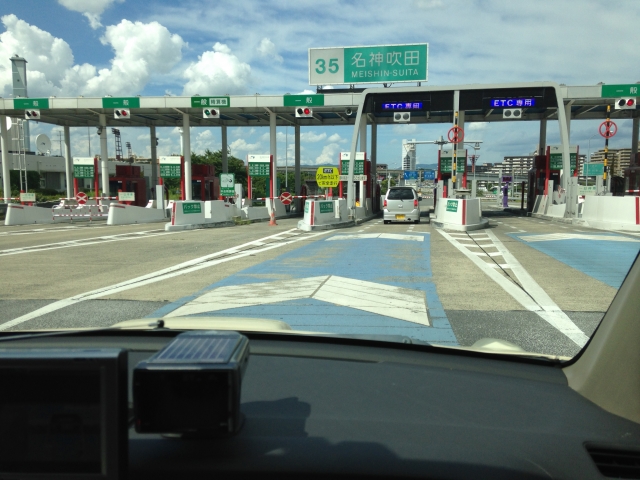
Navigating Japanese infrastructure in a modern sports car requires an understanding of local logistics.
+-----------------------------------------------------------------------+
|                    ESSENTIAL DRIVING LOGISTICS (2026)                  |
+-----------------------------------------------------------------------+
|  ETC Card: Essential for automated toll gates and highway discounts    |
|  Fuel Type: High-Octane Premium ("High-Oku") for JDM performance cars |
|  Gas Station Vocab: "Mantan" (Full Tank), "Cash-u" (Cash), "Card-o"   |
|  Parking: Use Coin Parking ("Gettou") with automatic floor barriers  |
+-----------------------------------------------------------------------+
Navigating Japan’s Toll Roads with ETC
Japan’s highway network is smooth, fast, and impeccably maintained, but almost all expressways and mountain parkways require tolls. The ETC (Electronic Toll Collection) system is vital.
[APPROACHING TOLL GATE]
  |-- BLUE LANE (ETC Only) -----> Pass through at 20 km/h (Card required)
  |-- GREEN LANE (Cash/Card) ----> Stop and pay attendant or machine
When you rent your vehicle, ensure an ETC card is installed in the dashboard reader. As you approach toll plazas, drive through the designated blue ETC lanes at 20 km/h. The wireless barrier lifts automatically, charging the toll to your account. This saves you from hunting for loose yen coins at every exit.
Refueling Your JDM Sports Car: Gas Station Phrases
Performance engines like the BRZ’s FA24 require High-Octane Premium Fuel (often labeled High-Oku or yellow pump handles at self-service stations).
At full-service stations (Full-Service Gasorin Stando), attendants will direct you to a stall. Here is the exact dialogue you need:
- "High-oku, mantan de onegaishimasu."(Premium High-Octane, full tank please.)
- "Genkin de" / "Kajyu de"(Paying with cash) OR "Karedotto kaado de" (Paying with credit card).
The friendly staff will fill your tank, wipe your windshield with a damp towel, and guide you safely back onto the roadway.
Parking Mechanics in Kyoto
Parking in urban Kyoto requires attention. Look for Coin Parking lots equipped with automated flap barriers (Lock Plate systems).
HOW COIN PARKING WORKS:
1. Park cleanly between the lines over the lowered metal plate.
2. After 3 minutes, the metal plate rises under the car to lock it in place.
3. To leave: Enter your parking spot number at the central payment machine.
4. Pay the fee (Cash or IC Card). The plate drops down flat.
5. Drive off immediately within 3 minutes before the plate rises again.
When driving a sports car like the BRZ with a low front splitter, approach curb cuts and parking barriers slowly at an angle to prevent scraping the underside of your bumper.
The Euphoria of the 6-Speed Manual JDM Experience
In an era dominated by paddle-shift automatics and electric powertrains, driving a pure 6-speed manual rear-wheel-drive sports car across Japan is a rare pleasure.
The Subaru BRZ provides a direct connection between driver, machine, and road. The pedals are positioned naturally for heel-and-toe downshifting. The manual gearbox shifts with satisfying mechanical precision. Feeling the chassis balance under cornering load while winding through ancient Kyoto pine forests creates an unforgettable memory.
Driving Kyoto Arashiyama in a Subaru BRZ: Comprehensive FAQ
Q1: What driver's license do I need to rent and drive a car in Japan?
Answer: You MUST hold a valid International Driving Permit (IDP) issued under the 1949 Geneva Convention, alongside your physical home country driver's license and your passport.
Crucial Warning: IDPs issued under the 1968 Vienna Convention or other treaties are NOT accepted in Japan. Citizens from specific countries like Germany, Switzerland, France, Belgium, Monaco, and Taiwan do not use the IDP system; instead, they must provide an official Japanese translation of their native license completed by the Japan Automobile Federation (JAF) or an authorized embassy. Always verify your country's license status before arriving.
Q2: Is driving on the left side of the road difficult for foreigners?
Answer: Most drivers adjust within 15 to 20 minutes. Japan drives on the left side of the road, with the driver sitting on the right side of the vehicle. Japanese drivers are exceptionally polite, patient, and law-abiding. Road signs feature clear English translations alongside Japanese Kanji characters.
Q3: What kind of insurance coverage should I get?
Answer: Always choose full comprehensive collision damage waiver (CDW) and Non-Operation Charge (NOC) protection when renting a car in Japan. This ensures complete peace of mind, covering any minor scratches, roadside assistance, or tire damage while navigating mountain passes.
Q4: Can I handle a manual transmission (MT) car if I haven't driven one recently?
Answer: The Subaru BRZ features a smooth, forgiving clutch uptake and hill-start assist, making it remarkably accessible even if your manual skills are a bit rusty. However, because mountain passes feature steep inclines and tight hairpin corners, having confident manual control ensures a safer, far more enjoyable trip.
Q5: What are winter road conditions like around Kyoto and Arashiyama?
Answer: Central Kyoto rarely sees heavy snow, but high mountain passes like Route 162 toward Miyama or the Hieizan Driveway can experience ice and snow blanketed across roads between late December and early March. If traveling during these winter months, request winter snow tires (studless tires) on your rental vehicle.
Driving Kyoto Arashiyama in a Subaru BRZ: The Final Thoughts
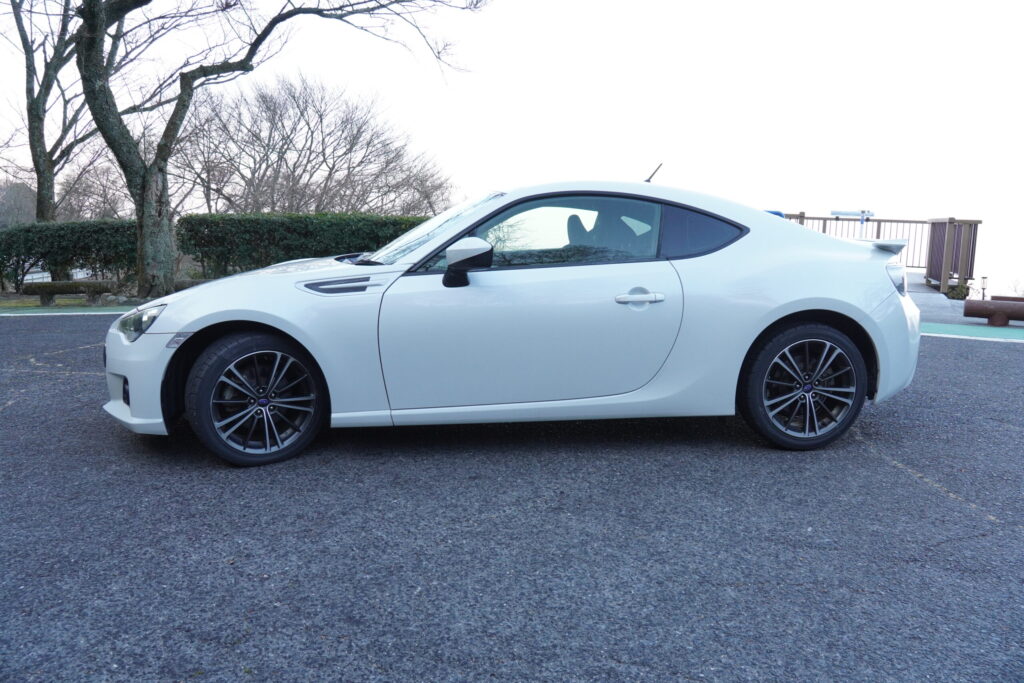
Kyoto is an ancient city of quiet wonders, but its true magic remains hidden from those confined to fixed train tracks and packed tour buses. The real spirit of Japan lives in the early morning dawn over Togetsukyo Bridge, the quiet rustle of an empty bamboo forest, the damp asphalt of mountain passes winding through cedar groves, and the mechanical roar of a legendary boxer engine echoing against stone cliffs.
Your dream JDM road trip across Japan shouldn't stay on a bucket list.
When you are ready to take the wheel, turn to Omoresan Rental Car Osaka Chuo Branch (おもしろレンタカー大阪中央店). Conveniently situated in the heart of Osaka, they specialize in offering impeccably maintained JDM performance icons—including the sports-tuned Subaru BRZ and Toyota 86 equipped with pure 6-speed manual transmissions.
Skip the standard rental fleets. Step into a machine crafted for true driving passion, set your GPS for the northern Kyoto mountains, and discover Secret Japan on your own terms. Your open road is waiting.