
Nara and Osaka Day Trip by Train Access - The Philosophy of Driving in Japan
For years, my life was defined by the rhythmic clatter of steel on steel, the precise schedules, and the bustling platforms of the Kintetsu Railway. As a train conductor, I witnessed the breathtaking landscapes of Japan unfurl outside my window, a panorama often glimpsed in fleeting moments. I’ve seen the seasons paint the countryside in vibrant hues, the cities glow with an electric energy, and the quiet reverence of ancient temples from a perspective few ever experience. But even from the conductor's seat, there was always a yearning – a silent whisper of roads untraveled, of hidden valleys and mountain passes that stretched tantalizingly beyond the reach of the tracks.
Many travelers to Japan are drawn to the unparalleled efficiency and convenience of its public transportation. And for navigating the labyrinthine urban centers of Osaka, Kyoto, or Tokyo, the Shinkansen and local lines are undeniably kings. But for those who seek to truly imbibe the spirit of Japan, to peel back the layers of its celebrated urbanity and delve into its beating, rural heart, the train merely scratches the surface. It’s an efficient conduit, yes, but it’s a passive experience, a pre-packaged journey along well-worn paths.
My philosophy, born from years on the rails and countless more exploring Japan’s forgotten corners by car, is this: the true magic of Japan, its 'Secret Japan,' lies just beyond the station platforms, waiting on winding roads, nestled in secluded hamlets, and perched atop mist-shrouded peaks accessible only by your own four wheels. Especially in the Kansai region, with Osaka as your dynamic starting point, a car transforms your trip from a scheduled tour into an expedition of pure discovery. Imagine the vibrant energy of Dotonbori as your launchpad, knowing that within an hour or two, you could be tracing the contours of ancient mountains or inhaling the crisp air of a cedar forest, the roar of a perfectly tuned JDM engine your only companion.
This isn't just about speed; it's about freedom. Freedom to chase a spontaneous whim down an unmarked road, to linger at a roadside stand selling improbable local delicacies, to pull over at a scenic overlook simply because the golden light of the setting sun has momentarily rendered the world perfect. It’s about the tactile sensation of the road beneath the tires of a meticulously engineered machine like a Toyota 86 or Subaru BRZ, feeling the car respond to your every input, becoming an extension of your will. This intimacy with the landscape, this control over your destiny, is what defines an authentic Japanese road trip. It allows you to forge a personal connection with the land, its people, and its unspoken stories that train windows, however panoramic, can never quite deliver. It's time to trade the rigid timetable for the open road, the collective journey for a personal odyssey into the soul of Japan.
Nara and Osaka Day Trip by Train Access - The 2-Day Itinerary: Deep Dive
Forget the notion of a hurried day trip. To truly unlock the magic of Nara and its surrounding, often-overlooked treasures, a two-day, one-night immersion is essential, especially when you have the exhilarating freedom of a JDM car. This itinerary is crafted not just for sightseeing, but for an visceral driving experience, for connecting with the land on a deeper level, and for savoring every moment. Our chariot for this adventure? A spirited Toyota 86 – its balanced chassis, responsive engine, and precise manual gearbox the perfect companion for Japan’s serpentine roads.
Day 1: Unveiling Nara's Verdant Heart & Ancient Echoes
7:00 AM – The Awakening in Osaka: The city of Osaka is just stirring. The aroma of brewing coffee mingles with the faint scent of diesel from early morning deliveries. You arrive at the rental shop, eyes bright with anticipation. There it sits: the Toyota 86, gleaming under the morning light, its aggressive lines promising adventure. You slide into the low-slung bucket seat, the firm bolster hugging your body. The clutch pedal feels familiar, the short-throw shifter a satisfying weight in your palm. A twist of the key, and the Boxer engine barks to life with a purposeful thrum, a mechanical heartbeat ready to conquer. This isn't just a rental car; it's a co-conspirator in your quest for discovery. Leaving the urban sprawl requires careful navigation, but soon the highways (Meishin Expressway or similar) open up, and the 86 settles into a confident cruise, its engine eager for the open road.
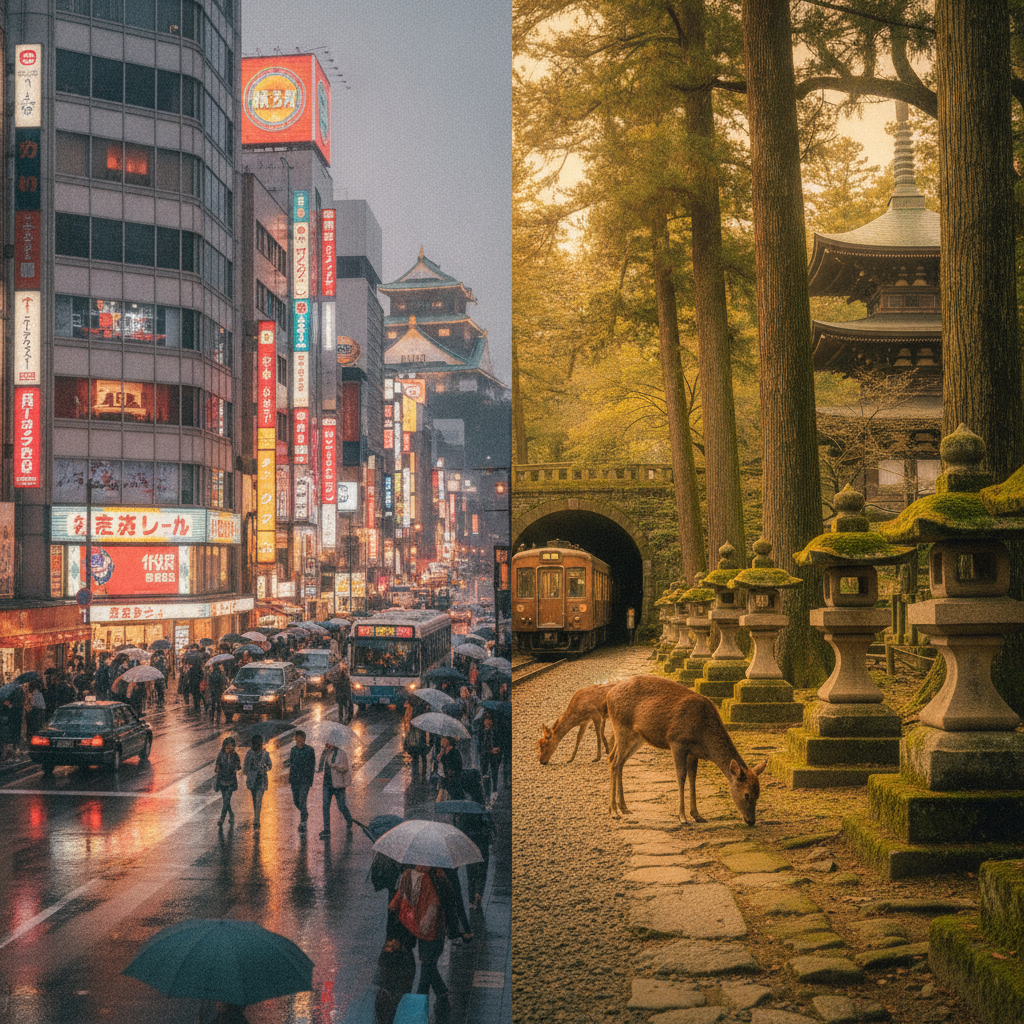
9:00 AM – Nara's Iconic Gateway (A Quick Nod): Our first stop is a necessary, albeit brief, encounter with mainstream Nara. Nara Park, an emerald expanse where graceful sika deer roam freely, is an undeniable classic. You stroll past them, marveling at their gentle curiosity, before approaching the colossal wooden gates of Todai-ji Temple. The sheer scale of the Daibutsuden (Great Buddha Hall), housing the immense bronze Buddha, is awe-inspiring. Here, amidst the throngs of tourists and the echoes of ancient history, you experience the grandeur that draws so many. But as the crowds swell, a subtle yearning for solitude begins to grow. This is the Japan that everyone sees. Our journey, however, is about to diverge, seeking the Japan that whispers.
11:00 AM – The Ascent to Yamato Highlands: With a knowing smile, you return to the 86. The city's buzz fades in the rearview mirror as we turn southeast, leaving the well-trodden paths of Nara City behind. Our destination: the Yamato Highlands, a rugged, rolling expanse of mountains and forests that form the true heart of Nara Prefecture. The roads begin to narrow, twisting and climbing with increasing enthusiasm. This is where the 86 truly comes alive. The precise steering, offering direct feedback from the asphalt, allows you to dance through a series of sweeping bends. The responsive engine, singing a high-pitched note as you downshift and accelerate out of corners, propels you forward with exhilarating grace. The air grows crisper, imbued with the clean scent of cedar and damp earth. The landscape transforms from manicured parkland to ancient, gnarled forests where sunlight dapples through dense canopies. Geologically, this region is a tapestry woven over millennia, with ancient volcanic activity shaping its dramatic contours, now softened by time and erosion into deep, fertile valleys and dramatic ridges. The very bedrock beneath your tires tells a story of earth's tumultuous past.
1:00 PM – Hidden Culinary Gems in the Foothills: Deep in the highlands, along a road you would never find without a car, we discover a tiny, unassuming shokudo (diner). Its weathered wooden facade might be easily missed, but inside, warmth and authenticity await. The proprietress, a kindly elderly woman, greets you with a genuine smile. Here, you taste the true flavors of Nara: perhaps a steaming bowl of handmade somen noodles, delicate and refreshing, or a simple, perfectly seasoned set meal featuring locally grown vegetables and freshwater fish. The simplicity is profound, the ingredients speaking for themselves. The subtle sweetness of the mountain spring water used for tea, the rich umami of miso soup – each bite is a connection to the land. The quiet hum of the 86 parked outside seems a distant memory, replaced by the gentle clinking of chopsticks and hushed local conversation. This is a moment of pure, unadulterated Japanese hospitality, a culinary secret earned by venturing off the map.
2:30 PM – Deep Forest Shrines & Whispering Histories: Our journey continues deeper into the emerald embrace of the mountains. The roads become even more intimate, at times barely wider than the car itself, challenging your driving skill and rewarding you with breathtaking solitude. We seek out a shrine nestled so deep within the forest that its existence feels almost mythical. Imagine a forgotten path, overgrown with moss, leading to a small, wooden torii gate, weathered and softened by centuries of rain and sun. This isn't the grand scale of Todai-ji, but a place of quiet reverence, where the spiritual energy is palpable. The only sounds are the rustle of leaves, the chirping of cicadas, and the gentle drip of water from ancient stone lanterns. Here, you can feel the weight of history, not through plaques and museums, but through the silent testimony of massive cedar trees, some hundreds of years old, their roots gripping the earth like ancient hands. The scent of damp earth and sacred wood fills the air, a timeless perfume. This spot, perhaps a sub-shrine of a larger complex or a wholly independent guardian of the forest, offers a moment of profound peace and connection to Japan's animistic past. The journey to reach it, winding through fragrant pine and bamboo groves, is as much a part of the spiritual experience as the destination itself.
5:00 PM – Sunset Vista & Evening Arrival: As the sun begins its slow descent, painting the western sky in hues of fiery orange, soft rose, and deep indigo, we navigate our 86 to a commanding viewpoint overlooking a vast, emerald valley, perhaps where the Yoshino River meanders lazily. The world below stretches out, a patchwork of rice paddies, traditional homes, and distant, hazy mountains. The silence is broken only by the gentle sigh of the wind and the distant call of a bird. It’s a moment of pure, unadulterated beauty, a reward for our day’s adventurous drive. From here, a short, scenic drive brings us to our accommodation: a traditional ryokan tucked away in a charming mountain village, far from any train station. The warm glow of paper lanterns welcomes us. The aroma of a simmering dinner already wafts through the air. The owner, with a deep bow and a genuine smile, leads us to our room – a haven of tatami mats, sliding shoji screens, and a futon that promises deep slumber after an exhilarating day.
7:00 PM – Ryokan Delights & Mountain Serenity: The evening at the ryokan is an experience in itself. You don the provided yukata (a light cotton kimono) and settle in for a multi-course kaiseki dinner. Each dish is a miniature work of art, a symphony of flavors and textures reflecting the season and the local produce: delicate sashimi from nearby rivers, crisp mountain vegetables lightly tempura-fried, savory grilled fish, and succulent local beef. Paired with a fine regional sake, each course is a revelation, a testament to Japan’s meticulous culinary traditions. After dinner, the soothing waters of the ryokan’s onsen (hot spring) beckon. Submerging yourself in the mineral-rich warmth, perhaps under a canopy of stars, with the gentle sounds of the mountain night as your soundtrack – crickets chirping, the distant rustle of leaves – is the perfect balm for body and soul. The day’s exhilaration slowly gives way to profound relaxation, as you reflect on the hidden wonders you’ve discovered, all thanks to the freedom of your 86.
Day 2: Ancient Paths, Mountain Passes, & the Return to Urban Pulse
7:00 AM – Dawn Drive & Crisp Mountain Air: The morning breaks with a gentle mist clinging to the mountain peaks. An early start is rewarded with roads that are utterly deserted, the air incredibly crisp and cool. The 86's engine, still warm from yesterday's exploits, comes alive with a contented growl. A short, invigorating drive through the awakening landscape, perhaps past terraced tea fields bathed in the golden light of the rising sun, clears the mind and invigorates the senses. We then enjoy a traditional Japanese breakfast at the ryokan – often a delightful spread of grilled fish, rice, miso soup, pickles, and local specialties, a fortifying meal for the day ahead.
9:00 AM – Asuka's Ancient Heart & Pastoral Beauty: Leaving our mountain sanctuary, we head west, descending into the historical heartland of Asuka Village. This area, less dramatic in its topography than the Yamato Highlands, offers a different kind of beauty: rolling hills, verdant rice paddies, and scatterings of ancient burial mounds (kofun) that whisper tales of Japan's earliest imperial court. The roads here are gentler, flowing gracefully through quaint villages where time seems to have slowed. The 86 feels equally at home, its smooth power delivery and comfortable ride making for a serene cruising experience. We stop at a few key sites like the mysterious Ishibutai Kofun, a massive stone burial chamber open to the elements, its origins shrouded in legend. The scale of the megaliths here is astounding, a testament to ancient engineering. We might also explore the Takamatsuzuka Tomb Mural Hall (or its replica, as access to the original is restricted), marveling at the preserved artistry from over a millennium ago. These sites, often surrounded by quiet farmland, offer a profound connection to Japan’s foundational history without the overwhelming crowds of more popular destinations. The gentle hum of the 86 as we navigate these ancient paths reinforces the feeling of an intimate journey through time.
12:00 PM – Lunch with a View in the Foothills: As hunger sets in, we seek out a charming cafe or a local eatery nestled in the gentle foothills bordering Asuka. Here, with panoramic views of the verdant valley and distant mountains, we indulge in a light but flavorful lunch. Perhaps it’s a regional specialty made with local ingredients, like a refreshing 'kudzu' dish (a starch from the arrowroot plant, often used in sweets and savory dishes) or a simple, perfectly brewed coffee served with house-made pastries. The quiet ambiance, the natural light flooding the space, and the unhurried pace of rural life provide a stark contrast to the bustling cities, allowing for a moment of quiet contemplation on the journey thus far.
1:30 PM – The Thrill of the Touge Back to Osaka: The afternoon beckons with the promise of exhilarating driving as we begin our return journey towards Osaka, but not via the mundane highways. Instead, we aim for one of the legendary 'touge' passes that connect Nara to the Osaka plain, perhaps the scenic Ikoma Skyline or a lesser-known mountain road in the Katsuragi or Kongo mountain ranges. This is the 86’s playground. The road transforms into a ribbon of asphalt, twisting and turning with delightful abandon. Hairpin bends demand precise steering inputs, the short-throw shifter clicks through gears with satisfying authority, and the balanced chassis of the 86 communicates every nuance of the road surface. The engine note rises and falls, a mechanical symphony echoing off the mountain slopes. As you climb, the views become increasingly spectacular, offering sweeping panoramas of the Nara Basin receding behind us and the vast, sprawling urban tapestry of Osaka slowly appearing in the distance. The transition from pristine wilderness to metropolitan sprawl, witnessed from the driver's seat of a capable JDM machine, is a truly sublime experience. It’s not just about getting from A to B; it’s about the journey itself, the focused concentration, the dance between driver and machine, the sheer joy of piloting a perfectly engineered vehicle through an ever-changing landscape. The feeling of flow, of becoming one with the car and the road, is what driving an 86 or BRZ on these roads is all about.
4:00 PM – Final Discovery & Reflection: Before we fully plunge back into Osaka’s urban embrace, we make one final, unique stop in the eastern suburbs, perhaps a small, artisanal workshop or a hidden local market. It might be a pottery studio where local artisans craft exquisite ceramics, or a tiny shop specializing in traditional Japanese sweets, offering a taste of regional delicacies you won’t find in the tourist traps. This final discovery serves as a gentle re-entry point, a bridge between the tranquility of the mountains and the energy of the city. It’s a chance to pick up a truly unique souvenir, a tangible memory of your journey beyond the conventional. As you drive the final kilometers towards the rental office, the hum of the 86’s engine a comforting presence, you reflect on the past two days. The vivid colors of the mountain scenery, the taste of authentic local food, the thrilling roar of the engine on a winding pass, the profound silence of ancient shrines – these are the indelible memories etched into your soul, experiences made possible only by the freedom of the open road.
5:30 PM – Return to Osaka: The city lights begin to twinkle, signaling our return. With a satisfied sigh, you guide the 86 back to the rental office in Osaka. The car, a loyal companion, has performed flawlessly, transforming a mere day trip idea into an unforgettable, deeply personal exploration of Japan's hidden depths. You step out, a sense of accomplishment and exhilaration coursing through you. The key to 'Secret Japan' has been firmly in your hands.
Nara and Osaka Day Trip by Train Access - Expert Advice & Cultural Nuances
Beyond the sheer thrill of driving a JDM car through Japan’s stunning landscapes, there are cultural nuances and practical insights that can elevate your road trip from excellent to absolutely legendary. As someone who has traversed these roads countless times, both on rails and behind the wheel, I want to share the wisdom that unlocks a deeper, more authentic experience.
First, embrace the phenomenon of the 'Michi-no-Eki' (Roadside Station). These aren't just rest stops; they are vibrant hubs of local culture and commerce, miniature festivals of regional pride. Each Michi-no-Eki boasts immaculate restrooms, often charming cafes, and, most importantly, incredible local produce. You’ll find farmers selling freshly picked vegetables, artisanal cheeses, homemade jams, and unique regional snacks – often at prices far more reasonable than city supermarkets. Many also feature souvenir shops stocked with quirky, locally crafted goods that make for far more authentic mementos than anything found in a generic tourist shop. Pull over, stretch your legs, sample some local delights, and immerse yourself in the microcosm of Japanese rural life. They are a lifeline for drivers and a treasure trove for curious travelers, truly places where trains cannot lead you.
To find those truly hidden gems – the secluded shrines, the mom-and-pop restaurants whose flavors haven’t changed in generations, the breathtaking viewpoints only locals know – you must adopt a spirit of adventurous curiosity. Look for small, hand-painted signs pointing down narrow, unassuming roads. Sometimes, a quiet gravel path can lead to a waterfall cascading into an emerald pool, or a breathtaking panoramic vista. Don’t be afraid to take a chance; the 86 or BRZ is nimble and capable. If you're fortunate enough to interact with locals (a simple 'Konnichiwa' and a smile go a long way), they might point you to their favorite, secret spot. These are the experiences that define 'Secret Japan' – moments of unexpected beauty and genuine connection that are entirely inaccessible by public transport.
Now, a word on driving etiquette and safety. Japan's roads are amongst the safest in the world, thanks to strict enforcement and a culture of courtesy. Speed limits, often lower than what you might be accustomed to, are rigorously enforced – especially on regular roads. Respect them. Japanese drivers are incredibly polite; they will rarely honk (except in specific situations) and will often yield with a silent nod. Return this courtesy. When driving on mountain roads, especially those exhilarating 'touge' passes, be mindful of blind corners. While your 86 or BRZ is a capable machine, respect its limits and your own. Sudden weather changes, particularly rain or mist, can drastically alter road conditions in the mountains, so always drive defensively. Keep an eye out for wildlife, especially deer or wild boar, which can unexpectedly cross roads in rural areas. The joy of driving a JDM car here is in its precision and responsiveness, allowing you to dance with the road, not dominate it. Drive with awareness, respect, and a keen sense of your surroundings, and your journey will be unforgettable.
Nara and Osaka Day Trip by Train Access - Detailed Logistics & Pre-Trip Tips
Embarking on a JDM road trip through Japan is an adventure in itself, but a little preparation goes a long way. Let's delve into the practicalities that will ensure your experience is as seamless and exhilarating as the drive itself, focusing on the current landscape around 2026.
Traffic & Navigation: While Osaka itself, like any major metropolis, can experience congestion during peak hours (typically 7:00-9:00 AM and 5:00-7:00 PM), once you venture beyond the urban sprawl, especially towards the mountain passes and rural areas of Nara, the roads often become refreshingly clear. This is precisely where your 86 or BRZ will shine, allowing you to fully enjoy its dynamic capabilities. A reliable GPS navigation system is absolutely essential, and most rental cars come equipped with one. Make sure it’s set to English (or your preferred language) and learn how to input destinations by phone number or map code, as addresses can sometimes be tricky in rural Japan. Even with GPS, a keen eye for road signs (which often have English translations) is advisable.
ETC Card System: Your Toll Road Ticket to Freedom: Japan's extensive network of expressways is incredibly efficient but also relies heavily on toll gates. Manually paying at each gate can be cumbersome and time-consuming, especially if you don't have exact change or are unfamiliar with the system. This is where an ETC (Electronic Toll Collection) card becomes your best friend. An ETC card, which can typically be rented from your car rental company, is inserted into a reader in the car. As you approach an ETC gate, a sensor reads your card, and the gate automatically lifts, deducting the toll fee. No stopping, no fumbling for cash, just a seamless glide onto the highway. It saves immense time and hassle, allowing you to maintain your driving rhythm and immerse yourself fully in the journey. Always confirm ETC card availability when booking your rental car.
Fueling Your JDM Beast: The Gas Station Experience: Fuel stations in Japan are readily available, even in rural areas. Most operate efficiently, offering both self-service and full-service options. For a full-service experience, pull up to the pump and a friendly attendant will greet you. The key phrase to remember for a full tank of regular gasoline is "Regyura Mantan Onegaishimasu" (レギュラー満タンお願いします). For high-octane fuel, which your 86 or BRZ will appreciate, say "Hai-oku Mantan Onegaishimasu" (ハイオク満タンお願いします). Payment can usually be made with cash or credit card. Self-service stations (セルフサービス) are also common and typically have English instructions on the pump, though they can be a bit more challenging if you're unfamiliar with the system. Remember to choose the correct fuel type (green nozzle for regular, red for high-octane) and the amount (満タン for full). The smell of petrol, the vibrant colors of the pumps – even a gas station stop becomes a small part of the Japanese experience.
Mastering the Art of Parking: Parking in Japanese cities can be tight and expensive. However, in the rural areas and smaller towns we'll be exploring, it's generally much easier. Look for "Coin Parking" (コインパーキング) lots, which are abundant. These operate on a time-based payment system. You park, and often a device locks your wheel in place; you pay at a central machine before you leave. Michi-no-Eki (roadside stations) always offer ample free parking. At temples, shrines, or tourist attractions, expect dedicated parking lots, which may have a flat fee. Always be mindful of 'no parking' signs (usually red circle with a blue X or a red diagonal line). Your nimble 86 or BRZ will be a boon in navigating tighter spots.
The Unrivaled Joy of Driving a JDM (MT) Car: This is arguably the most crucial tip: embrace the manual transmission. Driving an 86 or BRZ with a manual gearbox on Japan's roads is more than just transportation; it's an intimate dance, a symphony of human and machine. The short-throw shifter, the perfectly weighted clutch, the responsive throttle – they all conspire to create a visceral, engaging experience. You feel the road through the steering wheel, hear the engine’s song as you rev-match for a downshift on a winding mountain pass, and feel the chassis respond instantly to your every command. It’s an immersion that automated cars simply cannot deliver. The precise handling of these vehicles makes navigating tight turns and narrow roads an absolute joy, not a chore. This isn't just about driving; it's about connecting with the engineering marvel of Japanese car culture, a feeling of pure, unadulterated driving exhilaration that will forever redefine your perception of travel.
Nara and Osaka Day Trip by Train Access - Comprehensive FAQ
Venturing into the unknown with a JDM car is thrilling, but it’s natural to have questions. Here are answers to some of the most common concerns for international drivers in Japan, ensuring you're fully prepared for your adventure.
Q: What kind of driver's license do I need to drive in Japan?
A: To legally drive in Japan, you will need an International Driving Permit (IDP) based on the 1949 Geneva Convention. It is crucial to carry this IDP along with your original national driver's license and your passport at all times while driving. Your IDP must be valid for the entire duration of your stay and must be issued by an authority in your home country that is a signatory to the 1949 Geneva Convention. Simply having your domestic license translated is often not sufficient; the IDP is a separate, official document that validates your driving privileges internationally. Ensure you obtain your IDP before arriving in Japan, as they cannot be issued in Japan. Please note that some countries (e.g., Belgium, France, Germany, Switzerland, Monaco, Taiwan) have specific agreements allowing direct translation or different permit types; always verify the requirements for your specific nationality.
Q: What about car insurance?
A: It is highly recommended to opt for full coverage insurance when renting a car in Japan. While basic liability insurance is usually included, comprehensive coverage offers peace of mind against collision damage, theft, and other unforeseen circumstances. Always clarify the insurance terms with your rental provider. A small additional daily fee for full coverage can save you significant expenses in the unlikely event of an incident.
Q: I'm a bit nervous about driving a manual transmission (MT) car in Japan. Is it difficult?
A: While Japanese roads can sometimes be narrower than those you might be used to, especially in older towns or mountain passes, the nimble Toyota 86 or Subaru BRZ is perfectly suited for these conditions. If you're comfortable with MT, you'll find the experience incredibly rewarding. If it's been a while, consider practicing in less crowded areas before tackling mountain roads. Japanese traffic tends to be orderly and polite, so you'll have space to acclimate. Patience, smooth inputs, and a focus on enjoying the drive are key. The engagement of an MT car truly enhances the connection to the road.
Q: How are winter road conditions in Nara and Osaka?
A: In the lowlands of Osaka and Nara, winter road conditions (December to March) are generally mild, with snow being a rare occurrence that usually melts quickly. However, when venturing into the higher mountain passes, especially those in the deeper parts of Nara or bordering other prefectures like Mie or Wakayama, snow and ice can be present. If you plan to explore higher elevations during winter, always check the weather forecast. Rental companies can often provide vehicles equipped with snow tires (studless tires) if specifically requested in advance, but this might not be standard for all vehicles.
Q: Are there English-speaking staff at rental car agencies?
A: Many larger rental car agencies, especially those catering to international tourists, have English-speaking staff or at least staff who can manage basic English communication. It's always a good idea to confirm this when making your reservation or choose a company known for its international customer service. Using translation apps can also bridge any communication gaps effectively.
Nara and Osaka Day Trip by Train Access - The Final Call: CTA
You’ve navigated the ancient paths, scaled the winding mountain passes, tasted the hidden flavors, and felt the raw, untamed spirit of Japan pulsating through the very chassis of a legendary JDM machine. Your journey through Nara and Osaka hasn’t just been a trip; it’s been an awakening. You’ve transcended the confines of typical tourism, exchanged crowded train windows for panoramic windshields, and swapped rigid schedules for the boundless freedom of the open road. The 'Secret Japan' I spoke of, the Japan of untouched beauty, profound history, and exhilarating drives, is now a part of your story.
This isn't merely about reaching a destination; it’s about the unforgettable moments created between them. The perfectly executed heel-and-toe downshift as you approach a hairpin turn, the exhilarating pull of the engine as you rocket out of an apex, the tactile feedback of the steering wheel communicating every nuance of the tarmac – these are the sensations that transform a mere journey into a passionate affair with Japan. You've experienced the joy of absolute control, the thrill of discovery, and the profound connection that only a driver and their machine can forge with the breathtaking landscape of this incredible country.
Ready to trade the tracks for the tarmac? To swap the predictable for the profound? To feel the pulse of Japan through the steering wheel of an iconic JDM machine? At Omoshiro Rent-A-Car Osaka Chuo, we understand this yearning for authentic adventure better than anyone. As a former Kintetsu conductor and a fellow enthusiast, I've curated a fleet designed to ignite your passion for exploration. We offer meticulously maintained manual transmission JDM vehicles, including the spirited Toyota 86 and Subaru BRZ, often customized and always ready for the roads less traveled. Forget the limitations; embrace the liberation. Your ultimate Japanese road trip begins here. Visit us in Osaka Chuo and let's craft your unforgettable journey. The keys to 'Secret Japan' await, eager for your touch, ready to take you on the adventure of a lifetime.
