
Mazda MX-5 Lake Biwa Drive - The Philosophy of Driving in Japan
As a former conductor for the Kintetsu Railway, I spent years listening to the rhythmic, hypnotic clack-clack of steel wheels gliding over rails. The Japanese rail network is an engineering marvel of punctuality, efficiency, and seamless connectivity. For millions of travelers, it is the golden standard of transportation, whisking visitors from the vibrant neon arteries of Osaka to the ancient temple gates of Kyoto in absolute comfort. But trains, for all their brilliance, run on tracks laid by someone else. They bind you to fixed timetables, crowded platforms, and strictly predetermined routes. They show you Japan through a double-paned window frame, structured and polite, yet fundamentally distant.
To truly understand the soulful heart of Japan—to discover the "Secret Japan" that exists beyond the crowded tourist corridors—you must take the steering wheel into your own hands.
When you depart Osaka behind the wheel of a classic Japanese sports machine like the lightweight Toyota 86 or Subaru BRZ, the entire geography of the Kansai region transforms. The moment you leave the urban grid and hit the open tarmac, the country unveils an entirely different personality. Driving here is an immersive, multi-sensory ceremony: the tactile resistance of a manual gearshift, the linear swell of engine revs as you scale mountain passes, the scent of damp cedar trees blowing through the cabin, and the freedom to pull over at an unnamed coastal overlook simply because the light hitting the water took your breath away.
Lake Biwa (Biwako), Japan’s largest and oldest freshwater lake, is the ultimate canvas for this open-road ethos. Formed over four million years ago, this ancient tectonic lake sits just northeast of Kyoto, ringed by majestic mountain ranges—the Hira Mountains to the west and the Ibuki range to the east. While thousands of tourists take the train to Shiga Prefecture, they usually alight at standard stops, missing the continuous ribbon of asphalt known as the Kogan Doro (Lake Shore Road).
Driving the perimeter of Lake Biwa gives you unfettered access to a landscape sculpted by geography, history, and sacred tradition. It allows you to transition from the bustling energy of Osaka to serene lakeside shrines, quiet fishing hamlets, and twisting alpine bypasses at your own pace. You aren't just observing Japan; you are moving through its rich, textured topography.

Mazda MX-5 Lake Biwa Drive - The 2-Day Itinerary: Deep Dive
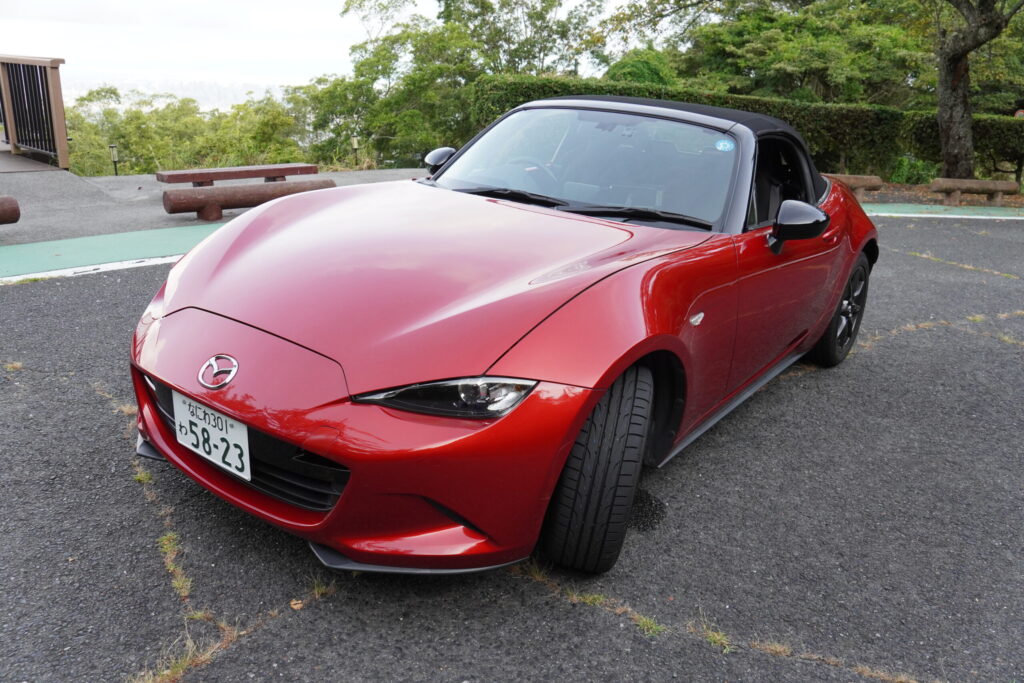
Whether you are looking for an action-packed weekend or a nuanced journey into Japan's countryside, Lake Biwa offers a stunning backdrop. Below is an exhaustive, hour-by-hour guide for a transformative two-day road trip originating from Osaka.
+-----------------------------------------------------------------------------------+
|                        LAKE BIWA 2-DAY ROAD TRIP OVERVIEW                         |
+-----------------------------------------------------------------------------------+
| DAY 1: OSAKA TO NORTHERN BIWA                                                     |
| 07:00 AM - Depart Osaka via Meishin Expressway                                    |
| 08:30 AM - Otsu Gateway & Lake Biwa Bridge (Biwako Ohashi)                        |
| 10:00 AM - Ukimido (Floating Temple) & Omi Maiko Shoreline                       |
| 12:30 PM - Omi-Takashima & the Water Gates of Shirahige Shrine                    |
| 03:00 PM - Oku-Biwako Parkway: Winding Alpine Curves                              |
| 06:00 PM - Nagahama Onsen & Lakeside Dinner                                       |
+-----------------------------------------------------------------------------------+
| DAY 2: HISTORIC EAST SHORE TO OSAKA RETURN                                        |
| 08:30 AM - Hikone Castle: National Treasure Keep & Castle Grounds                 |
| 11:30 AM - Omihachiman Canal District & Bricktown Heritage                        |
| 02:00 PM - Coastal Kogan Doro Cruising (Southern Loop)                            |
| 04:30 PM - Mount Hiei Driveway (Panoramic Vista over Kansai)                      |
| 07:30 PM - Return to Osaka Central                                                |
+-----------------------------------------------------------------------------------+
Day 1: Western Shores, Sacred Waters, and Alpine Ridge Lines
07:00 AM – Departure from Osaka: Awakening the Machine
The journey begins early in Osaka as the city slowly wakes up. Leaving the urban maze, you merge onto the Hanshin Expressway before joining the Meishin Expressway heading northeast toward Shiga Prefecture. In a nimble, rear-wheel-drive sports car like the Toyota 86 or Subaru BRZ, the crisp morning air sets the tone. The low-slung driving position, communicative hydraulic-feel steering, and mechanical click of the short-throw manual shifter create an immediate bond between driver, car, and road. The city skyline gives way to rolling green hills as you enter the Biwako basin.
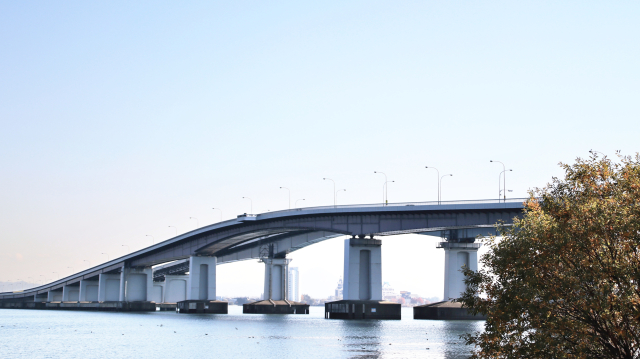
08:30 AM – Crossing the Threshold: Otsu & Biwako Ohashi
Entering Otsu, the southern gateway to Lake Biwa, the lake expands across the horizon like a vast inland sea. Rather than taking the southern bypass, head north toward the Biwako Ohashi (Lake Biwa Bridge). This civil engineering marvel spans the narrowest neck of the lake, connecting the east and west shores. As your tires roll across the special acoustic grooves carved into the bridge deck, the road literally plays a musical melody—a charming Japanese highway tradition welcoming you to Shiga.
10:00 AM – The Floating Sanctuary: Ukimido & Omi Maiko Shoreline
Taking Highway 161 along the western shore, your first major cultural stop is Ukimido, the "Floating Temple" attached to Mangetsu-ji Temple. Projecting outward into the tranquil waters on stone pillars, Ukimido was built during the Heian period to pray for maritime safety and the peace of Lake Biwa’s water spirit.
History & Cultural Context: Legendary monks like Ikkyu and Rennyo visited this site. The views across the water to the Hira Mountains inspired classic Japanese ink paintings and poetry.
Driving Experience: The route down to the lakeside is narrow and lined with traditional wooden residential structures. A compact sports car handles these tight alleyways effortlessly, allowing you to park smoothly near the temple gates.
After absorbing the quiet beauty of Ukimido, follow Route 161 north to Omi Maiko. Here, clear mountain streams feed into Lake Biwa, creating pristine white pebble beaches shaded by ancient Japanese black pines (Kuro-matsu).
12:30 PM – Torii in the Waves: Shirahige Shrine & Omi-Takashima
Continuing north, the road hugs the coastline tightly, delivering spectacular views of the water. Soon, a vibrant vermilion gate rises directly out of the blue lake: Shirahige Shrine (Shirahige Jinja).
Geological & Historical Significance: Shirahige is recognized as the oldest shrine in Shiga Prefecture, founded over 1,900 years ago. Dedicated to Sarutahiko Okami, the deity of guidance and crossroads, it has stood as a guardian over the water routes that once supplied ancient Kyoto with fresh fish and timber.
The Sights & Flavors: Park your car in the designated coastal area and admire the grand torii gate standing resiliently against the gentle lake waves. For lunch, step into a rustic local eatery nearby to taste Omi Beef (Omi-gyu), one of Japan's top three original Wagyu brands. Enjoying tender, marbled beef grilled over white charcoal (binchotan) with fresh rice grown in local mineral-rich mountain water is a culinary highlight of the trip.
03:00 PM – The Peak Driver's Road: Oku-Biwako Parkway
Leaving the flat coastal road, head toward the northern tip of Lake Biwa to experience the crown jewel of Shiga's driving routes: the Oku-Biwako Parkway.
The Winding Drive: This 18.8-kilometer ridge-line road climbs up the rugged mountains surrounding Northern Biwa. Here, a well-balanced chassis like the BRZ or 86 truly shines. The road bends through sharp hairpins, flowing sweeping turns, and dense canopies of oak and maple trees. As you downshift into 2nd gear, rev-match, and clip the apex of every corner, the car stays completely composed, communicating every detail of the road surface through the steering wheel.
Tsuzuki Peak Lookout (Tsuzuki-mine): Stop at the summit observatory for a breathtaking 360-degree panoramic view of Lake Biwa and Chikubu Island (Chikubushima), a sacred island home to Benzaiten, the goddess of music and water. The contrasting deep blue of the northern waters and the lush green of the surrounding peaks create an unforgettable vista.
06:00 PM – Arrival in Nagahama: Castle Town Onsen & Local Gastronomy
Descend the mountain pass into Nagahama, a historic castle town developed by Toyotomi Hideyoshi in the late 16th century. Check into a lakeside ryokan (traditional Japanese inn) featuring natural hot springs (onsen). After a day of spirited driving, soaking in iron-rich thermal waters relaxes the muscle memory of your clutch leg. Finish your evening with a traditional kaiseki dinner featuring Funazushi (an ancient form of fermented sushi unique to Lake Biwa) or hearty hot pots cooked with local mountain vegetables.

Day 2: Historic East Shore, Samurai Strongholds, and Alpine Heights
Route Progression: Nagahama -> Hikone -> Omihachiman -> Mount Hiei -> Return to Osaka
Total Driving Distance: Approx. 180 km
Road Types: Expressways, Coastal Byways, Mountain Toll Roads
08:30 AM – The Iron Stronghold: Hikone Castle
Begin your second day by following the eastern coastal road south toward Hikone.
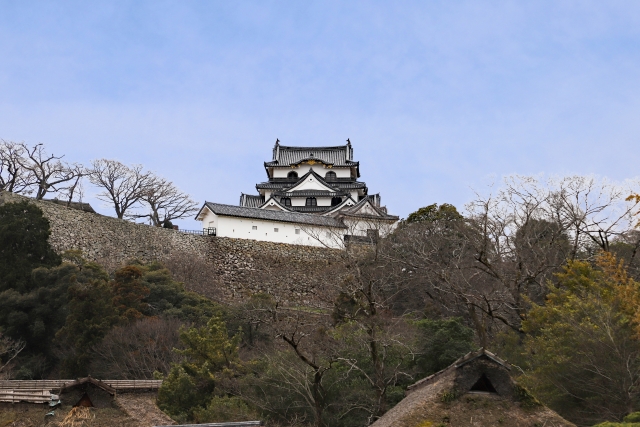
History & Architecture: Hikone Castle is one of only twelve original-surviving castle keeps (Tenshu) in Japan and is designated a National Treasure. Built in 1622 by the Ii clan, its complex defensive architecture features hidden gun ports, spiral stone staircases designed to throw off attackers, and stunning wood-and-plaster construction.
The Experience: Park in the expansive castle grounds, climb the ancient stone steps, and explore the keep. From the top floor, look out over the east shore of Lake Biwa to appreciate how strategically this fortress dominated trade routes between Kyoto, Tokyo, and the Sea of Japan.
11:30 AM – The Merchant Canals of Omihachiman
Drive 45 minutes south down Route 8, transitioning back onto the scenic lake shore road to reach Omihachiman.
Cultural Nuances: Omihachiman flourished as a merchant town during the Edo period. The Hachiman-bori canal, which connects the town directly to Lake Biwa, was once filled with barges carrying silk, sake, and woven goods. Today, preserved lattice-wood merchant houses and traditional clay warehouses (kura) line the willow-shaded canal banks.
Midday Culinary Stop: Stroll along the canal paths and stop at a traditional tea house for a bowl of Chagayu (green tea rice porridge) or sample local street food like Aka-konnyaku (a unique, iron-rich red konjac jelly native to this town).
02:00 PM – Cruising the Open Coastal Ribbon: The Southern Kogan Doro
Rejoin the main Lake Shore Road heading south toward Kusatsu. This stretch of highway offers wide lane layouts, long sweeping curves, and unobstructed views across the expansive body of water. Cruising smoothly with your windows down, enjoying the cool lakeshore breeze and the rhythmic hum of the boxer engine, represents pure driving bliss.
04:30 PM – The Grand Finale: Mount Hiei Driveway
Before making the final leg back to Osaka, make a detour up the Mount Hiei Driveway and Okubiwei Driveway. Mount Hiei straddles the border between Shiga and Kyoto and is home to Enryaku-ji, the headquarters of the Tendai sect of Japanese Buddhism.
The Ultimate Driving Challenge: This legendary toll road is world-renowned among driving enthusiasts. It features immaculate tarmac quality, banked hairpins, and elevation changes that test your braking technique and gear selection.
Sunset Vista: Park at the summit observation deck as the late afternoon sun begins to set. To your left, you can see the dense, glowing city lights of Kyoto; to your right, the peaceful, darkening waters of Lake Biwa reflecting the purple and amber hues of twilight. It is a striking visual contrast between urban Japan and natural grandeur.
07:30 PM – Safe Return to Osaka Central
Descend Mount Hiei and join the Kyoto-Higashi Interchange on the Meishin Expressway for a smooth 50-minute drive back into central Osaka, concluding an extraordinary 2-day journey.
Mazda MX-5 Lake Biwa Drive - Expert Advice & Cultural Nuances
Driving in Japan is an enjoyable experience when you understand its subtle rhythms, unwritten rules, and unique roadside culture.
+-----------------------------------------------------------------------------------+
|                            JAPAN DRIVING ETIQUETTE & TIPS                         |
+-----------------------------------------------------------------------------------+
| 1. HAZARD LIGHT THANK-YOU: Flash hazards 1-2 times when merged into traffic.      |
| 2. MICH-NO-EKI STOPS: Use roadside stations for local snacks, maps, & rest.       |
| 3. SPEED LIMIT REALITY: Flow of traffic usually sits slightly above posted limits.|
| 4. PEDESTRIAN CROSSINGS: Always stop fully for pedestrians waiting at zebra stripes.|
| 5. TIGHT MOUNTAIN PASSES: Yield at narrow spots; pull over if holding up locals.  |
+-----------------------------------------------------------------------------------+
The Magic of "Michi-no-Eki" (Roadside Stations)
Japan's network of government-designated roadside rest stops, known as Michi-no-Eki, goes far beyond basic highway service areas. They are vibrant hubs of regional culture, fresh local produce, and unique regional culinary specialties.
When driving around Lake Biwa, plan your rest stops around these stations. For example, Michi-no-Eki Shin-Asahi Windmill Village on the west shore offers local dairy products and fresh pastries, while Michi-no-Eki Saltotsu in the north serves hot bowls of handmade buckwheat noodles (soba) crafted from grain harvested in the surrounding mountains. They provide immaculate rest facilities, regional maps, and warm hospitality.
Local Driving Etiquette & Unwritten Rules
The "Thank You" Hazard Lights: When another driver slows down to let you merge onto a narrow road or pull out of a driveway, press your hazard light button for 1 to 2 blinks. This universal sign of gratitude is widely used across Japan.
Narrow Road Protocols (Lining Up & Yielding): Country roads in historic towns can be extremely narrow. If you encounter an oncoming car in a single-lane gap, the vehicle closer to a wider pull-out area (Yuzuri-ai) should pull over, stop completely, and flash their headlights once to signal the other car to pass.
Speed Limits and Traffic Flow: Speed limits in Japan may seem low on paper (30–50 km/h on local roads, 80–100 km/h on expressways). Drive smoothly, keep pace with local traffic flow, and pay careful attention when entering mountain passes where tight curves require precise speed control.
Mazda MX-5 Lake Biwa Drive - Detailed Logistics & Pre-Trip Tips
Navigating Japanese highways and fuel logistics is straightforward once you know the core systems.
+-----------------------------------------------------------------------------------+
|                         JAPANESE GAS STATION GLOSSARY                             |
+-----------------------------------------------------------------------------------+
| JAPANESE PHRASE          | PHONETIC PRONUNCIATION | ENGLISH MEANING               |
+--------------------------+------------------------+-------------------------------+
| レギュラー                 | Regular                | Standard Unleaded (Red Hose)  |
| ハイオク                   | High-Octane (Hai-oku)  | Premium Gasoline (Yellow Hose)|
| 軽油                       | Keiyu                  | Diesel (Green Hose)           |
| 満タン                   | Mantan                 | Full Tank                     |
| 現金                     | Genkin                 | Cash                          |
| クレジットカード           | Kurejitto Kado         | Credit Card                   |
+--------------------------+------------------------+-------------------------------+
Electronic Toll Collection (ETC) Cards
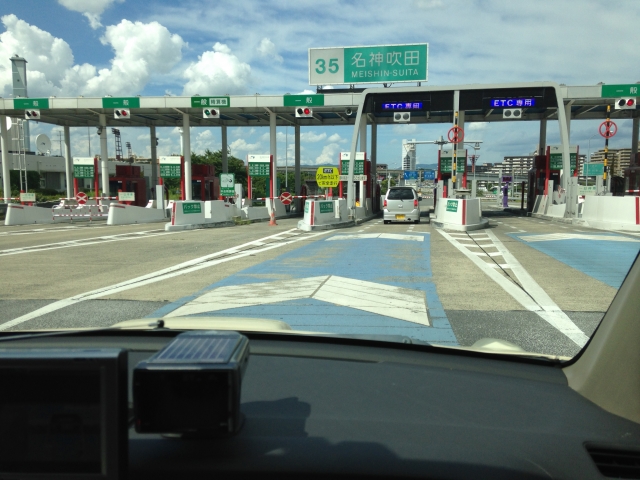
Japanese expressways use an automated toll system called ETC (Electronic Toll Collection). When renting a vehicle, always request an ETC card inserted into the in-car reader.
Why it matters: Expressway gates are divided into "ETC Only" (purple signs) and "Cash/Card" (green signs). An ETC card lets you drive through purple lanes without stopping, automatically recording tolls. You simply settle the balance when returning the rental vehicle. It saves time and grants access to substantial off-peak toll discounts.
Navigating Fuel Stations (Gasorin Sutando)
Fuel stations in Japan come in two forms: Full Service (Furu) and Self Service (Serufu).
Full Service: Attendants will guide your car in using hand signals. Roll down your window and tell them the fuel type and amount. For sports cars like an 86 or BRZ, always specify High-Octane fuel:
Say: "Hai-oku, Mantan, Kurejitto Kado de" (High-octane, Full tank, By credit card).
Attendants will clean your windshield, offer to take your trash, and guide you safely back into traffic when you leave.
Self Service: Touchscreens usually offer an English language toggle. Select ハイオク (Hai-oku / Yellow Hose) for high-performance Japanese engines.
Parking Conventions
In Japan, reverse parking (backing into spaces) is standard practice. It ensures maximum safety when pulling back out into parking lots and pedestrian zones. Look for green-and-white signs marked with P for public pay lots. In cities like Hikone and Nagahama, automated lock-plate parking lots (Flap Locks) are common: park over the lowered metal plate, and pay at the central machine using your space number before returning to your vehicle.
The Thrill of Manual JDM Driving
Renting an iconic, lightweight, manual rear-wheel-drive sports car in Japan elevates a simple journey into an unforgettable motoring experience. The mechanical feedback of a well-tuned engine, lightweight chassis balance, three-pedal layout, and smooth mechanical gearshift allow you to feel connected to Japan's rich automotive heritage as you wind along lakeshores and over mountain roads.
Mazda MX-5 Lake Biwa Drive - Comprehensive FAQ
What driver's license documentation do I need to legally drive in Japan?
To drive legally in Japan, you must present three documents at the time of vehicle pickup:
Your original valid National Driver's License issued by your home country.
A physical International Driving Permit (IDP) issued under the 1949 Geneva Convention. (Note: Permits issued under the 1968 Vienna Convention or other treaties are not accepted in Japan).
Your original valid Passport.
Important Exceptions: Drivers holding licenses issued in Taiwan, Switzerland, Germany, France, Belgium, Monaco, or Slovenia cannot use an IDP. Instead, you must present your home driver's license accompanied by an official, certified Japanese translation issued by the Japan Automobile Federation (JAF) or your home country's embassy in Japan.
What insurance coverage should I select?
It is strongly recommended to select full comprehensive insurance coverage, including a Zero-Deductible Collision Damage Waiver (CDW) and Non-Operation Charge (NOC) Protection. This covers unexpected repair costs or administrative fees in the rare event of an accident or minor cosmetic scrape on narrow village roads.
Is driving a manual transmission (MT) car in Japan difficult for visitors?
Driving a right-hand drive (RHD) manual transmission car becomes intuitive very quickly, even if you are accustomed to left-hand drive vehicles. In an RHD car, the pedal arrangement remains identical (Clutch-Brake-Gas from left to right), and the gear shift pattern (1st gear top-left) is unchanged. You simply shift using your left hand. Japanese drivers are courteous, and roads are exceptionally well-maintained, allowing you to settle into a natural driving rhythm.
What are the road conditions around Lake Biwa across different seasons?
Spring (March–May): Mild weather and spectacular cherry blossom displays along the shoreline roads, particularly at Kaizu-Osaki.
Summer (June–August): Lush greenery and clear coastal views; lake waters are warm and blue.
Autumn (September–November): Cool mountain breezes and brilliant fall foliage along the mountain pass routes.
Winter (December–February): Northern Lake Biwa and elevated mountain routes like the Oku-Biwako Parkway can experience snow and ice. Winter tires (studless tires) are mandatory during winter months.
Mazda MX-5 Lake Biwa Drive - The Final Thoughts
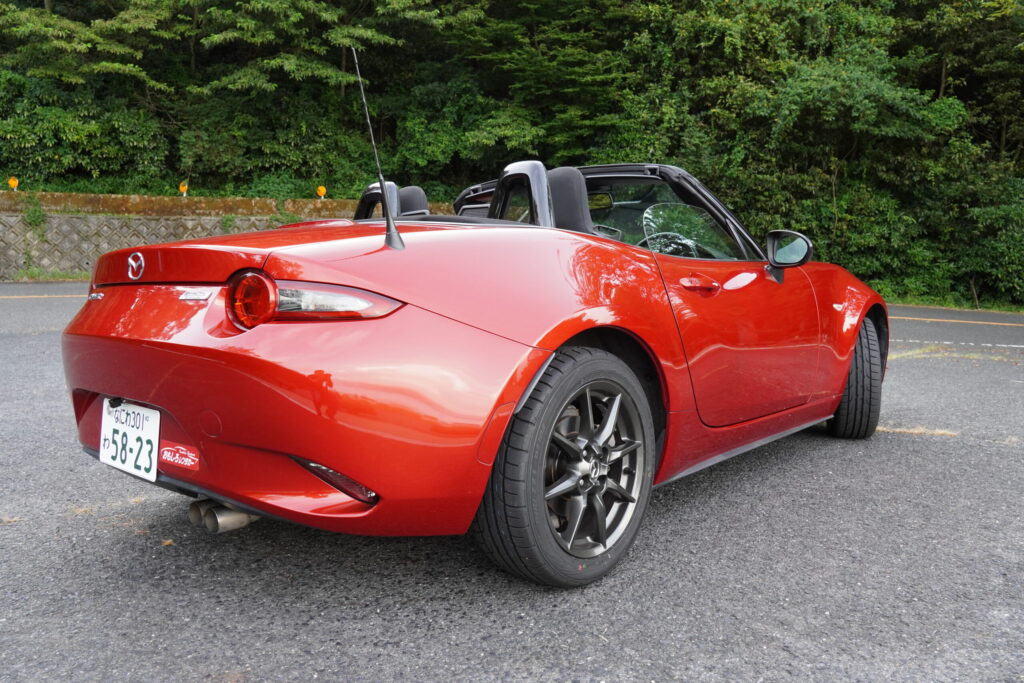
The true beauty of Japan does not reveal itself from the window of a high-speed train or through the structured itinerary of a tour group. It unfolds on the quiet, winding coastal roads, over mist-covered alpine passes, beside ancient torii gates standing silently in pristine lakes, and in small roadside ramen shops nestled in quiet fishing villages.
When you take control of your own journey, every turn in the road brings a new discovery, every gear shift builds an authentic connection to the countryside, and every sunset over the water becomes a personal memory. Lake Biwa is waiting to be explored—not as a passive bystander, but as a driver immersed in the true joy of the open road.
Ready to start your engines and experience the real Japan?
Visit Omoren Osaka Central (おもしろレンタカー大阪中央店) to reserve your iconic Japanese sports car—including pristine, enthusiast-grade models like the Toyota 86, Subaru BRZ, and other legendary JDM machines. Let your unforgettable Japanese road trip adventure begin today.