
Drive a Toyota 86 to Nara’s Murou-ji: The Philosophy of Driving in Japan
For nearly a decade, I viewed the Japanese archipelago through a very specific, carefully framed piece of glass: the front cab window of a Kintetsu commuter train. As a professional conductor operating across the expansive rail networks of Kansai—stretching from the bustling neon-lit terminals of Osaka Namba to the ancient, misty terminus at Yoshino and the sacred precincts of Ise—my life was governed by the unrelenting precision of the second hand. Japanese trains are engineering marvels, undeniable testaments to human efficiency, punctuality, and technological grace. I loved my time on the rails, listening to the rhythmic clack-clack of steel wheels on track and watching the rolling hills of Nara sweep past in uniform, predictable increments.
However, running on fixed tracks inevitably leaves you bound to fixed destinations. From the conductor’s platform, I lost count of how many winding mountain passes, hidden valleys blanketed in early morning fog, and quiet cedar-lined backroads I watched slip away into the distance—places where no train station would ever be built, where no bus schedule reached, and where the soul of "Secret Japan" truly resides.
When I stepped down from the railway and immersed myself fully in Japan's automotive culture, eventually opening a specialized JDM (Japanese Domestic Market) sports car rental outfit in Osaka, my entire perspective shifted. To truly understand Japan—beyond the hyper-polished, overcrowded golden routes of Kyoto's Fushimi Inari or Tokyo's Shibuya Crossing—you must put your hands on a steering wheel, place your left foot on a clutch pedal, and venture onto the winding tōge (mountain passes).
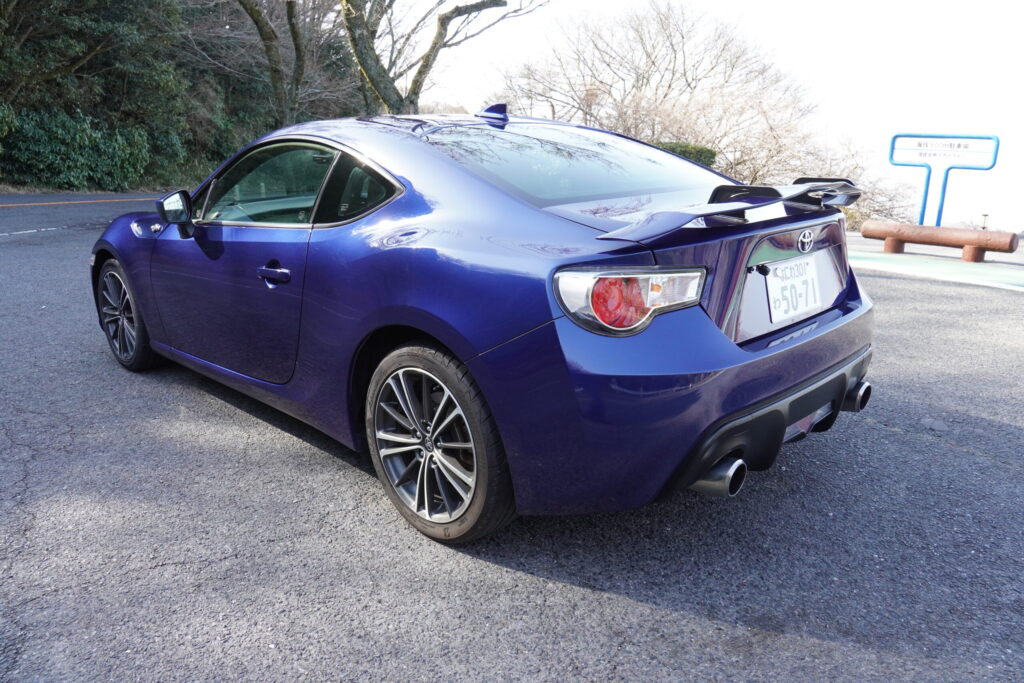
In Kansai, taking the wheel transforms travel from a passive visual observation into a dynamic, deeply sensory journey. When you set out from Osaka toward the ancient heartland of Nara, public transit limits you to major hubs like Kintetsu-Nara Station or Sakurai. But when you command a authentic driver's machine like the lightweight, front-engine, rear-wheel-drive Toyota 86, the journey itself becomes the destination. The vehicle ceases to be mere transportation; it becomes your passport to hidden mountain shrines, quiet riverside cafés, and centuries-old roads sculpted into the emerald topography of Nara Prefecture.
Murou-ji (室生寺), tucked deep within the dense forests of Uda in eastern Nara, is the ultimate manifestation of this philosophy. Known historically as the "Nyonin Kōya" (Women’s Koya) because it welcomed female pilgrims when nearby Mount Kōya strictly forbade them, Murou-ji is a sanctuary wrapped in ancient cryptographic timber, moss-covered stone staircases, and pristine mountain streams. Reaching it via the arterial backroads of Nara behind the wheel of an agile Toyota 86 is a transformative experience. You escape the rigid timetables of railway transit and enter a world where every crisp gear shift, every rev-matched downshift, and every apex turned through the cedar forests connects you directly to the geography, history, and spiritual quietude of Japan.

Drive a Toyota 86 to Nara’s Murou-ji: The 2-Day Itinerary: Deep Dive
Day 1: Escaping the Concrete Jungle to the Deep Forests of Uda
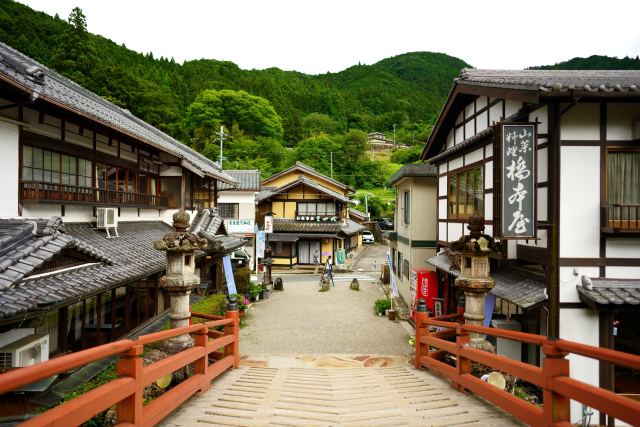
08:00 AM – Departure from Osaka: The Urban Transition
Your journey begins in the heart of Osaka’s grid. Settling into the low-slung, supportive bucket seats of the Toyota 86, the driver-centric cockpit wraps around you with purposeful simplicity. Adjust the leather-wrapped steering wheel, slip the short-throw shifter into first gear, and feel the tactile click of mechanical engagement. As the 2.0-liter naturally aspirated boxer engine comes to life with its distinct horizontal rumble, you leave behind the towering elevated structures of the Hanshin Expressway and ease onto the eastward flow toward Nara.
Navigating Osaka's morning traffic in a manual Toyota 86 is surprisingly effortless thanks to its light clutch feel and predictable throttle response. Moving eastward via the Hanshin Expressway Route 13 (Higashi-Osaka Line), the urban sprawl gradually gives way. You pass through the long, subterranean darkness of the Shin-Ikoma Tunnel, cutting through the natural granite wall of Mount Ikoma that has protected the Nara Basin for millennia. Emerging on the other side, the sharp neon edges of Osaka vanish, replaced by the open, blue-grey skies and soft, undulating green hills of Nara Prefecture.
09:30 AM – The Gateway Drive: Route 165 and the Yamato-Mahoroba Route
Leaving the expressway network behind at Nijo-zan, transition onto Route 165. This historical corridor skirts the foot of Mount Nijo, a twin-peaked extinct volcano that ancient Kansai inhabitants revered as a gateway to the afterlife.
Here, the character of the drive undergoes a radical transformation. As you bypass the suburban fringes of Kashihara, switch onto Route 165 heading toward Sakurai and Uda. The road narrows, weaving alongside the rushing waters of the Yamato River. In the Toyota 86, this is where the joy of driving begins to unfold. The steering, hyper-communicative and hydraulic-like in its precision, telegraphs every contour of the asphalt directly to your palms. As you press through gentle sweepers, the low center of gravity—courtesy of the boxer engine layout—keeps the chassis utterly flat, instilling absolute confidence.
10:30 AM – First Pitstop: The Ancient Sanctuaries of Hase-dera (長谷寺)
Before ascending into the deep mountains of Murou, make an essential detour to Hase-dera, located on the forested slopes of Mount Hatsuse. Parking the Toyota 86 in the lower village lot, step out into the crisp, pine-scented mountain air.
Historical & Geological Context: Founded in 686 AD by the monk Domyō, Hase-dera serves as the main temple of the Buzan sect of Shingon Buddhism. It sits in a steep V-shaped river valley carved over millions of years by the Hase River. The temple is famous for its Noborirō—a covered wooden stairway consisting of 399 stone steps framed by hanging lanterns that climb gracefully up the mountain slope.
Sensory Immersion: Walking up the Noborirō, your steps echo against polished river stone. The air is cool and thick with the aroma of burning incense and cedar needles. At the summit platform, which overhangs the valley cliff like Kyoto's Kiyomizu-dera, you are treated to a panoramic vista of sweeping green mountains and cascading cherry blossoms or fiery autumn maples, depending on the season.
Culinary Experience: On the approach road (sandō), sample Kusa-mochi (mugwort rice cake filled with sweet red bean paste), freshly pounded by hand at local storefronts. The earthy, herbal note of the wild mugwort coupled with warm, sweet red bean paste is the quintessential flavor of rural Yamato.
+-----------------------------------------------------------------------------------+
|                        DAY 1 ROUTE MAP & ELEVATION PROFILE                        |
|                                                                                   |
|  [Osaka City] --(Hanshin Exp)---> [Mount Ikoma] --(Route 165)---> [Hase-dera]     |
|     Elev: 10m                        Elev: 220m                     Elev: 280m    |
|                                                                         |         |
|                                                                   (Route 28/369)  |
|                                                                         v         |
|  [Murou-ji Sanctuary] <---(Pref. Route 28)--- [Murou River Valley] <----+         |
|     Elev: 450m                                   Elev: 380m                       |
+-----------------------------------------------------------------------------------+
01:00 PM – The Driving Highlight: Prefectural Route 28 to Mount Murou
Returning to the Toyota 86, key the engine and prepare for one of the finest driving stretches in eastern Nara: Prefectural Route 28 connecting Hase-dera to the Murou region.
The Machine Dynamics: This stretch of road features tight chicane sequences, blind hairpins climbing up dense cedar hillsides, and smooth, banked sweeping turns. Downshifting into second gear, the engine revs sweep upward toward the 7,000 RPM threshold. The pedal placement in the 86 is engineered perfectly for heel-toe downshifting. As you blip the throttle, drop the clutch, and turn into a hairpin, the front end bites with tenacity. The rear-wheel-drive architecture allows you to balance the car on the throttle through the mid-corner apex, smoothly applying power as the road opens up.
Atmospheric Immersion: Sunlight filters through 80-foot-tall Sugi (Japanese cedar) trees, casting rhythmic shadows across the black asphalt. The smell of rich forest soil and pine resin enters the cabin through the open windows, punctuated by the mechanical mechanical soundtrack of the 86's intake induction noise echoing off rock faces.
02:00 PM – Arrival at Murou-ji (室生寺): The Women's Koya
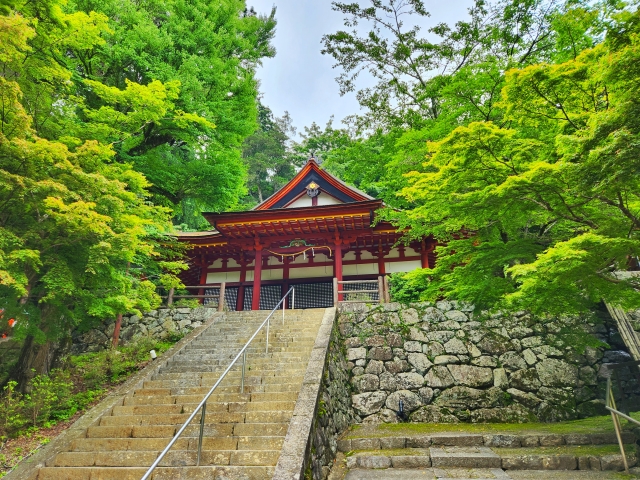
Arriving at the secluded valley of Murou, cross the iconic vermilion Taikō-bashi bridge spanning the crystal-clear, pebble-bedded Murou River. Park the car under the shade of ancient cryptomeria trees and enter the quiet sacred grounds.
Architectural & Spiritual Exploration: Murou-ji was established in the late 8th century during the Nara to Heian transition period. Unlike Mount Kōya, which rigorously excluded women until 1872, Murou-ji opened its doors to all worshipers, earning it deep devotion throughout Japanese history.
Key Highlights within the Complex:
Kondō (Main Hall): A National Treasure featuring an asymmetrical single-tiered roof covered in cypress bark (hibawadachi). Inside reside magnificent Heian-period wooden statues of Shaka Nyorai and the Twelve Heavenly Generals, carved with dramatic, flowing drapery (homuchō-shiki).
The Five-Story Pagoda (Gojū-no-tō): Standing at just 16 meters tall, this is the smallest outdoor five-story pagoda in Japan. Built in the late 8th century, its proportions are breathtakingly harmonious, nestled against a steep, moss-covered mountainside surrounded by giant ferns and ancient trees.
Oku-no-in (Inner Sanctuary): For those willing to climb the 700 steep, irregular stone steps blanketed in thick green velvet moss, the trail leads to the secluded Oku-no-in, dedicated to Kōbō Daishi. The ascent is a meditative exercise where the silence of the ancient forest is broken only by the chirping of mountain birds and the distant rustle of leaves.
05:00 PM – Late Afternoon Drive to Soni Highlands (曽爾高原)
After immersing yourself in the quiet spirituality of Murou-ji, climb back into the Toyota 86 for a sunset drive to the nearby Soni Highlands via Route 369.
Route 369 offers long, rolling sweeping curves over high-altitude mountain plateaus. As the late afternoon sun dips toward the horizon, light bathes the rolling hills of Soni in gold. The highlands are famed for their vast fields of Suzuki (pampas grass). In autumn, the entire landscape glows like a sea of spun gold under the setting sun.
Walk up the timber steps to the ridge trail overlooking the valley. The wind whistles across the plateau, carrying the cool evening air of the Yamato mountain range.
07:30 PM – Check-in & Dinner at a Traditional Ryokan in Uda or Nabari
End your first day by driving down to a traditional local Ryokan (Japanese inn) or a restored Kominka (farmhouse stay) in the Uda basin.
Dining: Indulge in a multi-course Kaiseki dinner featuring local Nara delicacies: Yamato Gyu (highly marbled, tender local beef grilled over charcoal), wild mountain vegetables (sansai) tempura, and Miwa Somen (ultra-thin hand-stretched wheat noodles served in a delicate, savory dashi broth).
Soak: Finish the night with a deep soak in a natural thermal Onsen, allowing the mineral-rich alkaline waters to soothe your muscles after a day of spirited mountain driving and staircase climbing.

Day 2: The Ancient Valleys of Asuka and the Historic Passes of Mount Katsuragi
+-----------------------------------------------------------------------------------+
|                        DAY 2 ROUTE MAP & ELEVATION PROFILE                        |
|                                                                                   |
|  [Uda Basin] --(Pref. Route 37)---> [Tanzan Shrine] --(Mountain Pass)---> [Asuka] |
|    Elev: 320m                         Elev: 520m                         Elev: 90m|
|                                                                              |    |
|                                                                      (Route 166)  |
|                                                                              v    |
|  [Osaka Return] <---(Hanshin Exp)--- [Minami-Kawachi] <---(Takenouchi Pass)-+     |
|    Elev: 10m                           Elev: 80m              Elev: 290m          |
+-----------------------------------------------------------------------------------+
08:30 AM – Morning Start: Prefectural Route 37 to Tanzan Shrine (談山神社)
Wake to the crisp mountain air of Uda. After a traditional breakfast of grilled salmon, miso soup, and Chagayu (green-tea rice porridge, a Nara specialty), key the ignition of the Toyota 86.
Set your course toward Tanzan Shrine along Prefectural Route 37. This narrow, winding mountain road cuts through dense cedar forests and over tight mountain ridges. The Toyota 86 shines here; its precise electric power steering provides instant turn-in, while the front MacPherson strut and rear double-wishbone suspension setup absorb minor pavement imperfections smoothly without unsettling the chassis.
09:40 AM – Exploration of Tanzan Shrine: The Cradle of Fujiwara History
Tanzan Shrine sits hidden away high on the slopes of Mount Tonomine.
Historical Significance: It was here in 645 AD, hidden deep within these mountains, that Nakatomi no Kamatari (later founder of the powerful Fujiwara clan) and Prince Naka no Ōe met secretly to plot the Taika Reforms, overthrowing the dictatorial Soga clan and reshaping Japanese governance for centuries.
Visual Marvel: The shrine boasts the world's only thirteen-story wooden pagoda, built in 1532. The intricate, cascading tiled roofs of the pagoda set against the backdrop of vibrant mountain foliage form one of the most striking architectural vistas in all of Japan.
11:30 AM – Descent into the Cradle of Japan: The Asuka Valley (飛鳥)
Negotiating the tight hairpin descents from Mount Tonomine down into the Asuka Valley provides a masterclass in vehicle control. Utilizing second and third gear engine braking in the 86 prevents brake fade and keeps the car perfectly balanced through continuous S-curves.
Asuka is regarded as the political, cultural, and spiritual birthplace of the unified Japanese state (the Asuka Period, 538–710 AD). Unlike the grand scale of Kyoto, Asuka is a tranquil rural countryside filled with terraced rice paddies, ancient burial mounds (Kofun), and mysterious megalithic stone sculptures scattered among quiet farming villages.
Key Historic Stops:
Ishibutai Kofun (石舞台古墳): The massive 7th-century stone tomb believed to belong to Soga no Umako. Made of 30 granite boulders weighing over 2,300 tons in total, the earth covering was eroded centuries ago, leaving the colossal stone chamber exposed to the sky. Standing inside the echoey granite chamber is a humbling experience.
Asuka-dera (飛鳥寺): Home to the Asuka Daibutsu, the oldest recorded bronze Buddha statue in Japan, cast in 609 AD. The temple retains a deeply intimate atmosphere where visitors can sit mere feet away from this ancient icon.
+-------------------------------------------------------------------------------+
|                       RECOMMENDED ITINERARY AT A GLANCE                       |
+--------+-------+--------------------------------------------------------------+
| Day    | Time  | Location / Activity                                          |
+--------+-------+--------------------------------------------------------------+
| Day 1  | 08:00 | Depart Osaka via Hanshin Expressway & Route 165              |
|        | 10:30 | Explore Hase-dera Temple & sample Kusa-Mochi                  |
|        | 13:00 | Drive Prefectural Route 28 (Spirited Tōge section)            |
|        | 14:00 | Visit Murou-ji Temple & climb to Oku-no-in                   |
|        | 17:00 | Sunset drive on Route 369 to Soni Highlands                   |
|        | 19:30 | Ryokan Check-in, Kaiseki Dinner & Onsen Bath                 |
+--------+-------+--------------------------------------------------------------+
| Day 2  | 08:30 | Morning Start & Route 37 Mountain Drive                      |
|        | 09:40 | Explore Tanzan Shrine & 13-Story Pagoda                      |
|        | 11:30 | Descend into Asuka Valley; visit Ishibutai Kofun             |
|        | 13:00 | Farm-to-Table Lunch in Asuka Village                         |
|        | 15:00 | Cross Takenouchi Pass (Japan's Oldest Highway)               |
|        | 17:30 | Return to Osaka Central                                      |
+--------+-------+--------------------------------------------------------------+
01:00 PM – Local Farm-to-Table Lunch in Asuka
Stop for lunch at a converted historic Machiya (traditional townhouse) in Asuka Village. Enjoy Asuka Nabe—a hot pot dish originating from the 7th century featuring local chicken, fresh seasonal vegetables, and mushrooms cooked in a rich, comforting broth made from dashi, milk, and ginger.
03:00 PM – The Homeward Tōge: Takenouchi Pass (竹内街道)
To conclude your driving pilgrimage, avoid the mundane expressway on your return to Osaka. Instead, take Route 166 over the historic Takenouchi Pass.
Historical Weight: Established in 613 AD under Empress Suiko, Takenouchi Kaidō is officially recognized as the oldest highway in Japan. It connected the ancient capital of Asuka with the coastal port of Naniwa-zu (modern Osaka), serving as the route through which Buddhism, diplomacy, and continental technology entered Japan.
The Final Drive in the 86: The ascent up Mount Nijō via Route 166 features smooth tarmac, elevation changes, and tight technical corners. Working through the Toyota 86's slick gear shifter one final time, rev-matching every gear change, you feel the pure mechanical harmony that modern computerized crossovers simply cannot replicate.
05:30 PM – Arrival Back in Osaka Central
As you descend from the pass into the Minami-Kawachi region and rejoin the urban flow toward central Osaka, the quiet serenity of Murou-ji and the roaring intake note of the 86 through cedar passes remain fresh in your mind. You have experienced a side of Kansai that millions of rail passengers miss entirely.
Drive a Toyota 86 to Nara’s Murou-ji: Expert Advice & Cultural Nuances
Driving through rural Nara offers an intimate, highly rewarding glimpse into authentic Japanese life, but it comes with unique cultural norms, driving etiquette, and unwritten rules that every international driver should know.
The Magic of Japan's Michi-no-Eki (Roadside Stations)
Do not confuse a Japanese Michi-no-Eki (道の駅) with a standard Western highway service station. These government-designated roadside rest spots are vibrant hubs of local community culture, agriculture, and cuisine.
What to Expect: Located along national routes like Route 165 and Route 369, spots like Michi-no-Eki Udaji Ouda or Michi-no-Eki Murou feature farmers markets selling hyper-fresh local produce harvested that morning, artisan handicrafts, regional condiments, and freshly prepared hot street food.
Must-Try Items: Look for 柿の葉寿司 (Kakinoha-zushi)—mackerel or salmon sushi wrapped tightly in persimmon leaves. The tannin in the persimmon leaves acts as a natural preservative while imparting a subtle, tea-like aroma to the vinegared rice and rich fish. It was traditionally created in the landlocked Yamato region as a way to preserve fresh seafood brought over the mountains from Kishu (Wakayama).
+---------------------------------------------------------------------------------+
|                       REGIONAL CULINARY HIGHLIGHTS                             |
+---------------------+-----------------------------------------------------------+
| Item                | Description & Significance                                |
+---------------------+-----------------------------------------------------------+
| Kakinoha-zushi      | Mackerel/Salmon sushi wrapped in aromatic persimmon       |
| (柿の葉寿司)         | leaves. Ancient Nara preservation delicacy.               |
+---------------------+-----------------------------------------------------------+
| Kusa-mochi          | Hand-pounded rice cakes infused with wild mountain        |
| (草餅)              | mugwort and filled with sweet azuki bean paste.           |
+---------------------+-----------------------------------------------------------+
| Asuka Nabe          | Historic 7th-century hotpot featuring chicken and fresh   |
| (飛鳥鍋)            | vegetables simmered in a savory dashi-milk broth.         |
+---------------------+-----------------------------------------------------------+
| Miwa Somen          | Ultra-thin, hand-stretched wheat noodles renowned for    |
| (三輪素麺)          | their delicate texture, served cold in summer or hot in winter.|
+---------------------+-----------------------------------------------------------+
Navigating Narrow Mountain Roads (Koku-dō & Fuku-dō)
While primary national routes (Kokudō) are generally well-paved and wide, secondary prefectural routes (Fukudō) leading deep into mountain valleys like Murou can narrow significantly.
The Hazard Flasher Etiquette: In Japan, hazard lights are used extensively for communication. If another driver pulls into a turnout to let your faster-moving Toyota 86 pass on a narrow mountain road, give them two brief blips of your hazard lights after merging back in front. This is the universal Japanese road signal for "Dōmo" (Thank you).
Narrow Passages (Kōtai-jo): When encountered on single-lane roads, look out for wide cutouts in the hillside marked with a sign reading 退避所 (Taihijo). If an oncoming vehicle approaches, the car closest to a cutout should stop and yield to allow the other to pass safely.
Mind the Blind Corners: Mountain passes feature convex mirrors mounted on utility poles at almost every blind curve. Do not just glance at them—actively look into them to spot oncoming traffic before committing to your turn.
Drive a Toyota 86 to Nara’s Murou-ji: Detailed Logistics & Pre-Trip Tips
Navigating Japanese roads in 2026 is remarkably smooth and user-friendly if you prepare properly beforehand.
Electronic Toll Collection (ETC) Cards
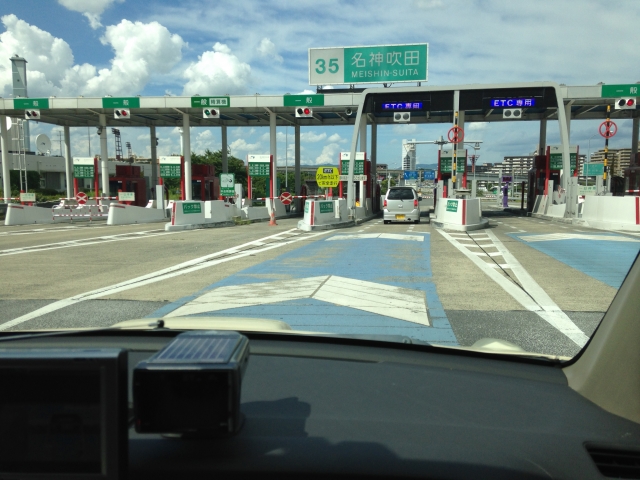
Japan’s expressway network operates predominantly on an automated toll system called ETC.
Why You Need It: While cash lanes exist, they are increasingly automated or restricted. Renting a physical ETC card with your vehicle allows you to pass through ETC gates at highway ramps at reduced speeds without stopping. The system logs your tolls electronically, allowing you to settle the balance effortlessly in cash or by credit card when returning the vehicle.
Cost Savings: ETC users gain automatic access to off-peak discounts (such as 30% off weekend driving rates on regional expressways) and allow seamless travel through ETC-only interchanges (Smart ICs).
Gas Station Navigation: Mastering the Terms
Gas stations (Gasorin Stand-o) in Japan operate as either Full Service (フル) or Self Service (セルフ).
When pulling up in a performance vehicle like the Toyota 86, remember that sports cars running high-compression naturally aspirated engines require High-Octane Premium Gasoline (ハイオク - Haioku), marked with RED pump handles. Standard regular unleaded is marked with RED or REGULAR (レギュラー - Regurā).
+-------------------------------------------------------------------------------+
|                    JAPANESE GAS STATION CHEAT SHEET                           |
+-----------------------+---------------------+---------------------------------+
| Term / Phrase         | Japanese            | English Meaning                 |
+-----------------------+---------------------+---------------------------------+
| High-Octane Premium   | ハイオク (Haioku)   | Premium Gasoline (Red Handle)   |
| Regular Gasoline      | レギュラー (Regurā)| Regular Unleaded (Red/Yellow)   |
| Fill it up!           | 満タンで (Mantan de)| "Fill the tank completely"      |
| Cash / Card           | 現金 / カード       | Genkin / Kādo                   |
| Window Clean          | 窓拭き (Mado fuki)  | Courtesy window wipe (Full)     |
+-----------------------+---------------------+---------------------------------+
Handy Phrases at Full Service Stations:
"Haioku, Mantan de onegaishimasu" (High-octane, full tank please).
"Kādo de haraimasu" (I will pay by credit card).
Parking Protocol in Historic Areas
Never Park on the Street: Street parking in Japan is virtually non-existent, especially in rural tourist regions. Always use designated coin-operated parking lots (Coin Parking) or official temple parking grounds.
Wheel Stops & Flap Locks: Many modern coin lots use lower flap locks (Lock Plate) that rise beneath the center of the car after parking. Upon returning, enter your space number at the payment kiosk, pay the required fee in cash (¥100/¥500 coins or ¥1000 notes) or electronic transit cards (Suica/ICOCA), verify that the lock flap has lowered completely, and clear the space promptly.
The Thrill of Driving a JDM Manual Transmission (MT)
Driving a pure, lightweight manual transmission sports car like the Toyota 86 through the Japanese countryside is an increasingly rare, highly visceral pleasure. In an era dominated by heavy electric vehicles and detached automatic transmissions, feeling the direct mechanical link of a rear-wheel-drive 6-speed manual chassis brings driving back to its absolute fundamentals. Every rev-matched gear change echoing through a forest valley becomes a memory that stays with you long after the trip concludes.
Drive a Toyota 86 to Nara’s Murou-ji: Comprehensive FAQ
Q1: What specific driver's documentation is legally required to rent and drive a car in Japan?
To legally rent and operate a motor vehicle in Japan, visitors must present three mandatory documents at the time of pickup:
Your Original Physical Valid Driver's License issued by your home country.
An International Driving Permit (IDP) issued strictly under the 1949 Geneva Convention on Road Traffic. The physical booklet must be presented (digital copies or permits under 1926/1968 conventions are invalid).
Your Physical Passport.
Note for license holders from Switzerland, Germany, France, Belgium, Monaco, and Taiwan: These specific countries do not issue 1949 Geneva IDPs. Instead, drivers from these nations must present their original license alongside an official Japanese translation issued by their respective embassy/consulate in Japan or the Japan Automobile Federation (JAF).
Q2: Is driving a manual transmission (MT) Toyota 86 difficult on Japanese mountain roads?
Not at all, provided you have baseline experience operating a manual vehicle. The Toyota 86 is universally praised for its light, forgiving clutch engagement and crisp, intuitive gear selector. However, Japanese mountain roads feature tight turns and steep grade shifts. If you are uncomfortable with hill starts or rev-matching on downshifts, practice these fundamental techniques before heading onto technical mountain passes.
Q3: What is the winter road condition situation around Murou-ji and Uda?
During the deep winter months (late December through late February), high-elevation mountain passes around Uda, Soni, and Mount Tonomine can experience freezing temperatures, black ice, and occasional snowfall. If traveling during this window, ensure your rental vehicle is equipped with studless winter snow tires (Studless Tires).
Q4: Are road signs in rural Nara easy to read for non-Japanese speakers?
Yes. Major arterial routes, national highways, and tourist signposts throughout Nara Prefecture feature dual-language labeling in both Japanese Kanji and English Romanization (Rōmaji). Modern onboard GPS navigation systems also feature full English voice guidance and intuitive destination input using 8-digit phone numbers or MapCodes.
Drive a Toyota 86 to Nara’s Murou-ji: The Final Thoughts

Japan is a country of extraordinary contrasts—where hyper-futuristic metropolis neon sits mere miles away from quiet, mist-shrouded mountain valleys that have remained unchanged for over a thousand years. But to bridge those two worlds, to truly break free from the crowded tourism trails and uncover the soul of "Secret Japan," you need the freedom of four wheels, a winding ribbon of mountain asphalt, and an authentic driver's car.
As a former train conductor who spent years observing this beautiful country from the rigid bounds of the railway, I can assure you: nothing compares to the exhilarating freedom of dropping a gear, turning the wheel, and watching the hidden temples of Nara emerge through your own windshield.
When you are ready to stop being a passive spectator and step into the driver's seat of your own Japanese adventure, your machine is waiting.
At Omoshiro Rent-a-Car Osaka Chuo (おもしろレンタカー大阪中央店), we specialize in providing meticulously maintained, high-performance JDM sports cars—including pure manual transmission Toyota 86s—tailored specifically for drivers who demand more from their journey. Located conveniently in central Osaka, we provide English-fluent service, complete guidance on ETC setup and navigation, and custom route recommendations straight from real driving enthusiasts who know every inch of Kansai's best tōge passes.
Don't just visit Japan. Drive it. Reserve your Toyota 86 today at Omoshiro Rent-a-Car Osaka Chuo, turn the key, and let the quiet mountain sanctuaries of Nara welcome you.