
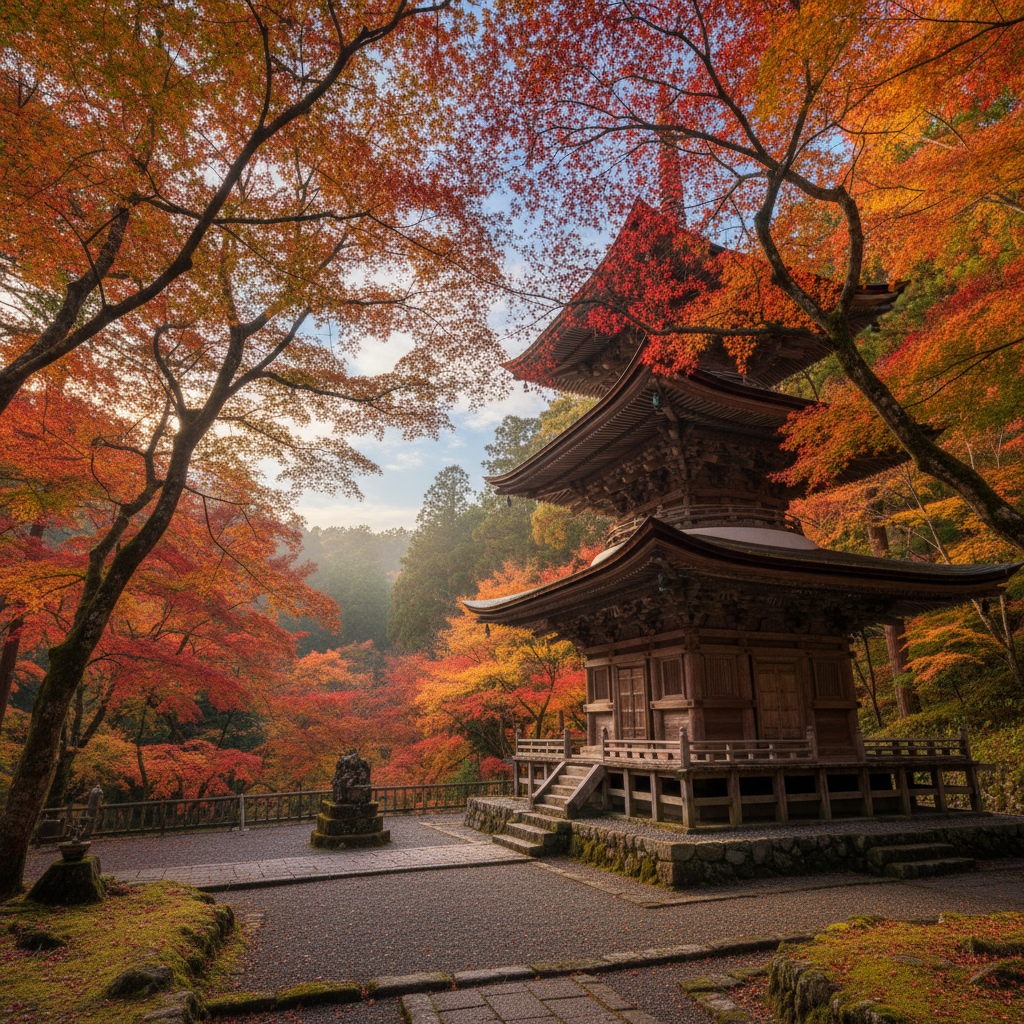
Muro-ji Temple, Nyonin Koya, Five-story Pagoda, Autumn Leaves, Nara - The Philosophy of Driving in Japan
As someone who once navigated the intricate steel arteries of Japan’s railway system as a Kintetsu train conductor, I understand the allure of its impeccable public transport. The rhythmic hum of the rails, the precise schedules, the panoramic window views – it’s a ballet of efficiency. Yet, my decades of exploring every forgotten byway and majestic mountain pass of this incredible nation, now as the owner of a JDM-focused rental car business in Osaka, have taught me a profound truth: the real Japan, the "Secret Japan," can only be truly unlocked by the open road.
Think about it. The trains, for all their glory, are tethered to their tracks, dictated by timetables. They ferry you from one major hub to another, showing you the well-trodden paths, the famous landmarks that everyone sees. But what about the whispering forests, the ancient villages nestled in forgotten valleys, the breathtaking vistas accessible only by a winding mountain pass? These are the realms where the spirit of Japan truly resides, far from the polished platforms and bustling stations.
Driving through the Kansai region, starting from the vibrant pulse of Osaka, offers an unparalleled freedom. It's not just about reaching a destination; it's about the journey itself. Imagine the crisp morning air rushing through the windows of an 86 or BRZ, the throaty growl of its Boxer engine echoing off verdant hillsides as you climb a forgotten pass. The scent of pine and damp earth, the flash of sunlight through a canopy of maples, the spontaneous stop at a tiny, family-run ramen shop whose existence no guidebook would ever reveal – these are the moments that forge unforgettable memories.
Public transport offers convenience, yes, but it strips away the visceral connection to the land. When you drive, you become an active participant in the landscape, not just an observer. You feel the undulations of the road, you choose your own pace, you discover serendipitous detours. It’s an immersion. And when your chariot is a finely tuned machine like an 86 or BRZ, every gear change, every precise turn, every blip of the throttle becomes a conversation between you, the machine, and the very soul of Japan. This is the philosophy of driving here – it’s an act of profound discovery, a pilgrimage into the heart of a culture that cherishes both efficiency and the quiet beauty of the journey less traveled. This is how you truly experience the mystique of Muro-ji, the ancient wisdom of Nyonin Koya, the quiet majesty of a Five-story Pagoda, and the fiery embrace of autumn leaves in the hidden corners of Nara.
Muro-ji Temple, Nyonin Koya, Five-story Pagoda, Autumn Leaves, Nara - The 2-Day Itinerary: Deep Dive
Prepare yourself, adventurer, for an odyssey that will redefine your perception of Japan. Forget the crowded tourist traps; we are embarking on a meticulously crafted, two-day journey from the electric dynamism of Osaka to the ancient, spiritual heartland of Nara, with the revered Muro-ji Temple at its core. And our companion? The agile, spirited 86 or BRZ – a machine designed for carving through winding roads and awakening your senses. This isn't just a trip; it's a communion with Japan's hidden beauty, a dance with history, and a symphony of mechanical precision.
Day 1: Osaka's Urban Embrace to Nara's Spiritual Ascent
7:00 AM - 8:00 AM: The Awakening in Osaka & The Call of the Open Road
The city of Osaka awakens with a symphony of bustling activity, but for us, it's the eager anticipation of the 86/BRZ's engine note that truly stirs the soul. Imagine settling into the driver's seat, the snug embrace of the bolstered seat, the satisfying thud of the door closing, sealing you into a cocoon of pure driving intent. The precise click of the seatbelt, the gentle thrum of the engine coming alive with a twist of the key – it's a prelude to adventure. We'll begin our journey by deftly navigating Osaka's efficient urban arteries, the early morning traffic a mere whisper as we head east towards the promise of open roads. The initial stretch on the Hanshin Expressway or Kinki Expressway offers a chance to acclimate to the car's responsiveness, feeling the direct steering input, the immediate feedback from the road. The towering urban landscape gradually gives way to wider vistas, a palpable shift in the atmosphere.
8:00 AM - 9:30 AM: Carving Through the Urban Fringe into Nature's Embrace
As we transition from the expressways to Prefecture Road 30, a palpable excitement builds. The cityscape recedes into the rearview mirror, replaced by rolling hills and the first hints of verdant countryside. The 86/BRZ truly comes alive on these types of roads. This isn't a dead-straight highway; it's a dynamic ribbon of asphalt, a prelude to the more challenging mountain passes ahead. The directness of the steering, the short-throw shifter inviting precise, satisfying gear changes, the immediate response of the naturally aspirated Boxer engine – every input from your hands and feet translates into an exhilarating dance with the road. The gentle undulations of the landscape, the occasional sweeping curve, the dappled sunlight filtering through roadside trees – it’s a sensory feast. This is where you begin to understand the philosophy of driving in Japan: it's about harmony between man, machine, and nature.
9:30 AM - 10:30 AM: A Taste of Local Life - Nara's Hidden Flavors
Before we delve into the spiritual heart of our journey, a moment to refuel our bodies with authentic local fare. We'll bypass the usual highway service areas and seek out a small, unassuming eatery tucked away in a quiet town like Sakurai or Uda. Look for the places where local delivery trucks are parked outside – a surefire sign of genuine, hearty cuisine. Perhaps a traditional soba (buckwheat noodle) shop, where the noodles are handmade, chewy, and served in a rich, umami-laden broth. Imagine the comforting warmth of the steaming bowl, the subtle fragrance of dashi, the delicate texture of the green onions, and the crisp bite of a tempura prawn. Or perhaps a simple onigiri (rice ball) shop, where each rice ball is a work of art, packed with savory fillings like salted salmon or pickled plum, wrapped in crisp nori. The taste is pure, unpretentious Japan, a perfect grounding before our spiritual ascent. The humble atmosphere, the friendly chatter of locals, the quiet clatter of dishes – it's an authentic cultural immersion.
10:30 AM - 11:30 AM: The Ascent to Muro-ji - A Driver's Dream
From our culinary interlude, the road begins its true ascent towards Muro-ji. This is where the 86/BRZ truly shines. The prefectural roads leading to Muro-ji (such as Prefectural Road 28 or 166, depending on your exact approach) are a symphony of twists, turns, and elevation changes. The engine, still humming with restrained power, responds eagerly to your demands. Each downshift, accompanied by a satisfying blip of the throttle, sets you up perfectly for the next corner. The car feels planted, balanced, communicating every nuance of the road surface through the steering wheel. The scenery shifts from open fields to dense, ancient forests. Towering sugi (cedar) and hinoki (cypress) trees line the route, their emerald canopies forming natural tunnels. In autumn, this drive is utterly transformed: flashes of fiery scarlet maples, brilliant golden ginkgos, and rust-colored zelkovas paint the hillsides in an intoxicating palette. The air grows cooler, crisper, carrying the scent of pine and damp earth. This isn't just a drive; it's a meditative journey, a preparation for the sanctity that awaits.
11:30 AM - 3:00 PM: Muro-ji Temple - Nyonin Koya, A Sanctuary of Serenity
Arriving at Muro-ji, you'll feel a sense of profound tranquility wash over you. Nestled deep within the forested mountains of Nara, Muro-ji holds a unique and revered place in Japanese Buddhism. Unlike the historically male-exclusive Mount Koya, Muro-ji, often affectionately called "Nyonin Koya" (Mount Koya for Women), has welcomed female devotees for centuries. This distinction imbues the temple with a special aura of compassion and inclusivity, making it a powerful spiritual destination.
Stepping out of the 86/BRZ, the quiet reverence of the place immediately envelops you. The first sight is often the elegant, moss-covered stone steps leading up to the main complex, flanked by ancient trees and weathered stone lanterns. The air is cool and fragrant with the scent of cedars and damp earth. The soundscape is dominated by the rustling of leaves, the distant murmur of the Murogawa River, and perhaps the soft chime of a temple bell carried on the breeze.
Your journey through Muro-ji begins at the Niomon Gate, guarded by fierce Nio guardian statues, their expressions a testament to the temple's protective power. Beyond this, the path leads to the Kondō (Main Hall), a beautiful structure housing precious Buddhist statues, including the principal image of Shaka Nyorai. Take your time to absorb the intricate details of the architecture, the aged timber, the subtle hues of the paint, and the centuries of devotion that permeate the space. The air inside is still, imbued with the weight of history and prayer.
Further up the slope, amidst a grove of ancient cedars, stands the magnificent Five-story Pagoda (Gojūnotō). This is Muro-ji's most iconic structure, a designated National Treasure and the smallest outdoor five-story pagoda in Japan. Its slender, graceful silhouette, rising elegantly against the backdrop of the dense forest, is a sight of breathtaking beauty, especially when framed by the vibrant colors of autumn. The pagoda's unique construction, with each successive story slightly smaller than the one below, creates an illusion of soaring lightness. The rich, earthy tones of its cypress bark roof (hiwada-buki) and its dark timber structure contrast dramatically with the fiery reds and golds of the surrounding maple leaves in late October and November. Stand here, let the silence engulf you, and feel the deep connection to a past stretching back to the 9th century. The gentle wind rustling through the leaves, the faint scent of incense, the sheer presence of this ancient masterpiece – it’s an experience that transcends mere sightseeing.
Continue your exploration to the Miroku-dō, a hall dedicated to the Bodhisattva Miroku (Maitreya), and the Okunoin (Inner Sanctuary), reached by a longer, steeper climb. The path to Okunoin is a pilgrimage in itself, winding through primal forest, past moss-covered stones and small, serene shrines. The physical effort of the ascent enhances the spiritual reward, culminating in a panoramic view and an even deeper sense of peace. The geological setting of Muro-ji, nestled in a caldera-like depression surrounded by volcanic peaks, contributes to its mystical atmosphere, protecting it from the harsh winds and fostering its lush, almost primordial vegetation. It's a place where time seems to slow, allowing for profound introspection.
3:00 PM - 4:00 PM: Muro-ji Surroundings & Local Discoveries
After immersing ourselves in the spiritual grandeur of Muro-ji, we'll take some time to explore the immediate vicinity. The small village around the temple often hosts quaint shops selling local crafts, traditional sweets (like mochi or regional rice crackers), or perhaps a gallery showcasing local artists. This is a chance to interact with the community, perhaps enjoy a cup of matcha tea in a quiet setting, or simply take a moment to reflect on the temple’s profound beauty. The air is still vibrant with the energy of the sacred mountain, but with a lighter, more human touch.
4:00 PM - 5:30 PM: Scenic Drive to Your Ryokan Retreat
As the afternoon sun begins its descent, casting long, dramatic shadows across the mountains, we embark on a scenic drive to our chosen accommodation. We'll head towards a charming ryokan or traditional inn in a nearby town such as Uda or even deeper into the tranquil Yoshino region, depending on availability and your preference for deeper seclusion. This drive offers another opportunity to appreciate the 86/BRZ's dynamic capabilities. The roads, now bathed in the golden hour's glow, feel different – perhaps a touch more reflective. The landscape transforms, revealing subtle hues that were hidden in the midday light. The engine’s purr is a comforting soundtrack as you navigate the gentle curves, anticipation building for the evening’s traditional Japanese hospitality.
5:30 PM - 8:00 PM: Ryokan Serenity & Culinary Delights
Stepping into a traditional ryokan is like entering another world – a haven of refined elegance and serene hospitality. You’ll be welcomed with warm tea and traditional sweets, shown to your room with its tatami mats, sliding shoji screens, and perhaps a private garden view. The first order of business will likely be a soothing soak in the ryokan's onsen (hot spring bath). Imagine the steamy, mineral-rich water melting away the day's travel, the quietude broken only by the gentle sounds of the natural surroundings. This is rejuvenation for both body and soul.
Dinner at a ryokan is an event in itself: a meticulously prepared kaiseki meal. This multi-course feast is a culinary journey, showcasing seasonal ingredients sourced locally. Picture delicate sashimi, perfectly grilled river fish, artfully arranged tempura, simmered vegetables, and locally grown rice, all presented with exquisite care. Each dish is a miniature work of art, a testament to Japanese aesthetic and culinary mastery. The flavors are subtle yet profound, celebrating the natural essence of each ingredient. The warmth of sake, the convivial atmosphere, the impeccable service – it's an experience that engages all five senses and deepens your appreciation for Japanese culture. After dinner, perhaps a quiet stroll in the ryokan garden or simply relaxing in your room, listening to the gentle evening sounds, before settling into your comfortable futon on the tatami floor for a peaceful night's rest.
Day 2: Echoes of History & Autumn's Fiery Embrace
8:00 AM - 9:00 AM: A Traditional Morning & Scenic Departure
Wake up refreshed, perhaps to the soft light filtering through the shoji screens. A traditional Japanese breakfast awaits, often a wholesome spread of grilled fish, miso soup, steamed rice, pickled vegetables, and fresh fruit. It's a lighter, yet equally satisfying, start to the day, preparing you for more adventures. After breakfast, a final moment to savor the tranquility of the ryokan before we bid farewell and return to our waiting 86/BRZ. The car, gleaming in the morning light, seems to beckon us back to the road.
9:00 AM - 11:00 AM: Exploring the Broader Nyonin Koya Concept & Hidden Temples
While Muro-ji is the most famous "Nyonin Koya," the concept of women's access to Buddhist practice extends beyond its walls. Today, we'll delve deeper into this historical nuance, using the flexibility of our car to explore other, lesser-known temples in the Nara prefecture that either historically welcomed women or offer a similar sense of peaceful sanctuary away from the main tourist circuits. Consider a visit to Hase-dera Temple (though more famous, it's accessible by car and offers stunning views, particularly in autumn), or explore temples in the Yamanobe-no-Michi area that exude ancient spiritual energy. The drive itself, along country roads framed by ancient rice paddies and small, sleepy hamlets, is a journey through time. The 86/BRZ’s precise handling makes these smaller, more intricate roads a joy to navigate, allowing you to absorb every detail of the passing landscape. My time as a train conductor gave me a unique vantage point on how interconnected these regions are, and how much richness lies just beyond the main lines. The car allows us to weave through this tapestry, picking out the threads that resonate most deeply.
11:00 AM - 1:00 PM: Nara's Seasonal Splendor - Chasing Autumn Leaves (紅葉)
Having explored the spiritual depth, our focus now shifts to the ephemeral beauty of autumn leaves (紅葉, kōyō). Nara Prefecture is renowned for its spectacular fall foliage, and with the 86/BRZ, we have the freedom to chase the most vibrant colors. We'll venture to spots that may not be on every tourist map but offer unparalleled beauty. One such gem could be the areas around Mount Yoshino, famously known for cherry blossoms, but equally stunning in autumn with its myriad of maple varieties painting the slopes in fiery reds, brilliant oranges, and deep purples. Imagine parking your car, the sleek lines of the 86/BRZ a stark, elegant contrast to the explosion of natural color around you. The sound of rustling leaves underfoot, the crisp, cool air, the dazzling light filtering through a canopy of crimson and gold – it’s a feast for the eyes and a balm for the soul.
Alternatively, explore less crowded areas like the grounds of Tōnomine Myōjin-ji Temple or hidden parks in the Uda region. These locations often provide a more intimate experience with nature’s artistry. The geological diversity of Nara, from its mountainous spine to its gentler river valleys, creates microclimates that result in varying shades and timings of autumn color. The thrill of discovery, of rounding a bend in the road to be met with an unexpected vista of blazing maples, is one that only a self-driven journey can provide. The rich colors are almost impossibly vivid, like a painting brought to life, especially under the soft autumn sun.
1:00 PM - 2:00 PM: Lunch & Local Delicacies
For lunch today, we’ll savor another regional specialty. Perhaps the famed Kakinoha-zushi – bite-sized sushi wrapped in persimmon leaves. The leaves, while not eaten, impart a subtle, earthy fragrance and act as a natural preservative, a tradition born from Nara’s historical distance from the sea. Each delicate parcel, often containing mackerel or salmon, is a harmonious blend of flavors and textures. Alternatively, seek out a local restaurant serving chagayu (tea porridge), a comforting Nara specialty, or a rustic eatery offering hearty mountain fare like wild boar stew (Botan Nabe), reflecting the bounty of the surrounding forests. The focus is on authentic, unpretentious cuisine that speaks to the region's heritage.
2:00 PM - 3:30 PM: The Scenic Route Back to Osaka - A Meditative Drive
As our incredible journey draws to a close, we begin our return drive towards Osaka. This isn't just a trip back; it's a winding down, a meditative reflection on the experiences gained. We'll opt for scenic prefectural roads again, perhaps traversing a different route through the gentle hills of Nara, allowing us to see new perspectives of the landscape we explored. The 86/BRZ, having performed flawlessly, now feels like an extension of yourself. The rhythmic purr of the engine, the subtle shifts of weight through corners, the satisfying feel of the pedals – it all contributes to a sense of effortless communion. The changing light of the late afternoon paints the landscape in soft, nostalgic hues. The vibrant autumn colors might still flash intermittently, a final, brilliant farewell. You'll carry with you not just memories, but the deep satisfaction of having truly experienced Japan, intimately, authentically, and on your own terms.
3:30 PM - 4:30 PM: Arrival in Osaka & Farewell to the JDM Companion
As the familiar skyline of Osaka gradually appears on the horizon, there's a bittersweet feeling. The adventure of the open road is drawing to a close, but the memories forged will last a lifetime. The 86/BRZ, having been your faithful and exhilarating companion, has delivered you back safely, its engine still humming with the spirit of the journey. The return to the urban environment is a gentle re-entry, a smooth transition from the serene mountains back to the vibrant energy of the city. As you switch off the engine for the final time, there’s a quiet sense of accomplishment, a profound appreciation for the machine that made this extraordinary journey possible, and an even deeper love for the intricate beauty of Japan.
Muro-ji Temple, Nyonin Koya, Five-story Pagoda, Autumn Leaves, Nara - Expert Advice & Cultural Nuances
Having traversed Japan's roads countless times, both as a curious explorer and now as a dedicated purveyor of JDM driving experiences, I've amassed a treasury of insights that go beyond mere navigation. These are the nuances, the subtle threads of Japanese culture woven into the fabric of its roadsides and eateries, that will elevate your journey from a mere trip to a profound cultural immersion.
The Michi-no-Eki Phenomenon: More Than a Rest Stop
One of Japan's most delightful driving secrets is the ubiquitous Michi-no-Eki (道の駅), or "Roadside Station." These are not your average highway service areas. Forget bland chain restaurants and generic souvenirs. Each Michi-no-Eki is a vibrant microcosm of its local region. As you drive through Nara's countryside, keep an eye out for these unique hubs. Here, you'll find farmers selling freshly harvested, seasonal produce directly from their fields – impossibly sweet fruits, crisp vegetables, and local delicacies that might not even reach city supermarkets. You'll discover artisanal crafts, unique local snacks, and often, incredible, often award-winning, local ice cream or soft-serve. Many also feature clean restrooms, free Wi-Fi, and tourist information for the surrounding area. They are community centers, culinary showcases, and cultural touchpoints all rolled into one. I’ve often stopped at a Michi-no-Eki for a quick break and ended up spending an hour, chatting with locals and discovering rare regional treasures. It's a genuine slice of local life, and an essential part of any Japanese road trip.
Hunting for Hidden Culinary Gems
Finding an authentic, unpretentious local restaurant can be a challenge if you only rely on English-language guides. Here's my advice: Ditch the tourist traps. Look for places with no English menu, sometimes even without pictures. The tell-tale signs of a truly local spot are a few work trucks parked outside (indicating it's popular with local laborers), perhaps some faded curtains (noren) at the entrance, and a generally unassuming exterior. Inside, you might hear lively chatter in Japanese, and the staff might speak little to no English – but a smile and pointing will often get you a fantastic meal. These are the places that serve delicious, heartfelt food, often at incredibly reasonable prices. Don't be afraid to venture down a side street or trust a handwritten sign. That’s where you’ll find the best soba, the most comforting ramen, or the freshest local ingredients transformed into culinary magic. The taste of these hidden gems, imbued with local history and a chef's passion, is far more memorable than any mass-produced meal.
Mastering the Art of Japanese Driving Etiquette
While Japanese roads are meticulously maintained and driving standards are high, understanding the subtle nuances of etiquette can greatly enhance your experience.
- Politeness is Paramount: Acknowledge other drivers with a quick flash of your hazard lights when they let you merge or pass. It's a small gesture, but deeply appreciated.
- Lane Discipline: Keep left, especially on multi-lane highways. The right lane is for passing.
- Pedestrian Priority: Pedestrians always have the right of way, even if they seem to appear out of nowhere. Be patient and courteous.
- Small Spaces, Big Patience: Japanese parking spaces, especially in smaller towns or at temples, can be compact. Take your time, use your mirrors, and don't rush. The precision of an 86/BRZ's steering and compact dimensions can be a real asset here.
- Turn Signals: Use your turn signals well in advance. Clear communication prevents confusion.
These small acts of consideration reflect the broader Japanese cultural value of harmony (wa). By embracing them, you’re not just driving; you're participating in the local way of life, earning respect, and ensuring a smoother, more enjoyable journey for everyone on the road. It’s an extension of the same respect one shows at a temple, or when interacting with locals in a restaurant – a holistic approach to being a guest in a foreign land.
Muro-ji Temple, Nyonin Koya, Five-story Pagoda, Autumn Leaves, Nara - Detailed Logistics & Pre-Trip Tips
Embarking on a Japanese road trip requires a bit of foresight and understanding of local systems. But fear not, with a few key pieces of knowledge, you’ll navigate the roads of Japan as confidently as you would your home turf. The year is 2026, and while some things remain constant, a few updates and perennial tips are essential for your adventure with an 86 or BRZ.
Navigating the Highways: The ETC Card is Your Best Friend
Japan’s expressway system is incredibly efficient, but paying tolls can be cumbersome at manned booths, especially if you don't have exact change or speak Japanese. This is where the ETC (Electronic Toll Collection) card becomes indispensable. Think of it as Japan’s equivalent of a transponder or EZ-Pass. When renting your 86/BRZ, ensure you also rent an ETC card. This small card, inserted into a reader in your car, allows you to drive straight through dedicated ETC gates on the expressways without stopping. The toll is automatically calculated and charged. It not only saves you time and hassle but can sometimes offer discounted rates. The sensation of gliding through an ETC gate, the brief beep of recognition, and the seamless transition back to cruising speed in your JDM machine is incredibly satisfying.
Fueling Up: "Mantan" and the Japanese Service Culture
Finding a gas station (gasorin sutando) is easy, but the process might be slightly different from what you're used to. Japan has both full-service and self-service stations.
- Full-Service: At a full-service station, an attendant will direct you to a pump. Simply say "Mantan de onegaishimasu" (pronounced "mahn-tahn deh oh-neh-gah-ee-shee-mah-soo"), which means "full tank, please." They will usually ask what kind of fuel (レギュラー - reguyura for regular, ハイオク - haioku for high-octane/premium, or 軽油 - keiyu for diesel). For your 86/BRZ, you'll almost certainly want high-octane. Attendants might also clean your windows, check your tires, and offer a small towel. It’s a level of service rarely seen elsewhere.
- Self-Service: These stations are becoming more common. The pumps typically have touch screens with language options. Select your fuel type (ハイオク for your 86/BRZ) and the amount (満タン - mantan for full tank, or a specific yen amount). Payment is usually credit card or cash at the pump. Don't worry if you need assistance; a staff member is usually nearby and happy to help.
Always remember to use the correct fuel type for your 86/BRZ – premium (ハイオク) is typically recommended for optimal performance and engine longevity in these high-revving machines.
Parking Prowess: Navigating Tight Spaces
Parking in Japan, especially in urban areas or at popular tourist sites like Muro-ji, can be an exercise in precision. Spaces are often narrower than in many Western countries.
- Coin Parking (コインパーキング): These are ubiquitous in cities and towns. Drive in, park, and pay at a central machine (usually cash or IC card) before you leave.
- Temple/Attraction Parking: Many temples, including Muro-ji, have dedicated parking lots, usually with a flat fee. Arrive early, especially during peak seasons like autumn foliage, as they can fill up quickly.
- Patience and Precision: The compact nature and excellent visibility of an 86/BRZ make it surprisingly adept at navigating tight spots. Take your time, use your mirrors, and don't hesitate to do a multiple-point turn if needed. Rushing leads to scrapes, and we want your JDM adventure to be pristine.
The Exhilaration of Driving a JDM (MT) Machine: The 86/BRZ Experience
For the true enthusiast, driving a JDM car with a manual transmission (MT) through Japan’s scenic roads is an unparalleled experience. The 86/BRZ is not just a car; it’s an extension of your driving passion.
- Pure Connection: The manual gearbox of the 86/BRZ offers a direct, visceral connection to the machine. You feel every engagement, every gear change, every precise rev-match. It's an analog symphony in a digital world.
- Winding Road Warrior: Its lightweight, balanced chassis, low center of gravity, and responsive Boxer engine are perfectly suited for the winding mountain passes of Nara. Downshift into a corner, feel the engine brake, clip the apex, and power out with a satisfying surge. The car communicates every nuance of the road, giving you confidence and control.
- Sensory Immersion: The precise short-throw shifter, the firm yet communicative clutch, the intoxicating growl of the exhaust as the revs climb – these are the sounds and sensations that define a true JDM driving experience. It's an invitation to become one with the road, to understand the rhythm of Japan through the language of automotive engineering.
If you're comfortable with an MT, this is how you unlock the full potential of your Japanese road trip. It's not just transportation; it's an integral, exhilarating part of the adventure itself.
Muro-ji Temple, Nyonin Koya, Five-story Pagoda, Autumn Leaves, Nara - Comprehensive FAQ
Planning an international road trip always comes with questions. Here are answers to some of the most common inquiries to ensure your Muro-ji adventure is smooth and worry-free.
Do I need an International Driving Permit (IDP) to drive in Japan?
Yes, absolutely. To legally drive in Japan, you will need an International Driving Permit (IDP) issued under the 1949 Geneva Convention, along with your original domestic driver's license and your passport. Make sure your IDP is valid for one year from the date of issue and is accompanied by your valid home country license at all times. Please note that an IDP from the 1968 Vienna Convention is not accepted in Japan unless your home country has a specific bilateral agreement with Japan (e.g., Germany, France, Switzerland, Belgium, Taiwan use translations, not IDPs under Geneva Convention directly). Always carry all three documents: IDP, domestic license, and passport. Without all three, you will not be able to rent a vehicle or drive legally.
What about car insurance?
Comprehensive car insurance is highly recommended and usually included or offered as an essential add-on by reputable rental companies. This typically covers damage to the rental car (with an excess, or deductible) and third-party liability. Consider opting for a "Collision Damage Waiver" (CDW) or similar zero-excess option, if available, to minimize your financial liability in case of an accident. Always understand your insurance coverage before you drive; peace of mind is invaluable on the open road.
I'm nervous about driving a Manual Transmission (MT) car in Japan. Is it difficult?
It's natural to have some apprehension, especially if you're not used to driving an MT in a foreign country. However, Japan's roads are generally well-maintained, clearly signposted (often with English translations), and drivers are typically courteous and follow traffic laws diligently. The 86/BRZ is also known for its user-friendly manual transmission, with a smooth clutch and precise shifter. If you're comfortable with MT, you'll quickly adapt. If you're genuinely uncertain, consider practicing in a less crowded area first, or opt for an automatic transmission if available (though the MT truly unlocks the JDM experience!).
What are winter driving conditions like in Nara Prefecture, especially around Muro-ji?
While the focus of this article is autumn leaves, it's important to be aware of winter conditions if your trip extends into colder months. Mountainous areas around Muro-ji and deeper into Nara Prefecture (like Yoshino) can experience snow and ice, especially from late December to early March. Roads leading to higher elevations may require snow tires or even chains. Always check local weather forecasts and road conditions before heading into mountainous regions during winter. Reputable rental companies will equip their vehicles with appropriate tires if you are traveling in designated snow areas.
Are credit cards widely accepted for payments?
Credit cards are widely accepted at hotels, larger restaurants, and most stores in urban areas. However, for smaller local eateries, Michi-no-Eki, temple entrance fees, and some parking lots, cash is still king. It's always wise to carry a good amount of Japanese Yen (JPY) for these instances. ATM access is generally good at post offices and convenience stores (like 7-Eleven, Lawson, FamilyMart) that accept international cards.
Muro-ji Temple, Nyonin Koya, Five-story Pagoda, Autumn Leaves, Nara - The Final Call: Your JDM Adventure Awaits
We've journeyed through ancient forests, ascended sacred mountains, and felt the exhilarating pulse of Japan's hidden heart. You've imagined the crisp autumn air, tasted the authentic flavors, and pictured the vibrant tapestry of history and nature unfolding before you. This isn't just a fantasy; it's a tangible reality waiting for you to grasp the steering wheel.
Are you ready to truly discover the "Secret Japan" that lies beyond the conventional routes? Ready to forge your own path, to feel the surge of a finely tuned JDM machine beneath you as you carve through winding mountain roads? To connect with a land rich in history, natural beauty, and unparalleled driving experiences? The spirit of adventure calls, and your perfect companion awaits.
When you seek to unlock this extraordinary journey – to feel the road, hear the engine, and immerse yourself completely in the authentic essence of Japan – there is only one destination for your vehicle: Omoshiro Rent-A-Car Osaka Chuo. We are not just a rental agency; we are your gateway to unlocking Japan's true spirit, providing the very machines, like the legendary 86 or BRZ, that will transform your trip into an unforgettable odyssey. Your JDM adventure, your ultimate exploration of Muro-ji, Nyonin Koya, the Five-story Pagoda, and the glorious autumn leaves of Nara, begins here.
