
Mazda MX-5 Coastal Drive: Exploring Awaji Island & Hyogo in Autumn—The Philosophy of Driving in Japan
For years, I looked at Japan through a very specific frame: the cab of a Kintetsu Railway train. As a former train conductor navigating the high-density rail network of Kansai, I lived and breathed the precision, efficiency, and quiet majesty of Japanese public transit. There is undeniable magic in sliding into a velvet-upholstered seat at Osaka-Namba, watching the urban grid yield to emerald mountains, and arriving at your destination to the second. Rail travel in Japan is a masterpiece of human engineering, but it operates on a fixed track. It shows you the Japan that was built for the masses—the curated, the accessible, and the heavily paved.
However, when you step out of the conductor’s booth, hand over your punch key, and buckle into the driver's seat of a lightweight sports car, Japan transforms completely.
The concept of Secret Japan—the hidden, raw, and deeply textured countryside—is fundamentally unreachable by train. The train takes you to the station; a car takes you to the ridge of the mountain where the sea fog rolls over ancient cedar trees. It takes you to the tiny coastal fishing villages along the Seto Inland Sea where the asphalt narrows to a single lane, and where the smell of grilled sea bream floats through the autumn air.
Using Osaka as your strategic launching pad, renting a car opens up the ultimate gateway to Western Japan. While most international travelers pack themselves onto crowded shinkansen platforms heading toward Kyoto or Hiroshima, you have the option to head west toward Hyogo Prefecture and cross the majestic Akashi Kaikyo Bridge—the gateway to Awaji Island.
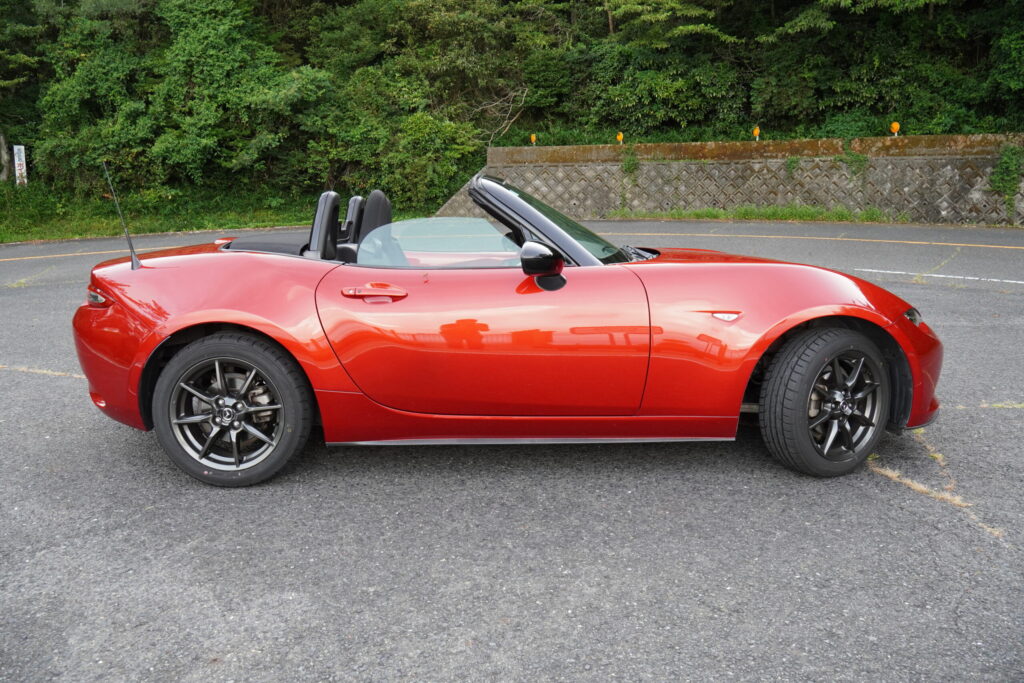
Autumn is the indisputable golden season for this journey. The blistering humidity of the Kansai summer fades into crisp morning temperatures averaging 15°C to 20°C (59°F–68°F). The foliage across Hyogo’s mountain passes ignites in brilliant hues of crimson, amber, and deep gold. But most importantly, autumn air is dense and cool—the absolute sweet spot for a naturally aspirated engine to breathe deeply, and the perfect climate to drop the soft top of a lightweight convertible like the Mazda MX-5 (known in Japan as the Mazda Roadster ND).
When you sit low to the pavement in a Mazda MX-5, feeling the mechanical precision of a short-throw 6-speed manual transmission, the relationship between driver, machine, and landscape becomes sacred. You are no longer just a spectator watching Japan pass by through double-paned train glass. You are actively carving your way through it, gear by gear.

Mazda MX-5 Coastal Drive: Exploring Awaji Island & Hyogo in Autumn—The 2-Day Itinerary: Deep Dive
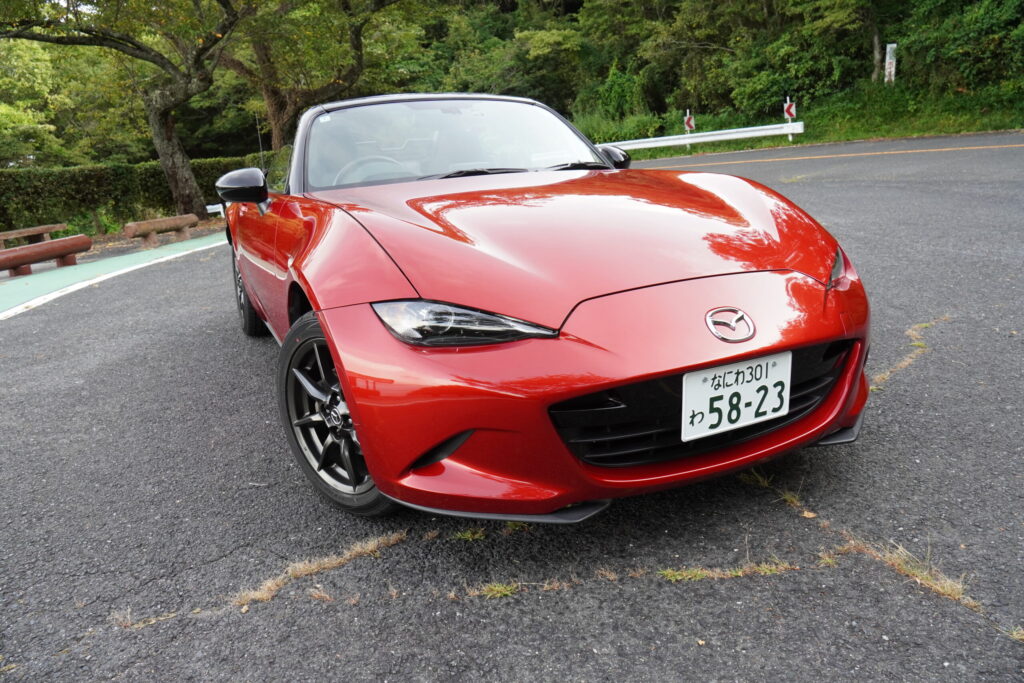
Whether you have a single weekend or a full week, driving through Hyogo and Awaji Island offers an unparalleled blend of coastal cruising and technical mountain driving. Below is the ultimate deep-dive 2-day autumn itinerary, timed to the hour, designed for maximum driving thrill, cultural depth, and visual splendor.
Day 1: The Gateway to the Inland Sea & The Western Sunset Line
08:00 AM – Departure from Osaka: Joining the Urban Veins
Your journey begins in the vibrant heart of Osaka. As you fire up the engine, the engine settles into a smooth, mechanical idle. Navigating out of Osaka via the Hanshin Expressway Route 3 (Kobe Route), you immediately experience the structural poetry of Japanese civil engineering. You run elevated above city streets, flanked by glass skyscrapers, before the urban density begins to soften as you glide past Kobe.
To your left, Osaka Bay glimmers under the morning sun; to your right, the dense green wall of Mount Rokko looms. The crisp autumn air invites you to roll down the windows or drop the top entirely. Keep the tachometer hovering around 3,000 RPM as you weave seamlessly through the light morning traffic, letting the tactile response of the MX-5’s hydraulic-like steering gear give you instant feedback from the tarmac.
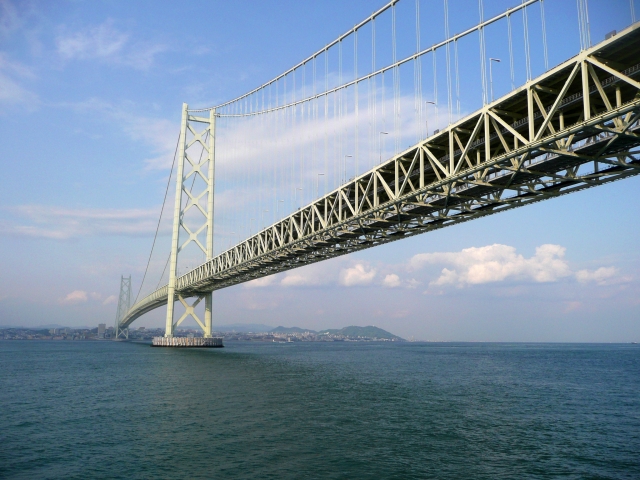
10:00 AM – Crossing the Akashi Kaikyo Bridge to Awaji Yumebutai
As you approach Tarumi, the horizon opens up dramatically. Ahead of you spans the Akashi Kaikyo Bridge—one of the longest suspension bridges in the world. Spanning nearly 4 kilometers across the turbulent Akashi Strait, crossing this engineering marvel in an open-top roadster is an unforgettable sensory high.
As the car climbs the suspension ramp, the ocean winds rush around the cabin. Below, dark blue tidal currents swirl violently, while the autumn sun reflects off the suspension cables above.
Once across, take the Awaji-Iwaya Interchange exit and make your first stop at Awaji Yumebutai (Awaji Vision Park). Designed by the world-renowned architect Tadao Ando, this complex was built on the hillside where soil had been excavated to build artificial islands in Osaka Bay (including Kansai International Airport). Ando transformed this environmental scar into a breathtaking geometric garden complex.
Walk through the Hyakudanen (100 Stepped Gardens)—a cascade of 100 square flower beds built along the incline, filled with autumn blooms facing the sea. The contrast between raw concrete, vivid autumn floral colors, and the expansive blue of the Seto Inland Sea sets the artistic tone for your trip.
01:00 PM – Coastal Route 28 & Fresh Seafood Delicacies
Heading south from Yumebutai, join Route 28, the eastern arterial coastal road of Awaji Island. The road hugs the waterline, placing you just feet away from the gently lapping waves of the Inland Sea.
Pull into a seaside shokudo (local eatery) near Sumoto for lunch. Awaji Island is historically celebrated as a Miketsukuni—a region designated since ancient imperial times to supply food to the Emperor's court in Nara and Kyoto. Order a bowl of Awaji Raw Shirasu Don (baby whitebait rice bowl), available fresh during autumn, served over warm steamed rice with raw egg yolk, grated ginger, and locally brewed soy sauce. The fish is buttery, brine-salty, and delicate, pairing perfectly with a piping hot bowl of miso soup infused with Awaji's famous sweet onions.
03:30 PM – The Awaji Sunset Line (Prefectural Route 31): The Driver's Paradise
After lunch, cut west across the island's narrow midsection via Route 46, feeling the MX-5 shift its weight through gentle countryside sweepers flanked by golden rice paddies, before intercepting Prefectural Route 31—affectionately known by Japanese car enthusiasts as the Awaji Sunset Line.
This 30-kilometer stretch of asphalt runs along the western coastline of Awaji and is one of the premier driving roads in Western Japan. As afternoon turns to golden hour, the sun dips low toward the Seto Inland Sea, casting a molten gold glow over the tarmac.
This is where the engineering balance of a sports car like the Mazda MX-5 shines:
Weight Distribution: The front-mid engine, rear-wheel-drive (FR) layout provides an ideal balance, allowing you to enter corners with surgical precision.
Tactile Feedback: The tight chassis transmits every subtle nuance of the road surface directly through your seat.
Driving Rhythm: Second gear into a tight coastal left-hander, feel the rear tires bite into the dry asphalt, roll smoothly onto the throttle, shift to third at 6,000 RPM, and let the sports exhaust note ring out off the sea walls.
Stop along the way at Keino Matsubara, a scenic beach lined with hundreds of ancient, gnarled black pine trees that have stood against sea breezes for centuries. In autumn, the contrast between the dark green pines, silver sand, and amber sunset creates a cinematic atmosphere.
06:30 PM – Sumoto Onsen & Awaji Beef Indulgence
End your day on the eastern shore at Sumoto Onsen. Check into a traditional ryokan (Japanese inn) overlooking the ocean.
After hours of driving, slide into an outdoor rotenburo (hot spring bath). The thermal, mineral-rich water melts away driving fatigue while the cool autumn sea night air chills your face.
For dinner, indulge in a multi-course kaiseki banquet highlighting Awaji Wagyu Beef. Awaji cattle are the genetic ancestors of the famous Kobe and Matsusaka beef lines. Raised in stress-free island pastures, the beef features intense intramuscular fat marbling. Sliced thin and seared on a hot volcanic stone, the meat melts on your tongue, releasing a rich flavor complemented by local sweet onion reduction.

Day 2: Mountain Ridge Passes, Vortexes & The Hyogo Mainland Run
08:30 AM – South Awaji Mountain Pass (Awa Channel Expressway & Route 25)
Wake early to the sound of ocean waves. After a breakfast of grilled mackerel, pickled plums, and steamed rice, strap into your sports car and head south toward the southern tip of the island.
Instead of taking the highway, route yourself along Prefectural Route 25, which climbs into the coastal mountains of South Awaji. Here, the landscape transitions from flat coastline to tight, technical twisties surrounded by dense foliage. In autumn, maple trees overhang the road, dropping orange leaves onto the asphalt.
The MX-5 thrives in this environment. Its low weight allows you to late-brake into downhill hairpin turns without overloading the front suspension. The pedal placement allows for heel-and-toe downshifting; a quick blip of the throttle matches engine revs seamlessly as you drop into second gear, keeping the car stable and balanced through apexes.
10:30 AM – The Naruto Whirlpools (Naruto Kaikyo)
Descend the mountain pass toward Cape Naruto. Below the Onaruto Bridge lies one of Japan’s most fascinating natural phenomena: the Naruto Whirlpools (Naruto no Uzushio).
Caused by the dramatic tide differences between the Pacific Ocean and the Seto Inland Sea passing through a narrow 1.3-kilometer strait, water rushes through at speeds up to 20 km/h, creating massive vortexes up to 20 meters in diameter.
Park at the Uzushio Observatory or take a walk along the Uzu no Michi—a glass-floored walkway built underneath the bridge structure, 45 meters directly above the roaring waters. Autumn spring tides bring some of the largest whirlpools of the year.
01:00 PM – Crossing back to Mainland Hyogo & Mount Rokko Skyline Drive
Leave Awaji Island behind as you re-cross the Akashi Kaikyo Bridge heading toward Kobe, then turn your nav system toward the Rokko Skyline Drive on mainland Hyogo.
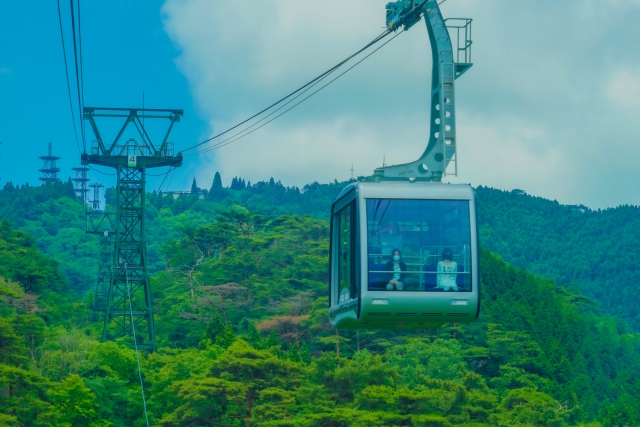
Mount Rokko towers over the city of Kobe, offering one of the most famous driving routes in Kansai. The ascent via the Rokko-Arima Ropeway Drive or the Omote-Rokko Drive features smooth pavement, well-banked elevation changes, and sharp hairpins carved directly into the mountain ridge.
As you gain altitude, the ambient temperature drops significantly. The dense canopy of Japanese maple, beech, and oak trees transforms into an ocean of deep red and gold.
Pull over at the Rokko Garden Terrace (elevation 880 meters). From this vantage point, you are treated to a sweeping panorama of Kobe Port, Osaka Bay, and on a clear autumn day, all the way across to Kansai International Airport.
04:00 PM – Arima Onsen: A Historic Mountain Retreat
Drive down the northern slope of Mount Rokko into Arima Onsen, one of Japan’s three oldest hot spring towns, with a recorded history stretching back over 1,000 years.
Park your car in the town center lot and explore the narrow, winding historic lanes on foot. The town’s rustic wooden architecture, wooden steam vents rising from the street corner, and maple trees overhanging stone footbridges feel worlds away from Osaka’s neon glow.
Try local street snacks like Tanso Senbei (thin, crispy carbonated water crackers) or steamed Onsen Manju (sweet bean paste buns) served hot out of wooden steamers.
07:00 PM – The Night Run Back to Osaka
As twilight turns into night, start your final leg back to Osaka via the Chuo Expressway. The mountain cool yields to the warm city lights.
Cruising along the highway at night in a open-top convertible, under the neon glow of Osaka’s urban canopy, offers a dramatic shift in mood. Your hands remain relaxed on the steering wheel, your mind calm and enriched by two days of pure driving freedom, technical roads, and serene autumn landscapes.
Alternative Itinerary Options
If your travel schedule is longer or shorter, adapt your Hyogo driving adventure using these patterns:
1-Day Express Run: Depart Osaka at 07:00 AM, cross Akashi Kaikyo Bridge, execute the full Western Sunset Line (Route 31) drive, enjoy a seafood lunch at Keino Matsubara, cut back across the island, and return to Osaka by 06:00 PM.
3-Day Northern Extension: Follow the 2-Day itinerary above, but on Day 2 evening, drive north from Arima toward central Hyogo to stay overnight near Takeda Castle Ruins (known as the "Castle in the Sky"). On Day 3, drive through the autumn fog of the Tajima mountain passes up to Kinosaki Onsen on the Sea of Japan coast before returning south to Osaka.
Mazda MX-5 Coastal Drive: Exploring Awaji Island & Hyogo in Autumn—Expert Advice & Cultural Nuances
Driving through rural Japan is an utterly refined experience, but it operates on cultural nuances and unspoken road etiquette that every international driver should master.
The Magic of Michi-no-Eki (Roadside Stations)
In Japan, highway rest stops and rural roadside stations are not mere gas stops with stale coffee; they are cultural hubs. Known as Michi-no-Eki (Roadside Stations), these state-sponsored facilities showcase the best of their immediate agricultural and culinary region.
When driving through Awaji Island, look out for Michi-no-Eki Uzushio or Michi-no-Eki Awaji. Here you can find:
Awaji Onion Burgers: Award-winning burgers featuring a thick slice of deep-fried, caramelized Awaji sweet onion topped with local beef patty and artisanal sauce.
Fresh Soft-Serve Ice Cream: Unique regional flavors like Awaji Milk, Citrus (Naruto Mikan), and roasted soy sauce.
Local Agricultural Treasures: Crates of fresh sweet onions, citrus fruits, and small-batch sea salt harvested from the Seto Inland Sea.
Unspoken Japanese Road Etiquette
Japanese traffic moves with remarkable politeness, quiet rhythm, and spatial awareness. Adopting these habits makes your journey seamless:
The Hazard Light Thank-You: When a driver yields to let you merge into traffic or pull out of a driveway, flash your hazard lights twice briefly. This is the universal sign of gratitude (domo) on Japanese roads.
Narrow Mountain Passes (Kukusho): Many rural roads on Awaji Island taper into single-lane tracks with designated passing pockets (daishotoku). If an oncoming car approaches, the driver closer to a passing space pulls over and flashes their headlights to yield. Pass slowly and offer a polite bow or hand gesture.
Pedestrian Priority: Japanese drivers strictly respect crosswalks. Even on quiet rural roads, if a pedestrian steps up to a crosswalk without a signal light, you must come to a complete stop.
Mazda MX-5 Coastal Drive: Exploring Awaji Island & Hyogo in Autumn—Detailed Logistics & Pre-Trip Tips
Navigating Japan’s highways in a rental car requires understanding the local highway infrastructure, fueling systems, and vehicle dynamics.
ETC Cards & Expressway Tolls
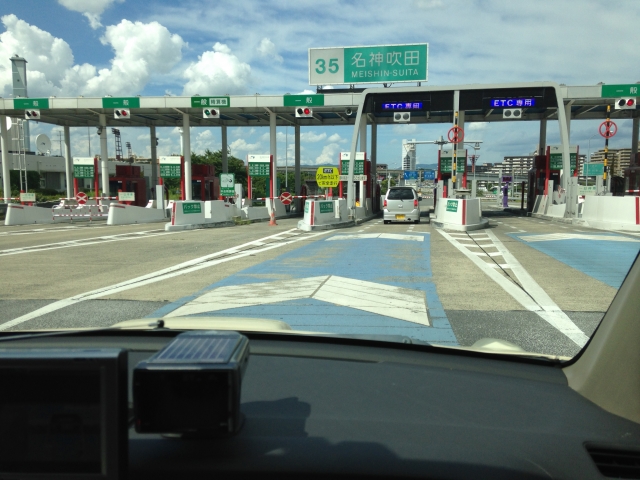
Japan's expressway network is pristine, fast, and fully gated. Tolls are collected electronically via the ETC (Electronic Toll Collection) system.
How it works: An ETC card (a smart credit card) is inserted into a dedicated reader unit usually hidden inside the glovebox or center console of your rental car.
At the Toll Gate: As you approach the expressway entrance or exit, choose the blue "ETC Only" lanes. Slow down to 20 km/h; the sensor will read your card, a chime will sound, and the barrier gate will lift automatically.
Settlement: You do not pay at the gate. When you return your car to the rental location, the staff reads the card data and settles your exact toll total in a single transaction. Always request an ETC card when renting a vehicle to save time and secure discounted toll rates.
Fueling Up: The "Mantan" Protocol
Gas stations (Gasorin Standu) in Japan are remarkably clean and efficient, divided into Full Service (Furu) and Self Service (Serufu).
At a full-service station:
Pull up to the pump, roll down your window.
Say: "Hai-oku, Mantan, Kado de" (High-octane, full tank, paying by credit card). Sports cars like the Mazda MX-5 and Toyota 86 require high-octane premium gasoline to deliver maximum power and prevent engine knocking.
The attendant will place a cloth on your window sill, fuel the car, wipe your side mirrors, and hand back your card with a bow.
Parking Mastery in Japan
Parking in Japan is strictly enforced. Street parking is virtually non-existent in cities and rare in rural areas. Always use designated parking facilities:
Times / Repark Lot Networks: Coin-operated surface lots found everywhere. You pull into a space, a small metal plate rises beneath your car after 3 minutes. When returning, type your space number into the central pay machine, pay the cash or credit amount, the plate drops, and you pull away.
Back-In Parking Culture: In Japan, reversing into parking spaces is standard practice. It ensures maximum safety when pulling out into traffic later.
Mazda MX-5 Coastal Drive: Exploring Awaji Island & Hyogo in Autumn—Comprehensive FAQ
Got questions before taking the wheel in Western Japan? Here are answers to the most common queries raised by international drivers:
What exact license paperwork do I need to drive legally in Japan?
To drive legally in Japan, you must present three physical documents at the rental counter:
Your original driver’s license issued by your home country.
A valid International Driving Permit (IDP) issued under the 1949 Geneva Convention on Road Traffic. (Note: Permits issued under the 1968 Vienna Convention are NOT accepted in Japan).
Your physical Passport.
Drivers holding licenses from specific countries that do not issue Geneva 1949 IDPs (such as Switzerland, Germany, France, Taiwan, Belgium, and Monaco) must instead present an official Japanese translation of their native driver's license, prepared by the Japan Automobile Federation (JAF) or their nation's embassy in Japan.
Is it difficult to adjust to driving on the left side of the road?
Driving on the left side of the road in a right-hand drive (RHD) vehicle feels natural within 15–20 minutes. Because the driver's seat is on the right side of the vehicle, your body naturally stays centered relative to the lane lines. Japanese drivers are calm and predictable, speed limits are reasonable, and road markings are exceptionally clear.
Should I choose a Manual Transmission (MT) or Automatic Transmission (AT)?
If you are comfortable operating a manual clutch, choosing a Japanese sports car (JDM) with a manual transmission adds unmatched engagement when driving mountain passes like Mount Rokko or the coastal sweepers of Awaji. However, if you prefer a relaxed cruise, modern automatic transmissions with paddle shifters offer seamless performance.
How are road conditions in autumn? Do I need winter tires?
Autumn weather across Osaka, Hyogo, and Awaji Island is clear, dry, and mild. Road surfaces remain fully clear of ice or snow through October and November. Standard high-performance summer tires or all-season tires offer optimum grip during this season.
Mazda MX-5 Coastal Drive: Exploring Awaji Island & Hyogo in Autumn—The Final Thoughts
The true magic of Japan does not exist in a travel guidebook, nor is it visible from the window of a bullet train travelling at 300 kilometers per hour.
It is found on the quiet, winding asphalt of Prefectural Route 31 as the autumn sun paints the Seto Inland Sea in shades of fire and gold. It is found in the mechanical click of shifting into 3rd gear along the crisp ridge lines of Mount Rokko, the smell of salt spray mixing with autumn air, and the sheer freedom of having the open road completely to yourself.
When you are ready to stop observing Japan and start driving it, your machine will be waiting. At Omoshiro Rent-a-Car Osaka Central, we specialize in putting true driving enthusiasts into meticulously maintained, iconically spec'd sports cars—from the ultra-responsive Mazda MX-5 Roadster (ND) to the perfectly balanced Toyota 86 and Subaru BRZ.
Skip the ordinary rental commuter cars. Elevate your Japanese journey into an unforgettable motoring adventure. Reserve your sports car today at Omoshiro Rent-a-Car Osaka Central, drop the top, turn the key, and discover the Secret Japan that lies just beyond the horizon.