
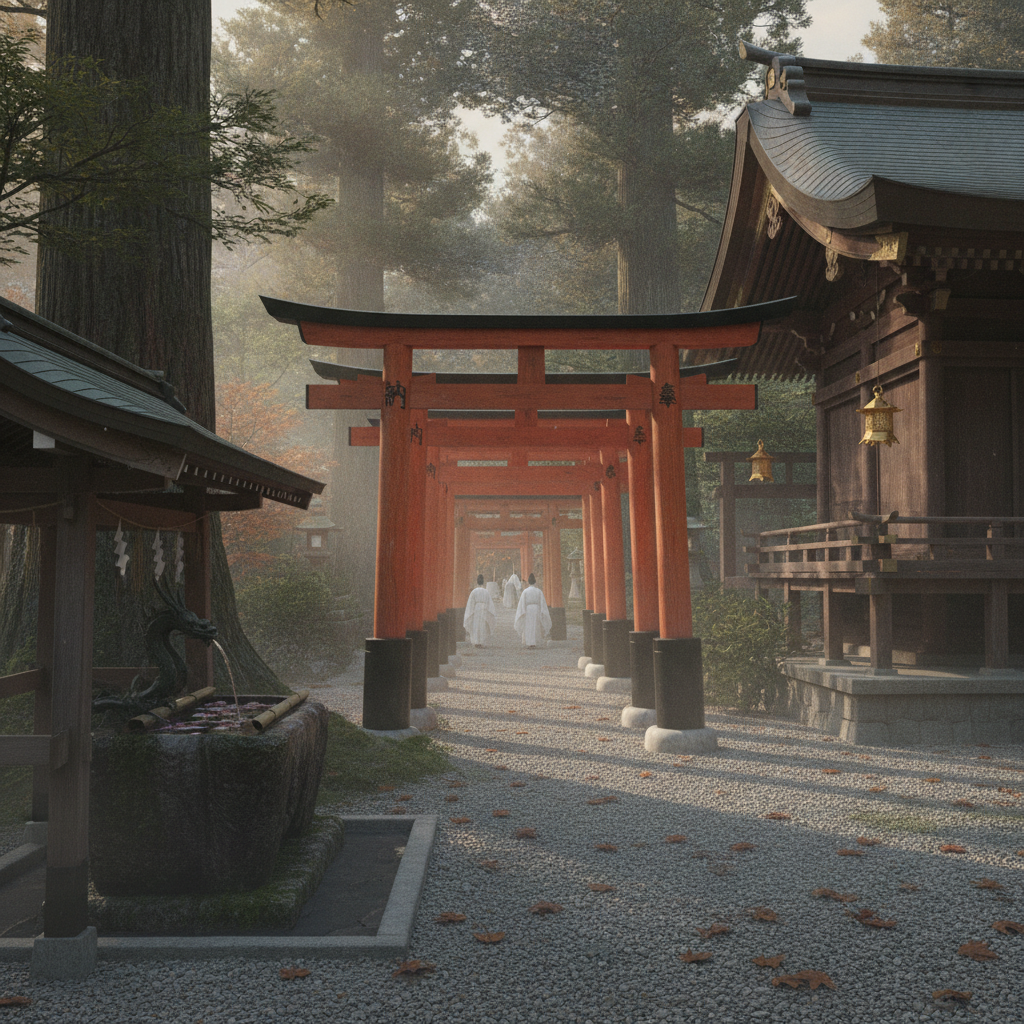
Nara Shrine Tour, Power Spots, Matchmaking, Financial Fortune - The Philosophy of Driving in Japan
For years, my life was dictated by the rhythmic clickety-clack of steel wheels on rails, the precise timing of departures and arrivals, and the controlled environment of a train conductor for Kintetsu Railways. I saw countless landscapes flash by, observed the ebb and flow of passengers, and understood the unparalleled efficiency of Japan's public transport system. Yet, with every passing station, a yearning grew within me – a desire to break free from the tracks, to truly immerse myself in the untamed beauty and hidden depths that lie just beyond the reach of the bullet train and local lines. It was this very yearning that led me from the conductor's uniform to the driver's seat, from the structured world of railways to the boundless freedom of the open road.
Why choose the car, you ask, especially in a country renowned for its pristine train network? The answer, my friends, lies in the concept of “Secret Japan.” While trains connect our bustling cities with remarkable speed and comfort, they merely skim the surface, offering a curated glimpse of the nation. The true heart of Japan, its most ancient secrets, its most potent power spots, and its most breathtaking vistas, are often tucked away in mountain valleys, nestled beside forgotten rivers, or perched on remote coastal cliffs – places simply inaccessible by rail. Public transport, for all its convenience, funnels you into predetermined paths, herding you along well-trodden tourist trails. But with a car, specifically a spirited JDM machine like the Toyota 86 or its Subaru BRZ counterpart, you unlock an entirely different dimension of travel.
Imagine, for a moment, the unparalleled thrill of navigating the winding mountain passes, the asphalt unraveling like a black ribbon before your wheels, the crisp air rushing through your open window as the engine hums a symphony of precision engineering. From Osaka, the vibrant heart of Kansai, a car transforms your journey into an odyssey. No more rigid schedules, no more crowded platforms, no more compromises on where your curiosity might lead. You dictate the pace, you choose the detours, and you discover the unexpected. This isn't just about getting from point A to point B; it's about the joyous journey itself, the exhilaration of control, the intimacy with the landscape, and the profound connection you forge with a country that willingly reveals its hidden wonders to those brave enough to explore beyond the conventional.
In the coming pages, we're not just planning a trip to Nara; we're orchestrating an immersion into its spiritual core, a quest for good fortune and lasting connections, all powered by the sheer joy of driving. Forget the well-trodden paths around Nara Park. Our journey will delve into the profound energies of ancient shrines, seeking out legendary spots for prosperity and love, often accessible only via roads that beg to be driven with passion. This is for the adventurer, the connoisseur of culture, and the automotive enthusiast who understands that the soul of a journey is often found not in the destination, but in the exhilarating miles that lead you there. Prepare to discover a Japan few ever see, a Japan that truly comes alive when experienced from behind the wheel of your very own JDM legend.
Nara Shrine Tour, Power Spots, Matchmaking, Financial Fortune - The 2-Day Itinerary: Deep Dive

This isn't merely a travel plan; it's a meticulously crafted two-day odyssey designed to awaken your senses, thrill your spirit, and connect you with the profound spiritual energies of Nara. Forget the usual tourist traps; we're embarking on a quest for authentic power spots, ancient shrines, and the pure exhilaration of driving a JDM legend, specifically an 86 or BRZ, through Japan’s breathtaking landscapes. From the bustling streets of Osaka to the serene, mist-shrouded peaks of Yoshino and the hallowed grounds of Nara, prepare for an adventure that will forever redefine your perception of Japan.
Day 1: Osaka to the Mystical Peaks of Yoshino & Tamaki Shrine (The Deep Spiritual Dive)
Our journey begins in the vibrant metropolis of Osaka, the perfect launchpad for an automotive adventure. Picture this: the morning sun glinting off the polished curves of your chosen steed – an 86 or BRZ, its boxer engine eager to sing its distinctive tune. The low-slung, balanced chassis and the immediate response of the steering wheel feel like an extension of your very intent. This isn't just a car; it's your key to unlocking Japan’s hidden spiritual gems.
8:00 AM - Depart Osaka: The Open Road Beckons
With a full tank of premium unleaded and the navigation set for the Yoshino region, we peel away from Osaka’s urban sprawl. The initial stretch along the Hanshin Expressway might be busy, but it’s a necessary prelude. Feel the immediate, direct connection to the road through the car's steering – a sharp contrast to the detached experience of a train. Soon, we transition to the Nishi-Meihan Expressway, then peel off onto routes that become progressively narrower, greener, and far more engaging. The city lights fade in the rearview mirror, replaced by the lush, verdant tapestry of the Japanese countryside.
As we approach the foothills of the Kii Mountains, the roads begin their dance. Smooth, sweeping curves give way to tighter hairpins, a true test of the 86/BRZ’s renowned handling. The engine note deepens slightly as you downshift for a corner, the short-throw shifter a joy to engage. This is where the car truly shines, a ballet of precision and control. The air, once heavy with city humidity, now carries the fresh scent of cedar and damp earth, hinting at the ancient forests we are about to enter.
9:30 AM - Scenic Drive into Yoshino: Prelude to Power
The drive into the Yoshino region is an experience in itself. The roads become serpentine, carving paths through dense forests where sunlight dapples through the canopy. This is not just a drive; it's a meditation. The focus required to navigate these roads enhances your connection to the landscape. We're heading deep into the heart of Shugendo, Japan's ancient mountain asceticism, and the very air feels charged with history and spiritual energy.
You'll notice the distinct aroma of wood and forest minerals. Keep an eye out for small, unassuming shrines tucked away by the roadside, marked by weathered torii gates. These are minor veins of the spiritual network that permeates this region. The 86/BRZ, with its low center of gravity and communicative chassis, makes these winding roads an absolute delight. You feel every nuance of the road surface, every subtle gradient, allowing for an incredibly engaging and responsive drive.
11:00 AM - Arrive at Tamaki Shrine: The Apex of Spiritual Power (縁結び & 金運)
Our destination for the morning is Tamaki Shrine (玉置神社), a place of such profound spiritual power that it's often referred to as one of Japan's most significant 'power spots.' Tucked away in the very heart of the Yoshino-Kumano National Park, it’s a destination that unequivocally demands a car. Public transport simply cannot reach this secluded sanctuary.
The drive up to Tamaki Shrine is legendary among enthusiasts and spiritual seekers alike. The final approach involves a narrow, winding road that tests both driver and machine. But oh, the reward! As you park the 86/BRZ after a thrilling ascent, the silence is profound, broken only by the rustling of ancient trees and the chirping of unseen birds. The air here is noticeably different – crisp, clean, and imbued with an almost palpable energy. Geologically, this area sits atop a convergence of tectonic plates, believed by many to amplify the earth's natural energies, making it a true spiritual vortex.
Tamaki Shrine itself is ancient, believed to have been founded over 2,000 years ago. Its main deity is Tamaki Okami, a kami associated with the mountains and nature's raw power. But for those seeking specific blessings, the shrine is particularly potent. It’s revered for 縁結び (Enmusubi - matchmaking and fostering good relationships) and 金運 (Kin-un - financial fortune). The spiritual energy here is not just for grand wishes; many visitors come seeking clarity, a realignment of their path, and a profound sense of inner peace.
Wander through the ancient cedar forest surrounding the shrine, where trees with massive, gnarled trunks stand as silent sentinels, some over 3,000 years old. These sugi (cedar) trees are considered sacred and are power spots in their own right. The main hall, with its intricate carvings and traditional architecture, blends seamlessly into the natural environment. Take your time. Breathe deeply. Touch the ancient wood. Allow the pervasive calm and power of this place to wash over you. The colors here are overwhelmingly natural – deep greens of the moss, the rich browns of aged wood, the subtle glint of sunlight on the shrine's bronze elements. This is Secret Japan at its most powerful and pristine.
1:00 PM - Lunch with a View: Local Delicacies of Yoshino
After absorbing the profound energies of Tamaki Shrine, your senses will be buzzing, and your stomach rumbling. We’ll descend slightly from the shrine, making our way to a local eatery known for its simple yet exquisite Yoshino cuisine. This isn't a Michelin-starred restaurant; it's a family-run establishment, perhaps a humble soba or udon shop, that utilizes locally sourced ingredients. The taste of freshly made noodles, perhaps with wild mountain vegetables (sansai) picked from the surrounding slopes, will be incredibly satisfying. The flavors are clean, honest, and reflect the purity of the environment. Imagine a steaming bowl of kuzu-udon, made with local Yoshino kuzu starch, offering a uniquely smooth and delicate texture. The view from such an establishment often overlooks a valley, a river, or terraced rice fields, offering a tranquil backdrop to your meal. This is where you connect with the heart of rural Japan, far from any tourist brochure.
2:30 PM - Scenic Drive & Local Exploration: The Essence of Yoshino
With renewed energy, we continue our exploration of the Yoshino region. Instead of rushing, we embrace the philosophy of the drive. The 86/BRZ is not just a mode of transport; it's a companion for discovery. Take some time to drive along the scenic roads around the Yoshino River, perhaps stopping at a roadside lookout point. The rivers here run clear, often a brilliant emerald green, cascading over rocks worn smooth by centuries of flow. The engine purrs contentedly as you engage in a series of gentle curves, the chassis communicating every subtlety of the tarmac.
This is a chance to truly appreciate the geological majesty of the Kii Peninsula, a region dominated by ancient volcanic activity and subsequent erosion, creating the dramatic peaks and valleys you’re driving through. The roads are a testament to human ingenuity, carved into a landscape that feels eternally wild. You might stumble upon a small, independent shop selling Yoshino’s renowned cedar products – perhaps a delicate pair of chopsticks or a handcrafted box. Or perhaps you'll find a tea house offering local green tea, its aroma mingling with the fresh mountain air.
4:00 PM - Depart Yoshino for Nara City Vicinity: Transition to Comfort
As the afternoon wanes, we begin our journey towards the vicinity of Nara City. We're not diving straight into the urban hustle. Instead, we’ll aim for a ryokan or a cozy inn located just outside the immediate city center, perhaps in the tranquil hills or by a river, offering a more peaceful evening after a day of intense spiritual and driving experiences. The drive is a mix of winding rural roads and eventually, more direct routes as we near the ancient capital.
The transition is subtle: the wildness of Yoshino slowly gives way to the more cultivated landscapes surrounding Nara. The driving remains engaging, but less demanding. As the sun begins its descent, painting the sky in hues of orange and purple, the 86/BRZ handles the gentle undulations with effortless grace. The interior of the car, though focused on driving, remains a comfortable cocoon, allowing you to reflect on the day’s profound encounters. The fading light casts long shadows across the fields, creating a serene, almost melancholic beauty.
6:00 PM - Check-in & Evening Relaxation: The Ryokan Experience
Arriving at your chosen accommodation, perhaps a traditional Japanese ryokan, is a delightful transition. After parking the 86/BRZ, you’ll be greeted with warm hospitality. Kick off your shoes, slip into a comfortable yukata, and prepare for an evening of relaxation. The best ryokans offer an onsen (hot spring bath), a truly Japanese way to unwind. Soaking in the mineral-rich waters, with the cool evening air on your face, is the perfect antidote to a day of intense driving and spiritual exploration. The day's accumulated tensions simply melt away, replaced by a profound sense of calm.
7:30 PM - Traditional Dinner: A Feast for the Senses
Dinner at a ryokan is an event in itself. A multi-course kaiseki meal, exquisitely prepared and artfully presented, is a feast for both the eyes and the palate. Each delicate dish showcases seasonal ingredients, locally sourced whenever possible. The subtle flavors, the fresh textures, and the beautiful arrangements are a testament to Japan’s culinary artistry. Expect fresh sashimi, perfectly grilled fish, delicate tempura, and an array of colorful side dishes. This is not just food; it’s a cultural experience, a celebration of the region’s bounty. Enjoy the quiet ambiance, perhaps with a glass of local sake, and recount the day’s adventures.
9:30 PM - Stargazing & Reflection: The Tranquility of Nara
After dinner, take a moment to step outside. Away from the city lights, the stars in the Nara night sky can be surprisingly brilliant. The silence is profound, broken only by the chirping of insects. This is a moment for quiet reflection, for processing the ancient energies of Tamaki Shrine, and for anticipating the spiritual discoveries of the next day. The hum of the 86/BRZ’s engine is now a distant memory, replaced by the deep tranquility of the Japanese countryside.
Day 2: Nara City's Sacred Heart (縁結び & 金運) & Return to Osaka
Awake refreshed, ready to delve into the heart of Nara City's spiritual landscape. Today, we focus on the concentrated power of Nara's most revered sites, specifically those famed for matchmaking and financial fortune. And of course, the journey to and from these sites will be an engaging drive.
8:00 AM - Traditional Japanese Breakfast & Departure
A traditional Japanese breakfast, often featuring grilled fish, rice, miso soup, and an array of pickles, will energize you for the day ahead. After a final dip in the onsen, we check out, eager to get back behind the wheel of the 86/BRZ. The engine awakens with a familiar, eager growl, a promise of the spirited drive to come. We head towards the main shrine area of Nara, which, while more accessible, still offers delightful driving opportunities on its periphery and approaches.
9:00 AM - Arrive at Kasuga Taisha & Surroundings: A Spiritual Hub
Navigating the approach to Kasuga Taisha in the 86/BRZ offers a blend of urban precision and natural immersion. While the main parking areas are well-marked, the drive through the outer edges of Nara Park, with deer gracefully roaming near the road, is a uniquely Japanese experience. The roads leading to the shrine are lined with ancient stone lanterns, a mystical prelude to the sanctuary ahead. Parking the 86/BRZ, you step out and immediately feel a different kind of energy from Tamaki Shrine – here, it's grander, more ancient, and deeply interwoven with imperial history.
Kasuga Taisha (春日大社) is one of Japan's most important Shinto shrines, a UNESCO World Heritage site renowned for its brilliant vermilion architecture and its thousands of bronze and stone lanterns. Founded in the 8th century, it was the tutelary shrine of the powerful Fujiwara family and plays a central role in Nara's spiritual identity. The deer that roam freely are considered messengers of the gods, adding to the enchanting atmosphere.
Geologically, Kasuga Taisha is nestled at the foot of Mount Mikasa (also known as Mount Kasuga), a sacred mountain that has been worshipped since ancient times. This geographical feature is not just picturesque; it is believed to channel powerful natural energies directly to the shrine grounds, making it a profound power spot.
9:30 AM - Explore Kasuga Taisha & Meoto Daikokusha (縁結び)
Begin your exploration by walking the moss-covered path leading to the main shrine buildings, flanked by an astonishing array of stone lanterns. The scent of ancient wood and incense hangs subtly in the air. The vibrant vermilion of the shrine buildings, contrasted with the dark green of the surrounding forest, is a visual feast. Inside the main complex, the sheer number of hanging bronze lanterns creates a mesmerizing, otherworldly glow.
For those seeking 縁結び (Enmusubi - matchmaking and marital harmony), your focus should be the Meoto Daikokusha Shrine (夫婦大國社), a small but incredibly potent sub-shrine within the Kasuga Taisha complex. This is the only shrine in Japan dedicated to Daikoku-sama and his wife, Enmusubi no Kami. It's a hugely popular spot for couples seeking to strengthen their bond and for singles hoping to find their soulmate. The atmosphere here is one of hopeful anticipation and gentle reverence. Purchase an ema (wooden prayer tablet) and inscribe your wishes for love and relationships, then hang it among the thousands of others. The collective energy of these sincere prayers creates a powerful field of intention.
11:00 AM - Wakamiya Shrine & Futatsu-Bashi (金運)
Next, we head to Wakamiya Shrine (若宮神社), another significant sub-shrine of Kasuga Taisha. While not exclusively for financial fortune, Wakamiya Shrine is known for its blessings related to prosperity, good harvest, and warding off misfortune – all elements crucial for robust 金運 (Kin-un - financial fortune). The drive or walk to Wakamiya Shrine is equally picturesque, taking you deeper into the tranquil forest. The annual Kasuga Wakamiya On-Matsuri, a grand festival held here, highlights its importance in the spiritual calendar.
Keep an eye out for Futatsu-Bashi (二ツ橋 - Twin Bridges), a lesser-known but historically significant spot nearby. It's believed that crossing these twin bridges brings good fortune and connects you to the blessings of the shrine. It’s a subtle but meaningful ritual for those in the know, adding another layer to your quest for financial prosperity.
12:30 PM - Lunch in Nara City: Modern Flavors, Ancient Setting
After a morning immersed in profound spiritual energy, it's time for lunch. Nara City offers a delightful contrast to the remote Yoshino. While still steeped in history, you can find a wider range of culinary options. Seek out a restaurant that offers local specialties like kakinoha-zushi (persimmon leaf sushi), a unique Nara delicacy where sushi is wrapped in persimmon leaves for preservation and flavor. Or perhaps a modern café serving contemporary Japanese fusion with a view of the five-story pagoda of Kofuku-ji in the distance. The vibrant flavors and refined presentation will be a welcome sensory experience after the quiet reverence of the shrines.
2:00 PM - Scenic Drive & Departure from Nara: Embracing the Horizon
With blessings for love and fortune secured, it's time to begin our return journey to Osaka. But not without one more exhilarating drive. We'll take a route that allows for a final appreciation of Nara's unique landscape. Instead of the most direct expressway, we’ll opt for a scenic detour, perhaps along a national route that winds through the hills bordering Nara and Osaka. The 86/BRZ, having performed admirably through mountain passes and city approaches, now glides effortlessly, its engine a familiar, comforting presence.
This final leg of the drive is an opportunity to reflect. The roads here might be broader than Yoshino’s hairpin turns, but they still offer a delightful rhythm of gentle curves and elevation changes. The late afternoon sun illuminates the countryside, painting the rice paddies and distant mountains in a golden glow. The smooth tarmac beneath the 86/BRZ's tires allows for a more relaxed yet still connected driving experience, a graceful transition from the ancient past to the bustling present.
The sounds within the car are subtle yet engaging: the controlled hum of the tires, the gentle whine of the gearbox, and the distinctive thrum of the boxer engine – a mechanical heartbeat accompanying your journey. The visibility from the 86/BRZ is excellent, allowing you to soak in every last detail of the passing scenery. As we rejoin the expressway back towards Osaka, the city skyline slowly emerges on the horizon, a beacon marking the return to modern life, but with a soul enriched by ancient wonders and the thrill of the open road.
4:30 PM - Arrive Back in Osaka: Memories Made
As you pull back into Osaka, perhaps returning the 86/BRZ to its home base, the vibrant energy of the city feels different. You carry with you not just souvenirs, but vivid memories: the scent of ancient cedar at Tamaki Shrine, the vibrant vermilion of Kasuga Taisha, the feel of the 86/BRZ carving through a mountain pass, the taste of local delicacies, and a newfound sense of connection to Japan’s profound spiritual heritage. This journey has been more than a trip; it has been an adventure, a spiritual quest, and a testament to the unparalleled joy of driving in Japan.
Nara Shrine Tour, Power Spots, Matchmaking, Financial Fortune - Expert Advice & Cultural Nuances
Beyond the itinerary, a truly immersive Japanese road trip requires an understanding of its unique cultural landscape. As a former train conductor who’s traversed these lands extensively by rail and now by road, I can offer insights that go beyond the typical guidebooks, ensuring your JDM adventure is as smooth as it is thrilling.
The Enchantment of Michi-no-Eki: Japan's Roadside Stations
Forget the soulless rest stops of other nations. Japan’s Michi-no-Eki (道の駅), or “Roadside Stations,” are cultural hubs, veritable treasure groves that epitomize local pride and charm. These aren't just places to refuel and use a spotless restroom; they are celebrations of the region they inhabit. Pulling your 86/BRZ into a Michi-no-Eki is like entering a mini-festival.
Here, you'll discover local agricultural products – fresh, seasonal fruits and vegetables often unavailable in city supermarkets. Imagine picking up incredibly sweet local persimmons from Yoshino or unique citrus from Wakayama. Many also feature local artisanal crafts, from delicate pottery to intricate woodworking. The food courts are often a highlight, serving regional specialties far superior to generic fast food. Look for limited-edition snacks (omiyage) that make perfect souvenirs. They are also excellent places to stretch your legs, perhaps with a soft-serve ice cream flavor unique to that specific area, like a green tea or kuzu-flavored treat in Nara. Engage with the friendly staff; they are often local residents passionate about their region, happy to share tips on hidden gems nearby. They are mini-cultural embassies, and a vital part of the Japanese road trip experience.
Unearthing Hidden Culinary Gems: Eating Like a Local
While I've mentioned some local delicacies, truly eating like a local means venturing beyond the obvious. My years as a conductor, and now as a driver, have taught me where to find the real flavors. The best eateries are often unassuming, tucked away on side streets, with handwritten menus and a loyal local clientele. Look for places with a single, highly specialized dish – a noodle shop that only serves udon, a small eatery focusing solely on tonkatsu (fried pork cutlet), or a tiny sushi bar run by an elderly couple.
These establishments prioritize quality and tradition over fanfare. The proprietors often source their ingredients from nearby farms or fishermen, ensuring peak freshness. Don't be shy; even with a language barrier, a simple “Oishii!” (Delicious!) and a gesture of appreciation will be warmly received. These are the places where you taste the true soul of Japanese cooking, unadulterated and deeply authentic. My advice: when you spot an 86 or BRZ, or any well-maintained JDM car, parked outside a modest-looking eatery, chances are you've found a local favorite. Fellow enthusiasts often know where the good food is!
Mastering the Japanese Road: Driving with Awareness
Driving in Japan, while generally safe and orderly, has its nuances. Here are a few expert tips:
- Left-Hand Traffic: Japan drives on the left. If you're from a right-hand traffic country, give yourself time to adjust. The 86/BRZ’s precise steering and compact size make this transition easier.
- Speed Limits: Japan’s speed limits are lower than many Western countries (typically 40-60 km/h in urban areas, 80-100 km/h on expressways). Strict enforcement means vigilance is key.
- Road Conditions: Roads are impeccably maintained, even in rural areas. However, mountain passes can be narrow and winding, especially those leading to places like Tamaki Shrine. Drive defensively, anticipate blind corners, and respect the natural environment. The 86/BRZ, with its excellent brakes and responsive handling, is perfectly suited for these challenges.
- Toll Roads: Most expressways are toll roads. The ETC card (Electronic Toll Collection) is invaluable for seamless travel (more on this later).
- Parking: Parking in cities can be tight and expensive. Look for multi-story car parks. In rural areas, shrine parking is usually well-marked. Always pay attention to signage.
- Wildlife: Especially in mountainous regions like Yoshino and around Nara Park, be aware of deer, wild boar, and monkeys crossing the road, particularly at dawn and dusk. A sudden encounter with a deer while driving your 86/BRZ on a spirited run is best avoided.
- Courtesy: Japanese drivers are generally courteous. Flash your hazard lights briefly as a “thank you” when someone lets you merge or pass.
Embracing these cultural and practical tips will not only enhance your driving experience but also deepen your appreciation for Japan’s unique rhythm and etiquette. It’s about becoming part of the landscape, not just passing through it.
Nara Shrine Tour, Power Spots, Matchmaking, Financial Fortune - Detailed Logistics & Pre-Trip Tips
Preparing for your JDM adventure to Nara requires a few practical considerations. My experience, both on and off the tracks, has taught me that meticulous planning paves the way for unforgettable journeys. Let's delve into the nitty-gritty to ensure your drive is exhilarating and hassle-free, especially for 2026 travel.
Navigating Japan's Roads in 2026: The ETC Advantage
Japan's road infrastructure is world-class, but its expressway system relies heavily on toll roads. For seamless travel, an ETC (Electronic Toll Collection) card is not just a convenience; it's a necessity. In 2026, cashless transactions are even more prevalent, and ETC lanes are often faster and less congested. When renting your 86/BRZ, ensure you also rent an ETC card. It's a small plastic card inserted into a reader in the car. As you approach an ETC lane (clearly marked in purple), the barrier will automatically lift, deducting the toll from the card. No fumbling for cash, no language barriers at the toll booth – just smooth, uninterrupted progress, keeping the flow of your spirited drive alive.
Without an ETC card, you'll need to use the green-marked general lanes, take a ticket upon entry, and pay cash or credit card upon exit. While manageable, it breaks the rhythm, especially when you're savoring the responsive handling of your 86/BRZ on an open stretch of road.
Fueling Up: The "Mantan" Ritual
Japanese gas stations are incredibly efficient and customer-service oriented, though they might operate a little differently from what you're used to. Many are full-service, especially outside major cities. When you pull up in your 86/BRZ, an attendant will likely greet you with a bow. The magic word for “full tank” is "Mantan" (満タン). You can specify "regular" (レギュラー - regu-raa) or "high-octane" (ハイオク - hai-oku). For a performance car like the 86/BRZ, high-octane is recommended for optimal performance and engine health. The attendant will often clean your windows, check your tire pressure, and even offer to throw out your trash – a testament to Japan’s legendary hospitality. Be sure to fuel up before heading into truly remote areas like the deep Yoshino mountains, as stations become sparse.
Parking with Precision: Tips for City & Shrine
Parking in Japan, particularly in urban centers and at popular tourist sites, demands precision. Spaces are often compact. Your 86/BRZ, with its nimble dimensions, is well-suited for this. In cities, look for multi-story car parks (立体駐車場 - rittai chushajo) which are common and efficient. Prices are usually displayed per hour or for a fixed period. At shrines, dedicated parking lots are typically available, often requiring a small fee. Always adhere to signage and avoid parking illegally – Japanese traffic enforcement is strict. Remember, the tighter the spot, the more satisfying it is to perfectly execute a reverse park in your JDM machine!
The Exhilaration of JDM (MT) Cars: More Than Just Driving
Driving a JDM manual transmission (MT) car like the 86 or BRZ in Japan is an experience that transcends mere transportation. It's a profound connection to the road, the machine, and the very spirit of Japanese automotive culture. The short-throw shifter, the precise clutch engagement, and the immediate response of the engine to your every input transform every twist and turn into a dance. As a former train conductor, I appreciate the intricate mechanics, but as a driver, I revel in the visceral engagement.
An 86/BRZ isn't about raw, brute power; it's about balance, feedback, and the sheer joy of driver involvement. Its naturally aspirated boxer engine delivers a linear power band that sings as you climb the revs, perfectly matched to the winding roads of Nara. Heel-and-toe downshifts before a hairpin bend, perfectly executed, are a symphony of control and skill. This isn't just driving; it's an art form, and Japan's roads are your canvas. If you have the confidence, opting for an MT truly unlocks the soul of these incredible machines and amplifies every moment of your journey.
Nara Shrine Tour, Power Spots, Matchmaking, Financial Fortune - Comprehensive FAQ
Embarking on a Japanese road trip naturally brings questions. Here are clear, concise answers to some of the most common inquiries to ensure your drive is as smooth and worry-free as possible.
Q: Do I need an International Driving Permit (IDP) to drive in Japan?
A: Yes, absolutely. To drive in Japan, you will generally need three documents: your valid international driving permit (IDP) issued under the 1949 Geneva Convention, your original driver's license from your home country, and your passport. It's crucial that your IDP is issued by a country that is a signatory to the 1949 Geneva Convention. These documents must be carried with you at all times while driving. Please ensure your IDP is issued by a legitimate authority in your home country before you travel.
Q: What about insurance?
A: When renting a car in Japan, comprehensive insurance is typically mandatory and included in the rental package, or offered as an essential add-on. This usually covers third-party liability, property damage, and vehicle damage (with an excess/deductible). It's always wise to opt for additional coverage, such as a Collision Damage Waiver (CDW) or Non-Operation Charge (NOC) waiver, to minimize your financial liability in case of an accident. Always confirm the exact coverage with your rental agency before signing the agreement.
Q: I'm worried about driving a manual transmission (MT) JDM car. Is it difficult?
A: If you are comfortable driving a manual transmission in your home country, adjusting to an MT JDM car like the 86 or BRZ should not be overly difficult, aside from adapting to the left-hand drive setup. Japanese roads are well-maintained, and traffic flow is generally orderly. The 86/BRZ is renowned for its user-friendly manual gearbox and forgiving clutch, making it an excellent platform for engaging driving. If you haven't driven MT in a while, or never on the left side of the road, consider booking a short practice session upon arrival before heading out on your full adventure. The reward of driving an MT car in Japan is truly immense, offering an unparalleled connection to the vehicle and the road.
Q: How are winter road conditions, especially in mountain areas?
A: Winter driving in Japan's mountainous regions, including parts of Yoshino, can present challenges. While Nara City itself rarely sees heavy snow, higher elevations can receive significant snowfall from December to March. Rental cars are usually equipped with all-season tires, but if you plan to drive in areas with expected snow or ice, you must request snow tires (スタッドレスタイヤ - studless tire) or snow chains (チェーン - chain) from your rental agency. It is illegal to drive on snowy or icy roads without appropriate traction devices. Always check local weather and road conditions before embarking on a winter mountain drive. Safety first, enjoyment second.
Q: What if I don't speak Japanese?
A: While many signs have English translations, especially in tourist areas and on expressways, a basic phrasebook or a translation app can be incredibly helpful for interacting at gas stations, Michi-no-Eki, and local eateries. Most car rental agencies have English-speaking staff, and navigation systems often offer English voice guidance. Don't let a language barrier deter you; Japanese people are incredibly polite and often go out of their way to assist foreign visitors.
Nara Shrine Tour, Power Spots, Matchmaking, Financial Fortune - The Final Call: Your Adventure Awaits
You’ve journeyed with me through ancient forests, felt the profound energies of hidden shrines, sought blessings for love and fortune, and experienced the sheer exhilaration of navigating Japan’s winding roads in a legendary JDM machine. This isn't just a fantasy; it's a tangible adventure waiting to be seized. The mist-shrouded mountains, the vibrant vermilion of Kasuga Taisha, the delicate flavors of local cuisine, and the responsive roar of an 86 or BRZ are calling to you.
Forget the predictable, leave the crowds behind, and embrace the unparalleled freedom of exploring Japan on your own terms. As a former Kintetsu conductor who now lives and breathes JDM culture, I can assure you there’s no better way to discover the true heart of this incredible nation. From the moment you grip the leather-wrapped steering wheel to the moment you return, brimming with unforgettable memories, this will be more than just a trip – it will be a transformation.
Are you ready to write your own chapter in Japan’s vast, thrilling narrative? Are you ready to feel the asphalt beneath your wheels, the wind in your hair, and the power of ancient spirits guiding your way? Then your next step is clear. For an authentic, high-octane Japanese road trip experience, where you can choose from a fleet of meticulously maintained JDM, MT, and custom cars like the 86 and BRZ, look no further. Ignite your adventure and book your dream car today with Omoshiro Rent-a-Car Osaka Chuo. Your unforgettable journey to Nara's mystical shrines and power spots begins now.
