
Awaji Island Road Trip: The Philosophy of Driving in Japan
As a former train conductor for Kintetsu Railway, I spent years embedded in the heart of Japan's world-famous public transit network. I know the rhythm of the rails like the back of my hand—the rhythmic clack-clack over sleeper switches, the unmatched precision of timetables calculated down to the second, and the undeniable elegance of gliding through the Kansai region aboard a pristine express train. Japan’s rail system is a miracle of modern engineering, and for moving vast numbers of people between dense urban nodes like Osaka, Kyoto, and Kobe, it is entirely unrivaled.
However, after stepping off the driver’s platform and spending years exploring the archipelago behind the wheel of sports cars, I came to a profound realization: the train shows you the Japan that was planned for the masses, but a sports car unlocks the Secret Japan—the untamed, authentic, and sublime realm that remains forever hidden behind train window glass.
Railways are bound by strict steel tracks, linear schedules, and flat topography. They skirt around rugged coastal cliffs and bypass tight mountain passes to preserve efficiency. When you travel strictly by rail, you exist as a passenger moving within a rigid corridor. You alight at standardized stations, follow predetermined pedestrian footpaths, and share every landmark with thousands of fellow travelers.
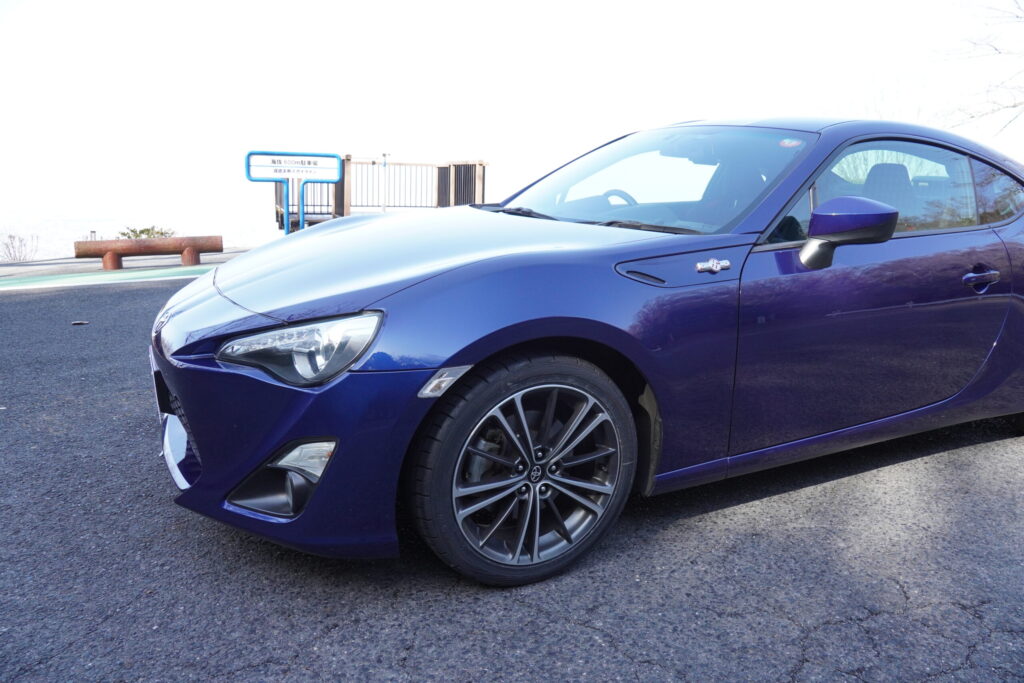
When you slide into the low-slung bucket seat of an iconic Japanese sports car—specifically a pure, naturally aspirated lightweight chassis like the Toyota 86 or Subaru BRZ—the entire philosophy of Japanese travel shifts. Suddenly, geography ceases to be an obstacle and becomes your playground.
Starting a road journey from Osaka opens the gateway to the Seto Inland Sea, but none of its destinations embody the ultimate driving freedom quite like Awaji Island (淡路島). Mythologically recorded in the Kojiki (Japan’s oldest chronicle) as the very first island created by the gods Izanagi and Izanami, Awaji sits anchored in the ocean between Honshu and Shikoku. It is an island carved by geological forces into a mesmerizing tapestry of sweeping coastal highways, razor-sharp mountain switchbacks, ancient incense-producing villages, and dramatic ocean cliffs.
While tourists gather in packed train cars heading toward over-photographed urban hubs, a driver departing Osaka in a Toyota 86 experiences the thrill of total autonomy. You leave the concrete grid of the city, cross the colossal steel spans of the Akashi Kaikyo Bridge, and drop down onto tarmac that hugs the waterline so closely you can taste the salt spray in the air. You gain the freedom to stop at secluded fishing ports where old fishermen repair nets by hand, to climb tight elevation shifts through emerald forests where fog clings to the bamboo groves, and to carve through technical apexes that reveal the true genius of JDM engineering. This guide is built for those who refuse to be mere passengers. This is your blueprint for an unforgettable 2-Day driving expedition across Awaji Island.

Awaji Island Road Trip: The 2-Day Itinerary Deep Dive
Day 1: The Northern Gateway, Cresting Highlands, and Western Sunset Roads
08:00 AM – Departure from Central Osaka: The Urban Breakout
The journey begins in the early morning air of Osaka. As you fire up the boxer engine of your Toyota 86, the low-frequency rumble fills the cabin—a mechanical promise of the driving dynamics ahead. Navigating out of Osaka via the Hanshin Expressway (Route 3 Kobe Line), the city’s dense network of elevated concrete flyovers acts as an urban warmup. Keep your hands firm at 9-and-3 on the leather-wrapped steering wheel as you filter through the early traffic. Feel the tight, communicative electric power steering transmit every minor texture of the highway asphalt through your fingertips.
09:15 AM – Crossing the Akashi Kaikyo Bridge: Soaring Above the Strait
As you clear Kobe, the horizon opens abruptly, revealing the breathtaking engineering marvel of the Akashi Kaikyo Bridge. Spanning nearly four kilometers across the turbulent Akashi Strait, this suspension giant once held the title of the world's longest central span.
Crossing this bridge in a low-profile sports car is a sensory awakening. The bridge deck sits over 60 meters above the churning ocean currents below. As the 86 rolls across the expanse, structural steel girders flash overhead like a hypnotic film strip. To your right, the skyline of Kobe recedes; to your left, the vast blue expanse of Osaka Bay stretches toward the horizon. Crosswinds at this altitude test the aerodynamic stability of the 86 chassis, but its ultra-low center of gravity keeps the car planted firmly on its track.
09:45 AM – Awaji Service Area: High-Octane Coffee with an Ocean View
Immediately upon crossing the bridge, take the off-ramp into the Awaji Service Area (SA). Far more than a simple rest stop, this elevated plateau offers an panoramic view of the entire suspension bridge framing the Honshu coastline. Walk to the observation deck with a hot can of Boss Coffee or a fresh iced matcha latte. Stand at the railing, listening to the rhythmic hum of distant tires over the bridge’s expansion joints, and watch container ships fight the fierce tidal currents of the strait below. This is where your journey officially leaves the mainland behind.
10:30 AM – Highway 28 to Awaji Hanasajiki: The Highland Climb
Leaving the expressway behind, downshift into 2nd gear and head inland via Prefectural Route 157, climbing steadily toward the northern plateau of the island. The road transitions rapidly from wide arterial lanes to narrow, twisting asphalt that weaves through agricultural terraces and forested slopes.
Here, the Toyota 86 reveals its brilliant mechanical balance. The naturally aspirated 2.0-liter (or 2.4-liter) boxer engine breathes deeply in the crisp hillside air. As you work the short-throw manual shifter, blipping the throttle on downshifts to rev-match effortlessly, the rear-wheel-drive platform rotates precisely around your hip line.
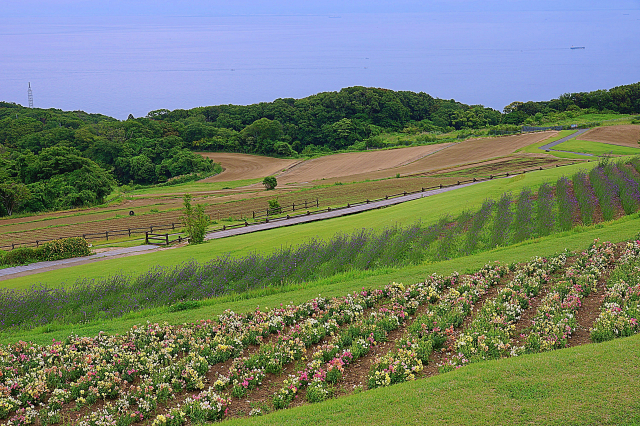
By 11:00 AM, you arrive at Awaji Hanasajiki (あわじ花さじき). Perched on a high hill gently rolling down toward the sea, this expansive floral park features vast fields of seasonal blooms—rapeseed blossom in spring, vibrant sunflowers in summer, and deep purple salvias in autumn. Park the 86, step out onto the crushed gravel paths, and breathe in the perfume of millions of flowers mixed with the distant, salty sea breeze.
12:30 PM – Coastline Cruising & Island Gastronomy: The Legend of Awaji Beef
Descend from the highlands back toward the western shoreline along Route 31, known locally as the Awaji Sunset Line. By noon, your appetite demands attention, and Awaji Island boasts one of Japan's most prized culinary secrets: Awaji Beef (淡路牛).
Pull into a coastal wood-framed grill house overlooking the ocean. Awaji cattle are the genetic ancestors to many of Japan’s most famous Wagyu lineages, including Kobe and Matsusaka beef. Due to the island's mineral-rich pastures and sea mist, Awaji beef features fine, snow-like intramuscular marbling.
Order a sizzling iron skillet of prime Awaji beef steak accompanied by sweet, caramelized Awaji onions—locally famous for having a sugar content rivaling fruit. The first bite of beef melts instantly on your palate, releasing a rich savory richness balanced by the sweet crunch of the roasted onions. Pair it with a bowl of warm, steaming local Koshihikari rice and a savory miso soup brewed with island-made fermented soybean paste.
02:00 PM – Route 31 (Awaji Sunset Line): Coastal Flow and Third-Gear Sweepers
With lunch complete, click your seatbelt back into place. The afternoon is dedicated to mastering the northern stretch of Route 31. This asphalt ribbon hugs the exact perimeter of the northwestern coast, mere feet above the lapping waves of the Seto Inland Sea.
Set the 86 into a smooth third-gear rhythmic flow. The road follows every inlet and headland, offering a succession of flowing S-curves, open sweepers, and short technical straightaways. The sound of the boxer engine echoes off concrete sea walls, punctuated by the mechanical clack of manual gear changes. Sunlight glints off the hood, illuminating the gentle bulges of the front fenders that help you place the front tires with pinpoint precision on the apex of every corner.
04:30 PM – Izanagi Shrine: Stepping into Mythology
Turn slightly inland toward the center of the island to visit Izanagi Shrine (伊夛久神社), the oldest Shinto sanctuary on Awaji and one of the most historically significant in all of Japan. According to the ancient chronicles, after the creator deity Izanagi-no-Mikoto completed his divine task of fashioning the Japanese archipelago, he constructed a quiet dwelling here to live out his eternal rest.
Park the car under the shade of ancient Japanese cedars and walk through the massive granite Torii gate. The air inside the shrine grounds drops several degrees, heavy with the scent of aged wood, moss, and centuries of quiet devotion. At the heart of the complex stands the Sacred Camphor Tree (夫婦大楠), a single giant tree trunk that split into two distinct trunks centuries ago, symbolizing enduring love, partnership, and safe journeys. Pay your respects by tossing a five-yen coin into the wooden offering box, bowing twice, clapping twice, and offering a silent prayer for safe roads and smooth gear shifts.
06:00 PM – Sunset at Keino Matsubara: The Crimson Sea
Return to the coast at Keino Matsubara (慶野松原) just as the sun begins its final descent toward the horizon. This iconic two-kilometer stretch of white sand beach is lined with over 5,000 ancient, gnarled black pine trees whose twisted branches bend toward the ocean like living sculptures.
Park the 86 along the coastal vista lookout. As the sun touches the water, the sky transitions through a brilliant gradient of fiery orange, deep magenta, and twilight violet. The silhouette of your sports car against the backdrop of the glowing sea is a moment of pure automotive tranquility.
07:30 PM – Check-in at a Coastal Ryokan & Kaiseki Feast
End your day by checking into a traditional coastal ryokan (Japanese inn) along the Minamiawaji coastline. Slip into a lightweight yukata robe and slide into an open-air hot spring bath (rotenburo) perched above the ocean. The hot, mineral-rich geothermal water irons out any tension built up in your shoulders from a day of spirited driving, while the sound of crashing waves provides a natural soundtrack.
Follow your bath with an opulent multi-course Kaiseki dinner served directly in your room or private dining hall. The meal highlights the evening's fresh maritime catch: delicate slices of raw Tai (red sea bream) with freshly grated real green wasabi, tender boiled octopus (Tako), tempura seasonal vegetables, and a warming clay pot rice dish (Kamameshi) infused with local dashi stock. Sleep comes easily, accompanied by the gentle roar of the sea.

Day 2: Southern Mountain Passes, Whirlpools, and Technical Windings
Day 2 Schedule Overview: 08:00 AM - Coastal Breakfast & Engine Warmup 09:00 AM - Crossing the Naruto Strait & Viewing Whirlpools 11:00 AM - Mount Yuzuruha: The Ultimate Mountain Pass 01:00 PM - Local Seafood Feast at Fukura Port 02:30 PM - The Southern Coastal Cliff Road (Nadamachi) 05:00 PM - Evening Return & Expressway Sprint to Osaka 08:00 AM – Engine Warmup and Coastal Morning Light
Wake up to the golden light of dawn breaking over the Pacific Ocean. After a traditional breakfast of grilled salted salmon, rolled omelet (tamagoyaki), steamed rice, and hot miso soup, check out of the ryokan and return to the parking lot.
Before starting the engine, perform a quick morning walkaround of your Toyota 86. Check tire pressures, inspect the sticky rubber compound on all four corners, and verify windshield clarity. As the starter motor cranks and the boxer engine roars to life, check the oil temperature gauge as the engine warms up to optimal operating parameters. Today is dedicated to technical mountain driving and dramatic cliffside roads.
09:00 AM – The Naruto Strait & Cape Anaga: Nature’s Violent Maelstrom
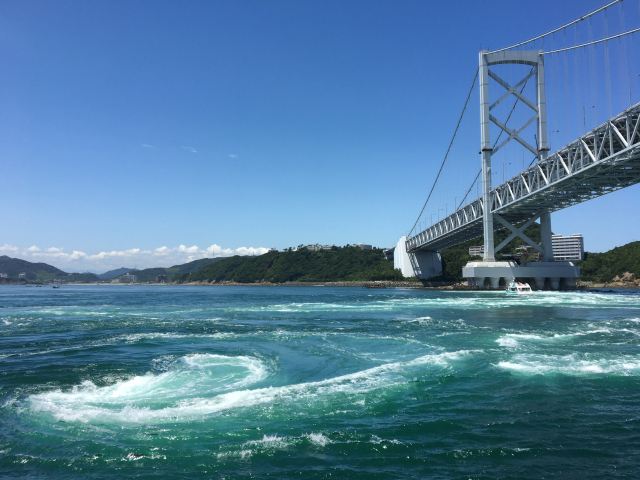
Drive south toward Cape Anaga and the magnificent Onaruto Bridge, which connects southern Awaji Island to the island of Shikoku. The Naruto Strait is world-famous for harboring one of the fastest and most turbulent ocean currents on earth. As water surges between the Seto Inland Sea and the open Pacific Ocean through a narrow underwater trench, sea level differences of up to 1.5 meters create massive, swirling Naruto Whirlpools (鳴門の渦潮) that can reach diameters of up to 20 meters.
Park near the bridge overlook or board a dedicated observation boat that pulls right up to the edge of these terrifying liquid vortices. Looking down into the white-water cauldrons from above, you witness the raw, kinetic energy of the planet—a stark reminder of the geological forces that forged this mountainous island.
11:00 AM – Mount Yuzuruha (由良・諭鶴羽山): The Driver’s Sacred Playground
Now, set the navigation for the interior mountain roads surrounding Mount Yuzuruha, the highest peak on Awaji Island at 608 meters above sea level. This is where the casual tourists turn back, and where true driving enthusiasts find paradise.
The road transitions from two lanes to a technical single-and-a-half-lane mountain pass. The asphalt here winds tight through thick cedar forests, hugging granite cliff walls on one side and steep drainage drops on the other. Moisture from mountain streams coats sections of the road, demanding absolute focus, delicate throttle control, and smooth steering inputs.
This environment is the natural habitat of the Toyota 86 chassis. The car's 50:50-style weight distribution and quick front-end turn-in allow you to dart into blind hairpin turns with complete confidence. Downshift to 2nd gear, trail-brake lightly to load up the front tires, feel the chassis settle through the mid-corner, and squeeze the accelerator as the road opens up at the exit. The mechanical hum of the exhaust echoes off the tree trunks, creating a symphony of mechanical sound.
At the summit crest, pause at the quiet mountain shrine dedicated to the spirits of the mountain. Standing among ancient stone lanterns shrouded in mist, look down through gaps in the cloud canopy to see both sides of the island at once—the blue sea stretching out to the north and south.
01:00 PM – Lunch at Fukura Port: Fresh Seafood from the Abyss
Descend the eastern face of the mountain pass down into Fukura Port, a working fishing harbor tucked into a protected southern bay. The docks here are lined with traditional trawlers and wooden fishing boats returning from the deep waters of the Kii Channel.
Head into a bustling seafood market hall where local fishermen grill their morning catch over open charcoal fires. Order a bowl of Awaji Kaisendon—a bowl of sushi rice topped with generous portions of freshly caught red sea bream, sweet raw glass shrimp (Shirasu), sea urchin (Uni), and rich fatty tuna. Pair it with a plate of sea-salt-sprinkled grilled turban shell snails (Sazae) eaten straight out of their charred shells with bamboo skewers. The flavor is clean, intensely savory, and unmistakably connected to the surrounding ocean.
Walk through the open-air market stalls and select your seafood directly from live tanks or ice beds stocked by morning fishing vessels.
Take your selection to the open charcoal hearths where skilled vendors sear shell-fish with local soy sauce and sake.
Sit at outdoor wooden picnic tables right along the harbor wall, taking in the sights and smells of the working fishing fleet.
02:30 PM – Route 76 (Nadamachi Coastal Road): The Savage Southeastern Cliffs
After lunch, point the bumper of your sports car toward Prefectural Route 76, also known as the Nadamachi Highway. While the western coast (Route 31) is smooth and polished, the southeastern coast is rugged, wild, and isolated.
Here, high mountain ridges plunge straight down into the roaring Pacific Ocean. Route 76 is carved into the middle of these sheer cliffs, featuring high-elevation sweeping turns, short dark tunnels cut into solid rock, and steep coastal drop-offs. The road surface changes constantly—offering high-grip tarmac through sweeping curves followed by technical, off-camber hairpins that reward precise heel-and-toe downshifting.
Keep your eyes on the road, but take advantage of occasional scenic pull-offs to watch massive Pacific rollers crash against dark rock stacks far below. Black kites soar on the thermal winds at eye level, and the air smells intensely of pine resin and ocean salt.
05:00 PM – The Evening Expressway Sprint back to Osaka
As the afternoon light turns to gold, join the Kobe-Awaji-Naruto Expressway at Sumoto IC for the journey north back toward Honshu. Cruising at steady highway speeds, the Toyota 86 settles into a smooth, relaxed rhythm.
Crossing back over the Akashi Kaikyo Bridge at dusk, the illuminated cables of the suspension bridge glow like emerald strings against the darkening sky. The skyline of Kobe and Osaka twinkles on the horizon ahead. You return to the urban jungle not tired, but deeply recharged—possessing memories of a hidden, dynamic Japan that few international travelers ever get to experience.
Awaji Island Road Trip: Expert Advice & Cultural Nuances
To truly master road trips in Japan, you must understand the subtle cultural infrastructure that makes automotive exploration here unique.
The Cult of the "Michi-no-Eki" (Roadside Stations)
For drivers in Japan, a Michi-no-Eki (道の駅) is far more than a place to use the restroom or buy gas—it is a cultural temple dedicated to regional pride and driving hospitality. Designed specifically to support rural tourism and highway travel, these government-designated rest areas are scattered strategic distances apart across every prefecture.
On Awaji Island, stopping at a Michi-no-Eki like Michi-no-Eki Uzushio or Michi-no-Eki Awaji is an absolute requirement. Here you will discover:
Hyper-Local Produce: Farm-fresh Awaji onions, local citrus fruits (Naruto Mikan), hand-crafted onion salad dressings, and artisanal sea salts.
Regional Street Food: Try the famous Awaji Onion Beef Burger—a thick patty topped with tempura-fried onion rings and local sweet tomato chutney, regularly voted the top gourmet burger in all of Japan.
Driver Hospitality: Impeccably clean restrooms, regional driving maps, local weather updates, and vending machines stocking hot coffees and energy drinks.
Driving Etiquette and Japanese Road Culture
Driving in Japan is governed by exceptional courtesy, mutual respect, and precise rules. To blend in like a seasoned local driver, keep these nuances in mind:
The "Hazard Light Thank You": When a driver yields to let you merge into a tight lane or exit a side street, flash your hazard lights twice brief blips after merging. This subtle gesture is the universal road sign for "Thank you."
Pedestrian Absolute Right-of-Way: At unmarked crosswalks, pedestrians always have absolute priority. Drivers are expected to bring their vehicle to a complete stop as soon as a pedestrian approaches the curb.
Speed Limits and Flow of Traffic: Speed limit signs on rural roads often indicate 40 km/h or 50 km/h, while expressways range from 80 km/h to 100 km/h. While local drivers usually maintain a smooth, safe flow of traffic slightly above posted signs on open stretches, exercise extreme caution in tight residential areas, narrow village lanes, and mountain passes.
Zero Tolerance for Alcohol: Japan enforces an absolute zero-tolerance policy for drink-driving (0.00% BAC). Never consume even a single sip of beer or sake if you intend to drive later that day. Passengers can also be held legally liable if they ride with a driver who has consumed alcohol.
Awaji Island Road Trip: Detailed Logistics & Pre-Trip Tips
Navigating Japan’s modern highway network in a performance sports car requires solid logistical preparation. Here is everything you need to know before turning the key.
Understanding ETC (Electronic Toll Collection)
Japan’s highway system is heavily tolled, and tolls on long suspension bridges like the Akashi Kaikyo Bridge can be costly if paid in physical cash.
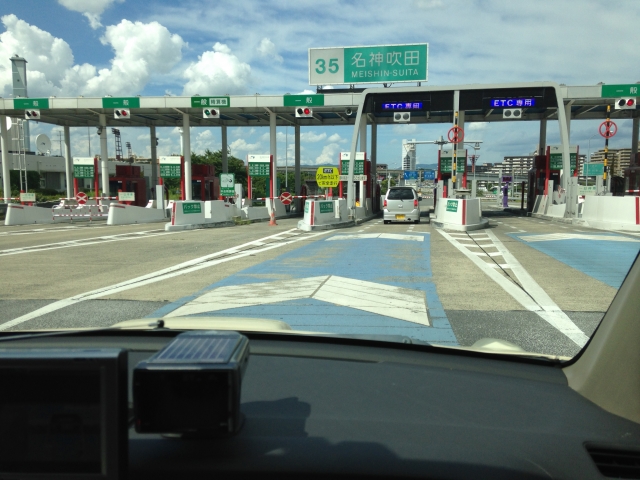
Pro Tip: Always ensure your rental car comes pre-equipped with an active ETC card. When approaching highway toll gates, look for the purple "ETC Only" lanes and reduce your speed to 20 km/h. The gate barrier will lift automatically with a pleasant chime from your dashboard.
[ HIGHWAY TOLL GATE LANE SELECTION ] +------------------+ +------------------+ | PURPLE SIGNS | | GREEN/WHITE | | "ETC専用" | | "一般" | +------------------+ +------------------+ | | Wireless Pass-Through Manual Stop & Pay (20 km/h Slow Down) (Cash/Credit Card) Navigating Gas Stations ("Mantan!")
Fueling up in Japan is a smooth, polite process. Gas stations are divided into two categories: Full Service and Self-Service (セルフ).
When pulling into a full-service station:
Attendants will guide you to a pump waving bright yellow flags.
Roll down your window and state your fuel type and amount. For sports cars like the Toyota 86 or Subaru BRZ, you must use Premium High-Octane Gasoline (called "High-Octa" or ハイオク).
Say: "High-octa, mantan, kashikado de" (Premium fuel, full tank, credit card please).
The staff will fuel your car, wipe down your windshield and side mirrors with fresh towels, and hand back your receipt with a polite bow.
Parking Mastery on Awaji Island
Back-In Parking Culture: In Japan, nearly 99% of drivers reverse into parking spaces. It is considered safer and far easier when pulling back out into traffic. Practice your reverse camera or mirror checks.
Wheel Stops: Parking spaces are almost universally fitted with low concrete wheel blocks (chock blocks). Because the Toyota 86 sits low to the ground, approach wheel blocks slowly to prevent scraping low front lips or exhaust mufflers.
The Thrill of Driving a Manual JDM Legend
Driving a lightweight, rear-wheel-drive manual sports car through Japan's mountain passes is an emotional, visceral experience. The direct mechanical linkage of a short-throw shifter, the heel-and-toe rev matches down into 2nd gear before a tight hairpin, and the balance of a chassis that responds instantly to every micro-input create a deep connection between driver, car, and road. It transforms a simple vacation into a memorable driving story.
Awaji Island Road Trip: Comprehensive FAQ
What driver's license documentation is required to drive in Japan?
To legally rent and drive a vehicle in Japan, visitors must present three documents at the rental counter:
Your original valid driver’s license issued by your home country.
A valid International Driving Permit (IDP) issued under the 1949 Geneva Convention.
Your original passport with a valid entry stamp.
Important Note: IDPs issued under the 1968 Vienna Convention are NOT accepted in Japan. Drivers holding licenses from specific countries that do not issue Geneva 1949 IDPs (such as Switzerland, Germany, France, Belgium, Monaco, and Taiwan) must instead carry an official, authorized Japanese translation of their native driver's license provided by the Japan Automobile Federation (JAF) or their respective country's embassy in Japan.
Is rental insurance necessary, and what coverage should I select?
Yes, full comprehensive coverage is strongly advised. Japanese rental agreements typically include basic liability, but opting for full collision damage waivers (CDW) and Non-Operation Charge (NOC) coverage ensures zero out-of-pocket expenses in the unlikely event of minor paint scratches, tire damage, or road incidents.
I haven't driven a manual transmission car in a while. Are Japanese mountain roads difficult?
While Japanese drivers are exceptionally polite and roads are impeccably maintained with clear signage, mountain passes (touge) feature tight corners, narrow sections, and steep gradients. If you choose a manual transmission JDM sports car like an 86 or BRZ, ensure you are comfortable with hill starts, smooth clutch control, and downshifting before tackling tight interior passes. Automatic options are also available for drivers who prefer to focus purely on the scenery.
What are winter road conditions like on Awaji Island?
Unlike the heavy snow belts of Nagano, Hokkaido, or Niigata, Awaji Island enjoys a mild, temperate maritime climate due to its position in the Seto Inland Sea. Snowfall on coastal roads is extremely rare, making Awaji Island an outstanding year-round driving destination. However, high mountain summits like Mount Yuzuruha can occasionally experience light early-morning frost during mid-winter months (January to February), so double-check local weather conditions.
Awaji Island Road Trip: The Final Thoughts
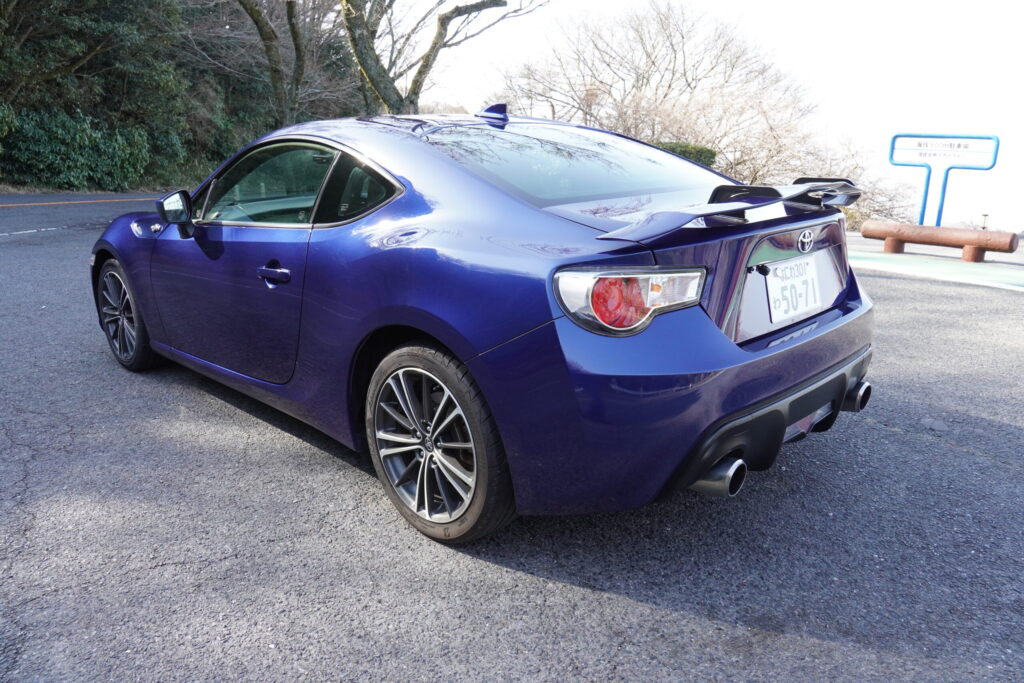
The roaring ocean waves along the Awaji Sunset Line, the sweet aroma of coastal seafood grilled over charcoal, the sacred silence of ancient cedar forests at Izanagi Shrine, and the pure mechanical harmony of a sports car carving through technical mountain switchbacks—these are the experiences that train tracks can never deliver.
Japan is a country waiting to be driven, felt, and truly discovered on your own terms. Do not settle for being a passive spectator watching the country flash past a train window. Take the wheel, command your path, and write your own story across the epic roads of the archipelago.
Your gateway to the ultimate Japanese driving adventure begins right here in Osaka. At Omoren Osaka Central (おもしろレンタカー大阪中央店), we specialize in providing meticulously maintained, high-performance Japanese domestic market (JDM) legends—including the iconic, razor-sharp Toyota 86 and Subaru BRZ. Whether you are seeking a pure manual sports car to master technical coastal sweepers or an enthusiast machine to make your dream Japan road trip a reality, our team delivers the vehicles, local knowledge, and passion to set you free on the open road.