
Mazda MX-5 to Totsukawa Village - The Philosophy of Driving in Japan
Having spent years working on the rails for Kintetsu Railway, watching the Japanese countryside flash past carriage windows at fixed speeds along predetermined iron tracks, I developed a profound respect for Japan’s public transit network. It is an engineering marvel of unmatched punctuality and efficiency. Yet, there is a distinct boundary to where the rails can take you. Train tracks follow the paths of least resistance—flat valleys, urban corridors, and heavily engineered tunnels built for mass transit. When you step off the train platform, you are bound by rigid timetables, crowded bus schedules, and fixed walking routes. You experience Japan through a pristine glass window, observing the landscape as a passive spectator rather than an active explorer.
To truly uncover what I call "Secret Japan"—those misty, primordial mountain passes, ancient cedar forests, and remote river valleys untouched by standard tour buses—you must step into the driver's seat. Japan is two distinct realms: the mega-cities connected by bullet trains, and the rugged, mountainous interior that belongs entirely to those with a set of wheels and a passion for driving. Nowhere is this contrast more breathtaking than when leaving the urban sprawl of Osaka and heading south into the deep, mysterious heart of the Kii Peninsula.
Starting your journey in Osaka puts you at the gateway to some of the finest driving roads in East Asia. While most international visitors queue up for crowded express trains to Kyoto or Nara, opting to drive southward transforms your travel into an immersive narrative. You move beyond the tourist surface and enter a realm where the journey itself becomes the destination.
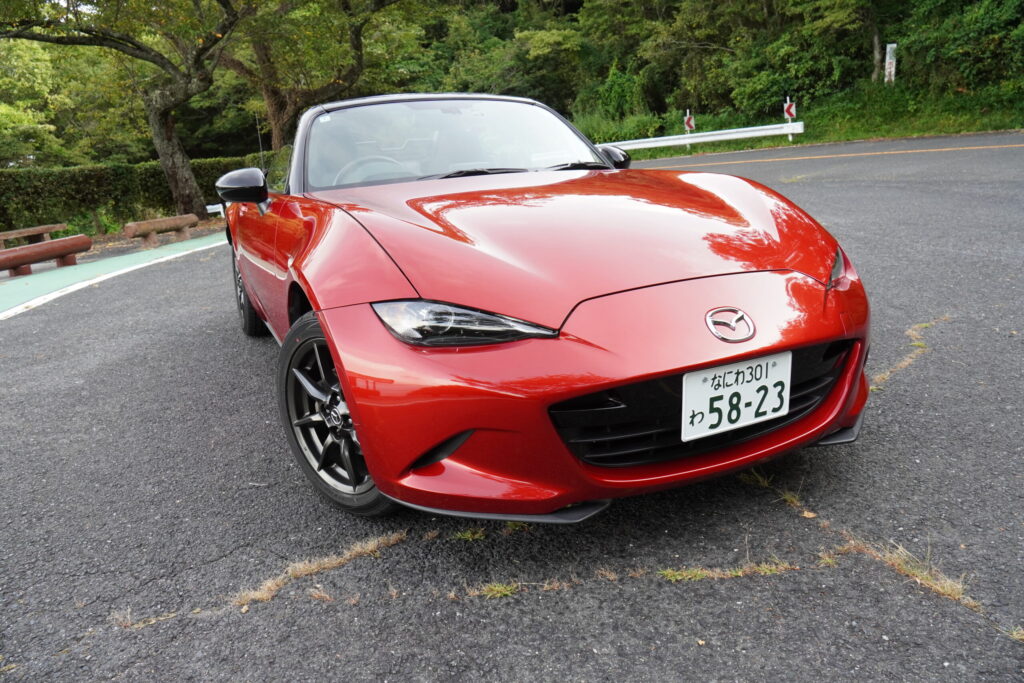
The chosen instrument for this journey is the icon of pure driving connection: the Mazda MX-5 (known natively in Japan as the Eunos Roadster or Mazda Roadster). Lightweight, perfectly balanced with its front-mid engine layout and rear-wheel-drive architecture, the MX-5 isn't about raw, terrifying straight-line horsepower; it is about absolute synergy between driver, machine, and asphalt—a concept the Japanese call Jinba Ittai (the horse and rider as one body).
As you leave Osaka's elevated expressways behind, the MX-5’s communicative steering, short-throw manual transmission, and immediate throttle response make every corner an engaging dialogue with the road. The open top allows you to smell the scent of cedar pine mixed with mountain rain, feel the sudden drops in ambient temperature as you climb through deep gorges, and hear the echo of your exhaust note bouncing off ancient cliff faces.
Totsukawa Village (Totsukawa-mura), tucked deep inside Yoshino-Kumano National Park in Nara Prefecture, represents the absolute pinnacle of this driving philosophy. It is Japan’s largest village by geographic surface area, yet it possesses no train stations whatsoever. Public transit here is reduced to sparse local buses that wind through steep canyons. To reach Totsukawa is an act of intentional travel. It requires navigating narrow, twisting ribbons of tarmac that carve through the Kii Mountain Range—a sacred landscape of UNESCO World Heritage pilgrimage routes, soaring suspension bridges, and subterranean geothermal hot springs. Driving here is not merely a mode of transport; it is your passport to an authentic, untamed Japan that remains entirely hidden from the railway lines.

Mazda MX-5 to Totsukawa Village - The 2-Day Itinerary: Deep Dive
Day 1: Leaving the Concrete Jungle for the Sacred Valleys
08:00 AM – Departure from Central Osaka: Setting the Stage
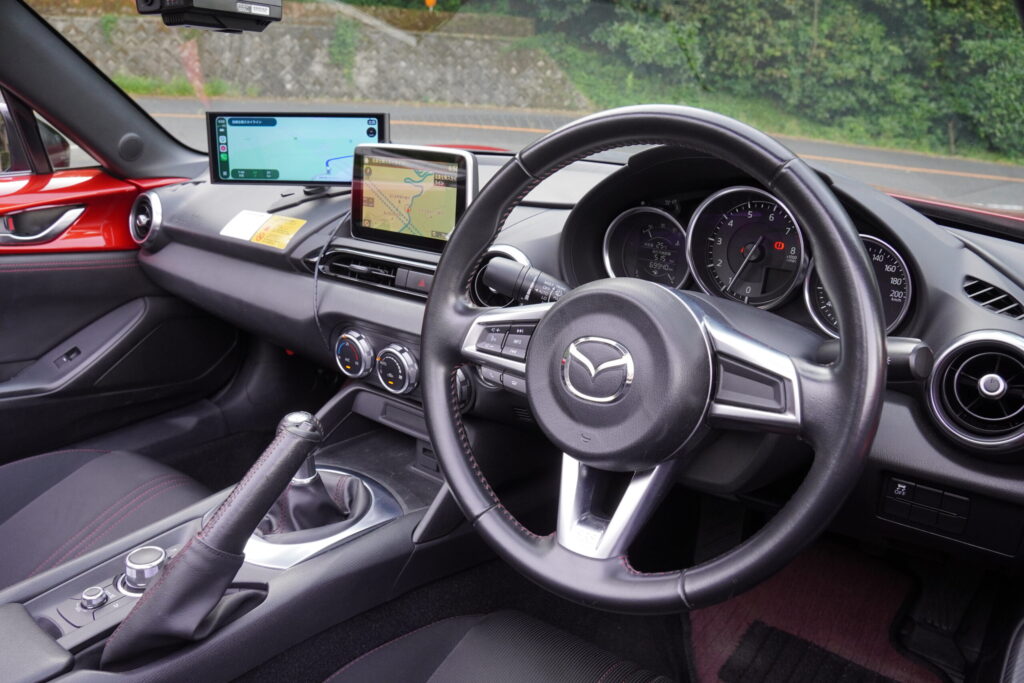
Your journey begins in the early morning air of Osaka. As the city gently awakens, you settle into the low-slung bucket seat of the Mazda MX-5. Adjust the side mirrors, grab the leather-wrapped steering wheel, and depress the light, crisp clutch pedal. Depressing the engine start button brings the naturally aspirated engine to a smooth, purring idle.
From central Osaka, merge onto the Hanshin Expressway Route 14 (Matsubara Route). The early hour allows you to beat the heavy commercial traffic. The road here sits high above the city streets on concrete pillars, weaving through dense high-rises. As you transition onto the Nishi-Meihan Expressway and head east towards Nara, the concrete jungle gradually softens. Towering skyscrapers give way to suburban hills, which soon transform into the rolling green contours of the Yamato Basin. Keep your eyes on the road, but notice how the air feels crisper as you leave the heat island of the metropolis behind.
09:30 AM – Entering Route 168: The Gateway to Kii Peninsula
Leaving the highway at Katsuragi, transition onto National Route 168 (Koku-do 168). Route 168 is legendary among local driving enthusiasts; it serves as the spine of the central Kii Peninsula, running north-to-south directly through the heart of Nara’s mountains down to Wakayama.
As you pass through Gojo City, the road narrows and begins its dynamic climb following the crystal-clear waters of the Yoshino River (which later becomes the Shingu River). This is where the driving experience undergoes a total metamorphosis. Put the soft top down. The crisp morning wind fills the cockpit, carrying the clean, wet fragrance of pine and damp earth.
The MX-5 comes alive here. Slot the gear shifter into 3rd, feeling the mechanical precision of the gates. The engine responds instantly to your foot's gentle input, matching revs effortlessly as you brake for your first series of sweeping mountain curves.
11:00 AM – The Conquest of National Route 168 & Denjo Bridge
As Route 168 burrows deeper into the mountains, civil engineering marvels blend seamlessly with rugged natural beauty. You will encounter high-viaduct bridges and a series of modern, illuminated tunnels interspersed with historic, single-lane cliffside roads. The Denjo Bridge area offers breathtaking elevated views over deep-green river gorges.
Driving the MX-5 along these sections reveals the true genius of its chassis tuning. The double-wishbone front and multi-link rear suspension absorb slight road imperfections while transmitting intimate feedback directly through the steering wheel. You feel the grip limits of the tires, the subtle shifts in pavement texture, and the exact moment the weight transfers to the outside wheels in a corner.
You aren't merely steering a vehicle; you are dancing with the terrain. The exhaust note echoes sharply against the vertical granite walls of the canyon as you heel-and-toe downshift into 2nd gear to round tighter hairpin bends. The sheer walls are draped in emerald moss, and far below, the turquoise river carves its path over smooth limestone boulders.
Route Overview: Day 1 Morning [Osaka Central] ---> (Hanshin/Nishi-Meihan Expwy) ---> [Gojo City] ---> (Route 168 South) ---> [Totsukawa Boundary] Duration: Approx. 3 hours Highlights: Elevated city expressways transitioning to winding canyon roads along Route 168. 01:00 PM – Arrival at Tanise Suspension Bridge (Tanise no Tsuribashi)
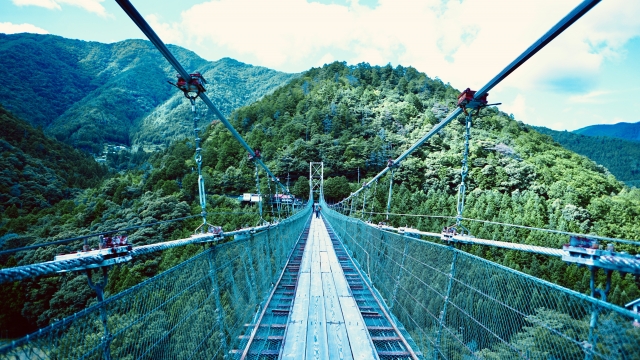
As you cross the official boundary into Totsukawa Village, the landscape becomes remarkably dramatic. Your first major destination looms overhead: the awe-inspiring Tanise Suspension Bridge.
Constructed in 1954 by local villagers who pooled their life savings to replace a wooden structure repeatedly washed away by floodwaters, this magnificent bridge spans a vast, gravelly riverbed at a staggering length of 297 meters (974 feet) and sits 54 meters (177 feet) high. For decades, it held the title of Japan's longest pedestrian suspension bridge.
Park the MX-5 in the dedicated parking area nearby (). Step out, take a deep breath of the alpine air, and stretch your legs. Walking onto Tanise Suspension Bridge is a thrilling sensory experience. The narrow wooden planks creak beneath your shoes, and the entire structure sways gently in the valley breeze. Beneath your feet, through tiny gaps in the timber, you can look straight down into the pristine waters of the Totsukawa River.
Looking out into the distance, you are framed by 360-degree views of steep mountain peaks draped in shifting, low-hanging clouds. The contrast between the fragile, swaying man-made wooden bridge and the timeless, immovable mountain range creates a deep feeling of humility.
02:30 PM – Savoring Local Flavors: Soba and Mehari-zushi
After walking back across the swaying bridge, head to a small, rustic local eatery near the bridgehead. It is time to experience the authentic culinary heritage of Totsukawa.
Order a steaming bowl of Handmade Yam-Soba paired with Mehari-zushi, a local mountain delicacy. Mehari-zushi consists of warm, seasoned rice wrapped tightly in pickled mustard greens (takana). Originally prepared as a portable, high-energy lunch for lumberjacks and foresters working deep in these rugged mountains, the name literally translates to "eyes open wide"—referring to the expression on a worker's face when taking a big bite of this large, flavorful rice ball.
The salty, tangy bite of the pickled green leaf balances perfectly with the warm rice, while the freshly made buckwheat noodles provide a comforting, nutty finish.
04:00 PM – Cruising South to Kamiyu Onsen & Checking In
Re-enter the MX-5's cockpit, start the engine, and continue your drive south along Route 168 toward your sanctuary for the night: a traditional ryokan tucked away along the banks of the Kamiyu River or near the main Totsukawa Onsen area.
Totsukawa Village holds a special, rare distinction in Japan’s vast hot spring culture. In 2004, Totsukawa became the very first municipality in Japan to declare a "100% Pure Free-Flowing Hot Spring Declaration" (Genshen Kakenagashi Unshitsu). This means that every single bath in the village uses pure thermal water tapped directly from underground sources without adding tap water, reheating the water, or recycling it through chemical filters.
Arrive at your accommodation, park your car, and step inside to change into a comfortable cotton yukata.
05:30 PM – The Hot Spring Soak: Thermal Healing
Step out into the rotenburo (outdoor hot spring bath). The mineral-rich water feels silky against your skin, infused with natural sodium hydrogen carbonate and sulfur.
As you sit immersed in the warm thermal waters, listen to the gentle rush of the mountain river flowing just a few feet away. Looking up into the dusk sky, stars begin to poke through the mountain mist. The physical fatigue accumulated from hours of precise driving dissolves instantly in the natural thermal heat.
07:00 PM – Multi-Course Kaiseki Dinner: Mountain Delicacies
Return to your room or dining hall for a multi-course kaiseki feast showcasing ingredients harvested directly from Totsukawa’s wild landscape:
Wild Boar Hot Pot (Botan Nabe): Thinly sliced wild boar arranged like peony petals in a rich, savory miso broth with local mountain herbs.
Salt-Grilled Amago Trout: Sweetwater mountain trout dusted with coarse sea salt and roasted over hot hardwood charcoal until the skin is crispy and the flesh tender.
Wild Mountain Vegetables (Sansai): Crisp tempura made from freshly gathered fern fronds and bamboo shoots.
Accompany your meal with a cold glass of local Nara sake, celebrating a successful day of mountain driving.

Day 2: Secret Gorges, Ancient Trails, and the Alpine Return
07:30 AM – Morning Dip and Mountain Breakfast
Awaken to the sound of birdsong echoing through the valley. Before breakfast, take a quick morning dip in the rotenburo to stimulate your circulation and awaken your senses.
Follow your soak with a traditional Japanese breakfast featuring local eggs, grilled river fish, hot miso soup, and Chagayu—a fragrant green tea rice porridge that has sustained residents of the Yamato and Totsukawa regions for centuries.
09:00 AM – Driving the Secret Loop: Up to Yaepas & Kazeya Dam
With the soft top dropped once again, drop into the MX-5's cockpit and embark on an exploration of Totsukawa's backroads. Drive north slightly to cross the Kazeya Dam, an impressive concrete gravity dam built in the 1960s that forms a quiet, deep-emerald reservoir stretching through the mountains.
From here, navigate narrow country lanes toward the mountain passes. The road here shrinks to a single lane with frequent turnouts (puking spaces). This is where the compact dimensions of the Mazda MX-5 shine brightly. Wide sports cars or bulky SUVs struggle and stress on these narrow roads, but the nimble MX-5 glides effortlessly between mountain walls and sheer drop-offs.
The steering requires gentle, smooth inputs. You clip apexes on narrow switchbacks, using 1st and 2nd gears, listening to the light mechanical roar of the intake as you power out of corners onto short straightaways. The road climbs high above the clouds, revealing views of endless emerald mountain ridges extending toward the horizon like frozen ocean waves.
Route Overview: Day 2 Loop [Totsukawa Onsen] ---> (Kazeya Dam) ---> [Kumano Kodo Omine Okugak道 Section] ---> [Dorogawa/Gojo Route] ---> [Osaka] Duration: Full Day Exploration Highlights: Narrow backroads, ancestral Kumano trails, pristine limestone gorges, and high-pass downhill drives. 11:30 AM – Touchpoint with History: Kumano Kodo Pilgrimage Routes
Totsukawa is deeply interwoven with the Kumano Kodo, an ancient network of pilgrimage trails that has drawn emperors, monks, and samurai for over a thousand years.
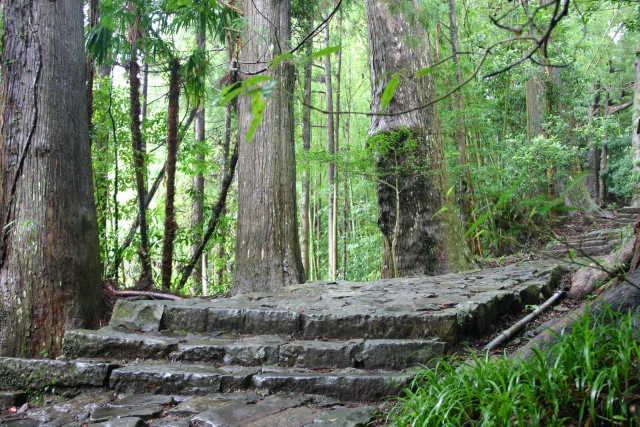
Park your car near one of the accessible trailheads along the Kohechi Route—the high-altitude trail connecting Mount Koya to the Grand Shrines of Kumano. Walk along a preserved stone-paved path (ishidatami) shaded by ancient Japanese cedar trees (sugi) that reach up to sixty meters into the sky.
Standing beneath these ancient giants, enveloped in quiet serenity, you feel connected to centuries of weary travelers who walked these exact paths in search of spiritual rebirth. The quiet energy of these sacred mountains offers a profound contrast to the dynamic mechanical joy of driving.
01:30 PM – Exploring the Secret Gorges: Dorokyo & River Valleys
Drive east toward the boundary where Nara, Mie, and Wakayama prefectures meet to visit Dorokyo Gorge (Doro-hatcho). This stunning natural monument features vertical cliff faces, strangely shaped rock formations, and deep, still, turquoise waters.
Park the MX-5 at an elevated viewpoint overlooking the canyon. The contrast between the bright red body paint of your roadster against the deep green foliage and slate-gray rocks creates an unforgettable photo opportunity. Grab a light lunch at a cliffside cafe, sipping black coffee while watching small wooden boats navigate the smooth waters far below.
03:30 PM – The Return Drive: Northbound over Mountain Passes
It is time to begin the journey back toward Osaka. Instead of simply retracing your steps, take the winding mountain roads heading north toward Gojo via the scenic high-altitude passes near Tenkawa Village.
As the late afternoon sun descends, casting long shadows across the asphalt, Route 168 transforms into a golden corridor. Golden hour driving in an open-top MX-5 is pure magic. The setting sun paints the sky in shades of deep amber, pink, and purple. The air grows cooler, prompting you to switch on the footwell heaters—a classic open-top roadster trick that keeps you warm while enjoying the fresh, crisp alpine breeze.
The downhill sections allow you to practice smooth, gentle driving technique. You balance the car through weight transfer, lightly dabbing the brakes before turn-in, feeling the mechanical harmony of the chassis working in unison with your hands and feet.
07:00 PM – Arrival in Central Osaka
As the mountains slowly flatten out into suburban Nara and finally merge back into the twinkling lights of the Osaka urban plain, you feel a deep sense of accomplishment. You have covered hundreds of kilometers through some of the most challenging, breathtaking terrain in East Asia.
Returning to the city center, the bright neon lights of Osaka feel vibrant and welcoming. Park the car, step out onto the pavement, and look back at the dusty tires and warm exhaust pipe of your Mazda MX-5. You haven't just visited Japan—you have conquered its secret heart.
Mazda MX-5 to Totsukawa Village - Expert Advice & Cultural Nuances
The Magic of Japan’s Michi-no-Eki (Roadside Stations)
To drive in Japan without visiting a Michi-no-Eki is to miss one of the country's greatest cultural pleasures. Designed as high-quality rest stops along national highways, these community centers are far more than places to use the restroom; they are showcases of regional pride, agriculture, and cuisine.
Along Route 168, Michi-no-Eki Totsukawa-mura serves as the vital hub of the area. When you park your car here, you will find:
Free Foot Baths (Ashi-yu): Fueled directly by the village’s pure hot spring water. Dip your feet in after a long stint of driving to refresh your legs.
Local Farmers' Markets: Packed with fresh local produce, wild honey, home-cured plum wine (umeshu), and handmade woodcrafts fashioned from aromatic Yoshino cedar.
Regional Souvenirs: Look for Kitsune-sushi prepared with local herbs and delicate wooden coasters carved by local artisans.
Etiquette and Driving Manners in the Japanese Mountains
Navigating deep rural Japan requires an understanding of unwritten local road etiquette:
The Courtesy Hazard Flash: If a local resident pulls over into a turnout space to let your sports car pass on a narrow single-lane road, give them two short flashes of your hazard lights after passing as a polite sign of gratitude (Arigato).
Yielding on Narrow Bridges: Many bridges deep in Totsukawa are narrow single-lane crossings. The car closer to the bridge has the right-of-way, but always slow down and offer a light head nod or hand wave if another driver yields to you.
Respecting Quiet Village Zones: When driving through residential mountain settlements early in the morning or late at night, downshift early and keep your engine RPM low to minimize noise pollution.
Mazda MX-5 to Totsukawa Village - Detailed Logistics & Pre-Trip Tips
The Electronics & Toll System: Understanding the ETC Card
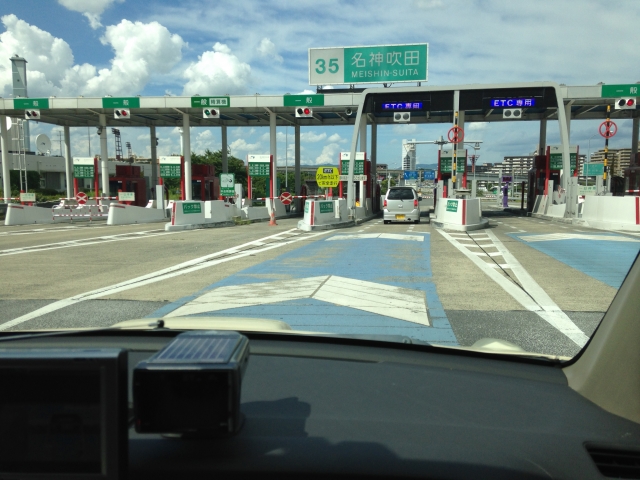
Japan's expressway network is seamless, fast, and entirely cashless if you use an Electronic Toll Collection (ETC) card.
When renting a car in Japan, always request an ETC card inserted into the vehicle’s dedicated onboard unit. As you pass through expressway toll gates around Osaka, choose the purple "ETC Only" lanes at speeds under 20 km/h. The barrier will lift automatically, logging your route. When you return your rental vehicle, the shop will read the card’s electronic memory and settle your exact toll balance in seconds.
Expressway Gate Guide: [ETC ONLY] --> Purple Markings --> Keep speed under 20 km/h --> Barrier opens automatically. [CASH/ETC] --> Green Markings --> Stop completely if paying cash/credit card. Navigating Japanese Gas Stations (GS)
Fueling your vehicle in Japan is straightforward once you know the core vocabulary. Gas stations are divided into Full Service (Mantan) and Self Service (Serufu).
At a Full-Service Station:
Attendants will guide you to a pump with hand signals.
Open your fuel door, roll down your window, and state your fuel type and amount:
"High-Octane, Mantan, Kega-dekiru" (Premium Fuel, Full Tank, Credit Card). Note that the Mazda MX-5 requires High-Octane (High-Ok) premium unleaded petrol for optimal engine performance and power output.
Attendants will often wash your windshield, mirrors, and offer to take any small trash from your cabin.
Crucial Fuel Vocabulary:
High-Octane / Premium: High-Ok (ハイオク) — Required for MX-5
Regular Gasoline: Regura (レギュラー)
Diesel: K軽油 / Keiyu (軽油)
Full Tank: Mantan (満タン)
Parking & Driving a Manual Transmission JDM Sports Car
Driving an iconic rear-wheel-drive manual transmission sports car like the Mazda MX-5 in Japan offers pure driver engagement, but demands attention to detail:
Back-In Parking: In Japan, reverse parking into marked spaces is mandatory cultural practice. It allows for safe visibility when pulling back out into traffic. Use the MX-5's clear sightlines and side mirrors to line up perfectly between the white lines.
Hill Starts on Mountain Passes: Totsukawa features steep inclines and sharp switchbacks. Practice smooth handbrake hill-starts to ensure zero roll-back on tight mountain inclines.
Mazda MX-5 to Totsukawa Village - Comprehensive FAQ
What driver's license documentation is required to rent and drive a car in Japan?
To drive legally in Japan as a foreign tourist, you must present a valid International Driving Permit (IDP) issued under the 1949 Geneva Convention on Road Traffic, along with your original domestic driver's license from your home country and your physical passport.
Important Note: IDPs issued under the 1968 Vienna Convention or other agreements are not recognized in Japan. Visitors holding licenses from specific countries that do not issue Geneva 1949 IDPs (such as Switzerland, Germany, France, Taiwan, Belgium, and Monaco) must carry an official Japanese translation of their driver's license provided by the Japan Automobile Federation (JAF) or their respective embassy.
Is driving a lightweight manual sports car difficult on rural Japanese mountain roads?
Not at all—in fact, it is the ideal environment! The Mazda MX-5's compact body, precise power delivery, and excellent pedal arrangement make it effortless to place on narrow Japanese lanes. Because speed limits on rural roads generally range from 40 to 60 km/h, you can enjoy working through the gears and revving the smooth engine without breaking legal limits or driving unsafely.
What are the road conditions in Totsukawa during different seasons?
Spring & Autumn (April–May, October–November): Peak seasons with crystal-clear skies, vibrant greenery, or brilliant red maple foliage. Temperatures are perfect for open-top driving.
Summer (June–August): Warm and humid, but pleasant at higher altitudes. Be mindful of sudden afternoon rain showers.
Winter (December–March): Higher elevations and shaded passes in Totsukawa can experience ice, freezing rain, or light snowfall. Renting a car equipped with winter snow tires (Studless Tires) is strongly recommended during these months.
Mazda MX-5 to Totsukawa Village - The Final Thoughts: Start Your Engine
The true magic of travel lies in spontaneity—the freedom to turn down an unmarked mountain lane, pull over beside a whispering pine forest, or stumble upon an ancient hot spring tucked away in a quiet river valley. While trains can carry you along well-worn tourist paths, only a driver's seat unlocks the hidden soul of Japan.
The winding asphalt of National Route 168, the swaying timbers of Tanise Suspension Bridge, and the restorative hot springs of Totsukawa Village are waiting for you. All you need is the right key in your hand and an open road ahead.
To turn this dream into reality, begin your journey with Omorenh / Omoshiro Rent-a-Car Osaka Chuo Branch. Specializing in legendary Japanese Domestic Market (JDM) performance cars, manual transmission sports coupes, and meticulously maintained enthusiast vehicles, they provide the perfect lineup for your adventure. Rent a pristine Mazda MX-5, feel the mechanical connection of a true driver's car, and embark on an unforgettable road trip into Secret Japan.
Reserve your vehicle today, grab your International Driving Permit, and discover the Kii Peninsula the way it was truly meant to be experienced—from behind the wheel.