
Ah, Japan. A land of unparalleled efficiency, breathtaking beauty, and a culture woven with threads of deep tradition. Many travelers gravitate towards the Shinkansen, the meticulously timed trains, and the well-trodden paths that connect our major cities. And while I, a former Kintetsu train conductor, deeply appreciate the mastery of Japan's rail system, I must confess a secret: the true heart of Japan, its most potent spiritual energy, and its most exhilarating experiences, remain elusive to the confines of a train carriage. They await discovery on the open road, behind the wheel of a truly special machine, like the nimble Toyota 86 or its sibling, the Subaru BRZ.
Nara Power Spot Pilgrimage, Goshuin, Spiritual - The Philosophy of Driving in Japan
Let me paint a picture. As a conductor, my world was a precise ballet of schedules, signals, and stations. Every journey was predetermined, every stop announced, every view framed by a window that rushed past. There’s a certain comfort in that predictability, yes, but also a profound limitation. The trains, as magnificent as they are, are arteries connecting major organs, but they bypass the myriad capillaries, the hidden veins that pulse with life and untold stories. These are the forgotten villages, the ancient shrines nestled deep in mist-shrouded mountains, the coastal roads where the ocean whispers ancient secrets, and the winding passes that challenge both car and driver in a ballet of precision and control.
For those seeking to truly understand Japan, to connect with its soul on a level deeper than tourist brochures allow, the car is not merely a mode of transport; it is the key to unlocking 'Secret Japan.' Imagine this: you're not a passive observer, but an active participant. You command your journey, choosing your rhythm, your detours, your discoveries. From Osaka, a city that bursts with an audacious energy, the Kansai region unfolds like a meticulously painted scroll. While the public transportation is superb for metropolitan exploration, it falls short when your soul yearns for the sublime isolation of a mountain temple or the thrill of a deserted coastal drive. These are places where the air itself hums with spiritual energy, where the rustle of ancient trees feels like a benediction, and where the views are so spectacular they feel like a personal revelation.
With a Toyota 86 or Subaru BRZ, the journey itself becomes as enriching as the destination. This isn't just about getting from A to B; it's about the exhilaration of the drive, the seamless connection between human and machine, the feel of the road translating through the steering wheel, the responsive growl of the engine as you ascend a mountain pass. It's about pulling over on a whim because a vista demands your attention, or stumbling upon a local café that serves coffee unlike any you've tasted. This freedom, this intimate connection with the landscape, this ability to chase the sunrise over a silent forest or witness the sunset over a serene lake – these are experiences trains simply cannot offer. This is why, for the adventurous spirit, for the car enthusiast, for anyone who craves an authentic and deeply personal engagement with Japan's spiritual heartlands, the only way to truly explore is by driving. And our destination? The ancient, mystical lands of Nara, a tapestry of power spots, intricate Goshuin, and profound spiritual awakenings, waiting to be discovered by the passionate driver.
Nara Power Spot Pilgrimage, Goshuin, Spiritual - The 2-Day Itinerary: Deep Dive
Prepare your senses, engage your spirit, and ready your hands for the wheel of an 86 or BRZ. This isn't just a trip; it's a pilgrimage, a communion with Japan's ancient soul, navigated through winding roads and breathtaking scenery. Our two-day journey into Nara’s profound spiritual landscape begins in the vibrant heart of Osaka, a city that pulsates with modern life, yet serves as the perfect springboard to ancient mysteries.
Day 1: Osaka to the Mystical Heart of Nara
08:00 AM - 09:00 AM: The Great Escape from Osaka
The morning air in Osaka is crisp, carrying the scent of fresh coffee and the gentle hum of a city awakening. You settle into the low-slung bucket seat of your Toyota 86, the ergonomic embrace feeling like a natural extension of your body. The steering wheel, thick and perfectly weighted, awaits your command. A turn of the key, and the 2.0-liter boxer engine of your BRZ burbles to life, a low, eager growl that promises adventure. We navigate the early morning Osaka traffic, heading east towards Nara. The urban sprawl gradually gives way to wider roads, and soon, you’re on the Daini Hanna有料道路 (Daini Hanna Toll Road). This isn't just asphalt; it’s a ribbon of anticipation, swiftly carrying us away from the city's embrace. The smooth acceleration, the precise feedback through the chassis, the feeling of absolute control – this is the joy of a JDM sports car, purpose-built for driving pleasure.
09:00 AM - 10:30 AM: Ascent to Mount Ikoma and Hozan-ji Temple
Exiting the highway, we immediately begin our ascent into the verdant slopes of Mount Ikoma, a peak steeped in folklore and spiritual energy. The roads narrow, transforming into a series of delightful, sinuous curves. This is where your 86 truly comes alive. The precise steering allows you to place the car exactly where you want it, carving through each turn with a fluidity that feels almost balletic. The engine sings as you gently work through the gears, the short throws of the manual shifter a satisfying mechanical engagement. The air grows cooler, cleaner, carrying the scent of pine and damp earth. Perched dramatically on the mountainside, Hozan-ji Temple (宝山寺) emerges, a powerful spiritual beacon with a history stretching back to the 7th century. It is a Shingon-shu Buddhist temple dedicated to Fudo Myoo, a wrathful yet compassionate deity. As you climb the stone steps, past intricate carvings and ancient lanterns, the panoramic view of the Kansai plain stretches out before you, often veiled in a mystical morning mist, offering a profound sense of detachment from the world below. This temple is famed for its power to bring prosperity in business and to bless new beginnings. The sheer scale of the main hall, carved into the mountainside, is awe-inspiring, and the tranquil atmosphere invites contemplation. Here, we collect our first Goshuin, the elegant brushstrokes a testament to the temple's rich history and our sacred visit.
10:30 AM - 12:00 PM: The Path Less Taken to Kasuga Taisha Shrine's Remote Sector
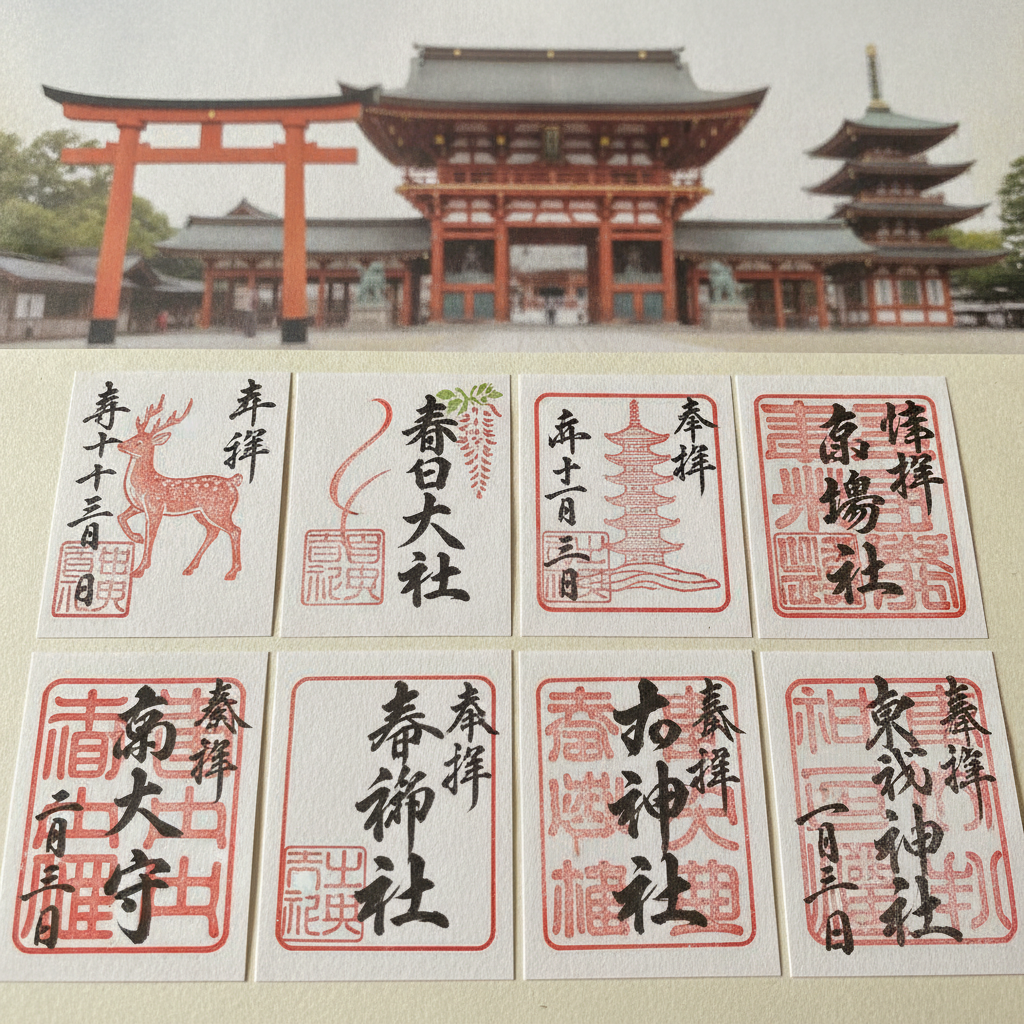
Leaving Ikoma, we head towards Nara City, but with a twist. Instead of the typical tourist approach, we navigate through the quieter, more scenic backroads that skirt the city, eventually bringing us towards the lesser-known, western approaches of Kasuga Taisha Shrine. Our 86 thrives on these roads, the perfect balance allowing for a confident, spirited drive. The road undulates, shaded by ancient cedars and cypress trees, their fragrance filling the cabin. We're aiming for a part of the shrine complex that feels more secluded, perhaps a small sub-shrine or a path that leads away from the main thoroughfare. Kasuga Taisha (春日大社) itself, established in 768 AD, is one of Japan's most important Shinto shrines, famous for its thousands of bronze and stone lanterns. It is dedicated to the Kasuga deities, who protect the city of Nara. Geologically, the area around Kasuga Taisha is fascinating, situated on the foothills of Mount Kasuga, considered a sacred mountain where logging has been forbidden for centuries, allowing a primeval forest to flourish. This untouched natural environment is a power spot in itself, pulsating with vital energy. We find a quiet spot, perhaps near the Wakamiya Shrine or a less-frequented path, and allow the quiet reverence of the ancient woods to wash over us. The air here is thick with history and spirituality, the soft crunch of gravel underfoot, the gentle rustle of leaves – a stark contrast to the city's clamor. We seek out a Goshuin from a smaller, less-crowded office within the sprawling complex, a more personal memento of our journey.
12:00 PM - 01:30 PM: Lunch: Nara's Hidden Culinary Gem
For lunch, we eschew the tourist traps near Nara Park. Our BRZ takes us deeper into the residential lanes, guided by a local's tip, to a small, unassuming eatery. Here, 'Kaiseki' takes on a simpler, more rustic form, perhaps a 'Washoku Teishoku' (Japanese set meal) specializing in locally sourced ingredients. Imagine a humble yet exquisite dish of 'Nara-zuke' (pickled vegetables unique to Nara), perhaps some freshly made 'Kakinoha-zushi' (sushi wrapped in persimmon leaves), or a delicate 'Somen' (thin noodles) dish, reflecting the seasonal bounty. The taste is pure, unpretentious, a symphony of subtle flavors that speak of careful preparation and respect for ingredients. The colors are muted, natural greens, browns, and whites, a calming contrast to the vibrant greens of the forest and the crimson of the shrine lanterns. The quiet clinking of ceramic bowls and the low murmur of local conversations provide the soundtrack, a truly authentic experience that rejuvenates both body and spirit.
01:30 PM - 03:00 PM: Ascent to Mount Wakakusa and Its Mystical Powers
With our stomachs satisfied, we point the 86 towards Mount Wakakusa (若草山), the gentle, grass-covered hill that overlooks Nara Park. While many walk up, we choose the scenic drive (seasonal access permitting) or park at the base and take a spirited walk up the well-maintained paths. The road up, though short, offers rewarding twists and turns, allowing the precise handling of our JDM car to shine once more. Mount Wakakusa is famous for its annual 'Yamayaki' (mountain burning) festival, but its spiritual significance runs deeper. It is considered a sacred natural power spot, a place where the earth’s energy is particularly potent. From its summit, the panoramic view encompasses all of Nara City, including Todai-ji Temple, Kofuku-ji Temple, and the distant mountains. The sheer scale of the landscape from this vantage point is humbling. Legend says that the mountain is guarded by the spirits of ancient deer, and the energy here is one of peaceful observation and connection to ancient natural forces. We spend time simply gazing, letting the vastness recalibrate our inner compass. The wind whispers through the sparse grass, a calming presence. The light shifts, painting the ancient city below in ever-changing hues of gold and green. It's a prime spot to feel the ancient currents of Japan. We won't find a Goshuin here, but the spiritual impression is indelible.
03:00 PM - 05:00 PM: The Ancient Secrets of Todai-ji and Tamukeyama Hachiman-gu
Descending Mount Wakakusa, we make our way to Todai-ji Temple (東大寺), not just for the Great Buddha, but for the profound spiritual aura that pervades its entire precinct. Park the BRZ in a designated area, and prepare for a walk through a historical wonderland. While the Great Buddha Hall is undeniably massive and impressive, the spiritual energy extends beyond it. Consider the Nigatsu-do and Sangatsu-do halls, nestled on the hillside. The path leading to Nigatsu-do (二月堂), especially, is enchanting, lined with stone lanterns and offering incredible views. These wooden structures date back to the 8th century, miraculously surviving fires and wars. The history here is palpable, a heavy cloak of time and devotion. Then, just north of Todai-ji, lies Tamukeyama Hachiman-gu (手向山八幡宮), a Shinto shrine dedicated to Emperor Ojin. Often overlooked by tourists rushing to the Great Buddha, this shrine offers a more serene and authentic spiritual experience. Its connection to Todai-ji is deep, as it was established to protect the grand temple. The vibrant vermilion of its torii gates and main hall contrast beautifully with the surrounding ancient trees. The quietude here is profound, allowing for a deeper connection with the spiritual landscape. We will collect a Goshuin here, a beautiful counterpoint to the Buddhist one from Hozan-ji, representing the duality of Japan's spiritual heritage.
05:00 PM - 06:30 PM: Scenic Drive to Accommodation & Check-in
As the afternoon light begins to soften, casting long shadows, we embark on a scenic drive to our chosen accommodation outside the immediate city center, perhaps nestled in the hills slightly south or east of Nara. The 86 eats up these country roads, offering a final burst of driving exhilaration before the day's rest. The setting sun paints the sky in hues of orange and purple, a glorious end to a day of exploration. We're looking for a traditional ryokan or a charming guesthouse that offers a quiet retreat, away from the bustling tourist areas. The aroma of traditional Japanese dinner, a 'kaiseki' feast, might already be wafting through the air as we check in. The tranquility of our chosen inn promises a peaceful night's rest.
06:30 PM - 08:00 PM: Onsen & Traditional Dinner Experience
After a day of driving and walking, nothing is more restorative than a soak in a traditional Japanese onsen. The mineral-rich hot water soothes tired muscles, melting away the day's exertions. The quiet serenity of the onsen, perhaps outdoors under a canopy of stars, is a deeply spiritual experience in itself, a purification ritual. Following the bath, a meticulously prepared 'kaiseki' dinner awaits. Each dish is a miniature work of art, reflecting the seasonality and local flavors of Nara. Expect delicate sashimi, expertly grilled fish, tempura with seasonal vegetables, and hearty miso soup. The taste is sublime, the presentation exquisite, a feast for both the eyes and the palate. The conversations are hushed, reverent, amidst the rustle of kimonos and the gentle clinking of sake cups. The focus is on the appreciation of food, company, and the day's profound experiences.
08:00 PM onwards: Starlit Reflection & Preparation for Day 2
With full stomachs and relaxed bodies, the evening is spent in quiet reflection. Perhaps a stroll in the ryokan garden, under a sky teeming with stars, far from city lights. The spiritual energy of Nara permeates the night, a silent, ancient hum. We review our Goshuin, each page a testament to a journey of discovery. The anticipation for tomorrow's adventures builds, a silent promise of more spiritual encounters and exhilarating drives with our faithful BRZ.
Day 2: Nara’s Deepest Spiritual Veins & The Thrill of the Return Journey
08:00 AM - 09:00 AM: Morning Serenity and Departure
The morning at our ryokan begins with a traditional Japanese breakfast, light yet satisfying. Miso soup, grilled fish, rice, and an array of pickles prepare us for another day of exploration. The quiet elegance of the inn, the rustle of bamboo outside the window, all contribute to a sense of peace. We check out, the engine of our 86 eagerly rumbling to life, ready for new horizons. The sun is already warming the crisp morning air, promising a beautiful day.
09:00 AM - 10:30 AM: Murou-ji Temple – The Mountain Sanctuary for Women
Our first destination for Day 2 is a true hidden gem, deeply spiritual and historically significant: Murou-ji Temple (室生寺). This requires a drive further southeast into the mountains, a journey perfectly suited for our JDM sports car. The roads become even more isolated, winding through dense cedar forests. The 86 carves through the landscape, its agile chassis and responsive engine making every curve a joy. The scent of ancient wood and damp earth fills the air. Murou-ji is unique in Japanese Buddhism for historically allowing women to enter its sacred grounds, a stark contrast to many other mountain temples. Established in the late 8th century, it is known for its beautiful five-storied pagoda, the smallest outdoor pagoda in Japan, nestled harmoniously within the forest. The natural geology here is rugged, with massive boulders and ancient trees, contributing to its powerful, almost primeval energy. The atmosphere is one of profound tranquility and reverence. The path to the main hall involves climbing moss-covered stone steps, under towering trees whose branches intertwine like ancient guardians. The air is still, save for the whisper of the wind and the distant calls of birds. This is a place where time seems to slow, where the veil between the physical and spiritual thins. We collect a Goshuin here, a powerful reminder of this unique and serene sanctuary.
10:30 AM - 12:00 PM: Haibara Fudoin – A Lesser-Known Gem for Protection
From Murou-ji, we take a short, yet scenic, drive to Haibara Fudoin Temple (榛原不動院). This is a truly off-the-beaten-path power spot, frequented mostly by locals, dedicated to Fudo Myoo – a deity known for dispelling evil and providing protection. The journey to Fudoin involves navigating small country roads, where the BRZ feels perfectly at home, allowing us to absorb the rural Japanese landscape. This temple, while smaller than Murou-ji, exudes an incredibly potent spiritual energy. It is often less crowded, allowing for a more intimate and profound experience. The temple grounds are modest but meticulously kept, and the main hall houses a powerful statue of Fudo Myoo. The surrounding area is characterized by dense forests and a quiet stream, adding to its serene and spiritually charged atmosphere. Many come here to pray for safety, good health, and protection from misfortune. The sheer sincerity of the prayers offered by locals is palpable. We take our time, absorbing the raw, unfiltered energy of this secluded sanctuary, and collect another unique Goshuin.
12:00 PM - 01:30 PM: Lunch: Local Delicacies and Countryside Views
For our final major meal in Nara, we seek out a local restaurant in the countryside around Haibara. Perhaps a 'soba-ya' (soba noodle shop) or 'udon-ya' that sources its ingredients directly from nearby farms. Imagine freshly hand-pulled soba noodles, served cold with a rich dipping sauce, or a steaming bowl of udon with tempura, made from seasonal mountain vegetables. The flavors are clean, wholesome, reflecting the pure air and fertile land. The view from the window might be of rice paddies shimmering in the sunlight or a distant line of mountains. The quiet, relaxed atmosphere, far from the tourist bustle, allows for a moment of true culinary appreciation. The satisfying slurp of noodles, the gentle murmur of the rural setting – it’s a taste of authentic Japan that only a road trip can uncover.
01:30 PM - 03:00 PM: Ishigami-Jingu Shrine – The Oldest Existing Shrine in Japan
With renewed energy, we begin our journey northwest towards Tenri City, home to Ishigami-Jingu Shrine (石上神宮). This is a pilgrimage site of immense historical and spiritual significance, believed to be one of Japan's oldest existing Shinto shrines, dating back to prehistoric times. The drive is a mix of quiet prefecture roads and some faster stretches, where the responsive engine of the 86 makes quick work of the distance. Ishigami-Jingu is famed for its collection of ancient weapons and artifacts, many designated as National Treasures, but its true power lies in its deep connection to the origins of Japan. The shrine is nestled within a beautiful, ancient forest, home to a flock of freely roaming chickens and roosters – messengers of the gods. The geology of the area, near the base of the sacred Mount Miwa, suggests a primeval energy source. As you walk through the majestic torii gates and along the path, the solemnity and antiquity of the place are palpable. The air feels charged, vibrating with centuries of prayer and reverence. It's a place to connect with Japan's very genesis. The sense of history, the quiet reverence, the ethereal presence of the chickens – it's an experience unlike any other. We collect a Goshuin here, a profound symbol of our journey to the heart of Japan's spiritual roots.
03:00 PM - 04:30 PM: Last Spiritual Stop: Tanzan Jinja Shrine & The Winding Roads of the Southern Hills
For our final spiritual immersion, we venture south to Tanzan Jinja Shrine (談山神社), renowned for its thirteen-storied pagoda, a unique architectural marvel, and its vibrant autumn foliage (though beautiful in any season). This involves a truly spectacular drive through the southern Nara hills. The roads here are a driver's dream, a symphony of sweeping turns, tight hairpins, and elevation changes. The BRZ absolutely shines on these roads, its perfectly balanced chassis and low center of gravity instilling immense confidence. You feel every nuance of the road, every subtle shift in grip, a truly engaging driving experience. The engine's growl echoes off the forested slopes as you power out of corners. Tanzan Jinja is steeped in political history, being the site of the Taika Reform conspiracy in the 7th century, a pivotal moment in Japanese history. It is dedicated to Fujiwara no Kamatari, a key figure in this reform. The pagoda, set against a backdrop of ancient trees, is breathtaking, and the shrine itself exudes a powerful, almost regal, spiritual presence. The views from various points on the grounds are expansive, offering glimpses of the rolling Nara countryside. This is a place where history and spirituality intertwine, a powerful culmination of our pilgrimage. We collect our final Goshuin, a beautiful record of this deep dive into Japan's spiritual and historical landscape.
04:30 PM - 06:00 PM: The Homeward Bound Drive: Nara to Osaka
As the afternoon wanes, casting long, golden shadows across the landscape, we begin our return journey to Osaka. The drive back is a chance to reflect on the profound experiences of the past two days. The roads, initially winding through the hills near Tanzan Jinja, gradually open up as we rejoin the main arteries. The 86, which has been our steadfast companion, feels like an extension of our very will. The engine hums a contented tune, a testament to the miles traversed and the memories forged. The changing landscape, from ancient forests to burgeoning suburbs, acts as a visual timeline of our journey. The setting sun, perhaps painting the western sky in fiery hues, serves as a spectacular farewell to the ancient lands of Nara. We might catch glimpses of Osaka’s skyline emerging on the horizon, a beacon of modern life after our immersion in history and spirituality. The feeling is one of immense satisfaction, of a journey deeply felt and truly earned.
06:00 PM - 07:00 PM: Arrival in Osaka & Vehicle Return
We navigate the evening traffic back into Osaka, the familiar urban glow a welcome sight. The seamless transition from winding mountain passes to city streets showcases the versatility of the 86. After two days of exhilarating driving and spiritual discovery, we arrive at our destination, ready to return our faithful JDM companion. The memories of Nara's power spots, the intricate Goshuin, the thrill of the drive, and the quiet beauty of 'Secret Japan' will linger long after the engine is turned off.
Nara Power Spot Pilgrimage, Goshuin, Spiritual - Expert Advice & Cultural Nuances
Embarking on a Japanese road trip in a JDM icon like the 86 or BRZ is an adventure, but a little insider knowledge can transform it into an unparalleled experience. As someone who's spent years traversing these islands, both by rail and road, I've gathered some insights that go beyond the guidebooks.
The Michi-no-Eki Phenomenon: More Than Just Rest Stops
Forget the mundane highway service areas of other nations. Japan's 'Michi-no-Eki' (道の駅), or 'Roadside Stations,' are cultural hubs, culinary delights, and essential waypoints for any driver. Each Michi-no-Eki is a showcase of local produce, crafts, and unique regional flavors. You’ll find meticulously clean restrooms, often with heated toilet seats (a delightful Japanese innovation), vending machines offering an array of beverages, and sometimes even a small onsen or foot bath. But the real magic lies in their shops: freshly baked bread, locally grown fruits and vegetables, artisanal jams, and souvenirs specific to that very region. They are perfect for grabbing a quick, delicious snack – think 'onigiri' (rice balls) with unusual fillings, freshly brewed local coffee, or a regional sweet. They’re also excellent places to stretch your legs, consult maps, or simply soak in the local atmosphere. Don't rush through them; explore, savor, and discover the micro-cultures of Japan.
Unearthing Local Culinary Secrets: Beyond the Tourist Trail
While major cities boast Michelin stars, true culinary treasures often hide in plain sight, especially in rural areas. My advice: look for the places with few English signs, a line of local cars outside, and a menu written entirely in Japanese (though Google Translate’s camera function is your friend!). These are the family-run 'shokudo' (eateries), 'izakaya' (pubs with food), or 'soba-ya' that serve generations-old recipes. Don't be afraid to point and smile; Japanese hospitality is legendary. Ask for the 'osusume' (recommendation) or simply order what looks popular. These are the meals that will stick with you, not just for their taste, but for the authentic slice of Japanese life they offer. Nara, for instance, has unique delicacies like 'Nara-zuke' (pickled vegetables) and 'Kakinoha-zushi' (persimmon leaf sushi) that are best sampled from small, specialized shops.
Navigating the Roads: Etiquette and Awareness
Japanese roads are impeccably maintained, and driving is generally very orderly. Speed limits are strictly enforced, especially in urban areas and near schools, so pay attention to the signs. On highways, maintain a safe distance and be prepared for occasional traffic jams, particularly around major cities during rush hour or holidays. When approaching smaller shrines or temples, parking can sometimes be limited, so look for designated lots or coin parking. Always park facing forward in coin parking spaces if possible, to make it easier for attendants to check your license plate if needed. Remember to drive on the left! Japanese drivers are courteous; don't be surprised if someone flashes their headlights to let you merge or turn. A quick nod or hand gesture of thanks goes a long way. When navigating tight rural roads, especially mountain passes, be mindful of oncoming traffic and blind corners. The spirited handling of your 86 or BRZ is a joy, but respect the road and its users.
Temple & Shrine Etiquette: A Bow to Tradition
When visiting power spots, especially shrines and temples, a few cultural nuances will enhance your experience. Always purify yourself at the 'temizuya' (water basin) before entering a shrine: scoop water with the ladle, rinse your left hand, then your right, then cup your left hand to rinse your mouth (spit beside the basin, not back into it), and finally, turn the ladle to rinse its handle before returning it. At a shrine, bow twice, clap twice, make your wish, and bow once more. At a temple, simply bow, make your wish, and bow again. Remove hats and sunglasses. Be respectful of worshippers. When collecting Goshuin, present your Goshuin-cho (stamp book) at the designated office (often called 'Nōkyōjo' or 'Shamusho'). It’s a cherished spiritual record, not just a souvenir. These small acts of respect show appreciation for the profound spiritual heritage you are immersing yourself in.
Nara Power Spot Pilgrimage, Goshuin, Spiritual - Detailed Logistics & Pre-Trip Tips
To truly embrace the open road in Japan with a JDM legend like the 86 or BRZ, understanding the logistical intricacies is paramount. Forget the anxieties of unfamiliar territory; with a few key tips, you'll navigate Japan's roads like a seasoned local.
2026 Traffic & Navigation: Smooth Sailing on Japan’s Roads
As of 2026, Japan's road infrastructure remains world-class. However, peak travel times, especially during Golden Week (early May), Obon (mid-August), and New Year's, can see significant congestion around major cities and popular tourist destinations. Plan your departures and arrivals outside these windows if possible. Navigation systems in rental cars are typically excellent, often offering English language options. Most also show real-time traffic updates. For your smartphone, Google Maps is indispensable; it provides accurate directions, public transport alternatives (if you ever need them!), and estimated travel times. Ensure your phone has a data plan or pick up a local SIM or pocket Wi-Fi device. The combination of your car’s built-in nav and your smartphone will keep you on track and informed about any unforeseen delays.
ETC Cards: Your Fast Pass to Japanese Highways
An Electronic Toll Collection (ETC) card is an absolute game-changer for driving in Japan. Instead of fumbling for change or stopping at every toll booth, an ETC card allows you to pass through dedicated ETC lanes seamlessly. The toll amount is automatically deducted. Rental car companies, including ours, offer ETC cards for rent, often for a small daily fee. I cannot stress enough how much convenience this adds, especially on multi-day road trips. It saves time, reduces stress, and keeps the flow of your journey uninterrupted. Ensure you inquire about an ETC card when booking your 86 or BRZ.
Fueling Up: The Art of the Japanese Gas Station
Japanese gas stations (ガソリンスタンド – 'gasorin sutando') come in two main types: full-service (フルサービス – 'furu sarubisu') and self-service (セルフサービス – 'serufu sarubisu'). Full-service stations offer an experience in itself – attendants will greet you, fill your tank, clean your windows, and sometimes even empty your trash. It’s a glimpse into Japan’s legendary customer service. For regular gasoline, ask for 'Regyura' (レギュラー) and if you want a full tank, say 'Mantan' (満タン). If you prefer self-service, look for the 'セルフ' sign. The pumps are color-coded: red for regular (レギュラー), yellow for high-octane (ハイオク), and green for diesel (軽油). Pay at the pump with cash or credit card. Don't worry if your Japanese is limited; pointing to the pump and saying 'Mantan, Regyura, Onegai Shimasu' (full tank, regular, please) with a smile will usually suffice. For your 86 or BRZ, you’ll typically be using 'Regyura' or 'Haioku' (High Octane), check the fuel cap or manual for the correct type. The ritual of fueling up, especially at a full-service station, is a small but memorable part of the Japanese driving experience.
Parking Prowess: Mastering the Art of Japanese Parking
Parking in Japan, especially in cities and at popular spots, requires a bit of finesse. Many urban areas rely on 'coin parking' (コインパーキング – 'koin pa-kingu'), which are usually unattended lots where you pay at a machine before leaving. They can be multi-story or small, efficient spaces. Always pay attention to the signs for rates and operating hours. At temples and shrines, designated parking lots are common, sometimes with a small fee. For your low-slung 86 or BRZ, be mindful of curb heights and steep ramps to avoid scraping the undercarriage. When parking in general, try to align your vehicle perfectly within the lines; Japanese drivers are meticulous, and it’s a sign of respect. Patience and observation are key. If a lot is full, there’s usually another one nearby, often signposted in English.
The JDM Thrill: Embracing the Manual Transmission
Driving an 86 or BRZ, especially with a manual transmission, is not just about getting around; it’s an immersive experience. This isn't your average rental car. These are cars designed for driver engagement. The precise clutch feel, the short, satisfying throws of the shifter, the direct connection to the engine's power band – it transforms every twist and turn of the road into a dance between driver and machine. On those winding Nara mountain roads, you'll feel the car communicate with you, urging you to find the perfect line, to carry speed smoothly through the corners. It's a visceral, exhilarating experience that deepens your connection to the landscape and the journey. If you've always wanted to try a manual or are a seasoned enthusiast, this is your chance to truly feel the road and unlock the full potential of Japan's incredible driving routes. The joy isn't just in the destination, but in every shift, every blip of the throttle, every perfectly executed turn.
Nara Power Spot Pilgrimage, Goshuin, Spiritual - Comprehensive FAQ
Embarking on a Japanese road trip naturally brings questions. Here are some of the most common queries, designed to put your mind at ease and prepare you for an unforgettable journey with your 86 or BRZ.
Q: What are the requirements for driving in Japan as a foreign visitor?
A: For those hailing from countries party to the 1949 Geneva Convention on Road Traffic, your international driving permit (IDP), alongside your domestic license and passport, will unlock Japan's roads. For other nations, direct translations or specific permits may be required. Always verify your specific situation, but generally, the key is an IDP from a Geneva Convention country, your home country's license, and your passport. This combination is essential for legal driving on Japanese roads. Ensure your IDP is issued by an authorized organization in your home country and is valid for the duration of your stay.
Q: Is rental car insurance necessary, and what kind should I get?
A: Absolutely, comprehensive rental car insurance is highly recommended. While basic insurance is usually included, I strongly advise opting for additional coverage, often referred to as a 'Collision Damage Waiver' (CDW) or 'full coverage.' This typically waives your financial responsibility for damages to the rental car in case of an accident or theft. Some policies also offer 'Non-Operation Charges' (NOC) coverage, which protects you from paying for the rental company's loss of income while the car is being repaired. Always check the terms and conditions carefully, and understand what is and isn't covered. Peace of mind on the road is invaluable.
Q: I’m not confident driving a manual transmission. Are automatic JDM sports cars available?
A: While the manual transmission truly enhances the JDM sports car experience, we understand that not everyone is comfortable with it. Many models, including the Toyota 86 and Subaru BRZ, are indeed available with automatic transmissions. If you prefer an automatic, simply specify your preference when booking. The automatic versions still offer excellent driving dynamics and will allow you to enjoy the responsive handling and performance of these cars without the added concern of shifting gears, letting you focus entirely on the breathtaking scenery and the joy of the drive.
Q: What are the road conditions like during winter, especially in mountainous areas of Nara?
A: While Nara is generally milder than regions further north, winter (December to March) can bring snow and icy conditions, particularly in the higher elevations and mountain passes like those around Murou-ji or Tanzan Jinja. Roads are generally well-maintained and cleared promptly, but it's crucial to be prepared. If traveling during winter, ensure your rental car is equipped with appropriate winter tires (スタッドレスタイヤ – 'sutadoresu taiya'). Road closures due to heavy snowfall are rare but can occur, so always check local weather forecasts and road conditions before heading into the mountains. Summer tires are completely unsuitable for snow and ice, so prioritize safety and inform the rental company of your winter travel plans.
Q: Is it difficult to drive on the left side of the road?
A: For drivers accustomed to right-hand traffic, driving on the left can feel a bit awkward initially, particularly when making turns or navigating roundabouts. However, most people adapt very quickly, often within an hour or two. Japan's well-marked roads and courteous drivers help immensely. Take it slow at first, pay extra attention to road signs, and consciously remember to keep left. Having a passenger to remind you can also be helpful. The biggest challenge for some is getting used to the steering wheel being on the right side of the car, but the precise ergonomics of the 86 or BRZ will make it a natural fit sooner than you think.
Nara Power Spot Pilgrimage, Goshuin, Spiritual - The Final Call: CTA
You’ve traversed ancient paths, felt the raw energy of Japan’s most profound power spots, and collected sacred Goshuin that tell tales of centuries. You’ve experienced the exhilarating embrace of winding mountain roads, the responsive growl of a perfectly tuned engine, and the pure, unadulterated joy of connecting with Japan on a level few ever achieve. This isn't just a vacation; it's a pilgrimage, an adventure, a spiritual awakening fueled by the thrill of the open road and the precision of a legendary JDM sports car.
From my unique perspective as a former Kintetsu train conductor, who once navigated Japan by rail, and now as a passionate advocate for exploring its hidden depths by car, I can tell you unequivocally: this is the Japan you truly yearn for. The Japan that reveals itself not on a timetable, but on your terms, with the freedom to chase every sunrise, explore every secluded shrine, and savor every moment behind the wheel.
Isn't it time to transform this vivid description into your own unforgettable reality? To feel the perfect balance of an 86 or BRZ as it carves through the ancient landscapes of Nara? To experience the symphony of engine and road, the fresh mountain air, and the deep spiritual resonance that awaits?
Your journey into the heart of Japan’s spiritual and driving excellence begins here. For the ultimate selection of JDM, custom, and manual transmission vehicles, meticulously maintained and ready for your adventure, look no further. As a dedicated specialist with a deep understanding of Japanese roads and a passion for these incredible machines, we are uniquely positioned to equip you for an unparalleled journey. Make your dream Japan road trip a reality. Visit Omoshiro Rent-A-Car Osaka Chuo today and reserve your Toyota 86 or Subaru BRZ – and unlock 'Secret Japan' for yourself.
