
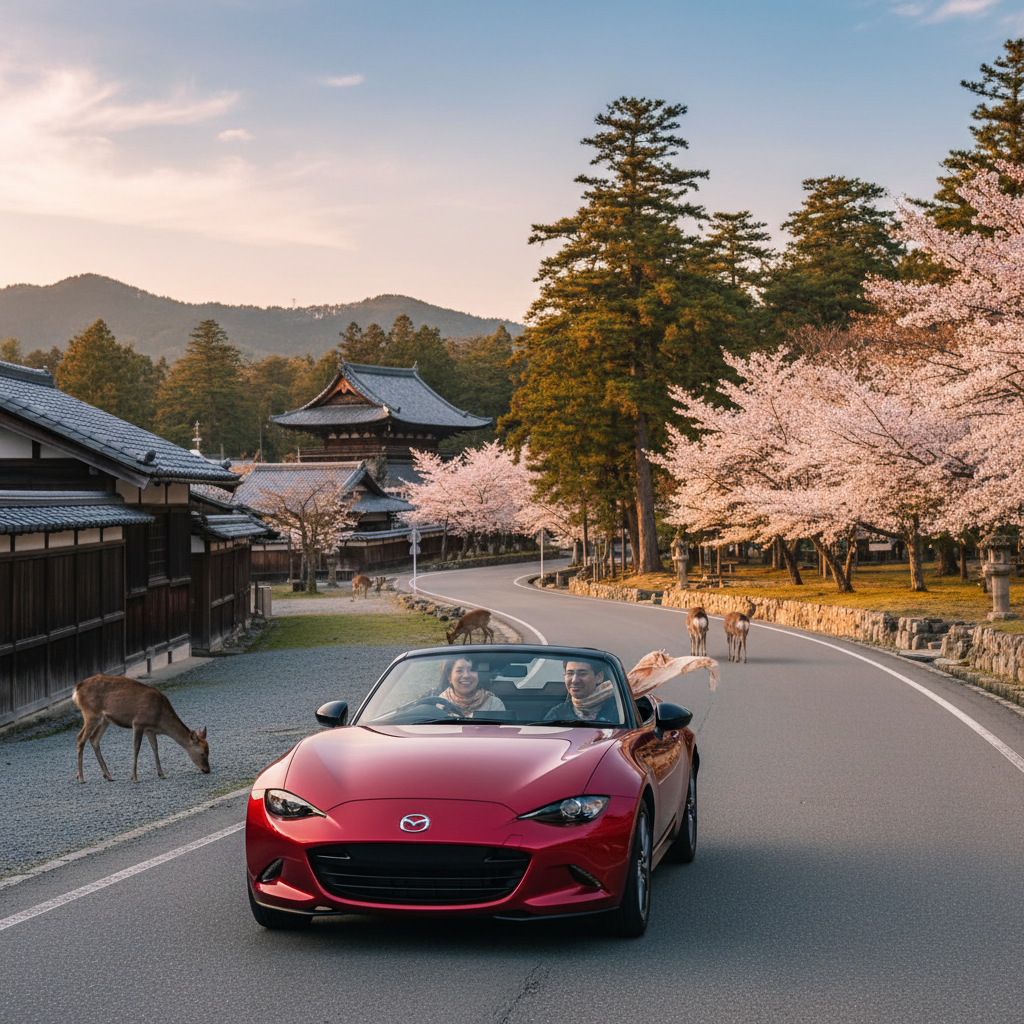
Nara Yakushiji Toshodaiji Recommended Driving Course: A Masterclass in History and Horsepower
For over a decade, I operated the levers of the Kintetsu Railway, guiding thousands of passengers through the heart of the Kansai region. I knew the rhythmic clatter of the tracks, the precise timing of the doors, and the predictable scenery of the Nara line. But there was always a part of me that looked out of the conductor’s window at the winding mountain roads and the hidden temple gates tucked away in the forest, thinking: "That is where the real Japan lives." Trains offer efficiency, but a car—specifically a finely-tuned JDM machine—offers intimacy.
Today, I have traded my conductor’s cap for the keys to some of Japan’s most legendary sports cars. As a resident of Osaka and a JDM specialist, I am here to tell you that the Nara Yakushiji Toshodaiji recommended driving course is not just a sightseeing trip; it is a pilgrimage. It is a journey that bridges the gap between the 8th-century spiritual peak of the Nara Period and the modern mechanical perfection of the Toyota 86 and Subaru BRZ. This is the Japan that the rail passes won’t show you. This is the Secret Japan.
1. The Philosophy of Driving in Japan: Why Four Wheels Beat Two Rails
In Japan, the railway is a marvel of punctuality, but it is also a cage. When you travel by train, you are a passenger in someone else's schedule. You see what the tracks allow you to see. To truly understand Nara—the cradle of Japanese civilization—you must have the autonomy to stop when the light hits a pagoda just right, or to take a detour up a mountain pass simply because the asphalt looks inviting.
Starting your journey from Osaka, the transition from the neon-lit urban sprawl to the misty, ancient atmosphere of Nara is best experienced through the windshield of a Toyota 86. The low center of gravity and the mechanical feedback of a manual transmission create a tactile connection to the landscape. When you drive the Nara Yakushiji Toshodaiji recommended driving course, you aren't just moving between points A and B; you are engaging in a dialogue with the terrain. The Boxer engine’s growl echoes the stillness of the temples, and the precision of the steering mirrors the meticulous craftsmanship of the ancient carpenters who built Nara without a single nail.

2. The 2-Day Itinerary: Deep Dive into Ancient Yamato
Day 1: The Spiritual Core – Yakushiji and Toshodaiji
08:30 AM: The Morning Departure from Osaka
Your journey begins as you slide into the bucket seat of a Toyota 86. The cabin is snug, purposeful. You turn the key, and the 2.0-liter engine settles into a steady hum. Leaving the grit of Osaka behind, you head east toward the Hanshin Expressway. The road begins to rise as you cross the Ikoma mountain range. Feel the weight of the steering as you navigate the long, sweeping curves. This is where the 86 shines—it doesn’t just go fast; it communicates.
10:00 AM: Yakushiji – The Temple of the Healing Buddha
Our first major stop on the Nara Yakushiji Toshodaiji recommended driving course is the majestic Yakushiji Temple. Parking a sharp JDM car against the backdrop of a 1,300-year-old pagoda is a visual feast. Yakushiji was founded in 680 AD by Emperor Tenmu to pray for the recovery of his sick wife. The architecture here is unique; the East Pagoda is the only original structure from the Nara period, famously described by Ernest Fenollosa as "frozen music" due to its rhythmic, multi-layered roofs.
As you walk through the Genjo-sanzoin Complex, take a moment to breathe in the scent of incense and old wood. The vibrant vermilion of the reconstructed buildings contrasts sharply with the deep blue of the Nara sky. For the car enthusiast, there is a parallel here: the dedication to preserving the soul of a machine or a building across centuries. After exploring the medicinal history of the Yakushi Nyorai (the Medicine Buddha), it’s time to head to the next spiritual pillar.
12:30 PM: A Culinary Detour – The Taste of Nara
Don’t settle for a convenience store lunch. Drive five minutes to a local spot serving Kakinoha-zushi (persimmon leaf-wrapped sushi). The saltiness of the mackerel and the slight sweetness of the vinegar-soaked rice, preserved in the anti-bacterial leaf, was the original "fast food" for travelers in the Edo period. It’s compact, powerful, and steeped in tradition—much like the car you’re driving.
02:00 PM: Toshodaiji – The Legacy of Ganjin
Just a short drive north lies Toshodaiji. If Yakushiji is "frozen music," Toshodaiji is "profound silence." Founded by the Chinese monk Ganjin, who lost his sight after five failed attempts to reach Japan, this temple feels heavy with history and perseverance. The Kondo (Main Hall) is a masterpiece of classic architecture, housing a massive thousand-armed Kannon statue that seems to watch over the very fabric of time.
The moss gardens here are unparalleled. After the mechanical excitement of the drive, the stillness of Toshodaiji provides a necessary recalibration. You'll find yourself walking slower, noticing the texture of the bark on the ancient trees, much like you notice the texture of the road through the 86’s suspension.
04:30 PM: The Afternoon Ascent – Mt. Wakakusa and the Nara Skyline
Now, we put the 86 to the test. Head toward the Nara-Okuyama Driveway. This is a toll road, but it is worth every yen. It winds up the mountainside, offering hairpin turns that allow the 86’s rear-wheel-drive dynamics to truly come alive. As you reach the summit of Mt. Wakakusa, the entire Nara basin unfolds beneath you. The Todai-ji Great Buddha Hall looks like a toy from this height. The sunset here, painting the sky in shades of violet and gold, is the perfect reward for a day of technical driving.
Day 2: Winding Roads and Hidden Valleys
09:00 AM: The Shigi-Ikoma Skyline
Wake up early and head to the Shigi-Ikoma Skyline. For a JDM lover, this is hallowed ground. This ridge-line road runs between Osaka and Nara, offering a mix of high-speed sections and technical chicanes. In a Subaru BRZ or Toyota 86, the balance is sublime. You’ll feel the tires biting into the asphalt as you heel-and-toe through the corners. The sound of the boxer engine bouncing off the mountain walls is a symphony for the soul.
11:30 AM: Asuka Village – The Cradle of the Nation
Drive south to Asuka. This area predates even Nara city as the capital of Japan. Here, you’ll find massive stone megaliths like Ishibutai Kofun. The roads in Asuka are narrow and wind through terraced rice paddies. The compact dimensions of the 86 make it the perfect tool for navigating these ancient lanes where a larger luxury car would struggle.
03:00 PM: The Return Path via the Old Highway
Instead of taking the main expressway back, take Route 25 (the non-toll version) through the mountains. It’s a slower pace, passing through small hamlets and alongside rushing rivers. It’s the perfect time to reflect on the duality of your trip: the ancient permanence of the temples and the fleeting, high-octane thrill of the drive.
3. Expert Advice & Cultural Nuances: Driving Like a Local
Driving the Nara Yakushiji Toshodaiji recommended driving course requires more than just a map; it requires an understanding of Japanese road culture. As a former conductor, I can tell you that Japanese people value harmony (Wa) above all else.
- The Michi-no-Eki Culture: These are more than just rest stops. They are community hubs where you can find local produce, handmade crafts, and sometimes even hot springs. They are the perfect places to cool down your brakes and grab a local peach-flavored soft-serve ice cream.
- The "Hazard Flash" Thank You: When someone lets you merge in traffic, a quick two-blink flash of your hazard lights is the universal Japanese sign for "Thank you." It’s a small gesture that goes a long way in maintaining the peaceful flow of the road.
- Hidden Temples: Don’t be afraid of the small wooden signs pointing down gravel paths. Some of the best experiences in Nara are the unmanned shrines where you can hear nothing but the wind in the bamboo.
4. Detailed Logistics & Pre-Trip Tips: The 2026 Edition
As we move into 2026, Japan’s infrastructure is more driver-friendly than ever, but there are nuances you need to master. Driving a JDM car like the Toyota 86 is an emotional experience, but you need to handle the practicalities first.
- The ETC Card: Electronic Toll Collection is essential. Most toll booths are now unmanned or prefer ETC. It saves you from fumbling with coins at every gate on the Hanshin Expressway. Ensure your rental includes an ETC card which you can settle at the end of your trip.
- The Gasoline Stand Ritual: When you pull into a "Full Service" station, the staff will often shout a greeting in unison. To fill it up, simply say "High-oku, mantan" (High-octane, full tank). They will even wipe your windshield and offer to take your trash. It’s a level of service that makes every pit stop feel like a Formula 1 visit.
- Parking with Precision: Nara’s historical areas have very tight parking spots. This is where the 86’s excellent visibility and compact frame become your best friends. Always back into your parking spot—it is the Japanese way and much safer when exiting onto busy roads.
- The Manual Transmission High: There is a specific joy in rowing through the gears of a 6-speed manual while the navigation system softly announces an upcoming temple. It is the ultimate synthesis of the modern and the ancient.
5. Comprehensive FAQ: Your Questions Answered
Q: What license do I need to drive in Japan?
A: You must have an International Driving Permit (IDP) issued under the 1949 Geneva Convention, along with your original home country license and your passport. Residents of certain countries (like Switzerland, Germany, France, etc.) require a Japanese translation of their license instead of an IDP. Always verify your country's status before traveling. You can find more details on licensing requirements on reputable rental sites, but the Geneva 1949 document is the golden rule for most English-speaking travelers.
Q: Is it difficult to drive a manual (MT) car in Japan?
A: Japanese roads are exceptionally well-maintained, but they can be narrow. If you are comfortable with MT, there is no better way to experience the mountains of Nara. The Toyota 86 has a very forgiving clutch and hill-start assist, making it accessible even if you haven't driven a manual in a while.
Q: What about insurance?
A: Standard insurance is usually included, but I highly recommend opting for the full collision damage waiver (CDW) and Non-Operation Charge (NOC) coverage. It gives you peace of mind while navigating those tight Nara streets.
Q: Can I drive this course in winter?
A: Nara rarely gets heavy snow, but the mountain passes (like the Shigi-Ikoma Skyline) can freeze. If you are traveling between December and March, ensure your car is equipped with winter tires (studless tires).
6. Your Adventure Awaits
The Nara Yakushiji Toshodaiji recommended driving course is a journey that changes you. It takes you out of the sterile environment of a train station and puts you in the driver’s seat of history. You will feel the pulse of the engine and the breath of the ancient gods. You will see colors you didn't know existed and hear the stories of a thousand years in the wind rushing past your window.
But to do this right, you need the right machine. You need a car that was built with passion, for people who love to drive. At Omoshiro Rent-a-Car Osaka Chuo, we don’t just rent cars; we provide the keys to an unforgettable Japanese experience. As a former conductor who has seen Japan from every angle, I personally curate our fleet of JDM icons like the Toyota 86 and Subaru BRZ to ensure they are in peak condition for your pilgrimage.
Don't be a passenger in your own vacation. Book your JDM legend today at Omoshiro Rent-a-Car Osaka Chuo and discover the Nara that only a driver can know. The road is calling. Are you ready to answer?