
The Philosophy of Driving in Japan: Beyond the Iron Rails
For nearly a decade, my life was measured in millimeters, exact seconds, and the rhythmic, hypnotizing clack-clack of steel wheels echoing along the Kintetsu Railway line. As a former train conductor navigating the sprawling network of the Kansai region, I held an intimate, almost sacred respect for Japan’s public transit. The Shinkansen is a triumph of human engineering; the local suburban trains are marvels of clockwork punctuality. If you want to travel from the neon-soaked grids of Namba in Osaka to the ancient temples of Kyoto, there is no finer, sleeker way to do it than on iron rails.
Yet, as every veteran traveler eventually discovers, train tracks are a cage built of velvet and steel. They dictate where you look, when you move, and what you are permitted to see. They channel millions of visitors into identical, highly sanitized corridors. You arrive at the station, step onto the paved plaza, follow the English signage, and stand in line behind fifty other people holding the exact same guidebooks.
Real, authentic, unscripted Japan—what I like to call "Secret Japan"—does not live within three hundred meters of a train platform. It begins precisely where the overhead electric wires end.
Secret Japan is hidden high in the misty topography of the Chugoku and Tajima Mountain ranges. It is tucked into sharp mountain passes where cedar trees filter the golden morning light onto ribboning tarmac. It is found in roadside stalls selling charcoal-roasted sweet potatoes, in quiet valley villages that smell of woodsmoke and autumn leaves, and atop lonely stone ruins where the clouds gather like an inland ocean at dawn.
To unlock this hidden realm, you do not need an IC card or a tourist rail pass. You need six manually selectable gears, a naturally aspirated engine, three pedals, and a set of rear wheels pushing you forward through a pre-dawn hairpin turn.
Osaka is universally recognized as the undisputed culinary and nightlife beating heart of Western Japan. But geography bestows upon it another, lesser-known title: it is the supreme launching pad for driving enthusiasts. Within thirty minutes of leaving the urban perimeter, the multi-lane elevated expressways give way to winding mountain passes that slice through Hyogo, Nara, and Wakayama prefectures.
When you sit low to the ground in a pure sports car, feeling every subtle nuance of the road surface through a tight, tactile steering wheel, the entire concept of travel transforms. You cease to be a passive cargo passenger transported between geographic points. You become an active explorer, carving your own path through the landscape. The destination is no longer just a location on a map—it is the reward at the end of a glorious, visceral drive.

The 2-Day Itinerary: Deep Dive into the Tajima Highlands & Castle in the Sky
To truly experience the magical Unkai (Sea of Clouds) that envelops Takeda Castle, your timing must be immaculate. The phenomenon is a delicate dance of nature—requiring a sharp temperature difference between night and day, high humidity, clear skies, and virtually no wind. This happens most frequently between October and late November, during the quiet, crisp hours between 5:00 AM and 8:00 AM.
Below is an hour-by-hour, two-day driving odyssey taking you from the vibrant pulse of Osaka, through the technical mountain passes of Hyogo Prefecture, to the ancient "Castle in the Sky," and down through the rugged, sea-carved Tajima coastline.
DAY 1: Into the Misty Heart of Hyogo
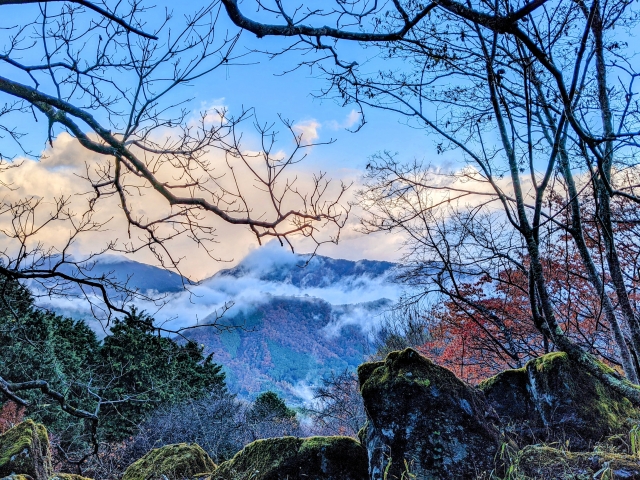
[Day 1 Itinerary Overview]
05:00 AM — Departure from Osaka: Dawn on the Hanshin Expressway
06:30 AM — Entering the Inagawa Pass (Route 12): Waking Up the Chassis
08:30 AM — Historic Interlude: Sasayama Castle Town & Black Soybean Breakfast
11:00 AM — Scaling the Bantan Pass: The Drive to Asago
01:00 PM — Gastronomic Fuel: Tajima Beef at a Mountain Hideaway
03:30 PM — Ritsuun-kyo Scouting Run: Reconnaissance for Tomorrow’s Unkai
06:30 PM — Onsen Sanctuary: Check-in at Yumura or Kinosaki Onsen
05:00 AM — Departure from Osaka: Dawn on the Hanshin Expressway
The city of Osaka is still asleep. The neon glow of Dotonbori has faded into a quiet, blue-hour hue. The morning air carries a sharp, cool bite—perfect for feeding cold, dense oxygen into a high-compression boxer engine.
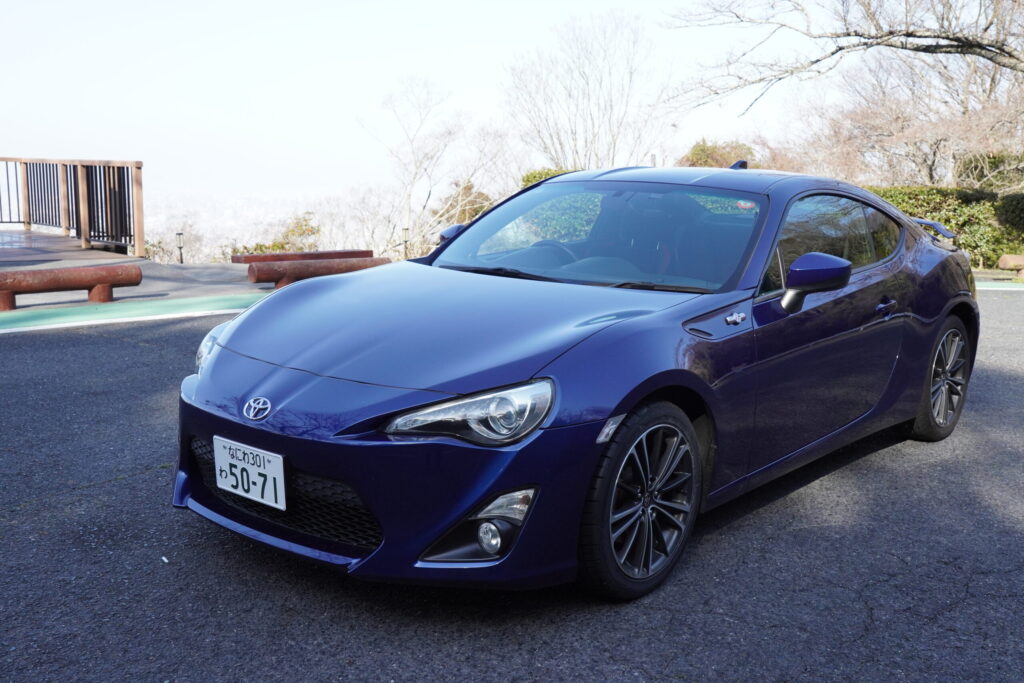
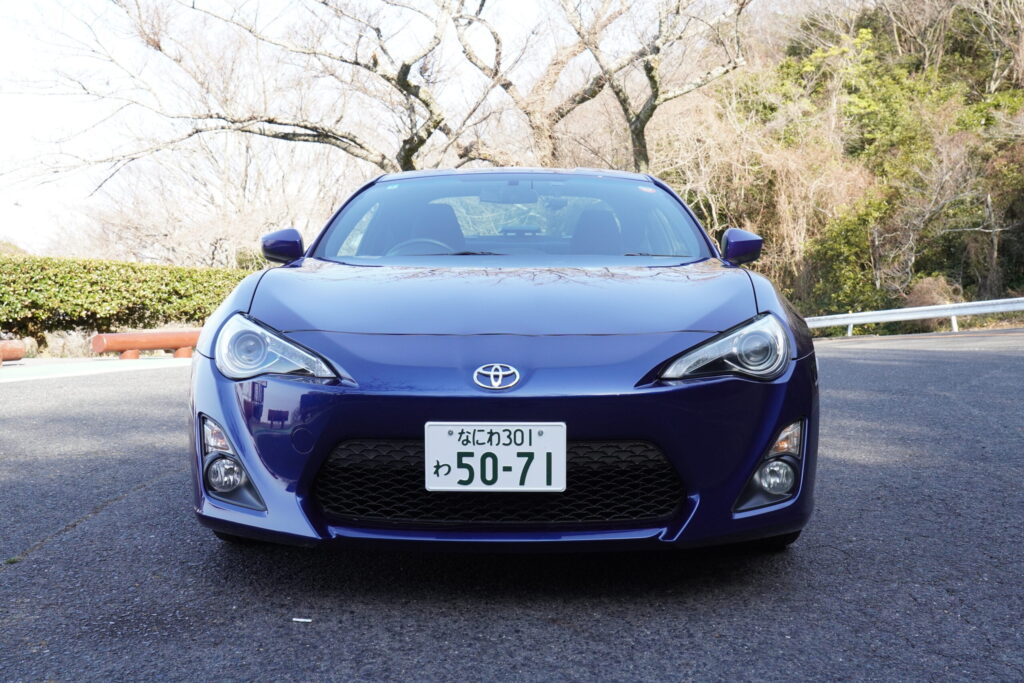
You turn the key or slide the push-start button of your Toyota 86. The 2.0-liter, naturally aspirated flat-four fires to life with a satisfying, mechanical raspy growl. The cabin is snug, purposeful, and minimalist. Your hips drop low into the bucket seat, your left hand naturally resting on the short-throw leather shift knob. Clutch in, select first gear with a precise, crisp clack, and roll out onto the silent asphalt.
Taking the Hanshin Expressway Route 11 north toward Ikeda, the elevated roadway feels like a private circuit. You climb above the sleeping metropolis, the twin exhaust pipes echoing off the concrete sound barriers as you run the engine up to 4,000 RPM before shifting into second, third, and fourth. As the city grid melts away, the distant silhouette of the Rokko Mountain Range begins to black out the brightening eastern sky.
06:30 AM — Entering the Inagawa Pass (Route 12): Waking Up the Chassis
Leaving the main highway at Ikeda, you merge onto Prefectural Route 12, heading north through Inagawa. This is where the suburban concrete shatters and the real driving begins.
Route 12 snakes alongside the clear waters of the Inagawa River. The road surface here is exceptionally smooth, featuring a rhythm of sweeping third-gear curves punctuated by tight, technical second-gear hairpins. This is the natural habitat of the Toyota 86. Unlike heavy supercar beasts that require massive tracks to unleash their power, the 86 thrives on lightweight agility, near-perfect 53:47 front-to-rear weight balance, and communicative steering.
As you turn into the first tight left hander, you feel the front tires bite into the cold tarmac. The steering wheel vibrates softly, feeding instant feedback straight into your palms. You dip the throttle, feeling the mechanical Torsen limited-slip differential lock subtly at the rear, pushing the car out of the apex with pinpoint precision. The scent of pine and moist mountain moss fills the cabin through the slightly cracked driver-side window.
08:30 AM — Historic Interlude: Sasayama Castle Town & Black Soybean Breakfast
By 8:30 AM, you pull into the ancient castle town of Tamba-Sasayama. Surrounded by rolling hills, Sasayama retains its feudal Edo-period street grid, lined with preserved wooden machiya (townhouses) and white-plastered storehouses.
Park near the outer moat of Sasayama Castle (built in 1609 by order of Tokugawa Ieyasu). Step out of the low-slung cockpit, stretch your legs, and absorb the absolute tranquility of a rural Japanese morning. The local specialty here is Kuromame (black soybeans), famous across Japan for their plump texture and rich, sweet flavor.
Stop by a local morning bakery or historic café to pick up fresh Kuromame bread—warm, soft, and packed with sweet, aromatic black beans—paired with a hot, dark-roast drip coffee. As you sip your coffee beside the ancient stone foundations of the castle, you’ll hear nothing but the caw of mountain crows and the rustle of autumn leaves.
[Vehicle Dynamics Spotlight: The Toyota 86 on Mountain Passes]
- Steering Response: Ultra-direct rack-and-pinion setup providing instant feedback.
- Chassis Balance: Low center of gravity (thanks to the flat-four boxer engine layout).
- Pedal Placement: Perfectly aligned for heel-and-toe downshifting on deceleration.
- Power Delivery: Linear acceleration that rewards holding gears high in the RPM band.
11:00 AM — Scaling the Bantan Pass: The Drive to Asago
Leaving Sasayama, track northwest along National Route 429 towards Asago. Route 429 is a driver’s dream—a single-lane and double-lane arterial mountain road that climbs sharply up into the Tajima highlands.
Here, the road climbs through dense, towering Japanese cedar (Sugi) forests. Shadows and sunbeams flicker across the hood of your Toyota 86 as you work the three pedals. Downshift into second: heel-and-toe, a quick blip of the throttle with the right side of your foot while braking, revs matching instantly as the clutch re-engages smoothly. The engine screams past 5,000 RPM, echoing off the rock faces lining the pass.
The road curves endlessly, following the contours of ancient valleys. You pass tiny agricultural hamlets where terraced rice paddies cascade down the hillsides, their golden stalks swaying gently in the mountain breeze.
01:00 PM — Gastronomic Fuel: Tajima Beef at a Mountain Hideaway
You have entered Tajima region—the ancestral birthplace of purebred Japanese Black (Kuroge Washu) cattle. In fact, virtually all premium Wagyu in Japan, including Kobe beef, Matsusaka beef, and Omi beef, traces its genetic bloodline back to Tajima cattle.
Pull up to a local, family-run roadside steakhouse or yakiniku restaurant tucked into the mountains outside Asago City. Order a Tajima Beef Steak Set or a Wagyu Sukiyaki Bowl served in an earthen pot.
When the hot stone plate arrives, the marbling of the Tajima beef glistens. The fat melts at human body temperature, filling the room with a rich, buttery, savory aroma. The first bite requires almost no chewing—it simply dissolves on your tongue, releasing a burst of umami, sweet soy glaze, and subtle oak smoke. Paired with steaming hot Tajima-grown white rice and house-made pickled vegetables, this meal provides the perfect energy boost for an afternoon of driving.
03:30 PM — Ritsuun-kyo Scouting Run: Reconnaissance for Tomorrow’s Unkai
Before nightfall, drive toward the base of Mount Wadayama to scout Ritsuun-kyo (立雲峡).
Ritsuun-kyo is the mountain viewpoint situated directly across the valley from Takeda Castle. While you can walk up to the castle ruins themselves, the famous, ethereal view of the "Castle floating in the Sky" can only be photographed and witnessed from the observation decks of Ritsuun-kyo.
Scouting the trail in the daylight is a vital step for any serious road-tripper. The parking area at the base of Ritsuun-kyo fills up quickly in the early morning hours, and climbing the steep, unpaved mountain trail in pitch darkness requires knowing where you are going.
Take a gentle 20-minute hike up to the 2nd Observation Deck. Looking across the valley, you see the massive, dry-stone granite terraces of Takeda Castle crowning the peak of Mount Shiroyama at 353 meters. Even without the sea of clouds, the sheer engineering feat of constructing these massive stone walls in the year 1431 leaves you spellbound.
06:30 PM — Onsen Sanctuary: Check-in at Kinosaki or Yumura Onsen
After a full day of dynamic driving, steer your Toyota 86 north along the Maruyama River toward Kinosaki Onsen or Yumura Onsen.
Checking into a traditional Japanese Ryokan (inn), exchange your driving shoes for wooden geta clogs and your jeans for a cotton yukata robe. Soaking in an outdoor natural hot spring bath (rotenburo) under a clear, starlit sky is the ultimate antidote to driving fatigue. The rich, mineral-laden volcanic water soothes your muscles, clearing your mind and preparing your body for a 4:00 AM wake-up call.
Enjoy a multi-course Kaiseki dinner featuring fresh Matsuba snow crab (if visiting between November and March), local mountain vegetables, and sweet river trout, before turning in early.

DAY 2: The Castle in the Sky & The Coastal Highway
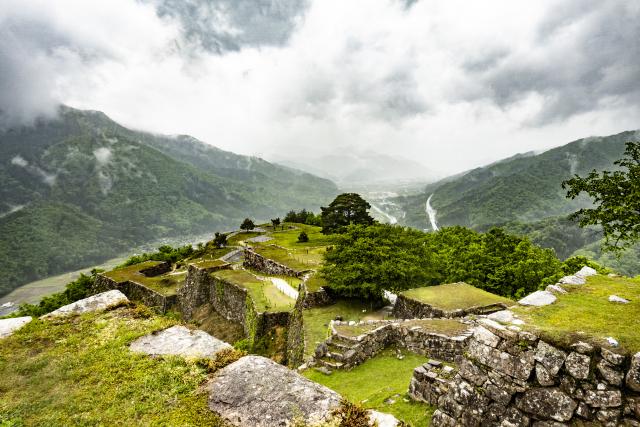
[Day 2 Itinerary Overview]
04:00 AM — Early Wake-Up & The Pre-Dawn Run to Ritsuun-kyo
05:15 AM — The Midnight Climb: Ascent to the Observation Decks
06:15 AM — The Magic Hour: Witnessing the Sea of Clouds (Unkai)
09:00 AM — Touching History: Exploring Takeda Castle Ruins On Foot
11:30 AM — The Winding Coast: Route 178 along the San'in Kaigan Geopark
02:00 PM — Seaside Gastronomy: Fresh Seafood at Kasumi Port
04:00 PM — The Return Loop: Expressway Sprint back to Osaka
04:00 AM — Early Wake-Up & The Pre-Dawn Run to Ritsuun-kyo
The alarm rings in the pitch dark. There is no time for hesitation. You slip out of your futon, pull on layered thermal clothes, grab your camera gear, and head out to the parked Toyota 86.
The air outside is freezing—a crucial indicator that the Unkai is forming in the valley. The windshield has a light coating of morning dew. Start the engine, turn on the defroster, and let the mechanical fluids warm up to operating temperature.
Driving through the silent valley at 4:30 AM is an ethereal experience. The headlights of your 86 slice through patches of thick, hanging ground fog. The road is completely deserted. Every downshift hums cleanly through the quiet night air as you navigate the narrow winding roads leading back to the base of Ritsuun-kyo.
05:15 AM — The Midnight Climb: Ascent to the Observation Decks
Arriving at the Ritsuun-kyo parking lot around 5:00 AM, you equip your headlamp or flashlights and begin the dark, steep hike up the wooden steps and earthen mountain path.
The trail winds through dark cherry blossom trees and granite boulders. The air is still, moist, and silent except for the crunch of gravel under your boots and your deliberate breathing. As you gain elevation, you periodically look to your left across the valley. Below, a blanket of white vapor is slowly pooling together, covering the roads, the houses, and the Maruyama River like thick, fluffy cotton.
By 6:00 AM, you reach the 1st Observation Deck (the highest viewing point on the mountain). You set up your tripod, wrap your scarf tight, and wait in anticipation.
06:15 AM — The Magic Hour: Witnessing the Sea of Clouds (Unkai)
Eastern light begins to paint the horizon in brilliant shades of indigo, gold, and burning orange.
And then, it happens.
As the sun peeks over the distant mountain ridge, the dense layer of fog filling the valley below catches the golden light. The entire city of Asago has completely disappeared beneath a shimmering, ocean-like sheet of white mist. Rising majestically above this white sea, standing isolated and proud on its mountain peak like a mystical fortress floating in the heavens, is Takeda Castle.
[The Historical Reality of Takeda Castle (Takeda-jo)]
- Constructed: 1431 by Yamana Sozen (The "Red Monk"), a powerful feudal lord.
- Architecture: An un-mortared dry-stone wall construction known as "Ano-sumi" (穴太衆積み), built using giant natural river rocks fitted together like a jigsaw puzzle.
- Dimensions: Extends roughly 400 meters from north to south and 100 meters east to west.
- Historical Fate: Abandoned following the decisive Battle of Sekigahara in 1600. While all wooden structures burned, the massive stone foundations remain 100% intact.
Standing there, watching the fog drift quietly across the centuries-old stone ramparts as the sky shifts from pale purple to brilliant blue, time ceases to exist. You realize instantly why no train ride on earth could ever deliver this moment. This view belonged exclusively to those willing to rise in the dark, drive through the misty mountain passes, and climb into the cold dawn.
+-------------------------------------------------------------------------+
|                    TAKEDA CASTLE UNKAI CONDITIONS                       |
+-------------------------------------------------------------------------+
| Season:       Late Autumn (October to late November is peak).          |
| Time:         5:30 AM to 8:00 AM.                                       |
| Weather:      Clear, sunny weather with low wind speed (< 2-3 m/s).     |
| Temperature:  High thermal variance between day and night (> 10°C drop).|
+-------------------------------------------------------------------------+
09:00 AM — Touching History: Exploring Takeda Castle Ruins On Foot
Once the sun rises higher and the morning heat slowly dissipates the sea of clouds, descend Ritsuun-kyo, grab a warm coffee at the base, and drive across the valley to the designated visitor parking area for Takeda Castle itself (such as Yamashiro-no-sato).
A short shuttle ride and a 20-minute walking trail take you directly onto the stone foundations of the castle. Walking through the Otemon (main gate) and onto the Honmaru (inner citadel), you gain a profound appreciation for the stonemasons of the 15th century.
Without modern cranes or mortars, these workers hauled tons of massive granite boulders up a 353-meter cliff face. Standing on the elevated edge of the citadel, looking out across the entire Tajima valley with the morning breeze in your hair, you truly feel like a feudal lord surveying your domain.
11:30 AM — The Winding Coast: Route 178 along the San'in Kaigan Geopark
After exploring the ruins, climb back into the tight bucket seat of your Toyota 86. Point the nose of the car north towards the Sea of Japan.
Take National Route 178, a legendary coastal highway that traces the edge of the San'in Kaigan UNESCO Global Geopark. Here, the driving character changes completely from technical mountain passes to fast, sweeping coastal twisties.
The road hugs jagged granite cliffs that drop straight into the turquoise, crystal-clear waters of the Sea of Japan. The Toyota 86 feels wonderfully planted here. You roll down both windows, letting the salty sea spray fill the car as you flick the gear stick between third and fourth gear. Curves sweep seamlessly into one another—left, right, left—allowing you to establish a rhythmic, intoxicating driving flow.
02:00 PM — Seaside Gastronomy: Fresh Seafood at Kasumi Port
Pull into the historic fishing port of Kasumi. The harbor is dotted with colorful wooden fishing vessels and red crab pots drying in the sun.
Locate a portside seafood market tavern. Order a fresh Kaisen-don (seafood rice bowl) piled high with sweet, raw Kasumi red snow crab leg meat, glistening sea urchin (Uni), fat scallops, and freshly caught yellowtail (Buri).
The seafood here is landed directly from the cold deep-water trenches of the Sea of Japan just hours before being served. The sweetness of the fresh crab meat paired with freshly grated real wasabi is unforgettable.
04:00 PM — The Return Loop: Expressway Sprint back to Osaka
With the afternoon sun beginning to dip toward the sea, turn south onto the Kitakinki-Toyooka Expressway, connecting back to the Chugoku Expressway toward Osaka.
Set a comfortable cruise on the highway. As the engine hums softly in sixth gear, your mind reflects on the last 36 hours: the midnight engine rumble in Osaka, the crisp shift into second gear along Inagawa's riverbanks, the warm taste of roasted black soybeans in Sasayama, the surreal sight of stone castle ramparts floating on a ocean of golden clouds, and the roar of the ocean along Route 178.
You return to the neon lit highways of Osaka by 6:30 PM—not exhausted, but deeply exhilarated, recharged, and changed.
Alternative Itineraries: Tailoring Your Japanese Driving Journey
While the 2-Day Tajima & Takeda Castle loop is the gold standard for road-trippers, driving in Japan offers endless flexibility. Depending on your schedule, here are two alternative routes designed specifically for the sports car enthusiast.
+--------------------------------------------------------------------------+
|                      ITINERARY COMPARISON GUIDE                          |
+--------------------------------------------------------------------------+
| Route Name             | Distance  | Driving Style  | Highlight          |
+------------------------+-----------+----------------+--------------------+
| 1-Day Takeda Express   | ~280 km   | High-tempo GT  | Sunrise Unkai      |
| 2-Day Tajima & Coast   | ~450 km   | Balanced / Pass| Unkai + Coastal    |
| 3-Day Kansai Grand Loop| ~750 km   | Technical Touge| Castle, Sea & Onsen|
+------------------------+-----------+----------------+--------------------+
Option A: The 1-Day Early Bird Takeda Express (280 km Round Trip)
Perfect for travelers with limited time who refuse to miss the Sea of Clouds.
03:30 AM: Depart central Osaka via the Chugoku Expressway.
05:15 AM: Arrive at Ritsuun-kyo parking lot; begin torchlit hike.
06:15 AM - 08:00 AM: Experience the Unkai sunrise over Takeda Castle.
09:00 AM: Breakfast in Takeda town; stroll through historical wooden streets.
11:00 AM: Drive through the winding mountain roads of Izushi (Famous for Izushi Sara Soba—buckwheat noodles served on miniature ceramic plates).
02:00 PM: Scenic mountain return via Prefectural Route 68 (The "Sanda Touge").
05:00 PM: Return car in Osaka in time for evening dinner.
Option B: The 3-Day Kansai Grand "Touge & Onsen" Loop (750 km)
The ultimate road-trip for car purists who want to conquer Japan's best mountain passes.
Day 1: Osaka → Inagawa Pass → Sasayama → Takeda Castle (Overnight at Takeda Castle Town En).
Day 2: Takeda Castle Morning Unkai → Route 178 Coastal Run → Kinosaki Onsen → Yumura Onsen (Overnight at Yumura).
Day 3: Yumura → Mount Hyo-no-sen Touge Pass → Lake Biwa West Coast Highway → Kyoto/Osaka Return.
Expert Advice & Cultural Nuances: Master the Japanese Road
Navigating Japan’s rural road network is an immensely rewarding experience, but it comes with unique cultural norms and practical quirks that every international driver should master.
[The Essential Japanese Driving Toolkit]
- ETC (Electronic Toll Collection) Card: Essential for seamless expressway driving.
- Cash (Japanese Yen): Vital for rural parking lots and roadside produce stands.
- Navigation App / Onboard GPS: MapCode capability makes locating rural spots effortless.
- Convenience Store Knowledge: Lawson, 7-Eleven, and FamilyMart are your tactical re-supply hubs.
The Wonders of "Michi-no-Eki" (Roadside Stations)
In Western countries, highway rest stops are often dirty, industrial, and bleak. In Japan, they are a cultural art form known as Michi-no-Eki (道の駅).
Created by the government to stimulate local rural economies, these government-designated roadside rest facilities are scattered across every major driving route in Japan. They feature:
Ultra-Fresh Local Farmers' Markets: Buy fruits harvested that very morning—such as Tajima grapes, sweet white peaches, or fresh mountain chestnuts.
Regional Gastronomy Hubs: Instead of generic fast food, Michi-no-Eki feature food stalls operated by local cooks serving regional specialties (e.g., Tajima Beef Croquettes, Wild Boar Ramen, or Black Soybean Soft-Serve Ice Cream).
Clean, Free 24/7 Restrooms & Parking: Spotlessly clean facilities with warm bidet toilets, pristine drinking water, and tourist information maps.
When driving to Takeda Castle, make sure to stop at Michi-no-Eki Tajima-Mahoroba. Designed to resemble an ancient Kofun tomb building, it sells incredible local artisan crafts, dry-aged Tajima beef cuts, and locally brewed sake.
Cracking the Code of Hidden Local Eats
When driving through rural Hyogo, ignore generic review aggregator websites that caters mostly to tourists in big cities. Instead, keep your eyes open for two distinct visual cues along the roadside:
Noren (Fabric Curtains): A clean, traditional fabric curtain hanging over a shop doorway indicates the store is open for business. If it’s dyed dark blue or warm brown with handwritten calligraphy, you’ve found an authentic local eatery.
Yellow Revolving Lights: Outside rural Japanese diners (Shokudo), ramen shops, and mountain coffee huts, you will often spot a single yellow electric light spinning on a pole. This is the universal rural sign for: "We are open, the kitchen is hot, and drivers are welcome."
Mountain Driving Etiquette (Touge Courtesy)
Japan's mountain roads (Touge) are legendary among car enthusiasts worldwide. To maintain safety and respect local residents:
Yielding to Faster Traffic: If a local vehicle or another sports car catches up to you in a mountain pass, signal left and briefly pull into one of the frequent paved turnouts (P-Kansho) to let them pass smoothly.
The "Hazard Light Thank You": When another driver yields to you, pulls over to let you merge, or lets you out of a side street, flash your hazard lights twice (blink-blink). This subtle, universal gesture of Japanese road politeness translates to: "Thank you, courteous driver."
Watch for Wildlife: Early morning drives around Asago and Tajima frequently cross paths with Sika deer, Japanese macaques (monkeys), and Tanuki (raccoon dogs). Keep your high beams on during pre-dawn runs and exercise caution near forested apexes.
Detailed Logistics & Pre-Trip Tips
Driving a manual sports car like the Toyota 86 through Western Japan in 2026 is pure magic, provided your logistics are rock-solid before turning the key.
Navigating Japan’s Toll Road Network & The Power of ETC
Japan boasts one of the most sophisticated, beautifully maintained expressway networks on earth. However, it is almost entirely tolled.
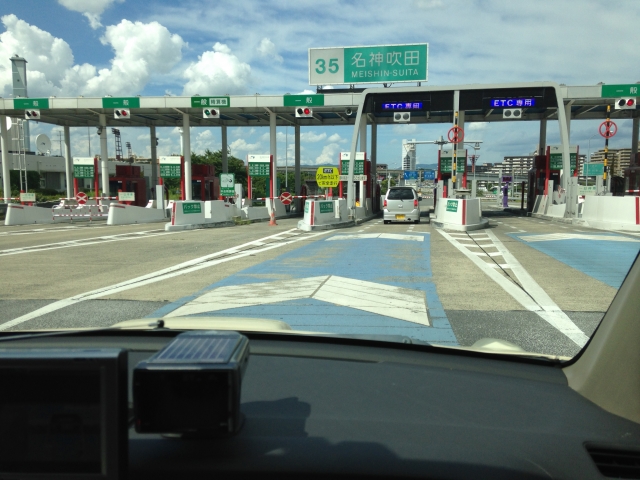
When renting your vehicle, it is absolutely essential to request an ETC Card (Electronic Toll Collection Card). This smartcard is inserted directly into a dedicated reader hidden inside the glovebox or center console of your car.
[Expressway Gate Navigation]
- GREEN "ETC Only" Lanes: Drive through smoothly at 20 km/h without stopping. The toll gate communicates wirelessly with your card, logging your route electronically.
- PURPLE "Cash/General" Lanes: Requires stopping completely to take a paper ticket or pay cash/credit card to a toll booth operator.
Using an ETC card eliminates the stress of fumbling for physical Yen coins at busy toll booths and grants you access to significant off-peak toll discounts (such as 30% discounts during weekend late-night driving hours).
How to Gas Up Like a Local: The "Mantan" Phrasebook
Full-service gas stations (Kyuyu-jo) remain widespread across rural Japan. When you pull up over the rubber sensor hose, energetic attendants in crisp uniforms will bow, guide your car in with hand signals, and handle the fueling for you.
To order a full tank of regular or premium gasoline, use these precise phrases:
"High-Octane, Mantan, Kado de" (ハイオク、満タン、カードで)
(Translation: "High-Octane/Premium fuel, Full tank, Paying by Credit Card.")
(Note: The Toyota 86 requires High-Octane Premium Gasoline to run smoothly!)
"Regular, Mantan, Genkin de" (レギュラー、満タン、現金で)
(Translation: "Regular gasoline, Full tank, Paying by Cash.")
While fueling, attendants will often wipe your windshield with a damp towel, clean your side mirrors, and offer to take your trash. When pulling out back onto the main road, the attendant will briefly block oncoming traffic and bow deeply as you accelerate away.
Parking Mastery in Rural Japan
Unlike North America or Europe, street parking in Japan is virtually non-existent and strictly illegal. You must always park in designated paved or gravel parking lots.
Back-In Parking Culture: 99% of drivers in Japan reverse into parking spots. This is considered standard safety etiquette, ensuring that when you depart—especially from tight mountain spots or busy roadside stops—you pull forward with clear visibility.
Wheel Clearance Awareness: The Toyota 86 has a low front bumper and low side skirts. Approach concrete parking blocks (wheel stops) slowly to avoid scraping the underside of the front splitter.
The Pure Joy of the JDM Manual Experience
Why drive a 6-speed manual Toyota 86 instead of a standard automatic rental box?
Because driving in Japan should be an immersive tactile sensory experience. The Toyota 86 features short-throw gear linkage, tightly spaced gear ratios, and pedals designed specifically for heel-and-toe downshifting.
When downshifting from third to second gear while braking into a tight hairpin pass in the Tajima hills, matching the engine revs perfectly creates a feeling of pure mechanical harmony. You aren't just looking at Japan through a window—you are actively driving through its geography, feeling every rise, fall, and curve of the ancient island topography in your hands and feet.
Comprehensive FAQ for International Drivers
Q1: What precise driving documents are required to drive a rental car legally in Japan?
To drive legally in Japan, you must present three physical documents at the rental counter:
Your Original Passport.
Your Valid Home Country Driver’s License.
An International Driving Permit (IDP) issued strictly under the 1949 Geneva Convention on Road Traffic.
[CRITICAL WARNING ON IDP PERMITS]
- The IDP MUST explicitly state compliance with the "Convention on Road Traffic signed at Geneva on 19 September 1949".
- IDPs issued under the 1968 Vienna Convention are NOT valid in Japan.
- Drivers holding licenses from Germany, France, Switzerland, Belgium, Monaco, or Taiwan do NOT use an IDP. Instead, they must present their original license alongside an official Japanese translation provided by JAF (Japan Automobile Federation) or their respective embassy.
Q2: Is insurance included, and what coverage should I select?
Basic liability coverage is usually included, but it is strongly recommended to select Full Collision Damage Waiver (CDW) and Non-Operation Charge (NOC) Coverage. This ensures that in the unlikely event of a minor scratch, stone chip on a mountain pass, or curb strike, you are 100% covered with zero out-of-pocket stress.
Q3: I haven't driven a manual transmission (MT) car in a few years. Will I struggle?
Japanese road layouts outside major cities are extremely driver-friendly. Roads are exceptionally well-maintained, signage features standardized English transliterations, and local drivers are patient, predictable, and polite. The clutch pedal on the Toyota 86 is light, communicative, and forgiving, featuring an intuitive engagement point that makes re-adapting to manual driving smooth and stress-free within fifteen minutes of practice.
Q4: What are the winter road conditions around Takeda Castle?
From mid-December through early March, mountain passes in Northern Hyogo and Tajima experience real snowfall and frozen road conditions. If traveling during these winter months, renting a vehicle equipped with dedicated winter snow tires (Studless Tires) is mandatory. For peak Unkai viewing (October to late November), road conditions are generally dry, crisp, and clear of snow, though early morning temperatures require warm clothing.
The Final Thoughts: Your Secret Japan Journey Begins in Osaka
The sunrise over Takeda Castle cannot be bought at a train station ticket window.
It cannot be experienced from the window seat of a tour bus crammed with sixty tourists. It cannot be scheduled, automated, or packaged into a generic travel itinerary.
The floating castle belongs exclusively to those who choose to take the wheel into their own hands. It belongs to the early risers, the lovers of open roads, the drivers who find joy in the precise click of a manual gearshift and the low rumble of a sports car engine slicing through the cold morning mist of the Tajima mountains.
When you step off the plane in Kansai, bypass the crowded airport train lines. Make your way into the heart of the city and head directly to Omoren Osaka Chuo (おもしろレンタカー大阪中央店).
As Western Japan’s premier specialist in sports cars and JDM legend vehicles, Omoren Osaka Chuo is not a generic rental counter. It is run by genuine car enthusiasts and veteran Japanese transit professionals who live and breathe the passion of driving. Whether you choose the razor-sharp, lightweight agility of the Toyota 86 or its twin sibling the Subaru BRZ, every car in the fleet is meticulously maintained, tuned, and prepared to deliver the ultimate driving high.
Your custom Toyota 86 is sitting in the garage right now, key ready in the ignition, tank filled with high-octane fuel, ETC card slotted in place. The winding mountain passes of Hyogo are calling, and the morning clouds are gathering over Takeda Castle.
Stop reading about Secret Japan. Put your hands on the wheel, step on the clutch, and drive it for yourself.
Reserve your Toyota 86 today at Omoren Osaka Chuo (おもしろレンタカー大阪中央店) and turn your Japanese journey into an unforgettable legend.