
Unveiling Ancient Nara: A JDM Drive Through Sakurai City's Miwa Somen Tradition - The Philosophy of Driving in Japan
For decades, my life was dictated by the rhythmic clickety-clack of steel wheels on rails, the precise timings of the Kintetsu line, and the communal experience of train travel. I knew every curve, every station, every sunrise over the meticulously maintained tracks. And while Japan's railway system is undeniably a marvel of efficiency, a testament to punctuality and interconnectedness, it offers a distinct, yet incomplete, view of this incredible nation. It's a fantastic way to navigate the urban sprawl and whisk between major cities, yes. But if you truly want to peel back the layers of Japan, to breathe in the crisp mountain air untainted by platform announcements, to discover the secluded hamlets nestled in forgotten valleys, and to taste the true essence of its regional soul, you must leave the rails behind. You must drive.
From my unique vantage point, having navigated both the rigid grid of the railways and the sprawling, organic network of Japan's roads, I can confidently tell you that a car unlocks a 'Secret Japan.' A Japan that remains elusive to the millions who dutifully follow train schedules and tour bus routes. Imagine the freedom to chase a fleeting sunset over a remote rice paddy, to pull over spontaneously for a local festival only hinted at by fluttering banners, or to simply lose yourself on a winding mountain road, the engine of your JDM sports car echoing against ancient cedars. This is the Japan that truly captivates, the Japan that calls to the adventurer, the gourmet, the true explorer.
Osaka, with its vibrant energy and strategic location, serves as the perfect springboard for such an odyssey. It’s a city that pulsates with life, but just beyond its sprawling urban edge lies a tapestry of ancient history, breathtaking natural beauty, and culinary traditions that have quietly evolved over centuries. Our destination today, Sakurai City in Nara Prefecture, home to the revered Miwa Somen, is precisely one of these secret treasures. It’s not just about reaching the destination; it’s about the journey there, the exquisite pleasure of piloting a responsive machine like a Toyota 86 or Subaru BRZ through a landscape that demands your full attention, rewarding you with every turn. It’s about experiencing Japan not as a passive observer, but as an active participant, a conductor of your own unforgettable adventure.
Forget the timetable. Forget the crowds. Embrace the open road, the exhilarating hum of a finely tuned Japanese engine, and the promise of discovery that lies just beyond the next horizon. This is not just a trip; it's an immersion, a profound connection with the beating heart of Japan, experienced on your terms, with the ultimate freedom only a JDM car can provide.
Unveiling Ancient Nara: A JDM Drive Through Sakurai City's Miwa Somen Tradition - The 2-Day Itinerary: Deep Dive

Day 1: From Osaka's Pulse to Sakurai's Ancient Soul
09:00 AM - 10:00 AM: The Ignition of Adventure in Osaka
The morning sun casts long shadows across the concrete jungle of Osaka as you arrive, a palpable anticipation in the air. The moment has come to claim your chariot for this adventure: a gleaming Toyota 86 or Subaru BRZ. As you approach the vehicle, its sleek lines and aggressive stance promise performance and precision. The door opens with a satisfying thud, revealing an interior designed for the driver. Settle into the bucket seat, the firm bolsters hugging your sides. Your hands instinctively grip the leather-wrapped steering wheel, feeling its perfect circumference. If you've chosen the manual transmission, the gear shifter feels exquisitely weighted, a direct conduit to the machinery beneath. Turn the key (or push the start button), and the flat-four engine barks to life with a throaty growl, settling into a confident thrum. It’s a sound that resonates deep within, a symphony of engineering prowess. This isn't just a car; it's a partner, a finely tuned instrument for exploration. We meticulously perform a final check, confirm your route, and with a confident clutch engagement and a smooth release, you pull away from the urban hum. The city slowly begins to fade in the rearview mirror, replaced by the burgeoning promise of the open road.
10:00 AM - 11:30 AM: Navigating the Urban Fringe to the Expressway
The initial segment of our journey involves a strategic navigation of Osaka’s urban arteries, a fleeting moment where the concrete landscape still dominates. But even here, in the organized chaos of Japanese city driving, the 86/BRZ feels nimble and eager. Its compact dimensions make maneuvering through traffic a joy, not a chore. The responsive steering offers immediate feedback, instilling confidence. Soon, the city limits recede, giving way to the sprawling suburban expanse, a gradual transition that hints at the natural beauty to come. We merge onto the Hanwa Expressway (or a similar route towards Nara), the smooth asphalt a stark contrast to the city streets. The engine note changes, a purposeful hum as you accelerate onto the main thoroughfare. The scenery rapidly transforms from endless buildings to green embankments and glimpses of distant hills. This initial highway stretch is where the 86/BRZ truly stretches its legs, maintaining a composed stability at speed, eating up the kilometers with quiet efficiency. The wind whispers softly around the sculpted mirrors, and the world outside begins to blur into a comforting tapestry of greens and blues.
11:30 AM - 12:30 PM: The Scenic Unveiling of Nara's Heartland
As we exit the major expressway, the landscape undergoes a profound shift. The multi-lane highways give way to narrower, more intimate prefectural roads, often adorned with traditional signage and flanked by small, family-run farms. This is where the true character of rural Nara begins to unfold. The roads here are less about speed and more about engagement. The 86/BRZ's precise steering comes alive, dancing through gentle curves that trace the contours of the land. We traverse through verdant rice paddies, shimmering emerald under the sun, reflecting the endless sky. Ancient farmhouses with their dark, weathered roofs peek out from groves of bamboo, their timeless presence a stark contrast to the modern world you just left behind. The air, crisp and clean, carries the scent of damp earth and distant woodsmoke. You begin to notice the subtle geological features of the Nara Basin, a vast, fertile plain surrounded by gentle mountains. These hills, ancient and verdant, have cradled Japanese civilization for millennia, witnessing the birth of empires and the rise of spiritual traditions. Every turn reveals a new vista, a panorama of rural tranquility. The subtle rumble of the 86/BRZ's exhaust note is your only companion as you delve deeper into this historical heartland, a thrilling prelude to the culinary and cultural immersion that awaits in Sakurai City.
12:30 PM - 02:00 PM: Miwa Somen – A Taste of Tradition in Sakurai
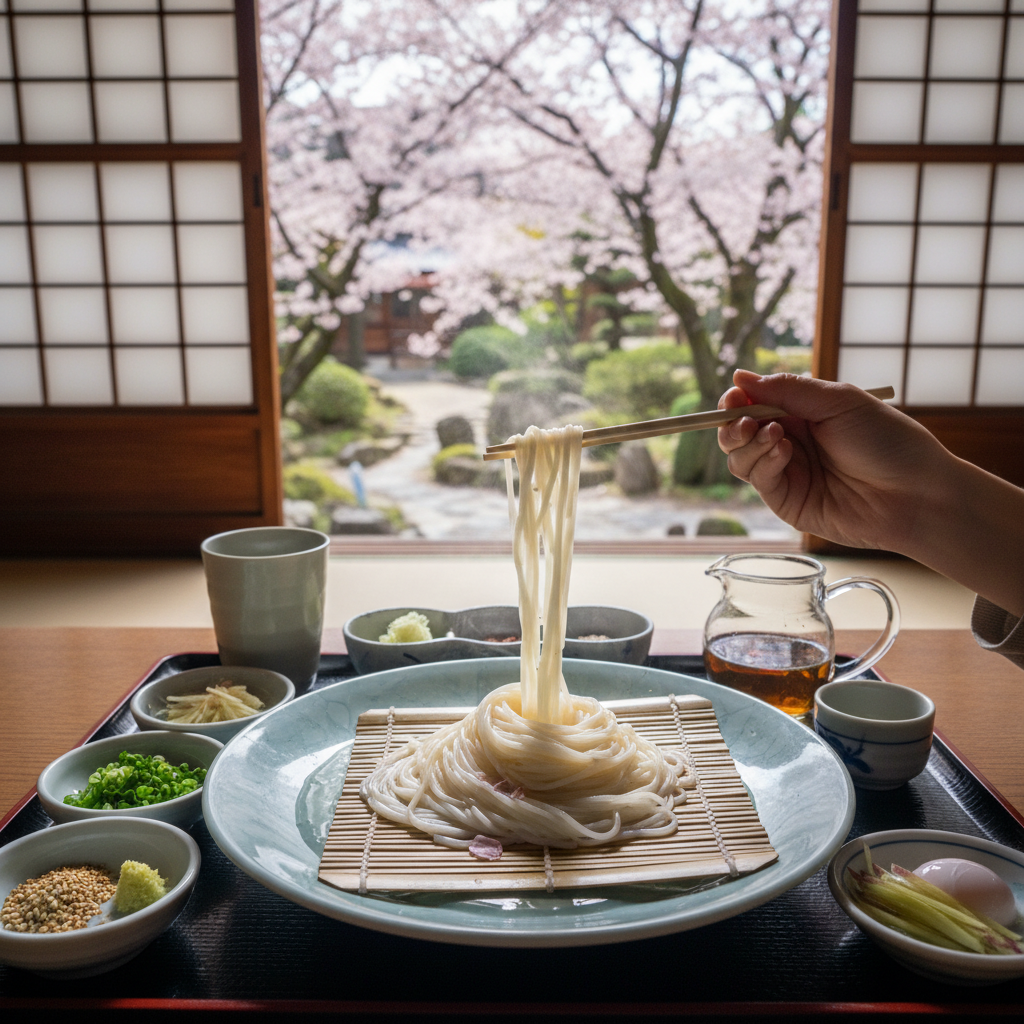
Arriving in Sakurai City, the atmosphere is distinctly different from Osaka’s bustling streets. It's quieter, imbued with a sense of history and tradition. Our first stop is inevitably dedicated to the very essence of this region: Miwa Somen. You've heard the name, but to experience it here, at its origin, is to truly understand its depth. Miwa Somen isn't just noodles; it's a culinary art form passed down for over 1200 years. We seek out one of the venerable establishments, often a modest building with a welcoming noren (traditional curtain). Stepping inside, the aroma of dashi stock and subtle wheat fills the air. The traditional setting, perhaps with tatami mats and low tables, invites a sense of calm. The meal arrives: delicate, impossibly thin, hand-stretched wheat noodles, typically served chilled with a light, flavorful dipping sauce (tsuyu). The first bite is revelatory. The texture is ethereal – silky smooth yet with a satisfying chew, a testament to the meticulous hand-stretching process that involves repeatedly pulling and oiling the dough. It’s a dance of elasticity and tension, developed through generations of craftsmanship. The lightness of the noodles allows the subtle umami of the tsuyu, often made from bonito flakes and soy sauce, to shine through. Served with finely chopped green onions, ginger, and perhaps a sprinkle of sesame, it’s a symphony of understated flavors. The simplicity is its genius. During colder months, it might be served hot in a clear broth, offering a comforting warmth. This isn’t just lunch; it’s a living piece of Japanese culinary history, a delicate threads of tradition you can taste.
02:00 PM - 04:30 PM: Omiwa Shrine and the Sacred Slopes of Mount Miwa
With our palates cleansed and our spirits refreshed by the sublime Miwa Somen, we turn our attention to the spiritual heart of Sakurai: Omiwa Shrine. This is no ordinary shrine with ornate buildings and dramatic gates. Omiwa Shrine is considered one of Japan's oldest and most sacred Shinto sites, unique in that it has no main hall for worship. Instead, the entire Mount Miwa itself is revered as the deity. The path to the shrine is shaded by ancient cedar trees, their colossal trunks reaching skyward, imbuing the air with a profound sense of tranquility and reverence. The drive to the base of the mountain is a peaceful ascent, the 86/BRZ purring contentedly as you navigate gentle curves. As you walk along the approach, the ground is carpeted with moss, and the only sounds are the rustling leaves and the distant chirping of birds. The 'honden' (main hall) is symbolically replaced by a three-torii gate, beyond which lies the sacred mountain, forbidden to common ascent. We absorb the ancient energy of the place, the deep-rooted animism that predates formal shrine architecture. Explore the subsidiary shrines scattered across the grounds, each with its own story, its own connection to the ancient Yamato people who first worshipped here. The air feels heavy with history, a palpable link to Japan's mythological origins. The geological significance of Mount Miwa, an isolated peak rising from the flat Nara Basin, likely contributed to its early designation as a sacred place, a natural landmark around which early beliefs coalesced. The experience is less about grand architecture and more about the raw, spiritual power of nature itself, a humbling reminder of Japan's enduring respect for its environment.
04:30 PM - 06:00 PM: Hasedera Temple – Climbing to Enlightenment
From the primal spirituality of Omiwa, we venture a short distance to Hasedera Temple, a magnificent Buddhist temple renowned for its stunning multi-tiered main hall and its breathtaking floral displays, particularly during cherry blossom and autumn foliage seasons. The drive to Hasedera is a delight, taking us through slightly more winding, picturesque roads, the 86/BRZ responding eagerly to every input. The temple itself is built into the side of a mountain, requiring an ascent of a long, covered staircase known as the 'Noboriro.' Each step you climb is an act of pilgrimage, a slow reveal of spiritual artistry. As you ascend, the views gradually open up, offering panoramic vistas of the surrounding valley, a patchwork of vibrant greens and seasonal hues. The main hall, a designated National Treasure, houses an impressive eleven-headed Kannon statue and is famous for its unique 'stage' balcony that extends out over the hillside, similar to Kyoto’s Kiyomizu-dera. The vibrant vermilion and intricate carvings of the temple structures stand in beautiful contrast to the lush natural backdrop. The silence within the temple grounds, broken only by the occasional toll of a bell or the chanting of monks, is profound. It's a place where history, art, and nature converge in spectacular harmony, providing a moment of serene contemplation after the exhilarating drive. The unique geological setting, perched precariously on a mountain slope, offers both protection and a commanding presence, testament to the ingenuity of its ancient builders.
06:00 PM - 07:00 PM: Sunset Drive and Arrival at Your Ryokan
As the sun begins its descent, casting long, golden rays across the landscape, we embark on a tranquil drive towards our chosen ryokan or traditional inn in the Sakurai countryside. This route is specifically chosen for its scenic beauty, winding through secluded lanes flanked by small farms and dense forests. The engine of the 86/BRZ, having performed flawlessly all day, settles into a contented hum, the subtle exhaust note adding to the meditative atmosphere. The light paints the rice paddies in hues of orange and purple, and the ancient mountain peaks glow with a final, fiery embrace. It's a moment of profound beauty, a quintessential Japanese scene. Your ryokan, likely nestled amidst verdant hills, awaits. The scent of hinoki wood and tatami mats greets you upon arrival. The soft glow of traditional lanterns, the sound of a nearby stream, and the warm welcome of your hosts immediately transport you to a state of peace. The satisfying click as you turn off the 86/BRZ's engine marks the end of a day of driving, a perfect culmination to the journey, leaving the car to rest as you prepare for a night of traditional Japanese hospitality.
07:00 PM onwards: Local Delicacies and Starlit Serenity
The evening at your ryokan is an integral part of the experience. After settling into your meticulously prepared room, perhaps donning a yukata, you'll be treated to a multi-course kaiseki dinner. This isn't just a meal; it's an artistic presentation of local, seasonal ingredients, a culinary journey reflecting the bounty of Nara. Expect delicate sashimi, expertly grilled local fish, crisp tempura, and an array of colorful side dishes, each a small masterpiece. Beyond Miwa Somen, Nara boasts specialties like 'kakinoha-zushi' (sushi wrapped in persimmon leaves, a local preserving method) and various pickles. Each dish is a testament to the region's agricultural richness and culinary heritage. The flavors are subtle, refined, and deeply satisfying. Afterwards, a soak in the ryokan's onsen (hot spring), if available, will melt away any lingering fatigue from the day’s adventures, the warm mineral-rich water soothing your muscles. As night fully descends, step outside. Away from the city lights, the sky above Sakurai City becomes a canvas of a million stars. The air is cool and still, the only sounds the gentle chirping of insects and the distant murmur of the countryside. It’s a moment of profound serenity, reflecting on the day’s discoveries, the thrill of the drive, and the deep connection you've made with this ancient land. The silent sleeping 86/BRZ awaits tomorrow's adventures, its presence a comforting reminder of the freedom it affords.
Day 2: Cultural Immersion, Winding Roads, and a Reflective Return
07:30 AM - 09:00 AM: Sunrise and Traditional Breakfast
Awakening in the tranquility of the Nara countryside is a profound experience. The morning light filters through the shoji screens, painting the room in soft hues. Step outside and breathe in the crisp, clean air, invigorated by the scents of dew-kissed foliage and damp earth. A traditional Japanese breakfast awaits, often a delightful spread of grilled fish, miso soup, steamed rice, various pickled vegetables, and perhaps a tamagoyaki (rolled omelet). It's a wholesome and energizing start to the day, preparing you for another day of exploration. The quiet elegance of the meal, served with meticulous care, is a perfect reflection of Japanese hospitality.
09:00 AM - 11:30 AM: Unveiling Local Craft and Hidden Roads
After breakfast, we set out to uncover another layer of Sakurai's charm. Instead of major tourist sites, we seek out a local craft workshop or a small, artisanal store. Perhaps a traditional sake brewery, or a pottery studio, or even a local facility that showcases the intricate process of Miwa Somen production, allowing you to witness the 'te-nobe' (hand-stretching) technique firsthand. Engaging with local artisans offers a rare glimpse into the dedication and passion that defines traditional Japanese craftsmanship. The rhythmic movements, the focused expressions, the patient dedication – it's a living art form. The drive to these smaller, often less-known establishments takes us deeper into the network of country roads, through bamboo groves and past small Shinto shrines guarded by weathered stone foxes. The 86/BRZ hums along, its suspension soaking up the minor imperfections of these older roads, the steering precise as you navigate tight turns between ancient stone walls. These are the roads less traveled, the paths that truly reveal the essence of rural Japan, where time seems to slow down, and every turn brings a new, unexpected delight.
11:30 AM - 01:00 PM: A Taste of Nara's Rustic Charm
For lunch, we'll bypass the usual tourist spots and seek out a 'shokudo' (local diner) or a charming 'kissaten' (coffee shop that serves light meals) frequented by locals. These are the places where authenticity thrives. You might find a simple yet deeply satisfying bowl of 'udon' or 'soba,' perhaps a hearty 'teishoku' (set meal) featuring seasonal vegetables or a local cut of meat. The atmosphere is unpretentious, warm, and inviting. It's a chance to observe daily life in Sakurai, to hear the local dialect, and to truly feel like a part of the community, even if just for an hour. The flavors are honest, comforting, and a genuine reflection of the region's culinary soul, far removed from the polished experiences of big-city dining. It’s here that the local ingredients, fresh from the surrounding farms, truly shine, prepared with a home-cooked touch that nourishes both body and spirit.
01:00 PM - 03:30 PM: Scenic Mountain Pass and Panoramic Views
As we begin our journey back towards Osaka, we take a deliberate detour through one of Nara's lesser-known mountain passes. This isn't just a route; it's a driving experience crafted for the 86/BRZ. The road starts as a gentle ascent, gradually tightening into a series of exhilarating hairpins and flowing S-curves. The sound of the flat-four engine, crisp and eager, fills the cabin as you downshift, heel-and-toe into a corner, and power out with a satisfying surge. The steering feels alive in your hands, communicating every nuance of the road surface. The balanced chassis of the 86/BRZ makes these winding roads a pure joy, a seamless dance between driver and machine. On one particularly sweeping curve, the trees part to reveal a breathtaking panoramic vista of the Kansai plain stretching out to the horizon, a hazy patchwork of cities and mountains. It's a moment to pull over, to silence the engine, and simply absorb the vastness of the landscape. The crisp mountain air fills your lungs, and the sheer beauty of Japan unfolds before you, a testament to the rewards of venturing off the beaten path. This route is not found on conventional tourist maps; it's a discovery, a secret shared between the roads and the spirited driver.
03:30 PM - 05:00 PM: Reflective Drive and Urban Re-Entry
From the mountain pass, we gradually descend, eventually rejoining the major expressways that lead back to Osaka. The transition is smooth, the 86/BRZ effortlessly shifting from canyon carver to composed cruiser. This final leg of the journey offers a chance for reflection. The vivid images of ancient shrines, the delicate taste of Miwa Somen, the friendly faces of local artisans, and the thrill of those winding roads play back in your mind. The vibrant greens of Nara's countryside slowly give way to the familiar concrete and steel of Osaka. The engine's hum, once a constant companion, now signals the gentle closing of this chapter. As the skyscrapers of Osaka reappear on the horizon, glowing golden in the late afternoon sun, there's a sense of accomplishment. You haven't just visited Japan; you've experienced it, intimately, passionately, and on your own terms. The JDM machine has been more than just transport; it’s been the key to unlocking an authentic, unforgettable adventure.
Unveiling Ancient Nara: A JDM Drive Through Sakurai City's Miwa Somen Tradition - Expert Advice & Cultural Nuances
Beyond the itinerary, a truly immersive Japanese road trip is enriched by understanding the subtle nuances of its culture and infrastructure. My years as a train conductor gave me an insight into the structured side of Japan, but my endless road trips and daily life as a JDM rental owner in Osaka have taught me the unspoken rules of the road and the unwritten joys of local discovery.
The Michi-no-Eki Phenomenon: More Than a Rest Stop
Japan's Michi-no-Eki, or 'Roadside Stations,' are truly one of the country's unsung treasures, especially for the discerning driver. Forget the generic highway service areas of other nations. Michi-no-Eki are vibrant hubs that celebrate local culture, produce, and craftsmanship. Each one is unique, a microcosm of its surrounding community. You'll find stalls brimming with impossibly fresh, seasonal fruits and vegetables, often picked that very morning. Discover artisanal goods, from pottery and textiles to locally brewed sake or regional sweets. The food courts offer 'gotochi gourmet' – local specialties that you simply won't find anywhere else. I've stopped at Michi-no-Eki that boast natural hot springs, foot baths, playgrounds for kids, and even small museums. They are not merely places to rest your legs; they are destinations in themselves, providing genuine insight into the heart of rural Japan. Always keep an eye out for them; they are marked by a distinctive green sign and a friendly face. They're perfect for stretching your legs, grabbing a unique souvenir, and tasting the authentic flavors of the region, supporting local economies directly.
Unearthing Hidden Local Gems
The true magic of driving in Japan lies in the freedom to stumble upon the unexpected. While my itinerary highlights key attractions, the most profound experiences often come from finding the 'hidden gems' – the small, unassuming places that don't make it into glossy guidebooks. How do you find them? Look for signs of local life. A small parking lot full of compact Japanese cars outside a nondescript building usually indicates a popular local eatery. A tiny, moss-covered shrine tucked away behind a rice field might hold centuries of local folklore. Don't be afraid to take a slight detour down a narrow lane (provided it's paved and safe). Sometimes the most charming cafes are hidden down a residential street, or the most breathtaking viewpoints are marked by a simple, hand-painted sign. If you're feeling adventurous, politely ask a local for recommendations, even with limited Japanese. A simple 'Oishii resutoran wa doko desu ka?' (Where is a delicious restaurant?) might lead you to a family-run establishment serving the best ramen or udon you'll ever taste. These are the moments when you truly feel connected to the spirit of Japan.
Navigating with Respect: Japanese Driving Etiquette
Driving in Japan is generally a pleasant and safe experience, largely due to the high standards of road maintenance and the inherent politeness of Japanese drivers. However, there are a few cultural nuances to be aware of. Always remember that Japan drives on the left-hand side of the road. Speed limits are strictly enforced, often with radar cameras, so adhere to them diligently – they're generally lower than in many Western countries (e.g., 80-100 km/h on expressways, 40-60 km/h in urban/rural areas). When encountering pedestrians or cyclists, always give them ample space and priority. When driving on narrow mountain roads, be prepared for occasional blind corners and drive defensively. Flashing headlights generally mean 'go ahead' or 'thank you,' but always exercise caution. If a car flashes its hazard lights briefly after you've allowed them to merge, it's a polite 'thank you.' And perhaps most importantly, patience is a virtue. Road rage is virtually non-existent, and a calm, considerate approach to driving will ensure a smooth and enjoyable journey. Respect the rules, respect other drivers, and Japan's roads will reward you with an unparalleled experience.
Unveiling Ancient Nara: A JDM Drive Through Sakurai City's Miwa Somen Tradition - Detailed Logistics & Pre-Trip Tips
Preparing for a Japanese road trip requires a little foresight, but with the right information, it's a seamless and rewarding experience. As someone who's spent countless hours traversing Japan's asphalt ribbon and now helps others do the same with JDM vehicles, I can tell you that the details make all the difference.
Japan's Roads in 2026: Modernity Meets Serenity
Japan's road network is among the best in the world. Expect impeccably maintained surfaces, clear signage (often bilingual on major routes), and efficient traffic flow, even in 2026. While city centers can still experience rush hour congestion, once you escape the metropolitan areas, the roads often open up into scenic, enjoyable drives. The expressways are a marvel of engineering, featuring tunnels through mountains and bridges across valleys, making long distances manageable. However, the true gems are the prefectural and local roads, often narrower and more winding, which lead you to the heart of rural Japan. These are where the 86/BRZ truly shines, allowing you to connect with the landscape in a way major highways cannot.
The ETC Card: Your Expressway Express Lane
An ETC (Electronic Toll Collection) card is an absolute necessity for any road trip in Japan. Trying to pay cash at every toll booth is a cumbersome and time-consuming process. The ETC system allows you to pass through tolls automatically, without stopping. When you rent your JDM car, ensure you also rent an ETC card reader. The card itself will typically be inserted into the reader in the car. As you approach an ETC lane (clearly marked in purple), simply slow down, and a barrier will lift, allowing you to pass. Your tolls are then tallied and billed either daily or at the end of your rental period. It streamlines your journey, keeps you moving, and truly enhances the driving experience, especially on the extensive expressway network that will whisk you from Osaka towards Nara.
Fueling Up: A Cultural Experience
Japanese gas stations are generally efficient and offer a choice between full-service and self-service. For a unique cultural interaction, I highly recommend full-service stations at least once. Pull up, and an attendant will typically greet you with a friendly shout and direct you to a pump. You'll likely hear them say "Mantan!" (full tank) as they begin. They’ll ask "Regular?" (レギュラー - regyuraa) or "High-octane?" (ハイオク - haioku), as JDM sports cars like the 86/BRZ often require high-octane fuel for optimal performance. They'll even clean your windows and dispose of any trash. It’s a level of service rarely seen elsewhere. For self-service, the pumps are usually user-friendly with touchscreens (often with English options). Remember to look for the correct fuel type (red nozzle for regular, yellow for high-octane, green for diesel). Payment is typically by cash or credit card at the pump or a small kiosk. Don't be surprised if attendants wave you out with cheerful energy – it’s part of the charming Japanese service.
Parking Prowess: Mastering Japanese Parking
Parking in Japan is generally well-organized, though spaces can be tighter than what you might be accustomed to in some other countries. The compact size and excellent maneuverability of the 86/BRZ make parking much easier. In cities and at major tourist sites, multi-story car parks and coin-operated parking lots are common. Look for signs that say “P” (for Parking) or “駐車場” (chushajo). Many smaller towns and rural attractions offer free parking. Always park within the designated lines, and remember to retrieve your ticket from the machine or pay at the exit. For coin parking, you'll often drive onto a platform that lifts or lowers, securing your car, and you pay upon return. It's an efficient system once you understand it.
The Unmatched Thrill of a JDM MT Car: An Ex-Conductor's Perspective
Driving a manual transmission JDM car like the 86 or BRZ in Japan is not just a mode of transport; it's a communion. It’s a direct, visceral connection between you, the machine, and the road. As a former train conductor, I understand the precision required to operate complex machinery, and the 86/BRZ embodies that Japanese engineering philosophy in a car. The crisp, short throws of the shifter, the perfectly weighted clutch pedal, the instantaneous throttle response – it all comes together to create an intoxicating driving experience. On those winding Nara roads, you're not just steering; you're dancing. Every downshift into a corner, every perfectly executed heel-and-toe, every precise input of the steering wheel becomes a part of the rhythm of the journey. The flat-four engine's distinctive rumble, the subtle exhaust note echoing off the bamboo groves, the feeling of the tires gripping the asphalt – these are the sensory details that elevate a trip into an adventure. It’s a challenge, yes, but one that rewards you with an unparalleled sense of control and exhilaration. It’s the closest you’ll get to truly driving the soul of Japan.
Unveiling Ancient Nara: A JDM Drive Through Sakurai City's Miwa Somen Tradition - Comprehensive FAQ
Navigating a new country, especially behind the wheel of a JDM car, can raise questions. Here are the most common queries, comprehensively addressed to ensure your peace of mind.
Do I need an International Driving Permit (IDP) to drive in Japan?
Absolutely. To drive in Japan, you will need an International Driving Permit (IDP) issued under the 1949 Geneva Convention, along with your original domestic driver's license and your passport. It is crucial to have all three documents with you at all times. The IDP translates your existing license into multiple languages and is valid for one year from the date of issue or the date of entry into Japan, whichever is shorter. Ensure your IDP is issued by the designated authority in your home country before you arrive in Japan. Without these three documents, you will not be able to legally drive a rental car in Japan.
What about rental car insurance?
When renting a car, comprehensive insurance coverage is highly recommended and usually mandatory. This typically includes Collision Damage Waiver (CDW) to cover damage to the rental car itself, and sometimes a Non-Operation Charge (NOC) waiver, which covers the loss of income for the rental company if the car is damaged and out of service. Always review the insurance terms thoroughly with the rental agency before signing. Ensure you understand what is covered, any deductibles (excess fees), and what additional options might be available for extra peace of mind.
I'm nervous about driving a manual transmission (MT) JDM car. Is it too difficult?
It's natural to feel a little apprehensive, especially if you're not accustomed to driving MT regularly or on the left side of the road. However, Japanese roads are generally well-maintained, and traffic flows smoothly. The 86/BRZ's manual transmission is known for its user-friendliness and precise engagement, making it a joy to operate. If you have some experience with MT, you'll quickly adapt. I recommend taking it easy in less crowded areas initially to get a feel for the car and the road. If you're genuinely uncomfortable, automatic transmission (AT) options are available, but for the full JDM driving experience, MT truly unlocks the car's spirit. The reward for mastering it is immense.
What are the winter driving conditions like in the Sakurai/Nara area?
The Sakurai and wider Nara area typically experiences mild winters compared to northern Japan. Snowfall is generally light and infrequent in the lower plains, but temperatures can drop, and mountain passes (like those we'd explore) can see occasional snow or icy conditions. If you're traveling between December and March, it's wise to check local weather forecasts before heading into higher elevations. Winter tires (スタッドレスタイヤ - sutaddoresu taiya) are not usually necessary for the main routes in the Sakurai plains but are strongly advised if you plan to venture into more mountainous regions or if heavy snowfall is predicted. Rental companies can equip cars with winter tires upon request, often for an additional fee. Always prioritize safety and drive according to conditions.
How do I navigate Japan's roads effectively?
Modern rental cars often come equipped with in-car GPS systems, which can sometimes be in Japanese by default, though English language options are usually available. For added convenience, a reliable smartphone with Google Maps or Apple Maps is invaluable. Ensure you have a portable Wi-Fi device or a local SIM card with a data plan. Inputting phone numbers or MapCodes (unique codes for specific locations) can sometimes be more accurate than addresses in Japanese GPS systems. Always have a charger ready for your phone, especially on long drives.
Unveiling Ancient Nara: A JDM Drive Through Sakurai City's Miwa Somen Tradition - The Final Call: CTA
The journey we've described isn't just a trip; it's a pilgrimage for the senses, an odyssey into the heart of ancient Japan, powered by the spirit of JDM. It's an opportunity to swap the predictable, efficient yet impersonal experience of the railway for the exhilarating, intimate freedom of the open road. From the delicate, centuries-old tradition of Miwa Somen in Sakurai City to the sacred slopes of Mount Miwa, from the hidden Michi-no-Eki brimming with local treasures to the pure, unadulterated thrill of a manual 86 or BRZ carving through winding mountain passes, this is Japan revealed in its most authentic, captivating form.
If you're ready to trade the roar of a train for the refined growl of a perfectly balanced sports car, to navigate those captivating roads that lead to Japan's deepest cultural secrets, and to forge a connection with this incredible country that goes far beyond the surface, then your adventure demands the right vehicle. At Omoshiro Rent-a-car Osaka Chuo, we understand this passion not just as a business, but as a lifestyle. As a former Kintetsu conductor and now a dedicated JDM enthusiast, I've meticulously curated a fleet of vehicles – including the iconic 86 and BRZ – that are more than just cars; they are meticulously maintained, custom-spec machines built to amplify your Japanese road trip dreams. We speak your language, we know these roads intimately, and we share your love for driving. Don't just visit Japan; truly experience it. Your unparalleled JDM adventure begins the moment you step into our Osaka Central branch. Book your dream ride today and unlock the Japan you've always dreamed of.
