
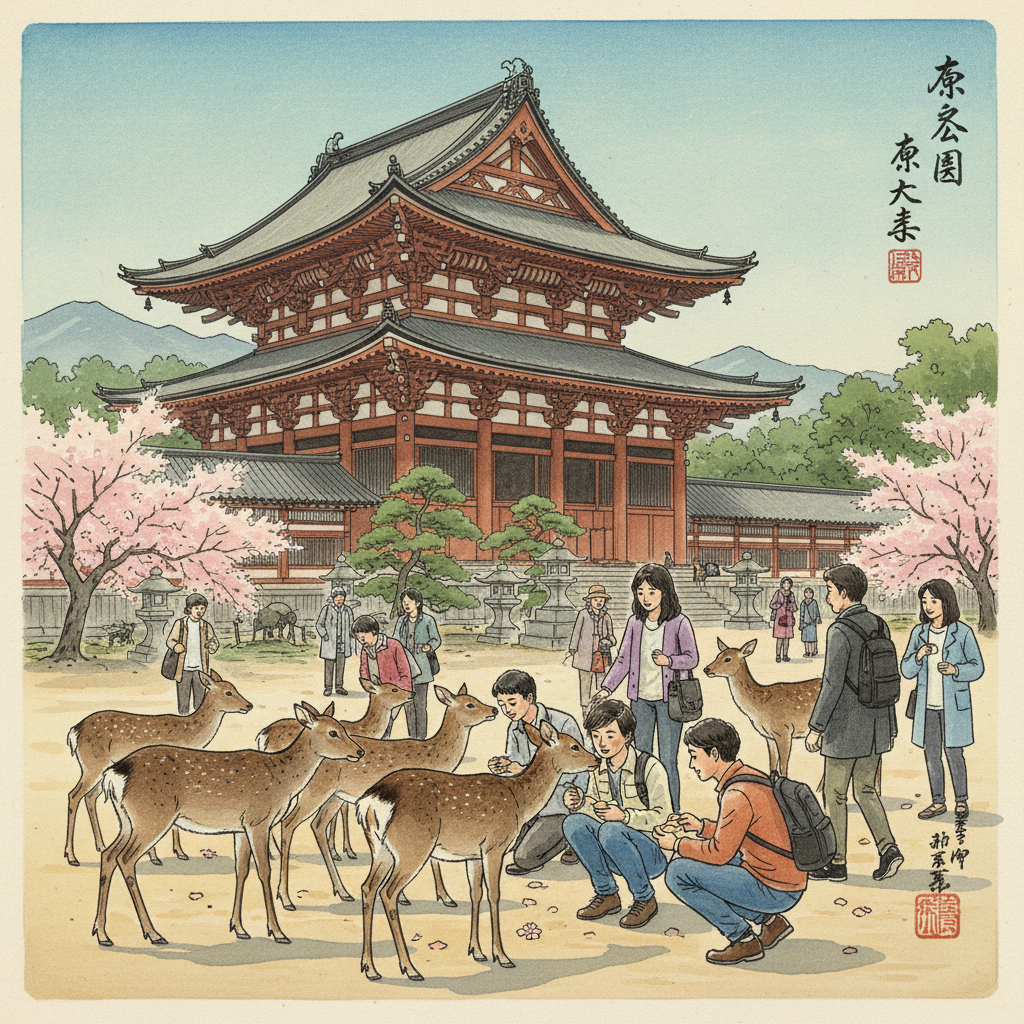
Nara Park, Todai-ji, Deer, Great Buddha, Nara Sightseeing, Beginner-Friendly: Unlock Japan's Ancient Heart with an 86/BRZ Adventure from Osaka
For decades, my life was meticulously scheduled, dictated by the rhythmic clang of closing doors and the precise hum of electric motors on the Kintetsu railway. As a former train conductor, I witnessed Japan’s breathtaking landscapes flash by countless times, but always through a window, always at a predetermined speed, and always on a fixed path. It was an unparalleled education in efficiency, punctuality, and the intricate dance of a nation on the move. Yet, even then, a different kind of longing stirred within me – a desire to pull off the tracks, to chase the horizon where the rails simply ceased to go.
Today, my journey continues, but the vehicle has changed. I now navigate Japan from behind the wheel, running a JDM rental car shop in Osaka, and the philosophy I once embraced has inverted. I’m here to tell you, with the unwavering conviction of someone who has experienced both sides of the coin: to truly feel Japan, to peel back its layers beyond the polished perfection of its public transport, you must drive. And there is no better way to discover the ancient, mystical heart of Nara, from its iconic deer to the colossal Great Buddha of Todai-ji, than by embracing the open road in a machine built for pure driving pleasure – an 86 or a BRZ.
Consider the allure of a journey that begins not with a timetable, but with a full tank and an open map. The train offers speed, yes, but it often delivers you directly to the tourist traps, the pre-packaged experiences. Driving, particularly from a vibrant hub like Osaka, unlocks a different dimension. It’s about the spontaneous detour down a tree-lined lane you wouldn't otherwise notice. It’s about the unexpected glimpse of a forgotten shrine nestled amidst the rice paddies, or the discovery of a local ramen shop whose existence remains a delicious secret to those bound by train schedules.
This is the essence of “Secret Japan” – a Japan that whispers its tales not from loudspeaker announcements, but from the gentle hum of your engine as you glide through a rural landscape, from the scent of fresh mountain air through your open window, or the breathtaking vista revealed after a challenging series of winding turns. The precision engineering of an 86 or BRZ isn't just about speed; it's about connection – connection to the road, to the landscape, and to the very soul of Japanese craftsmanship. It transforms a mere journey into an adventure, allowing you to not just visit Nara, but to truly experience the nuanced beauty of the Kansai region on your own terms.
Forget the crowded commuter lines for a moment. Imagine the exhilarating engagement of a manual transmission, the perfect weight distribution, and the direct feedback from the tarmac as you carve your way towards ancient history. This isn’t just transportation; it’s an integral part of the adventure. For the curious traveler, the car enthusiast, or anyone seeking a deeper, more personal encounter with Japan, the choice is clear. Let's trade the train for a true driver's machine and embark on an unforgettable two-day odyssey to Nara.
Nara Park, Todai-ji, Deer, Great Buddha, Nara Sightseeing, Beginner-Friendly: The 2-Day Itinerary: Deep Dive
Prepare yourself. This isn't just a trip; it's a pilgrimage into Japan's profound past, orchestrated with the thrilling symphony of a JDM legend. We’re embarking on a two-day journey from the urban pulse of Osaka to the serene, deer-filled ancient capital of Nara, all from the cockpit of an 86 or a BRZ. This itinerary is designed not just to show you the sights, but to immerse you in the tactile, auditory, and visual splendor of the Kansai region, making every mile an unforgettable part of your Japanese adventure.
Day 1: Osaka's Urban Edge to Nara's Ancient Embrace
7:00 AM: The Awakening of the Machine – Osaka Departure
The dawn breaks over Osaka, casting a soft, pearlescent glow on the cityscape. You arrive at our designated pick-up location, a subtle anticipation buzzing in the air. Before you sits your chariot: a gleaming 86 or BRZ, its aggressive lines hinting at the spirited drive ahead. The low growl of the boxer engine as you ignite it sends a shiver of excitement down your spine – a promise of the mechanical ballet to come. Take a moment to settle into the supportive bucket seat, feel the reassuring heft of the manual shifter, and adjust your mirrors. We'll perform a quick check of the navigation system, ensuring our route is optimized to avoid morning rush hour and to embrace the most engaging roads leading towards Nara.
Our departure from central Osaka is strategically planned to bypass the densest traffic. We’ll glide onto the Hanshin Expressway, the city gradually receding in your rearview mirror. The immediate goal is to transition smoothly from urban sprawl to the more open highways connecting Osaka to its eastern neighbors. The precise steering of the 86/BRZ makes lane changes effortless, its compact size a boon in the initial city navigating. Feel the subtle firmness of the suspension, a constant reminder that this is a driver's car, engineered for feedback and engagement.
8:00 AM: Highway Symphony and Countryside Whispers
As we merge onto the Kinki Expressway, the city’s concrete canyons give way to more expansive views. The pace quickens, and the 86/BRZ truly comes alive. The direct injection engine, though not boasting monstrous horsepower, is perfectly tuned for Japanese roads, offering a linear, eager power delivery. Engage the gears, feel the seamless shift, and listen to the distinct thrum of the engine echoing through the cabin – a constant, exhilarating soundtrack to your journey. The expressway here offers glimpses of burgeoning rice fields, traditional farmhouses, and the distant, verdant undulations of the Ikoma Mountains, which form a natural barrier between Osaka and Nara.
Historically, this route has been a crucial artery for centuries, connecting Japan's economic hub to its spiritual heart. The Ikoma Mountains, which we’ll soon traverse, have always been a formidable yet beautiful challenge, sculpted by millennia of tectonic activity and erosion, cloaked in dense forests of cedar and cypress. The geological history here tells a tale of ancient volcanic activity and the slow, inexorable march of geological time, culminating in the serene, rolling hills you see today.
9:00 AM: Ascending the Ikoma Skyparkway – A Driver's Delight
Our direct route takes us off the main expressway and onto a true hidden gem for drivers: the Ikoma Skyparkway. This isn’t merely a road; it’s an experience. The signage, often subtle, is your cue to leave the mundane behind. The 86/BRZ’s short wheelbase and precise steering come into their own here. The road begins to climb, twisting and turning with a delightful rhythm through dense forests. The air instantly feels crisper, cleaner, carrying the scent of pine and damp earth. Sunlight dapples through the canopy, creating a mesmerizing play of light and shadow on the asphalt.
Each corner is an invitation, not a challenge. Downshift, feel the engine rev-match perfectly, and then power out, the rear-wheel drive chassis communicating every nuance of the road surface. The suspension, firm yet compliant, ensures you maintain excellent control, soaking up imperfections while keeping the car flat through corners. Look out over the sprawling Osaka plain, now a miniature tapestry of concrete and green far below. The vistas from the various lookout points are breathtaking, offering panoramic views that stretch to the distant mountains, often shrouded in a soft, ethereal mist in the morning light.
Geologically, these mountains are part of the Kongo-Ikoma mountain range, an ancient uplifted block. The winding roads trace the natural contours of the landscape, remnants of ancient paths and trails now paved for modern enjoyment. This is where the car truly becomes an extension of yourself, a precise instrument of exploration. The rhythmic engagement of the manual gearbox and the responsive throttle make every curve an opportunity for pure driving enjoyment, a profound connection between man, machine, and magnificent scenery.
10:00 AM: Arrival in Nara – Gateway to Antiquity
Descending from the Ikoma mountains, the landscape flattens slightly, and the distinct, ancient aura of Nara begins to permeate the air. You’ll notice the architecture shifting, becoming more traditional, more subdued. Our 86/BRZ, after its exhilarating mountain sprint, settles into a more sedate rhythm as we approach the periphery of Nara Park. Parking in Nara can be tricky, but knowing the local layout allows us to secure a spot in one of the less crowded, more convenient parking areas near Kofuku-ji or the Nara Prefectural Office. This strategic choice avoids the main tourist bus parking and keeps our JDM pride safe and easily accessible.
The transition from the focused intensity of driving to the serene calm of Nara Park is striking. The moment you step out of the car, the air is alive with the gentle rustling of leaves and, unmistakably, the soft bleating of deer. These aren't just animals; they are the ancient guardians of Nara, revered as messengers of the gods. Their relaxed presence, roaming freely among visitors, is an immediate, enchanting welcome to this sacred land.
10:30 AM – 1:00 PM: Nara Park, Deer Encounters, and Todai-ji's Grandeur
This is where the magic truly begins. Nara Park stretches out before you, an expansive green canvas dotted with ancient trees and historic structures. The deer, numbering over 1,200, are undoubtedly the stars of the show. You can purchase 'shika senbei' (deer crackers) from vendors, but be warned: they are discerning and persistent! Watching a deer bow its head gently to request a treat is an unforgettable interaction, a tangible link to Nara's spiritual heritage. The feeling of their velvety noses nudging your hand, the soft texture of their fur as you offer a cracker – it's an experience that transcends mere observation.
As you wander through the park, let your senses guide you. The scent of ancient earth, the distant ringing of temple bells, the murmur of excited voices – it all contributes to an atmosphere unlike anywhere else. We'll make our way towards Todai-ji Temple, a monumental structure that embodies Japan's profound Buddhist history. Even from a distance, the sheer scale of its Daibutsuden (Great Buddha Hall) is breathtaking. This is the largest wooden building in the world, and its presence commands reverence.
Approaching the Nandaimon Gate, guarded by two fierce Nio guardian statues, is like stepping through a portal in time. The immense wooden structure, built without nails, creaks with the weight of centuries. Inside, the Great Buddha (Daibutsu) itself is an awe-inspiring sight. Standing at nearly 15 meters tall, cast in bronze, its serene gaze has watched over Japan for over 1,200 years. The sheer artistry and engineering required to create such a colossal statue in the 8th century are astounding. Take your time to walk around its base, to appreciate the intricate details, and to feel the palpable sense of history and devotion that permeates the air. The vastness of the hall, the quiet murmurs of visitors, the scent of incense – it’s a sensory overload in the most spiritual sense.
A fun, albeit challenging, tradition within Todai-ji is attempting to crawl through a pillar base with a hole in it, said to be the same size as the Daibutsu's nostril. Successfully navigating it is said to bring good luck. This is a moment where the ancient and the whimsical perfectly intertwine, a testament to Nara's unique charm.
1:00 PM – 2:00 PM: Lunch Amidst History – Nara's Culinary Delights
After immersing ourselves in such profound history, a well-deserved lunch is in order. Nara offers a delightful array of culinary experiences, from traditional Japanese fare to more modern interpretations. For a truly authentic experience, we'll seek out a local restaurant specializing in kakinoha-zushi, a regional delicacy of sushi wrapped in persimmon leaves. The leaves impart a subtle, earthy flavor to the rice and fish (typically mackerel or salmon), a taste that is uniquely Nara. It’s a bento-style meal, perfect for a casual yet refined lunch, allowing you to savor the subtle flavors and the delicate presentation.
Alternatively, we might seek out a small, family-run soba or udon shop tucked away from the main thoroughfares. Imagine slurping down freshly made noodles in a rich, umami-laden broth, the warmth spreading through you, especially welcome on a cooler day. The understated elegance of Japanese cuisine, even in its simplest forms, is a delight. The crispness of tempura, the delicate balance of seasonings – each dish is a testament to culinary craftsmanship.
2:00 PM – 4:00 PM: Exploring Beyond the Buddha – Kofuku-ji and Isuien Garden
With our appetites satisfied, we continue our exploration of Nara’s rich tapestry. Just a short walk from Todai-ji lies Kofuku-ji Temple, another UNESCO World Heritage site and one of Nara’s most prominent landmarks. While parts of it have been rebuilt over centuries, its stunning five-storied pagoda is an iconic symbol of Nara, its graceful silhouette often seen reflected in Sarusawa Pond. The pagoda, soaring elegantly into the sky, represents the exquisite architectural prowess of ancient Japan. The tranquil grounds invite quiet contemplation, a stark contrast to the lively deer park.
For those seeking a moment of serene beauty, Isuien Garden is an absolute must-visit. This traditional Japanese garden, composed of two separate gardens from the 17th and 19th centuries, utilizes the technique of "borrowed scenery" (shakkei), incorporating Todai-ji's Nandaimon Gate and the distant Wakakusa-yama hill into its meticulously crafted landscapes. Stroll along the winding paths, past serene koi ponds, perfectly pruned trees, and delicate stone lanterns. The vibrant greens of moss, the clear reflective water, the careful placement of every rock and plant – it’s a living work of art, designed for peace and contemplation. The sounds of birdsong, the gentle rush of water, and the rustling of leaves create an immersive, calming experience, a perfect counterpoint to the earlier sensory overload.
The geological features of the garden, though man-made, reflect the natural beauty of the region. The carefully chosen stones often hail from nearby rivers, their smooth, water-worn surfaces telling tales of ancient currents. The subtle undulations in the landscape mimic the natural hills, creating a microcosm of Japan’s varied topography.
4:00 PM – 5:30 PM: Heading to Accommodation – A Scenic Drive to a Local Ryokan
As the afternoon sun begins its descent, casting long shadows across the ancient city, it's time to head to our accommodation. Rather than staying in the heart of Nara, we'll venture slightly beyond the immediate city center, perhaps towards the charming outskirts or even a secluded spot in the foothills, for a more authentic Japanese experience. This is where the 86/BRZ shines again, offering the freedom to choose unique lodging that public transport simply cannot reach.
Imagine a short, scenic drive through quaint rural roads, the car gliding effortlessly as dusk begins to paint the sky in hues of orange and purple. The journey itself becomes part of the evening's relaxation. We might select a traditional ryokan nestled amongst the trees, offering hot spring baths (onsen) and exquisite multi-course dinners (kaiseki). The winding approach to such a place, perhaps on a narrow, well-maintained road, allows for another brief moment of spirited driving, the car responding with eager precision.
6:00 PM: Ryokan Check-in & Onsen Bliss
Upon arrival at the ryokan, you'll be greeted with warm hospitality. Slipping into a comfortable yukata, the traditional Japanese robe, you’ll immediately feel the day's exertions melt away. The highlight for many is the onsen. The mineral-rich waters, heated by geothermal activity, are profoundly relaxing, soothing tired muscles and calming the mind. The sensation of sinking into the hot, restorative water, often in an open-air bath (rotenburo) under the starlit sky, is an experience that epitomizes Japanese tranquility. The air, cool against your skin, provides a refreshing contrast to the warmth of the water. This is a moment of pure, unadulterated bliss, a reward for the day's explorations.
7:30 PM: Kaiseki Dinner – A Feast for the Senses
Dinner at a traditional ryokan is an art form. You'll be presented with a multi-course kaiseki meal, a seasonal culinary masterpiece meticulously prepared and beautifully presented. Each dish is a delicate balance of flavors, textures, and colors, showcasing the freshest local ingredients. From delicate sashimi to perfectly grilled fish, seasonal vegetables, and hearty miso soup, every bite is a revelation. The ceramicware, often handcrafted, enhances the visual appeal, making each course a miniature tableau. Savoring this meal, perhaps with a glass of local sake, is a truly immersive cultural experience, a celebration of Japan’s culinary heritage.
9:00 PM Onwards: Stargazing and Serenity
After dinner, take a leisurely stroll around the ryokan grounds or simply relax in your room, perhaps looking out at a meticulously maintained garden. Away from the city lights, the night sky can be surprisingly clear, offering a chance to marvel at the constellations. The quietude of the Japanese countryside at night is profound, broken only by the chirping of crickets or the gentle rustling of leaves. This peaceful end to Day 1 allows for reflection on the day's incredible journey, anticipating the adventures of tomorrow.
Day 2: Hidden Gems, Scenic Roads, and the Return to Osaka
8:00 AM: Traditional Japanese Breakfast & Morning Serenity
Wake refreshed after a peaceful night’s sleep. A traditional Japanese breakfast awaits, often featuring grilled fish, rice, miso soup, pickles, and various small dishes. It’s a nourishing and wholesome start to the day, preparing you for more exploration. The subtle flavors and delicate presentation are a gentle awakening for your palate, a contrast to the hearty breakfasts often found elsewhere.
9:00 AM: Morning Drive to a Hidden Gem: Mount Yoshino or Asuka Village
Today, we have options, both reached by engaging roads that highlight the agility of your 86/BRZ. For a truly breathtaking experience, especially in spring (cherry blossom season) or autumn (fall foliage), a drive towards Mount Yoshino (Yoshinoyama) is highly recommended. While a bit further afield, the journey itself is spectacular. The roads winding up to Yoshino are a joy for drivers, offering a challenging yet rewarding series of switchbacks and hairpins that your 86/BRZ will devour with relish. The engine note will sing as you ascend, the direct steering making every input feel precise and rewarding.
Yoshino, a UNESCO World Heritage site, is famous for its thousands of cherry trees. Even outside of peak season, the mountain offers stunning panoramic views, ancient temples, and a deep sense of spiritual history. It’s a place where you can hike through ancient cedar forests, visit the impressive Kimpusen-ji Temple, and feel connected to centuries of pilgrims. The geological formation of Yoshino, a steep, forested mountain, has made it a sacred site for Shugendo practitioners – mountain ascetics combining elements of Buddhism and Shinto.
Alternatively, for a closer historical dive, we could venture to Asuka Village. Often overshadowed by Nara, Asuka was actually Japan's first permanent capital and is considered the birthplace of Japanese Buddhism and many aspects of Japanese culture. The drive to Asuka is equally picturesque, taking you through charming rural landscapes, offering a more leisurely pace with gentle curves and open stretches where you can appreciate the smooth power delivery of your 86/BRZ.
Asuka is unique because its ancient ruins are not reconstructed temples but rather scattered megalithic stones, burial mounds (kofun), and palace foundations spread across a tranquil, pastoral landscape. Renting bicycles (or simply walking) is a popular way to explore, allowing you to discover enigmatic stone carvings like the Masuda-no-Iwafune (Rock Ship of Masuda) or the Kame-ishi (Turtle Stone). The quietude here is profound, a stark contrast to the bustle of Nara Park. This is where you can truly feel the ancient pulse of Japan, unadulterated and serene. The undulating terrain around Asuka, carved by ancient rivers, provided fertile ground for early Japanese civilization, leaving behind a rich archaeological tapestry.
12:00 PM – 1:00 PM: Lunch in the Countryside
Whether you choose Yoshino or Asuka, lunch will be a delightful local affair. In Yoshino, perhaps a hearty bowl of kuzu udon, featuring the local kuzu starch, or a simple yet delicious meal at a mountain-side restaurant with a view. In Asuka, look for charming cafes or small eateries offering fresh, seasonal produce grown in the surrounding fields. Imagine dining on organic vegetables, locally raised chicken, or perhaps a unique regional specialty like Asuka Nabe (hot pot) if the weather is cool. These meals offer a genuine taste of rural Japan, flavors that are often missed by those sticking to major tourist hubs.
The sounds of the countryside – cicadas in summer, the rustling of leaves in autumn – provide a natural soundtrack to your meal, a stark contrast to the urban symphony of Osaka.
1:00 PM – 3:00 PM: More Exploration or a Relaxed Drive
Depending on your chosen path and pace, this time can be used for further exploration of Yoshino’s higher reaches, delving deeper into Asuka’s archaeological sites, or simply enjoying a more relaxed, scenic drive through the verdant Nara prefecture. This flexibility is the core advantage of having your own JDM vehicle. You can linger longer at a spot that captures your imagination, or spontaneously decide to take a less-traveled road that promises intriguing views.
Perhaps you’ll stumble upon a small, independent pottery studio, or a tea plantation where you can sample freshly brewed green tea while overlooking terraced fields. These are the moments of "Secret Japan" that driving alone reveals – serendipitous discoveries that become cherished memories. The 86/BRZ, with its engaging chassis, makes even the most mundane road a pleasure, transforming a simple drive into a segment of the adventure itself. The way the car settles into a rhythm on an open country road, the subtle feedback through the steering wheel, the mechanical precision of its movements – it’s a constant reminder of the joy of driving.
3:00 PM – 5:00 PM: The Return Journey – Embracing the Kansai Expressway Network
As the afternoon wanes, it’s time to begin our return journey to Osaka. We'll strategically use the well-maintained Kansai expressway network, which offers a different kind of driving experience. While less winding than the mountain roads, these expressways allow you to appreciate the 86/BRZ’s stability at higher speeds and its refined cruising capability. The landscape will gradually shift from tranquil countryside back to the familiar, bustling periphery of Osaka.
The expressways in Japan are marvels of engineering, often elevated, offering unique perspectives of the towns and cities below. As you approach Osaka, the towering skyscrapers will begin to emerge on the horizon, shimmering in the late afternoon sun. This transition from ancient serenity to modern dynamism is a powerful reminder of Japan’s incredible contrasts. The 86/BRZ handles this shift with aplomb, its comfortable interior and precise controls making the longer stretches of highway feel effortless.
Reflect on the journey as the miles tick by. The smells of Nara’s ancient forests, the taste of traditional Japanese cuisine, the sight of the Great Buddha, the feel of a deer's velvet nose, and, of course, the exhilarating sound and feel of your JDM companion – these are the indelible memories you’ve collected. The journey isn't just about the destination; it's about the entire, immersive experience, shaped by the freedom and engagement that only a car can provide.
5:00 PM: Arrival in Osaka – A Fond Farewell
We’ll navigate back into the familiar urban landscape of Osaka, returning to our pick-up location. The bustling city welcomes you back, but you carry with you the profound tranquility and exhilarating memories of Nara. As you switch off the engine of the 86/BRZ, the silence that follows is a moment for reflection. The car, which was your trusted companion, now stands ready for its next adventure. You've not just visited Nara; you've driven its roads, felt its history, and experienced its hidden charms in a way few tourists ever do. This is the difference between seeing Japan and truly living it.
The satisfaction of a well-executed driving adventure, the feeling of accomplishment, and the richness of the experiences gained are immeasurable. You've mastered not just a new route but also a deeper understanding of Japan’s geography, history, and culture, all from the driver's seat of a legendary Japanese sports car.
Nara Park, Todai-ji, Deer, Great Buddha, Nara Sightseeing, Beginner-Friendly: Expert Advice & Cultural Nuances

Driving in Japan is an experience that transcends mere transportation; it's an immersion into a unique cultural landscape. As someone who has traversed every corner of this incredible country by car, and once commanded its railways, I’ve gleaned insights that go beyond the guidebooks. Here’s how to truly embrace the road and discover Japan’s deeper layers.
Embrace the "Michi-no-Eki" Culture: Roadside Stations of Delight
One of the true joys of driving in Japan is the ubiquitous "Michi-no-Eki" – roadside stations. These are far more than just rest stops; they are vibrant hubs of local culture, economy, and community. Think of them as miniature cultural centers, each uniquely reflecting its region. Pulling up in your 86/BRZ to a Michi-no-Eki is an invitation to explore.
At a Michi-no-Eki, you'll find impeccably clean restrooms, usually free Wi-Fi, and often a wealth of local produce. This isn't your average supermarket selection; this is direct from the farm, often harvested that very morning. Imagine succulent, seasonal fruits, unique regional vegetables, and artisanal pickles or jams you won't find anywhere else. They often feature local crafts, from pottery to textiles, offering perfect, authentic souvenirs. The food courts are usually excellent, serving regional specialties that are both delicious and incredibly fresh. Try the local ramen, udon, or a specialty bento box. Don't be surprised to find unique flavors of soft-serve ice cream, from rich green tea to sweet potato – a delightful treat for any palate. These stations are perfect for a relaxing break, a cultural dive, and a chance to mingle with local travelers, offering a glimpse into everyday Japanese life that major tourist sites often miss. They’re also excellent for topping up on fuel and taking a moment to appreciate the beautiful landscape.
Discovering Local Secrets: Beyond the Tourist Trail
While Nara Park and Todai-ji are unmissable, the real magic of driving comes from stumbling upon the unexpected. Japan is replete with hidden gems that require a car to access. Keep an eye out for small, unassuming signs that indicate a local shrine (神社, jinja) or temple (寺, tera) not listed in typical tourist brochures. These often lead to serene, ancient places of worship, undisturbed by crowds, where you can truly feel the spiritual energy of Japan.
Ask locals for recommendations – even with a language barrier, a friendly gesture and a map can go a long way. They might point you to a tiny, family-run restaurant serving the most authentic local cuisine, or a scenic lookout point known only to residents. For instance, in the Nara region, beyond the main attractions, there are countless small villages with their own unique histories and festivals. Drive a little further, and you might find a hidden waterfall, a tranquil bamboo grove, or a centuries-old tea house nestled in a quiet valley. These are the moments that transform a trip into an adventure, allowing you to connect with the genuine heart of Japan.
Mastering Japanese Road Etiquette and Driving Nuances
Driving in Japan is generally a pleasure due to meticulous road maintenance and considerate drivers, but there are nuances to be aware of:
- Left-Hand Drive: Japan drives on the left, which means the steering wheel is on the right. If you're accustomed to right-hand driving, take some time to adjust, especially with turns and roundabouts. Your 86/BRZ is a fantastic car for this as its direct feedback helps immensely with adjustment.
- Speed Limits: Generally lower than in many Western countries (e.g., 80-100 km/h on expressways, 40-60 km/h in urban areas). Strict enforcement is common, so adhere to them.
- Toll Roads: Most expressways are toll roads. An ETC (Electronic Toll Collection) card, which we'll discuss, makes this seamless. Without one, you'll need to pay cash or credit at manned booths.
- Parking: Can be expensive and scarce in city centers. Utilize designated parking lots, particularly those near train stations or major attractions. Never park illegally, as fines are hefty and swift. Many hotels and ryokans offer parking, so confirm in advance.
- Pedestrian Priority: Pedestrians always have the right of way, especially at crossings. Be prepared to stop.
- Traffic Lights: Pay close attention to traffic light sequences. Often, turns are permitted only when a dedicated arrow light is green.
- Hazard Lights: A quick flash of hazard lights is a common courtesy to thank drivers who have let you merge or pass.
- "Don't Honk": Horn usage is rare and generally only for emergencies. Avoid unnecessary honking, as it's considered rude.
- Road Conditions: Roads are generally excellent, but rural roads can be narrow. Be mindful of agricultural vehicles and cyclists in the countryside.
By understanding and respecting these cultural and practical aspects, your driving adventure in Japan, especially in an engaging machine like an 86 or BRZ, will be smooth, enjoyable, and deeply rewarding.
Nara Park, Todai-ji, Deer, Great Buddha, Nara Sightseeing, Beginner-Friendly: Detailed Logistics & Pre-Trip Tips
Embarking on a Japanese driving adventure requires a little preparation, but the rewards are immeasurable. Here’s what you need to know to ensure a seamless and exhilarating experience, especially when you’re behind the wheel of a JDM icon like an 86 or BRZ, cruising into 2026.
2026 Traffic Realities & Navigation
By 2026, Japan's road infrastructure continues to be state-of-the-art. Expect excellent road surfaces and clear signage, often in both Japanese and English, especially on major routes. While traffic flow is generally efficient, peak hours around major cities like Osaka (7-9 AM and 5-7 PM) can still be congested. Our itineraries are designed to strategically avoid these times where possible. Navigation systems in rental cars are usually very accurate and often support English. Consider supplementing with your preferred smartphone app (Google Maps, Apple Maps) for real-time traffic updates. Data connectivity is excellent across most of Japan, even in rural areas, making online navigation reliable. The precision handling of an 86/BRZ makes navigating even denser traffic surprisingly less stressful, its responsiveness allowing for confident maneuvers.
ETC Card: Your Expressway Express Pass
The Electronic Toll Collection (ETC) system is a must-have for stress-free expressway driving. An ETC card, usually available as an add-on when renting a car, is inserted into a reader on the dashboard. When you approach an ETC gate, it automatically communicates with the tollbooth, allowing you to pass without stopping to pay. Look for the distinct purple "ETC" signs above the lanes. This saves immense time and avoids the hassle of fumbling for cash or cards at every toll plaza. The satisfaction of gliding through an ETC gate while others wait in queues is surprisingly profound, especially when you're keen to get back to the open road in your 86/BRZ.
Fueling Up: "Mantan" and the Gas Station Experience
Japanese gas stations are incredibly efficient and provide full service. When you pull up, an attendant will usually direct you to a pump. If you want a full tank, simply say "Mantan de onegaishimasu" (満タンでお願いします), which means "Please fill it up." For the type of fuel, an 86 or BRZ requires high-octane (premium) gasoline, which is called "Hai-oku" (ハイオク). If you're unsure, just point to the gas cap – the fuel type is usually indicated there. Attendants often wipe your windows and sometimes even dispose of your trash. It’s a level of service rarely seen elsewhere. Payment can typically be made with cash or credit card. Experiencing this uniquely Japanese hospitality, even at a gas station, adds another layer to your journey.
Parking Prowess: Mastering the Art of the Stop
Parking in Japan, particularly in popular tourist areas like Nara Park, can seem daunting. However, knowing a few tricks will ease the process. Always look for designated parking lots (駐車場, chūshajō). Many are coin-operated or have automated payment machines. Take a ticket upon entry, and pay at a machine before exiting. In smaller towns and near some Michi-no-Eki, parking might be free. Never park on the street unless explicitly designated, as illegal parking is strictly enforced. For our 86/BRZ, its compact size and excellent visibility are assets in tight parking situations, making parallel parking less of a chore and more of a quick, precise maneuver.
The Thrill of the MT (Manual Transmission) JDM Machine
For the true enthusiast, the ultimate pre-trip tip is to embrace the manual transmission. Driving an 86 or BRZ with a stick shift is not just about getting from A to B; it's about the visceral connection to the machine and the road. The short, precise throws of the gear lever, the perfectly weighted clutch pedal, the way the engine revs respond to your inputs – it's an immersive, engaging dance. If you’re proficient with an MT, this is an opportunity to truly savor the engineering brilliance of Japanese sports cars. Each downshift into a corner, each smooth acceleration out, becomes a moment of pure driving joy. It transforms every winding road, every open stretch of highway, into a playground. This isn't just a rental car; it's an extension of your passion for driving, promising an unparalleled sense of freedom and exhilaration that public transport could never hope to replicate.
Nara Park, Todai-ji, Deer, Great Buddha, Nara Sightseeing, Beginner-Friendly: Comprehensive FAQ
Navigating a foreign country by car can bring up a few questions. Here are answers to common concerns, ensuring you're fully prepared for your Japanese driving adventure:
Q: What kind of driver's license do I need to drive in Japan?
A: To legally drive in Japan as a temporary visitor, you generally need three documents: your international driving permit (IDP), your national driving license from your home country, and your passport. The IDP must be issued by a country that is a signatory to the 1949 Geneva Convention and must be valid for one year from the date of issue. Please note that not all international driving permits are valid in Japan; only those based on the 1949 Geneva Convention are accepted. For some countries like Germany, France, Switzerland, Belgium, Taiwan, and Monaco, a Japanese translation of your national license is required instead of an IDP, along with your national license and passport. Always verify the specific requirements for your nationality before your trip.
Q: Is vehicle insurance included, and what does it cover?
A: Yes, comprehensive insurance is always included with our rental vehicles. This typically covers third-party liability, personal injury, and vehicle damage. However, there is usually an "excess" or "deductible" that you might be responsible for in the event of an accident. We also offer optional coverage, such as a non-operation charge (NOC) waiver, which can reduce or eliminate these out-of-pocket expenses. We highly recommend reviewing the insurance details carefully before you start your journey to understand your coverage fully and consider any additional options for complete peace of mind.
Q: I’m hesitant about driving a manual transmission (MT) JDM car. Is it difficult?
A: While driving an MT car requires a certain level of familiarity, if you’ve driven manual before, you’ll find the 86 or BRZ incredibly forgiving and engaging. Its clutch is light, the shifter is precise, and the engine is very tractable, making it a joy to operate. If you’re a complete novice, we recommend practicing on a manual car in your home country before your trip. However, for those with some experience, the direct feedback and exhilarating connection to the road that an MT JDM machine offers are unparalleled. It’s part of the adventure!
Q: What about winter driving conditions in the Nara area?
A: The Nara region generally experiences mild winters, with snow being infrequent and usually light, especially in the central city area. However, if your trip is planned for late December to early March and you intend to explore higher elevations (like Mount Yoshino, or further into the mountainous regions), there is a possibility of encountering snow or icy conditions. In such cases, rental cars can be equipped with appropriate winter tires or snow chains. Always check local weather forecasts before heading out, and inquire about winter tire options when booking your vehicle if your travel dates fall within the winter months or if your itinerary includes mountainous terrain. We prioritize your safety and can advise on the best preparation.
Nara Park, Todai-ji, Deer, Great Buddha, Nara Sightseeing, Beginner-Friendly: The Final Call
You’ve journeyed through ancient forests, gazed upon colossal statues, shared moments with sacred deer, and savored the quietude of Japan’s timeless landscapes. You’ve felt the pulse of the open road, the exhilarating engagement of an 86 or BRZ, and the freedom to craft your own narrative in this incredible country. This isn't just a trip report; it's an invitation – a call to action for the adventurer, the car enthusiast, and anyone who yearns to peel back the layers of Japan beyond the conventional.
As a former Kintetsu conductor who now champions the boundless freedom of the road, I know the difference a truly engaging vehicle can make. It transforms a simple itinerary into an unforgettable saga. We specialize in providing the very machines that ignite this passion: JDM legends, many with manual transmissions, all meticulously maintained and ready for adventure. Our fleet offers not just cars, but gateways to "Secret Japan," allowing you to discover the hidden beauty and profound experiences that public transport simply cannot reach.
Imagine yourself, not as a mere tourist, but as an explorer, a driver, carving your own path through the vibrant tapestry of Kansai. The roar of the engine, the precise shift of the gears, the panoramic views unfolding before you – these are the memories that will last a lifetime. Are you ready to trade the timetable for the open road? Are you ready to feel Japan, not just see it?
Your ultimate Japanese driving adventure awaits. Visit Omoshiro Rent-a-Car Osaka Chuo today and choose your perfect JDM companion. The keys to an unparalleled exploration of Nara, and indeed all of Japan, are waiting for you.