
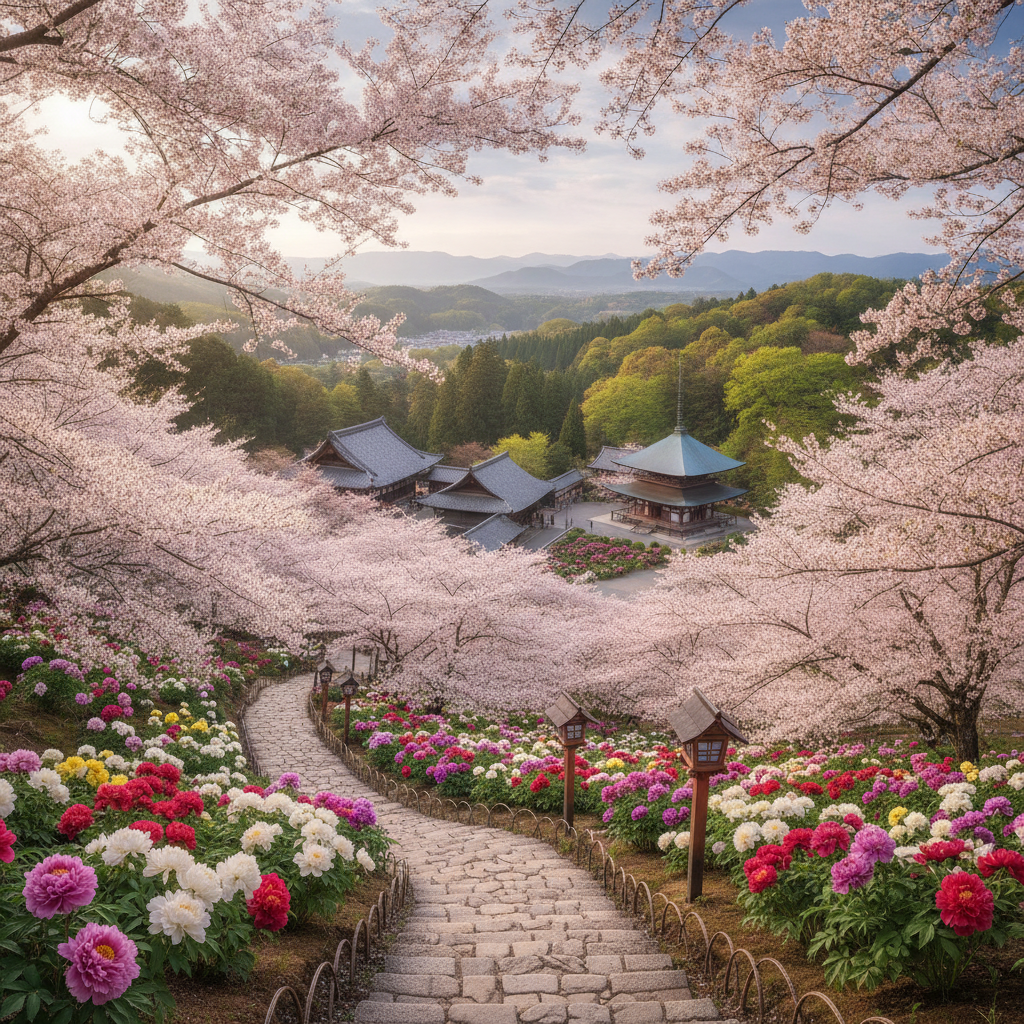
Nara's Spring, Cherry Blossoms, Hanami, Mount Yoshino, Hasedera - The Philosophy of Driving in Japan
For years, my world was defined by steel tracks and precisely timed schedules. As a conductor for Kintetsu Railways, I mastered the intricate dance of Japan’s public transportation, delivering countless passengers to their destinations with unwavering efficiency. From the bustling heart of Osaka to the serene ancient capitals, I witnessed Japan's breathtaking beauty through the narrow confines of a train window, always on a fixed path, a predetermined journey. And yet, after years of this profound intimacy with the rails, I stand before you today not as an advocate for the bullet train or the local line, but as a fervent evangelist for the open road, for the visceral, exhilarating freedom of driving Japan.
Why the dramatic shift? Because while trains are undeniably a marvel of modern engineering and convenience, they are, by their very nature, a path of least resistance. They guide you to the well-trodden, the easily accessible, the curated highlights. And for some, that's enough. But for the adventurer, for the soul that yearns to peel back the layers of the obvious and unearth the soul of a place, the train is a gilded cage. It prevents you from discovering what I affectionately call “Secret Japan.”
Imagine this: the intoxicating scent of cherry blossoms, not from a crowded platform, but wafting into your car as you navigate a secluded mountain pass, the morning mist still clinging to ancient cedar trees. Picture a sudden, breathtaking vista of terraced rice paddies ablaze with spring greenery, accessible only by a narrow, winding road that public transport wouldn't dare touch. Envision a tiny, unassuming soba shop, hidden deep within a hamlet, serving up a bowl that tastes of generations of dedication – a discovery you made on a whim, following an intriguing sign down a forgotten lane. This is the Japan that awaits the driver, the Japan that remains tantalizingly out of reach for those confined to rails and bus routes.
Kansai, with Osaka as its vibrant, bustling heart, is the perfect launching pad for such automotive escapades. While the city itself is a nexus of train lines, a mere hour's drive in any direction transforms the landscape. The concrete jungle gives way to rolling hills, verdant valleys, and mountain ranges that guard centuries of history and natural splendor. And what better way to explore these hidden gems than behind the wheel of a truly iconic Japanese machine – a JDM car like the Toyota 86 or the Subaru BRZ? These aren't just cars; they are extensions of your adventurous spirit, finely tuned instruments designed to connect you to the road, to the landscape, to the very pulse of Japan itself. Their precise steering, responsive engines, and balanced chassis transform every curve, every gradient, every moment into an engaging dialogue between you, the car, and the stunning scenery unfolding before you. This is not just travel; it's an immersion, a dance, a symphony of senses that public transport, for all its merits, simply cannot offer. It is the philosophy of true freedom, of unlocking a Japan that whispers its secrets only to those bold enough to take the wheel.
Nara's Spring, Cherry Blossoms, Hanami, Mount Yoshino, Hasedera - The 2-Day Itinerary: Deep Dive

Prepare yourself, for this is not merely a travel plan; it's an immersive saga, a two-day odyssey designed to ignite your senses, challenge your driving prowess, and reveal the profound beauty of Nara in spring. Forget the predictable; we are chasing the extraordinary, one winding road, one breathtaking vista, one perfectly executed downshift at a time. Our chariot for this unforgettable journey will be a finely-tuned JDM legend: a Toyota 86 or a Subaru BRZ, its naturally aspirated engine eager to sing through the mountain passes.
Day 1: Osaka to Mount Yoshino – The Pink Ascent
07:00 AM - Departure from Osaka: The Ignition of Adventure
Before the city truly awakens, before the first rush hour commuters clog the arteries of urban life, you'll be at the wheel of your chosen JDM steed. Slide into the driver's seat of the 86 or BRZ. The low-slung bucket seat hugs you, the thick, leather-wrapped steering wheel feels perfectly weighted in your hands, and the short-throw shifter beckons. A twist of the key, or a press of the start button, and the engine burbles to life – a low, eager growl that promises thrills. We'll perform a quick pre-drive check: tire pressure, oil, fluids, and a moment to familiarize yourself with the car’s ergonomics. The route out of Osaka begins with efficient expressways, but don't be fooled; this is merely the overture. The Fushimi and then Nishimeihan Expressway will carry us southeast, a smooth, swift passage that allows the FA20 Boxer engine to stretch its legs, settling into a comfortable hum.
07:30 AM - Highway Transition: Anticipation Builds
As Osaka’s skyscrapers recede in the rearview mirror, replaced by suburban sprawl that gradually yields to rolling hills, the landscape begins its subtle transformation. The morning light, a soft, ethereal gold, paints the nascent green of the countryside. We’ll peel off the major expressways and transition onto Route 169, a beautiful artery that slices through the heart of Nara Prefecture. Here, the character of the drive changes. The roads become more sinuous, the bends more engaging. The BRZ or 86, with its perfectly balanced chassis and low center of gravity, comes alive. You feel every subtle shift in the road texture, every nuance of the tarmac. This is where the car begins to breathe, responding to your every input with a keen alacrity.
08:30 AM - Entering Yoshino Town: The Gateway to a Pink Paradise
We arrive at the base of Mount Yoshino, a place steeped in over a thousand years of history and venerated as Japan's most spectacular cherry blossom viewing destination. Even from here, a faint blush of pink can be seen clinging to the mountainsides. The air here is noticeably different from Osaka – crisper, carrying the scent of damp earth and awakening spring. The approach roads to Yoshino are narrow and steep in places, a testament to the mountain's rugged beauty. Parking can be a challenge during peak season, so our early start is paramount. We'll aim for one of the lower parking areas, allowing us to embrace the traditional approach: ascending on foot.
09:00 AM - Yoshinoyama & The Lower Senbon (下千本): A Spiritual Ascent Begins
Stepping out of the 86, the cool mountain air is invigorating. The journey up Mount Yoshino is a pilgrimage in itself. We begin in the Lower Senbon (meaning “1,000 trees”), where the first wave of cherry blossoms greets us. The slopes here are a gentle riot of pale pink and white, primarily the “Shiro-yama-zakura” variety, which has graced these hills for centuries. These aren't just ornamental trees; they were planted by pilgrims and Buddhist monks, a living offering to the mountain deities and a symbol of enlightenment. The ground underfoot is a mix of asphalt and ancient stone paths, winding past small shops selling local delicacies and souvenirs.
10:00 AM - Middle Senbon (中千本): Temples, Tea, and Timeless Views
Our ascent continues into the Middle Senbon, where the cherry blossoms intensify. Here, we encounter the magnificent Kinpusenji Temple, a UNESCO World Heritage site and the spiritual heart of Yoshino. Its imposing Zao-do Hall, the second largest wooden building in Japan after Todaiji, stands as a testament to centuries of Shugendo mountain asceticism. The scent of incense hangs heavy in the air, mingling with the sweet perfume of the blossoms. Geologically, Yoshino is part of the Kii Mountain Range, characterized by its steep, forested slopes formed by ancient sedimentary rocks. The mountain's dramatic contours provide natural amphitheaters for the blossoms, ensuring breathtaking views from every vantage point. Take a moment at one of the traditional tea houses – perhaps the Sakuramotobō – for a cup of green tea and a taste of “Yoshino kudzu,” a delicate starch jelly, as you gaze out over a panorama of pink. The gentle murmur of distant streams and the rustle of petals falling like soft snow provide a tranquil soundtrack.
12:00 PM - Lunch in Yoshino: A Taste of Spring
For lunch, we'll seek out a local eatery within the Middle Senbon. Yoshino is renowned for “kakinoha-zushi,” pressed sushi wrapped in persimmon leaves. The leaves impart a subtle, earthy flavor to the rice and fish (often mackerel or salmon), a culinary tradition rooted in preservation techniques from a time before refrigeration. The taste is fresh, delicate, and utterly unique – a perfect complement to the spring atmosphere. The interior of these small restaurants is often simple, adorned with traditional Japanese art, allowing the vibrant views outside to be the main spectacle.
01:00 PM - Upper Senbon (上千本): The Peak of Pink Grandeur
Our journey continues upwards to the Upper Senbon, where the concentration of cherry trees reaches its zenith. From the Hanayagura Observatory, the view is nothing short of transcendent. Thousands upon thousands of cherry trees blanket the mountain, creating an undulating sea of pink that stretches as far as the eye can see, seemingly merging with the clear blue sky. It's a panorama that silences conversation, inspiring awe and a deep sense of connection to nature's ephemeral beauty. The sheer scale is overwhelming, a natural artwork created by centuries of reverence. The cool breeze at this elevation carries the faint scent of pine alongside the blossoms.
02:30 PM - Inner Senbon (奥千本): Seclusion and Serenity
For the true adventurer, the Inner Senbon offers a more secluded, spiritual experience. The path here narrows, fewer tourists venture this far, and the blossoms, while still abundant, are more scattered, allowing for moments of quiet contemplation. We might pass by Saigyo-an, a hermitage said to have been occupied by the famous poet Saigyo, who found inspiration amidst Yoshino’s natural splendor. This area feels ancient, untouched, a place where time seems to slow down. The silence, broken only by birdsong and the rustle of leaves, is profound. This is where the “Secret Japan” truly reveals itself, away from the main crowds.
04:00 PM - Descent and Drive to Accommodation: Winding Roads at Dusk
Reluctantly, we begin our descent, allowing the car to cool its brakes as we navigate the mountain roads. The afternoon light softens, casting long shadows and painting the blossoms in deeper, richer hues. The BRZ or 86, which proved its mettle on the ascent, now demonstrates its controlled agility on the downhill curves. We'll leave Yoshino and head east towards our overnight stay, perhaps in the charming town of Sakurai or a traditional ryokan nestled in the countryside between Yoshino and Hasedera. The drive through these smaller roads as dusk approaches is magical. The low sun dapples through the trees, creating a mosaic of light and shadow on the tarmac. The engine's note, no longer climbing, settles into a steady rhythm as we cruise through tranquil villages, their lights just beginning to twinkle.
06:00 PM - Check-in and Dinner: Ryokan Delights
Check into a traditional Japanese ryokan. The serenity of the tatami mat rooms, the warm welcome, and the anticipation of a multi-course “kaiseki” dinner are the perfect antidote to a day of exploration. The meal will be a celebration of local spring ingredients: tender bamboo shoots, fresh river fish, and seasonal vegetables, meticulously prepared and beautifully presented. Each dish is a tiny artwork, a symphony of delicate flavors. As you relax in the “onsen” (hot spring bath), reflecting on the day’s visual feast, the quiet hum of contentment fills the air. The crisp night air and the distant sounds of nature are a world away from the city.
Day 2: Hasedera's Elegance & The Return Journey – A Spiritual & Driving Finale
07:30 AM - Morning Departure: Crisp Air and Open Roads
After a traditional Japanese breakfast, we'll check out and prepare for Day 2. The morning air is often cool and crisp, a delightful contrast to the previous day's warmth. The 86 or BRZ, having rested overnight, starts with a familiar eager growl. Today's drive takes us on a slightly different path, focusing on the refined elegance of Hasedera Temple and the joy of navigating more secluded country roads. We'll head north from our accommodation, traversing scenic routes that weave through terraced farmlands and past small, traditional Japanese houses, where smoke might curl lazily from a chimney.
08:30 AM - Arrival at Hasedera Temple: The Temple of Flowers
Nestled in a secluded valley, Hasedera Temple is renowned as the “Temple of Flowers,” famous for its peonies, but in spring, its cherry blossoms offer a more intimate, understated beauty than Yoshino. The approach to Hasedera is less dramatic than Yoshino's, but equally captivating. You'll park the BRZ in the designated lot, the silence of the valley only broken by the distant call of a bird. Hasedera's history stretches back over 1,300 years, revered as the head temple of the Buzan sect of Shingon Buddhism and a significant stop on the Saigoku Kannon Pilgrimage. It is said that Murasaki Shikibu, author of “The Tale of Genji,” visited Hasedera, drawing inspiration from its serene beauty.
09:00 AM - Ascending the Noborirō: A Path Through History
Our visit begins with the iconic Noborirō, a magnificent covered staircase that ascends 399 steps up the hillside. Along its length, intricate wooden carvings and ancient lanterns line the path, leading us through a tunnel of light and shadow. In spring, the cherry blossoms here bloom in a more contained, delicate fashion, often framing the entranceways and providing splashes of color against the deep green of the surrounding foliage. The architecture of the temple is deeply intertwined with the topography; the main hall, a designated National Treasure, is built in the dramatic “kakezukuri” style, cantilevered over the hillside, similar to Kyoto’s Kiyomizudera. From this elevated perch, the views of the valley, dotted with houses and framed by verdant mountains, are simply stunning. The scent of aged wood and subtle incense permeates the air.
10:30 AM - Main Hall & Kannon Statue: Spiritual Grandeur
Inside the main hall, prepare to be awestruck by the towering eleven-faced Kannon statue, one of the largest wooden Buddhist statues in Japan. Its presence is powerful, humbling. The quiet solemnity of the hall, punctuated by the soft shuffling of other pilgrims, provides a stark contrast to the external vibrancy of spring. The geological formation around Hasedera is characterized by the ancient, rugged mountains of the Yamato Highlands, providing a dramatic natural setting that has protected and isolated the temple for centuries, allowing its spiritual essence to deepen. Explore the various sub-temples and gardens, each offering a unique perspective and a chance for quiet reflection. Even in a place of such profound history, the playful burst of a cherry blossom against an ancient stone lantern is a reminder of nature's eternal cycle.
12:00 PM - Lunch Near Hasedera: Local Flavors
After descending from the temple, we'll find a small local restaurant in the nearby village. This area is known for its fresh, simple Japanese cuisine, often featuring handmade udon or soba noodles, tempura made with spring vegetables, or a hearty teishoku (set meal). The flavors are clean, honest, and reflect the agricultural bounty of the region. This is not gourmet dining, but rather the comforting taste of authentic, regional cooking, served with genuine warmth.
01:30 PM - Scenic Drive: Unveiling Nara's Countryside
With refreshed spirits, we embark on the drive back towards Osaka, but not directly. Today, we'll consciously choose more meandering, scenic routes, allowing the 86 or BRZ to truly shine. We might take Route 369 initially, then peel off onto even smaller prefectural roads that snake through pristine forests and verdant valleys, far from the main arteries. This is where the JDM experience truly comes into its own. The car's precise steering allows you to carve through corners with surgical accuracy, the responsive engine delivering power exactly when needed, and the balanced chassis making every turn feel intuitive. The road rises and falls, twists and straightens, a perfect dance partner for the BRZ. The rich, earthy scent of the forest, the occasional glimpse of a wild deer, the distant sound of the engine echoing off the hillsides – these are the moments that define a Japanese road trip.
03:00 PM - Hidden Gem Stop: The Local Observation Deck
Keep an eye out for “Secret Japan” moments. Often, there are small, unadvertised observation decks or roadside rest points that offer unexpectedly stunning views of the countryside. Look for small, hand-painted signs or a cluster of local cars pulled over. It might be a vista overlooking a tranquil river valley, or a patchwork of tea fields stretching to the horizon. These impromptu stops are often more memorable than the planned ones, precisely because they are discoveries. The gentle hum of your JDM engine cooling down, the expansive view, the utter silence save for nature – this is pure, unadulterated bliss.
04:00 PM - Return to Osaka: Reflecting on the Journey
As we gradually rejoin the larger roads and the outskirts of Osaka begin to appear, there's a bittersweet feeling. The vibrant energy of the city signals the end of our driving adventure, but the memories forged on these roads will last a lifetime. The final stretch of the drive allows for reflection. The 86 or BRZ, which felt like an extension of your body on the mountain roads, now settles back into urban cruise mode, a testament to its versatility. You’ve not just driven through Nara; you’ve experienced its heart, its history, its natural grandeur, through a lens only a driver can truly appreciate. The engine's steady thrum becomes a comforting companion, a final note in our symphony of spring.
05:00 PM - Arrival in Osaka: Mission Accomplished
Arrive back in Osaka, perhaps a little tired, but undeniably invigorated and enriched. The car, a faithful companion, will be returned, its tires having gripped every curve, its engine having sung through every ascent. You've truly experienced Nara's spring, not as a passive observer, but as an active participant, a driver who forged an unforgettable connection with the landscape and the machine. The journey has ended, but the story of your Nara spring adventure has just begun.
Nara's Spring, Cherry Blossoms, Hanami, Mount Yoshino, Hasedera - Expert Advice & Cultural Nuances
Beyond the detailed itinerary, truly immersing yourself in Japan’s driving culture requires a keen understanding of its subtle nuances. As someone who’s navigated these roads for decades, first by rail and then by wheel, I can tell you there’s an art to it, a rhythm that enhances every mile.
The Michi-no-Eki Magic
First, let's talk about the “Michi-no-Eki” – the roadside stations. These are far more than just rest stops. They are vibrant hubs of local culture, a microcosm of regional identity. Imagine pulling off a picturesque mountain road in your 86, the engine ticking softly as it cools, and stepping into a Michi-no-Eki where you discover freshly harvested local produce, often sold directly by the farmers themselves. You might find artisanal crafts unique to that specific area, from hand-dyed fabrics to exquisitely carved wooden souvenirs. The food stalls offer regional specialties – perhaps “takoyaki” with a local twist, or freshly baked bread from a nearby village bakery. It’s an authentic taste of “Secret Japan” that often goes unnoticed by those who stick to main highways. Don’t just stop to refuel or use the restroom; take the time to browse, sample, and engage. Each Michi-no-Eki tells a unique story of its community, and they are excellent places to stretch your legs and absorb some genuine local flavor.
Unearthing Hidden Local Gems
My advice for finding truly hidden gems? Slow down. Pay attention. Don't be afraid to take a detour down a small, unmarked road that catches your eye. Often, the most authentic experiences are not listed in guidebooks. Look for signs written only in Japanese – these often lead to family-run restaurants, tiny craft shops, or even stunning, uncrowded viewpoints. Ask locals; a friendly “Osusume wa nani desu ka?” (What do you recommend?) can unlock a world of possibilities. Sometimes, it’s the unassuming storefront that serves the best ramen you've ever tasted, or the quiet forest path that leads to a forgotten shrine. Your BRZ, with its nimble handling and compact size, is perfectly suited for these exploratory deviations. Trust your instincts, follow your curiosity, and allow serendipity to guide you.
Navigating Japanese Roads: The Driver's Code
Japanese driving culture prioritizes politeness and precision. Always remember: we drive on the left, and passing on the right is the norm. Speed limits, especially on rural roads, are often lower than what many international drivers are accustomed to, typically 40-50 km/h in towns and 60 km/h on regular roads, with expressways usually at 100 km/h. Adhere to them not just for safety, but for respect. Overtaking on mountain passes should be done with extreme caution, and only when clearly safe. Japanese drivers are generally very courteous; they will often flash their hazard lights once or twice as a “thank you” when you let them pass or merge. Return the gesture! Be acutely aware of narrow roads in rural areas, especially on your way to places like Yoshino and Hasedera. These roads often have blind corners and limited space, so maintain a safe speed and be prepared to yield. And always, always be vigilant for wildlife, especially deer or wild boar, which can unexpectedly cross mountain roads, particularly at dawn or dusk. Driving in Japan is a truly rewarding experience, but it’s one best enjoyed with a respectful understanding of its unique unwritten rules and cultural courtesies.
Nara's Spring, Cherry Blossoms, Hanami, Mount Yoshino, Hasedera - Detailed Logistics & Pre-Trip Tips
Embarking on a JDM road trip in Japan requires more than just a car and a map; it demands an understanding of local logistics. As of 2026, Japan’s road infrastructure is a marvel of efficiency, but knowing the intricacies will save you time and enhance your adventure.
Traffic and the ETC Card: Your Expressway Pass
Japanese traffic, particularly around major cities like Osaka, can be dense during peak hours. However, once you venture into the countryside towards Nara, it significantly eases. The expressways are exceptionally well-maintained. The key to seamless travel on these toll roads is the Electronic Toll Collection (ETC) card. This small device, usually inserted into a slot on your rental car's dashboard, allows for automatic toll payment. No fumbling for cash, no stopping at toll booths – you simply drive through the dedicated ETC lane. It’s not just about convenience; ETC often offers discounts on tolls, making your journey more economical. Ensure your rental car comes equipped with an ETC card, as it’s an absolute game-changer for any serious road trip.
Fueling Up: The Japanese Way
Gas stations in Japan come in two main types: full-service (staffed) and self-service. For the full-service experience, just pull up, roll down your window, and say “Mantan de onegaishimasu!” (A full tank, please!). The attendant will typically ask “Regular? Hai-oku?” (Regular or High Octane?). For your 86 or BRZ, which thrives on performance, “Hai-oku” (high octane, or premium) is the ideal choice. The attendant will also often clean your windows and ask “Mado fukimashō ka?” (Shall I wipe the windows?). A simple “Hai, onegaishimasu” (Yes, please) is perfectly fine. Self-service stations can be a bit more daunting with touch screens, but most have English options. The main fuel types are green for regular (レギュラー), red for high octane (ハイオク), and yellow for diesel (軽油). Payment is usually credit card or cash. It’s a polite and efficient process, a small cultural interaction that adds to the charm of your journey.
Parking Perfection
Parking in Japan is incredibly organized, but space can be at a premium, especially in popular tourist areas. Look for “Coin Parking” lots, which are numerous and typically operate on an hourly rate. Many Michi-no-Eki, temples, and attractions like Yoshino and Hasedera will have designated parking areas. In residential areas, be mindful not to block driveways or park illegally; penalties can be steep. Your 86 or BRZ, with its compact dimensions, is a blessing here, allowing you to squeeze into tighter spots that larger vehicles might struggle with. Always check for “P” (Parking) signs and follow the instructions carefully.
The Exhilaration of JDM (MT) Driving
This is where the true magic of your adventure unfolds. Choosing an 86 or BRZ with a manual transmission isn’t just about getting from A to B; it's about the journey itself. It’s about the raw, unfiltered connection between human and machine. As a former train conductor, I appreciate precision and control, and an MT JDM car delivers that in spades. The tactile feedback of the shifter, the precise engagement of the clutch, the satisfying “thwack” as you slot into gear – it’s an extension of your will. On the winding, undulating roads of Nara's mountains, you’ll feel the car come alive. Heel-toe downshifts before a hairpin bend, keeping the engine in its power band as you climb a steep gradient, the guttural roar of the naturally aspirated Boxer engine echoing off the cherry-blossom-laden hillsides – these are moments of pure driving bliss. It's a dance, a conversation, an intimate communion that turns every mile into an unforgettable experience. This isn't just driving; it's piloting, mastering, and truly becoming one with the spirit of Japanese automotive engineering.
Nara's Spring, Cherry Blossoms, Hanami, Mount Yoshino, Hasedera - Comprehensive FAQ
To ensure your Japanese driving adventure is as smooth as a freshly paved expressway, let's address some common questions for international travelers.
International Driving Permit (IDP)
To drive legally in Japan, international visitors generally need an International Driving Permit (IDP) issued under the 1949 Geneva Convention. This permit must be obtained in your home country or region before arriving in Japan. You must carry your IDP, your original valid national driver's license, and your passport at all times while driving. It's essential that your IDP is issued by an authorized association in your country. Always verify your country's specific requirements before travel, as some countries may have special agreements or require different permits.
Insurance Coverage
When renting a car in Japan, basic Collision Damage Waiver (CDW) is usually included. However, it's highly recommended to consider additional insurance options, often referred to as Non-Operator Own Car insurance (NOOC), or other premium packages offered by the rental company. These can reduce your liability in case of an accident, covering things like non-operation charges (NOC) if the car needs repair, or personal injury. Always read the terms and conditions carefully and ensure you're comfortable with your level of coverage before heading out. Peace of mind is priceless on the road.
Concerns About Driving a Manual Transmission (MT)
If you're not accustomed to driving a manual transmission, the thought of navigating unfamiliar roads in a foreign country can be daunting. However, the reward of driving a JDM MT car like the 86 or BRZ in Japan is immense. The precise control and engagement it offers on mountain roads are unparalleled. If you're hesitant, consider practicing in your home country before your trip. Japanese roads, particularly the initial highway stretches from Osaka, are generally well-maintained and provide an excellent opportunity to reacquaint yourself with manual driving. Take it slow, trust the car, and remember that the satisfaction of mastering these roads with an MT is a core part of the adventure. Your JDM car is designed to be communicative and forgiving.
Winter Road Conditions
While this guide focuses on the glorious spring, it's important to note that winter road conditions in mountainous regions of Japan, including areas around Nara, can be extreme. Heavy snowfall is common, and roads can become icy or impassable without appropriate tires (studless winter tires) or chains. Always check local weather and road conditions if traveling outside of spring. However, for your spring cherry blossom adventure, expect generally clear, well-maintained roads, perfect for unleashing the spirit of your JDM machine.
Nara's Spring, Cherry Blossoms, Hanami, Mount Yoshino, Hasedera - The Final Call: CTA
You’ve seen it, haven't you? The endless cascade of pink on Mount Yoshino, the serene beauty of Hasedera, the thrill of carving through ancient valleys in a machine built for pure driving joy. This isn't just another trip; it's a sensory symphony, an intimate dance with Japan's soul, powered by the spirit of adventure and the raw exhilaration of a JDM car. You haven’t just visited; you've experienced, you’ve discovered “Secret Japan” in a way no train could ever deliver.
The scent of cherry blossoms, the whisper of the wind through an open window, the guttural note of an 86 or BRZ engine singing on a mountain pass – these aren't just memories waiting to be made. They are a call to action. You're not looking for a ride; you're looking for an experience, a partner in discovery. And that's exactly what awaits you.
As a former Kintetsu conductor and now the owner, I've curated a fleet of enthusiast-grade JDM vehicles – 86s, BRZs, and other custom manual transmission cars – specifically for explorers like you, who crave the authentic, the thrilling, the unforgettable. Your Japanese driving adventure begins not with a ticket, but with a key. Unlock the true heart of Japan, one exhilarating mile at a time. Your dream machine awaits.
Ready to carve your own path through the most beautiful spring landscapes Japan has to offer? Your journey starts at Omoshiro Rent-a-Car Osaka Chuo branch. Book your JDM legend today, and let the adventure unfold.
