
Unveiling Nara's Autumn Splendor: A JDM Drive Through Illuminated Fall Foliage & Secret Mountain Passes
奈良の秋, 紅葉スポット, ドライブ, ライトアップ-The Philosophy of Driving in Japan
For decades, my world revolved around the rhythmic clickety-clack of steel wheels on polished rails, the punctual precision of timetables, and the comforting announcement of the next station. As a former conductor on Kintetsu Railway, I witnessed countless breathtaking Japanese landscapes from the confines of a train carriage, ferrying passengers from bustling city centers to serene historical sites. It was a life of structured beauty, a testament to Japan’s unparalleled public transportation efficiency. Yet, there’s a secret I hold, one that began to whisper to me long before I traded my conductor’s hat for a mechanic’s wrench: the true, unbridled spirit of discovery in Japan doesn’t lie on the rails. It’s on the asphalt, weaving through forgotten valleys, ascending mist-shrouded peaks, and tracing the serpentine coastlines that public transport simply cannot reach.
This, my friends, is the concept of “Secret Japan.” It’s a Japan that evades the casual tourist, a Japan of hidden temples nestled deep within ancient forests, of local eateries known only by their faint aroma drifting through narrow alleyways, of panoramic vistas that unfurl dramatically after a challenging drive. And there is no better way to unlock this Secret Japan, especially during the ephemeral glory of autumn, than from behind the wheel of a truly engaging Japanese Domestic Market (JDM) car. When you depart from Osaka, the vibrant heart of Kansai, you’re not just beginning a journey; you’re initiating an intimate conversation with the land itself.
Forget the crowded tour buses, the rush to catch the last train, the predetermined stops. Imagine instead the tactile feedback of a perfectly weighted steering wheel in your hands, the intoxicating growl of a naturally aspirated engine — perhaps a Toyota 86 or a Subaru BRZ — responding to your every input. Picture the winding roads of Nara, a canvas of emerald pines and blazing maples, unfolding before you like a living scroll. This isn't merely transportation; it’s an extension of your being, a direct conduit to the pulse of the Japanese countryside. The subtle scent of damp earth and crisp autumn air through an open window, the sun-dappled leaves creating a mesmerizing dance of light and shadow on the road ahead, the exhilaration of a perfectly executed corner. These are the moments that forge indelible memories, moments that transcend the conventional tourist experience.
As much as I cherish my railway heritage, I discovered that true freedom lay in the driver’s seat. It's about pulling over on a whim to capture a fleeting view, about exploring that intriguing side road that promises an unknown treasure, about chasing the sunset over a mountain range without concern for the last bus schedule. Nara in autumn, with its kaleidoscopic tapestry of autumn leaves spots, its ancient history, and its potential for breathtaking night illuminations, becomes an entirely different beast when experienced through the lens of a spirited drive. It's a journey not just through a landscape, but through the very soul of Japan, guided by your own hands and propelled by the heart of a JDM legend.
奈良の秋, 紅葉スポット, ドライブ, ライトアップ-The 2-Day Itinerary: Deep Dive

Prepare to unleash the spirit of adventure. Our destination is Nara, but not the Nara of crowded temples and bowing deer. We’re delving into the heart of Nara’s autumn magic, seeking out the hidden autumn leaves spots, embracing the thrill of the drive, and losing ourselves in the ethereal glow of night illuminations. This is a two-day odyssey designed for the discerning traveler and the passionate driver, an immersion into a Japan few ever truly experience. Our chariot for this journey will be the legendary Toyota 86 or its sibling, the Subaru BRZ – a machine built for carving corners and connecting with the road, not merely consuming it.
Day 1: Osaka to the Heart of Nara’s Southern Peaks – A Symphony of Color and Engine Roar
08:00 AM – The Grand Departure from Osaka: Engine’s First Breath
The crisp morning air in Osaka hums with anticipation. You slide into the low-slung bucket seat of the 86. The familiar scent of leather and performance plastics fills the cabin. A twist of the key, a confident push of the clutch, and the 2.0-liter Boxer engine barks to life with a satisfying growl, a promise of the adventures ahead. This isn’t just a rental car; it’s a meticulously maintained precision instrument, eager for the open road. As we navigate the initial urban arteries of Osaka, heading east towards the Kashiwara IC, the 86 feels composed, a coiled spring ready to unfurl. The flat-four engine hums a contented tune, hinting at its eagerness for higher revs. The transition from city gridlock to the smooth expanse of the Nishi-Meihan Expressway is almost therapeutic. You feel the connection through the steering wheel, the precise short-throw shifter waiting for your command. This isn't just about speed; it's about the dance, the communication between man and machine.
09:00 AM – Ascent into History: The Path to Tanzan Shrine
Our first true taste of Nara’s autumn driving begins as we peel off the expressway near Tenri and head south towards Tanzan Shrine. The road quickly transitions from multi-lane highway to a narrower, more intimate two-lane ribbon winding through increasingly dense forests. The asphalt here is impeccably smooth, a testament to Japanese road engineering. This is where the 86 truly comes alive. The low center of gravity, the perfectly balanced chassis, and the responsive throttle become your allies. You’ll find yourself effortlessly dancing through gentle curves, the engine note rising and falling with each gear change. The air grows cooler, carrying the earthy scent of cedar and damp soil. The trees, initially a subtle mix of green and nascent yellow, begin to erupt into glorious shades of crimson, fiery orange, and deep russet. This isn't just a drive; it's a prelude to autumn’s grandeur.
10:30 AM – Tanzan Shrine: A Kaleidoscope of Ancient Glory (First Autumn Leaves Spot)
Arriving at Tanzan Shrine feels like stepping into a perfectly preserved autumn painting. Tucked away in the mountains of Tōnomine, this shrine is famous for its thirteen-storied pagoda, a graceful wooden structure dating back to the 7th century. But in autumn, it’s the backdrop that truly captivates. The entire valley becomes a riot of color, with thousands of maple trees (momiji) ablaze. The unique historical significance of Tanzan Shrine, established by Fujiwara no Katamari to honor Fujiwara no Kamatari, a key figure in the Taika Reform, adds layers of depth to the visual spectacle. Imagine the intricate carvings of the main hall, framed by the vivid reds and golds of the surrounding foliage. The air is still, save for the gentle rustle of leaves and the distant murmur of stream water. Walk the grounds, explore the various halls, and climb to the higher viewpoints for panoramic vistas. The geological formation of this mountainous region, with its steep slopes and diverse tree species, creates optimal conditions for such spectacular autumn displays. The gentle slopes and winding paths invite exploration, offering new perspectives of the pagoda against the fiery canopy at every turn. You can almost feel the whispers of history carried on the crisp autumn breeze. The sound of your own footsteps on fallen leaves is the only soundtrack you need here.
12:30 PM – Mountain Road Ascent: Exploring the Hidden Ridges
After immersing ourselves in Tanzan Shrine’s beauty, it’s time to re-engage with the machine. We’ll head south, taking a lesser-known mountain road that snakes its way through the Yoshino-Kumano National Park fringes, a series of exhilarating ascents and descents that demand respect but reward generously. This isn't a well-trodden tourist path; it’s a driver’s road. The asphalt tightens, corners become more frequent and challenging. Here, the 86 truly shines. The precise steering allows you to place the car exactly where you want it. Downshift, brake, turn in, feel the g-forces, accelerate out – it’s a symphony of mechanical harmony. The exhaust note echoes off the rock faces as you climb, a thrilling accompaniment to the unfolding scenery. You’ll pass through tunnels carved directly into the mountain, emerging into breathtaking views of forested valleys ablaze with color, some still touched by morning mist, lending an ethereal quality to the landscape. This is where the thrill of the JDM experience fully grips you – the intimate connection to the road, the raw, unfiltered feedback, and the sheer joy of piloting a finely tuned machine through an epic landscape. You’ll smell the faint scent of woodsmoke from distant villages, mingling with the fresh, clean mountain air.
01:30 PM – A Taste of Local Nara: Unassuming Culinary Delights
After the exhilarating drive, hunger calls. We’ll eschew the tourist traps and seek out a small, family-run eatery nestled by the roadside, perhaps one that specializes in kaki-no-ha sushi – persimmon leaf sushi, a local delicacy from Nara. This isn't a Michelin-starred restaurant, but a place where generations of culinary tradition are expressed in every bite. The sushi, delicately pressed and wrapped in a persimmon leaf, offers a subtle, aromatic flavor. Or perhaps a bowl of piping hot nyumen, thin wheat noodles in a clear, savory broth, perfect for warming you after the cool mountain air. The taste is honest, unpretentious, and deeply satisfying, a true reflection of the region’s hospitality. You’ll sit among locals, perhaps hearing the gentle hum of conversation, and feel a genuine connection to Japanese culture beyond the guidebooks. The simple, fresh ingredients taste even better after an invigorating drive, fueling you for the afternoon’s adventures.
02:30 PM – Deep into the Heart: Yoshino’s Lower Slopes and Hidden Gorges
Our journey continues south, winding deeper into the Yoshino region, renowned for its cherry blossoms in spring but equally magnificent, though less crowded, in autumn. We’ll take roads less traveled, perhaps detouring along the banks of the Yoshino River, where the sheer cliffs plunge into emerald waters, framed by a riot of autumn color. The geology here is dramatic, carved by millennia of river erosion, creating deep gorges and steep valleys that provide breathtaking backdrops for the vibrant foliage. The 86 thrives on these technical roads, its responsive chassis allowing you to flow seamlessly with the contours of the land. You’ll feel the car communicate every nuance of the road surface through the steering wheel. The silence of the remote areas is broken only by the gentle roar of the engine and the rush of the river. We’ll stop at a few pull-offs, discovering unnamed waterfalls or secluded clearings where the autumn leaves fall like fiery rain, creating a vivid carpet beneath your feet. The intensity of the colors here is astounding, from the deepest burgundies to the brightest golds, painting a breathtaking panorama at every turn. The air here is clean and pure, carrying the scent of pine and damp earth.
04:30 PM – Check-in: A Ryokan Retreat in the Mountains
As the afternoon wanes and the sun begins its gentle descent, casting long, golden shadows, we’ll make our way to a traditional ryokan nestled deep within the mountains. The exact location is part of the surprise, but imagine a serene haven with natural hot springs (onsen), where the evening air is filled with the chirping of insects and the distant murmur of a stream. You’ll park your 86, knowing it awaits your command tomorrow, and step into an oasis of tranquility. The warmth of the hospitality, the simple elegance of the tatami rooms, and the promise of a soothing onsen soak after a day of driving are profoundly welcoming. This isn't just a place to sleep; it’s an integral part of the Japanese experience, offering a chance to decompress and connect with nature’s rhythms. The silence is profound, broken only by the rustling of leaves outside and the gentle warmth of the cedar wood in your room.
06:00 PM – Kaiseki Dinner: A Culinary Masterpiece
After a refreshing onsen bath, you’ll be treated to a multi-course kaiseki dinner. This isn’t merely food; it’s an art form, a meticulously prepared feast that celebrates seasonal ingredients, presented with exquisite care. Expect delicate sashimi, grilled local river fish, seasonal vegetables, and savory broths, each dish a small masterpiece for both the eyes and the palate. The flavors are subtle yet profound, a symphony of textures and tastes that reflect the purity of the local ingredients. Enjoy this culinary journey in the serene ambiance of your ryokan, perhaps overlooking a small, illuminated garden, as the sounds of the night begin to envelop the mountains. The aroma of miso and fresh seafood fills the air, adding to the sensory richness of the experience.
07:30 PM – The Enchantment of Night: Autumn Leaves Illumination (Second Autumn Leaves Spot)
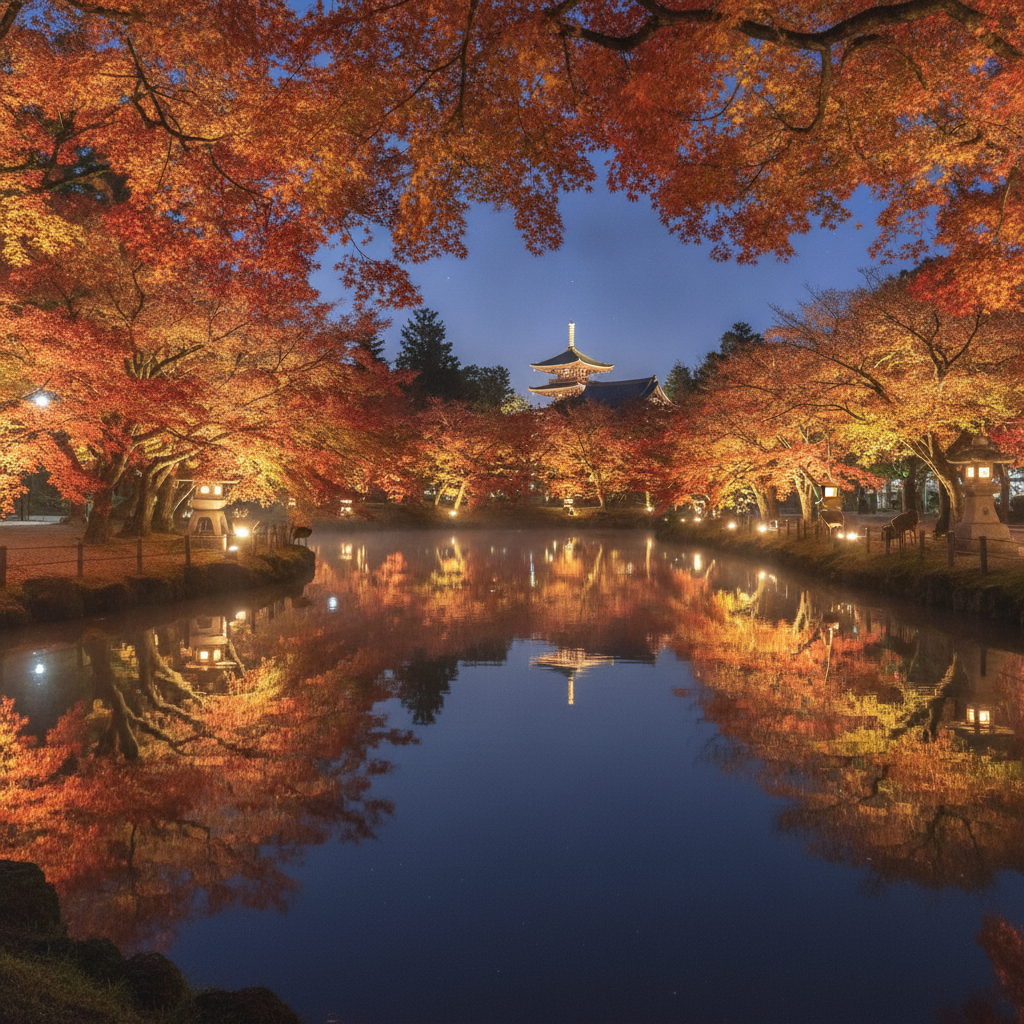
As darkness fully descends, it’s time for the truly magical experience of night illuminations. We’ll drive a short distance from our ryokan to a designated temple or garden that hosts a special autumn light-up event. This is where the familiar autumn leaves transform into something otherworldly. Carefully placed lights – often traditional lanterns or modern LEDs – cast a mesmerizing glow on the already vibrant foliage. The reds become deeper, the golds more radiant, and the oranges more fiery, all against the velvety black canvas of the night sky. The air is still, perhaps a little chilly, adding to the dramatic atmosphere. Walk through pathways lined with illuminated maples, their branches creating intricate patterns of light and shadow. The reflection of the glowing leaves in still ponds creates a mirror world, a breathtaking spectacle of color and light. The quiet murmur of admiration from fellow visitors, the gentle rustle of leaves in the night breeze, and the sheer visual impact create an unforgettable sensory experience. This is an entirely different perspective of Nara’s autumn, one that is both dramatic and profoundly serene. The subtle scents of damp earth and crisp night air combine with the visual feast to create a truly immersive experience.
09:00 PM – Stargazing and Reflection: A Mountain Night
After the illumination, we return to the ryokan. Step outside onto the veranda or a secluded spot. Away from city lights, the night sky over Nara’s mountains is often a canvas of glittering stars. Breathe in the cool, clean air. Reflect on the day’s journey: the exhilaration of the drive, the ancient beauty of Tanzan Shrine, the vibrant colors of Yoshino, and the ethereal glow of the illuminated leaves. This quiet moment under a vast, star-studded sky is the perfect end to a day filled with adventure and beauty. The profound silence of the mountains allows for deep introspection, connecting you with the timeless beauty of Japan.
Day 2: Yoshino’s Heights to Osaka’s Horizon – The Grand Finale Drive
08:00 AM – Sunrise and Mountain Air: Rejuvenation
Wake early to the soft glow of dawn filtering through the shoji screens. The mountain air is crisp and invigorating. A traditional Japanese breakfast awaits, a delicate spread of grilled fish, rice, miso soup, and various pickles – a light yet satisfying start to another day of adventure. Enjoy your coffee or green tea while gazing out at the misty valleys, where patches of autumn color still glow in the morning light. The 86 sits patiently outside, polished by the night’s dew, ready for the next leg of our journey.
09:30 AM – The Ascent of Yoshino-yama: A Driver’s Dream (Third Autumn Leaves Spot)
Today, we tackle the higher reaches of Yoshino-yama. While famous for cherry blossoms, its upper slopes offer some of Nara’s most spectacular and less-explored autumn scenery, especially in late autumn when the lower areas might be past their peak. The drive up Yoshino-yama is legendary – a series of tightly winding, hairpin turns that climb steeply. This is the playground for the 86. Engage the manual transmission, feel the engine rev, and let the car’s balanced chassis hug the corners. The sound of the Boxer engine reverberating off the steep cliffs is pure motoring poetry. Every turn reveals a new breathtaking vista: ancient temples clinging to hillsides, deep ravines filled with a mosaic of fiery foliage, and panoramic views stretching across the Nara basin. The geological forces that shaped Yoshino are evident in its dramatic topography, creating a dynamic backdrop for the diverse flora. We’ll stop at viewpoints like Takataki Falls, where the water plunges amidst a curtain of vibrant red and gold leaves, or Kinpusenji Temple, a UNESCO World Heritage site, whose massive wooden structure is made even more awe-inspiring by the blazing autumn colors surrounding it. The history here is palpable, dating back over 1300 years, and the autumn leaves add another layer to its spiritual beauty. The air is cool and crisp, carrying the scent of pine and damp earth. The sound of your tires gripping the asphalt through each curve is a testament to the car's engineering and your driving prowess.
12:00 PM – Mountain Sanctuary: A Secluded Lunch
After the exhilarating drive and exploration, we’ll seek out a humble eatery higher up on Yoshino-yama or in a neighboring village. Perhaps a small shop specializing in kuzukiri, a traditional Yoshino dessert made from kuzu starch, served with black sugar syrup – a refreshing and unique treat. Or a simple, hearty bowl of soba noodles, handcrafted with local ingredients. These are the places that hold generations of stories, serving food that is both comforting and authentic. The atmosphere is quiet, contemplative, and offers a perfect reprieve from the outside world. The view from the window, of mist-shrouded peaks and vibrant autumn colors, makes the simple meal feel extraordinarily special. The subtle flavors of the meal, combined with the clean mountain air, create a memorable sensory experience.
01:30 PM – The Road Less Traveled: Off the Beaten Path towards Central Nara
Instead of retracing our steps, we’ll take a more adventurous route, cutting across central Nara prefecture on smaller prefectural roads. These roads are often narrower, less maintained, but offer unparalleled access to truly authentic rural Japan. The 86, with its compact dimensions and agile handling, is perfectly suited for this. You’ll pass through tiny hamlets, past ancient farmhouses with smoke curling from their chimneys, and alongside terraced rice fields that glow golden in the afternoon sun. The autumn leaves here are less dramatic, more pastoral – subtle yellows, soft oranges, and deep greens, interspersed with patches of vibrant red. This is a glimpse into the everyday life of rural Japan, a tranquil counterpoint to the dramatic mountain scenery. The rhythmic hum of the engine, the feeling of the road through the chassis, and the constant engagement of the manual transmission make this section of the drive incredibly rewarding. You'll hear the gentle chirping of unseen insects and the occasional crow of a distant bird, a soundtrack to Japan's serene countryside.
03:30 PM – A Hidden Gem: The Secret Garden of Shōryaku-ji (Fourth Autumn Leaves Spot)
As we approach the outskirts of Nara City, we'll make a final, deliberate detour to a truly hidden gem: Shōryaku-ji Temple. Known as the birthplace of sake, this temple is secluded in a forested valley and in autumn, its grounds are a breathtaking, tranquil sanctuary of fall colors. Unlike the bustling tourist spots, Shōryaku-ji offers a serene and almost meditative experience. The ancient wooden structures are surrounded by a meticulously maintained garden, where maples, ginkgos, and other deciduous trees burst into a spectrum of reds, golds, and burnt oranges. The gentle slopes and natural springs that feed its pond reflect the brilliant foliage, creating stunning photo opportunities. The history of sake production here, dating back to the 14th century, adds another fascinating layer to this peaceful setting. Take your time to wander the paths, soak in the tranquility, and appreciate the artistry of nature and human design intertwined. The air is still and quiet, scented with damp earth and ancient wood, a truly calming experience after the dynamic drives. This is the kind of secret spot that makes a JDM road trip truly special.
05:00 PM – The Homeward Stretch: Sunset over Kansai
With hearts full of autumn’s beauty and minds buzzing with driving exhilaration, we begin our final journey back to Osaka. The route will take us onto the Hanwa Expressway, offering wider lanes and a chance to reflect on the past two days. As the sun begins its dramatic descent over the Kansai plains, painting the sky in fiery oranges, purples, and deep blues, you'll feel a sense of profound satisfaction. The 86, having performed flawlessly, effortlessly cruises towards the city lights. The experience is complete, from the visceral thrill of carving mountain passes to the serene beauty of illuminated leaves, all made possible by the freedom of your own JDM chariot. The memories forged on these roads, the scents, the sounds, the sights – they will linger long after the engine is turned off. You'll carry with you not just photographs, but a deep, personal connection to the autumn heart of Nara.
奈良の秋, 紅葉スポット, ドライブ, ライトアップ-Expert Advice & Cultural Nuances
Beyond the simple act of driving, there’s a rich tapestry of cultural nuances that elevate a Japanese road trip from a mere journey to an immersive experience. My years on the rails, observing the intricate flow of Japanese society, and now my passion for the open road, have granted me a unique perspective on these unspoken rules and delightful discoveries.
The Unsung Hero: Michi-no-Eki (Roadside Stations)
Forget the soulless rest stops you might be accustomed to. Japan’s Michi-no-Eki are vibrant community hubs, veritable treasure troves that embody the spirit of their local regions. They are far more than just places to refuel or grab a quick coffee. Each Michi-no-Eki is a showcase of local produce – incredibly fresh fruits and vegetables harvested that morning, often sold directly by the farmers themselves. You’ll find artisanal crafts, unique regional snacks (omiyage), and often a fantastic local restaurant serving specialties you won’t find anywhere else. They’re also excellent places to find clean restrooms and gather local information. Stop at one, take your time, browse the stalls. You might discover a perfectly ripe persimmon (a Nara specialty!), a handcrafted ceramic souvenir, or a surprisingly delicious snack made with local ingredients. It’s a microcosm of the area’s identity, and a truly authentic way to engage with the local culture.
Unearthing Hidden Gems: Going Beyond the Guidebook
While this itinerary takes you to some truly special, less-trodden paths, the real adventure lies in the unexpected detours. Here’s my advice for finding those truly local, hidden gems: look for handwritten signs outside small restaurants, even if you can’t read Japanese. A bustling parking lot filled with local cars is always a good indicator. Don't be afraid to venture down a narrow lane that looks intriguing (provided it’s not marked private). Sometimes, the best experiences are found by trusting your intuition. Ask at your ryokan or a Michi-no-Eki for local recommendations for food or lesser-known viewpoints – the Japanese are incredibly proud of their local area and eager to share its best aspects. These aren't just autumn leaves spots; they're glimpses into the soul of a community.
The Art of Japanese Driving Etiquette
Driving in Japan is a remarkably polite and orderly affair. Even on winding mountain roads, courtesy is key. Here are a few tips to keep in mind:
- Yield and be Patient: Japanese drivers are generally very patient. Don't rush or be overly aggressive. If someone wants to pass on a multi-lane road, move over when safe.
- Indicators are Essential: Always use your turn signals well in advance. This is considered fundamental courtesy.
- Speed Limits: They are strictly enforced, often by subtle camera systems. Even on seemingly open roads, especially mountain passes, adhere to the posted limits. It might feel slow at times, but the journey is about enjoyment, not raw speed.
- Hazard Lights for Thanks: If someone gives way to you in a tricky situation, it’s common to briefly flash your hazard lights once or twice as a “thank you.”
- Parking: Avoid parking illegally, even for a moment. Parking enforcement is diligent. Always look for designated parking areas.
Embrace the smooth, flowing rhythm of Japanese traffic. It's not about winning a race; it's about enjoying the journey. The disciplined nature of Japanese driving actually enhances the experience, allowing you to focus on the breathtaking scenery and the sheer pleasure of piloting your 86 or BRZ through these stunning landscapes, especially during the peak of the autumn leaves season.
奈良の秋, 紅葉スポット, ドライブ, ライトアップ-[Detailed Logistics & Pre-Trip Tips]
Embarking on a JDM road trip through Nara’s autumn wonderland requires a bit of preparation. While the freedom of the road is immense, understanding the practicalities ensures a smooth and exhilarating adventure. Here’s what you need to know for 2026 and beyond.
Navigating Japan’s Road Network: Tolls and ETC Cards
Japan boasts an incredibly well-maintained expressway system, but it comes with tolls. For foreign visitors, an Electronic Toll Collection (ETC) card is an absolute game-changer. It allows you to pass through toll gates without stopping, making your journey seamless. Most rental companies offer ETC cards as an optional extra, usually for a small daily fee. I highly recommend it. Just drive through the purple ETC lane, and the card communicates with the gate, automatically deducting the toll. No fumbling for cash, no language barriers at the toll booth. For our drive through Nara’s autumn leaves spots, you’ll be on expressways for parts of the journey, making an ETC card invaluable.
Fueling Your Adventure: Japanese Gas Stations
Navigating a Japanese gas station can be an experience in itself. You'll encounter two main types: full-service (where an attendant pumps your gas) and self-service. Full-service stations are becoming less common but still exist, especially in rural areas. At a full-service station, simply roll down your window and say, “Regyurā, mantan onegaishimasu!” (Regular, full tank please!). If you need high-octane, say “Haioku, mantan onegaishimasu!” (High-octane, full tank please!). The attendant might even wipe your windows! Self-service stations are similar to those in other countries, though the pump interfaces are in Japanese. Look for the color-coded nozzles: red for regular (レギュラー), yellow for high-octane (ハイオク), and green for diesel (軽油 – keiyu, but your 86 or BRZ will definitely not be diesel!). Payment is usually by cash or credit card at the pump. Don't let the language barrier intimidate you; Japanese staff are incredibly helpful and patient.
The Art of Parking in Japan
Finding parking can sometimes be a challenge, especially in popular tourist areas or city centers. However, for our drive through Nara's more secluded areas, you’ll find ample parking at temples, shrines, and Michi-no-Eki. Always look for designated parking lots (駐車場 - chūshajō). Avoid parking on the street unless explicitly marked. In smaller towns or near some autumn leaves spots, you might encounter coin-operated parking lots. These are usually clearly marked with instructions, often with an English option on the payment machine. Be mindful of parking signs; some areas have time limits or specific regulations. If you’re visiting a popular illumination event, arrive early to secure a good spot, as parking can fill up quickly.
The Exhilaration of a JDM MT Car: Your 86 or BRZ
Driving a manual transmission JDM car like the Toyota 86 or Subaru BRZ through the winding roads of Nara’s mountains is an experience unlike any other. This isn't just about getting from A to B; it's about the journey itself. The precision of the short-throw shifter, the direct feedback from the road through the steering wheel, the finely tuned engine responding to your every input – it all combines to create an incredibly engaging and immersive driving experience. You become one with the machine, feeling the nuances of the asphalt, anticipating each corner, and mastering the dance of heel-and-toe downshifts. The growl of the Boxer engine as you accelerate out of a hairpin turn, the crisp autumn air rushing through the windows, the kaleidoscope of colors flashing past – this is pure motoring nirvana. It's an opportunity to truly connect with the engineering marvels of Japan and to experience the country's breathtaking landscapes in the most visceral way possible. If you've never driven a manual before, Japan's well-maintained, respectful roads are a fantastic (though perhaps challenging) place to learn, but if you’re unsure, a few practice sessions beforehand will ensure you fully enjoy this unique aspect of your adventure.
奈良の秋, 紅葉スポット, ドライブ, ライトアップ-[Comprehensive FAQ]
Embarking on a JDM road trip through Japan naturally brings a few questions to mind. As someone who's crisscrossed this country countless times and now helps others do the same, I've got the answers to ease your concerns and ensure your Nara autumn adventure is seamless.
Do I need a special license to drive in Japan?
Yes, absolutely. To legally drive in Japan, you will need an International Driving Permit (IDP) issued under the 1949 Geneva Convention, along with your original domestic driving license and your passport. Make sure your IDP is valid for the duration of your trip. Without these three documents, you cannot legally drive. Some countries have bilateral agreements, allowing translation of their domestic license, but the IDP is the most universally accepted document for most visitors. Always confirm your country's specific requirements before you travel. It is a strict requirement, and rental companies will not hand over keys without proper documentation.
What about insurance?
Rental car companies in Japan typically offer comprehensive insurance packages. I strongly advise taking the full coverage offered, including collision damage waiver (CDW) and liability insurance. While driving in Japan is generally safe and orderly, accidents can happen. Having robust insurance provides peace of mind, allowing you to fully enjoy your drive through Nara’s stunning autumn leaves spots without undue worry. Read the fine print, but usually, the top-tier coverage is a wise investment for international travelers.
I’m nervous about driving a manual transmission (MT) car. Should I still rent a JDM?
It's natural to feel a bit apprehensive, especially if you're not accustomed to MT or driving on the left side of the road. However, the thrill of driving a Toyota 86 or Subaru BRZ in manual is a huge part of the JDM experience. If you’re a seasoned MT driver, you'll be in heaven on Nara’s winding roads. If you're a bit rusty or it’s your first time on the left, consider practicing in your home country before your trip, or opt for an automatic version of a JDM car if available. While the 86 and BRZ are designed for driver engagement, they are also very forgiving. If you prioritize the scenery and relaxation over the raw driving experience, an automatic is a perfectly viable and enjoyable option. Don't let it deter you from the adventure; choose the transmission that makes you feel most comfortable and confident.
What are the road conditions like during autumn in Nara? Any winter concerns?
During the peak autumn foliage season (typically late October to early December in Nara, depending on elevation), road conditions are generally excellent. The weather is usually crisp and clear, perfect for driving. However, as you ascend into higher mountain passes, especially in late November or early December, temperatures can drop significantly. While snow is unlikely on our planned routes during this period, it’s not entirely impossible in the highest elevations later in the season. Always check local weather forecasts before heading into the mountains. For this autumn itinerary, dedicated winter tires or chains are not typically necessary, but if your travels extend into deep winter (late December to March), they become essential for safety on mountain roads. For our specific trip focusing on Nara’s autumn and illumination events, you can expect clear, well-maintained roads designed for scenic drives.
奈良の秋, 紅葉スポット, ドライブ, ライトアップ-The Final Call: CTA
You’ve navigated the ancient pathways of Nara, felt the exhilarating pull of a finely tuned JDM engine through winding mountain passes, and stood awestruck beneath a canopy of blazing autumn leaves, both by day and under the magical glow of night illuminations. This isn’t just a trip; it’s a revelation, an intimate dance with the very soul of Japan, experienced on your own terms, at your own pace. You’ve tasted the local flavors, breathed the crisp mountain air, and unlocked the secrets that lie beyond the well-trodden tourist trails.
The memories of the Toyota 86 or Subaru BRZ, responding to your every command, becoming an extension of your will as you explored this breathtaking landscape, are now etched forever. That feeling of freedom, the rush of adrenaline, the profound connection to the road – it's an addiction. And the only cure is to do it again.
Are you ready to trade the ordinary for the extraordinary? To embark on your own JDM-fueled odyssey through Japan’s hidden wonders? Then look no further. As a former Kintetsu conductor who found his true calling on the open road, I understand what it means to seek adventure and authenticity. That's why I poured my passion into Omoshiro Rent-a-Car Osaka Chuo. We specialize in providing the very best of JDM vehicles, including the manual transmission 86 and BRZ, customized and meticulously maintained for enthusiasts like you.
Your ultimate Japanese driving adventure begins with us. Don’t just visit Japan; experience it, feel it, drive it. Head to Omoshiro Rent-a-Car Osaka Chuo today and reserve your JDM dream machine. The open road, the exhilarating turns, and the unforgettable beauty of Japan await your command.
