
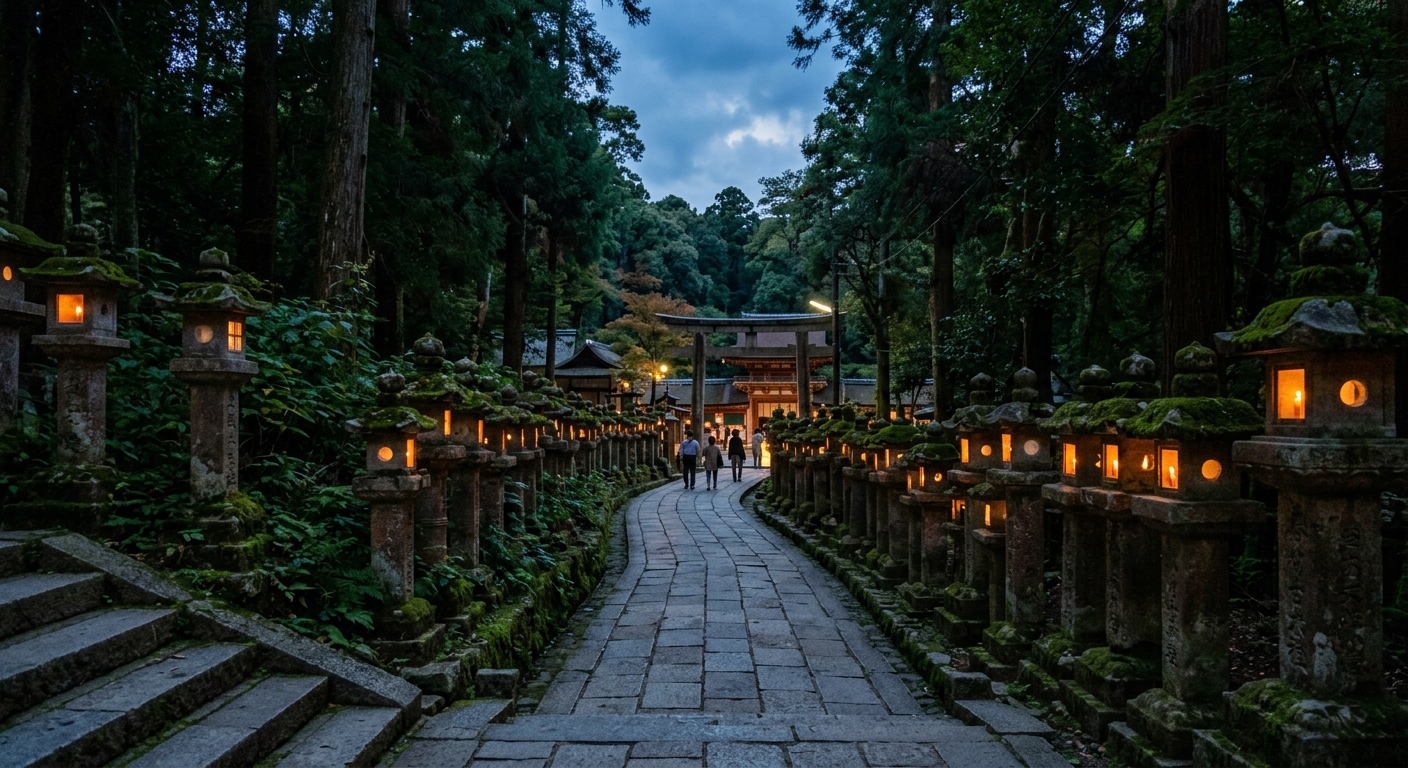
Kasuga Taisha, Lanterns, Ethereal, World Heritage, Night Visit - The Philosophy of Driving in Japan
I once navigated Japan's intricate railway veins, a Kintetsu conductor guiding trains through the pulsating heart of Kansai, a symphony of steel on tracks. I saw the country through a precise, timely lens, connecting cities, delivering millions to their destinations with unyielding punctuality. It was a career of unwavering dedication, a deep dive into the very bloodstream of Japanese infrastructure. But even then, a part of me, a deeper yearning, knew there was more. There was a Japan that remained stubbornly beyond the reach of the most efficient rail network, a canvas of hidden vistas and whispered legends that demanded a different kind of journey.
This is not an article for those content with the predictable. This is for the adventurer, the connoisseur of hidden beauty, the soul who craves the authentic thrum of a JDM engine underfoot. We’re talking about ditching the steel rails for asphalt ribbons, trading the rhythmic clatter of a train for the intoxicating growl of an 86 or BRZ. Because, while Japan’s public transport is a marvel of efficiency, it is also a meticulously curated experience. It funnels you along well-trodden paths, delivering you to the front door of the postcard-perfect, but rarely to the soul of “Secret Japan.”
Consider Osaka as your launchpad, a city brimming with electric energy, culinary masterpieces, and the perfect gateway to the spiritual heartland of Kansai. From here, the possibilities are boundless, yet only by car can you truly unlock them. Imagine the crisp morning air as you fire up the horizontally-opposed Boxer engine of an 86, the subtle vibration through the steering wheel, the satisfying ‘clunk’ as you slot into first gear. This isn't just transport; it's an extension of your spirit, a machine designed for pure, unadulterated driving pleasure.
The charm of driving in Kansai from Osaka isn't merely about convenience; it's about freedom. It’s the ability to chase a fleeting glimpse of sunlight dappling through ancient cedars, to discover a ‘Michi no Eki’ (roadside station) brimming with local artisanal treats, or to stumble upon a tiny, forgotten shrine nestled deep within a bamboo grove. These moments are the essence of “Secret Japan” – the impromptu detours, the winding roads that lead to unexpected beauty, the quiet contemplation away from the crowds. Public transport, with its fixed routes and schedules, simply cannot offer this spontaneity, this intimate communion with the landscape. It cannot deliver the thrill of mastering a mountain pass in a precision-engineered JDM, nor the quiet satisfaction of parking right at the trailhead of an unseen wonder.
As a former conductor, I appreciate the network, the interconnectedness. But as a driver, as an explorer, I understand the profound difference. The train offers a view; the car offers an immersion. The train dictates; the car liberates. And for an experience as profoundly unique and historically rich as the ethereal night拝観 (night visit) of Kasuga Taisha – a World Heritage site brought to life by thousands of glowing lanterns – only the freedom of the open road, and the spirited connection with a JDM legend, can truly do it justice. Prepare to embark on a journey where the destination is merely a highlight in a tapestry woven with unforgettable drives, local encounters, and the thrilling discovery of Japan's best-kept secrets.
Kasuga Taisha, Lanterns, Ethereal, World Heritage, Night Visit - The 2-Day Itinerary: Deep Dive

This isn’t just a trip; it’s an odyssey designed for the senses, an immersive dive into Japan’s ancient heartland, punctuated by the exhilarating pulse of an 86 or BRZ. We’ll trace the contours of Kansai, from Osaka’s urban sprawl to Nara’s spiritual serenity, culminating in the mystical glow of Kasuga Taisha’s lanterns.
Day 1: Osaka to Nara – The Path to Ethereal Lanterns
8:00 AM: The Ignition of Adventure – Osaka Pickup
The moment has arrived. You stand before it – a sleek 86, its lines hinting at latent power, its ‘Boxer’ engine waiting to be awakened. The paint gleams, whether in ‘World Rally Blue Pearl’ for a BRZ or the iconic ‘Pure Red’ of an 86, promising a vibrant journey. You slide into the low-slung bucket seat, the tactile grip of the leather-wrapped steering wheel a promise in your hands. The distinct scent of a well-maintained cabin, a subtle mix of new car and high-performance, fills your nostrils. You insert the key, turn, and the engine barks to life with that signature Subaru rumble – a low, guttural growl that instantly resonates with the car enthusiast’s soul. This isn’t just a rental car; it’s your companion, your instrument for exploration. You check the mirrors, adjust the seat, and take a deep breath. The excitement is palpable.
8:30 AM: Urban Escape – Osaka to Expressway
The initial challenge: navigating Osaka’s intricate morning traffic. But in the 86, even this becomes an enjoyable dance. The precise clutch engagement, the short-throw shifter of the manual transmission, the responsive throttle – it all makes for an engaging drive. You feel connected, a part of the city’s rhythm yet poised to break free. Soon, the urban labyrinth gives way to the smooth, flowing arteries of the expressway. The 86, designed for balance and driver engagement, settles into a comfortable cruise. The road signs, now also in clear English, guide you east towards Nara. The cityscape gradually recedes in your rearview mirror, replaced by the verdant, rolling hills that characterize the Kansai region. The engine note softens to a contented hum, a promise of the winding roads to come.
9:30 AM: First Glimpse of History – Yamazaki Overlook
An hour into our journey, we purposefully exit the main expressway a little early, opting for a brief detour onto a local ‘ken-do’ (prefectural road). Our destination is a discreet overlook near Yamazaki, a historical gateway between Osaka and Kyoto, famous for its strategic importance and – to the discerning eye – its subtle geological transition. Here, the land begins its gentle rise towards the Nara basin. From a small, often overlooked parking area, you can step out and breathe in the fresher air. Look back towards the sprawling urban expanse of Osaka, now a distant haze, and then turn towards the east, where the ancient mountains cradle Nara. It’s a moment of perspective, appreciating the journey’s subtle shifts. The sound of your 86 ticking as its engine cools provides a grounding counterpoint to the rustling leaves.
10:30 AM: Approaching the Ancient Capital – The Drive Through Nara’s Outskirts
As we get closer to Nara, the roads become a fascinating blend of modern infrastructure and ancient pathways. You’ll notice the architecture changing – more traditional wooden structures, subtle rooflines, and an increasing sense of history seeping into the landscape. The 86 handles the gentle curves and slight elevation changes with effortless grace, its low center of gravity making every turn a pleasure. We’re purposefully taking the scenic route, avoiding the most direct, congested arteries into the city center. This path leads us through residential areas, past small, neighborhood shrines, and local farms where the rich soil of the Nara basin yields its bounty. The transition is gradual, allowing you to mentally and spiritually prepare for the historical immersion that awaits. The light traffic allows for a relaxed, contemplative drive, the precise steering of the 86 making the simplest road feel like a driver’s delight.
11:00 AM: Nara Park – Gentle Giants and Whispers of the Past
Parking the 86/BRZ in one of the well-marked (and importantly, pre-booked or early-arrival secured) lots near Nara Park, you’re immediately greeted by the park’s most famous inhabitants: the deer. These aren’t just any deer; they’re considered messengers of the gods, revered and protected for centuries. The air here, especially in the spring, is a crisp blend of fresh earth, pine, and perhaps a hint of sakura blossoms. Walking through the park, the grand ‘torii’ gates of Kasuga Taisha become visible in the distance, partially obscured by the ancient trees. The scent of damp moss and decaying leaves from the primeval forest that surrounds the shrine permeates the air. Take your time, observe the deer – their gentle demeanor, their playful interactions. A bag of ‘shika senbei’ (deer crackers) is a must for a memorable interaction. This gentle introduction sets the stage, allowing the urban hustle to fully recede and the spiritual tranquility of Nara to take hold.
12:30 PM: A Taste of Nara – Kakinoha-Zushi Lunch
For lunch, we seek out a local gem specializing in ‘Kakinoha-zushi’ – pressed sushi wrapped in persimmon leaves. The leaves, while not eaten, impart a subtle, fragrant, and slightly tannic flavor to the rice and fish (typically mackerel or salmon), preserving it and adding a unique dimension. Imagine a small, unassuming eatery, perhaps a ‘machiya’ (traditional townhouse) converted into a restaurant. The interior is simple, elegant, with perhaps a ‘noren’ (fabric curtain) at the entrance and the gentle aroma of wood and rice. The ‘Kakinoha-zushi’ arrives beautifully presented, each piece a miniature work of art. The taste is a revelation: the firm, flavorful fish, the perfectly seasoned rice, and that elusive, earthy hint from the persimmon leaf. It’s a dish that speaks of Nara’s history, its connection to nature, and its refined culinary traditions. Pair it with a steaming cup of ‘hojicha’ (roasted green tea), its nutty aroma warming your hands. The quiet chatter of local patrons, the clinking of porcelain, and the distant calls of the deer outside create an authentic, unforgettable dining experience.
2:00 PM: Stepping into the Sacred – Kasuga Taisha’s Grandeur
With appetites sated, we approach Kasuga Taisha. The path leading to the shrine is lined with literally thousands of stone lanterns, their moss-covered surfaces testament to centuries of devotion. The air grows cooler, imbued with a sacred hush as you walk deeper into the primeval forest. Geologically, this area sits at the base of Mount Kasuga, a sacred mountain whose ancient forest has remained untouched for over a millennium. The towering cedars and pines form a natural canopy, creating a sense of awe and reverence. The vermillion gates and vibrant orange lacquer of the shrine buildings begin to emerge, a striking contrast against the deep greens of the surrounding nature. The ‘torii’ gates are monumental, each one marking a transition from the mundane to the divine. The very ground beneath your feet feels ancient, worn smooth by countless pilgrims.
2:30 PM: The Labyrinth of Light – Day View of the Lanterns
As you enter the main precinct, the sheer number of lanterns becomes overwhelming – in the most beautiful sense. Over 3,000 lanterns, both hanging bronze and towering stone, adorn the shrine grounds. During the day, they are sleeping sentinels, their intricate designs and family crests (‘mon’) telling stories of generations of devotion. Each bronze lantern, many centuries old, is a miniature sculpture, adorned with delicate carvings of animals, plants, and mythological creatures. The stone lanterns, some reaching impressive heights, are covered in layers of emerald moss, blending seamlessly with the forest floor. You’ll notice the subtle variations in their construction, reflecting different eras and artisans. The sunlight filters through the forest canopy, casting dappled patterns on the stone, highlighting the craftsmanship. It’s a meditative experience, walking among these silent guardians, imagining the countless ‘Setubun Mantoro’ (lantern festivals) they have witnessed. This World Heritage site is a living testament to Shinto faith and traditional Japanese artistry.
3:30 PM: Inner Sanctum – Exploring the Main Hall
Beyond the forest of stone lanterns lies the vibrant Inner Sanctuary. Here, the lacquered vermillion pillars and white walls glow with an almost otherworldly intensity. The intricate ‘chigi’ (forked roof finials) and ‘katsuogi’ (short horizontal logs) adorn the roof, shining golden in the afternoon light. Inside, the ‘Honden’ (main hall) houses the enshrined deities. While access to the innermost sanctum is limited, the outer corridors are open for reverence. You’ll find more bronze lanterns here, hanging in elegant rows, polished to a soft gleam. The smell of incense, subtly sweet and woody, hangs in the air. The hushed tones of visitors and the occasional soft chanting of priests add to the spiritual ambiance. Take time to appreciate the detailed carvings, the gold leaf accents, and the sheer scale of devotion encapsulated within these ancient walls. The history here is palpable, a direct link to the Fujiwara clan who established this shrine over 1,200 years ago.
4:30 PM: Retreat and Recharge – Ryokan Experience
Leaving the shrine grounds, the anticipation for the night visit begins to build. We head to our chosen accommodation – perhaps a traditional ‘ryokan’ (Japanese inn) nestled in the quiet lanes of Nara, a short drive from the park. The 86, after its spirited day, now idles quietly, its performance capabilities subtly appreciated. A ryokan offers a sanctuary of peace. Upon arrival, you’re greeted with warm hospitality, perhaps a cup of ‘matcha’ and a ‘wagashi’ (traditional sweet). The room, with its ‘tatami’ mat flooring, ‘shoji’ paper screens, and minimalist aesthetic, invites tranquility. Change into a ‘yukata’ (cotton kimono) provided by the inn. The feeling of the soft cotton against your skin, the quiet rustling of the bamboo outside your window, all contribute to a profound sense of relaxation. It’s a world away from the chrome and glass of modern life, preparing you perfectly for the mystical experience ahead.
5:30 PM: Nara’s Evening Delights – Dinner
Dinner in Nara should be an exploration of local flavors. Rather than seeking out tourist traps, we might ask our ryokan host for a recommendation – a ‘kaiseki’ (multi-course dinner) emphasizing seasonal Nara produce, or perhaps a more casual ‘izakaya’ (Japanese pub) known for its local sake and grilled specialties. Imagine a small, warmly lit restaurant, the sound of sizzling food from the kitchen, and the convivial murmur of conversation. You savor ‘Yamato Pork’ (a local specialty) prepared ‘tonkatsu’ style, perfectly crispy outside, juicy within, served with finely shredded cabbage and a rich sauce. Or perhaps ‘yuba’ (tofu skin) dishes, delicate and creamy, showcasing the purity of local ingredients. A local ‘jizake’ (local sake), perhaps a crisp ‘junmai daiginjo’ from a Nara brewery, perfectly complements the meal. This is not just sustenance; it’s a culinary journey, deeply rooted in the land and its traditions, preparing your senses for the spectacle to come.
7:00 PM: The Descent into Mysticism – Return to Kasuga Taisha
As true dusk settles, a different atmosphere permeates Nara. The daytime crowds have thinned, and a profound stillness descends. You leave your ryokan, the ‘yukata’ now replaced by your comfortable travel clothes, and walk back towards Kasuga Taisha. The forest path, once bright with afternoon sun, is now swallowed by encroaching shadows. The stone lanterns, which were merely architectural features earlier, now begin to exude an aura of expectation. The air is cooler, perhaps carrying the scent of damp earth and unseen blossoms. The silence is profound, broken only by the chirping of crickets or the distant calls of night birds. This walk itself is part of the pilgrimage, a transition into a realm of ancient magic.
7:30 PM: The Ethereal Unveiling – Night Visit to Illuminated Lanterns
And then, it happens. As you approach the main precinct, the first flicker of light catches your eye. Then another, and another, until the entire shrine grounds are bathed in a soft, golden glow. The thousands of lanterns, both stone and bronze, are now meticulously lit – some by electricity, but many by hand-placed candles, particularly during the special Mantoro festivals (typically in February and August). This is the ‘night拝観’ (night visit), and it is nothing short of breathtaking. The atmosphere is utterly ethereal. The bronze lanterns, which looked stoic by day, now cast intricate shadows on the vermillion pillars, their carvings dancing in the flickering light. The stone lanterns, once mossy guardians, become beacons, their soft light illuminating the ancient path. The shadows stretch and contract, creating an ever-changing tableau of light and darkness. The air is still, carrying the faint scent of lamp oil and ancient wood. The silence is broken only by the soft shuffling of feet and the occasional gasp of awe. You are no longer just a visitor; you are a participant in a timeless ritual, stepping into a dream. The World Heritage site transcends its architectural beauty, becoming a living, breathing entity of light and shadow, prayers and history. It’s a moment that will forever be etched in your memory, a testament to the profound beauty of Japanese spiritual tradition.
8:30 PM: A Labyrinth of Dreams – Wandering the Illuminated Paths
Wander through the main complex, taking your time. Each turn reveals a new perspective, a different interplay of light and shadow. The hanging lanterns in the corridors seem to float, their delicate designs captivating. Observe the light filtering through the ‘suki-bei’ (lattice windows), casting patterns on the ground. The very act of walking becomes a meditation. The gentle glow from the lanterns is surprisingly bright, yet soft enough to maintain the mystical ambiance. It’s a perfect setting for quiet reflection, for absorbing the centuries of prayers and wishes that these lanterns represent. The deer, now mere silhouettes in the darkness, occasionally emerge from the shadows, their eyes glinting in the faint light, adding to the magical quality of the experience. This isn’t just sightseeing; it’s a journey into the heart of Japanese spirituality, illuminated by a thousand gentle flames.
9:30 PM: Lingering Magic – Departure and Reflection
Reluctantly, you begin your departure. The magic of the illuminated shrine lingers, a warmth in your heart. The walk back through the now-darkened path, the stone lanterns slowly fading into the distance, feels like waking from a beautiful dream. The image of the glowing Kasuga Taisha will stay with you long after the light is gone. The gentle hum of your 86/BRZ as you make your way back to the ryokan feels like a warm embrace, a safe return from an otherworldly realm. The day has been a sensory overload in the best possible way – the thrill of the drive, the taste of local delicacies, the awe of ancient history, and the profound beauty of the illuminated lanterns. You drift off to sleep, the images of dancing light and shadow playing behind your eyelids, the soft rumble of the Boxer engine a distant, comforting memory.
Day 2: Winding Roads and Hidden Gems on the Way Back to Osaka
9:00 AM: Traditional Morning – Departure from Nara
After a restful night and a traditional Japanese breakfast at your ryokan – perhaps ‘miso’ soup, grilled fish, rice, and an array of pickles – you prepare for the second leg of your adventure. The morning air in Nara is crisp and invigorating. The 86/BRZ, parked patiently, looks ready for another day of exploration. You stow your luggage, the rear seats offering surprising practicality for a sports coupe, and fire up the engine once more. The exhaust note echoes softly in the quiet morning, a respectful acknowledgment of the peaceful surroundings. Today’s journey back to Osaka will not be a mere return trip, but another opportunity to uncover “Secret Japan” through exhilarating driving.
9:30 AM: Nara’s Countryside – The Winding Roads Less Traveled
Instead of retracing our steps on the expressway, we’re taking a detour through the lesser-known prefectural roads that snake through Nara’s mountainous interior. These roads are where the 86/BRZ truly shines. Picture a ribbon of asphalt unspooling before you, bordered by dense forests of cedar and cypress, their scent filling the cabin through the open windows. The ‘kami-saka’ (uphill sections) and ‘kudari-saka’ (downhill sections) demand precise gear changes, the short-throw shifter a joy to manipulate. The manual transmission allows you to extract every ounce of performance and feel from the balanced chassis. You heel-and-toe into corners, the engine rev-matching perfectly, the steering providing telepathic feedback. The sound of the Boxer engine climbing through the revs, a visceral mechanical symphony, is music to the ears of any enthusiast. This is not about speed; it’s about rhythm, precision, and the pure, unadulterated joy of driving. We pass through tiny villages, their roofs often still thatched, untouched by the frenetic pace of modern life. The geological features here are ancient, eroded volcanic rock formations softened by millennia of weather, now clothed in thick, vibrant green vegetation. The occasional glimpse of a distant waterfall or a terraced rice paddy adds to the serene beauty.
10:30 AM: Unseen Serenity – The Hidden Temple of Muroji
Our “Secret Japan” stop for the morning is Muroji Temple, a remarkably preserved temple often called “the Koyasan for women” due to its historical acceptance of female worshipers when many other temples restricted access. Nestled deep in the mountains, reaching it requires navigating a charming series of winding, narrow roads – perfect for the agile 86/BRZ. The temple complex itself is a marvel: ancient pagodas, tranquil halls, and statues carved from wood, all set against a backdrop of towering cryptomeria trees. The air here is cool and moist, carrying the earthy scent of the forest floor and the faint aroma of incense. The soundscape is dominated by birdsong and the rustling of leaves. It’s a place of profound peace, far removed from any bus routes or train lines. You can feel the centuries of devotion in the silence, the moss-covered stones, and the weathered wood of the buildings. The five-storied pagoda, a National Treasure, stands gracefully amidst the trees, a testament to ancient craftsmanship and resilience. This is the kind of discovery that makes a driving trip through Japan so rewarding.
11:30 AM: A Taste of Local Life – Michi no Eki Experience
As we continue our journey, we purposefully seek out a ‘Michi no Eki’ (roadside station) not on the main tourist routes. These aren’t just rest stops; they are vibrant hubs of local culture and commerce. Imagine pulling your 86/BRZ into a bustling parking lot alongside local farmers’ trucks and family cars. The aroma of freshly baked bread, roasted tea, and savory snacks fills the air. Inside, stalls overflow with seasonal produce – impossibly red strawberries, crisp mountain vegetables, local honey, and ‘konnyaku’ (konjac jelly) in various forms. You might find handmade pottery, woven crafts, or unique regional condiments that you won’t see anywhere else. This is a chance to taste “Secret Japan” through its agricultural bounty. Grab a local ‘onigiri’ (rice ball) or a ‘taiyaki’ (fish-shaped cake) freshly griddled, its sweet red bean paste still warm. Chat with the vendors, practice a few Japanese phrases, and soak in the authentic, unhurried pace of rural life. It’s a refreshing break and a genuine cultural exchange.
1:00 PM: Culinary Discovery – Local Lunch at a Hidden Gem
Guided by a recommendation from a friendly ‘Michi no Eki’ vendor or a small, unassuming sign, we venture to a nearby local restaurant for lunch. This isn’t a flashy establishment; it’s likely a family-run eatery that has been serving the community for decades. Perhaps a small ‘soba’ (buckwheat noodle) shop, where the noodles are handmade daily, their texture perfectly al dente, served in a delicate, savory broth with tempura of seasonal vegetables. Or a ‘teishoku’ (set meal) restaurant offering ‘tonkatsu’ or grilled fish with steaming rice and pickles. The flavors are clean, honest, and deeply satisfying, reflecting the local ingredients and generations of culinary tradition. The ambiance is one of quiet authenticity, a place where locals gather, their conversations a gentle murmur in the background. Eating here is not just about the food; it’s about feeling a part of the local fabric, tasting the true essence of the region.
2:30 PM: Homeward Bound with Views – Kansai Panorama
With satisfied stomachs, we continue our westward journey. Rather than the fastest route, we choose one that offers panoramic views as we begin our descent from the mountainous regions towards the sprawling plains of Kansai. The roads here open up, allowing the 86/BRZ to stretch its legs a little. The powerful grip of its tires on the asphalt, the precise cornering, and the responsive acceleration provide a thrilling counterpoint to the serene landscapes. You can feel the car’s balance, its ability to hug the road, making every sweep and curve a pure joy. The vista unfolds – distant mountains slowly giving way to verdant plains, and eventually, the faint outlines of the urban sprawl of Osaka. On a clear day, the shimmering expanse of Osaka Bay might even be visible in the distance, glinting under the afternoon sun. The colors of the landscape shift – from the deep greens of the mountains to the lighter hues of cultivated fields, reflecting the rich agricultural heritage of the region. It’s a majestic drive, a fitting visual crescendo to our journey.
3:30 PM: A Final Stop – Artisanal Pottery Workshop
Before fully re-entering the urban gravity of Osaka, we make one final, culturally enriching stop. This might be a small artisanal pottery workshop (perhaps in the Shigaraki area, famous for its ceramics, or a lesser-known kiln in the hills), or a traditional ‘sake’ brewery. These are places often missed by mass tourism, found only by those with the freedom of their own vehicle. Imagine a quiet studio, the rhythmic hum of a potter’s wheel, the earthy scent of clay. You might see a master craftsman at work, his hands deftly shaping the clay, embodying centuries of tradition. Or you could visit a small ‘sake’ brewery, learn about the intricate process of sake making, and perhaps even sample some unique, locally brewed varieties. It’s a chance to witness the enduring spirit of Japanese craftsmanship and appreciate the meticulous dedication that goes into every piece, every drop. This final cultural immersion leaves you with a deeper appreciation for the country’s artistry and heritage.
4:30 PM: Re-entering the Metropolis – Osaka’s Embrace
As the sun begins its slow descent, painting the sky in hues of orange and purple, we transition from the tranquil countryside back into the dynamic energy of Osaka. The roads gradually become wider, the traffic denser, and the buildings taller. The 86/BRZ, which carved through mountain passes with thrilling agility, now demonstrates its urban manners, easily navigating city streets. The feeling is one of returning, not just to a city, but to a base, laden with memories. The contrast between the ancient spiritual sites and the bustling modern metropolis highlights the incredible diversity of Japan. The adventure isn't over until the engine is off, and even then, the echoes of the drive, the sights, sounds, and tastes, will resonate deeply.
5:30 PM: The Bittersweet End – Returning the 86/BRZ
Pulling into the rental shop, the 86/BRZ quietly idles, its journey complete. The engine, still warm, ticks softly as you turn it off. There’s a bittersweet feeling – the thrill of the drive is over, but the memories forged over these two days are indelible. You step out, perhaps running a hand over the smooth lines of the car, a silent thank you for its companionship. This wasn’t just a trip; it was a profound experience, a deep dive into “Secret Japan” that only the freedom of a JDM, a manual sports car, could unlock. The purr of the engine, the winding roads, the ancient lanterns – they all converge into a tapestry of adventure that will call you back to Japan, and to the driver’s seat, again and again.
Kasuga Taisha, Lanterns, Ethereal, World Heritage, Night Visit - Expert Advice & Cultural Nuances
Driving in Japan is an art form, a dance between precision, respect, and a thirst for discovery. As a former Kintetsu conductor who’s also traversed countless kilometers of this incredible country by car, I can tell you that ‘Michi no Eki’ and hidden local spots are the jewels in Japan’s driving crown.
The ‘Michi no Eki’ (Roadside Station) Culture: More Than Just a Stop
Forget the soulless rest stops of other nations. Japan’s ‘Michi no Eki’ are vibrant community hubs, each a unique microcosm of its local region. They aren’t just for a quick bathroom break; they’re destinations in themselves. When you pull your 86/BRZ into a ‘Michi no Eki’, you’re stepping into a treasure trove. Here’s what to look for:
- Local Produce: Farmers bring their freshest seasonal fruits and vegetables directly to the ‘Michi no Eki’. Expect impossibly sweet strawberries, crisp mountain greens, or unique regional pickles that you’d never find in a supermarket.
- Artisanal Crafts: Many stations feature local artisans selling handmade pottery, textiles, wooden crafts, or specialty sweets. These make for authentic and meaningful souvenirs.
- Unique Regional Snacks & Drinks: From ‘mochi’ (rice cakes) infused with local flavors to specialty ‘sake’ or ‘shochu’ (distilled spirits), ‘Michi no Eki’ are culinary adventure playgrounds. Try the ‘soft cream’ (soft-serve ice cream) – many ‘Michi no Eki’ boast unique flavors like matcha, local fruit, or even wasabi!
- Information Centers: Often staffed by friendly locals, these are invaluable for finding out about nearby attractions, local festivals, and – critically – those hidden restaurants or scenic spots that only locals know about.
Embrace the ‘Michi no Eki’ as a chance to refuel your body, discover local culture, and connect with the heart of Japan off the beaten path.
Unearthing Hidden Local Gems: The Art of Discovery
The true magic of driving in Japan lies in the discoveries you make when you veer slightly off the well-trodden tourist trails. My years of driving across Japan have taught me this:
- Look for Local Cars: If a parking lot – even a tiny one – is full of local license plates, it’s usually a good sign of a quality eatery, a charming shop, or a local secret.
- Ask Politely: Don’t be afraid to ask staff at ‘Michi no Eki’, your accommodation, or even shopkeepers for recommendations. A simple “Oishii resutoran wa doko desu ka?” (Where is a delicious restaurant?) can open doors to incredible culinary experiences.
- Trust Your Instincts: Sometimes, it’s just a feeling. A narrow road winding into the forest, a small sign for a ‘café’ or ‘gallery’ in an unexpected place. These are often the paths to genuine discoveries, far from the tour buses.
- Small is Often Better: The most authentic experiences are often found in unassuming, family-run establishments. Their passion and dedication shine through.
Driving in Japan: Tips from a Pro
- Left-Hand Driving: Japan drives on the left. If you’re from a right-hand drive country, this will be intuitive. If not, take your first hour or so to acclimate. The 86/BRZ, with its excellent visibility and nimble handling, makes this transition smoother.
- Speed Limits: Japan’s speed limits are generally lower than in many Western countries (typically 40-60 km/h on regular roads, 80-100 km/h on expressways) and strictly enforced. Respect them; don’t risk a ticket.
- Courtesy is King: Japanese drivers are generally very polite and orderly. Avoid aggressive driving, tailgating, or unnecessary horn honking. A quick ‘arigato’ wave if someone gives way is always appreciated.
- Tolls and ETC: Expressway tolls can add up. An ETC (Electronic Toll Collection) card, which you can rent with your vehicle, is essential for seamless passage.
- Navigation: Japanese car navigation systems (often touch-screen) are excellent, but you’ll need to input destinations via phone number or ‘Map Code’ (a unique numerical identifier for specific locations), as street addresses can be complex. Your smartphone with Google Maps is a reliable backup.
With these insights, you’re not just driving; you’re engaging with Japan on a deeper, more intimate level, guided by the very spirit of adventure that fuels the JDM experience.
Kasuga Taisha, Lanterns, Ethereal, World Heritage, Night Visit - Detailed Logistics & Pre-Trip Tips
Embarking on a JDM road trip in Japan requires more than just a sense of adventure; it demands practical preparation. As someone who has driven extensively across this nation and now runs a JDM rental business, I’m here to equip you with the insider knowledge for a seamless, exhilarating journey in 2026.
The Roads of 2026: Traffic & Conditions
Japan’s road infrastructure is world-class – meticulously maintained, clearly signposted (with increasing English translations), and generally a pleasure to drive. In 2026, expect the expressways around major metropolitan areas like Osaka to experience congestion during peak commuting hours (7-9 AM, 5-7 PM) and on public holidays. However, the true beauty of our chosen route – venturing into the mountains and smaller prefectural roads – means you’ll largely escape the urban crawl. These roads are typically quiet, offering unspoiled driving pleasure. Always check real-time traffic updates via your car’s navigation or a smartphone app before setting out, especially when planning to traverse major city arteries.
ETC Card: Your Gateway to Smooth Tolls
An ETC (Electronic Toll Collection) card is not just a convenience; it’s a necessity for any extensive driving in Japan. Here’s why:
- Seamless Passage: Instead of fumbling for cash or credit cards at toll booths, an ETC card allows you to drive straight through dedicated lanes. The toll fee is automatically deducted.
- Cost Savings: Many expressway discounts (e.g., late-night, holiday) are only available to ETC users. Over a multi-day trip, these savings can be substantial.
- How it Works: You rent an ETC card along with your 86/BRZ. It inserts into a dedicated slot in the car’s dashboard unit. When approaching an ETC lane, a voice (usually in Japanese, but easily recognizable) will confirm the card reading and the barrier will lift.
Always ensure your rental company provides an ETC card. It will streamline your journey immensely.
Japanese Gas Stations: A Unique Experience
Fueling up in Japan is an encounter with impeccable service culture. You’ll find two main types of stations:
- Full Service (フルサービス): Pull up, and an attendant will greet you with a bow. Simply say “Mantan, regyura onegaishimasu” (満タン、レギュラーお願いします - “Full tank, regular please”) if you need regular gasoline, or “haioku” for high-octane (which your 86/BRZ will likely require – always check the fuel flap for the correct type!). They will pump your fuel, clean your windows, and even take your payment, often presenting it on a small tray. It’s a glimpse into ‘omotenashi’ (Japanese hospitality).
- Self-Service (セルフ): These are becoming more common. Follow the clear instructions on the pump, which often have English options. Pay attention to the fuel type colors (red for regular, yellow for high-octane, green for diesel). Payment is usually via a touch-screen panel accepting cash or credit card.
Remember that diesel (軽油 - “keiyu”) is for diesel vehicles only; your 86/BRZ runs on gasoline (ガソリン - “gasorin”).
Parking Mastery in Japan
Parking can be a tight squeeze in Japan’s cities, but systematic solutions exist:
- Coin Parking (コインパーキング): These ubiquitous lots are clearly marked. Drive in, park, and often a metal plate will rise beneath your car. When leaving, enter your parking spot number into the payment machine, pay the displayed fee (cash or card), and the plate will retract.
- Multi-Story Garages: Common in urban centers, these offer ample space but can be confusing. Look for clear signs for entry and exit. Some older ones might even use robotic systems to stack cars.
- Be Mindful of Signs: “No Parking” (駐車禁止) signs are strictly enforced. Avoid parking on residential streets unless clearly permitted.
The compact dimensions and excellent maneuverability of the 86/BRZ make navigating Japan’s smaller parking spaces far less stressful.
The Exhilaration of a JDM MT Car: The 86/BRZ Experience
Driving an 86 or BRZ with a manual transmission in Japan is not merely transportation; it’s an intimate dance with the road. This isn’t a beast of brute force, but a precision instrument, designed by enthusiasts, for enthusiasts. The 86/BRZ offers:
- Direct Connection: The manual gearbox puts you in complete control. Each gear change is a deliberate act, a conscious decision that engages your mind and body with the machine.
- Engine Symphony: The unique growl of the Boxer engine changes pitch as you work through the gears, a mechanical chorus echoing off the mountain passes. You feel the power band, the torque delivery, the precise moment to shift for optimal performance.
- Telepathic Handling: With its low center of gravity, perfectly balanced chassis, and communicative steering, the 86/BRZ carves through winding roads with surgical precision. You don’t just steer; you guide it with your thoughts.
- Pure Driving Pleasure: In a world increasingly dominated by automatics and driver aids, the manual 86/BRZ offers an unfiltered, exhilarating connection to the act of driving. It demands your full attention, rewarding you with an unmatched sense of accomplishment and joy on every curve.
This is the ultimate way to experience Japan’s breathtaking landscapes and hidden roads – not as a passive observer, but as an active participant, fully immersed in the thrill of the journey.
Kasuga Taisha, Lanterns, Ethereal, World Heritage, Night Visit - Comprehensive FAQ
Planning an epic JDM road trip to Japan inevitably sparks questions. Here are the answers to your most pressing concerns, ensuring you’re fully prepared for your adventure.
International Driving Permit (IDP) & Licenses
To legally drive in Japan, you need a valid International Driving Permit issued under the 1949 Geneva Convention, your domestic driver’s license, and your passport. Make sure your IDP is issued by a country that is a signatory to the 1949 Geneva Convention. Without these three documents, you cannot legally drive in Japan.
Insurance for Your Peace of Mind
When renting your 86/BRZ, comprehensive insurance is highly recommended. Standard rental agreements usually include basic liability coverage, but I strongly advise opting for additional, full-coverage insurance. This typically covers damage to your rental vehicle (with an “excess” or “deductible” waiver option), third-party damage, and personal injury. While Japan’s roads are safe, accidents can happen, and having robust coverage ensures you can enjoy your trip without financial worry.
Driving an MT (Manual Transmission) Car: Is It Too Difficult?
For enthusiasts, driving an MT car like the 86/BRZ is part of the allure. If you’re comfortable with manual transmissions, Japan’s well-maintained roads and generally orderly traffic make it an excellent place to enjoy the experience. If you’re a bit rusty or less experienced, consider practicing before your trip. The 86/BRZ’s forgiving clutch and precise shifter are quite user-friendly. Start with less busy routes to build confidence. The reward – an unmatched connection with the car and the road – is well worth it.
Winter Driving Conditions
While Nara and the Kansai region generally experience milder winters compared to northern Japan, occasional snowfall is possible, particularly in the mountainous areas. Heavy snow in the Kasuga Taisha area itself is rare but not impossible during the coldest months (January-February). If you plan a winter trip, monitor weather forecasts. Rental vehicles can be equipped with “studless” (winter) tires upon request, or chains if conditions warrant. Always consult with your rental provider about winter tire options if traveling during the colder season to ensure safety.
Navigation & Communication
While your JDM rental will likely have an in-car navigation system, having a reliable smartphone with data for Google Maps or other navigation apps is crucial. Wi-Fi hotspots are common, but a portable Wi-Fi device (“pocket Wi-Fi”) or a local SIM card ensures constant connectivity. This is invaluable for real-time traffic, looking up local information, and translating signs or menus.
Kasuga Taisha, Lanterns, Ethereal, World Heritage, Night Visit - The Final Call: CTA
You’ve envisioned it: the roar of the 86/BRZ engine echoing through ancient mountain passes, the crisp scent of cedar and history filling your lungs, and the breathtaking sight of Kasuga Taisha’s thousands of lanterns glowing with an ethereal grace under the velvet night sky. You’ve seen “Secret Japan” not just through a screen, but through the detailed, sensory-rich narrative of a journey only accessible to the adventurous soul behind the wheel. You’ve tasted local delicacies, navigated winding roads with surgical precision, and touched the very fabric of Japanese culture, all from the exhilarating cockpit of a true JDM legend.
Are you ready to trade the predictable train schedule for the thrill of the open road, to uncover Japan's most enchanting secrets in a machine built for pure driving pleasure? To feel the direct connection between your hands, your feet, and the asphalt beneath you, experiencing a country in a way most tourists only dream of? The vivid landscapes, the ancient whispers, the vibrant flavors, and the unparalleled driving experience are all waiting for you.
Then it's time to make your dream a reality. For an unparalleled selection of meticulously maintained JDM vehicles, including the legendary 86 and BRZ, and expert advice from a team that lives and breathes Japanese car culture – and understands the roads like no other – your first and only stop should be Omoshiro Rent-a-Car Osaka Chuo. Let us put the keys to your next unforgettable Japanese adventure in your hands. Visit us today, and let the journey begin. Your Kasuga Taisha night visit, illuminated by the spirit of JDM, awaits.
