
Alright, fellow adventurers and purveyors of true experiences, buckle up. Forget what you think you know about exploring Japan. I’ve seen this country from the pristine, polished windows of a Kintetsu train, miles of track unspooling beneath me, carrying thousands on their predictable journeys. And let me tell you, while the efficiency is undeniably Japanese, the true soul of this nation, its raw, untamed beauty, its whispered secrets, they remain tantalizingly out of reach on those iron rails. You see, a train, no matter how punctual, dictates your path, constrains your vision, and confines your spirit. It’s a magnificent machine for mass transit, yes, but for genuine discovery? For feeling the very pulse of Japan? No. For that, my friends, you need the open road, a precision-engineered machine, and the unbridled freedom that only a car can offer.
As someone who once commanded those steel beasts, I understand the allure of public transport. But as a man who has since crisscrossed this archipelago countless times by road, and now dedicates his life to sharing the visceral joy of driving JDM legends, I can tell you this: the real Japan, the 'Secret Japan' I speak of, is found on the winding mountain passes, along the forgotten coastal roads, and in the sleepy villages tucked away from the bullet train’s roar. It’s in the unexpected vista from a roadside station, the steam rising from a hidden onsen, the aroma of a local delicacy prepared in a humble eatery where no tourist bus could ever venture.
Especially when it comes to experiencing an event as profoundly unique as the Wakakusa Yamayaki in the depths of winter – a spectacle of fire and light against a frigid night sky – relying on public transport is to settle for a mere glimpse. The magic of Wakakusa Yamayaki isn't just the fire itself, but the journey to it, the anticipation, the flexibility to find that perfect, unobstructed viewpoint, and the freedom to explore the frosty landscapes of Nara and beyond, far from the tourist throngs. You want to chase the golden hour light playing on frost-kissed temples? You want to hear the crisp crunch of winter leaves underfoot at a secluded shrine? You want to detour to a small town known only for its artisanal sake? The train says, “No.” Your 86 or BRZ, however, whispers, “Absolutely. Let’s go.”
Driving from Osaka, the vibrant heart of Kansai, isn't just about getting from A to B; it's about the journey itself becoming an integral part of the adventure. Osaka is your launching pad, a city pulsating with urban energy, but just beyond its sprawling edges lie ancient capitals, mist-shrouded mountains, and the serene beauty of a Japanese winter. With the keys to a true driver’s car – an 86, perhaps, or a BRZ – you’re not merely a passenger; you’re an active participant in an unfolding narrative. You’re connected to the road, to the landscape, and to the very essence of discovery. The engine's hum, the precise feel of the steering wheel, the exhilarating shift of gears as you carve through a scenic route – these are the sensations that elevate a trip from a mere vacation to an unforgettable odyssey into the heart of Japan. Forget the crowded platforms and the rigid schedules. Embrace the freedom. Embrace the drive. Embrace the 'Secret Japan' that awaits you.
Wakakusa Yamayaki, Scenic Views, Events, Fireworks, Winter - The 2-Day Itinerary: Deep Dive
This isn't just a trip; it's an immersion. A two-day odyssey meticulously crafted to ignite your senses and embed Japan's winter magic deep within your soul, all from the driver's seat of an exquisite JDM machine. Our chariot for this adventure? A gleaming, agile 86 or its fraternal twin, the BRZ – a testament to pure driving pleasure, begging to be put through its paces on Japan’s storied roads.
Day 1: Osaka to the Fiery Heart of Nara – Wakakusa Yamayaki Unveiled
7:00 AM – The Awakening of the Machine in Osaka
The city of Osaka is stirring, but you’re already alive with anticipation. At our central Osaka base, your chosen steed, an 86 or BRZ, awaits. Its low-slung profile and purposeful stance are an invitation. The interior, sparse yet focused, cradles you. Twist the key, or push the start button, and the engine barks to life with a throaty growl, a promise of performance. The crisp winter air fills the cabin as you make final adjustments. This isn't just a car; it's a meticulously crafted instrument, an extension of your will.
7:30 AM – Embracing the Morning Drive: Urban Escape
With a smooth clutch engagement and a precise first-to-second shift, you’re off. The initial stretches through Osaka's waking streets offer a gentle warm-up. Traffic is light, the city still shaking off its slumber. The 86/BRZ feels eager, its suspension taut, steering direct. You navigate the urban grid with ease, the car's compact size a boon. Japanese drivers are courteous, and the rhythm of the road is quickly understood. Your destination: the ancient heart of Nara, specifically, the majestic Mount Wakakusa, where an ancient ritual of fire awaits.
8:30 AM – The Expressway Unfurls: A Symphony of Speed
As you merge onto the Hanshin Expressway, the city rapidly recedes into your rearview mirror. The road stretches out, a ribbon of asphalt cutting through the landscape. This is where the 86/BRZ truly sings. The engine's note rises as you accelerate, finding its rhythm in the upper RPMs. The precise gearing of the manual transmission keeps you engaged, allowing you to perfectly match revs for smooth, exhilarating overtakes. The scenery begins to transition from urban sprawl to rolling hills, hinting at the natural beauty to come. This isn't just transit; it's a ballet of man and machine, a prelude to the day’s adventures.
9:30 AM – Detour to Tranquility: The Whispers of Hozan-ji Temple
Before plunging into the deer-filled chaos of central Nara, we seek a moment of serene contemplation. A slight detour takes us off the main highway, onto narrower, winding roads that hug the base of Ikoma Mountain. This is where the 86/BRZ truly shines, its perfectly balanced chassis and responsive steering making light work of the tight corners. The air grows noticeably cooler, crisper, carrying the scent of pine and damp earth. Our destination: Hozan-ji Temple (生駒聖天), nestled discreetly on the slopes of Mount Ikoma. This temple, unlike the more famous ones in Nara Park, offers an otherworldly tranquility. You'll navigate a charming approach lined with stone lanterns, leaving the car in a small, local parking area. The temple itself, founded in the 17th century, is famous for its intricate carvings and its atmospheric, moss-covered grounds. The view from its elevated position, looking out over the nascent winter landscape of the Kansai plain, is breathtaking. The silence here is profound, broken only by the rustling of cold wind through the ancient trees and the distant, almost imperceptible hum of your car waiting below. This is ‘Secret Japan’ in its purest form, a place the trains simply cannot touch.
10:30 AM – A Taste of Nara's Culinary Heritage: Lunch in Ikoma
Descend from Hozan-ji, the 86/BRZ eager for the road. We head into the quaint town of Ikoma for an early, authentic lunch. Forget the tourist traps. We seek out a small, unassuming eatery known for its kakinoha-zushi (persimmon leaf sushi), a local specialty. The delicate rice, often with mackerel or salmon, is pressed and wrapped in a persimmon leaf, imparting a subtle, earthy aroma. The taste is a revelation – fresh, clean, and a testament to Nara's culinary traditions. This isn't just food; it's a connection to the land and its history, a sensory experience that enriches your understanding of the region. The warmth of the small restaurant, the quiet chatter of locals, and the exquisite flavors prepare you for the main event.
11:30 AM – The Ancient Capital Beckons: Nara Park & Todai-ji Temple
Refreshed, we set our sights on the heart of Nara. The drive from Ikoma is a pleasant, straightforward affair, and soon you're pulling into a well-located parking area near Nara Park. Stepping out of the 86/BRZ, the air immediately shifts. Here, hundreds of wild sika deer roam freely, considered messengers of the gods. The sight of these majestic creatures, some bowing for crackers (shika senbei), is an iconic Japanese experience, but in winter, there's an added layer of magic. The crisp air makes their breath visible, and their coats appear thicker, more lustrous. The drive to Nara, with the 86/BRZ responding instantly to every input, enhances the feeling of freedom, of truly immersing yourself in this ancient landscape.
Our primary destination within the park is Todai-ji Temple (東大寺). Its Great Buddha Hall (Daibutsu-den) is the world's largest wooden building, housing a colossal bronze statue of Buddha. The sheer scale is overwhelming, a humbling reminder of human ambition and devotion over centuries. Imagine the effort involved in its construction, dating back to the 8th century, and the subsequent reconstructions after fires. The wood, the intricate joinery, the towering presence – it speaks of a profound reverence. Standing within its immense halls, the weight of history is palpable, a contrast to the dynamic, modern machine you just parked. The vastness of the space, the scent of aged wood, the hushed reverence of visitors – it's a spiritual experience that transcends language.
2:00 PM – Ascending to the Flames: Mount Wakakusa Exploration
From Todai-ji, it's a short, scenic drive around the base of Mount Wakakusa itself. While you can walk up, the car allows us to survey potential viewing spots for later, and to appreciate the mountain’s unique geology. Mount Wakakusa (若草山), with its distinctive three peaks, is an extinct volcano. Its gentle slopes belie a dramatic history, both geological and cultural. For centuries, perhaps even millennia, the dry grass of Wakakusa has been set ablaze. The official Wakakusa Yamayaki festival, held annually on the fourth Saturday of January, has roots in a dispute between Todai-ji and Kofuku-ji temples over boundary lines, with the solution being to burn the mountain annually to prevent further encroachment or perhaps to appease spirits and pray for prosperity. This yearly incineration is not just a spectacle; it’s a living tradition, a powerful connection to ancient rituals.
We drive up to the first plateau, parking the 86/BRZ in a designated area. The short hike to the summit offers panoramic views of Nara City. In winter, the air is extraordinarily clear, and the distant mountains appear in sharp relief against the pale blue sky. The coarse, dry grasses of the mountain, awaiting their fiery destiny, rustle in the breeze, a stark beauty. This vantage point provides a sense of the scale of the impending event – how this entire mountain will become a canvas of flame. We walk along the trails, visualizing where the massive bonfire will be lit, anticipating the transformation of this serene landscape into a pyrotechnic marvel.
4:00 PM – Sustenance and Warmth: Pre-Yamayaki Dinner
With daylight fading and the chill setting in, it's time to fortify ourselves. We descend from Wakakusa-yama and head towards a local establishment known for its Nara-zuke (pickled vegetables) and udon or soba. The warmth of a hearty noodle soup, perhaps with some tender tempura, is exactly what’s needed. The flavors are clean, comforting, and quintessentially Japanese – a perfect balance of savory broth, chewy noodles, and crisp vegetables. The restaurant is likely buzzing with locals, all anticipating the evening's main event, adding to the communal atmosphere. This brief respite is crucial, allowing you to absorb the day's beauty and prepare for the night's intensity.
5:30 PM – Securing the Perfect Vantage: The Yamayaki Awaits
As twilight deepens, we make our way back to our pre-scouted prime viewing location. The advantage of having your 86/BRZ is unparalleled here. While many will congregate in Nara Park, we’re aiming for a slightly elevated, less crowded spot that offers an unobstructed view of both the mountain’s burn and the fireworks that burst directly above it. Perhaps a spot along the road leading up to the Nara Prefectural Office, or a similar strategic position slightly further afield, away from the immediate throng but with a clear sightline. The key is flexibility, and your JDM machine provides just that. As you park and step out, the cold winter air bites, but the excitement is a palpable warmth. The crowds are gathering, a sea of eager faces, all turned towards the dark silhouette of Mount Wakakusa.
6:15 PM – The Sacred Fire: Wakakusa Yamayaki Commences
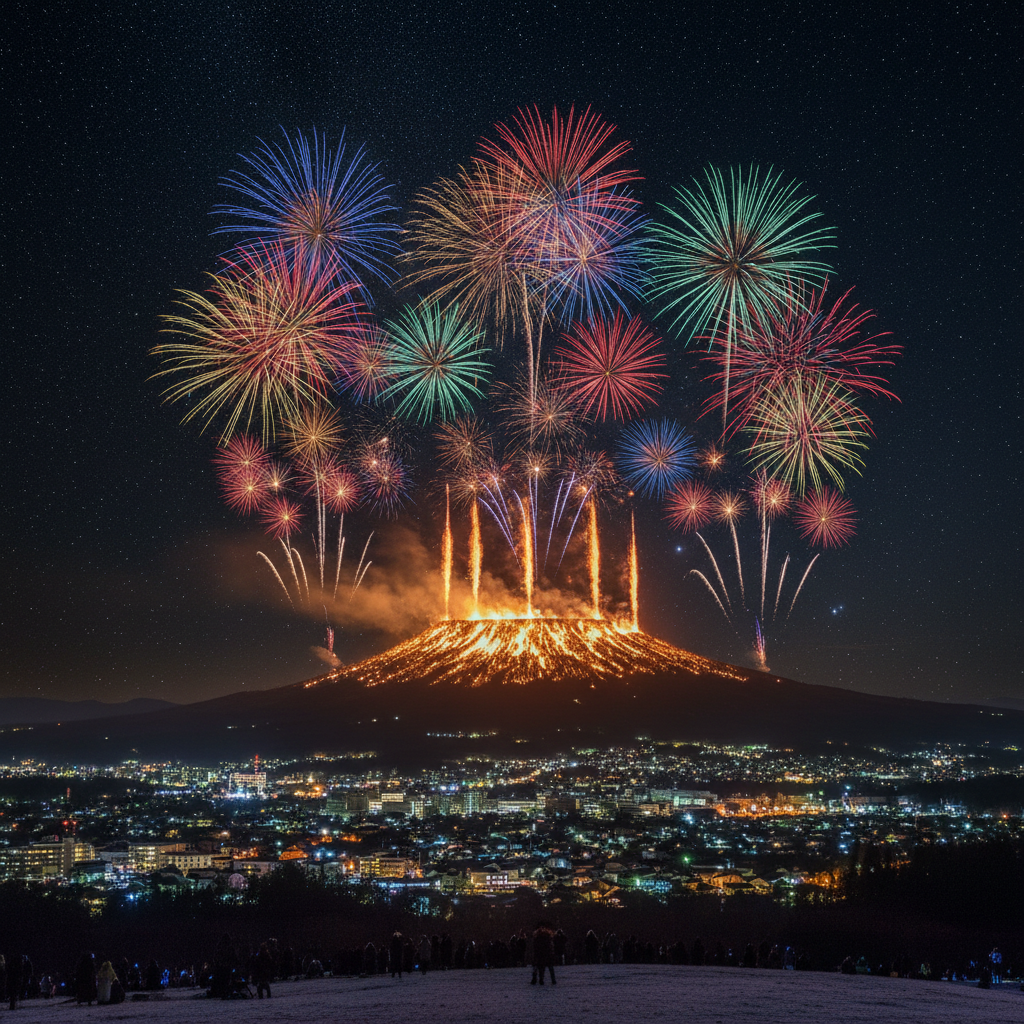
The anticipation is electric. A distant drum roll signals the start. At the base of the mountain, a large bonfire, known as the gojinka, is ceremoniously lit. This isn't just a fire; it's a purification, a prayer. Then, slowly at first, but with an escalating intensity, the flames begin to spread. Controlled teams ignite the dry grass across the mountain's face. The scene is surreal. Streaks of orange and red begin to snake their way across the dark canvas of the mountain. The crackling sound of burning grass, carried on the wind, reaches your ears. The scent of woodsmoke, earthy and primal, fills the air. It's a mesmerizing spectacle, watching a living landscape transform into a fiery tableau. The contours of the mountain become defined by light, as if a giant artist is painting with fire. The sheer scale is breathtaking; this isn’t a small bonfire, but an entire mountain engulfed in flame, a primal dance of destruction and renewal.
6:30 PM – Fireworks Extravaganza: Fire Above, Fire Below
And then, as if the burning mountain wasn't enough, the sky above erupts. A massive fireworks display commences, perfectly timed to coincide with the burning mountain. Imagine this: colossal bursts of color – vibrant reds, deep blues, glittering golds – exploding against the inky blackness, with the entire mountain beneath them glowing a fiery orange. The concussive booms reverberate through your chest, a primal symphony blending with the crackle of the flames. This isn't just fireworks; it’s a dialogue between earth and sky, a magnificent, multisensory overload. The contrast is astonishing: the slow, deliberate crawl of the mountain fire juxtaposed with the instantaneous, explosive beauty of the fireworks. It’s an unforgettable experience, a feast for the eyes and ears, the kind of moment that imprints itself permanently on your memory. You'll feel the residual heat from the mountain, even from your vantage point, a testament to the immense power on display.
7:30 PM – Post-Fire Serenity & The Drive to Retreat
As the fireworks fade and the mountain’s fires begin to subside into glowing embers, a new sense of calm descends. The crowds slowly disperse. The air is still thick with the scent of smoke, a lingering reminder of the spectacle. This is where your car becomes an oasis. The drive back to your accommodation, perhaps a traditional ryokan in the peaceful outskirts of Nara, or a charming hotel in a nearby town, is a tranquil affair. The 86/BRZ feels like a sanctuary, the warmth of its cabin a welcome contrast to the cold night. The roads, though still carrying some post-event traffic, are manageable, and the satisfaction of having witnessed something truly extraordinary fills the air. The smooth shifts of the manual gearbox, the gentle hum of the engine, the feeling of absolute control – it’s a perfect end to an intense, magical evening. Sleep comes easily, filled with images of fire and light.
Day 2: Winter Wonders Beyond Nara – Exploring Secret Kansai
8:00 AM – Ryokan Awakening & Traditional Breakfast
Waking in your ryokan, the morning light filters through traditional shoji screens. The air is still cold, but the room is warm. A traditional Japanese breakfast awaits: grilled fish, miso soup, pickles, rice, and fresh tea. It’s a delicate, nourishing spread, far removed from the hurried breakfasts of city life. This slower pace, this connection to traditional Japanese hospitality, is a vital part of the experience, a counterpoint to the previous night's fiery drama. Enjoy the quiet moments, reflecting on the Wakakusa Yamayaki, now a vivid memory.
9:00 AM – Into the Nara Countryside: Muro-ji Temple & Engaku-en
Today, we venture deeper into the 'Secret Japan' that only a car can unlock. We head southeast from Nara, away from the well-trodden paths, towards the more remote, mountainous region of Uda City. The drive in the 86/BRZ is exhilarating. The roads here are less traveled, offering sweeping turns and gentle elevation changes, perfect for experiencing the car’s precision handling. The winter landscape unfolds outside, a tapestry of frost-kissed forests and quiet, traditional villages. Our destination: Muro-ji Temple (室生寺). Unlike many temples, Muro-ji welcomes women, earning it the nickname ‘Nyonin Koya’ (Mount Koya for Women). It’s also famously beautiful in winter, with its ancient pagodas often dusted with snow, creating a serene, almost ethereal atmosphere. The five-story pagoda, Japan’s smallest outdoor pagoda, stands majestically amidst towering cedar trees. The stone steps leading up to the main hall are often covered in moss and, in winter, a delicate layer of frost, making the ascent feel like a journey through time. The quiet solitude, the scent of damp earth and ancient wood, the subtle play of light through the trees – it's a spiritual balm. Nearby, the Engaku-en Garden (円覚園), though lesser known, offers another tranquil escape, with its meticulously sculpted landscapes often adorned with winter’s delicate touch. The drive to these hidden gems, the direct feedback from the 86/BRZ through the steering wheel as you navigate the quiet mountain roads, connects you intrinsically to this ancient landscape.
12:30 PM – A Taste of Local Delights: Uda's Hidden Eateries
Having worked up an appetite exploring Muro-ji’s serene beauty, we seek out a truly local lunch. Uda City is known for its excellent local produce and unique regional dishes. We’ll find a small, family-run restaurant, perhaps serving yasai teishoku (set meal with local vegetables) or a hearty nabe (hot pot) that warms you from the inside out. The ingredients are incredibly fresh, often sourced from the surrounding farms. The flavors are robust, honest, and reflect the simplicity and bounty of the rural landscape. This is the kind of place you’d never find without a car, where the owner might come out to chat, delighted by your discovery of their hidden gem. The experience is more than just a meal; it’s a cultural exchange, a deeper dive into the heart of Japanese countryside living.
1:30 PM – The Scenic Route to Iga: Ninja History and Winding Roads
From Uda, our route takes a delightful turn towards the historic region of Iga, famous for its ninja heritage. The drive itself is a highlight. We’ll choose a path that avoids major highways, opting instead for Prefectural Route 150 and then connecting to other minor roads that wind through the mountains separating Nara and Mie prefectures. This is prime 86/BRZ territory. The roads are a symphony of curves and elevation changes, inviting you to engage with the car’s exquisite balance and responsive engine. You'll feel every nuance of the road through the steering wheel, the satisfaction of perfectly executed heel-and-toe downshifts echoing in the cabin. The winter scenery here is particularly stark and beautiful – bare trees silhouetted against the sky, occasional glimpses of distant snow-capped peaks, and the quiet dignity of rural life. It’s a drive that reminds you why you sought out a manual transmission JDM sports car in the first place.
2:30 PM – Iga-ryu Ninja Museum: Stepping Back in Time
Upon arriving in Iga-Ueno, we immerse ourselves in the fascinating world of the ninja at the Iga-ryu Ninja Museum (伊賀流忍者博物館). This isn't a passive museum visit; it's an interactive experience. Explore a genuine ninja residence with its hidden doors, revolving walls, and secret passages designed for escape. The guides, often dressed as ninja, demonstrate the various traps and mechanisms, bringing the legendary figures to life. Then, witness an impressive ninja show, where skilled performers showcase weapons and martial arts, highlighting the incredible discipline and ingenuity of these historical figures. The contrast between the ancient, secretive world of the ninja and the modern engineering marvel of your 86/BRZ is striking, yet both represent a pinnacle of their respective crafts. This detour offers a fun, educational, and truly unique cultural experience.
4:00 PM – Homeward Bound: The Dynamic Return to Osaka
As the afternoon wanes, it's time to begin our journey back to Osaka. Instead of retracing our exact steps, we’ll opt for a different route, perhaps taking the Meihan National Highway (Route 25) which offers a more direct, yet still engaging, drive back into the Kansai region, allowing us to appreciate a different set of vistas. The setting winter sun casts long shadows across the landscape, painting the sky with hues of orange and purple. The 86/BRZ continues to be a joy, its headlights cutting a crisp path through the fading light. The precise feel of the gearbox, the responsive throttle, the unwavering stability – these attributes make even a long drive a pleasure. This return journey is a time for reflection, for savoring the memories of the fiery Wakakusa Yamayaki, the tranquil temples, the delicious local food, and the exhilarating hours spent behind the wheel. You've experienced Japan in a way few tourists ever do, not just seeing it, but truly feeling it, through the lens of a true driving adventure.
5:30 PM – Final Stop: A Michi-no-Eki Farewell
Before re-entering the urban sprawl of Osaka, we make one final stop at a Michi-no-Eki (Roadside Station) along our route. These are far more than just rest areas, they are vibrant hubs of local culture and produce. Here, you can pick up some unique local souvenirs, perhaps some sake from a regional brewery, or fresh winter vegetables from local farms. Grab a final hot drink and reflect on the journey. The sense of accomplishment, the deep satisfaction of having explored Japan on your own terms, is immense. The camaraderie with your 86/BRZ, your faithful companion through winding roads and ancient landscapes, feels genuine. It's the perfect conclusion to a truly epic two-day adventure.
7:00 PM – Arrival in Osaka: Mission Accomplished
Returning to Osaka, the city’s vibrant lights welcome you back. The hum of the 86/BRZ's engine settles as you approach our rental facility. You’ve not just driven through Japan; you’ve engaged with it, felt its pulse, and uncovered its hidden gems. The car, perhaps a little dusty from the journey but still gleaming, stands as a testament to the adventure. You’ll step out feeling invigorated, enriched, and with a collection of memories that public transport could never hope to deliver. This is the true spirit of exploration, powered by a passion for discovery and the thrill of the drive.
Wakakusa Yamayaki, Scenic Views, Events, Fireworks, Winter - Expert Advice & Cultural Nuances

Venturing beyond the well-worn tourist paths of Japan requires not just an adventurous spirit, but also a savvy understanding of local customs and hidden opportunities. As someone who's spent years traversing this land, both by rail and by road, I've gathered a wealth of insights that can transform your journey from a mere trip into an authentic, deeply enriching experience. Especially when you're piloting a precision machine like an 86 or BRZ, understanding these nuances unlocks a different dimension of travel.
The Michi-no-Eki: More Than Just a Pit Stop
Ah, the Michi-no-Eki. These aren't your average roadside rest areas. Think of them as vibrant cultural micro-hubs, each a unique reflection of its surrounding region. When you're driving your JDM sports car, you'll want to seek these out. Why? Because they offer an unparalleled glimpse into local life and produce. Beyond clean restrooms and convenient parking (a lifesaver in an 86/BRZ, which fits perfectly), you'll find stalls overflowing with freshly picked seasonal vegetables, artisanal crafts, and regional delicacies that simply aren't available in city supermarkets. Imagine savoring a steaming bowl of local ramen specific to that prefecture, or discovering a unique snack you’ve never seen before. Many even have small onsen (hot springs) or footbaths, perfect for rejuvenating after a spirited drive. They are often nestled in picturesque locations, offering unexpected scenic views that you can leisurely soak in, perhaps with a freshly brewed coffee. They are community gathering spots, places where locals interact, and the perfect opportunity for you to strike up a friendly conversation, practice a few Japanese phrases, and uncover even more hidden gems.
Unearthing Hidden Gems: The Art of Local Discovery
This is where the flexibility of your car truly shines. 'Hidden gems' aren't always signposted in English, nor are they usually within walking distance of a train station. To find them, you need a different approach. First, observe. Look for small, hand-painted signs by the roadside in Japanese. See where local cars are parked in unusual numbers, especially during meal times – that’s often a sign of a truly authentic, delicious, and affordable eatery. Don’t be afraid to take a slight detour down a narrow road if it looks promising. Sometimes, the most rewarding discoveries come from simply following your intuition and allowing serendipity to guide you. Local temples nestled deep in the mountains, tiny ramen shops run by an elderly couple, artisanal workshops producing traditional crafts – these are the places that paint the true picture of Japan, and they are exclusively accessible by car. Ask the staff at a Michi-no-Eki, or even a local gas station attendant, for their recommendations. Even a few words of Japanese – 'Oishii resutoran wa doko desu ka?' (Where is a delicious restaurant?) – can open doors to incredible experiences.
Mastering the Japanese Road: Expert Driving Etiquette
Driving in Japan is a unique experience. While the roads are impeccably maintained and traffic laws are strictly enforced, there are cultural nuances to be aware of. First and foremost: courtesy. Japanese drivers are generally incredibly polite. Aggressive driving, tailgating, or excessive horn usage is rare and frowned upon. Always maintain a safe distance. Secondly, parking. In cities, be prepared for multi-story parking garages or coin parking lots. Outside of cities, particularly in more rural areas or at tourist sites, parking is generally plentiful, but always use designated spaces. Pay attention to signs – red characters usually mean 'no parking' or 'danger'.
When navigating winding mountain roads, such as those leading to the Wakakusa Yamayaki area or through the Iga countryside, be mindful of blind corners. The 86/BRZ's responsive handling makes these roads incredibly fun, but always be prepared for oncoming traffic or even unexpected wildlife (deer can be a hazard in some rural areas, especially at dawn or dusk). Japanese road signs are typically well-illustrated, often with English translations on major routes, but familiarity with basic symbols for speed limits, turns, and 'stop' (止まれ) is recommended. On expressways, observe the speed limits, which are often lower than in other countries. The precision of driving a manual JDM car on these roads is incredibly rewarding – feeling the car communicate every curve, every gradient, every shift in asphalt, makes you a part of the landscape rather than merely observing it.
By embracing these cultural nuances and practical tips, your JDM driving adventure through Japan will not only be thrilling but also deeply respectful and genuinely immersive. It's about more than just the drive; it's about connecting with Japan on its own terms, facilitated by the freedom and control your car provides.
Wakakusa Yamayaki, Scenic Views, Events, Fireworks, Winter - Detailed Logistics & Pre-Trip Tips
Embarking on a JDM driving adventure in Japan, especially to witness a spectacle like the Wakakusa Yamayaki in winter, requires a bit of preparation. But fear not, for the thrill of piloting an 86 or BRZ through stunning landscapes far outweighs any logistical hurdles. As someone who’s navigated these roads for decades, both professionally and for pleasure, I can assure you that with a little foresight, your journey will be seamless and utterly exhilarating.
Traffic in 2026: Navigating Japan’s Arteries
While Japan’s public transportation is world-renowned for its efficiency, road traffic, particularly in major urban centers like Osaka and on expressways leading out of them, can be robust, even in 2026. However, outside peak rush hours (roughly 7-9 AM and 5-7 PM on weekdays), traffic flows smoothly. The beauty of driving your own car is the flexibility it offers. If you anticipate congestion, you can adjust your departure time, or simply opt for a scenic detour through smaller, less-traveled roads – a true pleasure in an 86/BRZ. Japan's road network is extensive and well-maintained, ensuring that even if one route is busy, alternatives are often available. Winter travel outside the cities often means clearer roads, making for more enjoyable driving.
The ETC Card: Your Expressway Express Pass
An ETC (Electronic Toll Collection) card is an absolute necessity for seamless expressway travel in Japan. Think of it as a FastPass for toll roads. Instead of fumbling for change or cards at every toll booth, you simply drive through the dedicated ETC gate, and the toll is automatically charged. This saves immense time, reduces stress, and often provides small discounts on tolls. When you rent your JDM car, always request an ETC card along with it. The rental company will likely offer it as an optional extra. It’s a small investment that pays dividends in convenience, especially when covering significant distances in your 86/BRZ.
Fueling Up: The Japanese Gas Station Experience
Japanese gas stations are generally efficient and straightforward, but there are a few quirks. You'll encounter both full-service (サービスステーション - sa-bisu sute-shon) and self-service (セルフ - serufu) stations. For foreign visitors, full-service can be less intimidating. Pull up to the pump, lower your window, and a friendly attendant will usually greet you. The key phrase to remember is "Mantan, regyura- de onegai shimasu!" (満タン、レギュラーでお願いします!), which means "Full tank, regular gasoline, please!" (Regular is the most common type; if your 86/BRZ requires high-octane, specify "Hai-oku de onegai shimasu" - ハイオクでお願いします). The attendant will pump the gas, clean your windows, and sometimes even offer to dispose of your trash. It’s a level of service rarely seen elsewhere. Self-service stations have touch screens that can often be switched to English. Choose your fuel type, quantity (full tank is usually an option), and payment method. While credit cards are widely accepted, it's always wise to have some cash on hand, just in case.
Parking Prowess: Mastering the Art of the Stop
Parking in Japan, especially in cities, requires a keen eye and sometimes a bit of patience. Always use designated parking areas. In urban centers, multi-story parking garages and coin-operated lots (pa-kingu) are ubiquitous. Many offer clear signage and automated payment systems. For the Wakakusa Yamayaki, arriving early is crucial to secure a good spot. In rural areas and at Michi-no-Eki, parking is usually abundant and free. Never park on residential streets or in areas not explicitly designated for parking, as towing is swift and expensive. The compact size and excellent maneuverability of your 86/BRZ make navigating tight parking spaces a breeze, adding to the satisfaction of your driving experience.
The Exhilaration of JDM (MT Car) Driving
If you've opted for a manual transmission 86 or BRZ, you're in for an unparalleled treat. This isn't just about changing gears; it's about a symbiotic relationship between driver and machine. The tactile feedback through the short-throw shifter, the precise clutch engagement, the immediate response of the engine to your throttle input – it all combines to create a profoundly engaging driving experience. On the winding roads leading to Nara or through the Iga mountains, you'll find yourself carving corners with an almost telepathic connection to the car. The balance, the agility, the glorious engine note as you rev-match downshift for a perfect entry into a turn – this is what driving a JDM legend is all about. It’s a dance, a conversation, and an adrenaline rush, all rolled into one. It transforms mere travel into an active, joyous pursuit. The roads of Japan, particularly the scenic ones, feel as if they were designed for these cars, begging you to explore their limits with respect and skill. It’s a feeling that will stay with you long after you’ve parked the car.
Wakakusa Yamayaki, Scenic Views, Events, Fireworks, Winter - Comprehensive FAQ
Planning an epic driving adventure to Japan, especially one as unique as the Wakakusa Yamayaki in winter, naturally brings up a few questions. As a seasoned expert in Japanese travel and JDM vehicles, let me provide some clear, comprehensive answers to ensure your trip is smooth and unforgettable.
Q: What type of driver's license do I need to drive in Japan?
A: For a smooth and legal driving experience in Japan, visitors from countries that are party to the 1949 Geneva Convention on Road Traffic must carry an International Driving Permit (IDP) issued by their home country, along with their valid domestic driving license and passport. Please ensure your IDP is issued by an authorized agency in your country (such as AAA in the US or relevant automobile associations). Without these three documents, you will not be permitted to drive in Japan. For certain other countries not party to the Geneva Convention but with specific agreements with Japan (e.g., Germany, Switzerland, France, Belgium, Taiwan, Monaco), a certified Japanese translation of your domestic license, along with your original license and passport, is required. It's crucial to confirm your country's specific requirements before your trip. Always carry all three documents (IDP/translation, home license, passport) when driving.
Q: What about insurance for my rental car?
A: Comprehensive insurance is highly recommended and often included or available as an essential add-on with your rental. This typically covers third-party liability, property damage, and often provides a Collision Damage Waiver (CDW) with an excess (deductible). Most rental companies also offer optional Non-Operation Charges (NOC) waiver, which covers fees if the car requires cleaning or repairs after an accident. Given the unfamiliarity of driving in a foreign country, opting for the fullest coverage available provides peace of mind, allowing you to focus on the exhilarating drive rather than potential liabilities.
Q: I'm not used to driving an MT (manual transmission) car. Will I struggle with a JDM like an 86/BRZ?
A: The 86 and BRZ are fantastic cars for both seasoned manual drivers and those looking to reacquaint themselves with a stick shift. Their clutches are forgiving, the gear shifts are precise and smooth, and the engines are tractive even at lower RPMs. If you have some manual driving experience, you’ll quickly adapt. If it’s been a while, a short practice session in a quiet area around our rental facility can quickly refresh your skills. The joy and connection you feel when driving a manual 86/BRZ through Japan's winding roads, perfectly matching revs for a downshift, is an experience not to be missed. The car truly becomes an extension of yourself.
Q: How are the winter road conditions, especially around Wakakusa Yamayaki and the mountain areas?
A: While the Wakakusa Yamayaki typically takes place in late January, which is prime winter, heavy snowfall in Nara City itself is generally uncommon. The main roads are well-maintained and quickly cleared if snow does fall. However, when venturing into more mountainous regions like those around Uda City or on elevated passes, snow and ice can be present. Our rental 86/BRZ vehicles are equipped with appropriate tires for the season. If you plan to drive into deeper mountain areas where significant snow is expected, please inform us, and we can advise on specific tire requirements (e.g., winter tires) or whether snow chains might be necessary for extreme conditions. Always check local weather forecasts before heading out, especially for mountain routes. Drive cautiously, maintain ample distance, and avoid sudden braking or acceleration on potentially icy patches. Your 86/BRZ's balanced chassis and excellent feedback will be your allies in maintaining control.
Wakakusa Yamayaki, Scenic Views, Events, Fireworks, Winter - The Final Call: CTA
You’ve journeyed with me through ancient pathways and fiery spectacles, felt the crisp winter air on your face, and the precise dance of a JDM legend beneath your fingertips. You’ve tasted the local flavors, immersed yourself in history, and discovered the 'Secret Japan' that lies beyond the reach of the rigid train lines. The roar of the 86’s engine echoing through a mountain pass, the mesmerizing glow of the Wakakusa Yamayaki against the winter sky, the profound stillness of a hidden temple – these are not just images in your mind; they are experiences waiting to be lived.
If this epic journey ignites a fire in your soul, if the call of the open road and the thrill of a precision-engineered machine beckons, then your next step is clear. Transform this dream into reality. The unparalleled freedom to explore Japan on your own terms, to chase the horizon in a car that responds to your every command, is within reach. Forget the mundane, reject the ordinary. Demand an adventure that thrills your senses, challenges your skills, and imprints itself on your memory forever.
Your gateway to this extraordinary Japanese driving adventure awaits. At Omoshiro Rent-a-Car Osaka Chuo branch, we don't just rent cars; we provide the keys to unforgettable experiences. As a team led by a former Kintetsu conductor who understands the heart of Japan, and populated by passionate JDM enthusiasts, we specialize in offering a meticulously curated fleet of manual transmission JDM icons and custom cars – exactly like the 86 and BRZ you’ve just read about. We speak your language, we understand your passion, and we are here to equip you for the journey of a lifetime. Stop dreaming, start driving. Your JDM adventure, your ‘Secret Japan’ odyssey, begins now.
