
Wakayama Coastal Drive in a Mazda MX-5 – The Philosophy of Driving in Japan
As a former conductor on the Kintetsu Railway, I spent years navigating the rigid precision of Japan’s iconic rail network. There is undeniable poetry in the rhythmic click-clack of the steel tracks, the surgical punctuality of the express trains, and the seamless transit ecosystem that connects Osaka to the rest of Kansai. Rail travel in Japan is a marvel of engineering and human organization, but it operates on a fixed axis. It takes you to where millions of others have already been.
When you sit behind the wheel of a lightweight, rear-wheel-drive sports car—specifically the Mazda MX-5 (ND Miata)—the entirety of the Japanese archipelago shifts perspective. The tracks disappear, replaced by endless ribbons of tarmac that wind through jagged coastal cliffs, dense cedar forests, and forgotten rural hamlets.
The true soul of Japan does not exist on the platform of a Shinkansen station. It resides in "Secret Japan"—the vast, uncharted spaces tucked between major rail corridors where public transit simply cannot reach.
Starting a journey from Osaka and heading south toward Wakayama, specifically targeting the raw, dramatic coastline of Kushimoto (the southernmost point of Japan’s main island of Honshu), reveals an entirely different country. While tourists pile onto limited express trains bound for crowded urban hubs, a driver in an MX-5 experiences the road as a sensory canvas.
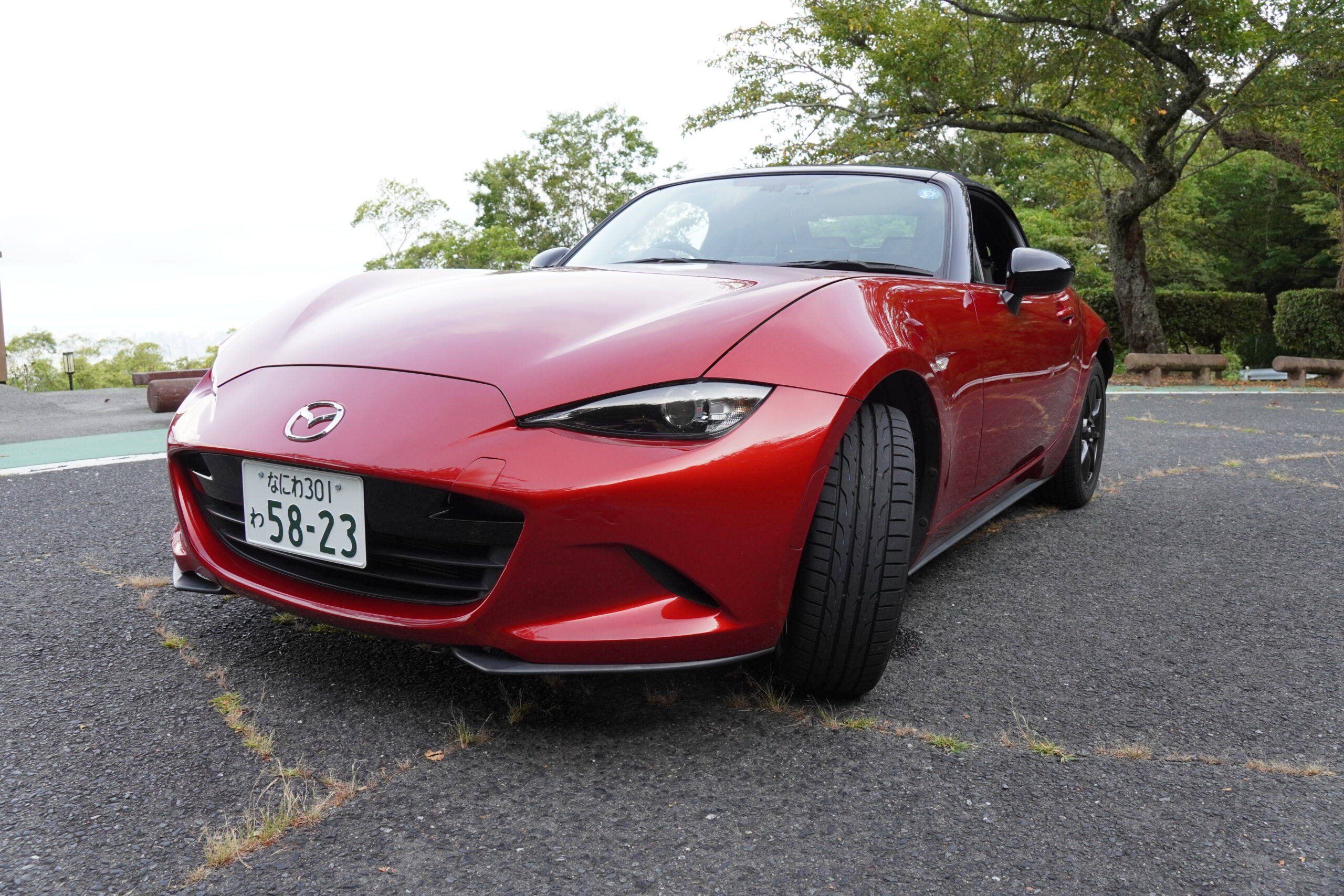
The Mazda MX-5 ND is uniquely suited for Japanese roads. Its compact dimensions allow you to negotiate narrow, single-lane mountain passes (toge) with surgical pinpoint precision. The near-perfect 50:50 weight distribution, crisp manual transmission, and immediate throttle response turn every coastal curve and forested hairpin into a masterclass in driving engagement. Dropping the soft top lets you take in every subtle change in the environment: the salty spray of the Pacific Ocean, the earthy fragrance of ancient Kii Peninsula pine needles, and the drop in ambient temperature as you climb through mountain passes.
Setting out from Osaka toward the southern tip of Wakayama is a rite of passage. You transition from the neon-lit concrete canyon of the metropolis to the raw, untamed beauty of the Kii Peninsula. By opting for a car over a train ticket, you break free from strict timetables. You gain the freedom to pull over at an unnamed coastal outlook as the sun dips below the horizon, to detour down a narrow forest road leading to an isolated Shinto shrine, and to experience the pure, unadulterated joy of driving one of the world's most iconic sports cars on some of Asia’s most spectacular coastal roads.

Wakayama Coastal Drive in a Mazda MX-5 – The Ultimate 2-Day Itinerary: Deep Dive
Day 1: From Osaka’s Neon to the Wild Coast of Shirahama & Kushimoto
07:00 AM – Departure from Osaka: Awakening the Machine
The journey begins in the early morning air of Osaka. As the city wakes up, you fire up the Skyactiv-G engine of the Mazda MX-5 ND. The short-throw shifter slips smoothly into first gear. Merging onto the Hanshin Expressway, the urban grid quickly falls away behind you. Head south, connecting to the Hanwa Expressway. As you clear the urban sprawl of Osaka Plain, the flat landscape gives way to the rolling green foothills of Wakayama Prefecture. The engine hums effortlessly at highway cruising speeds, but the real adventure begins where the expressway ends.
08:30 AM – Crossing into Wakayama & The Coastal Transition
Passing through the long tunnels that cut through the Izumi Mountain range, you emerge into Wakayama. The crisp morning air hits you as you drop the top on the MX-5. The air changes instantly—richer, humid, and infused with the crisp scents of green timber and marine salt. Transition off the main expressway onto National Route 42, the historic highway that traces the perimeter of the Kii Peninsula. Route 42 is an engineering marvel, carved directly into the rugged coastline where mountains tumble straight into the sea.
10:00 AM – The White Cliffs of Shirahama: Sen畳敷 (Senjojiki) & Sandanbeki
Your first major coastal stop is Shirahama. While famous for its white sand beach, the true driver’s destinations lie just around the southern headland: Senjojiki and Sandanbeki.
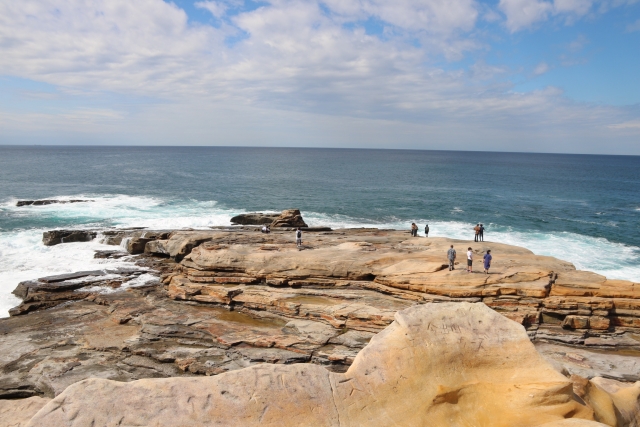
Senjojiki (Thousands-Tatami Mats Flat Rocks): Park the MX-5 in the dedicated lot and walk out onto a massive plateau of soft, multi-layered sandstone. Formed over millions of years through the relentless pounding of the Pacific waves, the rock formations resemble thousands of overlapping tatami mats. The contrast between the golden sandstone and the deep turquoise Pacific ocean creates an incredible natural backdrop.
Sandanbeki Cliffs: A short 2-minute drive down the road brings you to Sandanbeki, a sheer 50-meter-high cliff face against which the ocean violently crashes. Deep beneath these cliffs lies a cavernous sea cave once used by the Kumano Navy during the Heian period (794–1185). Taking the elevator down into the dark, damp sea cave reveals the immense power of the ocean, with tide pools rushing inside the cavern walls with a roaring resonance.
12:30 PM – Lunch: Fresh Katsuō (Skipjack Tuna) in Susami
Returning to the MX-5, hit Route 42 heading south towards Susami. The road here hugs the shoreline tightly, featuring long sweeping curves that match the natural rhythm of the Mazda’s chassis. Pull over at a local seaside eatery in Susami, renowned for its fresh catch fed by the rich Kuroshio (Black Current).
Order the local specialty: Katsuō no Tataki (seared skipjack tuna). Freshly caught that morning, the tuna is lightly seared over straw flames, creating a smoky exterior while keeping the center tender and raw. Served with grated ginger, fresh garlic slices, chopped green onions, and a splash of citrusy ponzu, the flavor is clean, bold, and unforgettable. Enjoying fresh seafood while looking out over the water where it was harvested is a quintessential road trip experience.
02:00 PM – The Driving Peak: Route 42 Coastal Sweepers to Kushimoto
This section of Route 42 from Susami to Kushimoto is world-class driving territory. The road winds between rocky promontories and sea stacks. In the MX-5, this stretch is pure driving bliss. The pedal layout allows for effortless heel-and-toe downshifts as you set up for entry into third-gear sweepers.
The suspension absorbs the undulating tarmac while maintaining total body control. With the ocean just meters away on your right, the reflection of the sky glistens across the hood of the car. The sound of the free-revving naturally aspirated engine echoing off the coastal rock walls provides a thrilling soundtrack.
03:30 PM – Arrival at Hashi-kui-iwa (Bridge Pillar Rocks)
As you roll into Kushimoto, the landscape reveals one of Japan's most distinctive geological wonders: Hashi-kui-iwa Rocks.
Spanning roughly 850 meters in a straight line toward Oshima Island, a row of nearly 40 gigantic, pillar-like rock formations rises vertically out of the ocean bed. According to Japanese folklore, the great Buddhist monk Kobo Daishi (Kukai) attempted to build a bridge across the sea from Kushimoto to Oshima Island in a single night. Interrupted by a mischievous spirit, he left the bridge unfinished, leaving only the massive stone pillars standing today.
Geologically, these pillars are the remaining volcanic dykes left behind after softer surrounding rock was eroded away by sea currents over thousands of years. Park the MX-5 with Hashi-kui-iwa in the background. The raw, jagged silhouette of the rocks contrasts sharply with the smooth, flowing lines of the Mazda MX-5.
05:00 PM – Sunset at Cape Shionomisaki: Standing at the Southernmost Tip of Honshu
Drive 15 minutes further south to reach the ultimate geographic destination of Day 1: Cape Shionomisaki. This is the southernmost point of Japan’s main island of Honshu (Latitude 33°26' N).
As you approach the cape, the thick coastal forest clears out into a sprawling, lush green grass park (Shionomisaki-mejo) that slopes down toward a 30-meter-tall cliff face. The historic white Shionomisaki Lighthouse, first lit in 1878, stands as a quiet guardian over the treacherous coastal waters.
Walk out onto the edge of the grassy plateau as the afternoon sun begins its descent. Looking south, there is no more land—only the vast expanse of the Pacific Ocean sweeping out toward the horizon. The horizon noticeably curves in the distance.
As the sun sets, the sky turns brilliant shades of deep orange, violet, and crimson, casting long shadows across the cape. The wind off the ocean carries a fresh, clean chill. Stand at the edge of the continent, knowing you reached this point entirely under your own power, guided by a manual gearbox and an open road.
07:00 PM – Dinner & Night in Kushimoto
Check into a local seaside ryokan (traditional Japanese inn) or coastal hotel in Kushimoto. For dinner, dive into the local delicacy: Kindai Tuna (farm-raised bluefin tuna developed by the local Kinki University Aquaculture Research Institute) alongside local spiny lobster (Ise-ebi).
The tuna sashimi melts in your mouth, rich in healthy fats and packed with umami. Pair your meal with a cold Japanese craft beer or local Wakayama sake made with crystal-clear mountain spring water. Soak in an outdoor onsen (hot spring) overlooking the ocean, letting the warm, mineral-rich waters soothe your muscles after a full day of driving.

Day 2: Sacred Mountains, Winding Passes & The Return Route
06:30 AM – Dawn at Cape Shionomisaki & Breakfast
Wake up early to catch the morning sun breaking over the Pacific Ocean. The light hits the white tower of Shionomisaki Lighthouse, casting long golden beams across the water. After a traditional Japanese breakfast of grilled salmon, steamed rice, miso soup, and tsukemono (pickled vegetables), load your gear into the compact trunk of the MX-5.
08:00 AM – Crossing to Oshima Island & Kashinozaki Lighthouse
Before leaving the Kushimoto area, take the loop over the spectacular Kushimoto Ohashi Bridge—a curving arch bridge that connects the mainland to Oshima Island.
Drive to the eastern tip of Oshima to visit Kashinozaki Lighthouse, Japan’s oldest stone lighthouse, built by British engineer Richard Henry Brunton in 1870. The road on Oshima Island is tight, technical, and framed by dense sub-tropical vegetation. It gives the lightweight chassis of the MX-5 another opportunity to flex its handling capability.
09:30 AM – Heading Inland: The Mountain Ascent via Route 168
Leave the coast behind and turn inland toward the heart of the Kii Mountains via Route 168. The geography shifts dramatically within minutes. The flat ocean horizon gives way to soaring mountain peaks enveloped in early morning mist. The temperature drops, and the road begins to climb sharply along the turquoise waters of the Kumano River.
Route 168 is a legend among driving enthusiasts. It features a mixture of newly engineered high-speed bridges, wide sweeping turns, and tight, technical toge sections that run through ancient cedar forests. The MX-5 shines brightly here. The precise feedback from the electric power steering informs you of every grip level, while the nimble chassis darts effortlessly from corner apex to apex.
11:00 AM – Nachi Falls (Nachisan) & Kumano Nachi Taisha
A short detour onto Route 46 brings you to one of Japan’s most iconic spiritual and natural sights: Nachi Falls (Nachi no Taki).
The Grand Waterfalls: Dropping 133 meters in a single continuous curtain of water, Nachi Falls is the tallest uninterrupted waterfall in Japan. It has been worshipped as a deity (kami) for over two thousand years.
The Visual Marvel: Park the MX-5 at the base of the mountain trail and climb the moss-covered stone steps under towering Japanese cedar trees. When you reach the viewing pagoda, you are greeted by an extraordinary sight: the brilliant vermillion three-story pagoda of Seiganto-ji Temple, with the roaring white stream of Nachi Falls dropping down the dense green jungle cliff in the background.
The sound of crashing water vibrates through the chest. The air feels charged with static and moisture. It is a deeply spiritual experience that encapsulates the ancient animistic nature worship at the heart of Japanese Shinto culture.
01:00 PM – Mountain Lunch: Mehari-zushi & Local Soba
Head toward the mountain settlement of Hongu. Stop at a rustic roadside eatery for a traditional mountain lunch.
Order Mehari-zushi—a local comfort food originating from the Kii mountain region. It consists of warm rice wrapped in salted mustard leaves (takana). Simple, hearty, and packed with savory flavor, it was traditionally carried by woodcutters and travelers traversing the steep Kumano Kodo pilgrimage routes. Pair it with a bowl of handmade wild mountain vegetable (sansai) buckwheat soba noodles served in a steaming, fragrant dashi broth.
02:30 PM – Deep into the Sacred Valley: Kumano Hongu Taisha
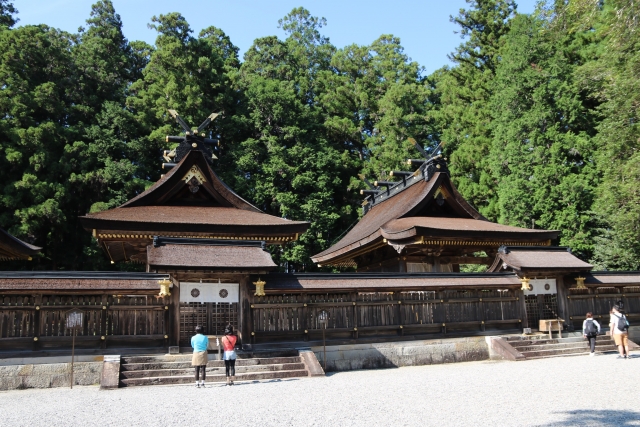
After lunch, visit Kumano Hongu Taisha, one of the three grand shrines of the historic Kumano Kodo pilgrimage network. Tucked deep within the mountains, the shrine features magnificent natural wood architecture with cypress-bark roofs that blend seamlessly into the surrounding pine forest.
A short walk from the main shrine compound brings you to Oyunohara, the site of the original shrine location. Rising out of paddy fields stands the world's largest Torii gate—a massive black steel structure standing 33.9 meters tall and 42 meters wide. Standing beneath this giant portal with the mountains towering behind it instills a deep sense of scale and peace.
04:00 PM – The Descent: Koyasan & The Mountain Skyline Road
To complete the loop back toward Osaka, take Route 370 northbound toward the sacred mountain plateau of Koyasan (Mount Koya), the world headquarters of Shingon Buddhism established by Kukai in 816 AD.
The road up toward Koyasan features tight, flowing S-curves that climb through thick cloud cover. In the late afternoon, rays of light filter through the dense trees, casting dynamic patterns on the wet pavement. The MX-5 holds line through these mountain curves with minimal body roll. The feeling of mechanical harmony between driver, car, and mountain road is peak driving enjoyment.
06:30 PM – Return to Osaka: The Finish Line
As dusk falls, descend the northern flanks of Mount Koya, connecting back to the Hanwa Expressway toward Osaka. The mountains fade into the twilight sky behind you, replaced once more by the glowing neon lights and high-rise silhouettes of Osaka's urban landscape.
Pulling back into the city after two days and over 500 kilometers of driving, you feel a deep sense of accomplishment. You have traversed coastal cliffs, stood at the edge of the island at Cape Shionomisaki, carved through sacred mountain valleys, and experienced a side of Japan that train passengers will never see.
Wakayama Coastal Drive in a Mazda MX-5 – Expert Advice & Cultural Nuances
Driving through rural Japan is an incredible experience, but understanding the local driving etiquette and cultural nuances will make your journey much smoother and far more enjoyable.
The Magic of Michi-no-Eki (Roadside Stations)
Japan’s Michi-no-Eki system is a driver's paradise. These are far more than standard highway rest stops. They are community-run cultural hubs that showcase regional pride.
Local Produce & Souvenirs: Every Michi-no-Eki along Route 42 sells hyper-local produce, baked goods, and specialized regional snacks. In Wakayama, expect an endless variety of Umeboshi (pickled plums), fresh citrus fruits (such as Mikan and Jabara), and artisanal soy sauces from Yuasa (the birthplace of Japanese soy sauce).
Facilities: They offer immaculate public restrooms, 24/7 parking access, local road condition updates, and regional food stalls serving local delicacies.
Top Pick on Route 42: Michi-no-Eki Susami offers a high-altitude balcony overlooking the Pacific Ocean, complete with a free foot-bath (ashiyu) fueled by natural hot spring water.
Driving Etiquette & Coastal Road Rules
The "Thank You" Hazard Lights: When another driver slows down to let you merge onto a narrow road, or pulls into a turnout to let your faster sports car pass, tap your hazard lights twice (pika-pika). This is the universal Japanese road sign for "Thank you."
Yielding on Single-Lane Roads (Toge): Mountain passes in Wakayama can suddenly narrow into single-lane roads (1.5-lane roads). Keep an eye out for designated wide turnouts marked with a white sign containing blue Japanese characters (避難所). If an oncoming vehicle approaches, pull into the nearest turnout to let them pass.
Speed Limits & Speed Traps: Rural Japanese speed limits can feel conservatively low on paper (often 40–50 km/h on coastal highways). While local traffic generally flows smoothly with the natural pace of the road, pay attention when entering small towns along Route 42. Automated speed cameras and local police units occasionally set up radar traps near school zones and city limits.
Wakayama Coastal Drive in a Mazda MX-5 – Detailed Logistics & Pre-Trip Tips
Navigating Japanese roads requires a clear understanding of practical logistics, especially when driving a manual performance vehicle like the Mazda MX-5.
Navigating Tolls: The ETC System
Japan’s high-speed expressways rely on the Electronic Toll Collection (ETC) system.
How it works: An ETC card (a dedicated toll credit card) is inserted directly into a card reader built into your rental car’s dashboard or glove compartment.
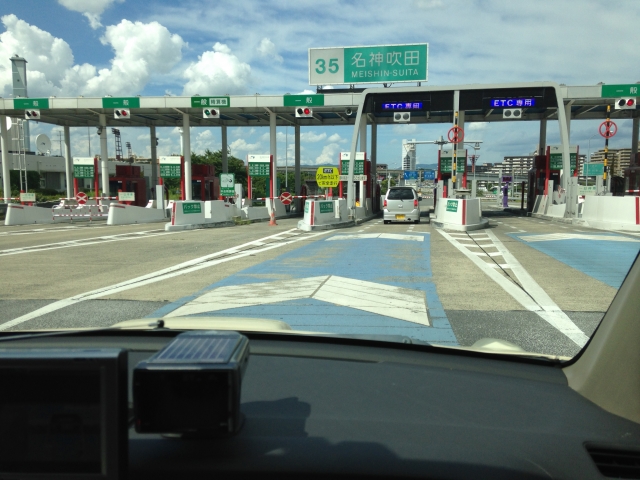
Using Toll Gates: As you approach expressway toll plazas, look for lanes marked with blue lights and the letters ETC. Slow down to 20 km/h; the gate barrier will scan your card and lift automatically without requiring you to stop and pay cash. Your toll charges are totaled and settled when you return the rental car.
Fueling Up: Gasoline Station Vocabulary
Most rural gas stations in Wakayama are either standard self-service (Self) or full-service (Full). High-performance Japanese sports cars like the Mazda MX-5 ND require High-Octane fuel (Premium Unleaded).
Key Fuel Types:
High-Octane (ハイオク - Haioku): Yellow pump handle. Use this for the Mazda MX-5.
Regular (レギュラー - Regurā): Red pump handle.
Diesel (軽油 - Keiyu): Green pump handle.
Full-Service Phrases:
"Haioku Mantan, Keshokai de" = "High-octane, full tank, payment by credit card."
"Mantan" = "Fill it up!"
Parking Etiquette
Back-In Parking: In Japan, reversing into parking stalls is standard practice. It improves safety when exiting into active traffic lanes or crowded lots.
Narrow Spaces: The Mazda MX-5’s short overhangs and compact footprint make parking effortless, even in tight rural parking lots.
Cash for Parking Lots: While major cities accept digital payments, many rural parking lots near waterfalls and shrines are cash-only, requiring ¥300 to ¥500 in physical coin boxes. Always keep a coin purse stocked with ¥100 coins.
The Excitement of Driving a JDM Manual (MT) Sports Car
There is an undeniable connection between driver and machine in a manual-transmission Japanese domestic market (JDM) car. The Mazda MX-5 features one of the finest 6-speed manual gearboxes ever built. The short, mechanical shift throw feels precise, snapping into gear with satisfying tactile feedback.
Blipping the throttle to rev-match on downshifts while descending a coastal mountain road delivers a pure driver's high. You are not a passive passenger watching the countryside pass by behind a window; you are actively engaged with the landscape through the steering wheel, pedals, and gearlever.
Wakayama Coastal Drive in a Mazda MX-5 – Comprehensive FAQ
Q1: What international documentation do I need to legally drive in Japan?
To drive legally in Japan, you must hold a valid driver's license from your home country AND an official International Driving Permit (IDP) issued under the 1949 Geneva Convention.
You must secure your IDP in your home country before departing for Japan.
Important: IDPs issued under the 1968 Vienna Convention are NOT valid in Japan.
Drivers holding licenses from specific countries (such as Switzerland, Germany, France, Belgium, Monaco, and Taiwan) require an official Japanese translation of their native license prepared by the Japan Automobile Federation (JAF) or their respective embassy, rather than an IDP.
You must carry your physical home country license, physical IDP/Translation document, and your Passport at all times while operating a vehicle in Japan.Note: Ensure your documentation meets the official legal requirements under the 1949 Geneva Convention before reserving your car.
Q2: Is driving a manual transmission (MT) car difficult on Japanese roads?
If you are comfortable driving a manual transmission car at home, driving one in Japan is straightforward. Japanese drivers are remarkably polite, tailgating is rare in rural areas, and road surfaces are well-maintained.
The primary adjustment for many international drivers is operating a right-hand-drive (RHD) vehicle on the left side of the road. Because the shift lever is operated with your left hand, it takes about 15 minutes of quiet driving to build muscle memory. The Mazda MX-5’s clutch pedal action is light and forgiving, making hill-starts simple.
Q3: What is the best time of year to undertake the Wakayama coastal road trip?
Spring (March to May) and Autumn (September to November) offer optimal driving conditions. Spring brings blooming cherry blossoms along mountain routes and mild temperatures. Autumn offers clear blue skies, vibrant fall foliage (Koyo) in the Kii Mountains, and comfortable open-top driving weather. Summer provides warm waters and beach activity in Shirahama, though midday heat can be intense. Winter is generally mild along the southern coast with very rare snowfall along Route 42, allowing for year-round coastal driving.
Q4: Are there high insurance excesses or hidden costs when renting a sports car?
Reputable specialty rental providers offer transparent insurance options. It is always recommended to opt for full coverage including a Collision Damage Waiver (CDW) and Non-Operation Charge (NOC) waiver. This ensures total peace of mind while navigating tight mountain roads or coastal turnouts.
Wakayama Coastal Drive in a Mazda MX-5 – The Final Thoughts: Take the Wheel
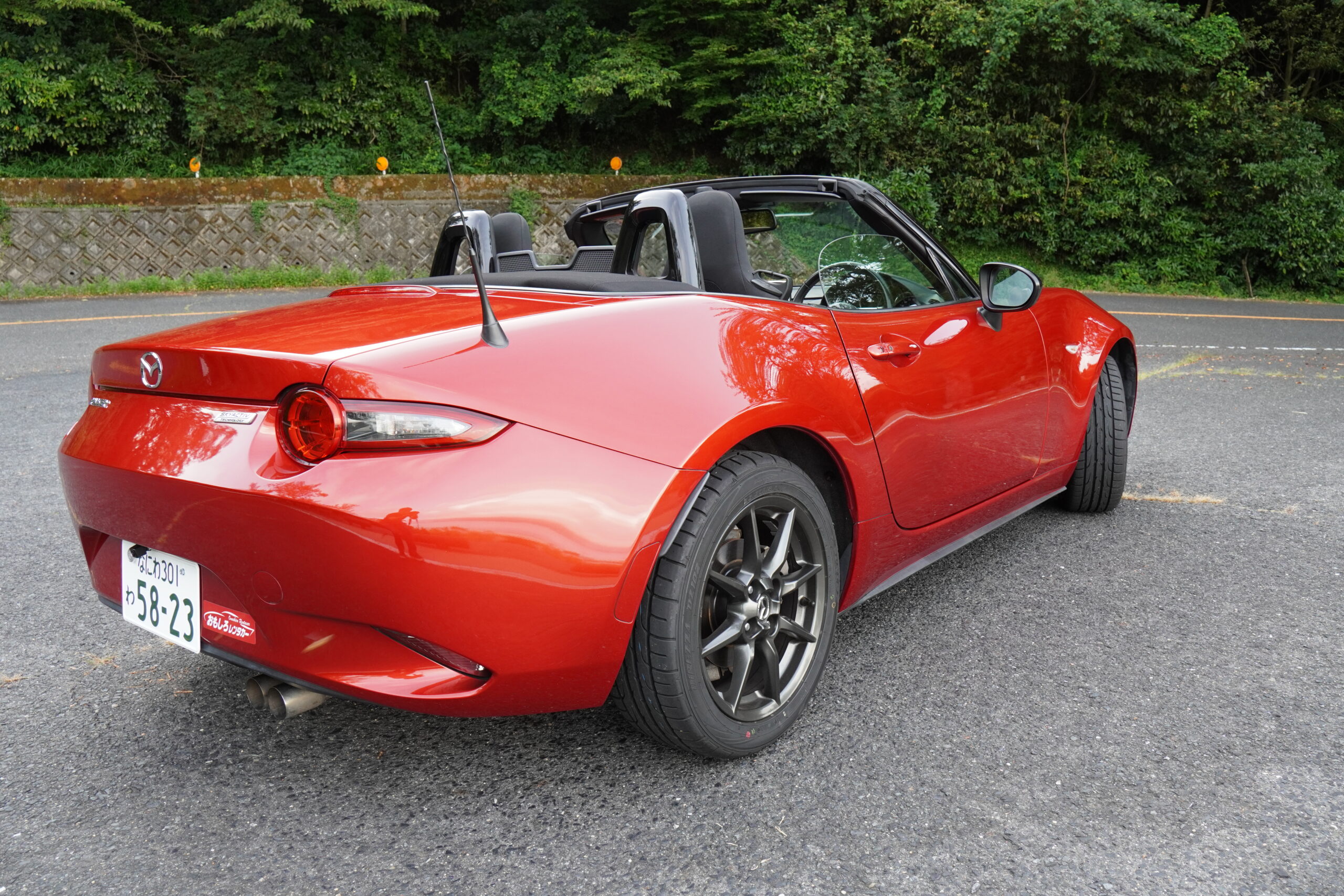
The open coastal highway is calling. You can spend your trip to Japan looking out from the window of a crowded train car, strictly tied to transit schedules and well-trodden tourist circuits. Or you can take control of your own journey, fire up a high-revving Japanese engine, drop the soft-top roof, and drive into the heart of "Secret Japan."
Standing on the rocky cliffs of Cape Shionomisaki, watching the sunset over the Pacific Ocean with the keys to an iconic sports car in your pocket, is an experience that stays with you forever.
When you are ready to make this road trip a reality, head to Omoren Osaka Chuo (Omoshiro Rent-a-Car Osaka Chuo).
Specializing in authentic, meticulously maintained JDM sports cars—including the legendary Mazda MX-5 (ND), Toyota 86, and Subaru BRZ—Omoren Osaka Chuo is your gateway to the ultimate Japanese road trip. Conveniently located in Osaka, their expert team speaks English, understands the needs of international driving enthusiasts, and equips you with everything required for a seamless adventure: from pre-installed ETC cards to custom route recommendations.
Don't just visit Japan. Drive it. Reserve your JDM sports car at Omoren Osaka Chuo today, turn the key, and discover the raw, open freedom of the Japanese highway.