
Imagine leaving behind the concrete jungle of Osaka, standard tour buses, and crowded station platforms. Imagine firing up the engine of a pure driver’s machine, precise shifting under your hand, the exhaust note reflecting off ancient coastal cliffs, and open asphalt stretching along the glittering Pacific coastline.
This isn't the generic Japan experience found in typical guidebooks. This is the raw, visceral, and unforgettable art of road-tripping through Kansai—specifically taking a thrilling route down into Wakayama to witness the breathtaking white limestone precipices of Shirasaki Ocean Park.
Whether you are a devoted motoring enthusiast, a seeker of hidden natural wonders, or a traveler determined to break away from the beaten path, driving through Wakayama's coastal ribbon is the ultimate journey.
1. Mazda MX-5 Coasting to Shirasaki Ocean Park – The Philosophy of Driving in Japan
As a former conductor on the Kintetsu Railway, I spent years working along one of Japan’s most intricate and efficient rail networks. Trains in Japan are a marvel of human engineering, punctuality, and logistical perfection. They will take you seamlessly to city centers, iconic temples, and massive transit hubs.
However, standard mass transit comes with a hidden cost: a rigid script.
When you travel solely by train, your world is bounded by schedules, physical tracks, platform barriers, and crowded carriages. You see the stunning countryside only as a blurred frame passing by a dual-pane window at 100 kilometers per hour. You cannot stop when a sudden mist rolls over a hidden coastal bend, nor can you turn down an unmarked mountain pass that leads to a centuries-old family-run citrus orchard.
This is where the concept of "Secret Japan" begins.
To truly experience the soul of Japan’s geography—its jagged coastline, steep volcanic topography, and secluded mountain ridges—you need four wheels, a manual gearbox, and an open road. Kansai, with Osaka as its starting grid, offers some of the finest driving roads in Asia if you know where to look. Once you cross south into Wakayama Prefecture, the urban sprawl dissolves into dramatic mountain ridges, aromatic mandarin orange groves, and sweeping ocean passes carved directly out of coastal rock.
Choosing a driver-focused sports car like the Mazda MX-5 (known in Japan as the Eunos or Mazda Roadster) completely redefines your relationship with the landscape. You aren't just moving from Point A to Point B; you become an active participant in the terrain. Every elevation change, hairpin corner, and seaside breeze becomes a tactile sensation. A car gives you absolute freedom—the freedom to set your own tempo, explore remote coastal lookouts, and discover a side of Japan that train passengers will never know exists.

2. Mazda MX-5 to Shirasaki Ocean Park – The Ultimate 2-Day Itinerary: Deep Dive
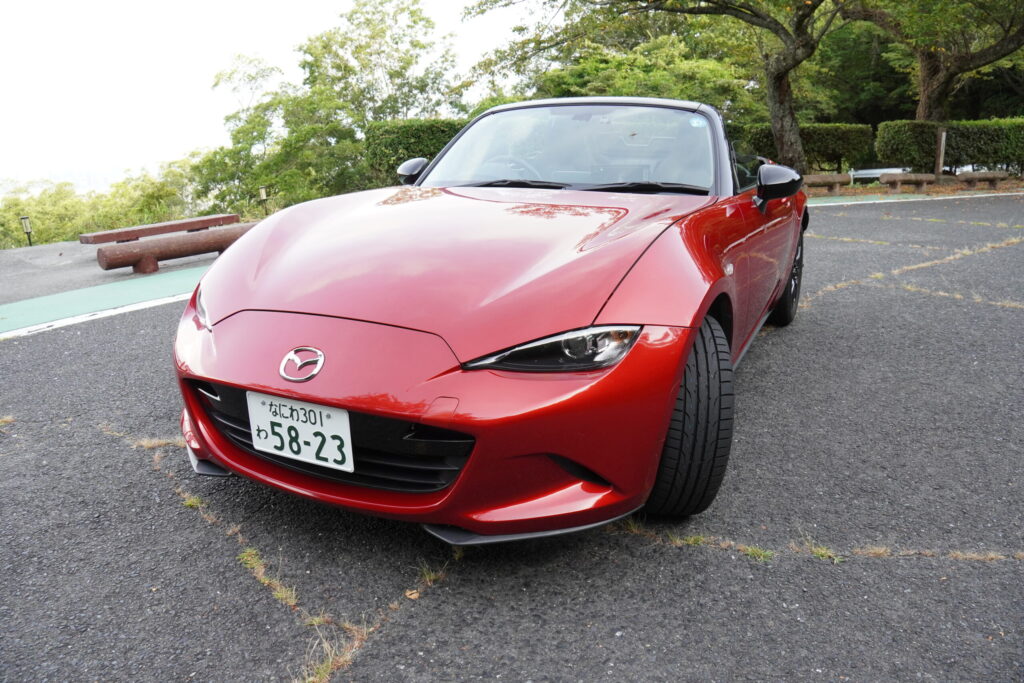
This detailed two-day driving itinerary is crafted specifically for drivers who love the road as much as the destination. Starting from Osaka, this route combines historic highway runs, technical mountain twisties, authentic local culinary stops, and the alien limestone geology of Shirasaki Ocean Park.
DAY 1: Into the Blue – From Osaka’s Grid to Wakayama’s Limestone Coast
08:00 AM – Departure from Osaka Central
Your journey begins in the heart of Osaka. As you fire up the engine, adjust your seating position, and grip the leather steering wheel, the city is just waking up. Settle into the cockpit, set your navigation, and slip into the morning flow of traffic heading south toward the Hanshin Expressway.
09:30 AM – Hanshin to Hanwa Expressway Transition
Leaving the neon-clad highways of urban Osaka, merge onto the Hanwa Expressway. As you clear the southern suburbs of Sakai and Kishiwada, the flat landscape gives way to the verdant rolling hills of the Izumi Mountain range. The asphalt opens up, allowing you to settle into a comfortable cruising rhythm. The subtle hum of the tires against smooth pavement combined with the mechanical precision of your sports car immediately sets a focused, exhilarating tone for the day.
10:30 AM – Historic Pitstop: Yuasa, The Birthplace of Soy Sauce
Distance: ~85 km from Osaka
Highlight: Edo-period architecture and artisanal soy sauce breweries
Take the Yuasa Interchange exit. Long before it became a pitstop for motorists, Yuasa was a vital staging post along the ancient Kumano Kodo pilgrimage route. It is globally recognized as the historic birthplace of Japanese soy sauce (shoyu), dating back to the 13th century.
As you navigate the narrow, beautifully preserved streets of the traditional merchant district, the air carries a rich, savory aroma of fermenting soybeans and roasted wheat from centuries-old wooden vats. Park your car near the historic preservation zone and take a short walk to Kadocho, a soy sauce brewery that has operated continuously since 1841.
Grab a quick refreshment—don't miss tasting authentic soy-sauce-flavored soft serve ice cream, a local delicacy balancing sweet and umami notes—before heading back to the car.
12:15 PM – The Coastal Approach: Route 42 to Prefectural Route 24
Leaving Yuasa, bypass the high-speed toll road and switch to National Route 42, then turn west onto Prefectural Route 24 toward the Yura coastline. This is where the true driving magic begins.
The road tightens and begins to hug the contours of the Kii Peninsula’s western coast. Shift down into third gear as you enter a sequence of flowing S-curves sandwiched between dense emerald pine trees and the deep blue expanse of the Kii Channel. The pavement here is exceptionally well-maintained, offering predictable grip and clear line-of-sight through sweeping coastal corners.
01:30 PM – Arrival at Shirasaki Ocean Park ("The Aegean Sea of Japan")
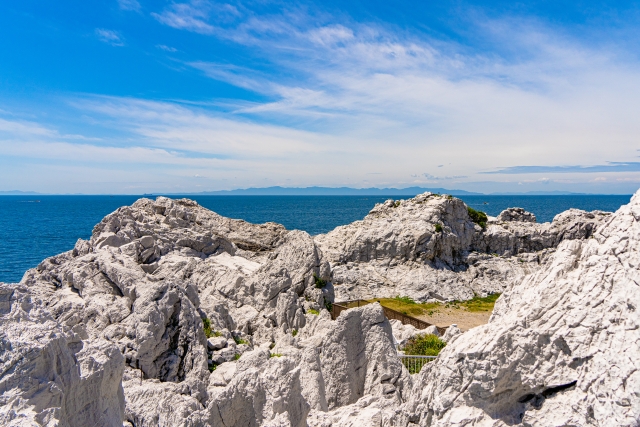
As you round the final headland, the green forest abruptly stops, replaced by a surreal landscape: massive, stark-white limestone cliffs jutting dramatically out of the azure ocean. Welcome to Shirasaki Ocean Park.
Geological Significance: Formed during the Permian period over 250 million years ago, these immense limestone formations are composed primarily of ancient marine fossils and coral deposits. The stark contrast between the blinding white rock and the deep cobalt waters of the Pacific has earned it the nickname "The Aegean Sea of Japan."
The Driving Experience: The entry road loops through giant chalk-white monoliths, making you feel as though you’ve driven onto another planet or a secluded Mediterranean coast.
Park in the designated area near the visitor center and take the winding staircase up to the ocean observation deck. From here, you are treated to a 360-degree panorama of the roaring ocean crashing against pristine white rock. The sea breeze carries the clean salt spray off the Pacific, providing a memorable sensory pause before your journey continues.
For lunch at the park's local eatery, indulge in a bowl of Shirasu-don—fresh, delicate local whitebait served over warm Japanese rice, topped with freshly grated ginger, green onions, and a dash of locally brewed Yuasa soy sauce.
03:30 PM – Coastal Cruise along Route 42 toward Shirahama
After soaking in the sights at Shirasaki, point the nose of your car south along Route 42 toward the coastal resort town of Shirahama.
This stretch of highway is legendary among local drivers. The road traces every inlet, bay, and cliffside contour. With the ocean on your right, lower your windows to listen to the mechanical symphony of your engine reverberating against concrete sea walls and natural rock faces.
05:30 PM – Evening Onsen & Sunset at Engetsu Island
Arrive in Shirahama just as the sun begins its late-afternoon descent toward the horizon. Head straight to the coastal viewing point for Engetsu Island (Engetsu-to). This natural sandstone arch features a distinctive circular hole in its center. On clear days, the setting sun aligns perfectly inside the archway, casting a golden light across the ocean.
After capturing the sunset, drive to Saki-no-yu Onsen, one of Japan's oldest operational hot springs, dating back over 1,400 years. The open-air baths (rotenburo) sit directly on the rocky shoreline, where gentle ocean spray sweeps over the edge of the thermal pools as you soak away the day's driving fatigue.

DAY 2: Into the Sacred Mountains – From Coastal Cliffs to Mount Koya
08:30 AM – Morning Exploration: Senjojiki & Sandanbeki
Start your second day with a short morning drive around Shirahama’s famous coastal rock formations:
Senjojiki ("One Thousand Tatami Mats"): Multi-tiered sheets of soft sandstone carved flat by ocean erosion, looking like natural stone steps cascading into the sea.
Sandanbeki Cliffs: A towering 50-meter-high cliff wall where wave action has cut deep subterranean caverns once used by Kumano navy pirates during the Heian period.
10:30 AM – Inland Ascent via Route 311 (Kumano Kodo Gateway)
It’s time to trade the ocean breeze for mountain air. Turn inland onto National Route 311, steering away from the coast toward the forested heart of the Kii Peninsula.
Route 311 is a driver’s paradise: smooth asphalt, long sweeping corners, minimal traffic, and elevated mountain perspectives following the crystal-clear waters of the Tonda River. This valley serves as the historic gateway to the Kumano Kodo, an ancient network of sacred pilgrimage trails traversed for over a thousand years by emperors, monks, and samurai.
01:00 PM – The Technical Climb: Koya-Ryujin Skyline (Route 371)
Warning for Drivers: High elevation, tight hairpin turns, and changing weather conditions. Proper gear selection and smooth braking technique are essential.
Transition onto the famous Koya-Ryujin Skyline (National Route 371). Stretching across high mountain ridges, this road is widely regarded as one of Kansai’s top mountain driving passes (touge).
Here, a lightweight sports car with precise handling shines. The road weaves through dense Japanese cedar forests, ascending rapidly from river valleys up to ridge lines exceeding 1,000 meters in elevation. Maintain a smooth driving rhythm: brake before turn-in, hit your apex, and feed the throttle evenly out of every corner. The mechanical feedback through the steering wheel provides an unmatched sense of control and exhilaration.
Stop for a quick lunch along the pass at a local mountain roadside rest stop. Sample Mehari-zushi—a traditional local dish of warm rice flavored with salted mustard greens, wrapped tightly in a whole pickled mustard leaf.
03:30 PM – Arrival at Mount Koya (Koyasan)
Reaching the top of the plateau brings you into Koyasan, the sacred head temple village of Shingon Esoteric Buddhism, founded in 816 AD by the legendary monk Kobo Daishi (Kukai).
Park your car near the entrance to Okunoin Cemetery, the largest and most sacred cemetery in Japan, where over 200,000 Buddhist monks, feudal lords, and historical figures rest under a canopy of ancient cedar trees. Walking through the quiet, moss-covered stone lanterns offers a serene, reverent contrast to the thrilling high-speed drive up the mountain pass.
05:30 PM – Mountain Descent & Return Journey to Osaka
As dusk settles over the sacred mountain, begin your descent via Route 480 toward the Hanwa Expressway, linking back up to Osaka. The drive down offers sweeping views of the glowing Osaka Bay lights in the distance—a fitting end to an epic 2-day driving adventure.
3. Mazda MX-5 to Shirasaki Ocean Park – Expert Advice & Cultural Nuances
Road-tripping in Japan offers cultural experiences you will never encounter on a train, provided you know how to navigate the nuances of local driving culture.
The Magic of "Michi-no-Eki" (Roadside Rest Stations)
Forget ordinary gas station stops. Japan’s national system of Michi-no-Eki (Roadside Rest Stations) turned highway driving into a culinary and cultural sport.
These facilities are designed to showcase local regional pride. A Michi-no-Eki in Wakayama isn't just a place to park and use the restroom; it's a bustling market where local farmers bring freshly harvested citrus, local fishermen sell daily catches, and artisanal kitchens serve hyper-local regional dishes.
Top Pick on this Route: Michi-no-Eki Yura (near Shirasaki). Stop here to buy Mikan (Japanese mandarin oranges), local citrus jams, and bottled citrus juices made from fruit grown on the surrounding coastal mountain terraces.
Driving Etiquette on Japanese Roads
The "Hazard Light Thank You": When a fellow driver lets you merge into traffic or pull out of an intersection, tap your hazard lights briefly for two or three blinks. This universal Japanese gesture expresses gratitude and maintains harmony on the road.
Speed Limits vs. Traffic Flow: Japan’s official posted speed limits can feel remarkably low (often 40–50 km/h on rural roads and 80 km/h on expressways). Pay attention to local traffic patterns, stay aware of your surroundings, and drive smoothly and safely.
Narrow Mountain Passes (酷道 Kokudo): Some single-lane rural roads require extra caution. When navigating tight blind corners in mountain passes, pull out slightly to inspect mirrors mounted on roadside poles (Curve Mirrors) to check for oncoming vehicles before proceeding.
4. Detailed Logistics & Pre-Trip Tips for International Drivers
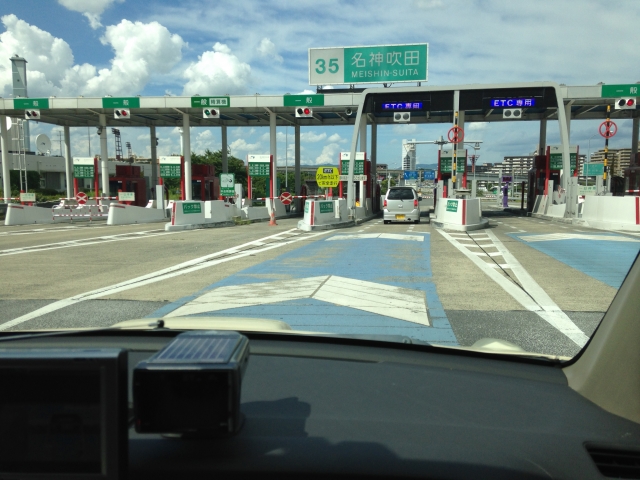
Navigating Japanese toll roads, gas stations, and driving setups is straightforward once you know the basic logistics.
Understanding Tolls & The ETC System
Japan's expressway system relies on high-tech electronic toll collection (ETC).
ETC Cards: When renting a car, always request an ETC card inserted into the in-car reader. This allows you to pass through dedicated wireless toll gates (marked in purple with ETC) at speeds up to 20 km/h without stopping to pay cash. All toll charges are logged electronically and settled when you return the vehicle.
Fueling Up at Japanese Gas Stations (Gassorin Stando)
Gas stations in Japan come in two varieties: Full Service and Self-Service (Serufu).
At a full-service station, staff will guide you to a pump with hand gestures. To request a full tank of premium high-octane gasoline (required for performance cars), simply lower your window and say:
The attendants will clean your windshield, offer to clear your trash, and safely direct you back into traffic as you depart.
The Thrill of Manual Driving (MT) in a Pure Driver's Car
There is no better place to experience a lightweight rear-wheel-drive sports car than Japan’s mountain passes and coastal highways. The crisp, short-throw gear shifts, perfectly spaced pedals for heel-and-toe downshifts, and telepathic steering response convert every turn into a rewarding driving exercise.
5. Comprehensive FAQ for Driving in Japan
What documents do I need to drive legally in Japan?
To drive legally in Japan as an international visitor, you must carry two physical documents with you at all times when behind the wheel:
Your valid driver’s license from your home country.
An official International Driving Permit (IDP) issued under the 1949 Geneva Convention.
Important Note: IDPs issued under the 1968 Vienna Convention or other treaties are not recognized in Japan. Visitors holding licenses from certain countries (such as Switzerland, Germany, France, Taiwan, Belgium, and Monaco) must carry an official Japanese translation of their original license provided by an authorized authority (such as JAF) instead of an IDP. Always verify your specific country's requirements prior to travel, and ensure you obtain your physical IDP before leaving your home country.
Is driving a manual transmission (MT) car in Japan difficult for visitors?
In Japan, traffic flows on the left side of the road, meaning the driver’s seat is on the right side of the vehicle. For drivers accustomed to left-hand-drive vehicles, shifting gears with your left hand takes about 15 minutes of conscious practice to become second nature. The pedal layout (Clutch, Brake, Accelerator) remains completely identical worldwide.
What are the parking rules in Japan?
Street parking is generally strictly restricted across Japan. Always park in designated off-street parking lots (Coin Parking). These automated parking facilities feature barrier plates that rise beneath the car or camera recognition systems. Simply input your parking space number into the payment machine and pay with cash or credit card before pulling out.
What should I expect regarding road conditions during winter?
While coastal Wakayama (including Shirasaki Ocean Park) remains generally mild year-round, high-elevation mountain roads such as the Koya-Ryujin Skyline can experience icy conditions and snow from December through early March. Always check mountain weather forecasts and verify road conditions if traveling during winter months.
6. The Final Thoughts: Experience the Ultimate Japan Drive
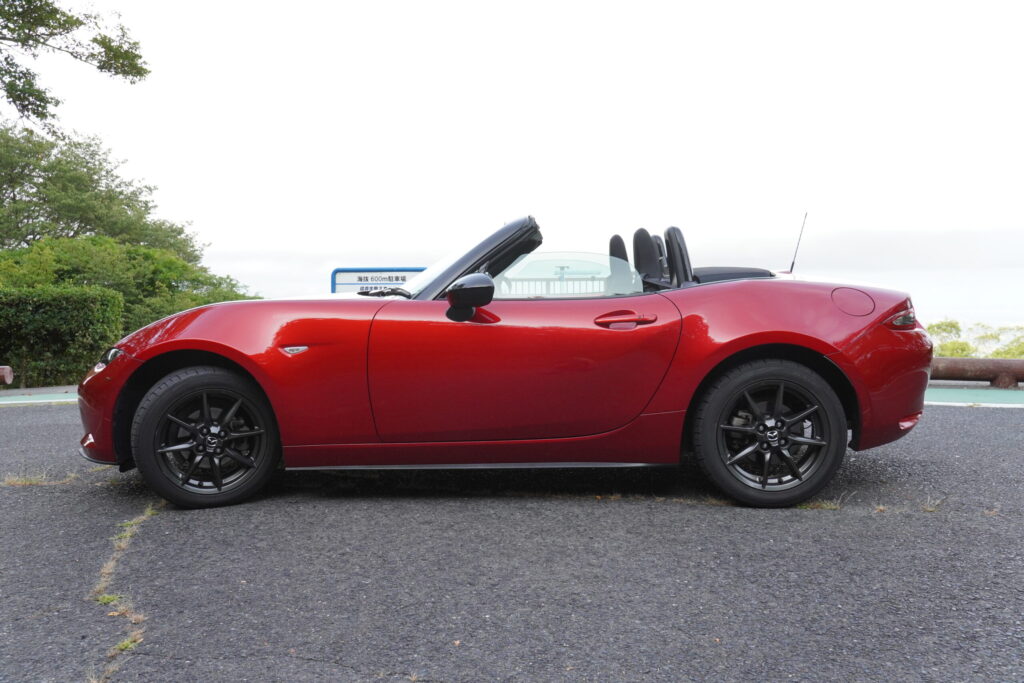
Japan is a country of incredible contrasts—where high-speed modernity exists right alongside quiet, ancient landscapes. While millions of tourists view this land through the glass windows of a crowded train, you have the opportunity to take the wheel and create your own journey.
Feel the feedback of smooth asphalt through the chassis, smell the ocean breeze along the chalk-white headlands of Shirasaki Ocean Park, and hear the engine resonate through ancient mountain valleys.
When you're ready to turn this dream into reality, begin your journey with Omoren Osaka Central (おもしろレンタカー大阪中央店). Conveniently located to serve as your launchpad for Kansai, they offer an incredible fleet of legendary, meticulously maintained Japanese performance machinery and JDM icons.
Reserve your ultimate sports car today, turn the key, and discover the true "Secret Japan" waiting for you beyond the highway horizon.