
1. Driving in Tamba-Sasayama — The Philosophy of Driving in Japan
For years, I viewed Japan strictly through the rhythmic, disciplined pulse of steel rails. As a former conductor for the Kintetsu Railway, my world was governed by absolute precision: split-second timetables, the high-pitched hiss of air brakes, and the reassuring, monotonous clatter of train wheels gliding over track joints. I loved every second of it. Japan’s rail system is an engineering marvel, a seamless web connecting metropolis to metropolis with breathtaking efficiency.
Yet, standing at the rear of a train as a conductor, looking out at the endless ribbons of green mountains receding into the distance, I always felt a faint sense of detachment. Trains are fantastic for transporting you to a destination, but they trap you on a predetermined track. They slice through the countryside, offering mere fleeting glimpses of hidden shrines tucked behind bamboo groves, misty mountain passes, and historic merchant towns where time seems to have stood completely still.
When I stepped down from the platform and took to the open road—driving tens of thousands of kilometers across every corner of the Japanese archipelago—my perspective fundamentally shifted. I realized that the true soul of Japan, the "Secret Japan" that tourist brochures rarely capture, lives in the white spaces between railway lines. It exists in the places where the tracks don't go.
Starting a road trip from Osaka completely transforms your relationship with Western Japan. While the neon maze of Namba and the crowded concourses of Osaka Station draw millions, setting off behind the wheel allows you to escape the urban sprawl within minutes. Within an hour, the elevated expressways give way to winding two-lane routes that curve around emerald reservoirs and climb through ancient cedar forests.
There is no better candidate for this automotive liberation than Hyogo Prefecture's Tamba-Sasayama region. Nestled in a highland basin surrounded by steep mountains, Tamba-Sasayama is a historical jewel. During the Edo period, it flourished as a vital castle town controlling the transport routes into Kyoto. Today, it remains one of Japan's best-preserved rural cultural landscapes, renowned for its ancient pottery traditions, historic samurai residences, and incredible culinary heritage—most notably its legendary Kuromame (black soybeans).
To experience Tamba-Sasayama properly, however, you cannot rely on local bus schedules or limited train connections that leave you stranded kilometers away from the best mountain passes. You need four wheels, a well-balanced chassis, and the freedom to stop whenever a wafting plume of woodsmoke or a striking view of mist-shrouded rice paddies demands your attention. Driving transforms your journey from passive observation into active exploration. You aren't just visiting Japan; you are engaging with its terrain, feeling every contour of its ancient topography through the steering wheel.

2. The 2-Day Itinerary: Deep Dive into Tamba-Sasayama
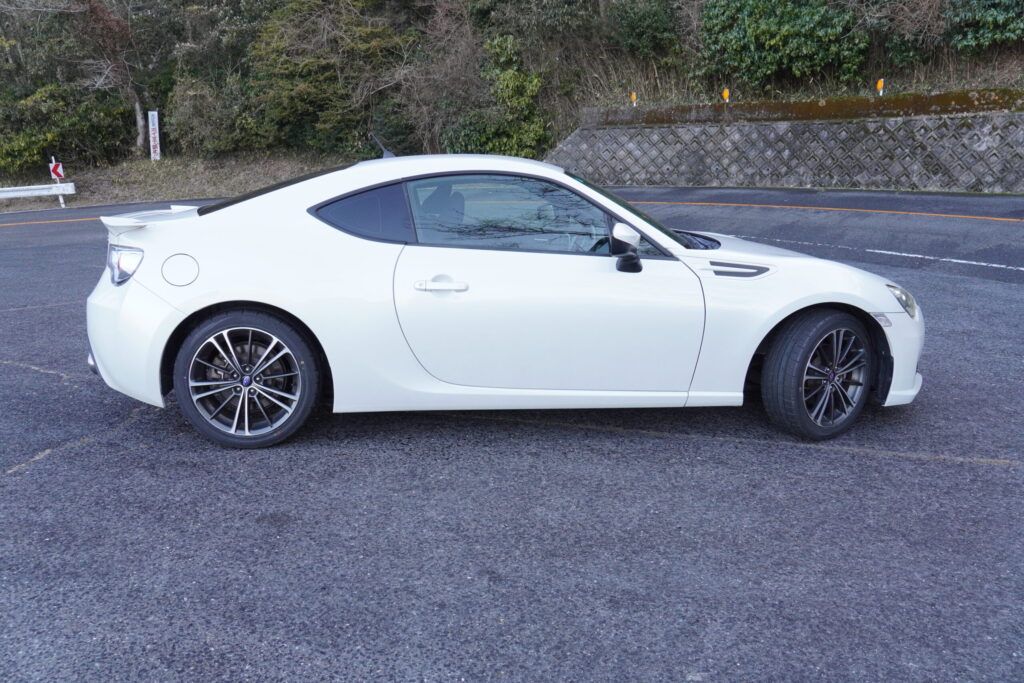
To truly capture the essence of autumn in Tamba-Sasayama, we have crafted a meticulously detailed two-day driving route. This itinerary takes you out of the concrete jungle of Osaka and directly into the heart of rural Hyogo, blending mountain twisties, cultural history, and unforgettable culinary discoveries.
Day 1: Escaping the Sprawl, Ancient Kilns, and Castle Town Charm
08:00 AM — Departure from Osaka: The Urban Gateway
Your journey begins early in the morning in central Osaka. Clearing the city before the morning rush hour is crucial. Merging onto the Hanshin Expressway Route 11 (Ikeda Route), the cityscape is a dense jungle of high-rises, overpasses, and bustling utility vans. As you clear the urban core and move northward past Itami Airport, the horizon begins to change. The concrete towers thin out, giving way to rolling green foothills.
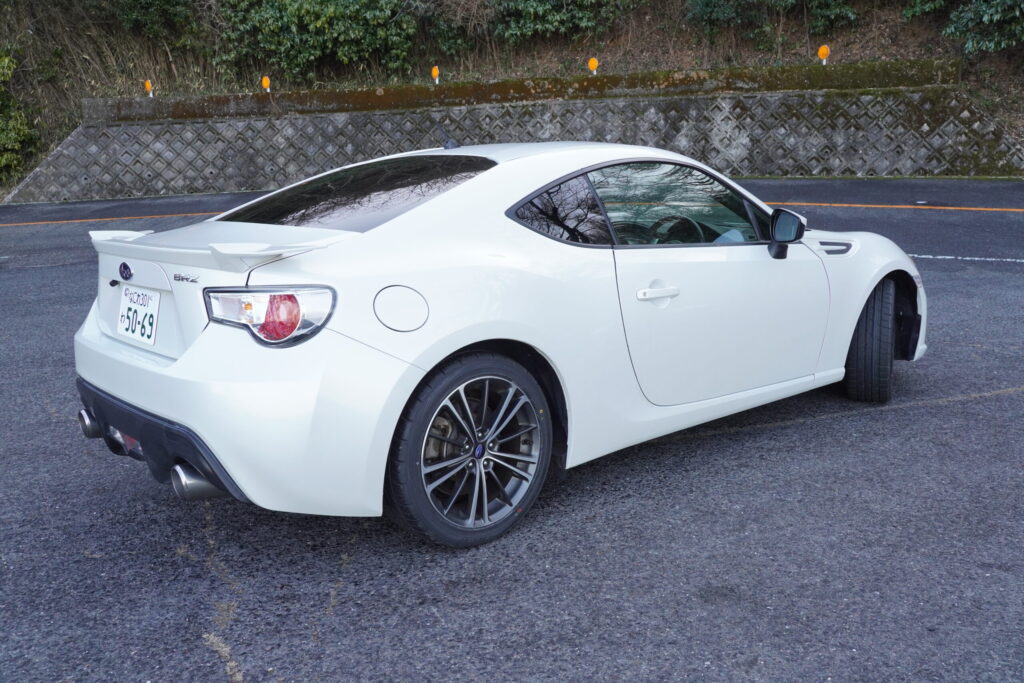
You are behind the wheel of a Subaru BRZ. The low-slung driving position places your hip point just inches off the tarmac, establishing an immediate, visceral connection to the road. The naturally aspirated 2.4-liter boxer engine hums smoothly at highway speeds, its low center of gravity making the car feel planted and eager. As the highway transitions into the Chugoku Expressway and then onto the Maizuru-Wakasa Expressway, the air outside cools down, and the distant ridge lines of the Tamba mountains come into sharp focus.
09:30 AM — Crossing into the Basin: The Scent of Autumn
Exiting the expressway at the Danan-Sasayamaguchi Interchange or navigating via Route 372 (affectionately known locally as the "Deco Deku Highway"), you cross the natural mountain barrier that isolates the Tamba Basin from the coastal plains. The transition is immediate and stunning.
In autumn, the Tamba Basin is often cloaked in a magical morning fog known locally as Tamba no Kiri (the Mist of Tamba). This microclimate, characterized by extreme temperature fluctuations between warm days and chilly nights, is precisely what gives the local produce its legendary flavor. As the morning sun pierces through the mist, golden rice paddies flare into brilliant orange hues, framed by forested mountains burning with red maples and yellow ginkgo trees. The crisp air smells faintly of burning rice straw, damp earth, and woodsmoke—the unmistakable scent of rural Japanese autumn.
10:00 AM — Tachikui Pottery Village (Tamba-yaki Kilns)
Your first driving destination lies in the Konda district, located in the southwestern corner of Tamba-Sasayama: the historic pottery village of Tachikui.
Tamba-yaki is recognized as one of Japan's "Six Ancient Kilns" (Rokkoryu), alongside Bizen, Shigaraki, Seto, Echizen, and Tokoname. Pottery has been produced continuously in this narrow valley for over 800 years, dating back to the late Heian period.
Navigating the narrow village paths of Tachikui requires precision. The roads wind tightly between traditional wooden homes with dark tiled roofs, past woodpiles stacked high with pine logs destined for the kilns. The Subaru BRZ’s compact footprint and communicative steering shine here; maneuvering through tight vintage alleyways is stress-free.
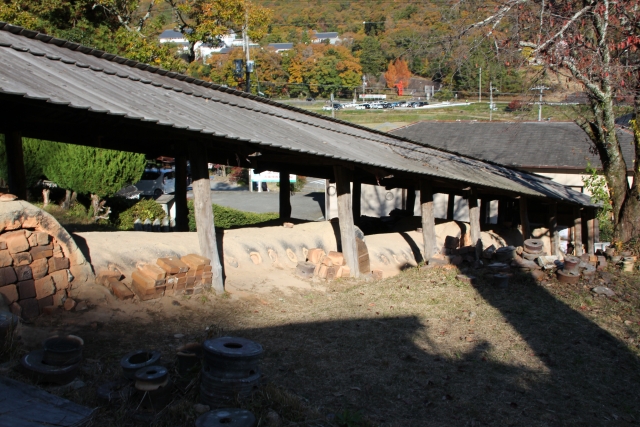
Stop at the Tamba Traditional Pottery Art Center (Tamba-yaki Togen no Sato). Here, you can walk along the hillside to view the famous Noborigama (climbing snake kilns). These long, stepped brick structures are built directly onto the slope of the mountain, allowing heat to rise through multiple chambers. Fueled exclusively by red pine firewood, these kilns reach temperatures exceeding 1,300 degrees Celsius over several days of continuous firing.
What makes Tamba-yaki unique is its natural ash glaze (Ashi-kabu). No artificial glazes are applied to the raw clay; instead, fly ash from the burning pine wood settles on the ceramic pieces during firing, melting and fusing into rich, rustic shades of moss green, dark chestnut, and burnt orange. Each piece is a unique physical record of fire, wood, and earth. Browsing the small artisan galleries lined along the hillside, you can pick up hand-crafted coffee mugs, sake cups, or rice bowls that feel heavy, tactile, and deeply rooted in the land.
12:30 PM — Lunch: The Legendary Tamba Black Soybean Feast
Leaving Tachikui, take Route 292 as it sweeps through rural hamlets toward the heart of Sasayama city. It is time to sample the region's most famous culinary export: Tamba Kuromame (black soybeans).
While black soybeans are consumed across Japan during New Year celebrations as a symbol of health and hard work, fresh autumn Tamba Kuro Edamame (harvested green before fully maturing into black beans) are a seasonal delicacy revered by gourmets nationwide. Available for only a few short weeks from early to late October, these beans are massive—nearly twice the size of standard edamame—with a dark, mottled skin and a rich, nutty, almost sweet flavor profile that is utterly addicting.
Pull into a local farm restaurant or traditional Kominka (renovated farmhouse) along the countryside roads. Order a full Tamba Gozen lunch set. The meal is an absolute celebration of autumn flavors:
Boiled Tamba Kuro Edamame: Served steaming hot, sprinkled with coarse sea salt. The texture is firm yet buttery, bursting with deep, savory umami.
Botan Nabe (Boar Hotpot): Tamba-Sasayama is the historic birthplace of Botan Nabe. Wild boar from the surrounding mountains, fattened on autumn acorns and chestnuts, is sliced thinly and arranged artfully on a platter to resemble a blooming peony (botan) flower. The meat is simmered in a rich, house-made red miso broth alongside local burdock root, shiitake mushrooms, and sweet mountain onions. Unlike farm-raised pork, wild boar meat is deeply flavorful, lean, and features a sweet, tender layer of fat that melts into the broth.
Chestnut Rice (Kuri-gohan): Local short-grain rice cooked with sweet, aromatic Tamba chestnuts (Tamba Kuri), which have been prized since the Heian period and were once presented as official tributes to the Imperial Court in Kyoto.
Eating this meal while gazing out through open shoji screens at a quiet Japanese garden framed by autumn foliage is an experience no city restaurant can ever replicate.
02:30 PM — Exploring Sasayama Castle Town & Castle Ruins
After lunch, drive toward the historic center of Sasayama Castle Town. Park your BRZ in one of the central parking areas near the castle moats.
Sasayama Castle was constructed in 1609 by order of Tokugawa Ieyasu, the founder of the Tokugawa Shogunate. Designed as a strategic stronghold to monitor and contain the western warlords (Tozama Daimyo), the castle was built using the labor of 20 different feudal lords in an astonishingly brief period of just six months.
While the main keep (Tenshu) was never built—partly because the Shogunate feared its formidable design was too dangerous—the massive stone walls (Ishigaki) and surrounding water moats remain completely intact. Walk up the wide stone staircases onto the castle ramparts. The stone masonry utilizes the Uchikomi-hagi technique, where raw fieldstones are meticulously fitted together without mortar, creating imposing, sloping walls that have resisted earthquakes for over four centuries.
At the center of the castle grounds stands the Oshoin (Grand Hall). Originally constructed in 1609 alongside the castle, it was one of the grandest wooden administrative halls in Japan, comparable in scale to the Ninomaru Palace at Nijo Castle in Kyoto. Though destroyed by fire in 1944, it was painstakingly reconstructed in 2000 using traditional joinery techniques and historical architectural drawings. Walking across the polished wooden floors into the Jodan-no-ma (Grand Chamber), you are greeted by dazzling gold-leaf walls adorned with painted pine trees, illustrating the sheer power and authority of the ruling Akeyama clan.
After exploring the castle grounds, take a short walk to the Kawaramachi Historic District. This preserved merchant street stretches for roughly 600 meters along the old Kyoto trade route. The streets are lined with traditional Machiya (townhouses) featuring Gensan-gawara roof tiles, dark-stained Bengara lattice windows, and clay walls.
Unlike overcrowded historical quarters in Kyoto or Higashiyama, Kawaramachi retains an authentic, working neighborhood atmosphere. You will find small, independent craft shops, traditional sake merchants, and cozy cafes housed inside centuries-old wooden structures. Be sure to drop into a local merchant shop to pick up some Kuromame-cha (roasted black soybean tea), which offers a warm, nutty aroma and is entirely caffeine-free.
05:00 PM — Golden Hour Drive: Route 372 to the Mountain Pass
As the autumn sun begins its low descent toward the horizon, casting long shadows across the valley, return to the driver's seat. It is time to experience the mechanical art of driving.
Head east from Sasayama Castle Town toward the surrounding mountain ranges on Route 372, heading toward the border of Kyoto Prefecture. The road transitions from smooth, open valley runs into a series of sweeping, well-paved curves that climb gently into the hills.
This is where the Subaru BRZ earns its keep. The vehicle’s ultra-low center of gravity, ultra-precise electric power steering, and perfectly spaced short-throw 6-speed manual transmission transform simple driving into a symphony of mechanical feedback. Approaching a sweeping right-hand curve, you drop a gear—the aluminum pedals are positioned perfectly for heel-toe downshifting—and feel the revs surge smoothly. The chassis remains exceptionally flat, tracking through the apex with razor-sharp neutrality.
The light during this hour in autumn is pure magic. Golden sunlight filters through the yellow canopy of mountain oaks and wild maples, creating a flickering pattern of light and shadow across the windshield. The boxer engine’s intake note echoes off the rock walls lining the pass, providing a raw, acoustic backing track to an epic rural drive.
06:30 PM — Check-in at a Traditional Onsen Ryokan
Conclude your first day by checking into a secluded Onsen Ryokan (traditional hot spring inn) nestled in the hills of Tamba or near the neighboring Takeda region.
Step out of your driving shoes and into soft tatami mat rooms smelling fresh of woven rush grass. Change into a comfortable cotton yukata and head directly to the outdoor hot spring bath (rotenburo). Soaking in the steaming, mineral-rich thermal waters while the cool autumn night air touches your face is the ultimate antidote to driver fatigue.
Dinner at the ryokan is a multi-course Kaiseki banquet showcasing local autumnal delicacies: grilled sweetfish (Ayu), wild matsutake mushrooms steamed in earthenware teapots (Matsutake Dobin Mushi), and tender slices of local Tamba Beef cooked over a tabletop hot stone.

Day 2: The High Passes, Castle in the Sky, and the Winding Descent
07:30 AM — Early Morning Drive: The Mist of Takeda
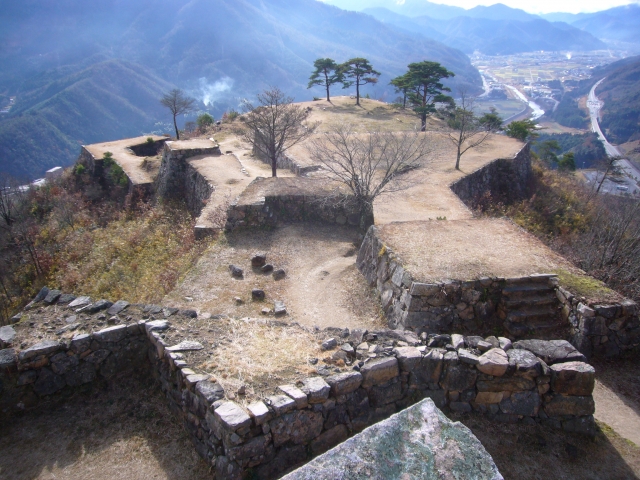
Rise early before dawn. Day two begins with an ambitious, unforgettable morning drive heading west toward the border of Asago city. Your destination: the famous view of Takeda Castle Ruins, widely known as the "Castle in the Sky" (Tenku no Shiro).
Drive along Route 312 as the first rays of dawn break over the mountains. During autumn mornings (especially from September to November), a dense sea of clouds (Unkai) frequently forms in the Maruyama River valley due to overnight radiative cooling.
Park at the base area or navigate up to the Ritsuun-kyo viewpoint on the opposite mountain face. Climbing the hillside trail to the viewing decks, you are treated to a surreal sight: the 15th-century stone foundations of Takeda Castle, perched 353 meters above sea level, appear to float completely untethered on a soft, white ocean of clouds. The ancient stone walls, illuminated by the crimson pinks and fiery oranges of the sunrise, look like a scene straight out of a Studio Ghibli film.
10:00 AM — Technical Driving: Exploring the Rokusou Highway and Mountain Passes
After descending from the viewpoint, return to the BRZ. It is time to explore the technical, winding mountain roads that crisscross the borders of Hyogo and Kyoto Prefectures.
Set your navigation toward the mountainous hinterlands around Mount Kenbi and the surrounding prefectural routes (such as Hyogo Prefectural Route 12 and Route 702). These roads are a dream for sports car enthusiasts. Unlike high-speed highways, these two-lane ribbons of tarmac feature technical hairpin turns, rhythmic elevation changes, and tight chicane-like corners that require total concentration and precise vehicle control.
In the BRZ, every turn becomes an exercise in driving purity:
Approach: Brake smoothly in a straight line, dipping the clutch with your left foot while blipping the throttle with the right side of your shoe to rev-match the downshift into second gear.
Turn-in: Release the brake gently, allowing the front suspension to load up. The BRZ's front double-wishbone and MacPherson strut setup bites into the asphalt instantly, with zero understeer.
Apex: As you clip the inner apex of the curve, the Torsen limited-slip differential (LSD) manages power delivery to the rear wheels, keeping the rear end firmly planted and predictable.
Exit: Unwind the leather-wrapped steering wheel and squeeze the accelerator pedal, listening to the engine climb past 6,000 RPM as the car rockets down the next straightaway.
The road carries you past isolated mountain villages where elderly farmers tend to small terraced vegetable plots, past mountain streams so clear you can see trout darting between polished stones, and beneath arching canopies of brilliant crimson maple leaves that shower down onto the hood of your car as you pass.
01:00 PM — Lunch: Handmade Mountain Soba in Izushi
Drive north-west for an hour toward the historic castle town of Izushi, often called "Little Kyoto of the Tajima Region."
Izushi is world-famous for its unique style of buckwheat noodles known as Izushi Sara Soba. The tradition dates back to 1706 when the feudal lord Sengoku Masaakira was transferred from Shinshu (modern-day Nagano, famous for soba) to Izushi, bringing skilled buckwheat noodle artisans with him.
Park near the Shinkorou, a wooden clock tower built in 1871 that stands as the iconic symbol of the town. Step into one of the dozens of family-run soba shops lining the historic streets.
Unlike standard soba served in a single large bowl, Izushi Sara Soba is served in small, individual portions on small white ceramic dishes crafted right in the region. A standard single order consists of five plates:
First Plate: Sample the dark, stone-ground buckwheat noodles plain, dipped slightly in cold Tsuyu (bonito and kelp dashi broth) to taste the nutty, earthy aroma of the fresh buckwheat harvest.
Second & Third Plates: Mix in finely chopped scallions and freshly grated spicy wasabi.
Fourth Plate: Add Toro-ro (creamy grated mountain yam) to the broth, creating a velvety coating that clings to the cold noodles.
Fifth Plate: Crack a raw local quail or chicken egg into the remaining broth for a rich, luxurious finish.
Locals routinely eat 10 to 15 plates in a single sitting, stacking the empty white ceramic dishes high on their table like a tower of culinary achievement.
03:30 PM — Afternoon Scenic Run: The Rural Valleys of Inagawa & Sasayama
Leaving Izushi, begin your gradual journey south back toward Osaka, taking the scenic route through the Inagawa Valley via Prefectural Route 12.
This stretch of road follows the clear waters of the Inagawa River, passing through peaceful rural farmland, cedar groves, and quiet mountain passes. The afternoon light turns soft and amber, painting the hillsides in deep metallic shades of gold and bronze.
Take a short break at a roadside scenic pull-off near the Inagawa River Gorge. Standing by the side of the road, breathing in the cold mountain air with the hot mechanical ping of the cooling BRZ exhaust ticking away in the quiet afternoon, you realize the true value of this journey. You haven't just seen Japan through a glass train window; you have felt its geography, breathed its air, tasted its seasonal harvests, and mastered its roads.
05:30 PM — Return to Osaka: The Urban Descent
As twilight falls, Route 12 connects smoothly to the Shin-Meishin Expressway or the Hanshin Expressway network. The quiet darkness of the rural mountains is gradually replaced by the glowing orange sodium lights of the expressway tunnels.
Merging back into the pulsing, multi-lane traffic flow of Osaka, the contrast is stark. The city is alive with neon signs, tail lights, and urban energy. You navigate the complex overpasses with ease, bringing your sports car back into the heart of the metropolis, filled with memories of ancient pottery kilns, mist-shrouded castle ruins, and the sweet flavor of freshly harvested black soybeans.
3. Expert Advice & Cultural Nuances
Driving in Japan is an immensely rewarding experience, but navigating its unique road culture requires an understanding of local customs, unwritten etiquette, and rural infrastructure.
The Wonder of "Michi-no-Eki" (Roadside Stations)
Forget everything you know about dreary, sterile highway rest stops. In Japan, Michi-no-Eki (Roadside Rest Stations) are cultural destinations in their own right. Jointly created by local municipalities and the Ministry of Land, Infrastructure, Transport and Tourism, these facilities serve a dual purpose: providing safe rest places for drivers while boosting local rural economies.
When driving through Tamba-Sasayama and the surrounding Hyogo countryside, stopping at a Michi-no-Eki (such as Michi-no-Eki Tamba Obaa no Sato or Michi-no-Eki Inagawa) is absolute mandatory protocol:
Fresh Local Produce: Farmers drop off freshly harvested produce every morning. In autumn, you will find giant Tamba chestnuts, fresh black edamame, wild matsutake mushrooms, and local koshihikari rice sold directly by the growers at fraction of city prices.
Regional Gelato & Snacks: Look for unique local ice cream flavors made on-site, such as Kuromame Soft Cream (roasted black soybean soft serve) or Chestnut gelato.
Clean Facilities & Free Parking: They offer immaculate public restrooms, 24/7 parking access, tourist information centers with localized driving maps, and vending machines stocking hot canned coffee (Boss or Georgia) to keep you sharp behind the wheel.
Driving Etiquette and Unwritten Rules
1. The "Thank You" Hazard Light Blink (Sankyu Hazado)
If a driver slows down to let you merge onto a narrow road, yield right-of-way at an intersection, or pull out from a side street, it is standard Japanese driving courtesy to flash your hazard lights twice (blink-blink). This simple gesture expresses gratitude and maintains harmony on the road.
2. Navigating Single-Lane Mountain Passes (Kukusai)
In rural areas of Hyogo, secondary mountain roads can occasionally narrow down to single-lane paths with small pull-out spaces (Yuzurai-jo). If you see an oncoming vehicle approaching on a narrow stretch, look ahead for a widening in the road, pull over to the left, and stop completely to let the other driver pass. A polite nod of the head or a brief raise of the hand is customary.
3. Speed Limits vs. Pace of Traffic
Official speed limits in Japan can seem extraordinarily low to overseas visitors—often 30–40 km/h in suburban/rural towns, 50–60 km/h on open two-lane national routes, and 80–100 km/h on expressways. While you should always drive safely and adhere to posted signs, pay attention to the flow of local traffic. Smooth, predictable driving that matches the surrounding vehicles is far safer than sudden braking or erratic speed changes.
4. Detailed Logistics & Pre-Trip Tips
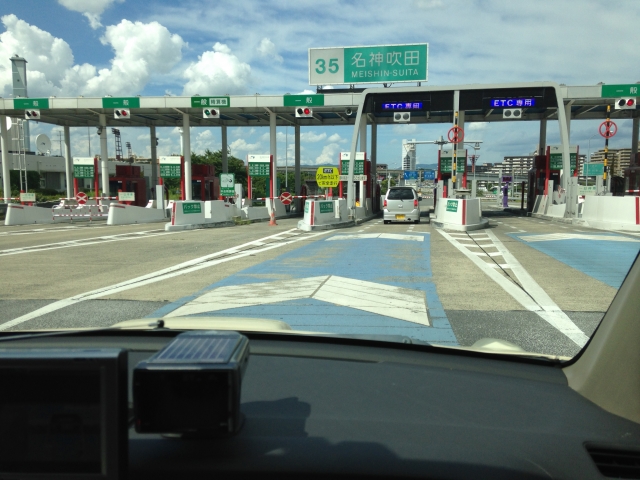
Navigating Japan’s road infrastructure smoothly requires proper preparation and an understanding of modern highway technology.
Expressways, Tolls, and the ETC System
Japan's expressway network (Kousokudouro) is world-class, immaculately maintained, and expensive. Tolls are calculated strictly based on distance traveled.
ETC (Electronic Toll Collection): Almost every modern vehicle in Japan is fitted with an ETC card reader. Make sure your rental car includes an ETC Card inserted into the reader unit (usually located inside the glovebox or near the steering column).
Using the Toll Gates: When approaching an expressway toll plaza, drive through the lanes clearly marked in purple with glowing ETC signs at a speed below 20 km/h. The wireless overhead gantry will read your card, beep, and raise the barrier gate automatically without forcing you to stop or handle cash. The accumulated toll fees are calculated and settled cleanly when you return the rental car.
Gas Station Navigation: "Mantan!"
Gas stations (Gasorin Susutando) in Japan come in two varieties: Self-Service (Serufu) and Full-Service (Furu).
At Full-Service stations, staff members will guide you to a pump with vocal calls and hand signals. Here is the exact localized Japanese dialogue to use:
Note on Fuel Types:
Red Nozzle: Regular Gasoline (89+ Octane)
Yellow Nozzle: High-Octane / Premium Gasoline (98+ Octane) — Crucial for performance cars like the Subaru BRZ or Toyota 86!
Green Nozzle: Diesel (Keiyu)
While the attendant fills your tank, they will frequently wipe down your windshield with a damp towel and hand you a small damp cloth (Oshibori) to wipe your dashboard or hands. When exiting the station back onto the street, staff members will often hold traffic for you and bow as you drive away.
Parking Wisdom in Japan
Parking on the street is strictly forbidden across almost all of Japan, even in small rural towns. Always use designated parking lots:
Coin Parking (Koin Pakingu): Common in towns and cities. You park over a space fitted with a small metal flap barrier beneath the chassis. Once parked, the flap raises after a few minutes to lock the car in place. To leave, type your parking spot number into the central payment kiosk, pay the displayed cash/card fee, verify that the metal flap has lowered flat to the ground, and drive out within a couple of minutes.
Maeno-Shasatsu (Back-in Parking): In Japan, virtually everyone backs into parking spaces. It is considered safer and far easier when exiting back into traffic. Use your side mirrors and backup camera, take your time, and reverse neatly into the lines.
The Thrill of the Manual JDM Experience
Driving a lightweight, rear-wheel-drive Japanese Domestic Market (JDM) sports car like the Subaru BRZ or Toyota 86 on real Japanese mountain roads (Touge) is a bucket-list experience for any true automotive enthusiast.
Unlike heavy modern supercars that reach illegal speeds in second gear, a lightweight 2.0L/2.4L sports car allows you to work through the gears, heel-toe downshift into tight hairpin turns, and extract maximum driving joy at sensible, safe speeds. The mechanical tactile feedback—the precise click of a manual shifter, the crisp throttle response of a naturally aspirated boxer engine, and the balanced feedback through the chassis—creates an unforgettable, emotional bond between driver, car, and mountain scenery.
5. Comprehensive FAQ
Q1: What specific driver's license documentation do I need to rent and drive a car in Japan?
To legally drive in Japan as a foreign tourist, you MUST present three physical documents at the rental counter:
Your original, valid Passport.
Your original Home Country Driver's License.
A valid International Driving Permit (IDP) issued strictly under the 1949 Geneva Convention on Road Traffic.
CRITICAL WARNING: IDPs issued under the 1968 Vienna Convention, 1926 Paris Convention, or AAA/automobile association translations that do not explicitly reference the 1949 Geneva Convention are NOT legally valid in Japan.
Drivers holding licenses from specific countries/territories that do not issue 1949 Geneva IDPs (such as Switzerland, Germany, France, Taiwan, Belgium, and Monaco) must instead present an official Japanese translation of their home license provided by the Japan Automobile Federation (JAF) or their nation's consulate in Japan. Always secure your physical IDP in your home country before flying to Japan; digital copies, photos on smartphones, or faxed documents are strictly rejected by law.
Q2: Is insurance included, and what happens in the case of an accident or scratch?
Reputable rental shops provide baseline third-party liability insurance. However, it is strongly recommended to opt for full Collision Damage Waiver (CDW) and Non-Operation Charge (NOC) coverage options. NOC covers the business compensation fee charged by the rental operator while a vehicle is undergoing repairs or cleaning (typically ¥20,000 to ¥50,000). In Japan, even if you cause a minor bumper scuff in a parking lot, you are legally required to contact the police immediately (110) to obtain an official Police Accident Report (Jiko Shomeisho); otherwise, rental insurance coverage becomes completely void.
Q3: What if I am nervous about driving a Manual Transmission (MT) car on the left side of the road?
Driving on the left side of the road (RHD - Right-Hand Drive) feels completely natural within about 15 to 20 minutes of driving. Because the driver's seat is on the right side of the vehicle, your body remains positioned toward the center lane of the road—exactly as it is when driving in LHD countries.
If you choose a manual transmission JDM sports car, pedal placements remain identical worldwide (Clutch on the left, Brake in the middle, Accelerator on the right). Shift patterns are also identical (1st gear is top-left). The only minor adjustment is shifting gears with your left hand instead of your right hand. Take it slow in the rental lot, practice finding the clutch bite point, and enjoy the rewarding process of mastering a manual transmission on Japanese soil.
Q4: Are the mountain roads in Tamba-Sasayama safe in autumn and winter?
In autumn (September through late November), driving conditions in Tamba-Sasayama are pristine: crisp temperatures, dry pavement, and stunning foliage. However, late autumn mornings can bring dense valley mist and damp roads, so maintain safe tailing distances.
By mid-December through February, mountain passes in rural Hyogo can experience freezing temperatures, black ice, and snow accumulation. If traveling during mid-winter, renting a car equipped with studless snow tires (Sutaddoresu-taiya) is mandatory for safety.
6. The Final Thoughts
The true magic of Japan does not reveal itself through the window of a high-speed bullet train rushing past at 300 kilometers per hour. It stays hidden in the mist-shrouded valleys of Tamba-Sasayama, along the narrow cobblestone alleys of ancient pottery villages, inside cozy roadside farmhouses serving bubbling pots of wild boar broth, and across rhythmic mountain passes where the foliage burns red and gold against the autumn sky.
To unlock this side of Japan, you need more than just a transit pass—you need a machine built for the joy of driving. You need a vehicle that transforms every corner, every heel-toe downshift, and every scenic pull-off into an unforgettable sensory memory.
When you are ready to trade crowded tour buses for the crisp exhaust note of an iconic Japanese sports car, look no further than Omoren Osaka Chuo (おもしろレンタカー 大阪中央店).
Specializing in meticulously maintained JDM legends, sports cars, and manual transmission icons—including the legendary Subaru BRZ and Toyota 86—Omoren Osaka Chuo is conveniently located in central Osaka, providing the ultimate launching pad for your rural Western Japan adventure. Their expert team understands the passionate driver's soul, offering pristine performance vehicles equipped with ETC readers, English navigation options, and the exact mechanical setup required to conquer the touge passes of Hyogo, Kyoto, and beyond.
Don't settle for the standard tourist path. Reserve your Subaru BRZ or Toyota 86 at Omoren Osaka Chuo today, grab your international driving permit, turn the key, and discover the thrilling, secret roads of Japan waiting just beyond the city lights.