
Katsuragi Kogen, Tsutsuji, Ichimoku Hyakumanbon, Zekkei - The Philosophy of Driving in Japan
For years, my world was defined by steel rails and precise timetables. As a Kintetsu train conductor, I witnessed Japan's breathtaking landscapes flash by through a rectangular window, always on a predetermined path. I mastered the rhythm of the tracks, the seamless efficiency of a system that moves millions with unparalleled precision. But even then, even from the conductor's seat, a profound truth resonated within me: the real soul of Japan, its deepest secrets and most exhilarating sensations, lie just beyond the reach of the tracks.
This is the philosophy that drives me today, literally. Having spent countless hours behind the wheel, navigating every twist and turn of this incredible country, and now, providing others with the keys to their own wheeled adventures, I can tell you unequivocally: to truly understand Japan, you must drive it. Forget the crowded tourist traps, the predictable routes, and the rush of public transport. From vibrant Osaka, a city pulsating with urban energy, an entirely different Japan awaits, one that unveils itself only to those bold enough to grasp the steering wheel.
The allure of driving in Kansai, with Osaka as your launchpad, isn't merely about convenience; it's about liberation. It's about the freedom to chase the rising sun over misty mountains, to stumble upon a hidden shrine nestled deep within a bamboo grove, to follow the tantalizing aroma of a local ramen shop down a forgotten lane. Public transportation, as magnificent as it is in Japan, imposes limitations. It funnels you into well-worn paths, connecting major hubs and leaving the vast, intricate tapestry of rural life largely unexplored. The serendipity, the unexpected detours, the profound moments of solitude amidst nature's grandeur – these are the exclusive domain of the driver.
I call it 'Secret Japan.' It's the Japan whispered about by locals, cherished by adventurers, and utterly inaccessible without your own set of wheels. It’s a Japan where time slows, where ancient traditions blend seamlessly with stunning natural beauty, and where every kilometer driven is a brushstroke on a canvas of unforgettable memories. It's not just about reaching a destination; it's about the journey itself – the visceral connection between driver, machine (especially a finely tuned JDM like an 86 or BRZ), and the ever-changing landscape. It’s about feeling the road beneath you, hearing the symphony of the engine as it climbs a mountain pass, and breathing in the crisp air of places untouched by mass tourism. Prepare yourself, because we're about to embark on an adventure that transcends mere sightseeing. We're going to dive deep into Secret Japan, starting with the breathtaking spectacle of Katsuragi Kogen.
Katsuragi Kogen, Tsutsuji, Ichimoku Hyakumanbon, Zekkei - The 2-Day Itinerary: Deep Dive

This is not just a trip; it's an odyssey. A two-day immersion into the heart of Nara Prefecture's natural splendor, a pilgrimage to a spectacle so grand it earns the moniker 'Ichimoku Hyakumanbon' – a million blooms at a single glance. Our chariot for this adventure? A precision-engineered Toyota 86 or Subaru BRZ, a machine designed for pure driving exhilaration, ready to carve through the winding roads that lead to Katsuragi Kogen. Forget everything you thought you knew about Japanese travel; this is the ultimate road trip for the discerning adventurer and the passionate petrolhead.
Day 1: Osaka to the Summit of Azaleas
07:00 AM – The Urban Awakening & The Roar of Anticipation (Osaka Departure)
The city of Osaka, still stirring from its slumber, offers a unique backdrop to our departure. The first rays of dawn paint the steel and glass cityscape in hues of rose and gold. You slide into the low-slung bucket seat of the 86/BRZ. The scent of leather and performance plastics fills the cabin. A twist of the key, or push of a button, and the horizontally opposed engine growls to life with a satisfying burble. This isn't just a car; it's an extension of your spirit, eager to devour the asphalt. We navigate the quiet morning streets, the city slowly fading in the rearview mirror, replaced by the promise of open roads. The precise feedback from the steering wheel, the firm clutch engagement, the satisfying snick of the short-throw shifter as you slot into first – these are the first whispers of the adventure to come.
07:30 AM – Highway Hypnosis & Mountainous Horizons (Kansai Expressway)
We merge onto the Hanshin Expressway, then transition seamlessly onto the Minami-Hanna Road, heading east towards the mountains that guard Nara Prefecture. The early morning traffic is light, allowing the 86/BRZ to stretch its legs. The hum of the tires on the impeccably maintained tarmac, the subtle vibrations through the chassis, the growing sense of anticipation – it’s a symphony of mechanical harmony. Gaze out at the undulating emerald hills of the Ikoma mountain range, which act as a natural boundary between Osaka and Nara. As a former conductor, I spent years traversing these very valleys by rail, but from the cockpit of an 86/BRZ, the perspective is entirely new, liberating. You’re not merely a passenger; you are the conductor of your own journey, dictating the pace and path.
08:30 AM – The Ascent Begins: Mt. Katsuragi Parkway (Winding Roads & Adrenaline)
Leaving the expressway, we begin our ascent onto the legendary Mt. Katsuragi Parkway. This is where the 86/BRZ truly comes alive. The roads here are a driver's dream: beautifully paved, a ballet of sweeping curves, tight hairpins, and exhilarating straights. The engine note rises from a confident hum to a purposeful growl as you dip into the throttle, rev-matching perfectly on downshifts. Feel the car’s balanced chassis, the immediate turn-in response, and the reassuring grip of the tires as you carve through each corner. The air grows noticeably cooler, carrying the scent of pine and damp earth. Sunlight filters through the dense canopy of trees, dappling the asphalt in shifting patterns of light and shadow. The world shrinks to the immediate road ahead, a ribbon of blacktop leading you higher and higher into the embrace of the mountains. This isn't just driving; it's a dynamic conversation between you and the machine, a dance of precision and power.
Geologically, Mt. Katsuragi is part of the Kongo-Katsuragi mountain range, formed by ancient tectonic activity. Its slopes are a testament to millennia of erosion and geological uplift, creating the dramatic gradients and natural terraces that now host the famed azaleas. Historically, these mountains were places of spiritual significance, dotted with small shrines and pilgrimage routes, embodying the animistic beliefs of early Japan.
09:30 AM – Arrival at Katsuragi Kogen & The Million Bloom Spectacle (Ichimoku Hyakumanbon)
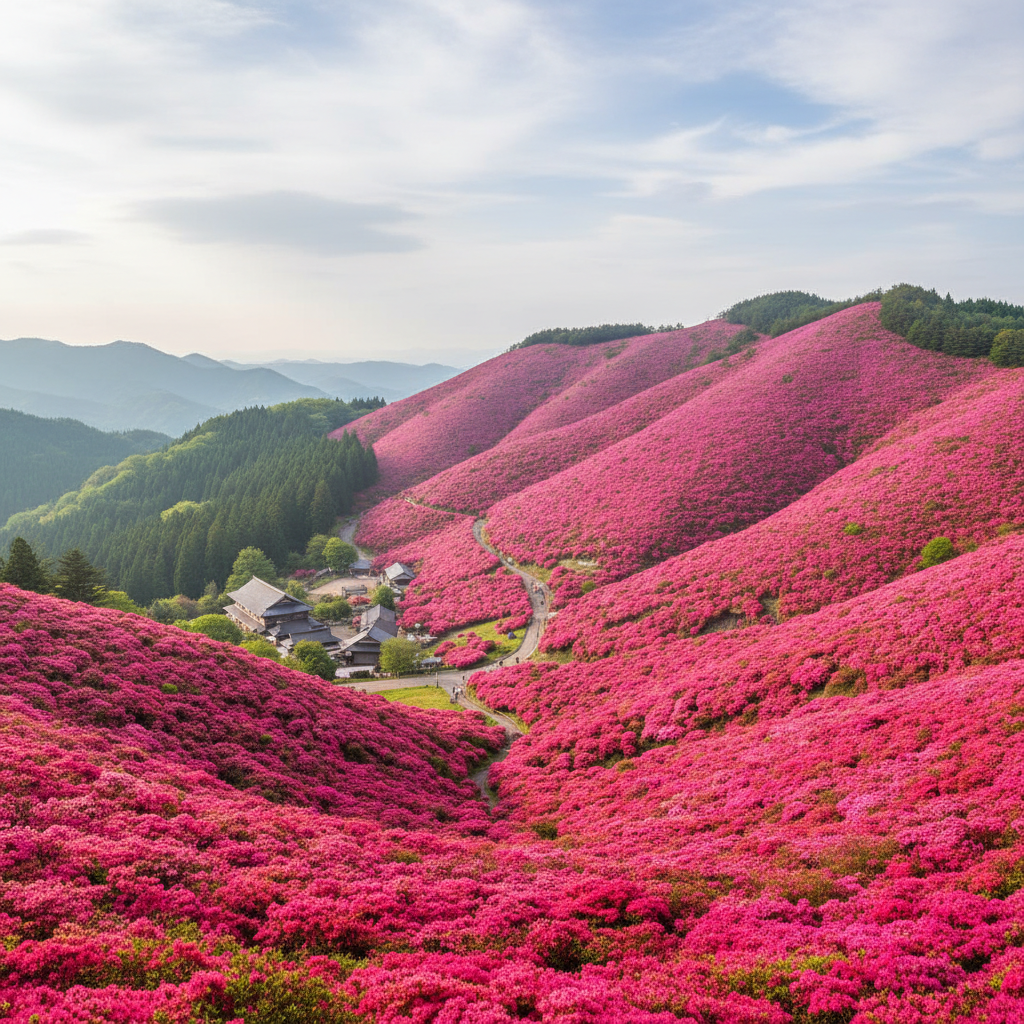
As you near the summit, the tree line begins to thin, and then, without warning, the world explodes in a riot of color. You've arrived at Katsuragi Kogen. From the parking area, the first glimpse of 'Ichimoku Hyakumanbon' – a million azalea bushes blanketing the entire mountainside – is absolutely breathtaking. It’s an almost overwhelming vista, a vibrant tapestry of fuchsia, magenta, crimson, and delicate pink, stretching as far as the eye can see. The sheer scale is difficult to comprehend until you are standing amidst it. This is not merely a garden; it's a living, breathing natural phenomenon. The air is thick with the sweet, delicate perfume of the blossoms, carried on a gentle mountain breeze.
Take your time here. Wander along the well-maintained paths that wind through the azalea fields. Each step reveals a new perspective, a different shade, a fresh wave of floral fragrance. Look closely, and you’ll see bees buzzing contentedly, tiny splashes of life amidst the vibrant expanse. The history of these azaleas is intertwined with the local community's dedication; they are meticulously cared for, a labor of love passed down through generations. Imagine the patience and foresight required to cultivate such an unparalleled display. The mountain itself, deeply revered, seems to bloom with a divine grace.
12:00 PM – Summit Sustenance: A Taste of the Highlands (Lunch)
After immersing yourself in the azalea wonderland, a well-deserved lunch awaits at the mountain-top facilities. Resist the urge for anything generic. Seek out the local specialties. One absolute must-try is the 'Katsuragi Soba' – buckwheat noodles made with pure mountain spring water, often served with wild mountain vegetables (sansai) foraged from the slopes. The simplicity of the dish belies its profound flavor: the earthy nuttiness of the soba, the crisp freshness of the sansai, and the delicate umami of the dashi broth. Each mouthful is a taste of the mountain itself, clean and invigorating. Paired with a warm cup of roasted green tea (hojicha), it’s the perfect fuel for more exploration. From the restaurant's panoramic windows, you’ll enjoy a spectacular view of the sprawling azaleas you just explored, a truly immersive dining experience.
01:30 PM – Exploration & Panoramic Vistas (Katsuragi Summit Park & Observation Deck)
Beyond the azalea fields, the Katsuragi Kogen area offers stunning panoramic views that stretch across the Kansai Plain, embracing the distant silhouettes of Osaka, Kyoto, and even the faint shimmer of Osaka Bay. Head to the observation deck near the ropeway station. On a clear day, the expanse is truly humbling, offering a unique geographical perspective that highlights the region's diverse topography. Take a leisurely walk around the summit park, which often features local flora and fauna that thrive in this highland environment. You might spot various birds, or if you're lucky, perhaps even a kamoshika (Japanese serow) in the quieter areas. The air at this altitude is incredibly fresh and clean, a stark contrast to the city air, invigorating your senses and clearing your mind.
03:00 PM – The Descent & A Hidden Gem (Exploring Local Towns)
Reluctantly, we begin our descent from Katsuragi Kogen, taking a slightly different route to discover more of the local charm. The 86/BRZ glides effortlessly down the mountain roads, the engine braking providing controlled descents and allowing you to fully appreciate the scenery. We head towards the town of Gose at the base of the mountains. This area is steeped in ancient Japanese history, particularly connected to early imperial Japan and the powerful Soga clan. Stop by the Gose City Folk Museum (or a similar small, local museum), if available, to glimpse artifacts from the Kofun period, offering a tangible link to a Japan millennia past. These small, often overlooked towns provide an authentic window into rural Japanese life, far removed from the bustling tourist circuits.
04:30 PM – Ryokan Retreat & Onsen Bliss (Check-in & Relaxation)
Our accommodation for the night will be a traditional Japanese ryokan, ideally located in a quieter area near the base of the mountains, perhaps in Kashihara or an adjacent town. The choice of a ryokan isn't just about a bed for the night; it’s an experience. The delicate aroma of tatami mats, the quiet elegance of sliding shoji doors, and the profound hospitality (omotenashi) of the staff immediately transport you. After checking in, slip into a yukata (light cotton kimono) and head straight for the onsen. The mineral-rich waters of a Japanese hot spring are the perfect antidote to a day of driving and exploring. Let the soothing heat melt away any tension in your muscles, and feel your mind drift into a state of profound relaxation. The stillness, broken only by the gentle sounds of nature, is deeply restorative. This is an essential part of the Japanese travel experience, a ritual of purification and rejuvenation.
07:00 PM – Kaiseki Feast: A Culinary Masterpiece (Dinner)
Dinner at a traditional ryokan is an art form known as 'kaiseki.' This multi-course meal is a meticulous presentation of seasonal, local ingredients, each dish a miniature masterpiece in terms of flavor, texture, and visual appeal. Expect an array of vibrant colors, delicate aromas, and exquisite tastes. You might savor fresh river fish, locally grown vegetables, perhaps some melt-in-your-mouth wagyu beef from a nearby farm, and seasonal delicacies prepared with incredible precision. Each course is presented with grace, explaining the ingredients and their significance. It’s not just food; it’s a narrative, a culinary journey through the region's bounty. Pair it with a local sake, carefully selected to complement the meal, enhancing the intricate flavors. The experience is intimate, reflective, and a true celebration of Japanese gastronomy, especially after a full day of driving.
09:00 PM – Stargazing & Serene Slumber (Evening Relaxation)
After the kaiseki, perhaps a gentle stroll around the ryokan's garden, or simply relax in your room, sipping green tea. If the night sky is clear, step outside. Away from the city lights, the mountain air offers an unparalleled canvas for stargazing. The vastness of the cosmos, the crisp silence, and the knowledge that you are deep within Japan's natural heartland create a moment of profound peace. Reflect on the day's incredible sights and sensations. As you lay down on the comfortable futon, the day's adventures will replay in your mind, lulling you into a deep, contented sleep.
Day 2: Scenic Routes, Cultural Tapestries, and the Journey Home
07:30 AM – Morning Rituals & Nourishment (Breakfast)
Wake to the gentle sounds of the ryokan, perhaps birdsong or the soft rustle of leaves. A traditional Japanese breakfast awaits: grilled fish, miso soup, steamed rice, pickled vegetables, and a variety of small, flavorful dishes. It's a wholesome and balanced meal, designed to provide sustained energy for the day ahead. Enjoy your meal overlooking a tranquil garden, soaking in the serene atmosphere that only a ryokan can offer. The quality of the rice and the freshness of the ingredients are immediately apparent, a testament to Japan’s culinary dedication.
08:30 AM – Farewell Katsuragi & Scenic Route Exploration (Start of Day 2 Drive)
After checking out, we rejoin our 86/BRZ, the engine eager for another day of exploration. Instead of backtracking directly, we'll take a more circuitous, scenic route, allowing us to discover more of Nara Prefecture's hidden charm. Our destination is generally west, but with several captivating detours. We will follow rural prefectural roads that wind through verdant valleys and past traditional farmhouses. The 86/BRZ feels responsive and agile, making light work of the smaller roads. This is where you truly appreciate the joy of driving a lightweight, rear-wheel-drive sports car; every corner is an invitation, every straight a moment to feel the surge of acceleration.
09:30 AM – Ancient Temples & Tranquil Gardens (Hase-dera Temple or Murō-ji Temple)
We make our way to one of Nara's less-visited but profoundly beautiful temples. Depending on our exact route and time, either Hase-dera Temple or Murō-ji Temple offers an ideal spiritual interlude. Hase-dera, known as the 'Temple of Flowers,' is particularly stunning during the blooming seasons (though azaleas are our main focus, its extensive grounds feature various seasonal blossoms). Murō-ji, often called the 'Mount Kōya for women' (as Kōya-san was historically restricted to men), is nestled deep within a cedar forest, its buildings blending harmoniously with nature. Both offer a serene escape, a chance to walk through ancient wooden structures, admire intricate Buddhist statues, and meditate in tranquil gardens. The approach roads to these temples are often charmingly narrow and shaded, a delightful drive in the 86/BRZ, requiring precision and offering a sense of discovery.
Historically, these temples are rich with centuries of faith and architectural evolution. Hase-dera, for instance, boasts a magnificent main hall built on stilts, offering panoramic views. Murō-ji's pagoda is unique for being made entirely of cypress bark, a testament to ancient craftsmanship. The stillness within these sacred grounds, occasionally broken by the distant clang of a temple bell, provides a profound sense of continuity with Japan's past.
11:30 AM – Roadside Refreshment & Local Delights (Michi no Eki Discovery)
As we continue our journey westward, keep an eye out for a 'Michi no Eki' – a roadside station. These aren't just gas stations; they are vibrant hubs of local culture and commerce. Stop at one that catches your eye. This is an excellent opportunity to stretch your legs, use clean facilities, and most importantly, sample regional produce and unique souvenirs. You might find freshly baked bread, locally grown fruits (Nara is famous for its persimmons and strawberries), artisanal jams, or crafts made by local residents. Grab a coffee or a refreshing local juice. It’s a chance to interact with locals, practice a few Japanese phrases, and soak in the authentic atmosphere of rural Japan. The parking lots at these stations are often bustling with a mix of local vehicles and fellow adventurers, making for great people-watching.
01:00 PM – Lakeside Lunch & Scenic Drive (Lake Kawakami/Local Reservoir)
Our drive now takes us towards a tranquil lakeside setting for lunch. While not a major tourist destination, areas around local reservoirs or smaller lakes, such as those found deeper in the Nara countryside, offer incredibly peaceful spots for a meal. Find a modest, family-run restaurant specializing in regional cuisine – perhaps kakinoha sushi (sushi wrapped in persimmon leaves, a Nara specialty) or yoshino kuzu ryori (dishes featuring Yoshino kuzu starch). The simplicity of the setting, with views of placid water and surrounding forests, enhances the flavors of the fresh, unpretentious food. Imagine the gentle lapping of the water, the rustle of leaves in the breeze, and the satisfying taste of local ingredients. This is the kind of authentic experience that public transport simply cannot deliver.
02:30 PM – The Driver's Delight: Southern Nara Winding Roads
After lunch, we embark on what many enthusiasts consider to be some of the best driving roads in Kansai. Southern Nara Prefecture, particularly routes that weave through areas like Yoshino or even further south, offers an intricate network of perfectly paved, challenging, and incredibly scenic roads. The 86/BRZ thrives here. These are roads that demand your attention, rewarding precise inputs with exhilarating feedback. The engine sings its characteristic boxer symphony as you accelerate out of corners, the steering offering direct communication with the road surface. You’ll navigate through tunnels carved into the mountains, over bridges spanning deep ravines, and along ridges offering breathtaking vistas of primeval forests and distant peaks. This is not about speed; it's about the pure, unadulterated joy of driving, of being one with the machine as it responds flawlessly to your commands. The dynamic capabilities of the 86/BRZ make these winding passages a true pleasure, a testament to its engineering.
The geological formations here are older, more rugged, than those around Katsuragi Kogen, hinting at a more ancient and dramatic past. The dense cedar and cypress forests have been carefully managed for centuries, providing timber for iconic temples and traditional architecture. Driving through them, you feel a connection to this deep history, as if you’re tracing paths trod by samurai and monks of old.
04:30 PM – Final Views & The Homeward Bound
As the afternoon sun begins its descent, casting long shadows across the valleys, we begin our final stretch towards Osaka. We'll choose a route that offers one last majestic view, perhaps a high point that allows a sweeping panorama of the western Kansai region, bathed in the golden light of the late afternoon. This is a moment for reflection, to consolidate the incredible memories forged over the past two days. The 86/BRZ, having performed flawlessly, cruises effortlessly on the highway, its engine a contented thrum. The drive back to Osaka is a gradual reintegration into urban life, but you carry with you the serene spirit of the mountains, the vibrant colors of the azaleas, and the exhilaration of the open road. The transition from remote beauty to bustling metropolis is stark, yet softened by the experiences you've gathered.
06:00 PM – Return to Osaka (Vehicle Drop-off & Memories)
Arrive back in Osaka, the city lights now twinkling like scattered diamonds. As you park the 86/BRZ, the engine cooling with soft ticks and pings, a sense of accomplishment washes over you. You haven't just visited a place; you've experienced it, intimately, dynamically, and on your own terms. The car, your loyal companion, now rests, its mission accomplished. The memories of Katsuragi Kogen's million azaleas, the thrill of the winding roads, the taste of mountain delicacies, and the profound peace of ancient temples are now etched into your soul, a testament to the unparalleled adventure of driving Secret Japan.
Katsuragi Kogen, Tsutsuji, Ichimoku Hyakumanbon, Zekkei - Expert Advice & Cultural Nuances
Having traversed the breadth of Japan by car and spent years navigating its intricate rail network, I’ve gleaned invaluable insights into making the most of a Japanese road trip. It's more than just driving; it's about understanding the subtle cultural cues and leveraging unique local institutions to enrich your journey.
Embrace the 'Michi no Eki' Culture
The 'Michi no Eki' (Roadside Station) is a cornerstone of Japanese road travel, far surpassing mere rest stops. Think of them as miniature cultural hubs, each celebrating the distinct character of its region. They are meticulously clean, offer immaculate restrooms, and often boast free Wi-Fi. But their true magic lies in their local markets: you'll find an astonishing array of fresh, locally grown produce, artisanal crafts, unique souvenirs, and regional snacks (omiyage) that you simply won't encounter elsewhere. Look for seasonal fruit, specialty jams, miso paste from a nearby farm, or even a local sake brewed with mountain spring water. Many Michi no Eki also feature small, authentic restaurants serving regional dishes, a perfect opportunity to savor flavors that define that specific area. Stop often, explore, and treat them as an integral part of your cultural immersion. They're a window into the daily lives and agricultural bounty of rural Japan.
Discover Hidden Local Gems
The beauty of driving your own 86/BRZ is the freedom to deviate from the well-trodden path. While Katsuragi Kogen is a spectacle, the true essence of Secret Japan lies in the unexpected discoveries. How do you find them? Engage with locals. A simple 'Sumimasen' (Excuse me) and a smile can open doors. Ask shopkeepers at a Michi no Eki for their favorite local eatery, or a lesser-known viewpoint. You might be directed to a tiny, family-run soba shop that's been serving the community for generations, or a tranquil temple hidden from tourist maps. These are the moments that transform a good trip into an unforgettable adventure. Be observant; sometimes the most captivating sights are just a turn off the main road, marked only by a small, unassuming sign. These hidden spots offer a genuine connection to Japanese life, free from the artifice of mass tourism, and reveal the true heart of the country.
Navigating with Respect: Japanese Driving Etiquette
Japanese roads are incredibly safe, thanks to disciplined drivers and meticulous infrastructure. Here are a few key points: traffic moves on the left, and the steering wheel is on the right. Speed limits are strictly enforced, often lower than what you might be accustomed to (typically 40-60 km/h in urban areas, 80-100 km/h on expressways). Be patient; aggressive driving is rare and frowned upon. If a local driver flashes their hazard lights briefly after you've let them merge, it's a polite 'thank you.' Always yield to pedestrians, especially at crossings, and be extra cautious in residential areas and around schools. Japanese drivers tend to be incredibly courteous; mirroring their respectful behavior will ensure a smooth and enjoyable journey for everyone. Pay attention to road signs – many now have English translations, but understanding common symbols is helpful. And always, *always* be mindful of parking rules; unauthorized parking can lead to hefty fines or even towing.
Katsuragi Kogen, Tsutsuji, Ichimoku Hyakumanbon, Zekkei - Detailed Logistics & Pre-Trip Tips
To truly unlock the magic of a Japanese road trip, preparation is key. As someone who's spent years traversing this nation's roads, and now guides others in their driving adventures, I'll equip you with the essential logistical knowledge for a seamless and exhilarating journey in 2026.
2026 Traffic & Road Conditions: What to Expect
Japan's infrastructure remains world-class. Roads are impeccably maintained, and signposting is clear, often with English translations on major routes. While traffic in major cities like Osaka can be dense during peak hours, our early morning departure strategy skillfully bypasses the worst of it. Rural roads, especially those leading to places like Katsuragi Kogen, are typically far less congested, allowing you to fully enjoy the drive. You'll notice a steady increase in electric vehicle (EV) charging stations across the country, but for our JDM sports car, traditional gasoline stations are ubiquitous. Always check real-time traffic updates via navigation apps before setting out, especially if traveling during major holidays like Golden Week or Obon, when domestic travel spikes.
The Indispensable ETC Card System
For seamless highway travel in Japan, an Electronic Toll Collection (ETC) card is not just convenient; it’s virtually essential. Instead of stopping at toll booths to pay cash, the ETC card, inserted into a reader in your 86/BRZ, automatically deducts tolls as you pass through dedicated ETC lanes. This saves significant time and hassle, especially on longer journeys. Most reputable rental companies offer ETC card rentals as an add-on. Make sure to request one when you book your car. Without it, you’ll be fumbling for change at every toll gate, a frustrating interruption to the flow of your drive.
Navigating the Japanese Gasoline Station
Pulling into a Japanese gas station for the first time can be a unique experience. Many stations still offer full service, where friendly attendants guide you into a bay, ask for your fuel type, and even clean your windows. While self-service stations are becoming more common, don't be shy about trying a full-service one for a taste of traditional Japanese hospitality. The most crucial phrase to know? "Mantan" (満タン) – which means "full tank." Simply say "Regyuraa mantan onegaishimasu" (Regular, full tank, please) for regular unleaded gasoline, or "Haioku mantan onegaishimasu" (High-octane, full tank, please) for premium (which our 86/BRZ will prefer). Most attendants will understand English, or point to the fuel type. Payments can typically be made by cash or credit card. Always ensure you're using the correct fuel type for your rental car – for the 86/BRZ, it's almost certainly premium unleaded.
Parking Prowess in Japan
Parking in Japan, especially in cities or popular tourist spots, requires a bit of strategy. Overnight street parking is generally forbidden in urban areas. Look for designated parking lots, often marked with a blue 'P' symbol. Many city lots are multi-story automated car parks, an interesting experience in itself. In rural areas and at attractions like Katsuragi Kogen, parking is usually abundant, but may require a small fee. Always be mindful of 'No Parking' zones and read signs carefully. When parking at a Michi no Eki or a local attraction, be considerate and park within the designated lines. The smaller dimensions and agile nature of the 86/BRZ make navigating tight Japanese parking spaces significantly easier and more enjoyable.
The Exhilaration of a JDM (MT Car)
Driving a JDM manual transmission car like the 86 or BRZ is not just transportation; it's an immersive experience. It's about connecting with the machine on a fundamental level. The crisp, mechanical feel of the shifter, slotting into each gear with satisfying precision. The delicate dance of clutch and accelerator, perfectly rev-matching on downshifts as you approach a hairpin turn on Mt. Katsuragi Parkway. The visceral feedback from the steering wheel, communicating every nuance of the road surface. This isn't autonomous driving; this is *driving*. It sharpens your senses, heightens your awareness, and transforms every winding road into a personal track. For the true enthusiast, it's the only way to experience Japan's dynamic topography, feeling every curve and gradient as if the road itself were speaking to you through the car. It’s an intoxicating blend of control, performance, and pure, unadulterated fun, making your journey to the million azalea blooms an unforgettable driving adventure in its own right.
Katsuragi Kogen, Tsutsuji, Ichimoku Hyakumanbon, Zekkei - Comprehensive FAQ
Do I need a special license to drive in Japan?
Yes, to drive in Japan, you will generally need an International Driving Permit (IDP) issued under the 1949 Geneva Convention. This must be presented along with your valid domestic driver's license from your home country and your passport. Make sure your IDP is valid for the entire duration of your stay. Note that some countries have specific bilateral agreements with Japan that may allow direct use of their national license with an official Japanese translation; always check the latest regulations for your specific nationality. It's crucial to carry all three documents (IDP, home country license, passport) with you whenever you drive.
What about car insurance?
All rental cars in Japan come with mandatory basic insurance coverage (Compulsory Automobile Liability Insurance). However, this typically has high deductibles and limited coverage. It is highly recommended to opt for additional, comprehensive insurance packages offered by your rental company. These often include Collision Damage Waiver (CDW) and Non-Operation Charges (NOC) waiver, which significantly reduce your financial liability in case of an accident or damage. Always read the terms and conditions carefully and understand what is covered before driving off. Peace of mind is priceless on a road trip.
I'm not used to driving a manual transmission (MT) car. Is it difficult in Japan?
While Japan has excellent public transportation, experiencing a JDM MT car like the 86/BRZ on winding mountain roads is unparalleled. If you have some MT experience, even if it's rusty, you'll quickly adapt. Japanese roads are well-maintained, and traffic flow is generally disciplined, providing a good environment to re-familiarize yourself. Modern MT cars are also quite forgiving. If you're genuinely apprehensive, consider practicing a bit before your trip or opting for an automatic transmission, though you'd miss out on some of the dynamic fun. However, for enthusiasts, the precise control of an 86/BRZ in manual mode is part of the adventure's thrill.
What are the road conditions like during the azalea season?
The azalea season (typically late April to early May) falls in late spring, meaning road conditions are generally excellent. You can expect dry, clear roads, and pleasant weather for driving. Winter snow and ice are long gone from the lower mountain passes, and the heavy rains of summer haven't yet begun. This period offers some of the most ideal driving conditions in Japan, with moderate temperatures and clear visibility, perfect for enjoying both the scenery and the performance of your 86/BRZ.
Katsuragi Kogen, Tsutsuji, Ichimoku Hyakumanbon, Zekkei - The Final Call: CTA
You’ve journeyed with me through the philosophy of driving Japan, navigated every hour of an unforgettable two-day itinerary, absorbed expert advice, and prepared for every logistical detail. Now, with the vibrant spectacle of Katsuragi Kogen's million azalea blooms etched in your mind, and the thrilling embrace of Japan's winding roads calling to your adventurous spirit, there's only one thing left to do: make this dream a reality.
Forget the well-worn paths and the conventional tourist trails. This is your chance to truly experience Secret Japan, to forge memories that transcend mere sightseeing, and to feel the unparalleled exhilaration of driving a legendary JDM machine. As a former Kintetsu conductor and a lifelong automotive enthusiast, I know the profound difference a truly engaging driving experience can make. That’s why I founded a place where fellow adventurers can access the very best: performance-tuned JDM cars, including the precise and playful Toyota 86 and Subaru BRZ, many available with manual transmissions for the ultimate driving connection.
Your ultimate Japanese driving adventure begins not on a train track, but on the open road. Don't just dream of the 'Ichimoku Hyakumanbon' – go and see it, feel it, and drive to it. For the enthusiast seeking more than just a rental, for the traveler craving an authentic, uncompromised Japanese journey, your chariot awaits. Discover the difference passion makes. Plan your escape now.
Ready to ignite your Japanese road trip? Explore our fleet of JDM legends and book your Toyota 86 or Subaru BRZ today at Omoshiro Rent-a-Car Osaka Chuo. The mountains are calling, and your adventure begins behind the wheel.
