
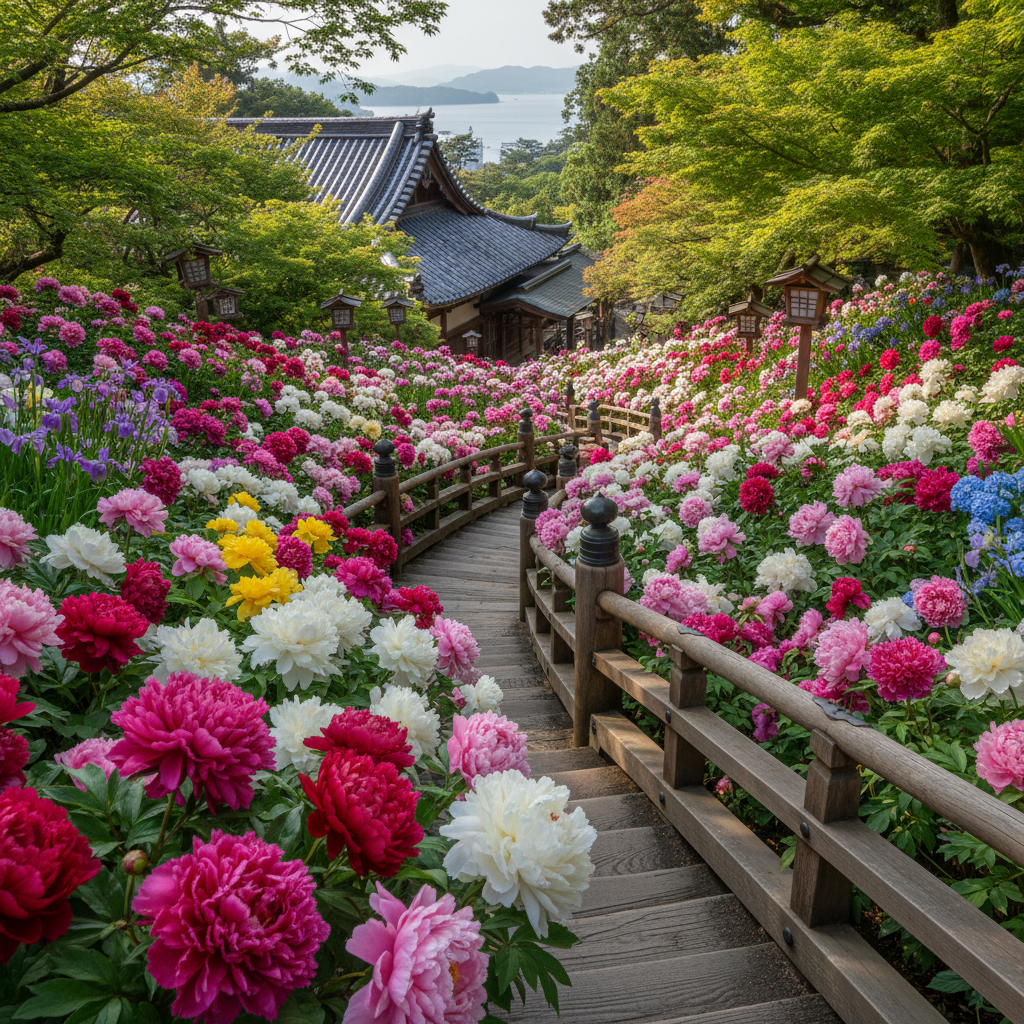
Hasedera, Peonies, Flower Temple, Staircase Corridor, Spring - The Philosophy of Driving in Japan
For years, I navigated the intricate web of Japan's railways as a Kintetsu train conductor, witnessing the country's pulse from a unique vantage point. I saw the efficiency, the punctuality, the seamless connectivity that defines Japan's public transportation. And yet, after countless journeys traversing the breadth of this incredible archipelago, I can tell you with absolute certainty: to truly taste the soul of Japan, you must drive it. Especially when your adventure begins in the bustling heart of Kansai, Osaka.
Think about it. The bullet train, for all its marvel, whisks you from one urban center to another. Local trains, while charming, confine you to fixed routes, often leaving you gazing longingly at tantalizing glimpses of landscapes just beyond reach. But the wheel, the asphalt, the open road – these are your keys to unlocking what I affectionately call 'Secret Japan'. This isn't the Japan plastered on postcards or filtered through travel guides. This is the Japan of ancient mountain paths veiled in mist, of sleepy coastal villages where the rhythm of life slows to a forgotten pace, of hidden temples nestled deep within verdant valleys, blooming in vibrant hues only known to those who seek them out. This is the Japan that public transport can never, and will never, deliver.
From Osaka, a city synonymous with culinary delight and vibrant street life, the possibilities for automotive exploration are limitless. Imagine slipping into the driver's seat of a finely tuned JDM machine, perhaps an exhilarating 86 or its sibling, the BRZ. Feel the satisfying click of the manual shifter, the precise feedback from the steering wheel, the eager growl of the engine as you leave the city's concrete embrace behind. The expressways become arteries leading to discovery, transitioning into serpentine mountain roads that demand your full attention, rewarding you with panoramic vistas at every turn. You're not just a passenger; you are the orchestrator of your own journey, dictating the pace, choosing your detours, immersing yourself in the landscape not as an observer, but as an active participant.
The destinations that truly resonate – like the ethereal beauty of Hasedera Temple in spring, adorned with its legendary peonies and the dramatic ascent of its staircase corridor – are often just far enough off the beaten rail path to deter the casual tourist. This is precisely where the magic of driving comes alive. You gain not just convenience, but an unparalleled sense of freedom and discovery. You dictate the soundtrack of your journey, whether it's the purr of the 86's engine or your favorite tunes. You decide when to pull over for that breathtaking photo, when to stop at a quaint roadside stand, when to linger at a serene overlook. It’s an intimate dance with the landscape, a personal odyssey that simply cannot be replicated by the rigid timetables of a train. Driving in Japan is not merely transportation; it’s an philosophy, an embrace of adventure, a testament to the idea that the greatest treasures often lie just beyond the horizon of the well-trodden path.
Hasedera, Peonies, Flower Temple, Staircase Corridor, Spring - The 2-Day Itinerary: Deep Dive
Prepare yourself for an unforgettable two-day odyssey from Osaka, deep into the heart of Nara Prefecture, where ancient spirituality and natural splendor intertwine. This isn't just a trip; it's a pilgrimage for the senses, an immersive journey designed for the true adventurer behind the wheel of an 86 or BRZ. We’ll chase the vibrant spectacle of spring peonies, ascend an iconic staircase, and discover the profound tranquility of Hasedera, the “Flower Temple.”
Day 1: Osaka's Embrace to Nara's Mystique
08:00 AM – Osaka Departure: The Engine's First Roar
The morning air in Osaka is crisp, hinting at the spring warmth to come. Your chosen chariot, the agile 86 or responsive BRZ, sits gleaming under the rising sun. A quick turn of the key, and the Boxer engine awakens with a guttural growl, a promise of performance to come. The manual transmission shifts with satisfying precision as you navigate the waking city streets, heading for the expressway. The urban sprawl quickly gives way to the smooth, sweeping curves of the highway, your JDM companion hugging the tarmac with reassuring grip. Feel the precise feedback through the steering wheel, the road communicating every subtle nuance directly to your fingertips. The goal: to feel the direct connection between man and machine, a prelude to the ancient wonders awaiting you.
09:30 AM – Expressway Serenity & Mountain Ascent
The journey east from Osaka on the Nishi-Meihan Expressway and then connecting to the Minami-Hanna Road is a testament to Japanese engineering. The pavement is flawlessly smooth, the scenery transitioning from urban density to rolling hills and then to the more dramatic, misty mountains that cradle Nara Prefecture. Your 86 or BRZ, with its low center of gravity and balanced chassis, feels utterly at home on these fast, flowing sections. The engine hums a contented tune, a gentle reminder of the power lying beneath the hood. As you approach the Sakurai area, the landscape becomes more rugged, the roads beginning their delightful ascent into the cedar-forested hills. This is where the real fun begins – the winding roads that lead to Hasedera are a driver’s dream, a symphony of bends and gradients.
10:30 AM – Sakurai's Ancient Crossroads: A Brief Pause
Before reaching Hasedera, a brief stop in Sakurai offers a glimpse into Japan's profound past. This area is steeped in history, standing at the crossroads of ancient Yamato, the birthplace of the Japanese nation. Geologically, it’s a basin surrounded by mountains, fed by rivers that have carved fertile plains, making it a crucial site for early agricultural development. The air here feels different, heavier with the weight of centuries. A quick stroll might take you past remnants of the Yamato Dynasty, hinting at the powerful figures who once walked these lands. Your BRZ or 86, a marvel of modern engineering, feels a world apart, yet perfectly in tune with the timeless beauty of its surroundings. The contrast is invigorating, a bridge between eras.
12:00 PM – Lunch in Sakurai: Local Flavors & Culinary Delights
Sakurai is not just about history; it’s a haven for local cuisine. Seek out a traditional 'soba-ya' (soba noodle restaurant) tucked away on a side street. The delicate aroma of buckwheat noodles and dashi broth will draw you in. Order a plate of 'Tenpura Soba,' the crispy tempura adding a delightful crunch to the warm, comforting noodles. The taste is pure, understated Japanese perfection – savory, yet light, a testament to quality ingredients and generations of culinary skill. As you eat, reflect on the journey, the seamless blending of thrilling drive and cultural immersion. The quiet atmosphere, the chatter of local patrons, the simple yet profound flavors – these are the moments that truly define 'Secret Japan'.
01:30 PM – Arrival at Hasedera: The Peony Kingdom Awaits
The final approach to Hasedera Temple is a winding dance through cedar forests, the 86’s engine singing a joyful melody as you navigate the twists and turns. The air grows cooler, carrying the scent of damp earth and blooming flora. Parking is available nearby, and as you step out of your car, a hush falls, replaced by the gentle rustle of leaves and the distant murmur of temple bells. The first glimpse of the temple grounds reveals the breathtaking scale and serenity. In spring, the anticipation is palpable: the peonies, the majestic 'King of Flowers,' are about to reveal their glory.
02:00 PM – Hasedera's Grand Entrance: The Noboriro Staircase Corridor
Hasedera Temple is a Shingon Buddhist temple renowned for its extraordinary beauty, particularly in spring. But before the peonies, you must conquer the 'Noboriro,' the impressive roofed staircase corridor that ascends over 399 steps. This architectural marvel, draped in lush greenery, is more than just a path; it's a spiritual transition. As you ascend, each step feels like a journey through time. The wooden structure, dating back centuries, creaks faintly underfoot, carrying the echoes of countless pilgrims. From the outside, the deep vermillion railings contrasting with the dark wood and vibrant green foliage creates a painter's dream. Inside, the dim light filtering through the latticework windows casts intricate patterns, creating a meditative atmosphere. Take your time, breathe deeply, and feel the history permeating every plank.
03:00 PM – The Main Hall and Panoramic Views
Emerging from the Noboriro, you are greeted by the magnificent Main Hall, a designated National Treasure, perched precariously on the side of Hatsuseyama mountain. Its dramatic stage-like veranda extends outwards, offering truly breathtaking panoramic views of the Hatsuse Valley below. In spring, the valley floor is a patchwork of emerald greens and burgeoning life. But the true spectacle lies closer: hundreds, if not thousands, of peony bushes burst forth in an riot of color – whites, pinks, deep purples, and fiery reds. The air is thick with their delicate, intoxicating fragrance. The sheer scale of the bloom is astonishing; Hasedera is rightfully called the 'Flower Temple.' The Main Hall houses the famous eleven-faced Kannon statue, one of the largest wooden Kannon statues in Japan. Its serene gaze overlooks the valley, imparting a sense of peace that settles deep within your soul. Spend time here, absorbing the visual feast and the profound spiritual energy.
04:30 PM – Exploring the Temple Grounds & Pagoda
Beyond the Main Hall, the temple grounds invite further exploration. Discover smaller sub-temples, moss-covered stone lanterns, and serene gardens. The five-story pagoda, standing tall against the cerulean sky, is a picture of classical Japanese beauty. Find a quiet spot amidst the peony gardens, perhaps near a small water feature, and simply sit. Listen to the chirping birds, the distant sound of a bell, and the gentle breeze rustling through the leaves. The colors of the peonies, softened by the late afternoon light, seem to glow with an inner luminescence. This is not merely sightseeing; it’s an immersion, a complete surrender to beauty. The journey here in your 86/BRZ has granted you the freedom to linger, to truly connect with this extraordinary place.
06:00 PM – Check-in to a Traditional Ryokan in Sakurai Area
As twilight descends, the vibrant colors of the peonies gradually soften. Drive a short distance back towards the Sakurai area, seeking out a traditional Japanese ryokan. The drive back along the winding roads, bathed in the golden hues of sunset, is another sensory delight. The 86's headlights cut through the deepening shadows, guiding you to a haven of tranquility. The ryokan, often a family-run establishment, will welcome you with warm hospitality. The aroma of hinoki wood and the subtle scent of tatami mats instantly relax you. Slip into a yukata (light kimono) and prepare for a traditional multi-course 'kaiseki' dinner.
07:30 PM – Kaiseki Dinner: A Culinary Masterpiece
Your kaiseki dinner is more than just a meal; it’s an art form. Each dish, meticulously prepared and exquisitely presented, is a small masterpiece. Seasonal ingredients from the surrounding mountains and rivers are transformed into delicate flavors: crisp tempura of spring vegetables, perfectly seared local wagyu, fresh sashimi, and aromatic miso soup. The local sake, served warm or chilled, complements the dishes beautifully. This is a celebration of local produce, a symphony of tastes and textures that will linger long after the last bite. The quiet elegance of the dining room, the attentive service, and the sheer artistry of the food make this an unforgettable experience, a perfect culmination to a day of intense beauty and exploration.
09:30 PM – Onsen Bliss & Peaceful Slumber
After dinner, indulge in the soothing warmth of the ryokan’s 'onsen' (hot spring bath). The mineral-rich waters melt away any lingering fatigue from the day’s driving and climbing. Whether it’s an indoor cypress bath or a serene outdoor rotemburo under the stars, the experience is profoundly relaxing. Feel your muscles unwind, your mind clear. Retreat to your futon on the tatami floor, lulled by the sounds of the surrounding nature. The soft spring breeze through the open window, the distant croaking of frogs – these are the lullabies of rural Japan. You drift off to sleep, dreams filled with vibrant peonies and the exhilarating hum of your 86.
Day 2: Morning Serenity & The Thrill of the Return Journey
08:00 AM – Ryokan Breakfast & Morning Rituals
Wake to the gentle light of dawn filtering through your shoji screen. A traditional Japanese breakfast awaits: grilled fish, steamed rice, miso soup, pickled vegetables, and perhaps a small omelet. It’s a nourishing and healthy start to the day, preparing you for the adventures ahead. Enjoy a final moment of serenity in the ryokan’s garden, perhaps sipping green tea while contemplating the beauty of a freshly bloomed camellia.
09:30 AM – Morning Stroll & Local Crafts (Optional)
Before hitting the road, take a leisurely stroll through the local area around your ryokan. You might stumble upon small craft shops selling local pottery or wooden goods, or a traditional 'wagashi' (Japanese sweets) shop where you can pick up a delicate treat for the road. These spontaneous discoveries are the true rewards of driving – the freedom to explore the unplanned, to connect with the authentic rhythm of local life.
11:00 AM – Departure from Sakurai: The Call of the Road
With a sense of renewed energy, settle back into the driver's seat of your 86 or BRZ. The engine springs to life with that familiar, eager note. Today, the journey back to Osaka will be just as rewarding as the journey here, focusing on scenic routes and the sheer joy of driving. We'll take a slightly different path, embracing more of Nara's picturesque countryside.
11:30 AM – Scenic Drive through Nara's Backroads
Instead of immediately heading for the main expressways, navigate through Nara's enchanting backroads. These smaller routes, often overlooked by those on public transport, are where the 86 and BRZ truly shine. Feel the precise handling as you carve through gentle curves, past rice paddies shimmering under the spring sun, ancient farmhouses with thatched roofs, and small, forgotten shrines. The scent of fresh spring air, a mix of blooming flowers and damp earth, floods through the open windows. The engine's note changes with each gear shift, a direct response to your input. This is driving as it was meant to be – an intuitive dance between driver and machine, immersed in the tranquil beauty of rural Japan.
01:00 PM – Lunch at a Michi-no-Eki: A Taste of Local Delights
Seek out a 'Michi-no-Eki' (roadside station) along your chosen route. These aren't just rest stops; they are vibrant hubs of local culture and produce. The specific Michi-no-Eki will vary based on your exact route, but they all offer a similar, delightful experience. Step inside, and you’ll be greeted by a bustling market filled with fresh, seasonal fruits and vegetables, local delicacies, and handmade crafts. For lunch, head to the Michi-no-Eki restaurant. Here, you’ll find simple, hearty dishes made with ingredients sourced directly from the surrounding area. Perhaps a steaming bowl of 'udon' noodles with wild mountain vegetables, or a regional specialty like 'kakinoha sushi' (sushi wrapped in persimmon leaves). The food is unpretentious, wholesome, and bursting with authentic local flavor. This is another facet of 'Secret Japan' – discovering the unique culinary identity of each region, often found in these unassuming roadside havens.
02:30 PM – Engaging the Twists: Mountain Passes & Driver's Roads
As you continue your westward journey, aim for routes that traverse some of Nara's smaller mountain passes. These are the roads that car enthusiasts dream of. The 86 or BRZ, with its perfectly weighted steering and responsive throttle, will come alive. Feel the precise turn-in, the minimal body roll as you transition from one corner to the next. The mechanical grip of the tires, the direct connection to the road – it's an exhilarating experience. The engine revs freely, its characteristic Boxer sound echoing through the forested valleys. Shift through the gears with satisfying clicks, braking smoothly, cornering with confidence. The changing gradients, the tight hairpins, and the sweeping arcs demand focus and skill, but reward you with an immense sense of satisfaction. The views from these elevated points are often spectacular, offering sweeping vistas of the plains and distant mountains, sometimes shrouded in a delicate spring haze. This is where the engineering of your JDM companion truly shines, transforming a simple drive into an art form.
04:30 PM – Return to Urbanity: Osaka's Skyline Beckons
Reluctantly, the winding mountain roads begin to straighten, the forests thin, and the familiar signs of urban expansion reappear. You transition back onto the expressway, the faster pace a stark contrast to the leisurely meanderings of the past two days. Osaka's skyline gradually emerges on the horizon, a glittering tapestry against the late afternoon sky. The journey back allows for reflection on the profound beauty and exhilarating drives you’ve experienced. The memory of Hasedera’s peonies, the ascent of the Noboriro, the taste of local delicacies, and the thrilling sensations of the 86/BRZ become indelible.
05:30 PM – Arrival in Osaka: Mission Accomplished
As you navigate back into the heart of Osaka, the city’s energy re-embraces you. The smooth hum of the engine, which has been your constant companion, is a comforting sound. You've not just visited a destination; you've experienced a journey, a connection with Japan that runs deeper than any train ride could offer. You’ve tasted 'Secret Japan,' driven its hidden roads, and felt the pulse of its ancient heart. The adventure culminates as you return your JDM steed, filled with memories that will last a lifetime.
Hasedera, Peonies, Flower Temple, Staircase Corridor, Spring - Expert Advice & Cultural Nuances
Venturing beyond the well-trodden tourist paths in Japan unveils a tapestry of unique experiences. As a former Kintetsu conductor and someone who’s spent countless hours exploring every nook and cranny of this country by car, I can offer insights that will enrich your journey and elevate your appreciation for 'Secret Japan.' The nuanced beauty of Japanese culture often lies in the details, especially on the open road.
One of the most delightful aspects of driving in Japan is the 'Michi-no-Eki' culture. These aren't your typical highway rest stops. Imagine a bustling local market, a community hub, and a culinary delight all rolled into one. Each Michi-no-Eki is a proud showcase of its region's specialties. You’ll find everything from freshly harvested seasonal produce – think perfectly ripe strawberries in spring, crisp apples in autumn – to unique artisanal crafts, local sake, and homemade pickles. The food stalls often serve regional comfort food that you simply won't find in urban centers. It's an excellent opportunity to stretch your legs, interact with locals, and sample authentic flavors. Don't just drive past them; make them part of your adventure. I've discovered some of the most delicious 'onigiri' (rice balls) and unique 'manju' (steamed buns) in these unassuming roadside stations.
Beyond the Michi-no-Eki, the real culinary gems are the hidden local eateries. These aren't on Google Maps' first page. They're often tucked away in residential areas, identified by a simple 'noren' (fabric curtain) at the entrance. Look for establishments that are bustling with local patrons during lunch hours; that’s usually a sure sign of quality. Don’t be afraid to try a small 'teishoku-ya' (set meal restaurant) or a 'kissa-ten' (traditional coffee shop) that also serves light meals. The owners are often incredibly proud of their food, and while English menus might be rare, a friendly smile and pointing at what others are eating will usually suffice. These are the places where you taste the true heart of Japanese home cooking – simple, fresh, and deeply satisfying. As an ex-conductor, I often sought out these local haunts during my layovers, discovering the true culinary soul of each town.
Driving in Japan, while exhilarating, also comes with its own set of cultural nuances and practical considerations. Firstly, always drive on the left. This might take some adjustment for right-hand-drive countries, but the Japanese are exceptionally polite drivers, which makes the transition smoother. Speed limits are strictly enforced, and radar cameras are common, so resist the urge to push your 86/BRZ beyond the posted limits outside of designated track areas. Parking is generally well-organized but can be tight. Look for designated parking lots, especially near tourist attractions and train stations (even though you're driving, sometimes parking near a station can be a convenient base for a quick local exploration on foot). When parking, always back into a space if possible – it’s considered polite and makes for safer exiting. The precise, quiet rumble of your JDM car is a joy, but remember that residential areas require extra caution and slower speeds, respecting the local peace.
Finally, immerse yourself in the etiquette of the road. A quick nod of thanks to another driver who yields to you, maintaining a safe following distance, and being mindful of pedestrians – these small gestures contribute to the harmonious driving experience that Japan is famous for. Enjoy the journey, not just the destination, and let the culture of the road enrich your adventure.
Hasedera, Peonies, Flower Temple, Staircase Corridor, Spring - Detailed Logistics & Pre-Trip Tips
Navigating Japan by car in 2026 is an incredibly rewarding experience, offering unparalleled freedom and access to 'Secret Japan.' To ensure your JDM adventure in the 86 or BRZ is seamless, here’s what you need to know about the practicalities of the road.
Latest Traffic Situation & Expressways: Japan's road infrastructure is world-class, but like any developed nation, traffic can be heavy around major cities, especially during peak hours (7-9 AM, 5-7 PM) and public holidays. For this Hasedera trip from Osaka, plan your departure early in the morning to avoid the urban rush. The expressways (kōsoku dōro) are fast, well-maintained, and often offer stunning scenery. Tolls are standard, and while you can pay with cash, an ETC (Electronic Toll Collection) card is an absolute game-changer.
ETC Card System: This is a must-have. An ETC card allows you to pass through toll gates without stopping, automatically deducting the toll fee. It’s incredibly convenient and saves significant time, especially on longer journeys. Most reputable rental companies (like ours) offer ETC cards as an add-on. Make sure to request one when you book your 86 or BRZ. When approaching an ETC gate, follow the purple or green signs with 'ETC' written on them, slow down to about 20km/h, and the barrier will lift automatically. It's a smooth, effortless process that epitomizes Japanese efficiency.
Japanese Gas Stations: Pulling into a Japanese gas station can be a unique cultural experience. You’ll encounter two main types: full-service and self-service. Full-service stations are staffed, and the attendant will pump your gas for you. It’s a great opportunity for a brief, friendly interaction. Here's a typical scenario, straight from an ex-conductor's experience:
Attendant: 「いらっしゃいませ!レギュラー満タンですか? 」 (Irasshaimase! Regyuraa mantan desu ka? - Welcome! Regular full tank?)
You: 「はい、レギュラー満タンでお願いします。」 (Hai, regyuraa mantan de onegai shimasu. - Yes, regular full, please.)
The attendant might then ask, 「窓拭きますか? 」 (Mado fukimasu ka? - Shall I clean your windows?) or 「ゴミありますか? 」 (Gomi arimasu ka? - Do you have any trash?)
You: 「はい、お願いします。」 (Hai, onegai shimasu. - Yes, please.) or 「いいえ、大丈夫です。」 (Iie, daijobu desu. - No, I'm fine.)
They might even offer to empty your ashtray or dust your dashboard! It's a level of service rarely seen elsewhere. Self-service stations (セルフ - serufu) are more straightforward, with touch screens that often have English options. Always choose 'レギュラー' (regyuraa - regular gasoline) for the 86/BRZ unless otherwise specified (some JDM performance cars require high-octane, but for a stock 86/BRZ, regular is usually fine). Payment is typically credit card or cash at the pump.
Parking Tips: Parking at Hasedera Temple is well-signposted, but can fill up quickly during peak peony season. Arrive early to secure a spot. In smaller towns, look for designated public parking lots (often marked with a blue 'P' sign) or 'coin parking' (コインパーキング - koin paakingu) where you pay by the hour. Remember to always pull into parking spots in reverse – it’s a widespread custom in Japan that makes exiting much safer and is considered good etiquette.
The Exhilaration of Driving a JDM (MT Car): This is perhaps the most compelling reason to rent an 86 or BRZ. For enthusiasts, the pure, unadulterated joy of a manual transmission JDM car on Japan's roads is an unparalleled experience. The direct mechanical connection between driver and machine, the precise shifts, the engaging clutch pedal – it transforms driving from a chore into an art form. The 86/BRZ, with its perfectly balanced chassis, responsive steering, and eager engine, is designed for exactly the kind of winding mountain roads that lead to Hasedera. Feel the short, crisp throws of the shifter, listen to the Boxer engine's satisfying growl as you rev-match downshifts, and experience the car hunkering down through corners with exhilarating confidence. It’s an immersive, sensory-rich experience that deepens your connection to both the vehicle and the stunning landscapes you traverse. This is what 'car culture' truly means in Japan, and you're about to become a part of it.
Hasedera, Peonies, Flower Temple, Staircase Corridor, Spring - Comprehensive FAQ
Planning an international driving adventure naturally brings questions. Here are comprehensive answers to common queries for your JDM trip to Hasedera:
Q: Do I need an International Driving Permit (IDP) to drive in Japan?
A: Yes, absolutely. To legally drive in Japan, you need an International Driving Permit (IDP) based on the 1949 Geneva Convention, issued in your home country. Your national driving license and passport are also required. Ensure your IDP is valid for at least one year and is issued by an authorized organization in your country (e.g., AAA or AATA in the US, AA or RAC in the UK). Without an IDP, you cannot rent or drive a car in Japan, regardless of how long you've been driving elsewhere. Always carry all three documents (IDP, home country license, passport) with you while driving.
Q: What about car insurance?
A: When renting a car in Japan, basic compulsory insurance (liability and personal injury) is included. However, it's highly recommended to opt for additional, comprehensive coverage (often called 'NOC exemption' or 'waiver'). This typically covers vehicle damage, theft, and removes the liability for loss of use fees if the vehicle is damaged. Check with your rental provider for exact details and ensure you understand what is and isn't covered before you depart. This extra peace of mind is invaluable.
Q: I'm worried about driving a manual transmission (MT) car in Japan. Is it much harder?
A: If you are comfortable driving a manual transmission in your home country, you'll generally find it a fantastic experience in Japan. The 86 and BRZ have excellent manual gearboxes with precise, short throws and forgiving clutches, making them a joy to drive. The primary challenge for most will be driving on the left side of the road with a right-hand-drive car, which means shifting with your left hand. It takes a little getting used to, but with a bit of practice in a less congested area, you'll quickly adapt. Embrace the challenge; the reward of feeling so connected to the car and the road is immense.
Q: What are the winter road conditions like in the Hasedera area?
A: While this itinerary focuses on spring, it's good to be aware. The Hasedera area, nestled in the mountains of Nara, does experience winter. From December to March, temperatures can drop below freezing, and snowfall is possible, though typically not heavy or prolonged in the immediate temple area itself compared to more northern or higher mountain regions. Mountain roads can become icy or snowy, requiring snow tires or chains. For spring travel (March-May), these concerns are minimal, and roads are generally clear and safe. Always check local weather forecasts before setting out, regardless of the season.
Q: Are the roads well-signed in English?
A: Major roads and expressways have excellent English signage alongside Japanese. In more rural areas, like some of the backroads leading to Hasedera, English signs might be less frequent. A reliable GPS (many rental cars have multi-language options) or a smartphone with a data plan and a mapping app like Google Maps is highly recommended. Inputting phone numbers or map codes (often provided for attractions) can also be useful for precise navigation.
Hasedera, Peonies, Flower Temple, Staircase Corridor, Spring - The Final Call: CTA
You’ve journeyed with me from the bustling heart of Osaka, through the philosophical shift from train to car, across ancient landscapes, and into the breathtaking, fragrant embrace of Hasedera Temple’s spring peonies. You’ve felt the thrill of the 86 or BRZ on winding mountain roads, savored the authentic tastes of 'Secret Japan' at Michi-no-Eki and hidden eateries, and immersed yourself in a cultural odyssey only accessible to those who dare to drive.
This isn't just a trip; it's an awakening. An opportunity to connect with Japan on a profoundly personal level, to uncover the hidden gems that lie beyond the reach of conventional tourism. It's about the freedom to chase the setting sun, to pull over for that unexpected vista, to feel the raw power of a JDM legend responding to your every command. The memories of the grand staircase corridor, the sea of vibrant peonies, the quiet serenity of a traditional ryokan – these are treasures you’ll carry for a lifetime.
Are you ready to stop dreaming and start driving? To feel the pulse of Japan beneath your fingertips, through the steering wheel of a high-performance JDM car? To unlock your own 'Secret Japan' adventure?
Then the call of the open road awaits you. Your adventure begins with the perfect machine. For an unparalleled selection of JDM, MT, and custom cars that will transform your Japanese road trip into an unforgettable epic, look no further than Omoshiro Rent-A-Car Osaka Chuo. As a former Kintetsu conductor who now runs this very shop, I can personally guarantee you the vehicle and the passion to make this dream a reality. Book your 86 or BRZ today, and let’s make some memories that only a true driver can forge.
