
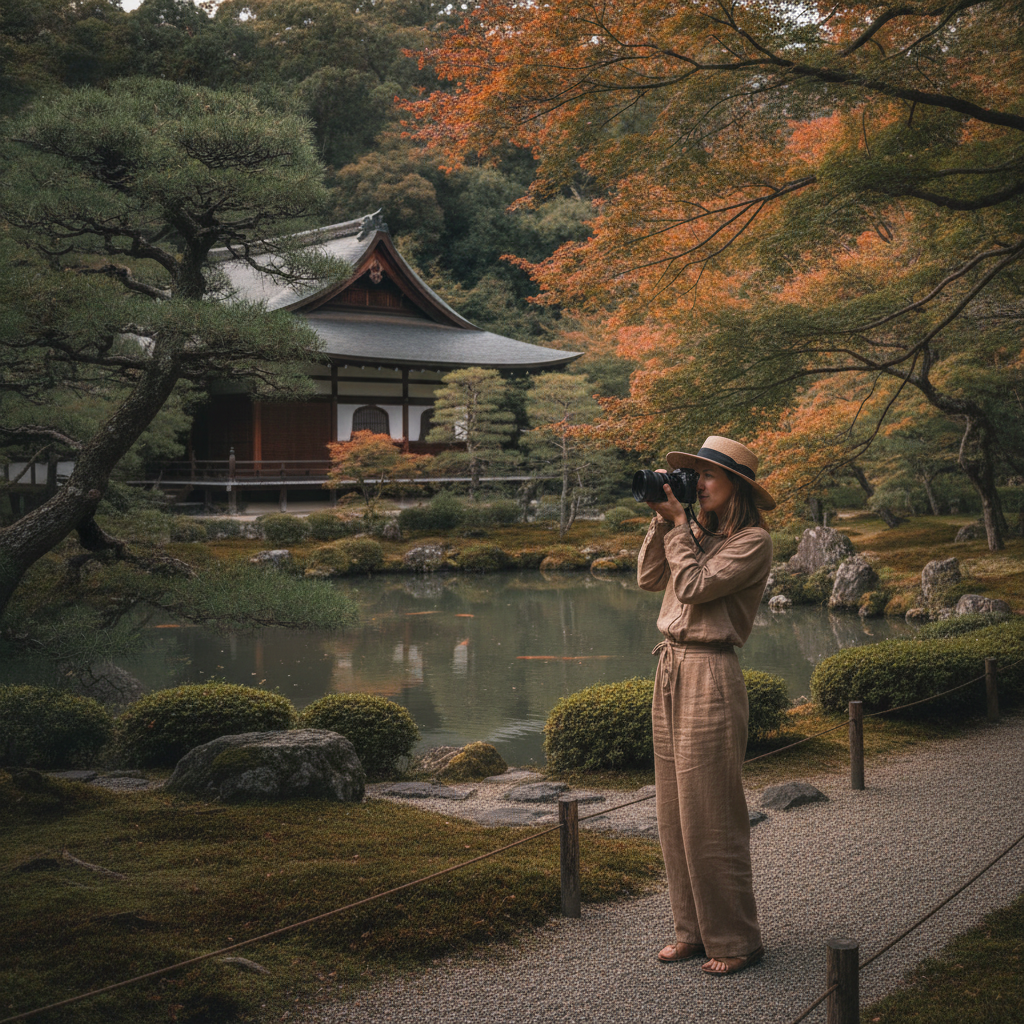
Nara Solo Drive: Photography, Secret Spots & Goshuin – Unleashing Japan's Ancient Soul with a JDM Icon
Nara Solo Drive, Photography, Scenic Spots, Goshuin, Historical Exploration - The Philosophy of Driving in Japan
For years, my life was dictated by the rhythmic clang of the platform bell and the precise timing of the Kintetsu train schedule. As a conductor, I witnessed the beauty of Japan flash by from a steel cage, a fleeting tableau enjoyed by passengers constrained by rails. While efficient and undeniably convenient for accessing major city centers, train travel, I've come to realize, is but a curated glimpse of this archipelago's soul. It's a meticulously planned symphony, but it lacks the improvisational solos that truly define a journey.
The real Japan, the 'Secret Japan' I speak of, is found where the tracks end, where the roads narrow, and where the scent of ancient cedar forests hangs heavy in the air. It’s a Japan that beckons the intrepid, the curious, and the automotive enthusiast. From my current vantage point, operating a JDM rental shop in Osaka, I now understand that the greatest adventures lie just beyond the station platforms, accessible only by the hum of an engine and the freedom of four wheels. Imagine the exhilarating purr of an 86 or BRZ, its precision engineering a direct extension of your will, carving through mountain passes that twist and turn like ancient dragon spines. This isn't just about getting from point A to point B; it's about the visceral connection to the land, the subtle shifts in elevation, the unexpected vistas that unfold with every turn of the wheel.
Osaka, with its vibrant energy and strategic location, serves as the perfect springboard for these automotive pilgrimages. While it’s a bustling hub with excellent train connections, the true magic of Kansai – its hidden temples, its secluded shrines, its dramatic coastlines, and its serene mountain retreats – reveals itself only to those who dare to venture off the beaten path. A car liberates you from the tyranny of the timetable, allowing spontaneous detours to a roadside ramen shop recommended by a local, or an unplanned stop at a breathtaking viewpoint missed by the express train. It’s about creating your own itinerary, dictated by curiosity and the thrill of discovery, not by a pre-printed schedule. This is the philosophy of driving in Japan: to embrace the freedom, to seek out the unseen, and to forge a deeply personal connection with a land steeped in history and natural splendor. It’s an invitation to rewrite your travel narrative, one winding road at a time.
Nara Solo Drive, Photography, Scenic Spots, Goshuin, Historical Exploration - The 2-Day Itinerary: Deep Dive

Prepare yourself for an odyssey, an immersive two-day escape into the heart of Nara, designed not for the casual tourist, but for the discerning adventurer, the passionate photographer, the history buff, and the true petrolhead. Our chariot? A magnificent Toyota 86, a symphony of engineering designed to connect driver and road in an unparalleled dance. This isn't just a guide; it's a sensory blueprint, an hour-by-hour invocation of sights, sounds, tastes, and the raw thrill of discovery.
Day 1: Unveiling Ancient Secrets & Mountain Serenity
07:00 - 08:00: Osaka Dawn & The Awakening Machine
The crisp morning air in Osaka still holds the lingering scent of last night's izakaya and the promise of a new day. Your 86 sits poised, its Boxer engine a silent sentinel. The key turns, and a guttural growl erupts, settling into a confident idle. This isn't just a car; it's a meticulously crafted instrument, begging to be driven. Before the city fully awakens, we slip onto the Hanshin Expressway, heading east. The initial urban sprawl quickly melts away, replaced by the undulating greens of the Kansai countryside. The 86 feels alive, its precise steering and taut suspension communicating every nuance of the tarmac. This early start avoids the rush, allowing the first hour to be a meditative experience, the rhythm of the road and the engine setting the tone for the adventure ahead.
08:00 - 09:30: The Winding Ascent to Mount Ikoma and Hidden Vistas
Leaving the expressway, we transition onto Route 308, specifically the "Kuragari Pass" section leading up to Mount Ikoma. This isn't just a road; it’s a legend, infamous for its impossibly steep grades and hair-raising hairpin turns. The 86, with its perfectly balanced chassis and responsive manual gearbox, comes alive here. Each downshift, each blip of the throttle, is a conversation between driver and machine. The engine sings, a high-pitched mechanical wail echoing off the ancient rock faces. From my old conductor's seat, trains followed a predictable gradient; here, the road throws discretion to the wind. The view from the top, even before reaching the main observatory, offers panoramic glimpses of Osaka stretching out like a shimmering tapestry, often shrouded in a mystical morning mist – a photographer's dream. We pause briefly at a small, almost unnoticed overlook, capturing the city awakening, a stark contrast to the quiet ancient path we're about to tread.
09:30 - 10:30: Asuka Village & The Cradle of Japan (Photography & History)
Descending from Ikoma, we bypass the immediate urban sprawl of Nara City, heading south to the serene Asuka Village. This region, often overlooked by those rushing to Todai-ji, is the true cradle of Japanese civilization, an open-air museum where history whispers from every rice paddy and ancient mound. The 86 glides through narrow country lanes, past traditional farmhouses and fields, a stark contrast to the modern world. Park near the Asuka Museum or Asukadera Temple, Japan's oldest Buddhist temple. Its simple, unadorned beauty speaks volumes of its age. The light here is often soft, perfect for capturing the weathered wooden structures and the peaceful rural landscape. Focus your lens on the details: the moss-covered stones, the intricate tile work, the subtle curves of the temple roofs. This is a place where time slows, and the car's engine, now resting, allows the ancient echoes to come forward.
10:30 - 12:00: Kofun Tombs & Mysterious Stone Sculptures (History & Photography)
From Asuka-dera, the real exploration begins. Utilize the 86 to navigate the scattered sites that define Asuka. Drive to the Kitora Tomb and Takamatsuzuka Tomb, ancient burial mounds (kofun) that contain incredible murals, though the originals are preserved off-site, replicas offer a glimpse. More importantly for photography and atmosphere, seek out the mysterious "Ishibutai Kofun," a massive stone chamber, believed to be the tomb of Soga no Umako. Its raw, primeval power is palpable, offering dramatic photographic opportunities, especially with the interplay of light and shadow within its vast interior. Then, the "Kameishi" (Turtle Stone) and "Sakafuneishi" (Boat Stone), enigmatic stone carvings whose origins and purpose remain a mystery. These are not grand temples, but subtle, powerful remnants of a bygone era, best reached with the freedom of your own vehicle, allowing you to linger and capture their timeless essence without constraint. Your 86 handles the narrow, often unpaved paths leading to some of these spots with surprising agility, a testament to its rally-inspired roots.
12:00 - 13:00: Rural Nara Lunch & Local Flavors (Taste & Culture)
By now, the stomach will be rumbling. Asuka, being rural, is perfect for discovering authentic local cuisine. Eschew chain restaurants and seek out a small, family-run eatery (shokudo) along a quiet road. Look for places with hand-written menus or a queue of locals. Often, you'll find delectable kaki-no-ha zushi (persimmon leaf sushi), a local specialty, or perhaps simple, hearty udon or soba noodles made with local ingredients. The taste is pure, unpretentious, and deeply satisfying – a true taste of Nara's countryside. The hospitality, though often quiet, is warm and genuine. This is the Japan that package tours miss, a connection forged over a shared meal and simple gratitude.
13:00 - 15:00: Hasedera Temple - "Flower Temple" & Pilgrimage Path (Goshuin & Photography)
After lunch, point the 86 towards the mountains – specifically, to Hasedera Temple. This grand temple, perched majestically on Mount Hatsuse, is famous for its "climbing corridors" (noboriro) and its stunning displays of peonies in spring, but it's magnificent year-round. The drive itself is delightful, winding roads leading you higher into the forested hills. The 86's chassis feels perfectly planted as you ascend, the engine note a happy hum. Parking at the base, you embark on a spiritual journey up hundreds of steps, each one revealing new architectural details and sweeping vistas. The main hall houses a massive Eleven-faced Kannon statue, its presence awe-inspiring. For photographers, the "Five-Story Pagoda" set against the lush mountain backdrop is iconic, especially with dappled sunlight filtering through the trees. The Goshuin here is particularly beautiful, often featuring an elaborate calligraphy and a vibrant vermilion stamp, a tangible memory of your pilgrimage to this sacred mountain retreat.
15:00 - 17:00: Murou-ji Temple - "Women's Koyasan" & Forest Serenity (History & Photography)
From Hasedera, a scenic drive further east brings us to Murou-ji Temple, often called "Women’s Koyasan" because, unlike the historically male-exclusive Koyasan, it always welcomed female pilgrims. It's nestled deep within a tranquil cedar forest, giving it an otherworldly, ancient feel. The drive there through narrow, winding mountain roads is exhilarating in the 86, its nimble handling making light work of the tight corners. Park and immerse yourself in the profound stillness. The temple’s five-story pagoda, the smallest outdoor pagoda in Japan, stands elegantly amongst towering cedars, its weathered wood a testament to centuries of quiet contemplation. The atmosphere here is sublime for photography, especially the interplay of light and shadow in the dense forest. This is a place for quiet reflection, for absorbing the profound energy of ancient Japan, and for collecting a Goshuin that feels truly earned, a mark of deep spiritual journey rather than mere tourism.
17:00 - 18:30: Uda City & Unraveling Ancient Streets (Culture & Exploration)
As the afternoon wanes, we continue our drive east to Uda City, a charming area with a rich history and a distinctly "old Japan" feel. Specifically, explore the Hagiwara area or the "Uda Matsuyama Old Town." The 86 parks easily in designated areas, and you can wander the preserved streets, lined with traditional merchant houses (machiya). It's a quieter, more authentic experience than the bustling tourist centers. This is where you might find a traditional sake brewery, a local craft shop, or simply enjoy the peace of a historical Japanese town untouched by mass tourism. The golden hour light casts long shadows, perfect for street photography, capturing the intricate details of the architecture and the quiet rhythm of local life. The beauty of having the 86 is the freedom to discover these understated, truly local gems.
18:30 - 19:30: Drive to Ryokan & Mountain Sunset (Scenic Drive)
As dusk begins to paint the sky, we drive towards our accommodation, perhaps a traditional ryokan nestled in the mountains around Yoshino or in a secluded valley near Uda. This twilight drive is pure magic. The roads, now quieter, allow for a more relaxed cruise in the 86. The setting sun bathes the rolling hills in hues of orange, purple, and deep indigo. The engine hums a contented tune, and the sensation of being deep in the Japanese countryside, with the day's discoveries fresh in your mind, is profound. The subtle scent of cedar and damp earth drifts through the open window. This is the moment you truly feel connected to the land, an experience no train could ever offer.
19:30 onwards: Ryokan Immersion & Culinary Delights (Taste & Relaxation)
Check into your ryokan. The traditional hospitality, the soothing warmth of an onsen (hot spring bath) – it's the perfect antidote to a day of spirited driving and exploration. Indulge in a multi-course kaiseki dinner, a culinary art form where each dish is a delicate masterpiece, showcasing local seasonal ingredients. From fresh river fish to seasonal vegetables, every bite is a celebration of Nara's bounty. Reflect on the day's journey, the roads conquered, the history absorbed, the photos captured. The quiet elegance of a ryokan, away from the urban clamor, truly completes the "Secret Japan" experience.
Day 2: Sunrise Serenity, Spiritual Ascent & The Road Home
06:00 - 07:00: Early Morning Drive & Sunrise Photography (Photography & Scenic Drive)
Rise before the sun. The 86, still cool from the night air, awaits. Our destination: a high vantage point for sunrise. Perhaps a return to a specific overlook on the way towards Tsubosaka-dera, or a lesser-known spot recommended by your ryokan host. The drive in the pre-dawn stillness is invigorating, the only sounds being the gentle roar of the engine and the chirping of early birds. As the first rays of light kiss the mountain peaks, watch as the landscape awakens, colors bleeding into the sky from soft pastels to vibrant oranges. This is a fleeting, magical moment, perfect for capturing breathtaking, uncrowded landscape photographs, a memory etched in both pixels and soul.
07:00 - 09:00: Tsubosaka-dera Temple - Hilltop Grandeur & Sacred Views (History, Goshuin & Photography)
After catching the sunrise, head to Tsubosaka-dera Temple, a gem perched high on a hill, offering panoramic views of the surrounding countryside. The drive up is engaging, a perfect warm-up for the 86. This temple is famous for its massive stone Kannon statue, a gift from India, and its unique blend of Japanese and Indian Buddhist aesthetics. It's a site of immense spiritual power. Walk the grounds, marvel at the intricate stone carvings, and capture the incredible vistas from the temple complex. The elevated position makes it a superb spot for landscape photography, especially on a clear morning. Obtain another beautiful Goshuin, a testament to your visit to this high-altitude sanctuary.
09:00 - 10:30: Scenic Drive towards Yoshino & Mountain Air (Scenic Drive)
Our journey continues southwest towards the foothills of Yoshino, a region famed for its cherry blossoms, but equally enchanting in any season for its dramatic mountain scenery and spiritual significance. The roads here are a driver's paradise – long, sweeping curves, gentle ascents, and descents through dense forests of cedar and cypress. The 86 feels utterly at home, its low center of gravity and responsive throttle making every turn a joy. Roll down the windows, let the cool, clean mountain air fill the cabin, and listen to the symphony of the forest interspersed with the harmonious growl of your Boxer engine. This is driving for driving's sake, a pure, unadulterated pleasure.
10:30 - 12:30: Kinpusen-ji Temple - UNESCO World Heritage & Shugendo Power (History & Goshuin)
While Yoshino is synonymous with cherry blossoms, it is also the heartland of Shugendo, an ancient syncretic religion blending Buddhism and Shinto mountain worship. Drive up towards the main town of Yoshino (even if it's not cherry blossom season, the drive itself is superb). Park and walk to Kinpusen-ji Temple, a UNESCO World Heritage site and the most important temple of Shugendo. Its main hall, the Zao-do, is a colossal wooden structure, second only to Todai-ji's Daibutsu-den in size. The sheer scale and rustic grandeur are breathtaking. Inside, three massive blue-faced statues of Zao Gongen stand guard, emanating an ancient, powerful energy. For photographers, the sheer size and historical weight of the temple offer countless angles. The Goshuin here is particularly impressive, often hand-drawn by monks with a powerful brushstroke, reflecting the rugged spirituality of Shugendo. This site perfectly encapsulates the 'Secret Japan' – profound history nestled in dramatic natural beauty, far from the typical tourist trails.
12:30 - 13:30: Yoshino Town & Mountain Delicacies (Taste & Culture)
Explore the quaint town of Yoshino, a cluster of traditional shops and eateries clinging to the mountainside. Lunch here will be a treat. Seek out local specialties like "Kuzu-ryori" (dishes made with kudzu starch, famous in Yoshino) or a simple, warming bowl of "Yoshino Soba." Many shops also offer local sake and traditional sweets. The atmosphere is peaceful, unhurried, a refreshing change from urban hustle. The mountain air sharpens the appetite, making even the simplest meal feel like a feast.
13:30 - 15:30: Retreating Roads & Hidden Views (Scenic Drive & Reflection)
Begin the journey back towards Osaka, but not directly. Instead, take a meandering route through the lesser-known mountain roads of central Nara, perhaps skirting the base of Mount Miwa, one of Japan's most sacred mountains. The 86 eats up these roads with relish, its precise handling making every corner an invitation. The landscapes shift from dense forest to open valleys dotted with small villages and terraced rice paddies. Keep an eye out for small, roadside shrines or unexpected waterfalls, perfect for a quick photo stop – these are the unplanned treasures that define a road trip. The beauty of the drive is as much about the journey as the destination, a rolling panorama of Japan’s timeless beauty. This is where you connect with the essence of rural Japan, a landscape that has changed little over centuries.
15:30 - 17:00: Michi-no-Eki Interlude & Local Treasures (Culture & Exploration)
Before rejoining the expressway, make a stop at a 'Michi-no-Eki' (Roadside Station). This is an essential part of the Japanese road trip experience, and a topic I'll elaborate on shortly. For now, enjoy the opportunity to stretch your legs, grab a coffee or a local snack, and browse the selection of regional products. You might find unique souvenirs, fresh produce, or artisanal goods that you won't see anywhere else. It’s a chance to take a piece of "Secret Japan" home with you.
17:00 - 18:00: The Homeward Stretch & Osaka Skyline (Scenic Drive)
Rejoin the expressway, and as the setting sun paints the western sky in fiery hues, the distant skyscrapers of Osaka begin to appear on the horizon. The 86, after two days of spirited driving, remains composed, a reliable companion. The journey back is a time for reflection, for savoring the memories of ancient temples, winding roads, breathtaking views, and the deep satisfaction of having explored Nara on your own terms. As you descend into the city, the urban glow contrasting with the afterglow of the sunset, you’ll feel not just a sense of accomplishment, but a profound connection to the heart of Japan, a connection forged by the open road and the spirit of adventure.
Nara Solo Drive, Photography, Scenic Spots, Goshuin, Historical Exploration - Expert Advice & Cultural Nuances
Embarking on a Japanese road trip, especially in a JDM icon like the 86, is about more than just navigating from one point to another; it's about immersing yourself in the cultural tapestry of the country. Here’s some expert advice to enhance your journey:
The "Michi-no-Eki" Culture: More Than Just a Rest Stop
As a former train conductor, I was used to scheduled stops, but Michi-no-Eki (Roadside Stations) are a different beast entirely. They are vibrant community hubs, far beyond your average gas station and convenience store. Think of them as miniature cultural centers, showcasing the unique charms of their locality. Each Michi-no-Eki offers clean restrooms, vending machines, and often a restaurant serving local specialties. But the real treasure lies in their "local product corners" where you'll find an astonishing array of regional produce, artisanal crafts, and unique souvenirs. From freshly picked strawberries and locally brewed sake to handmade pottery and specialty snacks – you’ll discover items specific to that town or region. It's the perfect place to grab a local coffee, try some regional "soft cream" (soft-serve ice cream with unique flavors like green tea or sweet potato), and interact, however briefly, with local vendors. Michi-no-Eki are not just convenient; they are an integral part of the Japanese road trip experience, offering genuine glimpses into local life and commerce.
Unearthing Hidden Culinary Gems: The Local's Larder
Forget the international chains and tourist-trap restaurants. The true gastronomic delights of Japan lie in its hidden, local eateries. With your 86, you have the freedom to venture off the main roads and discover these culinary sanctuaries. Look for establishments with simple, unassuming exteriors, perhaps a noren (traditional curtain) at the entrance, and a small queue of local patrons – that's often your best indicator of quality. Don't be intimidated if there's no English menu; a pointing finger and a polite "Kore o kudasai" (I'll have this, please) will often suffice. Embrace the experience! You might stumble upon a ramen shop perfected over generations, a tiny soba restaurant serving noodles made by hand, or a charming izakaya where the local chatter is as flavorful as the food. These are the places where the "taste of Japan" truly comes alive, where the chef's passion is palpable, and the memory of the meal lingers long after. The 86 allows you to escape the predetermined paths and find these authentic culinary experiences.
Driving Etiquette & Roadside Wisdom
Driving in Japan is generally a polite and orderly affair, but there are nuances. Japanese drivers are incredibly courteous; don't be surprised if someone flashes their hazard lights as a thank you when you let them merge. Speed limits are strictly enforced, often with subtle cameras, so always adhere to them. Pay particular attention on narrow mountain roads – some are barely wide enough for two cars, so proceed with caution, especially around blind corners. Headlights are often used even during the day in tunnels and on winding roads. When navigating smaller towns, be mindful of pedestrians and cyclists, who often share the narrower streets. Parking can be a challenge in older city centers, but the compact size of the 86 makes it easier to tuck into smaller spots. Always look for designated parking lots; street parking is rare and usually prohibited. Above all, drive defensively and with respect for other road users and the local environment. Your 86, while a performance machine, is also a vehicle for cultural immersion, so drive it with grace and awareness.
Nara Solo Drive, Photography, Scenic Spots, Goshuin, Historical Exploration - Detailed Logistics & Pre-Trip Tips
Mastering the logistics of driving in Japan is key to unlocking its full potential. By 2026, many things have evolved, but the core principles remain. Here's what you need to know for a seamless, exhilarating JDM adventure.
2026 Traffic Realities: Navigating Japan's Roads
Japan's road infrastructure is world-class, but like anywhere, major urban centers like Osaka and Nara can experience rush hour congestion. However, our itinerary is specifically designed to skirt these peak times and delve into rural, less-trafficked routes. Expect impeccable road surfaces, clear signage (often bilingual), and efficient traffic management. Speed limits are generally 40km/h in urban areas, 60-80km/h on national roads, and up to 100-120km/h on expressways. The 86, with its nimble chassis, handles city traffic with ease, but truly shines on the open roads. Always be aware of school zones and residential areas where limits are lower, and children or elderly people may be present. Japan takes road safety very seriously, so adherence to rules is paramount.
ETC Cards: Your Expressway Express Pass
Forget fumbling for change at toll booths. An ETC (Electronic Toll Collection) card is an absolute necessity for stress-free expressway travel. It’s like a fast-pass for Japan's extensive network of toll roads. When you rent your 86, ensure it comes equipped with an ETC card reader. You simply drive through the green ETC gate, and the toll is automatically charged. This saves time, especially on long journeys, and often provides small discounts. Navigating expressways without one means queuing at cash lanes, which can be frustrating and slow. My years on the Kintetsu line taught me about efficiency, and ETC is the driving equivalent – a system designed to keep you moving smoothly towards your destination.
Fueling Up: The "Mantan" Experience
Japanese gas stations (gasorin sutando) are efficient, but the experience can differ. Many are full-service, identifiable by attendants who greet you with enthusiasm and direct you to a pump. Simply roll down your window and say "Mantan" (mah-n-tahn), which means "full tank." The attendant will ask "Regyura?" (regular gasoline) or "Haioku?" (high-octane). For your 86, "Haioku" is recommended to truly appreciate its performance. They’ll clean your windows, check your tires, and often offer a small towel or tissue pack as a courtesy. Payment is usually cash or credit card. Self-service stations (serufu) are also common; you'll typically select your fuel type and amount on a touch screen before pumping. Don't worry, even at self-service stations, there's usually an attendant nearby if you need assistance. The octane rating of high-octane fuel in Japan (typically 100 RON) is often higher than "premium" in other countries, perfect for the finely tuned engine of your 86.
Parking Prowess: Mastering Japanese Spots
Parking in Japan, particularly in urban areas or popular tourist spots, requires a bit of finesse. While your 86 is compact, it's always best to use designated parking lots (pāking-gu). Many attractions, especially the larger temples and shrines, will have their own paid parking facilities. In smaller towns, you might find coin-operated parking meters or small, multi-story car parks. Always check for "P" signs or "Parking" written in English. Avoid parking illegally; fines are steep, and clamping/towing is not uncommon. The good news is that parking facilities are generally well-maintained and often have clear, easy-to-understand payment systems. With the 86's excellent visibility and tight turning radius, even challenging spots become manageable.
The JDM (MT Car) Driving Experience: A Symphony of Control
Driving a JDM manual transmission car like the 86 or BRZ in Japan is not just a mode of transport; it's an exhilarating dance between human and machine. From the moment your foot finds the clutch and your hand grips the short-throw shifter, you're in command. The direct connection to the engine, the satisfying "snick" of each gear change, the precise feedback through the steering wheel – it transforms every journey into an event. On the winding roads of Nara, downshifting for a tight corner, feeling the revs match, and then smoothly accelerating out with the Boxer engine's distinctive thrum is pure automotive poetry. It's a skill, a craft, and a profound joy that modern automatics simply cannot replicate. This is a car built for engagement, a machine that begs to be driven, truly driven. It's a sensory experience that adds an unparalleled layer of excitement to your discovery of Japan's "Secret Roads."
Nara Solo Drive, Photography, Scenic Spots, Goshuin, Historical Exploration - Comprehensive FAQ
Venturing into the unknown always brings questions. Here are answers to some of the most common inquiries from intrepid travelers eager to hit Japan's roads in a JDM icon:
International Driving License: What You Need to Know
To legally drive in Japan, you will need an International Driving Permit (IDP). It is crucial to understand that an IDP alone is not sufficient. You must carry your valid domestic driving license along with your IDP. Additionally, your passport is always required as proof of identity. The IDP must be issued under the 1949 Geneva Convention on Road Traffic. Be sure to obtain it in your home country BEFORE traveling to Japan, as you cannot get one once you are here. Ensure your IDP is current and has not expired. Without these three documents – your valid domestic license, your 1949 Geneva Convention IDP, and your passport – you will not be able to rent or legally drive a car in Japan. Always keep them together and easily accessible.
Insurance: Driving with Peace of Mind
When renting an 86 or BRZ, comprehensive insurance is paramount. Most reputable rental companies in Japan, including ours, offer various levels of coverage. It is highly recommended to opt for the fullest coverage available, often referred to as "Collision Damage Waiver" (CDW) and an additional "Non-Operation Charge" (NOC) waiver. CDW covers damages to the rental car itself, reducing your liability. The NOC waiver covers the loss of income to the rental company if the car is off the road for repairs. While Japan's roads are safe, unforeseen circumstances can occur. Investing in good insurance means you can enjoy the thrill of driving without undue financial worry, ensuring your adventure remains stress-free.
Driving an MT Car in Japan: Overcoming Anxiety
If you're accustomed to automatic transmissions, the thought of driving a manual (MT) in a foreign country can be daunting. However, if you have even basic MT experience, the 86 or BRZ is an incredibly forgiving and rewarding car to drive. Its clutch is light, and the shifter is precise. Japan's well-maintained roads and generally polite traffic flow provide an excellent environment to reacquaint yourself with a manual gearbox. Start slowly, practice in less congested areas, and let the car's intuitive nature guide you. The satisfaction of perfectly executing a downshift on a winding mountain road, feeling that direct connection to the machine, is an experience that quickly erases any initial anxiety. It's a skill that will deepen your appreciation for the car and the journey.
Winter Driving: Navigating Japan's Snowy Roads
While our Nara itinerary generally avoids heavily snow-prone regions in winter, it's essential to be prepared if traveling during colder months (December to March), especially if venturing into higher elevations or northern parts of Nara. Many mountainous roads, even in Kansai, can receive snow. Rental cars during winter often come equipped with winter tires (studless tires) or snow chains. Always check road conditions before departing, particularly for mountain passes, as they can be closed due to heavy snow. Drive slowly, increase following distances, and avoid sudden braking or acceleration. If driving in snowy conditions is a concern, consult with the rental company beforehand to ensure your vehicle is appropriately equipped and to understand local winter driving regulations.
Nara Solo Drive, Photography, Scenic Spots, Goshuin, Historical Exploration - The Final Call: CTA
You’ve journeyed with me through ancient pathways, felt the exhilaration of winding mountain roads in a performance machine, and discovered the hidden heart of Nara – a land rich in history, breathtaking scenery, and profound spiritual energy. We've navigated the subtle nuances of Japanese culture, from the vibrant Michi-no-Eki to the quiet sanctity of age-old temples. You've imagined the perfect photograph, felt the engine respond to your every command, and tasted the authentic flavors of a land less traveled.
This isn't just a fantasy. This adventure, this deep dive into "Secret Japan," is within your grasp. The roar of the 86’s Boxer engine, the precise feel of its manual gearbox, the freedom to chase every sunset and explore every hidden gem – it’s all waiting for you. Don't let your Japanese journey be confined to train schedules and crowded tours. Take the wheel, chart your own course, and experience Japan as it was meant to be seen – through the windshield of a JDM icon.
Are you ready to transform this vision into your unforgettable reality? It’s time to seize the adventure. Visit us at "Omoshiro Rent-a-Car Osaka Chuo" and let us equip you with the perfect JDM machine – be it an 86 or a BRZ – to embark on your own "Secret Japan" odyssey. The keys to your ultimate Nara solo drive await. Your legend begins now.
