
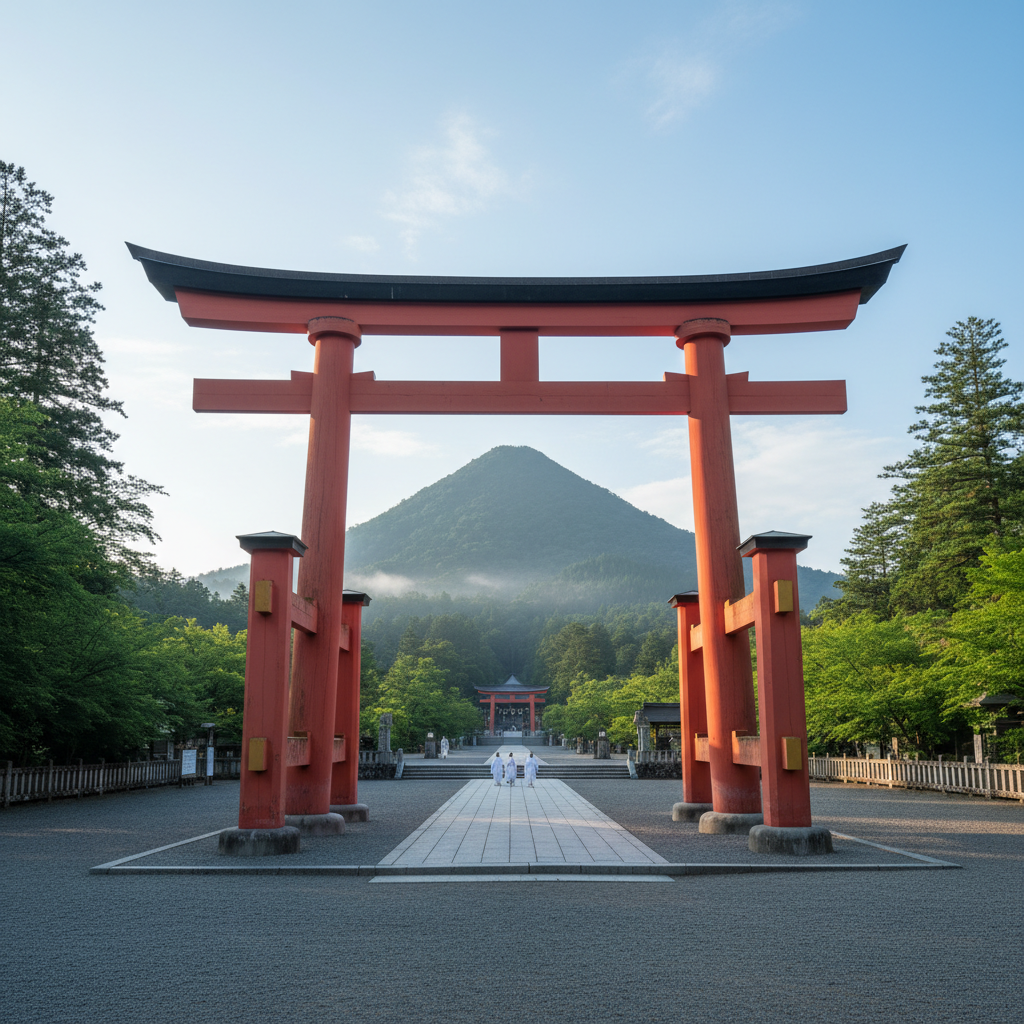
Omiwa Shrine, Mt. Miwa, Japan's Oldest Shrine, Nara - The Philosophy of Driving in Japan
For years, my world was defined by steel rails and meticulously timed schedules. As a conductor on the Kintetsu railway, I witnessed Japan’s breathtaking landscapes flash by through a window, a symphony of efficiency and precision. It was an unparalleled experience, guiding countless passengers through the heart of Kansai. Yet, even then, a different kind of freedom called to me – the open road, the direct connection between driver, machine, and the very asphalt that threads through this ancient land.
Today, my perspective has shifted, fundamentally. While the Shinkansen and local lines are marvels of modern engineering, delivering you to major hubs with unparalleled speed, they are, by their very nature, conduits. They transport you along predetermined paths, connecting dots that are already well-defined on every tourist map. But what if you crave more? What if your soul yearns for the vibrant hues of a hidden mountain village, the echoing silence of an ancient forest path, or the intoxicating aroma of a local specialty simmering in a roadside eatery that no guidebook mentions?
This, my friends, is the essence of "Secret Japan," and it is utterly inaccessible by public transport. Picture this: you've landed in Osaka, a dazzling metropolis teeming with neon energy and culinary delights. It’s a fantastic starting point, but to truly understand the soul of this nation, to peel back the layers of its millennia-old history, you must venture beyond the bustling city limits. While Nara’s iconic deer park and grand temples are undeniably magnificent, they represent just one facet of its profound heritage. The true depth lies hidden, nestled in the undulating folds of the land, guarded by the very topography that makes Japan so captivatingly beautiful.
To unlock these secrets, to truly immerse yourself in the authentic tapestry of Japanese life, you need a vehicle that isn't just a means of transport, but a partner in your adventure. This is where the thrill of a JDM (Japanese Domestic Market) car, specifically a machine like the legendary 86 or BRZ, becomes not just a preference, but a philosophy. Imagine the crisp feedback from the steering wheel as you navigate a winding mountain pass, the satisfying engagement of a manual transmission as you perfectly match revs for a downshift, the harmonious growl of the engine echoing against ancient cedars. It's a symphony of sensation that no train, however efficient, can ever replicate.
Driving in Japan isn't merely about getting from point A to point B; it's about the journey itself. It’s about the freedom to chase a fleeting sunset over a rice paddy field, to stumble upon a secluded shrine where time seems to stand still, to connect with local artisans whose craft has been passed down through generations. From Osaka, the Kansai region unfolds like a painter's canvas, inviting you to explore its hidden masterpieces. It's an invitation to drive, to feel, to experience Japan not as a spectator, but as an active participant in an unfolding adventure. It's an invitation to forge your own path, to discover the "Secret Japan" that waits patiently, just beyond the reach of the tracks.
Omiwa Shrine, Mt. Miwa, Japan's Oldest Shrine, Nara - The 2-Day Itinerary: Deep Dive
Prepare to ignite your senses and your spirit. This isn’t just a trip; it’s an odyssey into the very genesis of Japan, a journey where every twist of the road in your meticulously engineered 86 or BRZ unveils a deeper layer of history and natural grandeur. We’ll embark from the vibrant pulse of Osaka, venturing into the ancient heart of Nara, specifically to the enigmatic Omiwa Shrine and its sacred guardian, Mount Miwa – Japan’s oldest shrine, a place where the mountain itself is worshipped as a deity. This one-night, two-day itinerary is crafted for those who seek the extraordinary, who yearn for the rumble of a performance engine as much as the whisper of ancient spirits.
Day 1: From Osaka's Urban Beat to Nara's Sacred Embrace
08:00 AM: The Awakening in Osaka – Your JDM Steed Awaits
The dawn breaks over Osaka, casting a soft glow on the city awakening. The air is crisp, charged with the promise of adventure. As you approach your awaiting JDM machine – a gleaming 86 or BRZ – you feel an almost primal connection. The sleek lines, the purposeful stance, the promise of exhilarating performance. You slide into the low-slung driver's seat, the bolstered support hugging you just right. The cockpit, a symphony of driver-focused ergonomics, invites your command. Turn the key (or push the start button), and the Boxer engine awakens with a guttural growl, a deep, resonant hum that sends a shiver of anticipation down your spine. This isn’t just a car; it's an extension of your will, poised to conquer the roads of ancient Japan. A quick check of the mirrors, a reassuring click of the seatbelt, and the smooth engagement of the clutch signals the beginning of an unforgettable journey.
08:30 AM – 09:30 AM: Urban Escape – The Expressway Symphony
We begin our escape from Osaka’s urban sprawl, initially navigating the city's efficient expressway network. The rush of traffic soon gives way to a more open flow, and the 86 or BRZ settles into a comfortable rhythm. The engine, still eager, offers a subtle thrum beneath your right foot. Observe the impressive engineering of Japan's elevated expressways, a testament to human ingenuity. As the city recedes in your rearview mirror, the concrete canyons gradually soften into rolling hills and distant mountain silhouettes. This segment is about setting the pace, getting acquainted with your machine's cruising capabilities, and anticipating the winding roads ahead. The sun climbs higher, illuminating the verdant tapestry of the Kansai countryside, a stark yet beautiful contrast to the metropolitan energy we just left behind.
09:30 AM – 10:30 AM: Transition to Tranquility – The Scenic Route to Nara
Leaving the main expressway, we transition onto Route 25 or a similar, more intimate local road that snakes its way deeper into Nara Prefecture. This is where the 86/BRZ truly begins to shine. The steering feels more alive, communicating every nuance of the road surface directly to your fingertips. The subtle undulations of the road become an invitation, and the precise gearbox allows for seamless shifts as the terrain changes. The scenery transforms from industrial to idyllic: scattered farmhouses with traditional tiled roofs, meticulously cultivated rice paddies reflecting the sky like shattered mirrors, and groves of bamboo swaying rhythmically in the gentle breeze. The air grows noticeably fresher, carrying the scent of rich earth and distant pine. Roll down the windows; let the ambient sounds of rural Japan—the chirping of cicadas in summer, the rustling of leaves in autumn—blend with the satisfying purr of your engine. This drive isn’t just transportation; it's an immersive prelude to the sacred landscape that awaits.
10:30 AM – 11:00 AM: Arrival at Omiwa Shrine – First Glimpse of the Divine
As you approach Sakurai City, the gateway to Omiwa Shrine, you'll start to notice subtle shifts. The roads, while still well-maintained, become narrower, more intimate. You’ll pass through small, unassuming towns, each with its own quiet rhythm. Then, quite suddenly, through a break in the trees, you'll catch your first glimpse of a towering torii gate – the grand entrance to Omiwa Shrine. This isn't just any gate; it's immense, made of unpainted timber, standing sentinel against the backdrop of Mount Miwa. Parking your 86/BRZ, you step out, and the air immediately feels different. It's cooler, imbued with a profound sense of antiquity and spiritual weight. The ground beneath your feet, often covered in fine gravel, crunches softly, a sound that has echoed here for millennia. Take a moment to absorb the scale, the sheer ancient presence of this sacred precinct.
11:00 AM – 12:30 PM: Omiwa Shrine – Where the Mountain is God
Omiwa Shrine (大神神社), often referred to as Miwa Myojin, stands as a testament to Japan’s most ancient spiritual traditions. Unlike most shrines, it has no main hall (honden). Instead, the deity is believed to reside directly within Mount Miwa itself. The worship is directed towards the sacred mountain, making the shrine a powerful conduit to the divine. This unique architectural and theological feature underscores its unparalleled status as Japan’s oldest shrine, with roots stretching back to the dawn of the nation. The history here isn't just written in texts; it's etched into the very landscape. Geologically, Mount Miwa is an ancient volcanic peak, its slopes thickly forested with cryptomeria (Japanese cedar), some trees so old they’re considered living deities. The geological activity of the past has shaped the fertile plains around it, making it a cradle of early Japanese civilization.
As you walk deeper into the shrine grounds, guided by the serene paths lined with towering cedars and moss-covered stones, you'll pass several smaller halls and sub-shrines. The vibrant vermilion of some structures contrasts beautifully with the deep greens of the forest and the solemn grey of aged timber. The main worship hall, the Haiden (拝殿), stands before a locked gate, beyond which the sacred path ascends into Mount Miwa. Here, you'll witness pilgrims offering prayers, their voices a soft murmur in the hushed air. Spend time observing the rituals, feeling the profound reverence that permeates this space. The sheer antiquity of Omiwa Shrine, predating organized Buddhism and even many forms of Shinto, is palpable. It’s a direct link to the animistic beliefs that formed the bedrock of Japanese spirituality, where nature itself was revered as divine.
12:30 PM – 02:30 PM: The Sacred Ascent of Mount Miwa – A Pilgrimage into the Past
For the truly adventurous and spiritually inclined, a pilgrimage up Mount Miwa (三輪山) offers an experience unlike any other. This is not a casual hike; it is a sacred ascent, requiring respect and adherence to strict protocols. Access to the mountain is granted at the Sai Jinja Oharai-sho (斎神社祓所) within the Omiwa Shrine grounds, where you must register and pay a small fee. Here, you’ll receive a white sash (tasuki) to wear, signifying your status as a pilgrim. Photography, food, and drink are strictly prohibited on the mountain itself, emphasizing the focus on spiritual contemplation. The path is well-maintained but naturally rugged, climbing steadily through a dense, ancient forest of cryptomeria and cypress. The air is thick with the scent of pine and damp earth, punctuated by the rustling of leaves and the occasional cry of a bird. The winding trail tests your resolve, but every step takes you deeper into an almost primeval landscape. Sunlight filters through the dense canopy in ethereal shafts, illuminating patches of vibrant moss and gnarled tree roots that crisscross the path. This is not a climb for panoramic views; it's an interior journey, a chance to commune directly with the deity of the mountain. You'll pass small, unmarked altars and sacred rocks, reminders of the mountain's profound spiritual power. The feeling is one of immense peace, but also of being in the presence of something immeasurably ancient and powerful. This experience, lasting approximately 2-3 hours round trip, will leave you with a profound sense of connection to Japan’s spiritual origins, a memory far richer than any photograph could capture.
02:30 PM – 03:30 PM: Lunch – The Delicate Art of Miwa Somen
Having descended from the sacred mountain, your body will welcome sustenance. Fortunately, the Miwa region is renowned for its exquisite somen noodles. These incredibly thin, delicate wheat noodles are a local specialty, traditionally hand-stretched and sun-dried. Head to a local somen restaurant near Omiwa Shrine; many will offer a traditional setting. Imagine sliding into a tatami-matted room, the scent of dashi broth subtly perfuming the air. The somen is typically served chilled in summer, with a light, flavorful dipping sauce (tsuyu) made from soy sauce, mirin, and dashi, often accompanied by finely chopped green onions and ginger. The noodles possess a subtle chewiness, a perfect balance of texture and taste. In cooler months, it might be served warm in a hearty broth. This simple yet refined meal is a culinary embodiment of the region’s long history and meticulous craftsmanship. The delicate flavors are a welcome counterpoint to the raw power of the mountain, nourishing both body and soul, preparing you for the next leg of your journey.
03:30 PM – 05:00 PM: Exploring Byways and Lesser Known Shrines – The JDM's True Playground
With renewed energy, it’s time to truly enjoy the driving capabilities of your 86 or BRZ. This area, slightly off the main tourist circuit, offers a network of delightful winding roads that are an absolute joy to navigate. Let the chassis communicate the road texture, relish the direct steering feel, and perfect your heel-and-toe downshifts as you carve through gentle curves. Head towards some of the smaller, lesser-known shrines nestled in the surrounding hills, such as Tatsuta-Taisha Shrine, known for its connection to wind deities, or Abe Monjuin Temple, a beautiful temple with intricate gardens. These spots, while not as grand as Omiwa Shrine, offer a more intimate glimpse into local faith and history. The roads leading to them are often narrow, lined with dense foliage, creating an almost tunnel-like effect, adding to the sense of discovery. The engine's eager throttle response allows for exhilarating acceleration out of corners, a satisfying push that connects you deeply to the machine. You're not just driving; you're dancing with the road, your 86/BRZ an extension of your own adventurous spirit.
05:00 PM – 06:00 PM: Check-in at a Traditional Ryokan
As dusk begins to paint the sky with hues of orange and purple, make your way to a traditional Japanese ryokan in the vicinity of Sakurai or Tenri. Choose one that boasts a natural hot spring (onsen) – the perfect antidote to the day's driving and mountain ascent. The arrival at a ryokan is an experience in itself: the gentle greeting, the removal of shoes at the entrance, the calming aroma of tatami. Your room, a serene space with minimalist design, will likely feature sliding paper screens (shoji) and a view of a meticulously kept garden. The sound of distant cicadas or the gentle trickle of water from a garden feature creates an atmosphere of profound tranquility. Unwind, perhaps with a cup of green tea offered by your host, and let the day's profound experiences slowly settle within you.
07:00 PM – 08:30 PM: Kaiseki Dinner – A Culinary Masterpiece
The highlight of a ryokan stay is often the kaiseki dinner. This multi-course meal is an art form, a meticulously prepared procession of seasonal dishes, each a small masterpiece of flavor, texture, and presentation. Expect delicate sashimi, perfectly grilled local fish, simmered vegetables, tempura, and perhaps a succulent cut of Yamato beef, a regional specialty. Each dish is designed to reflect the season and the local bounty, a culinary journey that engages all your senses. The intricate flavors, the vibrant colors, the exquisite plating – it’s a celebration of Japanese gastronomy, served in the serene privacy of your room or a dedicated dining area. Enjoy a local sake or plum wine, allowing the subtle nuances of the beverage to enhance the meal. The experience is one of pure indulgence, a quiet conversation between taste buds and tradition.
08:30 PM – 10:00 PM: Onsen Bliss and Stargazing
After dinner, there’s no better way to conclude your day than a soak in the ryokan's onsen. The mineral-rich hot spring water, sourced from deep within the earth, soothes tired muscles and calms the mind. Whether it’s an indoor bath with large panoramic windows or a tranquil outdoor rotenburo, surrounded by natural rock formations and lush greenery, the experience is profoundly rejuvenating. Feel the warmth penetrate your skin, dissolving any lingering tension. In the open air, under a velvet sky, the stars appear with an intensity rarely seen in the city. The gentle steam rising from the water, the quiet rustle of leaves, the vast expanse of the cosmos above – it’s a moment of pure, unadulterated bliss, a fitting end to a day steeped in history, spirituality, and the exhilaration of the drive.
Day 2: Nara's Countryside Charms and the Drive of a Lifetime

07:00 AM – 08:00 AM: Traditional Japanese Breakfast and Morning Serenity
Wake refreshed to the soft morning light. A traditional Japanese breakfast awaits, typically featuring grilled fish, rice, miso soup, pickles, and various small dishes. It’s a healthy and balanced start to the day, providing sustained energy for the driving ahead. Enjoy the quiet moments, perhaps stepping out into the ryokan garden for a final breath of fresh, crisp air. The tranquility of the ryokan, with its impeccable service and serene atmosphere, is a memory to cherish.
08:30 AM – 10:00 AM: Ikoma Skyline Drive – A Driver's Paradise
After checking out, it's time to unleash the full potential of your 86 or BRZ on some of Nara’s finest driving roads. Instead of heading straight back, we’ll take a scenic detour that few tourists experience: the Ikoma Skyline Drive. This toll road, while a bit further west, offers some of the most exhilarating winding roads and panoramic views in Kansai. The road climbs and descends Mount Ikoma, offering breathtaking vistas of Osaka Bay to the west and the Nara basin to the east. The 86/BRZ comes alive here: the finely tuned suspension soaks up imperfections while providing superb feedback, the low center of gravity instills confidence through sweeping bends, and the balanced chassis allows for precise control. Each corner is an invitation, each straight a chance to feel the raw, unadulterated joy of driving. The engine note, a distinctive Boxer rumble, echoes against the surrounding hills as you masterfully navigate the road. This isn’t just a drive; it's a dynamic conversation between driver and machine, a ballet of steel, rubber, and asphalt. The crisp morning air, the panoramic landscape unfolding before you – it's pure driving ecstasy.
10:00 AM – 11:30 AM: Explore a Local Craft Village or Farmers Market
Descend from the Ikoma Skyline and explore one of the small, authentic craft villages or local farmers' markets often found tucked away in the Nara countryside. These are places where the rhythm of life moves a little slower, and traditions are deeply cherished. You might discover a pottery studio where artisans meticulously shape clay into beautiful ceramics, or a woodworking shop where the scent of cedar and cypress fills the air. A farmers’ market (asaichi or marche) will offer an abundance of fresh, seasonal produce, local sweets, and perhaps unique pickles or jams. This is an opportunity to interact with local residents, practice a few Japanese phrases, and gain insight into the daily lives of the people who call this ancient land home. Pick up a unique, handmade souvenir that tells a story, a tangible reminder of your journey beyond the typical tourist traps.
11:30 AM – 01:00 PM: Lunch – Nara's Hidden Culinary Gems
For lunch, venture into a smaller town like Kashihara or Tenri, away from the immediate tourist hubs, to discover a true local culinary gem. This could be a ramen shop serving a regional variation with a rich, savory broth, a small udon eatery specializing in handmade noodles, or a charming cafe offering Western-style dishes with a Japanese twist, using fresh local ingredients. The beauty of driving is the freedom to seek out these establishments – often family-run, unpretentious, and brimming with authentic flavor. The buzz of local conversation, the clatter of chopsticks, the comforting aroma of home-cooked food – these are the moments that truly connect you to the heart of Japan. Imagine a steaming bowl of tonkotsu ramen, the rich, creamy broth clinging to perfectly firm noodles, topped with melt-in-your-mouth pork belly and crisp green onions. A true taste of local life.
01:00 PM – 02:30 PM: Tatsuta-Taisha Shrine or Hōryū-ji Temple (External View/Drive By)
On your way back towards Osaka, depending on your pace, you might choose a quick stop or a scenic drive-by of one of Nara's other significant cultural sites. Tatsuta-Taisha Shrine, previously mentioned, offers beautiful autumn foliage if your visit aligns with the season. Alternatively, consider Hōryū-ji Temple, one of Japan's oldest and most important Buddhist temples, boasting the world's oldest surviving wooden structures. While the main complex can be crowded, a scenic drive past its ancient pagodas and halls allows for a visual appreciation of its grandeur without needing to allocate extensive time. The sight of these ancient structures, rising majestically against the backdrop of rolling hills, is a powerful reminder of Japan's deep spiritual and architectural heritage. The JDM car allows you to capture these moments from a unique perspective, providing the flexibility to incorporate such highlights into your dynamic itinerary.
02:30 PM – 04:00 PM: The Homeward Journey – Relishing the Drive
The journey back to Osaka is not merely an endpoint; it's a chance to consolidate the incredible experiences of the past two days. Choose a route that allows you to savor the drive one last time. Perhaps a section of the Hanwa Expressway which offers more dynamic curves or a smaller prefectural road that meanders through lush agricultural landscapes. The 86/BRZ, having proven itself a faithful companion, now feels like an extension of yourself. The engine hums with a contented confidence, the transmission shifts with familiar precision. Reflect on the diverse beauty you've witnessed: the ancient sanctity of Omiwa Shrine, the challenge of Mount Miwa, the breathtaking vistas from Ikoma, the subtle charm of rural villages. The wind rushing through the open windows, the subtle vibrations from the road, the rhythmic thrum of the engine – these are the sensations that etch this journey into your memory, a testament to the unparalleled joy of exploring Japan by car.
04:00 PM – 05:00 PM: Return to Osaka – The End of an Unforgettable Chapter
As the city skyline of Osaka gradually reappears on the horizon, a sense of satisfaction washes over you. The bustling energy of the metropolis, once a starting point, now feels like a warm embrace after your sojourn into ancient Japan. You expertly navigate the final stretches of expressway, bringing your JDM steed back to its home base. The journey concludes, but the memories, the sights, the sounds, the tastes, and the exhilarating feeling of the drive will linger long after you’ve parked the car. You’ve not just traveled; you’ve explored, discovered, and connected with Japan in a way that few ever do. You’ve mastered the roads, delved into profound history, and experienced the "Secret Japan" that beckons only to those willing to take the wheel. The keys may be returned, but the spirit of this adventure, fueled by a passion for driving and discovery, will remain a vibrant part of your travel narrative.
Omiwa Shrine, Mt. Miwa, Japan's Oldest Shrine, Nara - Expert Advice & Cultural Nuances
Beyond the hour-by-hour itinerary, truly unlocking the magic of a Japanese road trip requires understanding the subtle cultural cues and leveraging local insights. As someone who's crisscrossed this archipelago countless times, and who once managed the intricate dance of train schedules, I can tell you that the real charm often lies just beneath the surface, waiting for a curious eye and an adventurous spirit.
Embracing the “Michi no Eki” Culture: More Than Just a Rest Stop
One of Japan's unsung treasures for any road warrior is the "Michi no Eki" (道の駅), or roadside station. Forget your typical highway service areas; Michi no Eki are vibrant hubs that encapsulate local culture and commerce. They’re designed not just for a quick bathroom break but as destinations in themselves. Here’s what you’ll find:
- Local Produce & Delicacies: Each Michi no Eki proudly showcases agricultural products unique to its region. You’ll find everything from freshly picked fruits and vegetables to artisanal pickles, regional sweets, and locally brewed sake or craft beer. It’s an ideal place to sample authentic flavors and pick up souvenirs that are genuinely local.
- Unique Dining: Most stations feature restaurants or food stalls serving regional specialties that you won’t find elsewhere. Imagine trying soba noodles made from local buckwheat, a hearty bowl of pork tonjiru soup, or even adventurous soft-serve ice cream flavors like green tea or sweet potato. The food is typically fresh, affordable, and incredibly authentic.
- Crafts & Information: Many Michi no Eki also house local craft shops, art displays, and comprehensive tourist information centers staffed by knowledgeable locals. You might stumble upon intricate regional pottery, handcrafted textiles, or unique folk art. This is your chance to ask about local events, hidden viewpoints, or the best place for a sunset photo.
- Relaxation: Some larger Michi no Eki even include small onsen (hot springs) or foot baths (ashiyu), offering a perfect respite from driving. Always look for the distinct green-and-white road sign; stopping at them is an essential part of the Japanese road trip experience.
Unearthing Hidden Culinary Gems: Eating Like a Local
While the Michi no Eki offers a fantastic introduction, true culinary immersion comes from venturing into the small, unassuming eateries favored by locals. These are often tucked away on side streets, without flashy signs, and might not even have an English menu. But fear not; with a little courage and a smile, you’ll be rewarded with unforgettable flavors.
- Look for the Lines (or Lack Thereof): A long line of Japanese patrons, especially around lunchtime, is a sure sign of a fantastic restaurant. Conversely, some of the best ramen or udon shops might be quiet until late at night, known only to those in the know.
- Embrace the Set Menu (Teishoku): Many local restaurants offer daily set menus that are incredibly good value and feature seasonal ingredients. Pointing and smiling often works wonders.
- Specialty Shops: In regions like Nara, look for shops specializing in one thing – be it somen noodles, kakinoha-zushi (persimmon leaf sushi), or a specific type of ramen. These masters have often perfected their craft over generations.
- Local Izakaya: For evening dining, a small, local izakaya (Japanese pub) can offer a vibrant experience. Order a variety of small dishes (otoshi), try local sake, and soak in the convivial atmosphere.
Driving Etiquette and Road Awareness: Navigating with Respect
Japanese roads are remarkably well-maintained, and drivers are generally very polite and considerate. However, a few nuances are worth noting:
- Left-Hand Traffic: Japan drives on the left side of the road, and the steering wheel is on the right. If you’re accustomed to right-hand traffic, give yourself time to adjust.
- Speed Limits: Enforcement is strict. Expressway limits are typically 80-100 km/h, while local roads are 30-60 km/h. While a JDM car like the 86 or BRZ yearns to perform, adhere to limits. The joy comes from the handling, not excessive speed.
- Narrow Roads: Be prepared for extremely narrow roads in rural areas and old town centers. Exercise caution, especially around blind corners. You might need to pull over to let oncoming traffic pass.
- Pedestrian Priority: Pedestrians always have the right of way. Be extra vigilant in residential areas and near schools.
- Expressway Manners: Keep to the left lane unless overtaking. Signal clearly and well in advance. Do not tailgate.
- Tunnels and Bridges: Japan has an extensive network of tunnels and bridges, especially in mountainous regions. They are engineering marvels, but be mindful of sudden changes in lighting.
By keeping these cultural nuances and practical tips in mind, your road trip to Omiwa Shrine and the surrounding Nara region will be not just a journey, but a rich, immersive experience that delves deep into the heart of Japan’s tradition and breathtaking beauty.
Omiwa Shrine, Mt. Miwa, Japan's Oldest Shrine, Nara - Detailed Logistics & Pre-Trip Tips
Preparing for your Japanese road trip in a performance vehicle like the 86 or BRZ involves a few practical considerations that will significantly enhance your experience. As a former train conductor who’s transitioned to navigating Japan’s roads, I've gathered invaluable insights into making your drive smooth, safe, and exhilarating. Let's talk about the essentials for your 2026 adventure.
Navigating Japan's Roads in 2026: Traffic and Tolls
While Japan's public transport is legendary, its road network is equally impressive, offering unparalleled access to every corner of the country. By 2026, the system remains highly efficient:
- Expressways (Kōsoku Dōro): These are multi-lane, well-maintained highways connecting major cities. While generally fast, congestion can occur around major urban centers like Osaka during peak hours (morning and evening commutes, national holidays). Plan your departures accordingly.
- Local Roads (Ippan Dōro): These are prefectural and national routes that offer a more intimate view of the countryside. They are generally less crowded but slower, often winding through towns and rural landscapes. For our Omiwa Shrine itinerary, you'll be on a beautiful mix of both.
- Toll System (ETC Card is King): Japan's expressways are predominantly toll roads. The most efficient way to pay is with an ETC (Electronic Toll Collection) card. This small card, inserted into a reader in your rental car, allows you to pass through toll gates without stopping, automatically deducting the fare. It's an absolute game-changer for convenience and speed. Your rental company will be able to provide an ETC card along with your vehicle. Without it, you’ll need to use cash or credit cards at manned booths, which can be slower and occasionally tricky if you're unfamiliar with the system.
Fueling Up: "Mantan" and the Japanese Service Station Experience
Gas stations in Japan are plentiful and generally spotless. You’ll encounter two main types:
- Full-Service (Furu Sābisu): These stations are a unique cultural experience. Pull up, and an attendant will greet you with a friendly "Irasshaimase!" (Welcome!). You simply need to say "Mantan de onegai shimasu" (満タンでお願いします), which means "A full tank, please." They'll also ask for your fuel type. For an 86 or BRZ, you’ll almost certainly need high-octane gasoline, so say "Haioku, mantan de onegai shimasu" (ハイオク満タンでお願いします). The attendant will pump the gas, clean your windows, check your tire pressure, and might even politely direct you back onto the road. It’s a wonderfully efficient and courteous service.
- Self-Service (Serufu): These are becoming more common. Instructions are usually in Japanese, but many newer machines offer English options. Pay with cash or credit card at the pump, select your fuel type (red for regular, yellow for high-octane), and pump it yourself.
- Fuel Type: Always confirm the correct fuel type for your 86 or BRZ with the rental company. High-octane (ハイオク - haioku) is common for performance cars.
Parking Smartly in Sacred and Scenic Areas
Parking in Japan, especially near popular or sacred sites, requires a bit of strategy:
- Designated Parking Lots: Always use designated parking areas. At Omiwa Shrine and other major temples/shrines, large, well-marked parking lots are available, often for a small fee (cash usually, sometimes credit card).
- Coin Parking (Koin Pākin): In towns and cities, coin parking lots are abundant. These are automated systems where you pay at a machine before exiting. Look for the blue "P" signs.
- Michi no Eki: As mentioned, these roadside stations offer ample, free parking and are excellent spots to break up your journey.
- Narrow Streets: Avoid parking on narrow residential streets, as this can impede local traffic and is generally frowned upon, and sometimes illegal.
The Unadulterated Joy: Driving a JDM (MT) Performance Car
For the true enthusiast, driving an 86 or BRZ with a manual transmission through Japan’s scenic backroads is an experience bordering on spiritual. It's not just about speed, but about connection:
- Engagement: The manual gearbox demands your full attention, forging an intimate bond between you and the machine. Each perfectly timed shift, each blip of the throttle for a clean downshift, becomes a small victory.
- Feedback: The precise steering and finely tuned suspension of an 86/BRZ communicate every texture of the road, every subtle shift in grip. You feel directly connected to the asphalt, enhancing your sense of control and exhilaration.
- The Soundtrack: The distinctive growl of the Boxer engine, especially when pushing through a mountain pass, is a symphony that complements the visual beauty around you. It’s an auditory reminder of the engineering prowess beneath the hood.
This level of engagement transforms a simple drive into a dynamic dance, making every kilometer a memorable part of your adventure. It’s the ultimate way to experience Japan’s winding roads and hidden landscapes, fostering a deeper appreciation for both the country and the art of driving.
Omiwa Shrine, Mt. Miwa, Japan's Oldest Shrine, Nara - Comprehensive FAQ
Embarking on a JDM road trip in Japan naturally brings questions. Here are some of the most common inquiries from fellow adventurers, providing clarity to ensure your journey is seamless and unforgettable.
Q1: What kind of driver's license do I need to rent and drive a car in Japan?
To drive in Japan, you'll need an International Driving Permit (IDP) issued under the 1949 Geneva Convention, your valid driver's license from your home country, and your passport. It's crucial that your IDP is issued by an authority in your home country and is valid for the entire duration of your stay in Japan. Ensure your home country is a signatory to the 1949 Geneva Convention. For instance, if you're from a country that only issues IDPs under the 1968 Vienna Convention, it won't be valid in Japan. Always carry all three documents (IDP, home country license, passport) with you when driving. Please consult official driving regulations or inquire with your rental agency for a comprehensive list of countries and specific requirements.
Q2: Is car insurance mandatory, and what coverage should I get?
Yes, basic liability insurance is mandatory and included with all rental cars in Japan. However, I highly recommend opting for additional, comprehensive coverage, often referred to as a Collision Damage Waiver (CDW) or similar. This significantly reduces your financial liability in case of an accident or damage to the vehicle. While Japanese roads are generally safe, and drivers are courteous, unforeseen incidents can happen. Peace of mind is priceless when exploring a foreign land, especially in a performance vehicle.
Q3: I'm not very experienced with manual transmission (MT). Is Japan a good place to drive an MT car?
Absolutely! Japan's well-maintained roads, clear signage, and generally polite driving culture make it an excellent environment to hone your MT skills. While urban centers can be stop-and-go, the scenic routes and mountain passes where the 86 or BRZ truly shines offer ample opportunity to practice smooth shifts and enjoy the engagement. Start by practicing in quieter areas, get a feel for the clutch, and remember that patient, anticipatory driving is key. Many enthusiasts find that the immersive experience of an MT car deepens their connection to the journey itself.
Q4: What are the road conditions like during different seasons, especially winter?
Road conditions in Japan vary significantly by season and region. Our itinerary to Nara and Omiwa Shrine primarily covers central Kansai, where major roads are generally clear. Spring and autumn offer ideal driving conditions with pleasant temperatures and stunning scenery (cherry blossoms in spring, vibrant foliage in autumn). Summer can be hot and humid, with occasional typhoons bringing heavy rain, so always check weather forecasts. Winter, especially in mountainous areas of Nara or if venturing further north, can bring snow and ice. If you plan a winter trip, ensure your rental car is equipped with proper snow tires (studless tires) or chains, and always check local road conditions before setting out. For this specific itinerary, early spring to late autumn is generally recommended for the most enjoyable driving experience.
Q5: Can I modify my itinerary on the fly?
One of the greatest advantages of a JDM road trip is the unparalleled freedom and flexibility it offers. While this itinerary provides a structured guide, consider it a dynamic template. Feel free to pull over at an intriguing Michi no Eki, detour to a picturesque viewpoint you spotted on the map, or linger longer at a shrine that captivates your spirit. Your 86 or BRZ is your key to spontaneous discovery. Embrace the unexpected, and let the road lead you to your own unique "Secret Japan" moments.
Omiwa Shrine, Mt. Miwa, Japan's Oldest Shrine, Nara - The Final Call: CTA
You’ve journeyed with me through the ancient mists of Omiwa Shrine, felt the sacred presence of Mount Miwa, and tasted the delicate flavors of Nara’s hidden culinary gems. You’ve imagined the exhilarating ballet of an 86 or BRZ on winding mountain roads, the engine’s growl a symphony against the backdrop of Japan’s timeless landscapes. This isn't just a travel plan; it's an invitation to a profound immersion, a chance to connect with Japan's soul in a way that goes beyond the conventional. It's a call to the adventurer, the enthusiast, the seeker of true authenticity.
If the philosophy of the open road resonates with you, if the allure of "Secret Japan" whispers to your spirit, then the final, pivotal piece of your extraordinary journey awaits. To truly unleash the spirit of Japan and experience these hidden roads in the perfect vehicle, your ultimate partner is ready. For an unparalleled selection of JDM, manual transmission, and custom-tuned sports cars, including the very 86 or BRZ that will make this itinerary sing, look no further. Our passion for these machines, combined with an intimate knowledge of Japan’s best driving routes, ensures an unforgettable experience. Your keys to a driving adventure through ancient Japan are waiting for you at Omoshiro Rent-a-car Osaka Chuo. Don't just dream of this journey; make it a vibrant reality. Book your adventure today and feel the true pulse of Japan.