
Unlocking Ancient Japan: Asuka Village Cycling, Ishibutai Tumulus, Asuka-dera Temple, and Historical Walks by JDM Car - The Philosophy of Driving in Japan
For decades, my life revolved around the rhythmic clickety-clack of steel wheels on steel rails, the precise timings of departures and arrivals, and the controlled environment of Japan's immaculate train system. As a former Kintetsu train conductor, I’ve witnessed the efficiency and beauty of public transport from a unique vantage point. And while I will forever laud the unparalleled punctuality and reach of Japan's rail network, I am here today to reveal a profound truth that goes against my very professional genesis: to truly discover Japan, to feel its ancient pulse, to taste its untold stories, you must drive it.
From the sprawling urban tapestry of Osaka, the train will carry you to the familiar, the well-trodden, the postcard-perfect. But the real Japan, the 'Secret Japan' I speak of, lies nestled in valleys, perched on forgotten hilltops, and hidden along winding rivers. These are the places that public transport, by its very nature, cannot reach with the same intimacy, the same freedom, the same raw sense of discovery. Imagine the frustration: a remote temple, a breathtaking vista, a culinary gem – just a few kilometers from the nearest station, yet effectively a world away without your own wheels. This is where the magic of the open road, the direct connection between you, the asphalt, and the evolving landscape, becomes not just a convenience, but a philosophy.
Driving through the Kansai region, using Osaka as your vibrant springboard, transforms a mere sightseeing trip into an immersive odyssey. You are not just a passenger; you are the architect of your adventure. The engine hums a promise of untamed paths, the steering wheel an invitation to diverge, to pause, to linger. It’s the thrill of negotiating a narrow mountain pass, the unexpected vista that steals your breath away, the spontaneous stop at a humble roadside stand offering seasonal delicacies. These are the moments that truly define travel, moments that are inherently inaccessible when constrained by train schedules and bus routes. This is about more than just getting from A to B; it’s about savoring every meter in between. It’s about feeling the road, hearing the engine, and letting the land unfold before you, not through a window, but through your direct interaction with it. The car, in this context, is not merely transportation; it is your vessel for profound exploration, a key to unlocking the true soul of this ancient land, one forgotten village, one sacred site, one exhilarating curve at a time. The real Japan awaits, and it beckons from beyond the train tracks.
Unlocking Ancient Japan: Asuka Village Cycling, Ishibutai Tumulus, Asuka-dera Temple, and Historical Walks by JDM Car - The 2-Day Itinerary: Deep Dive

Day 1: Osaka to Asuka – The Ancient Heartbeat Unveiled
8:00 AM – The Grand Departure from Osaka: Your JDM Beast Awaits
The dawn breaks over Osaka, not with a gentle whisper, but with the eager anticipation of a true driving adventure. You’ve woken early, perhaps with the faint scent of coffee still lingering, and now, the moment arrives. You walk towards your chariot, a gleaming Toyota 86 or Subaru BRZ, an engineering marvel designed to ignite the senses. The sight of it—its aggressive stance, the subtle curves, the promise of balanced exhilaration—sends a shiver down your spine. This isn't just a car; it's a statement, a meticulously crafted extension of your adventurous spirit. You slide into the low-slung bucket seat, feeling the embrace of the bolsters, the perfect ergonomics designed for driver engagement. The leather-wrapped steering wheel feels cool and precise in your hands. You turn the key, or push the start button, and the engine rumbles to life with a throaty growl, a symphony of finely tuned pistons and exhaust, a sound that promises spirited performance. This isn't the quiet hum of an electric car; it's the raw, mechanical music that reminds you you're about to embark on something truly special. The clutch is firm yet forgiving, the short-throw shifter clicks into first gear with satisfying precision. As you pull away from the city's slumbering edge, the concrete jungle gradually gives way to wider avenues. The early morning traffic is light, allowing you to appreciate the eager responsiveness of the 86/BRZ. The steering is direct, feedback-rich, translating every subtle nuance of the road directly to your fingertips. This isn't just driving; it's a conversation with the machine, a dance between human and engineering excellence.
8:30 AM – The Urban Escape: Conquering the Expressway
Merging onto the Kinki Expressway, the 86/BRZ effortlessly accelerates, the engine revving cleanly through its powerband. The Osaka cityscape recedes in your rearview mirror, slowly morphing from a dense network of buildings into a hazy silhouette against the rising sun. The highway, initially a multi-lane artery, soon transforms into the Nishi-Meihan Expressway, guiding you southeast. The subtle bends of the expressway are an initial playground for the car’s excellent chassis, allowing you to feel its composure, its unwavering stability even at highway speeds. The twin-scroll turbocharger (if you're in a later model BRZ) or the naturally aspirated Boxer engine's linear power delivery of the 86 is a joy, offering ample torque for overtakes while maintaining that characteristic JDM engine note. This isn't the anonymous drone of a family sedan; it's a performance machine, hinting at the exhilaration that awaits on more challenging roads. The road ahead unfurls like a silver ribbon, stretching towards the distant, mist-shrouded hills of Nara. You're not just driving; you're flowing with the traffic, yet you feel distinctly connected to the road in a way that’s impossible in larger, more insulated vehicles. This initial highway leg is more than just transit; it's a warm-up, a chance to bond with your JDM companion, feeling its capabilities before diving into the true adventure.
9:30 AM – Transition to Tranquility: The Scenic Route to Asuka
As you exit the expressway, the world outside your windshield undergoes a dramatic transformation. The broad, straight lanes give way to narrower, more intimate prefectural roads. The air instantly feels cleaner, carrying the faint scent of damp earth and verdant foliage. This is where the 86/BRZ truly comes alive. The roads begin to curve gently, then more emphatically, inviting you to explore the car's dynamic capabilities. You'll pass through small, sleepy towns, their traditional Japanese houses nestled amongst manicured gardens, before the landscape opens up into rolling hills and expansive rice paddies. The engine note, once a highway hum, now sings a more varied tune as you downshift for tighter bends and accelerate out of corners. The precision of the steering allows you to place the car exactly where you want it on the road, dancing with the tarmac. Each turn reveals a new vista: a cluster of ancient cedars, a babbling stream, or a solitary farmer tending to their fields. This isn't just scenery; it’s a living, breathing landscape, steeped in history. The transition from the urban sprawl to this pastoral idyll is palpable, a gradual unfolding of Japan’s ancient soul. You feel the connection to the land intensify with every turn of the wheel, a profound sense of anticipation building as you approach the heart of Asuka.
10:30 AM – Arrival in Asuka: Cycling Prep & Fueling Up for History
You’ve arrived. The 86/BRZ purrs to a stop in a designated parking area near the heart of Asuka Village, perhaps at the Asuka Rental Cycle Terminal or a similar facility. The engine ticks softly as it cools, a mechanical sigh of satisfaction after the invigorating drive. You step out, stretching your legs, and immediately you’re enveloped by the tranquility of the ancient capital. The air is fresh, carrying the faint aroma of rice straw and blossoming flowers. Birdsong replaces traffic noise. This is a place where time seems to slow, where the echoes of a distant past are almost audible in the gentle breeze. Now, it’s time to switch gears, literally. While the JDM machine brought you here with exhilarating speed, the true essence of Asuka is best experienced on two wheels. You make your way to the rental cycle shop, choosing a sturdy, comfortable bicycle – perhaps an electric assist model for ease, or a classic road bike for a more authentic pedal-powered journey. While securing your bicycle, take a moment to savor a quick, authentic local lunch. Look for a small, unassuming eatery offering local specialties like "Asuka Nabe" – a creamy, comforting chicken and vegetable hot pot, or "Kakinoha-zushi" – pressed sushi wrapped in persimmon leaves, a traditional Nara delicacy. The flavors are subtle yet profound, reflecting the simplicity and richness of the local produce. It’s a perfect culinary introduction to the region, grounding you in its traditions before you embark on your historical exploration. Each bite is a testament to the local bounty, a culinary footnote to the journey you've just undertaken and the history you're about to uncover. This is not just sustenance; it’s a ritual, preparing you for the deep dive into antiquity.
11:30 AM – Ishibutai Tumulus: A Megalithic Enigma
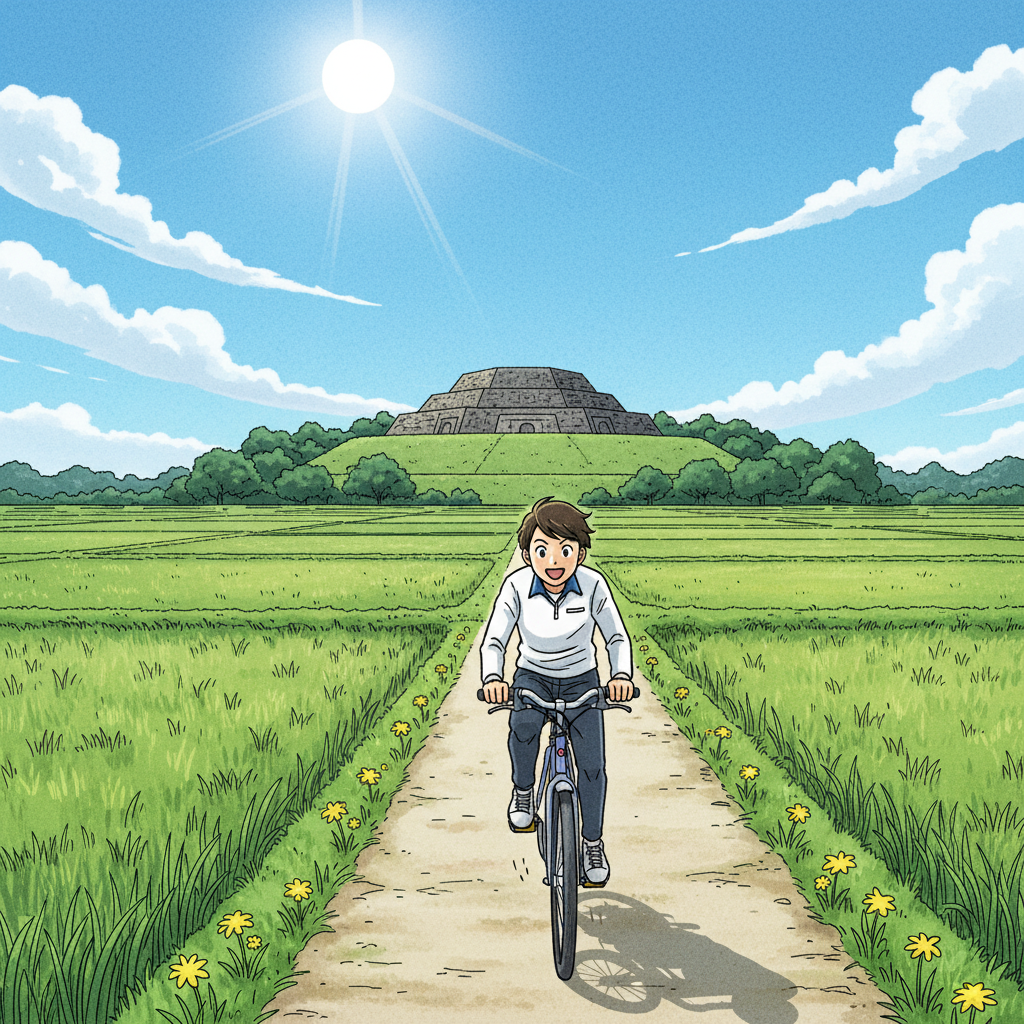
With your bicycle at the ready, you set off towards your first major destination: the Ishibutai Tumulus. The ride is gentle, winding through verdant rice paddies, the emerald green contrasting beautifully with the azure sky. The path is largely flat, offering easy pedaling and ample opportunity to absorb the pastoral beauty. You hear the rustle of the wind through the tall grasses, the distant croaking of frogs, and the gentle whir of your bicycle chain – a symphony of rural Japan. As you approach, the massive, exposed stone structure of the Ishibutai Tumulus gradually emerges from behind a cluster of trees, an awe-inspiring spectacle that instantly transports you back to the 7th century. This isn't just a pile of rocks; it's a testament to immense power and ancient engineering. The sheer scale of the megalithic stones, some weighing over 70 tons, is staggering. This impressive monument is widely believed to be the tomb of Soga no Umako, a pivotal figure who wielded immense power during the Asuka period, effectively controlling the imperial court. He was instrumental in the introduction and spread of Buddhism in Japan, a move that reshaped the nation's spiritual and political landscape. As you walk around and even inside the exposed stone chamber, running your hand over the cool, rough surface of the ancient granite, you feel a profound connection to a bygone era. Imagine the sheer manpower and ingenuity required to quarry, transport, and perfectly place these colossal blocks without modern machinery. The sunlight filters through the gaps between the stones, casting dramatic shadows that play across the textured surfaces. The air inside the chamber is noticeably cooler, carrying a faint, earthy scent that whispers of centuries past. It’s a place of quiet contemplation, where the weight of history is palpable. The very ground beneath your feet vibrates with the echoes of ancient rituals and political intrigue. This isn't merely a historical site; it's a gateway to understanding the foundational elements of Japan's imperial system and cultural identity.
1:00 PM – The Asuka Kofun Cycling Route: Rolling Through History
Leaving the grandeur of Ishibutai Tumulus, you re-mount your bicycle, the tires crunching softly on the gravel path. This is the essence of the Asuka experience: a gentle, immersive journey through history. The "Kofun Cycling Route" is not just a path; it's a living museum, where every turn reveals another layer of ancient Japan. You’ll pedal along narrow country lanes, flanked by meticulously cultivated rice paddies, their surfaces mirroring the sky like vast liquid canvases. Occasionally, you'll spot smaller, less imposing Kofun (ancient burial mounds) dotting the landscape, unassuming yet significant markers of a powerful past. These subtle bumps in the earth, often covered in dense foliage, are poignant reminders of the countless lives and legacies that shaped this land. The route is largely flat, making for an enjoyable and unhurried ride, allowing you to breathe in the crisp, clean air and appreciate the tranquility. The visual tapestry is rich: vibrant green fields, rustic farmhouses with traditional tiled roofs, and the occasional blooming flower adding a splash of color. You might encounter local farmers tending their crops, offering a friendly nod as you pass. This isn't a museum behind glass; it's an open-air exhibition, where history is integrated seamlessly into the daily rhythm of life. The sound of your bicycle chain, the gentle whir of the wheels, and the distant chirping of cicadas create a meditative rhythm, drawing you deeper into the serene beauty of the Asuka countryside. It’s a liberating feeling, exploring at your own pace, absorbing the quiet majesty of this ancient landscape.
2:30 PM – Asuka-dera Temple: Japan’s Oldest Beacon of Buddhism
Your cycling journey brings you to the hallowed grounds of Asuka-dera Temple, a site of immense spiritual and historical significance. As you approach, the atmosphere subtly shifts, becoming imbued with a deeper sense of reverence. Asuka-dera is not merely an old temple; it is the oldest Buddhist temple in Japan, a direct link to the very dawn of Buddhism in this island nation. Founded in 588 AD by Soga no Umako (whose tomb you just visited), it was a pivotal institution in the introduction and flourishing of Buddhist doctrines under the patronage of Prince Shotoku, a visionary leader who profoundly shaped Japan's early cultural and political landscape. Though the original grand temple complex has long since been lost to fires and the ravages of time, the current main hall still houses the Great Buddha, one of Japan's oldest and most revered bronze statues. As you step inside, the scent of incense hangs in the air, mingling with the aged wood of the building. The statue, though damaged and repaired over centuries, radiates an undeniable aura of peace and antiquity. Its serene expression has witnessed the rise and fall of empires, the struggles and triumphs of generations. The historical narrative woven around Asuka-dera is rich with tales of imperial power, religious conversion, and cultural exchange with continental Asia. You can almost visualize Prince Shotoku debating philosophical tenets within these very walls, or the earliest monks diligently copying sutras. The grounds themselves are peaceful, inviting quiet contemplation. You might find yourself sitting on a wooden bench, listening to the rustle of leaves, reflecting on the profound impact this single location had on the entire spiritual trajectory of Japan. It’s a place where history isn’t just learned; it’s felt, a deep spiritual resonance that permeates every stone and every whisper of wind.
4:00 PM – Exploring Asuka's Hidden Gems: Takamatsuzuka & Kitora Tumuli (Exterior View)
Continuing your leisurely cycle, you'll find yourself near the Takamatsuzuka Tumulus and Kitora Tumulus, two more monumental sites that captivated the nation when their brilliantly preserved wall paintings were discovered. While the actual mural chambers are typically closed to the public to ensure their preservation (replicas are often displayed in nearby museums), the external view of these kofun still offers a powerful connection to the past. The mounds themselves are understated, blending into the gentle undulations of the landscape, often covered by a dense canopy of trees. Yet, knowing the incredible artistic and historical treasures they contain within – vibrant depictions of celestial beings, constellations, and court life from over a millennium ago – imbues them with an almost mystical aura. You can imagine the meticulous care with which these tombs were constructed, the secrets they have held for centuries. The serene setting, often surrounded by quiet forests or small streams, encourages reflection on the lives of the ancient nobility buried within and the rich cultural tapestry they left behind. These spots are perfect for a moment of quiet contemplation, appreciating the sheer passage of time and the surprising resilience of art. The gentle sounds of nature, the filtering sunlight through the leaves, create a poignant backdrop for these silent witnesses to Japan's ancient grandeur. The entire Asuka Historical National Government Park area is designed for this kind of unhurried exploration, inviting you to wander, to ponder, and to truly immerse yourself in the landscape that cradled Japan's earliest imperial court.
5:30 PM – Sunset and Serenity: Checking into Your Ryokan
As the late afternoon sun begins its descent, casting long, golden shadows across the rice paddies, you make your way back towards your waiting 86/BRZ. The ride back is filled with a sense of quiet accomplishment, the day’s historical revelations settling deeply within you. The cycling complete, you'll drive a short distance to your chosen accommodation, ideally a traditional ryokan or a charming local inn nestled in or around Asuka or the nearby Kashihara area. The moment you step through the noren (traditional entrance curtain) of your ryokan, a wave of tranquility washes over you. The air is often scented with cypress wood and tatami mats. After a long day of historical exploration and physical activity, the ritual of checking in, perhaps being welcomed with a warm cup of matcha, is deeply restorative. You’ll be shown to your room, a minimalist space of understated elegance, where futons await on tatami flooring, and a sliding shoji screen offers a glimpse of a meticulously curated garden or a peaceful countryside view.
7:00 PM – A Culinary Journey: Kaiseki Dinner
The evening culminates in a spectacular traditional Japanese dinner, often a multi-course kaiseki meal served either in your room or a dedicated dining area. This isn’t just food; it’s an art form. Each dish is a miniature masterpiece, meticulously prepared using seasonal, local ingredients. Imagine delicate sashimi, exquisitely fresh and almost melting on your tongue; perfectly grilled fish, its skin crisp and flavorful; a medley of vibrant pickled vegetables; and perhaps a regional specialty like tender Nara-zuke (pickled vegetables with sake lees). The flavors are subtle, harmonious, designed to awaken and delight your palate without overwhelming it. Each course is presented with elegant precision, a testament to centuries of culinary tradition. As you savor each bite, paired perhaps with a local sake, you reflect on the day’s profound discoveries. The sounds of the countryside – distant cicadas, a gentle breeze through the trees – provide a serene soundtrack to your meal. This isn’t just about satisfying hunger; it’s about experiencing Japanese culture through its most refined culinary expressions, a perfect complement to the ancient history you’ve absorbed throughout the day. The tranquility, the taste, the timelessness – it all coalesces into an unforgettable evening, preparing you for another day of exploration.
Day 2: Asuka’s Spiritual Heights & The Joyful Return
8:00 AM – Traditional Japanese Breakfast & Morning Serenity
You awaken to the gentle sunlight filtering through the shoji screens, the air crisp and clean. A traditional Japanese breakfast awaits, a wholesome and artfully arranged meal designed to nourish both body and spirit. Expect fluffy white rice, savory miso soup, grilled fish, various pickles (tsukemono), tamagoyaki (rolled omelet), and perhaps some local vegetables. Each component is a testament to balance and flavor, a microcosm of Japanese culinary philosophy. It’s a stark contrast to a Western breakfast, yet deeply satisfying, preparing you for another day of adventure. After breakfast, take a moment to enjoy the quietude of the ryokan or a brief stroll through a nearby garden. The early morning in Asuka is particularly peaceful, a time when the echoes of history feel most palpable, before the gentle influx of daytime visitors.
9:30 AM – Tachibana-dera Temple: Birthplace of Prince Shotoku
After checking out, you'll drive your 86/BRZ a short distance to Tachibana-dera Temple. The engine growls to life with a familiar eager note, and the short drive through the quiet morning streets of Asuka is a joy. Tachibana-dera holds a special place in Japanese history and spirituality, as it is believed to be the birthplace of Prince Shotoku, one of Japan's most influential figures. Shotoku Taishi, as he is reverently known, was instrumental in introducing Buddhism to Japan, establishing the Seventeen-Article Constitution, and fostering cultural exchange with China, laying many foundations for the Japanese state. The temple grounds, while not as grand as some, exude a serene beauty. You'll find a tranquil atmosphere, often less crowded than other sites, allowing for deeper contemplation. Walk among the ancient trees, feel the moss beneath your feet, and explore the various halls. One of the unique features is the "Nimen-Sekibutsu" (Two-faced Buddha) stone, which symbolizes the duality of human nature – good and evil. This esoteric detail adds a layer of philosophical depth to the visit. Standing on the very ground where such a visionary leader was born offers a powerful connection to the wellspring of Japanese culture and governance. The quiet beauty of Tachibana-dera is a perfect spiritual bookend to your exploration of Asuka's ancient heart, a moment to reflect on the profound legacies that shaped this nation.
11:00 AM – Amakashi no Oka: Panoramic Views of the Ancient Capital
From Tachibana-dera, a short, scenic drive in your 86/BRZ will take you to Amakashi no Oka, a modest hill offering one of the most breathtaking panoramic views of the entire Asuka basin. The winding road up the gentle slope is a delightful opportunity to enjoy the precise handling of your JDM machine, the engine humming contentedly as you ascend. Parking at the base, a short walk brings you to the summit. And then, the view unfolds. Below you lies a sprawling tapestry of verdant rice paddies, interspersed with clusters of traditional farmhouses, and the tell-tale mounds of various kofun. In the distance, you can pick out the general locations of Ishibutai Tumulus, Asuka-dera, and the other sites you’ve visited, now seen from a majestic bird's-eye perspective. This is where the ancient capital truly reveals its scale and setting. You can almost visualize the grand palaces and temples that once stood here, the bustling life of the imperial court, the movements of people who shaped Japan's destiny. The wind often whispers across the hilltop, carrying with it the scents of the countryside and the distant echoes of history. It's a moment of profound reflection, allowing you to synthesize all the individual pieces of history you've encountered into a coherent, sweeping narrative. The clarity of the air, the vibrant greens and blues of the landscape, and the sheer expanse of the view create a memory that will linger long after you’ve left. It's a perfect place to breathe in the history, to truly grasp the scale of Asuka’s significance, and to appreciate the timeless beauty of this land.
12:30 PM – Farewell Lunch: A Taste of Asuka to Remember
Descending from Amakashi no Oka, you’ll drive your 86/BRZ to a carefully selected local restaurant for your final authentic Asuka meal. This is your chance to savor another taste of the region's culinary delights. Perhaps a "Mizu-yokan" (a chilled, soft sweet bean jelly, perfect on a warm day) with green tea, or a hearty bowl of "Somen" noodles, a delicate wheat noodle often served cold in summer or warm in winter, a staple in this region. Look for a place that prides itself on local, seasonal ingredients, ensuring a fresh and memorable experience. The atmosphere in these smaller, family-run establishments is often warm and welcoming, offering a glimpse into everyday Japanese life. As you enjoy your meal, take a moment to reflect on the depth of history and culture you've encountered over the past two days. The flavors, the aromas, the gentle chatter around you – it all contributes to a rich tapestry of sensory memories. This final meal isn't just about sustenance; it's a culinary souvenir, a way to imprint the taste of Asuka onto your memory before your journey home.
2:00 PM – The Enthusiast’s Return: Winding Roads and JDM Purity
With a full heart and satisfied palate, you embark on the return journey to Osaka. But this isn't merely a drive back; it's a final, exhilarating communion with your 86/BRZ. Instead of simply retracing your steps on the expressway, you opt for a slightly different route, seeking out the scenic prefectural roads that offer a more engaging driving experience. Perhaps you'll navigate through the gentle hills bordering Nara Prefecture, where the roads narrow and tighten, providing a perfect ballet of cornering and acceleration. The direct, unassisted steering of the 86/BRZ, its beautifully balanced chassis, and the eager revving of its engine transform every curve into an opportunity for enjoyment. You feel the grip of the tires, the subtle shifts in weight, and the immediate response of the powertrain. Each downshift, each heel-toe maneuver, is a moment of pure driving bliss, a testament to the meticulous engineering that defines JDM performance cars. The landscape flashes by in a blur of greens and browns, punctuated by glimpses of distant mountains. The air, still fresh, streams through the open windows, carrying the scents of forest and earth. This isn't just transportation; it's a visceral experience, a celebration of the open road and the freedom it represents. You're not rushing; you're savoring every kilometer, every shift, every perfectly executed turn. The car feels like an extension of your will, responding with intuitive precision. As the urban sprawl of Osaka gradually reappears on the horizon, a bittersweet feeling settles in. The ancient tranquility of Asuka gives way to the vibrant energy of the metropolis, but the memories, the sensations, and the profound connection forged with the land and the machine will linger long after the engine is switched off. This final leg of the journey is a powerful reminder of why driving is the only way to truly unlock the "Secret Japan."
Unlocking Ancient Japan: Asuka Village Cycling, Ishibutai Tumulus, Asuka-dera Temple, and Historical Walks by JDM Car - Expert Advice & Cultural Nuances
Discovering Japan’s "Michi-no-Eki" Culture: More Than Just a Rest Stop
One of the true joys of driving in Japan, often overlooked by those reliant on public transport, is the unique cultural phenomenon of the "Michi-no-Eki" or "Roadside Station." These are far more than just gas stations or conventional rest stops; they are vibrant hubs of local culture, commerce, and community. Think of them as miniature cultural centers, each offering a curated slice of its surrounding region. As you traverse the scenic routes to and from Asuka, keep an eye out for these invaluable oases. Inside, you’ll discover an Aladdin’s cave of local produce – often picked that morning by nearby farmers – artisanal crafts, unique souvenirs, and regional delicacies that you simply won't find in urban supermarkets. Imagine biting into a perfectly ripe, locally grown peach, or sampling a specialty miso paste unique to that particular valley. Beyond the gastronomic delights, Michi-no-Eki often feature immaculate restrooms, comfortable resting areas, and sometimes even small museums or art galleries showcasing local heritage. They’re fantastic places to stretch your legs, grab a surprisingly high-quality coffee, or simply watch local life unfold. They are cultural pit stops, offering not just a break from driving, but a genuine immersion into the heart of rural Japanese communities, a testament to the pride and craftsmanship of each region.
Unearthing Culinary Treasures: Hidden Local Eateries
While guidebooks might point you towards popular tourist restaurants, the real culinary magic often happens in the unassuming, off-the-beaten-path establishments favored by locals. These "hidden gems" are precisely what a self-driven adventure allows you to discover. Forget the polished facades; look for the places with handwritten menus (even if you can't read every character, a picture or a friendly local can help!), a perpetually steaming noren at the entrance, and perhaps a small queue of patiently waiting salarymen or elderly couples. These are the places where generations of culinary tradition are meticulously upheld, where secret family recipes transform simple ingredients into unforgettable dishes. In the Asuka region, this might mean a humble soba noodle shop serving handmade noodles in a broth perfected over decades, or a small izakaya offering seasonal vegetables prepared with an unexpected twist. Don't be afraid to venture down a side street or ask a local for a recommendation (a simple "Oishii resutoran wa doko desu ka?" – "Where is a delicious restaurant?" – goes a long way). These experiences offer not just incredible food, but a genuine connection to Japanese culture, far removed from the tourist traps. The flavors are richer, the atmosphere more authentic, and the memories more profound.
Navigating with Confidence: Essential Driving Tips in Japan
Driving in Japan, especially for those accustomed to right-hand traffic, requires a keen eye and a calm demeanor, but it’s an incredibly rewarding experience. First and foremost, remember to drive on the left side of the road and overtake on the right. Speed limits are generally lower than in many Western countries (often 40-60 km/h on local roads, 80-100 km/h on expressways) and are strictly enforced. Pay close attention to road signs, which are often in both Japanese and English, especially on main routes. Japanese drivers are generally courteous and patient, but always maintain a safe distance. Intersections can sometimes be complex, so be prepared for multiple lanes and traffic signals. Navigating is made easy with reliable GPS systems (most rental cars come with English-language options). Remember that many scenic routes, particularly in mountainous areas, can be narrow and winding, perfect for enjoying the dynamic capabilities of your 86/BRZ, but requiring focused attention. Parking, especially in smaller towns like those surrounding Asuka, is generally well-marked and relatively inexpensive compared to major cities. Always look for designated parking lots; illegal parking is frowned upon and can result in fines or towing. Finally, be mindful of cyclists and pedestrians, particularly on country roads or near historical sites where cycling is popular. A smooth, respectful driving style will ensure an enjoyable and safe journey, allowing you to fully appreciate the unique charms of Japan’s roads.
Unlocking Ancient Japan: Asuka Village Cycling, Ishibutai Tumulus, Asuka-dera Temple, and Historical Walks by JDM Car - Detailed Logistics & Pre-Trip Tips
The Evolving Road Network: 2026 Traffic Realities
As of 2026, Japan’s road network remains one of the most efficient and well-maintained in the world. While major urban centers like Osaka can still experience rush hour congestion, particularly on the Kinki Expressway during peak times (7-9 AM and 5-7 PM), routes leading to historical areas like Asuka Village generally clear up quickly once you’re out of the immediate metropolitan area. Expect modern expressways with clear signage and numerous service areas. Local roads, while sometimes narrower, are almost always smoothly paved and well-marked. Be aware that during major Japanese holidays (Golden Week, Obon, New Year’s), traffic on all major routes can become significantly heavier, so planning your travel outside these periods is advisable for a smoother experience. Real-time traffic information is readily available via car navigation systems and smartphone apps, keeping you informed of any unexpected delays. The overall driving experience is highly predictable and safe, making a road trip a truly stress-free option for independent exploration.
ETC Card: Your Expressway Pass to Seamless Travel
One of the greatest conveniences for expressway travel in Japan is the ETC (Electronic Toll Collection) card. This small card, inserted into a reader in your rental car, allows you to pass through expressway toll gates without stopping. Instead of fumbling for change or interacting with a toll booth attendant, you simply drive slowly through the designated "ETC" lane, and the toll is automatically recorded. Not only does this save time, but it can also offer discounts on certain routes or during specific times. For international visitors, it's highly recommended to inquire about renting an ETC card along with your vehicle. The process is usually straightforward at the rental counter, and the benefits in terms of convenience and efficiency are immense. It transforms the expressway experience from a series of stops and starts into a smooth, uninterrupted flow, allowing you to maintain your momentum and savor the driving pleasure of your 86/BRZ without interruption. Think of it as your VIP pass to Japan's meticulously maintained highway system.
Fueling Your Adventure: The "Mantan" Experience at Japanese Gas Stations
Pulling into a Japanese gas station is an experience in itself, often a blend of meticulous service and efficiency. Most stations offer full-service or self-service options. If you opt for full-service (recommended for first-timers), an attendant will typically greet you with a friendly "Irasshaimase!" (Welcome!). To request a full tank of regular unleaded gasoline, simply say "Mantan de, regyura onegai shimasu." ("Full tank, regular please."). The attendant will efficiently pump your fuel, clean your windows, and sometimes even offer to dispose of your trash. It's a testament to the legendary Japanese hospitality. If you choose self-service (セルフ or "self" in English), the pumps often have touchscreens with English language options. You'll typically select your fuel type (レギュラー / "regular" is standard unleaded), amount (満タン / "mantan" for full), and payment method. The nozzle has a safety feature that requires you to keep the handle depressed while fueling. Prices are clearly displayed per liter. The interaction, even for a simple task like getting gas, adds to the cultural immersion, offering a glimpse into the everyday precision and politeness that characterizes Japan.
Mastering the Parking Puzzle: Tips for Japanese Roads
Parking in Japan is generally well-organized, albeit sometimes compact. In major tourist areas like Asuka Village, you’ll find clearly designated parking lots, often with electronic signs indicating available spaces. Always look for parking signs (駐車場 / "chūshajō") and ensure you park only in marked bays. Illegally parked cars are quickly towed. Many parking lots use automated systems where a barrier rises to secure your car, and you pay at a central machine before exiting. Smaller, more rural areas around Asuka might have free parking or simple coin-operated meters. For your 86/BRZ, its compact size and excellent maneuverability make parking a breeze, especially in Japan's often tighter spots. Its rear-wheel-drive dynamics also mean you'll find it surprisingly easy to get into and out of snug spaces. Always remember to fold in your side mirrors when parked on narrow streets to avoid accidental damage. With a little awareness, parking will be a minor detail, allowing you to focus on the exploration rather than logistics.
The Unmatched Thrill: Driving a JDM (MT Car)
For the true petrolhead, the joy of driving a JDM car, especially one with a manual transmission like the 86 or BRZ, is an experience that transcends mere transportation. It’s a dance, a symphony of human and machine. The short-throw shifter, the perfectly weighted clutch pedal, the immediate response of the naturally aspirated Boxer engine – it all combines to create a visceral connection to the road. You feel every subtle nuance of the tarmac through the steering wheel, every G-force through the seat of your pants. Negotiating the winding roads around Asuka, feeling the car lean into a corner, precisely selecting the right gear for the exit, and hearing the engine sing as you accelerate out – this is driving in its purest form. It’s a sensory feast: the precise engagement of the gears, the responsive steering, the distinctive engine note, and the balanced chassis that allows you to confidently push the car’s limits. This isn't about raw power; it's about balance, precision, and the sheer joy of driver involvement. Driving an MT JDM isn't just a means to an end; it's an integral part of the adventure, enhancing every kilometer with exhilarating satisfaction. It's the ultimate expression of automotive passion, perfectly suited for unlocking the hidden roads of Japan.
Unlocking Ancient Japan: Asuka Village Cycling, Ishibutai Tumulus, Asuka-dera Temple, and Historical Walks by JDM Car - Comprehensive FAQ
International Driving Permit & Required Documents
To legally drive in Japan as a foreign visitor, you will need a valid International Driving Permit (IDP) issued under the 1949 Geneva Convention. This must be presented along with your valid driving license from your home country and your passport. It is crucial to remember that the IDP alone is not sufficient; you must carry all three documents at all times while driving. Please ensure your IDP is issued by a recognized authority in your country of residence and is still within its validity period (usually one year from issuance). Without these specific documents, rental agencies cannot legally provide you with a vehicle, and driving could lead to serious legal consequences. Ensure you obtain your IDP well in advance of your trip.
Navigating Insurance for Your Rental Car
When renting a car in Japan, comprehensive insurance is highly recommended, if not mandatory, and is typically offered as part of the rental package. Basic coverage usually includes Collision Damage Waiver (CDW) and Third-Party Liability. It is wise to consider opting for additional coverage, often referred to as a "Non-Operation Charge" (NOC) waiver or "Zero Deductible" plan. This supplementary insurance typically covers the cost you would otherwise be liable for if the vehicle is damaged and requires repair, including loss of rental income for the agency. Always clarify what is included in your rental agreement and what additional coverage is available to ensure complete peace of mind during your Japanese road trip. Read the fine print carefully, or ask the rental counter staff for a clear explanation in English.
Addressing MT Car Driving Anxiety
For those who love the idea of driving a JDM manual transmission car but feel a pang of anxiety about operating a stick shift in a foreign country, rest assured that Japanese roads, particularly outside major cities, are ideal for manual driving. Traffic flows predictably, and drivers are generally patient. If you're proficient with a manual transmission in your home country, adapting to the left-hand drive (and right-hand shift) usually takes only a short period of adjustment. The 86/BRZ, specifically, is renowned for its user-friendly manual gearbox and forgiving clutch, making it an excellent choice for spirited driving without excessive effort. A few minutes of practice in a quiet parking lot before heading out can boost your confidence. Embrace the engagement; it’s part of the adventure! If you are truly uncomfortable, automatic JDM vehicles are also available, though the manual truly elevates the experience.
Winter Driving Conditions & Preparations
While Asuka Village is not typically known for heavy snowfall, winter conditions (late December to early March) can still bring freezing temperatures, especially at night. In mountainous areas or during unexpected cold snaps, ice or light snow can occur. It is generally advisable to check local weather forecasts if traveling during these months. Most rental cars will be equipped with all-season tires, but if you plan to venture into higher elevations or if a snow warning is issued, inquire about winter tires ("studless tires" in Japan) or snow chains from your rental agency. For the Asuka region, which is relatively temperate, major snow is uncommon, but exercising caution on bridges and shaded roads during cold mornings is always prudent. The roads are well-maintained, and snow removal is efficient, but awareness is key.
Unlocking Ancient Japan: Asuka Village Cycling, Ishibutai Tumulus, Asuka-dera Temple, and Historical Walks by JDM Car - The Final Call: CTA
You’ve journeyed through the timeless landscapes of Asuka, pedaled past ancient tombs, walked in the footsteps of emperors and monks, and tasted the authentic flavors of Japan’s heartland. You’ve felt the pulse of history, not from a detached distance, but through an intimate, hands-on exploration. Every twist of the road in your JDM 86 or BRZ, every gentle turn of the bicycle wheel, has deepened your connection to this extraordinary country. The roar of the engine, the scent of fresh countryside air, the taste of local delicacies – these are the indelible memories that a truly immersive Japanese road trip carves into your soul.
This isn't just a vacation; it's an awakening. An adventure where you are the master of your destiny, discovering the "Secret Japan" that few ever get to experience. If the thought of peeling away from the usual tourist trails, embracing the thrill of a performance JDM car, and charting your own course through ancient history ignites a fire within you, then your next step is clear. Don't just dream of this unparalleled journey; make it a reality. Embark on your own epic Japanese road trip. The road to discovery, freedom, and unforgettable memories begins with the right vehicle. For the ultimate JDM driving experience, featuring meticulously maintained manual transmission cars like the Toyota 86 and Subaru BRZ, look no further than Omoshiro Rent-A-Car Osaka Chuo. Your authentic Japanese adventure awaits!
