
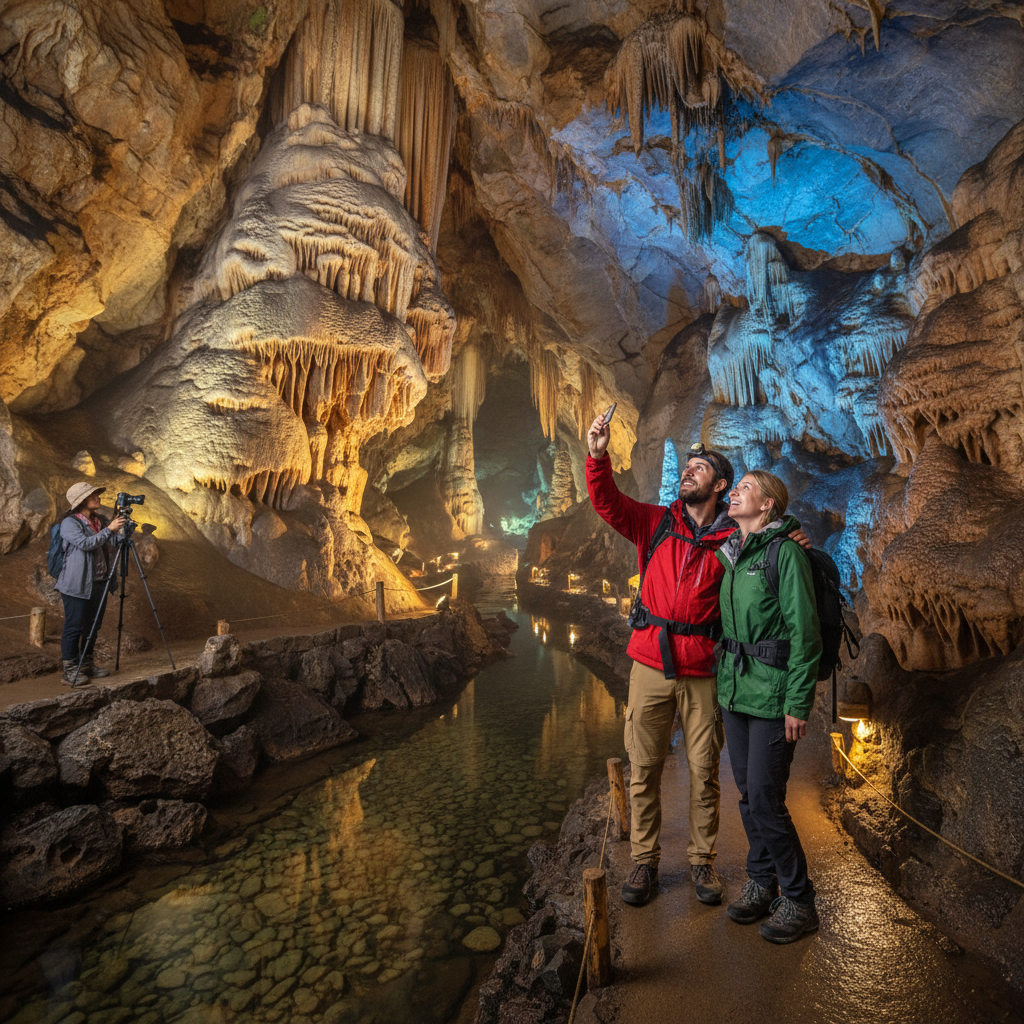
Nara Limestone Cave Exploration: The Ultimate JDM Driving Odyssey
For most travelers, Nara is synonymous with bowing deer and the Great Buddha of Todai-ji. They arrive on the Kintetsu Limited Express, spend four hours walking through the park, and head back to the neon lights of Osaka or the shrines of Kyoto. But as a former conductor for the Kintetsu Railway, I can tell you a secret that the transit maps don't show: the real soul of Nara—the wild, rugged, and mystical heart of the Kii Peninsula—is buried deep in the mountains where the tracks don't reach. To find it, you don't need a train ticket. You need a steering wheel, a manual gearbox, and the courage to leave the beaten path.
The Philosophy of Driving in Japan: Why Four Wheels Beat the Rails
I spent years of my life on the Kintetsu lines, announcing stops and ensuring that the rhythmic 'clack-clack' of the rails remained perfectly on schedule. I love trains; they are the backbone of Japanese society. However, the railway is a curated experience. It shows you the 'Public Japan.' To see the 'Secret Japan,' you must be the master of your own trajectory. This is particularly true in Nara Prefecture, where the terrain shifts from suburban sprawl to primeval forests in the blink of an eye.
When you sit in the cockpit of a Toyota 86 or a Subaru BRZ—cars designed with a low center of gravity and surgical steering precision—you aren't just a tourist; you become a participant in the landscape. The winding roads of Nara are not obstacles; they are the destination. The narrow passes of Tenkawa and the steep climbs of the Omine mountain range are where a JDM machine truly breathes. Here, the engine's growl echoes off limestone cliffs that have stood for millions of years, and the mechanical connection between your palm and the gear shifter provides a visceral thrill that no luxury train can match. Driving here is about the 'Philosophy of the Gap'—finding the beauty in the spaces between the famous landmarks.
Nara Limestone Cave Exploration: The 2-Day Deep Dive Itinerary
This is not a casual Sunday drive. This is a technical, sensory-overload expedition through some of the most geologically significant terrain in Honshu. We will be piloting either a Toyota 86 or a Subaru BRZ—lightweight, rear-wheel-drive masterpieces that are perfectly suited for the tight hairpins we are about to encounter.
Day 1: Into the Heart of the Sacred Mountains
08:00 AM – Departure from Central Osaka
We begin in the concrete canyons of Osaka. As you pull out, the first thing you’ll notice in the 86/BRZ is the seating position. You are inches from the tarmac. The Hanshin Expressway serves as our launchpad. We head south, the urban landscape gradually softening. Feel the suspension communicate the texture of the road. We are heading toward the Minami-Hana Road, transitioning from the grid-like logic of the city to the organic curves of the mountains.
10:00 AM – The Gateway to Tenkawa: Route 309
As we enter the Yoshino district, the road begins to tighten. Route 309 is a driver’s dream. It follows the path of the river, weaving through cedar groves so tall they blot out the sun. Here, the 'Secret Nara' begins. This area has been a site of Shugendo (mountain asceticism) for over 1,300 years. The air turns noticeably cooler, rich with the scent of damp earth and pine. Downshift into third, let the revs climb, and feel the balance of the car as you hit the first series of S-curves.
11:30 AM – Menfudo Limestone Cave: A Subterranean Cathedral
Our first major objective is the Menfudo Limestone Cave in the village of Dorogawa. Discovered in 1929 by a local resident, this cave is a designated Natural Monument. To reach the entrance, you can take a whimsical little forest monorail, but the real reward is inside. The cave stays a constant 8 degrees Celsius year-round. As you walk through, the stalactites and stalagmites are illuminated in ethereal colors. The 'Silver Column' and the 'Heavenly Palace' formations are breathtaking. The geological history here is written in the slow drip of calcium-rich water, creating structures that grow only one centimeter every hundred years. It puts the lifespan of a car—and a human—into perspective.
01:00 PM – Lunch in Dorogawa Onsen: Soba and Mountain Water
Dorogawa is a town frozen in time. Traditionally a base for pilgrims climbing Mount Omine, its streets are lined with traditional ryocans featuring wooden engawa (porches). For lunch, seek out local handmade soba. The secret ingredient is the water—'Goro-goro mizu,' a famous mineral water that flows from the limestone layers of the mountains. The noodles have a firm snap and a clean finish that refreshes you for the afternoon drive.
02:30 PM – Goyomatsu Limestone Cave: The Vertical Challenge
Just across the valley lies the Goyomatsu Limestone Cave. While Menfudo is expansive, Goyomatsu is a more intimate, vertical experience. It was discovered by Goyomatsu Akasaka, and exploring it feels like a true expedition. The paths are narrow, the ceilings are low, and the sense of being deep within the Earth's crust is palpable. The 'Crystal Chamber' glows with a ghostly light. It’s a physical reminder of the volcanic and tectonic forces that pushed these limestone deposits up from the ancient seabed millions of years ago.
04:30 PM – The Golden Hour Drive to your Ryokan
As the sun begins to dip, the mountains of Tenkawa turn a deep indigo. This is the perfect time to explore the local forest roads surrounding the village. The 86/BRZ’s headlights pierce the encroaching mist. The mechanical grip of the tires on the cooling asphalt provides immense confidence. We check into a local ryokan in Dorogawa Onsen. After a day of technical driving, soaking in an outdoor bath (rotenburo) while listening to the rushing river is the only way to recover.

Day 2: The Water and the Winding Pass
09:00 AM – The Ascent to the High Passes
After a traditional breakfast of grilled fish and mountain vegetables, we head toward the eastern side of the prefecture via the R169. This is a faster, more open road than the R309, allowing the 2.4L boxer engine to stretch its legs. The views of the Kawakami dam and the turquoise waters of the reservoirs are stunning. The contrast between the brilliant blue water and the deep green of the forests is a visual feast.
11:00 AM – Fudo Cave: The Hidden Gem of Kawakami
In the village of Kawakami, we find Fudo Cave. This cave is often overlooked by tourists, making it a 'Secret Japan' highlight. It is located near a thundering waterfall, and the sound of water follows you into the entrance. The cave features a series of narrow passages that lead to an underground waterfall. The sheer power of the water carving through the rock over millennia is a testament to the patient strength of nature. The humidity is high, and the walls are slick—it’s a raw, unpolished experience compared to the more developed caves.
01:00 PM – The Technical Run: Route 169 to Totsukawa
We now head south toward Totsukawa, the largest village in Japan by area. The drive involves long tunnels and high-speed sweepers. This is where the aerodynamics of the BRZ/86 come into play. The car feels planted, the steering weight perfectly judged. We stop at the Tanize Suspension Bridge—once the longest in Japan—to stretch our legs. Looking down at the valley floor 54 meters below, you realize just how high into the mountains you’ve climbed.
03:00 PM – The Return Loop: Testing the Limits
Instead of heading back the way we came, we take the winding mountain passes that lead back toward Gojo. These are 'old roads,' often bypassed by the newer tunnels. They are narrow, moss-fringed, and incredibly demanding. This is the ultimate test of the JDM experience. Heel-and-toe downshifts, precise turn-ins, and the mechanical symphony of the car working in harmony with the driver. There is no radio needed; the soundtrack is the engine and the wind.
06:00 PM – Returning to the Neon Glow
As we descend back toward the Nara plains and eventually the highway to Osaka, the transition is jarring. The quiet majesty of the caves and the roar of the mountain passes are replaced by traffic lights and skyscrapers. But as you return the car, you’ll find that the scent of the cedar forests and the vibration of the steering wheel have left a permanent mark on your soul.
Expert Advice & Cultural Nuances
Driving in rural Nara is a masterclass in Japanese etiquette and logistics. One of the most important concepts to understand is the 'Michi-no-Eki' or Roadside Station. These are far more than just rest stops. In Nara, they are hubs of local culture. At the 'Michi-no-Eki Kawakami,' you can buy woodcrafts made from local Yoshino cedar or taste 'Kaki-no-ha-zushi' (sushi wrapped in persimmon leaves), a local specialty designed to stay fresh during mountain travels.
When driving the narrow mountain passes, you will encounter the 'O-saki ni dozo' (Please, go ahead) culture. If a local in a tiny K-truck is tailing you, they likely know these roads like the back of their hand. Pull into a turnout, let them pass with a wave, and you’ll find the drive much more relaxing. Conversely, if you meet another driver on a road only wide enough for one car, the person closest to a turnout usually backs up. A small bow or a flash of the hazard lights is the universal 'thank you.'
Also, pay attention to the 'Melody Roads' found in some parts of the region. If you drive at the exact speed limit, the grooves in the pavement will play a folk song through the vibrations of your tires. It’s a uniquely Japanese blend of engineering and whimsy.
Detailed Logistics & Pre-Trip Tips
As we move through 2026, Japan’s driving infrastructure remains world-class, but the deep mountains of Nara require preparation. Your JDM rental—the 86 or BRZ—is a precision instrument. Most are equipped with manual transmissions to maximize the driving engagement. If you haven't driven a manual in a while, the 86’s clutch is forgiving but communicative, making it an excellent 're-entry' car into the world of three pedals.
The ETC Card: Ensure your rental comes with an ETC (Electronic Toll Collection) card. Many exits on the Hanshin Expressway and the Nishi-Meihan are now 'ETC Only.' It also saves you from fumbling for cash at toll booths, allowing you to maintain your flow.
The 'Mantan' Rule: When returning your car or stopping at a rural gas station, the word of the day is 'Mantan' (Full Tank). Most mountain stations are 'Full Service.' An attendant will guide you in, wash your windows, and even take your trash. It’s a level of service that shocks most international visitors. Say 'Regular Mantan' or 'High-Octane Mantan' (the 86/BRZ prefers High-Octane), and enjoy the hospitality.
Parking: In Nara's mountain villages, parking is usually free at trailheads and caves, but space is limited. The compact dimensions of the 86/BRZ make it much easier to tuck into small spots compared to a bulky SUV. Always park within the white lines; Japanese parking etiquette is strict.
The JDM High: There is a specific feeling—an 'atavistic high'—that comes from driving a Japanese car on the roads it was developed on. The 86 was tested on Japan's 'Touge' (mountain passes). When you feel the car rotate through a corner in Tenkawa, you are experiencing the car's true purpose.
Comprehensive FAQ
What kind of license do I need?
To drive in Japan, you must present a valid International Driving Permit (IDP) issued under the 1949 Geneva Convention, along with your original domestic driver's license and your passport. Residents of certain countries (like Switzerland, Germany, France, etc.) require a Japanese translation of their license instead of an IDP. Always verify your country's status before arrival. You can find the detailed list of requirements on the official guide at omoren.com/en/guide/license.
Is driving a manual (MT) car difficult in the mountains?
If you are comfortable with a manual, the 86/BRZ is a joy. The gear ratios are tight, and the pedal placement is perfect for heel-and-toe shifting. However, if you are anxious, we also offer automatic versions that still provide plenty of paddle-shifted fun.
What are the road conditions like in winter?
From late December to March, Nara’s high passes can experience heavy snow and ice. During this time, winter tires or snow chains are mandatory. For this 'Cave Exploration' route, the best months are May through November.
Is there English GPS available?
Yes, our vehicles are equipped with multilingual GPS systems. However, we also recommend using Google Maps or Waze via a phone mount for the most up-to-date traffic and forest road closures.
The Final Call: Start Your Engine
The limestone caves of Nara are ancient, silent, and profound. The roads that lead to them are loud, vibrant, and thrilling. Combining the two is the ultimate way to experience the duality of Japan—the serene past and the high-performance present. Don't settle for the 'Public Japan' seen from a train window. Grab the keys to a legend.
At Omoren Osaka Chuo (Omoshiro Rent-a-Car Osaka Chuo), we specialize in making these dreams a reality. As a former Kintetsu conductor, I’ve transitioned from the world of tracks to the world of tires because I want you to feel the freedom that only a JDM machine can provide. Whether you choose the surgical precision of the Subaru BRZ or the playful soul of the Toyota 86, your Nara adventure starts at our shop. Located conveniently in the heart of Osaka, we are your gateway to the 'Secret Japan.' Book your car today and discover what lies beyond the end of the line.