
1. 86 Driving in Nara and Soni Highlands - The Philosophy of Driving in Japan
For years, my daily reality was bounded by steel tracks, overhead catenary lines, and the rhythmic, hypnotic clack-clack of standard-gauge rail. As a former conductor for Kintetsu Railway—one of Japan’s most expansive private rail networks—I lived and breathed public transit. I know the intricacies of the Kansai rail grid inside and out. I can tell you down to the exact second when the limited express will glide into Yamato-Yagi Station, and I hold immense reverence for the sheer punctuality, engineering brilliance, and civil efficiency of Japan’s train system.
Yet, as someone who spent years peering out from the rear cab, watching pristine forest canopies and mist-covered ridgelines zip past at 100 kilometers per hour, I harbored an unspoken truth: The true, beating heart of Japan cannot be reached from a train platform.
Railways are designed for efficiency. They connect dense urban centers to suburban hubs via the path of least physical resistance—tunnels bored straight through granite mountains, elevated viaducts spanning concrete-lined riverbeds, and direct corridors that bypass the subtleties of the countryside. When you travel exclusively by train through the Kansai region, you are experiencing Japan through a carefully curated, highly optimized lens. You see the major shrines, the bustling station plazas, and the famous tourist enclaves.
What you miss, however, is the Secret Japan.
Secret Japan exists in the geography of the in-between. It lives along the twisting prefectural roads (fukudo) that trace the spine of the Kii Peninsula. It resides in ancient cedar forests where sunlight filters through dense canopies in beams of golden light, illuminating lonely roadside shrines that haven't seen a tour bus in decades. It is found in mountain passes where the asphalt curls back on itself in rhythmic hairpin turns, flanked by crystal-clear streams and sudden, breathtaking vistas of rolling mountain ranges.
To unlock this realm, you need more than a rail pass. You need four wheels, three pedals, and a manual gearbox.
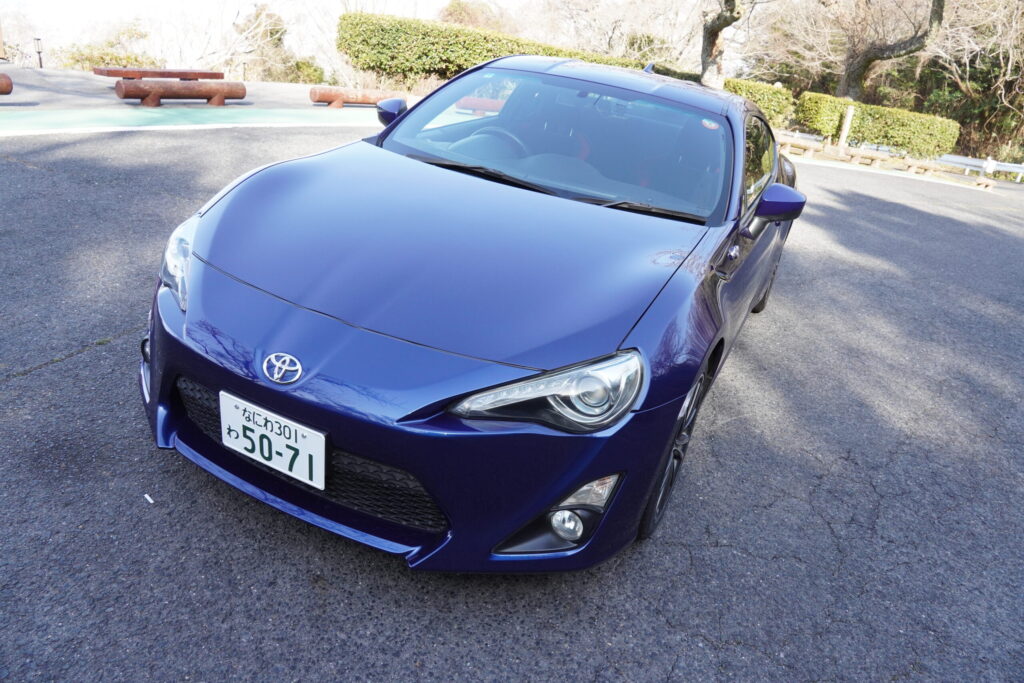
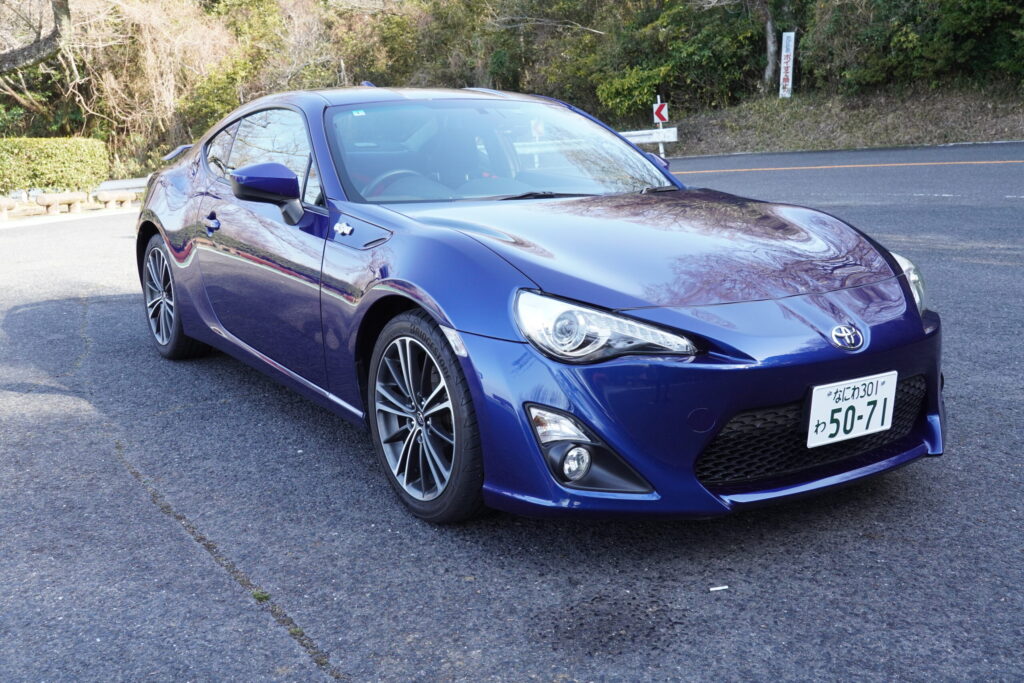
Starting a journey from Osaka behind the wheel of a pure driver's machine—specifically a lightweight, rear-wheel-drive sports car like the Toyota 86 or Subaru BRZ—fundamentally transforms your relationship with the landscape. Osaka is a sprawling, energetic neon metropolis, a city of culinary excess and urban density. But within thirty minutes of departing the city's perimeter, the highway concrete gives way to rural asphalt. The towering skyscrapers dissolve into the majestic, mist-veiled peaks of Nara Prefecture.
When you drive a lightweight sports car through Nara toward the remote eastern highlands, you are not merely a passive spectator watching scenery glide past a train window. You are an active participant in the terrain. Every elevation change is communicated through the seat of your pants; every nuance of the tarmac transfers directly through the rack-and-pinion steering. The mechanical hum of the boxer engine echoes off ancient cliff faces, creating a symphony that bridges human engineering with raw, untamed nature.
This guide is an invitation to step off the worn tourist tracks, leave the crowded train carriages behind, and experience the ultimate driving pilgrimage in Kansai: a autumn expedition to the golden, wind-swept pampas grass plateau of the Soni Highlands (Soni Kogen).

2. 86 Driving in Nara and Soni Highlands - The 2-Day Itinerary: Deep Dive
Day 1: Departing the Urban Grid for Ancient Mountain Passes
08:00 AM – Departure from Central Osaka: The Urban Gateway
The morning air in central Osaka carries a crisp, cool bite—a hallmark of late autumn in the Kansai basin. You climb into the low-slung bucket seat of your Toyota 86. The cabin wraps snugly around you, purposeful and ergonomic. Your left hand rests naturally on the leather-wrapped shift knob; your feet intuitively locate the three aluminum pedals. Depress the clutch, hit the engine start button, and the naturally aspirated 2.0-liter boxer engine fires to life with a sharp, mechanical bark before settling into a steady, rhythmic idle.
Leaving the urban pulse of Osaka, you navigate onto the Hanshin Expressway system. The early morning city is just waking up. Modern concrete architecture glides past as you head east towards the Minami-Hanwa line, merging onto the Nishi-Meihan Expressway. Early on, you feel the taut, responsive tuning of the 86’s suspension. Unlike floaty luxury sedans, the car transmits a subtle, confident road feel, letting you know precisely how much grip the tires have on the smooth Japanese asphalt.
09:15 AM – Crossing into Nara: The Ancient Capital Boundary
As you pass through the Kashiba area and cross the border into Nara Prefecture, the urban concrete shifts dramatically. Modern high-rises give way to traditional Japanese farmhouses with swept tile roofs (kawara), surrounded by meticulously terraced rice paddies that have harvested their annual crop, leaving golden stubble glistening under the low morning sun.
You take the exit toward Route 165, heading east into the Yamato Basin. This region is the cradle of Japanese civilization—Yamato was the heartland where Japan’s early emperors established their seats of power long before Kyoto or Tokyo existed. The air here feels thicker with history. As the road begins to narrow, you transition off the multi-lane bypasses and onto Prefectural Route 30, known locally as the Yamato Yamanobe Road region.
10:30 AM – Pitstop at Asuka Village & The Ancient Monoliths
Before ascending into the deep eastern mountains, take a brief detour south into Asuka Village (Asukamura). Asuka represents the dawn of written Japanese history, home to 7th-century burial mounds (kofun) and mysterious carved granite monoliths whose origins remain shrouded in myth.
Park the 86 near the Ishibutai Kofun (Stone Stage Tomb). Stepping out into the cool morning, the fragrance of burning rice straw and damp pine needles fills the air. Ishibutai is a massive megalithic structure constructed from 30 massive granite stones weighing over 2,300 tons in total, believed to be the tomb of Soga no Umako, a powerful 6th-century statesman. Standing before these gigantic stones, surrounded by gentle hills clad in fiery red Japanese maples (momiji) and yellow ginkgo trees, you sense the immense deep time embedded in this landscape.
Enjoy a hot black coffee from a nearby local kiosk, take in the tranquil valley atmosphere, and prepare yourself for the dramatic elevation changes ahead.
11:45 AM – The Climb Begins: Route 166 and the Hase-dera Corridor
Leaving Asuka, you point the nose of the 86 toward Sakurai and connect with Route 166, tracing the ancient Hase Kaido—a pilgrim path historically used by monks and travelers journeying from the capital to the sacred shrines of Ise.
Here, the driving dynamics shift from relaxed cruising to technical engagement. Route 166 winds alongside the Yamato River, cutting through steep, forested gorges. Shift down into 3rd gear; the engine notes crisp up instantly as revs rise past 4,000 RPM. The 86 shines in these medium-speed technical sections. With its near-50/50 weight distribution and low center of gravity, the chassis rotates effortlessly around corners with zero body roll.
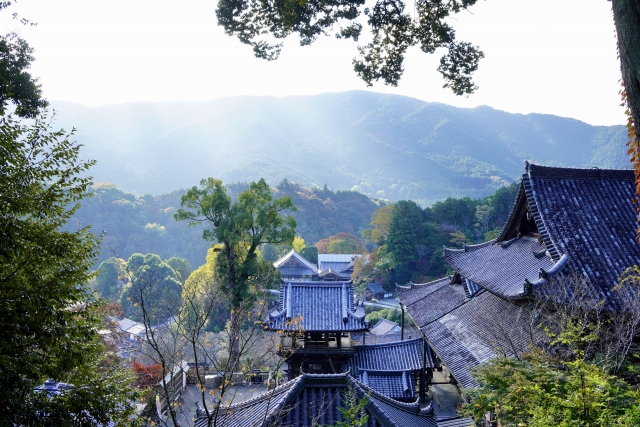
You pass near Hase-dera Temple, perched dramatically on the side of Mt. Hatsuse. The temple's long covered wooden staircase (Noboriro) winds up the hillside through a canopy of rich crimson autumnal leaves. Even from the road, the views of rustic temple pagodas poking through multi-colored forest canopies offer a stunning visual backdrop.
01:15 PM – Mountain Lunch in Higashiyoshino: Handmade Soba & Local Flavors
As you climb deeper into the Higashiyoshino region, the roads become noticeably quieter. Civil engineering in these remote regions is a marvel; smooth, perfectly banked asphalt carves through mountain pass after mountain pass.
Stop for lunch at a mountain soba-ya (handmade buckwheat noodle shop) nestled alongside a crystal-clear river. These remote establishments utilize pure, mineral-rich mountain spring water to craft their noodles daily.
Order a steaming bowl of Shinshu-style or local Yamato Buckwheat Soba, accompanied by fresh seasonal mountain vegetable tempura (sansai tempura) featuring wild fern fronds, maitake mushrooms, and shiso leaves fried in a light, gossamer batter. Pair it with a local specialty: Kaki-no-Ha Zushi (persimmon leaf-wrapped sushi), where salted mackerel or salmon rests on seasoned rice, wrapped tightly in a wild persimmon leaf that imparts a subtle, earthy tannins and aroma. The light, clean flavors are deeply satisfying and nourish you for the technical mountain driving to come.
02:45 PM – Route 369 to Route 11: The Technical Ascent to Soni
Re-entering the 86, turn off the main arterial road and onto Nara Prefectural Route 369, ascending toward the Murou and Soni region. This stretch of road is pure motorsport poetry.
The tarmac ribbons upward through dense groves of towering Japanese cedar (Sugi) and cypress (Hinoki). Sunlight punches through the thick forest canopy, creating dynamic patterns of light and shadow on the road surface.
This is where you fully appreciate the mechanical purity of an RWD Japanese sports car. Approaching a tight 180-degree hairpin curve, you apply firm pressure to the brake pedal, heel-and-toe downshift from 3rd to 2nd gear—blipping the throttle to match revs seamlessly—turn the wheel, and clip the apex. The steering feedback is razor-sharp. As you roll smoothly back onto the throttle at the exit, the rear tires bite firmly into the pavement, launching the car down the short straight toward the next sequence of curves.
The atmospheric shift as you gain altitude is palpable. The temperature drops, the mountain air grows remarkably crisp, and the dense forest occasionally opens up to reveal staggering panoramic views of the Murou Volcanic Group's jagged ridges.
04:15 PM – Arrival at Soni Highlands: The Golden Hour
You arrive at the base of the Soni Highlands (Soni Kogen) just as the sun drops low toward the horizon. Located on the slopes of Mt. Kuroso along the border of Nara and Mie prefectures, Soni Kogen is a vast, 40-hectare natural plateau covered entirely in wild pampas grass (suzuki).
Park the car in the highland parking area. Stepping out, the quietude of the highlands washes over you, broken only by the whistling mountain wind. Walk up the wooden pedestrian paths that meander through the undulating fields.
In late autumn, the pampas grass turns a deep, shimmering shade of polished gold. As the late afternoon sun descends, its low-angle rays strike the fluffy feather-like seed heads of the grass, causing the entire mountainside to burst into a sea of brilliant, liquid gold. The landscape sways and ripples like a golden ocean under the mountain breeze.
Follow the trail up to the Kame-yama (Turtle Mountain) ridge lookout. Looking down, you see the iconic Ogame-ike (Turtle Pond) nestled in the center of the plateau, reflecting the dramatic colors of the autumn sky—pinks, purples, and fiery oranges—surrounded by glowing golden hillsides. Standing on the ridgeline, looking westward over the layered mountain peaks of Nara fading into blue silhouettes, you experience a moment of profound serenity that no rail itinerary could ever replicate.
06:30 PM – Evening Retreat: Ryokan Stay & Local Onsen
After watching the final amber light fade behind the peaks, head to a nearby traditional Japanese Ryokan (inn) or mountain lodge in the Soni/Mitsue village area.
Check into your room, featuring aromatic woven tatami mats, paper shoji screens, and thick, comfortable cotton futons. Before dinner, slip into a cotton yukata robe and immerse yourself in the natural hot spring waters (onsen). The thermal waters, rich in natural minerals, soothe tired muscles from a day of spirited driving.
For dinner, indulge in a multi-course Kaiseki meal celebrating hyper-local autumn ingredients:
A bubbling hot pot (nabe) featuring local Yamato Beef or wild boar (botan nabe) simmered with seasonal mushrooms, leeks, and tofu in a savory dashi broth.
Freshly harvested local sweet potatoes, roasted over charcoal.
A bottle of chilled, locally brewed Nara sake, displaying smooth rice notes with a crisp, clean finish.
Retire early, listening to the gentle murmur of mountain streams outside your window.

Day 2: The Sacred Peaks, Deep Gorges, and the Return Stream
07:30 AM – Morning Fog over the Highlands & Breakfast
Wake up early to catch the dawn light. Mountain valleys in Nara are famous for Unkai (a sea of clouds or heavy morning valley fog). Stepping outside into the freezing morning air, you witness low-slung, billowy white clouds sitting trapped in the valleys below, with mountain peaks poking through like isolated islands in a white sea.
Enjoy a traditional Japanese breakfast of steamed white rice, grilled salted salmon, a delicate rolled omelet (tamagoyaki), miso soup with local mushrooms, and pickled vegetables (tsukemono). Warm up with a bowl of hot green tea before packing your bags back into the trunk of the 86.
08:45 AM – The Technical Descent: Route 370 toward Yoshino
Starting the engine, the boxer note cuts through the crisp morning silence. Today’s drive takes you through the heart of deep southern Nara, toward the legendary Yoshino and Tenkawa regions.
Take Route 370 heading southwest. The morning tarmac is cool, requiring smooth driving inputs to let the tires warm up naturally. Route 370 follows the contours of the Yoshino River valley. The road here features a delightful mixture of sweeping medium-speed bends, sudden elevation drops, and tightly banked turns that showcase the incredible balance of the 86 chassis. The hydraulic-like precise feedback through the steering wheel makes every micro-correction an absolute joy.
10:30 AM – Exploring the Emerald Depths of Mitarai Valley (Mitarai Keikoku)
Carve your way along Route 309, ascending deep into the Omine Mountain range—a UNESCO World Heritage sacred mountain zone traditionally associated with Shugendo (mountain asceticism). Your target is Mitarai Valley (Mitarai Keikoku).
Mitarai Valley is widely considered one of the most stunning river gorges in Kansai. Park the car at the entrance suspension bridge and walk along the wooden footpaths built directly over the roaring torrents.
The contrast of colors here during late autumn is otherworldly. The river water is astonishingly clear, glowing with a deep, vibrant emerald green hue. Cascading waterfalls pour over massive white granite boulders, while overhead, brilliant brilliant red Japanese maples and golden beech trees form a vibrant natural canopy over the gorge. The air smells intensely crisp, filled with negative ions from the rushing waterfalls and pine resins from the virgin forest.
12:30 PM – Tenkawa Village: Pilgrimage Culture & Local Delicacies
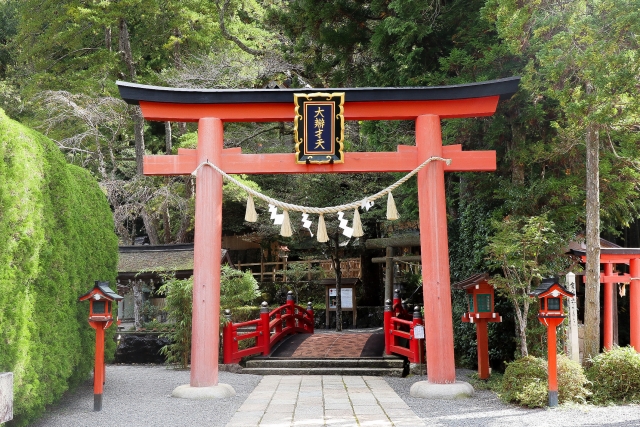
A short drive further up Route 309 brings you to Tenkawa Village, a spiritual mountain settlement centered around the ancient Tenkawa Benzaiten Shrine—one of Japan’s most sacred spiritual sites dedicated to the goddess of water, music, and the arts.
Stop in Tenkawa for a traditional lunch. Visit a local eatery serving fresh Ayudons (sweetfish caught directly from the crystal-clear rivers of Tenkawa, salted and salt-grilled over open charcoal hearths until the skin is crispy and the flesh buttery and sweet). Accompanied by hot sansai (wild mountain vegetable) soup and freshly pickled ginger, it is rustic Japanese mountain cuisine at its finest.
Take twenty minutes to walk through the grounds of Tenkawa Benzaiten Shrine. The serene, sacred silence of the complex, broken only by the ringing of heavy brass bells and the rustle of falling leaves, provides a deeply reflective intermission to the high-energy mountain driving.
02:15 PM – The Mountain Pass Odyssey: Route 309 to Mount Shigi
Leaving Tenkawa, take Route 309 north, heading back toward the northern plains of Nara. Route 309 features high-altitude road tunnels bored straight through granite mountains, interspersed with technical downhill mountain passes that require focused concentration and precise downshifting.
As you exit the steep southern mountains and descend back into the flatter Yamato Plain, navigate toward the Shigisan Driveway or the Shigi-Ikomayama Skyline toll road, located along the border between Nara and Osaka Prefectures.
04:30 PM – The Sunset Run: Shigi-Ikomayama Skyline
The Shigi-Ikomayama Skyline is a legendary driving road among local Japanese car enthusiasts. Curving along the crest of the Ikoma mountain range at an elevation of roughly 600 meters, it offers continuous, unobstructed views on both sides: to the east, the vast historical expanse of the Nara Basin; to the west, the sprawling, infinite urban expanse of Osaka extending all the way to Osaka Bay.
This is the ultimate grand finale for your driving expedition. With the late afternoon sun dipping toward the Osaka horizon, turn off the traction control setting to sport mode and let the 86 stretch its legs across the smooth, winding asphalt ridge road.
Pull over at the Kikuseidai or Bell of Hope Lookout. As the sun hits the horizon, the sky transforms into a gradient of burnt orange, fiery red, and deep indigo. Below you, the entire Osaka metropolis begins to light up—millions of glowing neon lights forming an endless, sparkling carpet of light that stretches to the ocean edge.
Standing on the ridge with the cool wind in your hair, listening to the gentle tick-tick-tick of the 86’s hot exhaust pipe cooling down beside you, the contrast between the tranquil golden wilderness of Soni Highlands and the neon energy of Osaka creates an unforgettable sensation.
06:00 PM – The Return Journey to Osaka City
Descend from the Ikoma ridge via the Hanshin Expressway Route 13 (Osaka Line). The high-speed urban elevated expressway guides you back into the glowing core of Osaka’s central district. Navigating back through the city streets, every shift of the gear lever feels earned, every memory of mountain passes, emerald gorges, and golden pampas grass plateau permanently burned into your mind.
3. 86 Driving in Nara and Soni Highlands - Expert Advice & Cultural Nuances
Driving through rural Japan is an infinitely rewarding experience, but it comes with a unique set of cultural nuances, road etiquette, and local secrets that transform a good trip into an unforgettable masterclass in travel.
The Phenomenon of the "Michi-no-Eki" (Roadside Stations)
For the uninitiated traveler, a roadside service area might sound like a plain concrete rest stop with vending machines. In Japan, however, Michi-no-Eki (Roadside Stations) are cultural destinations in their own right. Designed to revitalize rural economies, these government-designated rest areas serve as showcases for local agriculture, crafts, and regional culinary arts.
When driving through Nara toward Soni, make a point to stop at key Michi-no-Eki along your route, such as Michi-no-Eki Soni or Michi-no-Eki Katsuragi.
Hyper-Local Produce: You will find freshly harvested seasonal items sold directly by local farmers—such as deep-orange Fuyu Persimmons (Kaki), sweet local Asian pears (Nashi), and fragrant Yuzu citrus fruits.
Regional Snack Foods: Look out for Kurogoma (black sesame) soft-serve ice cream, freshly cooked Kudzu starch sweets, or savory skewers of grilled wild boar sausage.
Craft Goods: Handcrafted cedar wood utensils, traditional pottery, and small-batch local jams make exceptional, authentic souvenirs that support mountain communities directly.
Local Culinary Treasures off the Beaten Path
While major tourist guides point visitors toward crowded city restaurants, the best food in Nara is tucked away down quiet prefectural roads.
Kudzu-yu and Kuzumochi: Nara’s Yoshino region is world-famous for Kudzu (wild arrowroot powder). In cold autumn weather, stopping at a small roadside teahouse for a bowl of hot Kudzu-yu—a sweet, thick, soothing arrowroot drink infused with ginger or plum—is an unmatched comfort.
Yamato-Midori Tea: The tea plantations scattered across the high-altitude plateaus of Nara produce vibrant green teas characterized by rich umbrella-like aromas and minimal bitterness due to the dramatic day-night temperature swings in the mountains.
Japanese Mountain Driving Etiquette
Japanese driving culture is built on a foundation of profound mutual respect, spatial awareness, and unspoken courtesy.
Passing Places on Narrow Passes (Kaitosho): Many single-lane mountain passes (1.5-lane roads) feature wide pockets cut into the cliffside marked with blue signs reading "退避所" (Taihisho). If you see a vehicle approaching from the opposite direction or notice a local tailgating you closely, pull smoothly into the next available pocket to let them pass.
The "Hazard Light Thank You": When a driver yields the right of way to let you merge into traffic or pass on a narrow mountain road, it is customary to flash your hazard lights twice (chazatto) as a brief signal of appreciation.
Speed Awareness & Speed Trap Warnings: Rural speed limits in Japan are often posted unexpectedly low—typically 40 km/h or 50 km/h on mountain roads. While local flow-of-traffic may move faster, keep an eye out for small white police cars or automatic radar traps (Orbis) positioned near entering mountain townships.
4. 86 Driving in Nara and Soni Highlands - Detailed Logistics & Pre-Trip Tips
Navigating Japan’s highway networks and rural roadways in 2026 requires a quick understanding of local infrastructure, technology, and vehicle operation nuances.
Navigating Japan’s Toll Network: ETC 2.0
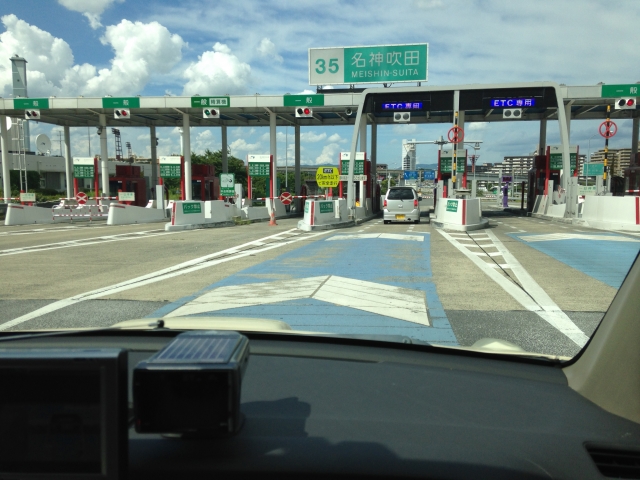
Japan’s expressway network is exceptionally smooth, impeccably maintained, and fully gated by toll booths. Modern tolls are managed electronically via ETC (Electronic Toll Collection) cards.
How It Works: An ETC card is a smart card inserted directly into a card reader built inside your vehicle’s glove box or dashboard.
At the Toll Gate: As you approach an expressway toll plaza, look for the lanes marked with purple illuminated signs reading "ETC 専用" (ETC Only). Slow down to 20 km/h; the gate sensor reads your card wirelessly, the barrier lifts, and the toll is recorded automatically.
Why You Need It: Using an ETC card eliminates the need to stop and pay cash at manual lanes ("一般" / General Lanes). Furthermore, ETC users receive significant discounts during off-peak weekend driving and late-night highway transit across Kansai.
Fueling Up: Deciphering the Japanese Gas Station
Refueling your sports car in Japan is a smooth, highly efficient process once you master the basic vocabulary and station formats.
Gas stations in Japan fall into two categories: Self-Service ("セルフ" - Serufu) and Full-Service ("フル" - Furu).
Standard Fuel Grade Categories:
High-Octane / Premium ("ハイオク" - Haioku): Mandatory for high-compression sports engines like the Toyota 86/BRZ. Fuel handles are universally color-coded YELLOW.
Regular Gasoline ("レギュラー" - Regyura): Standard octane fuel, color-coded RED.
Diesel ("軽油" - Keiyu): Diesel fuel, color-coded GREEN. (Do NOT put diesel in your 86!)
Key Phrases for Full-Service Stations:
"Haioku Mantan, Keshudai de" -> "High-octane, full tank, paying with credit card."
"Mantan" means "Full Tank".
Full-service staff will often wipe down your windshield, side mirrors, and offer a small towel to clean your dashboard while refueling.
Parking Mastery in Rural & Mountain Areas
Back-in Parking Culture: In Japan, reversing into parking stalls (Kanzen-chousha) is the universal norm. It ensures maximum safety when pulling out into traffic later. The Toyota 86 features excellent side mirror visibility and modern backup sensors/cameras, making reverse parking effortless.
Coin Parking Lot Lockers: In towns like Asuka or Sakurai, you will encounter self-service coin parking lots (Times24 or Repark). When you park over a stall, a small metal plate rises beneath your chassis after a few minutes. To exit, enter your stall number at the payment machine, pay the exact fee in cash or IC Card (Suica/Pasmo/Icoca), and wait for the metal barrier to lower completely before driving out.
The Thrill of the Manual Transmission (JDM Experience)
Driving a Toyota 86 or Subaru BRZ with a 6-speed manual transmission (MT) on Japanese mountain passes offers a pure, unfiltered connection between man and machine that modern automatic paddle-shift cars simply cannot match.
Pedal Placement: The pedal box in the 86 is optimized specifically for heel-and-toe downshifting techniques. The brake and accelerator pedals are spaced close together, allowing you to blip the throttle effortlessly with the right edge of your foot while braking into corners.
Chassis Telepathy: The mechanical feel of the short-throw shifter engaging each gear with a solid, tactile click enhances every second of your journey. As you trace the sweeping turns through the autumn mountains, operating a mechanical clutch on winding Japanese tarmac provides an addictive, deeply engaging rush of endorphins.
5. 86 Driving in Nara and Soni Highlands - Comprehensive FAQ
Q1: What driver's license documentation do I need to rent and drive a car in Japan?
To drive legally in Japan, you must present a valid physical International Driving Permit (IDP) issued under the 1949 Geneva Convention on Road Traffic, along with your original valid driver’s license from your home country and your passport.
Crucial Note: Ensure your IDP is explicitly issued under the 1949 Geneva Convention framework. IDPs issued under the 1968 Vienna Convention or other treaties are not legally recognized in Japan. Drivers holding licenses from specific countries (such as Switzerland, Germany, France, Taiwan, Belgium, or Monaco) do not use standard IDPs; instead, they must provide an official Japanese translation of their native license prepared by the Japan Automobile Federation (JAF) or their respective embassy.
Q2: What kind of insurance coverage should I select?
It is strongly recommended to select full comprehensive collision coverage, including a Collision Damage Waiver (CDW) and Non-Operation Charge (NOC) Protection. NOC covers the daily operational loss fees incurred by the rental agency if a vehicle requires maintenance or repairs following an incident. Having full protection ensures complete peace of mind while navigating narrow rural mountain roads.
Q3: Is it difficult to adjust to driving on the left side of the road in Japan?
For drivers coming from right-hand drive countries (like North America or Mainland Europe), driving on the left side (RHD vehicle) might feel intimidating for the first 15 minutes. However, because Japan’s road infrastructure is clearly marked with high-visibility lane lines, turning guides, and logical traffic lights, the mental adjustment happens very quickly. Simply follow the flow of traffic ahead of you, take wide right-hand turns carefully, and remember that the driver should always sit positioned toward the center divider line of the road.
Q4: I haven't driven a manual transmission (MT) car in a few years. Is the Toyota 86 forgiving?
Yes! The Toyota 86 / Subaru BRZ platform features a remarkably intuitive, crisp clutch engagement point with an easy-to-modulate pedal weight. Hill-start situations are easily handled, and the engine’s linear torque band ensures the car is highly forgiving at lower speeds while still offering explosive response when revved hard in technical mountain curves.
Q5: What are the winter road conditions around Soni Highlands?
During the peak autumn pampas grass season (October through late November), roads around Soni Highlands remain fully clear of ice and snow. However, starting in late December through February, elevation zones in eastern Nara can experience freezing temperatures, black ice, and snowfall. If traveling during mid-winter, equipping snow tires (Studless Tires) is mandatory.
6. 86 Driving in Nara and Soni Highlands - The Final Thoughts
The glowing golden fields of Soni Kogen do not wait forever. As winter approaches, the autumn wind gently carries away the shimmering seed heads of the pampas grass, and the fiery crimson maples of Mitarai Valley surrender their leaves to the mountain streams.
Japan is a country designed to be felt through the senses—the crisp scent of mountain cedar, the taste of freshly grilled river trout, the golden glow of a late-autumn horizon, and the mechanical roar of a high-revving boxer engine echoing through a remote granite gorge.
You can spend your journey crammed into a crowded commuter train carriage, staring at a static timetable and watching the true beauty of Japan slip past behind tinted safety glass. Or you can take control of your story, grab a leather-wrapped steering wheel, slide your foot onto a aluminum clutch pedal, and carve your own path into the mist-shrouded peaks of Secret Japan.
Your machine is primed. The mountain tarmac is clear. The open winding roads of Nara are calling.
When you are ready to stop being a passive tourist and start being a true driver, head over to Omoren Osaka Chuo (おもしろレンタカー 大阪中央店). Reserve your legendary Toyota 86 or Subaru BRZ manual sports car today, pick up your keys in central Osaka, and launch your dream JDM driving expedition into the heart of Japan’s golden highlands.
Your ultimate autumn drive begins the moment you turn the key.