
Driving in Japan: Beyond the Rails to Kyoto’s Hidden Backbone
For years, I viewed Japan through a very clean, very precise glass window. As a former train conductor for Kintetsu Railway, my life was dictated by split-second timing, polished stainless steel, and the endless rhythmic clatter of standard-gauge tracks slicing through the Kansai region. Rail transit in Japan is an absolute engineering marvel—a triumph of human organization that can sweep you from the neon grid of Osaka to the ancient gates of Kyoto in under an hour.
However, steel rails are bound by strict iron geography. They run along valleys, bypass rugged crests, and strictly connect high-density nodes to move millions of passengers efficiently. When you rely solely on trains and tourist buses, you see the Japan that has been curated for the masses: crowded temples, familiar gift shops, and well-trodden concrete plazas. You miss the spaces in between.
To unlock what I call "Secret Japan"—the misty mountain passes, the centuries-old thatched roof villages, the silence of old-growth cedar forests, and authentic roadside culinary culture—you must step off the platform and take the wheel.
Exiting the sprawl of Osaka and steering north past downtown Kyoto toward Keihoku (京北) reveals a completely different realm. Keihoku is Kyoto’s mountainous back garden, a rural paradise nestled in the Tamba Highlands along the upper reaches of the Katsura River. While central Kyoto chokes on tourist traffic, Keihoku remains pristine, quiet, and deeply atmospheric—especially when autumn ignites the mountain forest canopy in shades of crimson, gold, and deep amber.
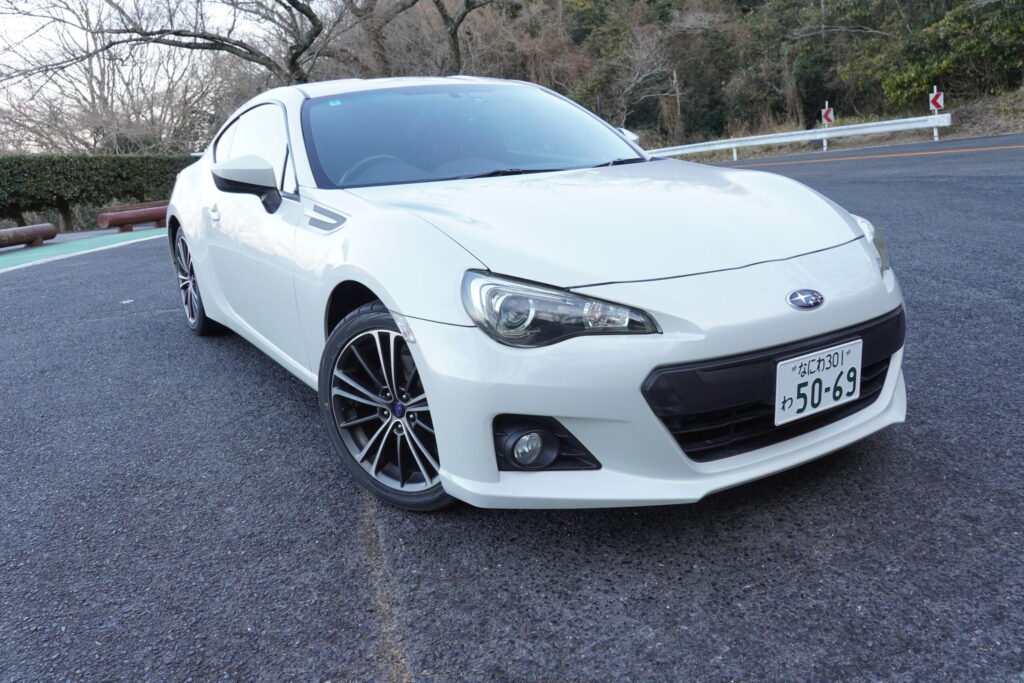
To truly experience these roads, your vehicle matters. You do not want a sluggish hybrid crossover that numbly filters out the road. You want a driver's machine. Sliding into the cockpit of a rear-wheel-drive sportscar—specifically a lightweight, naturally aspirated manual beast like the Subaru BRZ or Toyota 86—transforms a simple transfer from Point A to Point B into an unforgettable sensory event.
The immediate, communicative steering, the mechanical click of a short-throw shifter, and the precise throttle response of the boxer engine give you absolute command over every apex and elevation change. When driving through Keihoku's undulating topography, the vehicle becomes an extension of your senses, letting you feel the texture of ancient Japanese asphalt as you weave through cedar-scented air.

The Ultimate 2-Day Autumn Keihoku Itinerary: A Hour-by-Hour Deep Dive
Day 1: Conquering the Passes, Cedar Forests, and Mountain Flavors
[Day 1 Overview] Osaka Departure (07:00) ➔ Route 162 Climbing (08:30) ➔ Sugi no Koto Sugi Cedar Forest (09:45) ➔ Historical Keihoku Exploration (11:30) ➔ Traditional Gibier Lunch (13:00) ➔ Joko-ji Temple Stroll (15:00) ➔ Check-in at Traditional Onsen Ryokan (17:30) 07:00 AM – Departure from Osaka: Awakening the Boxer Engine
Your journey begins early in Osaka as the metropolis wakes up. Starting at dawn lets you clear the city's urban arteries before morning traffic builds up. Depress the clutch, push the engine start button, and let the 2.4-liter boxer engine of your Subaru BRZ come to life with its distinct low rumble. Settle into the low-slung bucket seats, adjust your mirrors, and set your navigation north toward Route 162, historically known as the Shūzan Kaidō (周山街道).
As you clear the highway network and head past northern Kyoto, the suburban landscape rapidly fades away. Concrete high-rises give way to traditional tiled-roof houses, and the horizon rises into steep, timber-clad mountains. The temperature drops, and the air becomes crisp and cool—ideal conditions for the BRZ’s high-compression engine to breathe in cold, dense autumn air.
08:30 AM – The Ascent via Route 162 (Shūzan Kaidō)
Route 162 is legendary among local driving enthusiasts. Historically, this ancient highway served as a vital trade link bringing fresh seafood—most notably mackerel—from Wakasa Bay on the Sea of Japan inland to the Emperor’s court in Kyoto. Today, it stands as one of the finest driving roads in the Kansai region.
As you pass through the Kurama and Nakagawa districts, the road begins to twist dramatically. Here, the BRZ’s low center of gravity comes into its own. Drop down into 3rd gear, heel-toe downshift into 2nd as you approach a sharp hairpin, and feel the rear-wheel-drive chassis track through the corner with absolute stability. The feedback through the steering wheel is raw and immediate, telling you exactly how much grip the tires have on the cool pavement.
Autumn paints this mountain corridor in vibrant hues. Towering Japanese maples (momiji) overhang the road like fire-colored tunnels, dropping golden leaves across the black asphalt. Sunlight breaks through the morning mist in soft beams (komorebi), illuminating the damp moss on roadside stone walls.
09:45 AM – Deep Silence: The Giant Cedars of Nakagawa and Sugi no Koto Sugi
Pulling off the main highway onto a narrow asphalt lane, you enter the heart of Kitayama Cedar territory. For over 600 years, this region has produced Kitayama Sugi (Kitayama polished log cedar), prized by traditional architects for its straight grain, knot-free trunk, and silky smooth surface used in Japanese tea ceremony houses (chashitsu).
Stop near the ancient groves to view the monumental cedar trees, including the revered Sugi no Koto Sugi. Turn off the BRZ's ignition and step out into an incredible, heavy silence. The air smells intensely of pine resin, damp earth, and decaying autumn leaves.
Standing beneath these 400-year-old giants, which stretch over 40 meters into the sky, puts human scale into perspective. The contrast between high-octane engineering and ancient natural stillness is profound.
11:30 AM – Crossing the Kasatoge Pass into the Keihoku Basin
Back behind the wheel, click the gear lever into 1st and head up toward the Kasatoge Pass (笠トンネル / 笠峠). This section features a series of sweeping double-apex curves and moderate gradients that let you balance the BRZ's chassis effortlessly with the throttle.
As you exit the dark opening of the Kasatoge Tunnel, the dense mountain forest suddenly opens up into the wide, sunlit valley of the Keihoku Basin. Flanked by rounded mountain ridges clad in brilliant red, orange, and deep evergreen trees, the valley floor reveals clean agricultural fields, golden rice paddies nearing harvest, and classic kayabuki (thatched-roof) farmhouses with smoke rising gently from their hearths.
01:00 PM – Artisanal Lunch: Wild Game (Gibier) and Local Buckwheat
Driving through mountain passes works up an appetite, and Keihoku offers some of Kyoto’s most authentic culinary secrets. Park your car at a local family-run eatery nestled near the Katsura River stream.
In Keihoku, autumn is the season for Gibier (wild game cooking). Order a steaming hot pot of Botan Nabe (wild boar hotpot), where thin slices of locally harvested wild boar are arranged like peony petals around a rich broth seasoned with homemade red miso, mountain ginger, and wild mushrooms. Accompany this with handmade Soba (buckwheat noodles) crafted using fresh mountain spring water.
Taste Profile: The wild boar meat is lean, flavorful, and sweet, pairing wonderfully with the earthy, savory depth of aged miso.
Visual Appeal: Steaming earthenware pots contrasting with the chill outside, paired with vibrant seasonal mountain greens (sansai).
03:00 PM – Cultural Immersion: Jōkō-ji Temple (常照皇寺)
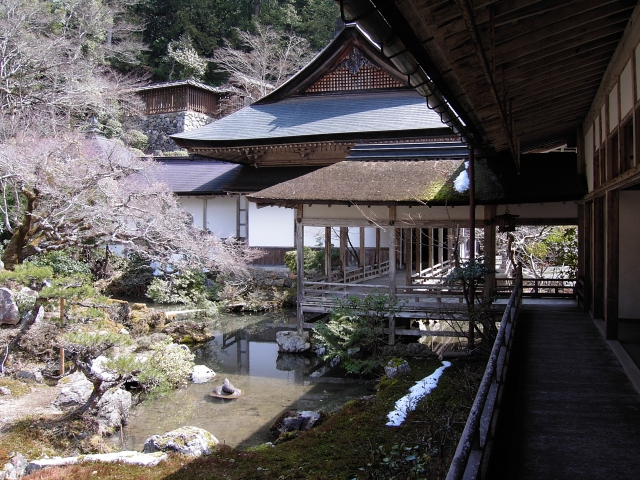
After lunch, take a short drive along narrow backcountry lanes to Jōkō-ji Temple, a hidden Zen Buddhist sanctuary established in 1362 by the retired Emperor Kōgon. Unlike the packed temples of downtown Kyoto, Jōkō-ji offers tranquility and unhurried contemplation.
Walk up the moss-covered stone steps under a canopy of fiery red Japanese maples. The temple grounds house several historically designated trees, including the famous Kokonoe-zakura cherry tree. In autumn, the garden floor turns into a vibrant carpet of fallen red leaves, reflecting against dark polished wood corridors. Take your time walking through the silent halls, listening to the soft rustling of wind through the forest and the gentle flow of nearby streams.
05:30 PM – Check-in at a Riverside Onsen Ryokan
As twilight sets in, drive along the twisting banks of the Katsura River toward your accommodation—a traditional Japanese ryokan (inn) tucked away in the forest.
After checking in, change into a yukata cotton robe and submerge yourself in an outdoor hot spring bath (rotenburo). Relaxing in thermal mineral waters while looking out at the dark silhouette of the autumn mountains is the ultimate antidote to driving fatigue.
Finish the evening with a traditional Kaiseki multi-course dinner featuring seasonal delicacies: roasted sweetfish (ayu), matsutake mushroom soup cooked in earthenware teapots (dobin mushi), and tender local Tamba beef grilled over charcoal.

Day 2: The Hidden Lake, Mountain Crests, and Coastal Windings
[Day 2 Overview] Early Morning Fog Run (07:30) ➔ Hanase Pass Thrill (09:00) ➔ Miyama Kayabuki no Sato (11:00) ➔ Coastal Drive to Miyazu & Amanohashidate (14:30) ➔ Sunset Return Run to Osaka (17:30) 07:30 AM – The Early Morning Fog Run along Route 477
Wake early to experience one of the most serene moments of driving in Japan: morning mountain fog (giri). After a traditional breakfast of grilled salted salmon, steamed rice, and miso soup, start up the BRZ. The exhaust note rings crisp through the quiet morning valley air.
Take Route 477, a narrow, technical road that carves through deep cedar valleys. At this hour, thick low-lying fog hangs in the valley bottoms, filtering the golden morning sunlight into luminous rays. The road surface can be damp, making the BRZ’s precise chassis and sensitive traction controls welcome partners as you trace tight S-curves through misty groves.
09:00 AM – The Technical Test: Hanase Pass (花背峠)
For drivers who genuinely love technical road craft, the detour toward Hanase Pass offers an exciting workout. This pass features extremely narrow single-lane stretches, switchbacks with tight radii, and steep climbs.
Here, heavy high-horsepower sports cars struggle, but a compact, agile car like the Subaru BRZ excels. The light curb weight allows for quick direction changes, while short gear ratios keep the engine right in its torque band. Steering around tight hairpin turns requires precision, smooth pedal control, and clear eyes looking far ahead down the road.
11:00 AM – Miyama Kayabuki no Sato: Living History
From Hanase, descend back into the valley and cross north into the Miyama region to visit Kayabuki no Sato (茅葺き之里). This preserved hamlet contains one of the highest concentrations of traditional thatched-roof farmhouses in Japan.
Park the BRZ in the village lot and take a leisurely walking tour. Unlike open-air museums, this is a living, working community where residents tend vegetable gardens, dry red peppers under building eaves, and maintain centuries-old architectural traditions. The thick thatched roofs (kayabuki), mossed over with age, contrast beautifully against the deep scarlet slopes of the surrounding autumn mountains.
Stop at a village café for fresh gelato made from local Miyama milk, or enjoy a cup of roasted green tea (hōjicha) while soaking in the pastoral views.
02:30 PM – Extension to the Coast: The Road to Amanohashidate
If you wish to extend your journey, press further north toward the coastal town of Miyazu. As you clear the final range of the Tamba mountains, the air shifts from sweet pine and cedar to crisp, salty sea breeze.
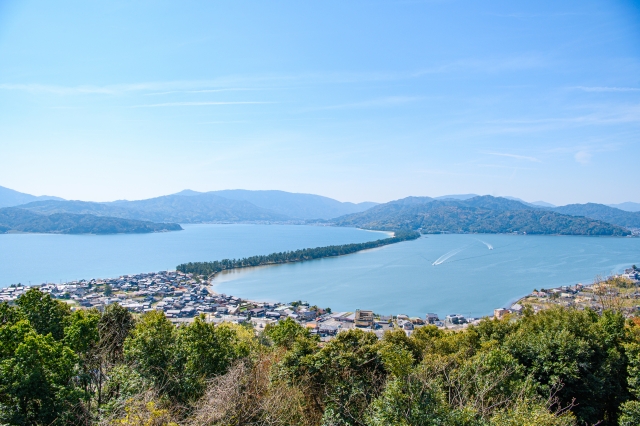
Here lies Amanohashidate (天橋立), celebrated for centuries as one of Japan’s "Three Scenic Views" (Nihon Sankei). It is a natural 3.3-kilometer sandbar covered in over 8,000 pine trees, stretching across Miyazu Bay like a green bridge floating on indigo waters.
Park at the viewpoint lookout, take the cable car up to Amanohashidate View Land, and try the traditional matanoki viewing pose—bending over to look through your legs. The sandbar instantly resembles a dragon flying upward into the sky.
05:30 PM – Sunset Return Run to Osaka
As the late afternoon sun dips toward the horizon, casting a warm golden glow across the Sea of Japan, it is time to turn the car south toward Osaka.
Joining the Kyoto Jukan Expressway, set your cruise control or enjoy the smooth highway driving as the mountain ridges fade into deep purple silhouettes against an orange sky. Settling back into the cockpit, listening to the steady hum of the highway, you can reflect on two days of pristine driving through a landscape that high-speed trains simply cannot reveal.
Expert Advice & Cultural Nuances of Driving in Japan
1. The Wonder of Japan’s Michi-no-Eki (Roadside Stations)
Do not confuse a Japanese Michi-no-Eki (道の駅) with a standard Western highway service station. Created by the government to combine rest areas with local economic development, these roadside hubs are cultural destinations in their own right.
Local Produce: Farmers bring freshly harvested produce every morning. In Keihoku and Miyama, look for wild chestnuts (kuri), matsutake mushrooms, fresh yuzu citrus, and sweet potato cakes.
Regional Souvenirs: You can pick up small-batch sake from local mountain distilleries, hand-carved cedar crafts, and fresh dairy products.
Stamp Rallies: Every Michi-no-Eki features a unique rubber commemorative stamp. Locals keep official logbooks to collect stamps from stations across the country.
Station Recommendation: Be sure to stop at Michi-no-Eki Woody Keihoku (道の駅 ウッディ京北). It features incredible massive wooden beams inside, sells delicious local bento boxes, and provides up-to-date road condition maps for surrounding passes.
2. Navigating Narrow Mountain Roads (Kōdo & Lanes)
While main routes like Route 162 are wide and well-paved, secondary mountain roads (often marked as 3-digit prefectural routes) can shrink unexpectedly down to single-lane tracks (fukoin).
Passing Bays (Dai-ichi-tai): When driving on a narrow lane, always look ahead for wider pull-out spots marked with blue signs or painted road lines. If an oncoming vehicle appears, pull into the nearest bay or stop to let them pass.
Blind Curves & Mirrors: Curved mountain roads feature large convex mirrors mounted on poles. Never round a blind corner without checking the mirror for oncoming headlights or vehicles. A short, polite tap of your horn can signal your presence around tight, blind bends.
3. Etiquette and Road Culture
Japan’s driving culture is built on deep mutual respect and quiet courtesy:
The Hazard Light Thank-You: If a driver slows down to let you merge or pass on a tight road, flash your hazard lights twice. This is the universal Japanese sign for "thank you."
Speed Limits: Posted speed limits in mountain areas are often conservative (usually 40 km/h or 50 km/h). Drive responsibly, respect local village speed zones, and yield to local drivers who know the roads well.
Detailed Logistics & Pre-Trip Tips for International Drivers
Driving in Japan is exceptionally safe, comfortable, and efficient once you understand the core mechanics of the country's road network.
1. Toll Systems & The ETC Card
Japan’s highway network is heavily tolled, managed primarily by NEXCO.
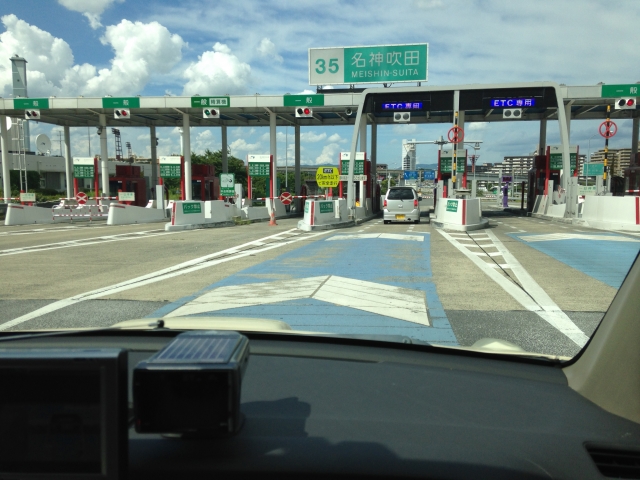
What is ETC? ETC (Electronic Toll Collection) allows cars to pass through toll gates without stopping. A wireless card is inserted into an onboard reader inside the car's glovebox or dashboard.
Why Rent One? Renting an ETC card with your rental car saves time and gives you access to ETC-only highway interchanges. Toll charges are recorded automatically on the card and settled conveniently when you return the vehicle.
Toll Gates: When approaching toll gates, slow down to 20 km/h. Drive through gates clearly marked with bright blue ETC signs. Avoid gates marked in green 一般 (General/Cash), unless you plan to pay cash or credit manually.
2. Fueling Up: Deciphering Japanese Gas Stations
Gas stations (Gasorin Stand) in Japan are divided into Full Service (Full) and Self Service (Self).
Fuel Types & Color Codes:
High-Octane / Premium (ハイオク - Haioku): Yellow Pump Handle. This is required for high-performance sports cars like the Subaru BRZ and Toyota 86.
Regular Unleaded (レギュラー - Regurā): Red Pump Handle.
Diesel (軽油 - Keiyu): Green Pump Handle.
Key Phrases at Full-Service Stations:
"Haioku Mantan, Keshokai de" = "High-octane, full tank, payment by credit card."
"Mantan" means "Fill it up!"
Attendant Courtesy: At full-service stations, staff will often wipe your windows, offer to take your trash, and direct traffic so you can pull safely back onto the roadway.
3. Parking Etiquette
Back-In Parking: In Japan, reversing into parking spaces is standard practice. It ensures clear sightlines when pulling out into traffic later.
Flap Parking Lots: In urban areas, you will often encounter automated coin parking spaces with ground flaps. Park your car straight over the lowered flap. After a few minutes, the metal flap rises under the vehicle to lock it. To leave, type your parking space number into the payment machine, pay the fee, confirm the flap has dropped flat, and drive away promptly.
4. The Magic of Driving a JDM Manual Transmission (MT)
While automatic cars are convenient, driving a pure manual JDM sports car along Japan's mountain passes is an unparalleled thrill. The mechanical connection of a clutch pedal, the precise notch of a short-throw shifter, and the ability to control engine braking down steep slopes give you absolute harmony with the machine.
Cars like the Subaru BRZ and Toyota 86 feature brilliant pedal placement designed specifically for heel-toe downshifting. Blipping the throttle on approach to a corner while matching engine revs creates a visceral sense of reward that modern automatic gearboxes simply cannot replicate.
Comprehensive FAQ for Foreign Drivers
Q1: What driver's license documentation do I need to legally drive in Japan?
You cannot rent or drive a car in Japan with just a home country driver's license. You must present:
Your original home country Driver’s License.
An International Driving Permit (IDP) issued under the 1949 Geneva Convention.
Your Passport.
Crucial Note: IDPs issued under the 1968 Vienna Convention are not accepted in Japan. Visitors holding licenses from specific countries that do not issue 1949 Geneva IDPs (such as Switzerland, Germany, France, Belgium, Monaco, and Taiwan) must instead provide an official Japanese translation of their home license issued by the Japan Automobile Federation (JAF) or their nation's embassy in Japan.
Q2: Is driving a Manual Transmission (MT) car in Japan difficult for visitors?
If you already know how to operate a manual car at home, adapting to driving in Japan is quick and straightforward. Remember that in Japan, you drive on the left side of the road, and the steering wheel is on the right side of the car. This means you will use your left hand to shift gears. The pedal arrangement (Clutch-Brake-Gas from left to right) remains identical worldwide. Within 15 minutes of quiet driving, your muscle memory will naturally adjust.
Q3: What insurance coverage should I get?
Always opt for full coverage, including Collision Damage Waiver (CDW) and Non-Operation Charge (NOC) waiver coverage. This protects you from out-of-pocket costs in the event of minor scratches, parking scrapes, or mechanical downtime.
Q4: How are mountain road conditions in autumn and winter?
In autumn (October to late November), mountain driving conditions around Keihoku are generally fantastic, dry, and cool. However, fallen leaves can become slick when wet, so drive smoothly. By late December through March, mountain passes can experience freezing temperatures, black ice, and snowfall. If traveling during winter months, ensure your rental car is equipped with studless winter tires.
Your Key to the Open Road: Start Your Journey in Osaka
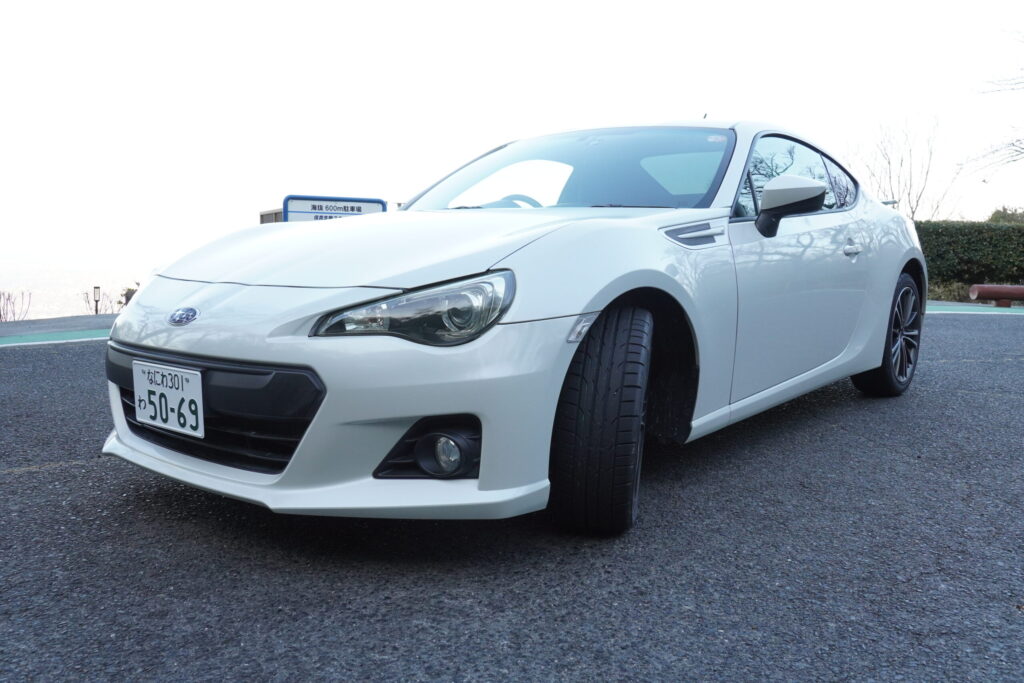
Central Kyoto’s crowded shuttle buses and jam-packed train cars show you only a small fragment of Japan's rich story. Beyond the urban limits lies an extraordinary landscape of winding asphalt, deep forests, mist-shrouded valleys, and timeless mountain villages—a world that only unlocks when you take the wheel yourself.
Whether you want to feel the chassis balance of a Subaru BRZ through the sweeping S-curves of Route 162, taste fresh mountain game hotpot in a quiet river valley, or watch the sun set over the Sea of Japan, the open road is waiting.
When you arrive in Kansai, bypass the mundane commuter options and elevate your travel experience. Visit Omoren Osaka Chuo (おもしろレンタカー大阪中央店) to pick up a meticulously maintained, driver-focused Japanese sports car. Get in, turn the key, engage first gear, and discover the thrilling world of Secret Japan on your own terms.