
1. 86 Drive to Kushimoto: The Philosophy of Driving in Japan
As a former conductor for the Kintetsu Railway, I spent years listening to the rhythmic, hypnotic clack-clack of steel wheels on steel rails. I knew the timetables by heart, traced the precise tracks cutting through the Kansai region, and watched thousands of travelers gaze through tinted passenger windows as the Japanese countryside flashed past like a curated slideshow. Train travel in Japan is legendary—punctual, hyper-efficient, and undeniably romantic in its own right. But it has a boundary. Trains run on fixed ribbons of steel. They deliver you to the center of a town, to designated platforms, and to prescribed destinations. They dictate your timing, lock you into rigid schedules, and keep you separated from the raw, breathing landscape behind double-paned glass.
When I traded the conductor’s whistle for the key to a manual sports car and set out to explore Japan on four wheels, my entire perception of this country shattered and rebuilt itself. Beyond the train platforms lies what I call "Secret Japan"—a realm of twisting mountain passes, hidden coastal coves, fog-shrouded cedar forests, and roadside eateries that no rail line will ever reach.
Starting a road trip from Osaka is the ultimate juxtaposition. You begin in a hyper-dense, neon-soaked megalopolis, a city defined by the roar of expressway flyovers and the endless energy of Dotonbori. But turn the key of an iconic Japanese driver's machine like the Toyota 86, point its long bonnet south toward the Kii Peninsula, and within an hour, the concrete sprawl gives way to dramatic topography.
Driving in Kansai is an immersive philosophy. It’s about total autonomy: stopping at an unnamed turnout because the morning mist is rising off a mountain stream just right, downshifting into a tight hairpin turn where the road hugs a sheer cliff, or feeling the sudden shift in air temperature as you burst out of a hand-carved mountain tunnel onto a sunlit coastal highway. The Kii Peninsula, jutting down into the Pacific Ocean south of Osaka, is a spiritual land of sacred pilgrimage routes, rugged geology, and legendary driving roads.
While train tourists are bound to major stations like Shirahama or Kii-Katsuura, trapped by bus schedules that run once every two hours, a sports car grants you keys to the entire coastline. You can trace the edge of Honshu all the way to its southernmost tip: Kushimoto. To truly experience the depth, drama, and freedom of Japan, you have to sit in the driver's seat, wrap your hands around a leather steering wheel, feel the mechanical feedback of a three-pedal manual transmission, and write your own itinerary.

2. 86 Drive to Kushimoto: The 2-Day Itinerary Deep Dive
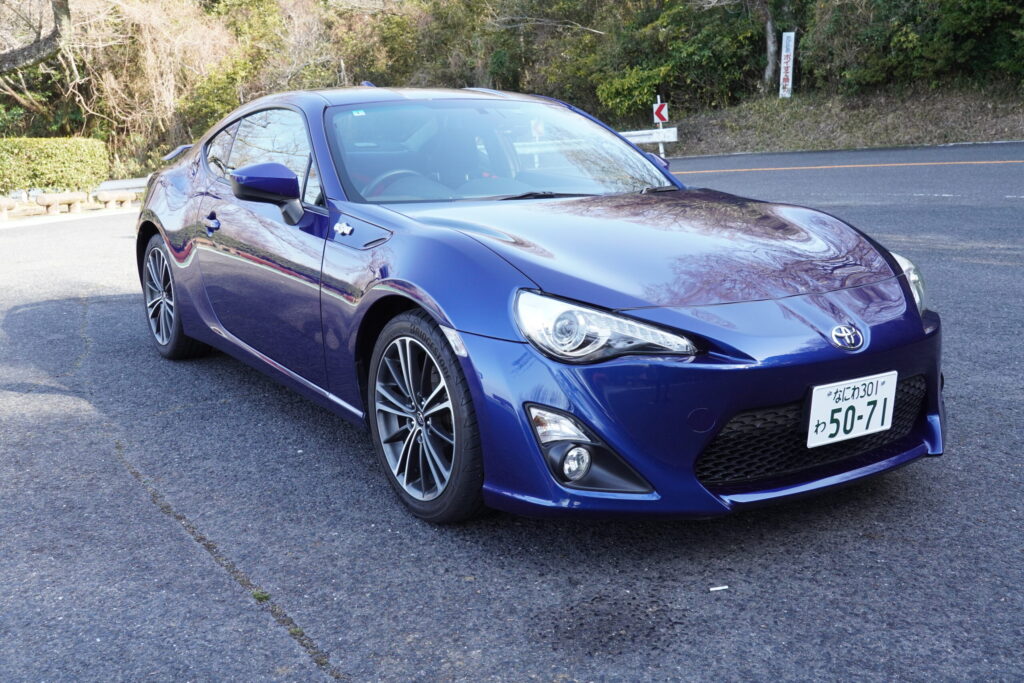
This detailed 2-day itinerary takes you from the bustling center of Osaka all the way to Honshu's southernmost point at Kushimoto and back. Designed specifically for those who appreciate the art of driving, this journey pairs world-class coastal roads with breathtaking geology, fresh seafood, and rich historical stops.
Day 1: Chasing the Coast to the Edge of the Island
07:00 AM – Departure from Osaka: The Urban Gateway
Your journey begins early in Osaka. As the city warms up under a pale morning light, you climb into the low-slung cockpit of the Toyota 86. Adjusting the seat, you press the clutch pedal to the floor, slip the short-throw gear lever into neutral, and thumb the starter button. The naturally aspirated 2.0-liter boxer engine fires to life with a mechanical bark, setting a gentle vibration through the aluminum pedals and steering column.
Leaving the city, you navigate the Hanshin Expressway system, merging south toward the Hanwa Expressway. The morning air is crisp, and as the towering apartments of Osaka recede in your rearview mirror, the flat urban landscape gives way to the rolling green foothills of Wakayama Prefecture. The Toyota 86 feels instantly composed—its low center of gravity and communicative chassis turning simple highway lane changes into precise, satisfying maneuvers.
08:30 AM – Hanwa Expressway to Yuasa: The Birthplace of Soy Sauce
As you cross the border into Wakayama, the air changes. The faint scent of city exhaust is replaced by coastal ozone and the fresh aroma of citrus groves clinging to steep hillsides. Take the exit toward Yuasa, a quiet, beautifully preserved coastal town nestled along a sheltered bay.
Yuasa is historically renowned as the birthplace of Japanese soy sauce (shoyu). In the 13th century, a Buddhist monk returning from China brought back a recipe for fermented miso paste; locals discovered that the liquid settling at the bottom of the aging barrels produced a rich, savory seasoning.
Park your 86 near the historic district, where narrow lanes are lined with traditional dark-timber machiya buildings featuring delicate wooden lattice screens (koshi). Walking through these peaceful alleys, you'll catch the rich, sweet, and umami-heavy aroma of wood-fired soy sauce brewing in centuries-old cedar vats. Grab a small cup of soy sauce soft-serve ice cream—a surprisingly delicious blend of salty caramel-like depth and creamy sweet dairy—before stepping back into the car.
10:30 AM – The Coastal Twist: Senjojiki & Sandanbeki Cliffs
Rejoining Route 42, the road begins to carve its way along the coastline. Here, the drive transitions from simple transport into pure automotive joy. Route 42 ribbons between emerald-green ocean cliffs and dark indigo water.
Your next stop is the geological wonder of Shirahama, starting with Senjojiki ("One Thousand Tatami Mats"). This massive plateau of soft, multi-layered sandstone has been sculpted by millions of years of crashing Pacific waves and fierce coastal winds. Walking out onto the vast, flat pale-yellow stone shelves, you feel the sheer power of the ocean as turquoise swells explode into brilliant white foam against the rocks below.
Just a three-minute drive down the coast brings you to Sandanbeki Cliffs, a sheer, 50-meter-high wall of basalt stretching for two kilometers along the ocean edge. The Toyota 86 tracks effortlessly along the cliffside road, its precise hydraulic-feel steering giving you an intimate read of the asphalt's grip.
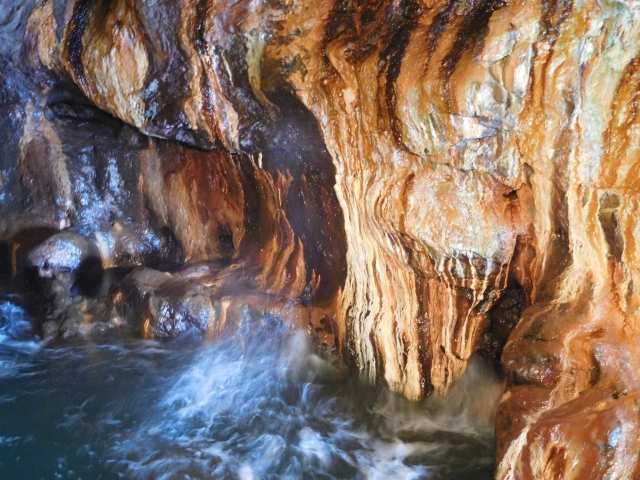
At Sandanbeki, step into an elevator inside the visitor facility that plunges 36 meters down through solid rock into a hidden sea cave. Below, in the dim, atmospheric light, ocean tides rush furiously into cavernous vaults where 12th-century Kumano Navy pirates once hid their fleets. The roaring acoustic resonance of waves crashing inside the underground cavern is unforgettable.
01:00 PM – Lunch: Gourmet Catch at Toretore Market
Driving appetite piqued, head ten minutes inland to Toretore Market in Shirahama, one of the largest seafood markets in western Japan. Owned by the local fishery cooperative, this massive market is a sensory explosion of lively vendors, icy displays, and the freshest sea treasures imaginable.
Watch master fishmongers perform live tuna butchering (maguro no dismantlement), effortlessly slicing massive bluefin tuna with sword-like knives. For lunch, step up to the fresh seafood stalls and assemble your ultimate kaisen-don (seafood rice bowl): plump fat-marbled raw tuna, sweet scallops, glowing orange salmon roe (ikura), and delicate sea urchin (uni), served over warm sushi rice. The fish melts instantly on your tongue, packed with clean, ocean sweetness. Pair it with a steaming bowl of red miso soup brewed with local sea lettuce.
02:30 PM – Driving the Coastal Ribbons: Susami Coastal Road (Route 42)
Now begins one of the finest coastal driving stretches in all of East Asia. South of Shirahama, the heavy traffic completely thins out. Route 42 hugs the Pacific coastline tighter than ever, snaking through a landscape where dense green pine forests plunge directly into the dark blue sea.
This is where the Toyota 86 truly shines. The road presents a rhythmic sequence of sweeping third-gear curves, tight second-gear hairpins, and sudden elevation changes as the highway climbs over rocky headlands and drops back to sea level. Heel-and-toeing down into second gear, you listen to the engine rev-match smoothly.
The chassis remains flat, neutral, and endlessly communicative. Every input through the thick leather steering wheel translates instantly into crisp direction changes. Windows down, the salty sea air fills the cockpit, accompanied by the mechanical rasp of the boxer engine bouncing off the stone retaining walls. You aren't just traveling through the landscape—you are actively participating in it.
04:30 PM – Arrival at Hashigui-iwa Rocks: The Giant's Causeway of Japan
As you enter the boundaries of Kushimoto Town, you are greeted by one of Japan's most awe-inspiring geological sights: Hashigui-iwa Rocks. Spanning roughly 850 meters across the sea toward Kii-Oshima Island, this straight line of approximately 40 massive, strangely shaped stone pillars rises dramatically out of the water like the ruined piers of a giant's bridge.
Geologically, these pillars are the result of ancient volcanic magma rising up through soft mudstone layers; over millions of years, the softer surrounding earth was eroded away by relentless ocean tides, leaving only the hard quartz-porphyry rocks standing tall.
Local folklore, however, offers a grander tale: it is said that the great Buddhist monk Kobo Daishi was challenged by a demon to build a bridge across the sea to Kii-Oshima in a single night. Before he could finish, the demon faked a rooster's crow to trick the monk into believing dawn had arrived, causing Kobo Daishi to drop his work and leave the bridge forever incomplete.
Park the 86 in the seaside lot. As the afternoon light begins to soften, the sharp, dark silhouettes of the rock pillars cast long shadows across the shallow, glass-like coastal waters.
06:30 PM – Sunset & Southernmost Dinner in Kushimoto
With the sun dipping low toward the horizon, drive the short distance onto Cape Shionomisaki, the absolute southernmost point of Japan’s main island of Honshu. Standing at the ocean’s edge beside the historic white lighthouse (first lit in 1878 and designed by British engineer Richard Henry Brunton), you gaze out across a unbroken, 270-degree panorama of the Pacific Ocean. Looking closely at the horizon, you can visibly trace the soft curvature of the Earth. The evening sky transforms into a brilliant gradient of fiery crimson, deep lavender, and indigo.
For dinner in Kushimoto town, seek out local dining spots specializing in Katsuo (Skipjack Tuna) and local wild-caught fish. Try Katsuo no Rikyu-meshi—fresh slices of skipjack tuna marinated in a rich, sweet sesame-soy sauce, served over hot rice. Halfway through the meal, pour hot green tea or savory dashi broth over the bowl to enjoy it as a comforting ochazuke.
08:30 PM – Check-in & Onsen Relaxation
Check into your local oceanfront hotel or traditional ryokan along the Kushimoto coast. After a long day of focused driving, sink into a natural hot spring bath (onsen) fed by deep thermal waters. Soaking in an outdoor bath (rotenburo) with the cool Pacific night breeze on your face and the rhythmic sound of crashing waves in the distance, your muscles completely relax, leaving you primed for tomorrow’s mountain adventure.

Day 2: Sacred Mountains, Waterfalls, and the Ultimate Mountain Pass
06:30 AM – Sunrise at Cape Shionomisaki: Honshu's Edge
Wake up before dawn and drive the 86 back out to the sprawling grass park of Cape Shionomisaki. Standing at the stone monument marking latitude 33°26'N, watch the morning sun break directly over the Pacific Ocean. The light glints off the low hood of the sports car, highlighting its sharp fender swells and aggressive stance against the vast ocean backdrop. It’s a moment of pure serenity—just you, your machine, and the endless horizon at the absolute edge of the island.
08:30 AM – Inland Ascent: Route 371 & Shizugawa Valley
Bid farewell to the coast and turn the nose of the 86 north, venturing into the interior of the Kii Peninsula along Route 371. The transformation in scenery is instant and profound. Ocean vistas give way to ancient cedar forests, deep river valleys with water so crystal-clear you can spot swimming sweetfish (ayu), and mist-covered mountain peaks.
The driving character changes completely here. The wide, sweeping coastal curves are replaced by technical, narrow mountain roads that follow the contours of the valley floor. The light weight and perfect 50:50-style balance of the Toyota 86 make quick work of the rapid left-right transitions. The steering communicates every texture of the road, keeping you fully engaged as you climb higher into the sacred Kumano realm.
10:30 AM – Kumano Nachi Taisha & Nachi Falls
Arrive at Kumano Nachi Taisha, one of the three sacred grand shrines of the Kumano Kodo pilgrimage network, an ancient spiritual path trodden by emperors, monks, and pilgrims for over a thousand years.
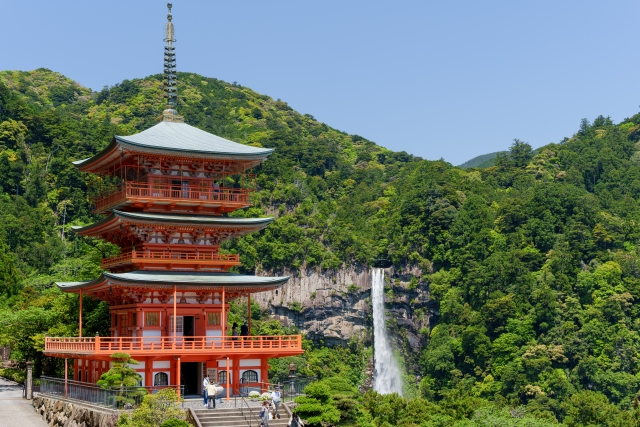
Park the car and climb the stone stairs lined with towering ancient Japanese cedars (sugi). At the top, the vermillion architecture of the shrine stands proudly against the green mountain forest. Just past the shrine grounds lies the iconic view of Japanese postcards: the three-story red pagoda of Seiganto-ji temple with Nachi Falls plunging dramatically in the background.
Dropping 133 meters in a single continuous curtain of water, Nachi Falls is the tallest single-tiered waterfall in Japan. It is not merely a natural feature—it is revered as a kami (a divine spirit) itself. As you approach the base of the waterfall, the air grows noticeably cooler, filled with fine mist and a powerful hum that seems to vibrate right through your chest.
01:00 PM – Fresh Maguro (Tuna) Lunch in Kii-Katsuura
Head down the mountain to the nearby port town of Kii-Katsuura, Japan’s premier harbor for fresh (never frozen) raw tuna catches. The harbor front is alive with coastal energy.
For lunch, visit a local harbor restaurant to experience authentic Raw Maguro. Because the fish caught here are brought directly to market on ice without being deep-frozen, the texture is remarkably silky, rich, and juicy. Order a tuna tasting platter featuring three cuts: Akami (lean, deep-red meat with a clean, slightly iron-rich finish), Chutoro (medium-fat belly with a perfect balance of tenderness and flavor), and Otoro (fatty belly that melts rich and sweet the moment it touches your tongue).
03:00 PM – The Mountain Pass: Koya-Ryuujin Skyline
Leaving Katsuura, point your car toward the ultimate driving crescendo of the trip: the Koya-Ryuujin Skyline (Route 371). This famous ridge-line road stretches over 40 kilometers through the spine of the Wakayama mountains, connecting the hot spring sanctuary of Ryujin Onsen to the sacred Buddhist mountain peak of Mount Koya.
Formerly a toll road, this asphalt ribbon climbs high above the tree line, running along razor-thin mountain ridges. On either side, dramatic valleys drop away into green seas of clouds.
This is world-class tarmac. The asphalt is wide, smooth, and expertly banked, offering an endless succession of medium-speed S-bends, sweeping ridge turns, and elevation drops. In the 86, you can maintain a sublime driving rhythm. Downshift into third, weight transfers smoothly to the front tires as you turn in, hit the apex precisely, and feed in the throttle as the chassis tracks clean and true out of the bend. The engine sings up to its 7,400 RPM redline, echoing through the empty mountain passes.
06:30 PM – Descent into Nara/Osaka & Car Return
As the Koya-Ryuujin Skyline gradually descends through the ancient temple town of Mount Koya (Koyasan), the mountain roads slowly unwind back into the gentler traffic of Nara and Osaka.
Arriving back in the city lights of Osaka by early evening, you pull into the rental shop. As you switch off the ignition, the cooling exhaust ticks quietly in the garage air. You step out onto the pavement, tired in the best possible way—your mind refreshed by coastal winds, mountain air, and two days of pure, unadulterated driving freedom.
3. 86 Drive to Kushimoto: Expert Advice & Cultural Nuances
Driving through rural Japan reveals an intricate, fascinating subculture that train travelers completely miss. To truly enjoy a road trip in the Kii Peninsula, you need to know how to navigate these local nuances like a seasoned insider.
The Magic of Michi-no-Eki (Roadside Stations)
Japan’s Michi-no-Eki system is nothing like the bleak, concrete rest stops found along North American or European highways. Created by the government to revitalise rural economies, these government-designated roadside stations are cultural and culinary hubs.
Along Route 42 and through the mountains of Wakayama, stopping at a Michi-no-Eki is an essential part of the journey. Every station is unique, featuring local farmers selling fresh produce harvested that morning, artisanal food stalls, and regional specialties you cannot buy anywhere else.
Michi-no-Eki Susami: Features a oceanfront viewing terrace and fresh Katsuo (skipjack) snacks.
Michi-no-Eki Hashigui-iwa: Placed directly in front of the giant rock pillars, perfect for sampling Pondan (local citrus) soft-serve ice cream while enjoying the view.
Michi-no-Eki Ryujin: Nestled deep in the mountains, offering handmade wooden crafts carved from local Kishu cedar and piping-hot wild boar ramen (Inoshishi Ramen).
Finding Hidden Culinary Gems
When driving through rural Wakayama, ignore generic tourist recommendation lists. Look instead for modest roadside establishments flying a fluttering fabric banner (nobori) outside.
A banner reading めはり寿司 (Mehari-zushi) points to a sacred local delicacy: warm rice wrapped in salted mustard leaves, seasoned with savory dashi. It was originally created as a portable lunch for foresters working deep in the Kii mountains.
Look for banners reading 和歌山ラーメン (Wakayama Ramen)—locally called Chuka Soba. Wakayama ramen features a rich, dark soy-sauce-and-tonkotsu (pork bone) broth paired with thin, straight noodles, topped with tender chashu pork and a swirl of pink-and-white fish cake (narutomaki). A unique local tradition: on every table in a true Wakayama ramen shop, you'll find boiled eggs (yude-tamago) and leaf-wrapped mackerel sushi (haya-zushi). You simply eat them while waiting for your noodles and report how many you had when paying at the end!
Etiquette and Driving Realities on Rural Japanese Roads
The "Thank You" Hazard Lights: When a driver pulls over on a narrow mountain lane to let your faster sports car pass, or yields to let you turn onto a busy road, flash your hazard lights twice after passing. This two-blink hazard flash is the universal Japanese sign of polite gratitude.
Single-Lane Mountain Passes (Kukodo): Some secondary mountain roads in Wakayama carry the designation Kukodo (literally "National Route," but jokingly referred to as "hardship routes"). These roads can narrow down to a single car width with limited visibility around blind turns. Drive with control, keep your eyes scanning ahead for small turnout pockets (daishotai), and don't hesitate to give a short, gentle tap on the horn before entering blind, single-lane rock cuts.
4. 86 Drive to Kushimoto: Detailed Logistics & Pre-Trip Tips
Navigating Japan’s road system in a high-performance Japanese Domestic Market (JDM) vehicle is seamless once you understand the core mechanics of Japanese transportation logistics.
1. Navigating the Expressways with ETC Cards
Japan’s highway network is immaculate, smooth, and fast, but it relies almost entirely on a toll system.
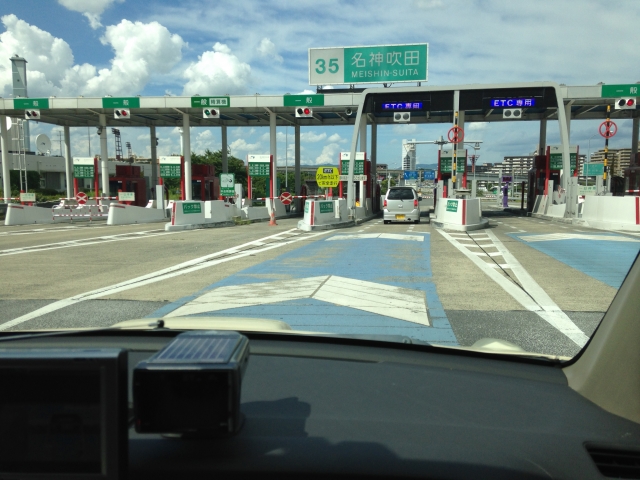
The ETC (Electronic Toll Collection) System: When renting your sports car, always request an ETC Card from the rental agency. The card slips into a dedicated electronic reader box inside the glove compartment or center console.
How to Use It: As you enter an expressway toll plaza, slow down to 20 km/h and enter the lane marked in blue neon with the letters ETC. The toll barrier will automatically read your card, display the fee, and lift open without requiring you to stop or roll down your window for cash payments. You simply settle the accumulated toll balance at the rental desk upon returning the car.
2. Master the Japanese Gas Station (Gasorin Stando)
Refueling in Japan is an exceptionally polite and efficient experience. Stations come in two varieties: Full Service and Self Service (セルフ - Serufu).
At a Full-Service Station:
An attendant will guide you to a pump with vocal calls and hand signals. Roll down your window and state three things:
Fuel Type: For a performance car like the Toyota 86, you MUST specify "High-Octane" (ハイオク - Haioku). Never use regular gasoline.
Amount: Say "Mantan" (満タン), which means "Fill it up."
Payment Method: Say "Card-o" (Credit Card) or "Cash-u".
Example phrase: "Haioku, mantan, card-o de onegaishimasu" (High-octane, fill it up, credit card please).
While your car is fueling, the attendants will often wipe down your windshield, side mirrors, and hand you a clean damp towel to wipe down your dashboard. When pulling out back onto the street, an attendant will stand in traffic to guide you out safely with a deep bow.
At a Self-Service Station:
Touchscreen kiosks are available in English. Select "High-Octane" (color-coded YELLOW across almost all Japanese gas station chains like ENEOS and Shell). Select the payment method, insert cash or card, fill the tank until the auto-nozzle clicks, and take your change receipt to the automated cash return machine if paying cash.
3. Parking Etiquette
Back-In Parking: In Japan, pulling forward into a parking space is considered bad practice. Always reverse-park into spaces. This ensures maximum safety when pulling out later and keeps parking lots organized. The Toyota 86 features excellent rear visibility and compact dimensions, making reverse parking effortless.
Nighttime Street Parking: On-street overnight parking is almost non-existent in Japan. Always park in marked pay lots (Times 24, Coin Parking) or designated hotel parking facilities.
4. The Joy of Driving a Manual JDM Sports Car
The Toyota 86 was crafted by engineers with a single purpose: absolute driving purity. It isn't about excessive horsepower; it is about balance, weight distribution, and tactile feedback. Operating a manual three-pedal setup in Japan adds a profound level of engagement to your travel. Clicking through the short-throw 6-speed gearbox as you climb through dense Japanese forest roads creates a visceral connection to the land that no passenger bus or train can ever recreate.
5. 86 Drive to Kushimoto: Comprehensive FAQ
Q1: What driving license documentation do I need to rent and drive a car in Japan?
To drive legally in Japan, visitors must present two crucial documents alongside their passport upon vehicle pick-up:
Your valid physical driver's license from your home country.
A valid International Driving Permit (IDP) issued under the 1949 Geneva Convention on Road Traffic.
CRITICAL NOTE: Japan strictly recognizes only IDPs issued under the 1949 Geneva Convention. Permits issued under the 1968 Vienna Convention or other agreements are NOT valid in Japan.
Driver's License Exceptions: Holders of driver's licenses issued in Taiwan, Switzerland, Germany, France, Belgium, Monaco, or Slovenia do not use an IDP. Instead, they must carry their original home license accompanied by an Official Japanese Translation issued by the Japan Automobile Federation (JAF) or their nation's embassy/consulate in Japan.
Be sure to secure your IDP or official translation in your home country before departing for Japan!
Q2: Is rental insurance included, and what coverage should I get?
Basic mandatory third-party liability insurance is included with rental vehicles, but it leaves significant coverage gaps for collision damage and business interruption fees. Always opt for full Collision Damage Waiver (CDW) and Non-Operation Charge (NOC) Waiver protection. This ensures zero out-of-pocket financial liability in the event of an scratch, tire puncture, or accident, allowing you to drive with complete peace of mind.
Q3: I haven't driven a manual transmission (MT) car in a while. Is driving an MT sports car in Japan difficult?
Japan drives on the left side of the road, meaning the driver's seat is on the right, and you will operate the gear shifter with your left hand. While this might sound intimidating at first, the Toyota 86 features an exceptionally forgiving clutch pedal feel, crisp gear gates, and smooth throttle response. Within 15 minutes of quiet suburban driving, your muscle memory adapts naturally. Furthermore, drivers in Japan are remarkably patient, polite, and law-abiding, making it one of the safest and least stressful environments in the world to enjoy a manual performance car.
Q4: What are the winter road conditions like along the route to Kushimoto?
The coastal Route 42 through southern Wakayama and down to Kushimoto stays relatively warm year-round due to the warm Kuroshio Ocean Current; snow and ice are extremely rare along the coast even in January or February. However, if you plan to drive high mountain passes like the Koya-Ryuujin Skyline between December and March, snow and black ice can accumulate rapidly. During winter months, check road reports ahead of time and ensure your rental vehicle is equipped with winter studless tires if heading into high-elevation inland zones.
6. 86 Drive to Kushimoto: The Final Thoughts
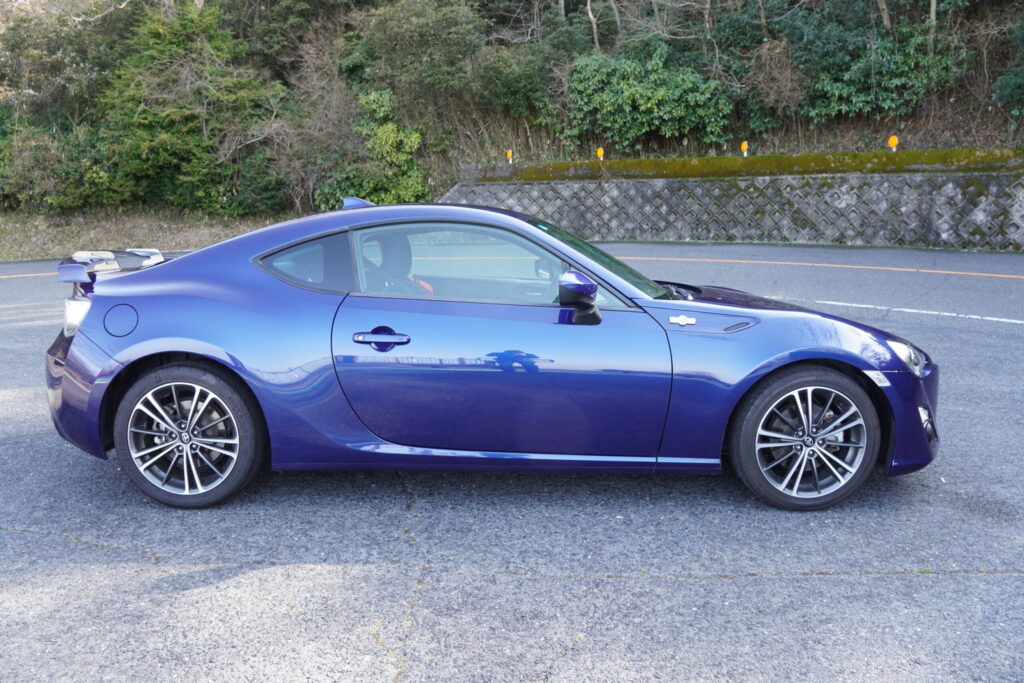
Japan is a country that rewards the curious traveler—the one who refuses to stay strictly on the worn tourist trail, who craves the mechanical hum of a fine engine, and who understands that the journey itself is the ultimate destination.
Standing at Cape Shionomisaki, watching the Pacific ocean spray rise against the ancient rocks of Hashigui-iwa, you realize that this is a side of Japan that train windows simply cannot reveal. The twisting mountain asphalt of the Koya-Ryuujin Skyline, the rich umami taste of freshly brewed Yuasa soy sauce, and the satisfying click of a short-throw shifter on a quiet coastal highway become memories burned deep into your soul.
Your dream JDM road trip across Kansai shouldn't be spent behind the wheel of a boring, soulless economy commuter box. To truly unlock the passion of Japan’s iconic mountain roads, you deserve a true driver's machine—a meticulously maintained, manual Toyota 86 or Subaru BRZ that responds to your every input with precision and joy.
When you are ready to stop watching Japan pass by through a train window and step into the driver's seat yourself, your journey begins in the heart of Kansai at Omoren Osaka Central (おもしろレンタカー大阪中央店).
Located conveniently in Osaka, Omoren Osaka Central is the premier destination for international car enthusiasts, travelers, and adventurers. Specializing in an incredible lineup of iconic JDM sports cars, pure manual performance machines, and custom-tuned vehicles—including the legendary Toyota 86 and Subaru BRZ—their team provides fluent, welcoming service tailored specifically for overseas drivers.
The open coastal highways are calling. The mountain passes are waiting. Grab your International Driving Permit, book your Toyota 86 at Omoren Osaka Central, turn the key, and set out to discover your own Secret Japan today.