
Mount Rokko Night Drive: The Philosophy of Driving in Japan
If you were to consult standard travel guides for Western tourists visiting Kansai, they would all hand you the same formulaic blueprint: step onto a clean, hyper-efficient Kintetsu or JR train, swipe your IC card, and ride the rails between the neon-soaked avenues of Osaka, the temples of Kyoto, and the historic shrines of Nara.
I say this with profound respect for the iron rails. Before I owned an enthusiast car rental business in Osaka, I spent years working as a conductor for Kintetsu Railway. I know the rhythm of the tracks intimately—the gentle sway of the carriages as they slice through urban density, the crisp safety calls at every platform, and the mesmerizing precision of Japan’s rail infrastructure. Rail is a marvel of human engineering. It is punctual, smooth, and undeniable in its utility.
Yet, as a conductor standing at the rear of the train looking out at the passing landscape, I was haunted by what lay beyond the tracks.
When you ride a train, your journey is dictated by steel lines laid down decades or centuries ago. You observe Japan through tinted glass, framed by fixed stations, rigid timetables, and crowded platforms. You see the places tourist boards want you to see, operating at the pace the timetable demands. But the true spirit of Japan—what I call Secret Japan—does not live next to a train station platform.
Secret Japan is found in the misty mountain passes (tōge) that weave like ribbon through cedar-forested peaks. It hides in quiet coastal turnouts overlooking the Pacific Ocean, in late-night rural resting stops where steam rises from freshly piped ramen bowls, and in the sharp, rhythmic downshifts required to clip an apex on a deserted, winding asphalt ridge.
To truly experience the geography of Japan—to feel its terrain, its elevation changes, its atmospheric shifts, and its soul—you must take the steering wheel into your own hands.
Starting a journey from Osaka behind the wheel of an authentic Japanese Domestic Market (JDM) machine changes your entire relationship with the country. Osaka is the beating heart of Kansai, a energetic megalopolis ringed by dramatic mountain ranges. Just beyond its sprawling concrete borders lies one of the most celebrated driving grounds in Japanese motoring history: Mount Rokko (六甲山) in Hyogo Prefecture.
For decades, Mount Rokko has held a legendary, near-mythical status among local automotive enthusiasts, mountain car clubs, and night-drivers. Rising steeply behind the port city of Kobe, this mountain complex features technical, undulating asphalt ribboning across peaks that reach nearly 1,000 meters above sea level. By day, it offers lush natural escapes and sweeping vistas of the Seto Inland Sea. But as the sun dips below the horizon, Rokko undergoes a dramatic transformation. The cool mountain air settles over the ridge, light traffic dissolves, and the summit roads open up into a illuminated arena framing what is recognized as one of Japan’s top three night views (Nihon San-dai Yakei).
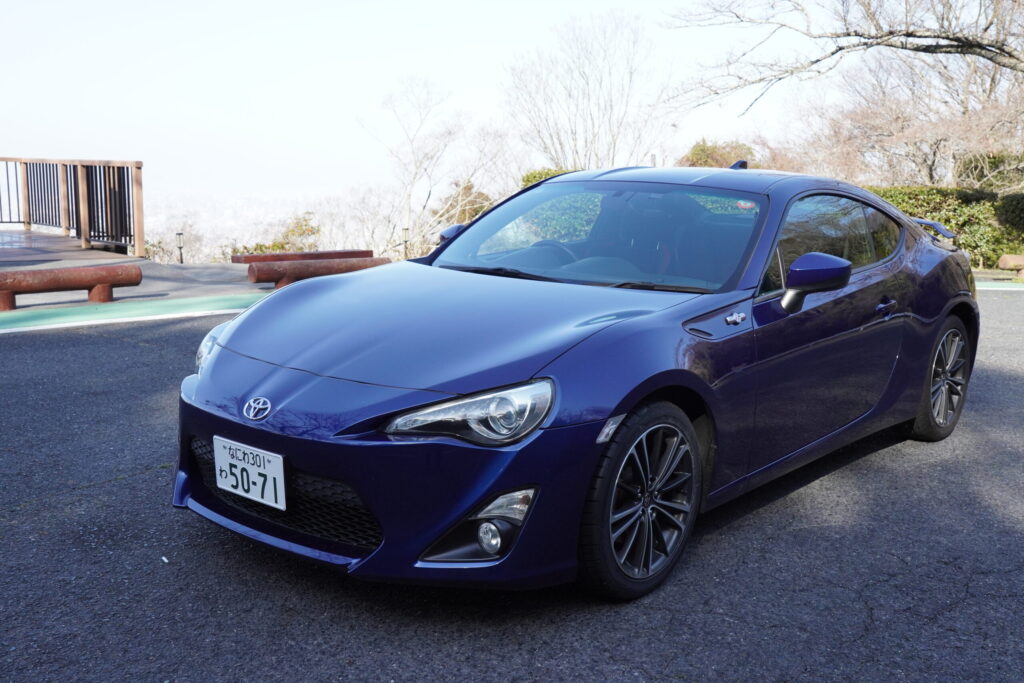
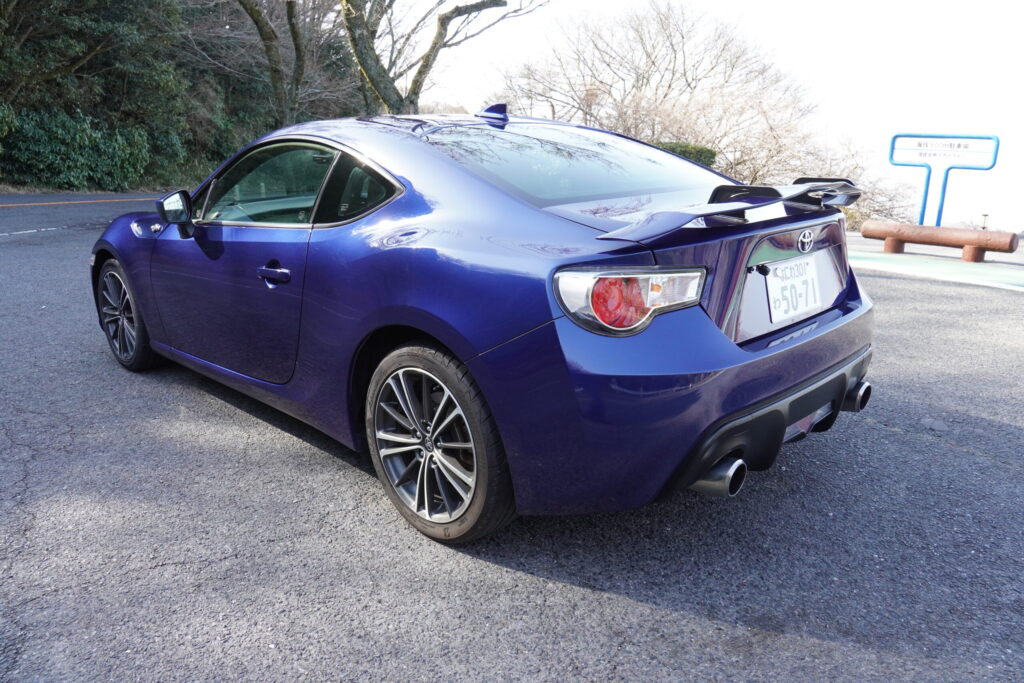
To conquer this ridge, you do not want a bloated luxury SUV or an soulless automatic crossover. You need a tool designed specifically for technical mountain roads. You need a rear-wheel-drive, naturally aspirated icon engineered with a low center of gravity and telepathic steering feedback: the Toyota 86 (or its twin, the Subaru BRZ).
In a world obsessed with raw horsepower numbers and straight-line electric acceleration, the Toyota 86 stands as a love letter to driving purity. Inspired by the legendary AE86 Corolla Levin / Sprinter Trueno of the 1980s—the light, agile coupe that birthed modern Japanese drift culture—the modern 86 features a front-engine, rear-wheel-drive layout powered by a high-revving boxer engine. It sits low to the tarmac, placing your hip point close to the car's center of mass. Every input you make through its compact, perfectly weighted steering wheel or manual shifter generates an immediate, tactile response.
When you drop into the bolstered bucket seat of a Toyota 86, grip the tactile leather-wrapped wheel, and slide the short-throw manual shifter into first gear, the barrier between you and the Japanese landscape evaporates. You are no longer just a spectator watching Japan pass by a train window; you become an active participant in its landscape.
This is the definitive guide to exploring Mount Rokko—not as a passive passenger, but as a driver taking on one of Japan's grandest driving routes.

Mount Rokko Night Drive: The 2-Day Itinerary Deep Dive
Day 1: Departure, Mountain Ascent, and the Million-Dollar Night View
DAY 1 ITINERARY TIMELINE
13:00 | Osaka Departure & Highway Cruiser
14:30 | Base of Mt. Rokko & Tire Pressure Check
15:15 | The Ascent: Rokko Driveway & Omote-Rokko Tōge
16:45 | Summit Ridge & Rokko Garden Terrace Sunset
18:30 | The Main Event: The Million-Dollar Night Drive
20:30 | Mountain Ridge Dinner: Local Kobe Cuisine
22:00 | Late-Night Run: Ura-Rokko Touge
23:30 | Check-in: Arima Onsen Mountain Retreat
13:00 — Departure from Osaka Central
Your adventure begins in the bustling core of Osaka. Slipping through the grid of city streets, the mechanical hum of the Toyota 86’s flat-four boxer engine thrums steadily under the hood. Sliding the short-throw shifter through its tight gates immediately engages your senses. As you merge onto the Hanshin Expressway Route 3 (Kobe Line), the concrete jungle slowly gives way to elevated views of Osaka Bay.
Driving a lightweight JDM sports car along Japan’s urban expressways is an exercise in pure focus. The suspension is firm, telegraphing every seam in the elevated roadway directly through your seat. The steering feels dart-y and eager, responding to micro-adjustments with zero slop. Keep the engine cruising comfortably at 3,000 RPM in 6th gear as you chart a westward path toward Kobe. To your right, the imposing silhouette of the Rokko Mountain range looms like a dark green fortress guarding the northern sky, beckoning you away from the flat coastal plain.
14:30 — The Base of Mount Rokko & The Transition Zone
Leaving the expressway at the Mikage exit, the environment shifts rapidly. Within minutes, the flat, hyper-dense suburban grids of Kobe give way to increasingly steep residential incline ramps. This is the transition zone where urban settlement abruptly yields to primordial wilderness.
Before beginning the steep mountain ascent, pull into a local roadside convenience store (Konbini) at the base of the slope. Grab a hot canned coffee—a staple of Japanese car culture—and check your vehicle parameters. Inspect your tire condition, ensure your windows are spotless for nighttime visibility, and let the engine idle smoothly as you review your ridge maps. Above you, the canopy of dense forest thickens, and the air temperature drops noticeably.
15:15 — The Ascent: Omote-Rokko Driveway & Technical Tōge
Engage first gear, release the clutch, and press down on the throttle. The ascent up the Omote-Rokko Driveway begins immediately with a dramatic surge in gradient.
The road waste no time introducing itself: tight hairpins (hairpin-curve), off-camber sweeps, and short acceleration bursts carved directly into the rugged granite face of the mountain. Here, the Toyota 86 shines in its natural element. The naturally aspirated 2.0-liter boxer engine loves to rev. As you drop down into 2nd and 3rd gear, dipping the engine into its upper powerband, the intake sound resonates against the damp stone retaining walls.
                  [ Omote-Rokko Mountain Pass Route ]

     SUMMIT (931m) -> [Rokko Garden Terrace / Observation]
                           ^
                           |   (Technical Hairpins & S-Bends)
                           |
                  [ Omote-Rokko Driveway ]
                           ^
                           |   (Ascent Phase / Cedar Canopy)
                           |
     BASE LEVEL   -> [Kobe Suburban Edge / Mikage Entrance]
The geometry of Omote-Rokko is relentless. Sweeping left-hand curves compress the suspension, testing mechanical lateral grip before quickly transitioning into sharp right-hand climbing hairpins. Heel-and-toe downshifts become second nature: a sharp blip of the throttle with the right side of your foot while braking matches engine revs seamlessly, keeping the rear-wheel-drive chassis balanced and composed as you drop down gears.
The scent of warm rubber and mechanical heat mixes with the crisp, sweet aroma of Japanese red pine and mountain cedar flowing through your cracked windows. Sunlight filters through the dense tree canopy in scattered amber shafts (komorebi), flickering across the hood of the car as you climb higher toward the clouds.
16:45 — The Summit Ridge & Rokko Garden Terrace Sunset
Breaking through the final climbing switchbacks, the road levels out as you reach the summit ridge highway (Rokko Sanjo Road), perched roughly 900 meters above sea level.
Park the 86 at the Rokko Garden Terrace, a designated scenic area offering unobstructed panoramic views toward the south and east. Walk out to the viewing platforms as late-afternoon daylight begins its slow retreat. Beneath your feet, the entire Kansai basin unfolds like an intricate cartographic map. You can trace the vast sweep of Kobe Port, the artificial islands of Port Island and Rokko Island, the long span of the Akashi Kaikyo Bridge stretching toward Awaji Island, and the sprawling outline of Osaka across the glowing waters of the bay.
As dusk approaches, the sky transforms into a gradient of deep indigo, magenta, and burnished gold. The lower valley begins to cool, drawing light mist down through the mountain ravines while the urban lights below flick on one by one like a vast field of electrical fireflies.
+-------------------------------------------------------------------+
|               ROKKO GARDEN TERRACE VIEWING METRICS               |
+------------------------------------+------------------------------+
| Elevation                          | 880 meters above sea level   |
| Historical Designation             | Top 3 Night Views of Japan   |
| Visual Span                        | Kobe, Osaka Bay, Kansai Airport|
| Ideal Viewing Window               | 30 mins post-sunset (Blue Hr)|
+------------------------------------+------------------------------+
18:30 — The Main Event: The Million-Dollar Night Drive
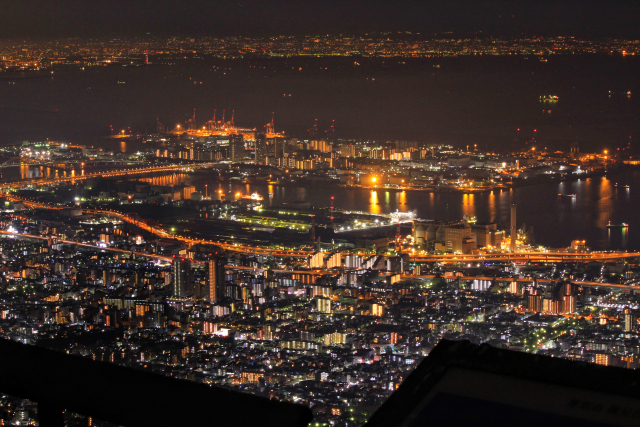
When total darkness falls over the mountain, Mount Rokko reveals its iconic identity. Kobe’s night skyline is officially designated as a "Ten Million Dollar Night View" (Jūman-dol no Yakei), an aesthetic spectacle powered by millions of urban lights reflecting off the dark waters of Osaka Bay.
Climb back into the low-slung cockpit of the Toyota 86. Fire up the engine, turn on your headlights, and set off along the high-ridge route heading toward the Kiku-seidai observation point on Mount Maya via the Maya Driveway.
Driving this high-altitude ridge at night is a thrilling sensory experience. The road is carved along the sharp edges of mountain crests, illuminated only by the throw of your headlights piercing the cool dark air. To your left, dark mountain forests line the road; to your right, through breaks in the tree line, the brilliant glowing carpet of the metropolitan area sparkles hundreds of meters below.
The Toyota 86 tracks precisely along the dark mountain road. Its sharp, linear steering response allows you to place the front wheels exactly where you want them along the inner road markings, while the chassis stays balanced and glued through long, high-altitude curves. The contrast is sharp and captivating: inside the car, you are focused on rev matching, mechanical precision, and reading the dark asphalt ahead; outside, an endless sea of electric city light stretches all the way to the horizon.
[ NIGHT DRIVE SENSORY MAP ]

 (VISUALS)  -> Piercing LED headlights cutting through pitch-black mountain crests.
               Brilliant electric carpet of Kobe & Osaka shining below.

 (SOUNDS)   -> The crisp, mechanical rasp of the boxer engine bouncing off rock faces.
               Tire hum echoing through empty mountain passes.

 (FEELINGS) -> Cool, crisp alpine air rushing through cracked windows.
               Tactile feedback of the manual shifter and weighted steering wheel.
20:30 — Mountain Ridge Dinner: Local Kobe Delicacies
After an exhilarating drive along the summit roads, pause your night run to recharge at one of the secluded mountaintop dining spots or cozy lodge cafes dotting the ridge.
Opt for a warming, rich local dish such as Kobe Beef Curry or a hot bowl of Alpine Miso Stew. The intense local flavors taste exceptionally rewarding after hours of intense concentration behind the wheel. Over steaming food, local drivers and automotive enthusiasts often gather at mountain turnouts, quietly discussing chassis setups, tire compounds, and weather conditions over hot cans of coffee purchased from roadside vending machines.
22:00 — Late-Night Technical Run: Ura-Rokko Tōge
With traffic down to near zero, it is time to experience the darker, more technical side of Mount Rokko: Ura-Rokko Tōge (The Rear Rokko Pass).
While the front side of the mountain faces the bright lights of Kobe Port, the rear side plunges north into quiet, uninhabited mountain valleys. Ura-Rokko is famous in Japanese grassroots motorsport folklore as a demanding, highly technical road featuring tight double-apex turns, rapid elevation drops, and banked corners framed by steep drainage ditches (mizoguchi).
Slip the 86 into gear and begin the descent. Here, driving technique and smooth control inputs take priority over high speeds. You gently trail-brake into tight entry corners to load up the front tires, feeling the front end turn crisply into the apex before squeezing the throttle on exit as the rear-wheel-drive platform pushes you smoothly down the straightaway. The 86’s chassis communicates everything: traction levels, subtle road ripples, and weight transfer are instantly felt through your seat and hands. It is a thrilling rhythm—brake, downshift, turn, clip the apex, roll onto the throttle, repeat.
23:30 — Check-In: Arima Onsen Mountain Retreat
At the base of the northern descent lies Arima Onsen, one of Japan’s oldest and most famous hot spring towns, with a recorded history going back over 1,000 years.
Park the Toyota 86 at a traditional Ryokan (Japanese inn) nestled along the narrow, winding stone streets of the historic bath town. Slip into the healing thermal waters of Arima’s famous Kinsen (Golden Spring)—rich in iron and salt mineral deposits that tint the water a deep reddish-brown. As the hot, mineral-rich water eases your muscles, you can reflect on the thrill of navigating the dark mountain ridges above, the mechanical hum of the engine still echoing gently in your mind.

Day 2: The Northern Ridge, Coastal Vistas, and Mountain Descent
DAY 2 ITINERARY TIMELINE
08:30 | Morning Onsen Soak & Traditional Breakfast
10:00 | Historic Exploration of Arima Onsen Town
11:30 | Morning Ridge Ascent: Omote vs. Ura Comparison
13:00 | Mt. Rokko Summit Alpine Botanical Garden
14:30 | Coastal Descent via Mt. Maya Driveway
16:00 | Kobe Port & Harborland Waterfront Drive
18:00 | Return Sunset Drive to Osaka Central
08:30 — Morning Soak & Traditional Alpine Breakfast
Wake up to the serene, refreshing atmosphere of the northern Rokko mountain range. Before breakfast, take another early morning dip in the Kinsen hot springs to awaken your senses. Follow this with a traditional Japanese Ryokan breakfast featuring locally sourced grilled salmon, dark miso soup, warm rice, pickled mountain vegetables, and fresh tofu.
10:00 — Exploring Historic Arima Onsen
Take a slow walk through the narrow, steeply winding cobblestone alleyways of historic Arima Onsen. The town’s preserved timber buildings, wooden cider shops, and steaming hot spring vents present a stark, beautiful contrast to the modern technical roads you tackled the night before. Stop by a local artisan shop to pick up Tanzan Senbei (traditional crispy carbonated water crackers baked using natural spring water) before returning to your vehicle.
+-------------------------------------------------------------------+
|                   DAY 2 EXPLORATION HIGHLIGHTS                    |
+-------------------+-----------------------------------------------+
| Location          | Key Experience                                |
+-------------------+-----------------------------------------------+
| Arima Onsen Town  | Ancient mineral springs, wooden architecture  |
| Nishi-Rokko Route | High-speed sweeping turns, cedar forests      |
| Mt. Maya Crest    | Daytime panoramic view of Kansai Bay Area     |
| Kobe Harborland   | Waterfront urban drive, iconic red Port Tower |
+-------------------+-----------------------------------------------+
11:30 — Morning Ridge Ascent: The Nishi-Rokko Route
Re-key the ignition of the Toyota 86. The engine fires up with a sharp, eager mechanical rumble that cuts through the cool mountain air. Today you explore the western section of the ridge along the Nishi-Rokko Driveway.
In contrast to the dark, mysterious atmosphere of your night drive, daylight reveals a vibrant, green landscape. The road climbs through dense groves of Cryptomeria trees (Japanese cedar) and vibrant maple trees. Light streams through the canopy, creating a dappled pattern on the asphalt. The Nishi-Rokko route features wide, flowing medium-speed curves that allow you to hold a steady rhythm in 3rd gear, enjoying the balanced chassis balance and precise throttle response of the rear-wheel-drive sports car.
13:00 — Mt. Rokko Alpine Botanical Garden & Summit Lunch
Stop near the upper mountain plateau to visit the Rokko Alpine Botanical Garden. Established in 1933, this high-altitude garden houses thousands of alpine plant species from around the world, taking advantage of Mount Rokko's cool high-elevation climate.
After a relaxing walk through the gardens, enjoy a relaxed lunch at an alpine mountaintop restaurant. Treat yourself to a hearty bowl of local hand-cut Shinshu buckwheat noodles (soba) or a plate of hot, crispy pork cutlet curry (Katsu Curry), paired with clear mountain water.
14:30 — The Coastal Descent: Maya Driveway
Begin your descent down the southern face of the mountain using the steep, technical Maya Driveway.
Descent driving demands a different skillset than climbing. It requires smooth, progressive braking, careful weight distribution management, and patience on corner exits. The Toyota 86’s light weight (roughly 1,200 kg) shines on downhill mountain passes. Unlike heavy luxury sedans or tall SUVs, which quickly overheat their brake pads and strain their front tires on long descents, the lightweight 86 stays cool, light, and perfectly controllable under braking.
As you drop down through the switchbacks, the vast blue expense of the Seto Inland Sea grows larger and larger through your front windshield, creating a breathtaking visual illusion of driving straight down into the ocean.
 [ MOUNT ROKKO DRIVING ROUTE COMPARISON ]

  OMOTE-ROKKO (Front Route)
  + Gradient: Steep & Aggressive
  + Character: Tight Hairpins & Urban Overlooks
  + Best For: Sunset Views & Climbs

  URA-ROKKO (Rear Route)
  + Gradient: Technical & Undulating
  + Character: Deep Forest Canopies & Drainage Ditches
  + Best For: Pure Technical Driving & Precision

  NISHI-ROKKO (West Route)
  + Gradient: Smooth & Flowing
  + Character: Medium-Speed Sweepers & High Ridge Crests
  + Best For: Scenic Daylight Cruising
16:00 — Kobe Port & Harborland Waterfront Drive
Re-entering the sea-level urban landscape of Kobe, route the car toward Kobe Harborland and the historic Meriken Park waterfront district.
Cruising past the striking crimson lattice structure of the Kobe Port Tower and historic brick warehouses (Renga-sōko), the Toyota 86 draws admiring glances from local enthusiasts. Kobe’s waterfront road network features smooth asphalt, wide boulevards, and crisp sea breezes coming off the harbor—a delightful visual contrast to the tight forest roads you conquered earlier in the day.
18:00 — Sunset Return Drive to Osaka Central
As evening approaches, join the Hanshin Expressway once more to head east back toward Osaka. Driving into the warm golden light of the setting sun, the skyline of Osaka glows brilliantly ahead.
You return to the metropolis not as a tired tourist who spent the weekend squeezed into crowded train cars, but as an insider who navigated one of Japan's most historic mountain road networks behind the wheel of an iconic JDM sports machine.
Mount Rokko Night Drive: Expert Advice & Cultural Nuances
Driving in Japan is a wonderful, deeply gratifying experience, but it comes with its own unique set of cultural customs, road etiquette, and unwritten rules. To ensure your trip is safe, rewarding, and culturally respectful, keep these expert insights in mind:
The Magic of Japan's "Michi-no-Eki" (Roadside Stations)
While expressways feature large Service Areas (SA), Japan’s rural secondary roads and mountain routes are served by Michi-no-Eki (Roadside Rest Stations). Created to promote local tourism and provide drivers with high-quality rest stops, these facilities are vastly superior to standard gas station turnouts found in the West.
A Michi-no-Eki is a window into the regional culture of the area you are driving through. At the base of Mount Rokko and surrounding rural Hyogo Prefecture, these stations offer fresh local produce, regional sweets, hot tea, artisanal crafts, and high-end vending machines. They serve as natural gathering spots for local automotive enthusiasts. Parking your JDM car at a mountain Michi-no-Eki on a cool evening often opens up quiet, friendly interactions with local drivers who share a deep passion for sports cars.
+-------------------------------------------------------------------+
|               EXPRESSWAY REST STOP CLASSIFICATIONS                |
+-------------------+-----------------------------------------------+
| Type              | Features & Amenities                          |
+-------------------+-----------------------------------------------+
| Service Area (SA) | Large complexes, 24/7 gas stations, restaurants|
| Parking Area (PA) | Smaller stops, vending machines, restrooms    |
| Michi-no-Eki      | Local regional hubs, farm markets, food stalls|
+-------------------+-----------------------------------------------+
Deciphering Mountain Road Etiquette
Japanese driving culture is built on deep mutual respect, polite consideration, and spatial awareness. When driving technical mountain roads (tōge), keep these key practices in mind:
- Hazard Light Gratitude ("Arigatou Hazards"): When a local driver pulls over into a designated turnout lane to let your faster car pass, tap your hazard lights twice after merging ahead. This simple two-blink gesture is the universal Japanese motoring sign for "Thank you."
- Yielding to Faster Local Drivers: If you notice a local driver approaching quickly in your rearview mirror while you are exploring an unfamiliar mountain pass, gently signal left and pull into the next available turnout (Daihi-jo) to let them pass smoothly.
- Noise Courtesy near Residential Zones: While the sound of a Toyota 86 engine echoing off mountain walls is deeply satisfying, always drop into higher gears to keep your engine noise down when passing through small mountain villages, residential zones, or peaceful temple districts.
Navigating Local Hidden Gems
When exploring the Mount Rokko area, avoid relying exclusively on standard English tourist guides for dining choices. Look for modest, small-scale dining establishments displaying traditional fabric curtains (noren) hanging over their entrance doors.
In the foothills surrounding Mount Rokko, seek out traditional roadside Izakaya (Japanese taverns) and cozy Soba houses. These spots offer outstanding regional dishes—such as crispy pork cutlets, fresh mountain vegetables (sansai), and rich, slow-simmered beef soups—at a fraction of the prices charged in heavily commercialized tourist zones.
Mount Rokko Night Drive: Detailed Logistics & Pre-Trip Tips
Navigating Japanese roads in a modern JDM machine is remarkably straightforward once you understand the basic logistical framework. Here is everything you need to know before turning the key:
Navigating Tolls with the ETC (Electronic Toll Collection) Card
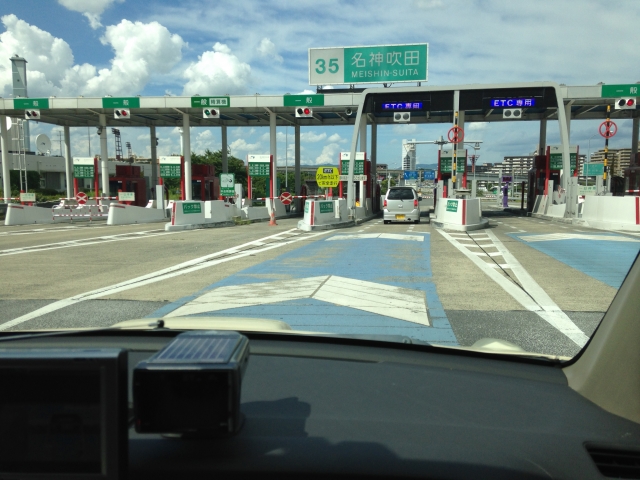
Japan’s high-quality expressway network—including the Hanshin Expressway connecting Osaka to Kobe—is fully tolled. While manual cash lanes exist at highway interchanges, they can cause delays and require exact Japanese yen currency.
The most seamless way to travel is using an ETC (Electronic Toll Collection) Card. This small wireless card inserts directly into a dedicated reader hidden inside your rental vehicle’s glove box or dashboard. As you drive through green ETC lanes at toll plazas at speeds up to 20 km/h, the system automatically logs your journey. You simply settle your accumulated toll bill conveniently when you return the car at the end of your trip.
[ ETC TIER LANE GUIDE AT HIGHWAY TOLL PLAZAS ]

 +-----------------------+------------------------------------------+
 | GREEN ETC LANES       | Automatic wireless toll processing       |
 |                       | (Requires ETC Card installed in vehicle) |
 +-----------------------+------------------------------------------+
 | PURPLE CASH/MIXED     | Manual payment lanes                     |
 |                       | (Accepts Credit Cards & Japanese Yen)    |
 +-----------------------+------------------------------------------+
Master Gas Station Interactions: The Magic Words
Refueling your rental vehicle in Japan is an enjoyable, highly polite experience. Gas stations are divided into Full Service (Furu) and Self Service (Serufu).
At a Full Service station, friendly attendants in clean uniforms will direct you to an available pump, wipe your windows, and take your trash. To handle gas station interactions smoothly, memorize these three key terms:
+-------------------------------------------------------------------+
|               ESSENTIAL GAS STATION PHRASES                       |
+-------------------+-----------------------------------------------+
| Phrase            | Meaning                                       |
+-------------------+-----------------------------------------------+
| "Mantan"          | Fill the tank completely (Full Tank)          |
| "Haiku-oku"       | Premium High-Octane Gasoline (Required for 86)|
| "Genkin"          | Cash Payment                                  |
| "Kādo"            | Credit Card Payment                           |
+-------------------+-----------------------------------------------+
Example interaction: Step out of the car, bow slightly, and say: "Haiku-oku, mantan, kādo de onegaishimasu" (High-octane, full tank, paying by credit card, please). The attendant will handle everything seamlessly from there.
Precision Parking Etiquette
Parking in Japanese cities and mountain areas follows strict rules:
- Always Reverse Park: In Japan, reverse-in parking is universal practice. It ensures maximum safety when pulling back out into active traffic.
- Flap Parking Locks (Lock Plate): In automated urban parking lots, a small metal flap will rise underneath your car's belly 5 minutes after you park. To leave, enter your parking spot number into the central payment machine, pay the displayed fee, wait for the flap to lower completely, and carefully drive out.
[ FLAP PARKING AUTOMATION FLOW ]

  1. Reverse into empty bay -> 2. Metal flap rises automatically after 5 mins
                                                   |
  4. Flap lowers completely <- 3. Pay fee at machine using spot number
The Thrill of Driving a Manual JDM Machine
Driving a manual Toyota 86 on real Japanese roads offers a level of visceral mechanical engagement that no modern automatic car can replicate.
The pedal layout in the 86 is optimized for precise heel-and-toe downshifts, the clutch engagement point is sharp and intuitive, and the mechanical feedback through the shifter connects you directly to the car's drivetrain. Every turn along a Japanese mountain pass becomes a masterclass in car control—balancing chassis weight, selecting the ideal gear, and matching engine revs as you sweep through beautiful natural scenery.
Mount Rokko Night Drive: Comprehensive FAQ
Q1: What international driving documentation is required to drive a rental sports car in Japan?
To legally operate a motor vehicle on public roads in Japan, you must present a valid International Driving Permit (IDP) issued under the 1949 Geneva Convention on Road Traffic, along with your original valid home country driver's license and your passport.
Important Warning regarding IDP Validity:
Japan strictly recognizes only IDPs issued under the 1949 Geneva Convention. Permits issued under the 1968 Vienna Convention or other international treaties are NOT valid in Japan. Drivers holding licenses from specific countries (including Germany, France, Switzerland, Belgium, Taiwan, and Monaco) must carry an official Japanese translation of their home license prepared by the Japan Automobile Federation (JAF) or their nation’s embassy in Japan.
For detailed, step-by-step documentation requirements and country-specific rules, please review the official licensing guide here:
https://www.omoren.com/en/guide/license (Note: Please copy and paste this URL into your browser to verify your country's license eligibility before booking).
Q2: What insurance coverage is included, and how does liability work for sports rentals?
Reputable sports car rentals include comprehensive foundational insurance coverage encompassing Personal Injury Liability, Property Damage Liability, and Vehicle Damage Coverage. A standard deductible (* 免責額 / Menseki*) and Non-Operation Charge (NOC—a flat fee covering business disruption while a damaged car is repaired) apply in the event of an accident. Premium full-coverage collision waiver packages are available to reduce your financial risk for total peace of mind on mountain roads.
Q3: I am rusty at driving a manual transmission (MT). Is a Toyota 86 difficult to drive?
Not at all. The Toyota 86 is renowned as one of the most forgiving, rewarding manual sports cars ever produced. It features a light, highly predictable clutch pedal feel, clear engagement feedback, and an hill-start assist feature that prevents backward rolling on steep inclines. A few minutes of driving through quiet suburban streets will quickly bring your manual driving confidence right back.
Q4: Are Mount Rokko's mountain passes safe to drive during the winter months?
During spring, summer, and autumn, Mount Rokko offers ideal driving conditions. However, from late December through February, high-altitude summit roads can occasionally experience freezing temperatures, black ice, or light snowfall. During winter months, driving requires checking live weather conditions, choosing vehicles fitted with studless winter tires, or timing your drives during clear daytime hours.
Mount Rokko Night Drive: The Final Thoughts
+-------------------------------------------------------------------+
|               YOUR UNFORGETTABLE JDM JOURNEY AWAITS               |
+-------------------------------------------------------------------+
|  CAR: Toyota 86 / Subaru BRZ (Manual Transmission, Rear-Wheel Drive)|
|  ROUTE: Osaka -> Kobe -> Mount Rokko Summit -> Arima Onsen        |
|  EXPERIENCE: "Million-Dollar Night View", Mountain Passes, Onsen   |
+-------------------------------------------------------------------+
Japan is waiting for you. But the real Japan—the thrilling, romantic, atmospheric country of misty mountain passes, quiet coastal roads, illuminated mountain ridges, and glowing summit outlooks—cannot be experienced from the seat of a crowded tour bus or a passing train.
It is waiting for you on the sharp switchbacks of the Omote-Rokko Driveway. It is found in the mechanical intake rasp of a high-revving boxer engine bouncing off dark granite rock faces. It is captured in the breathtaking moment you break through the high mountain canopy to reveal the vast, sparkling electric sea of the Kobe and Osaka skylines far below.
Stop traveling like a passive spectator. Take control of your journey, drop into a bolstered bucket seat, slide a short-throw shifter into first gear, and carve your own path through the legendary mountains of Japan.
Your ultimate Kansai mountain road trip starts in Osaka Central. Reserve your manual Toyota 86 today at Omoren Osaka Central (おもしろレンタカー大阪中央店), grab the keys to a legendary JDM machine, and set off on an unforgettable driving adventure across Japan's finest roads!