
Ah, Japan. A land of ancient traditions, futuristic marvels, and a public transportation network so legendary, it’s practically a deity. As someone who once spent countless hours orchestrating the intricate dance of Kintetsu trains across this very landscape, I can attest to its unparalleled efficiency. But here’s a secret, whispered by the wind through mountain passes and carried on the spray of hidden waterfalls: the train, for all its glory, only shows you one face of Japan. The true, untamed, utterly breathtaking spirit of this archipelago? That, my friends, is revealed when you slip behind the wheel of a JDM legend.
Why trade the serene clickety-clack of the rails for the throaty growl of an engine? Because the rails, while magnificent, are shackles. They dictate your pace, your destination, your very perception of time. As an ex-conductor, I guided countless passengers along predefined paths, but my heart yearned for the detours, the spontaneous U-turns, the unmapped wonders. To truly experience Kansai, to unlock the verdant mysteries of Nara in summer – its cool, refreshing water activities, its serene, shaded sanctuaries, its vibrant local festivals, and its spectacular fireworks displays – you need the freedom that only a car, a proper JDM machine like the nimble Toyota 86, can provide. Osaka, with its bustling energy and superb connectivity, serves as the perfect launchpad for this vehicular pilgrimage.
Public transportation, as efficient as it is, keeps you tethered to the tourist trail, to the well-trodden paths. But with an 86 or BRZ, you don’t just visit Japan; you immerse yourself in its very fabric. You ascend winding mountain roads where every turn reveals a vista more stunning than the last. You discover tranquil riverbanks where the only sounds are the rustle of leaves and the gentle murmur of water. You stumble upon tiny, family-run eateries known only to locals, serving flavors that transcend any Michelin-starred experience. This is what I call “Secret Japan” – a realm of unparalleled beauty, profound serenity, and exhilarating discovery, hidden just beyond the reach of the bullet train and the bus stop. It’s where the adventure truly begins, where you dictate the journey, and where every mile driven is a memory forged.
奈良の夏, 水遊び, 涼しいスポット, 祭り, 花火-The 2-Day Itinerary: Deep Dive
Prepare yourselves, fellow adventurers, for a journey unlike any other. This isn't just a trip; it's a sensory symphony, an intimate dance with the spirit of Nara's summer, orchestrated by you and the magnificent Toyota 86. From Osaka, we will plunge into a landscape of emerald rivers, ancient forests, and skies ablaze with starlight and fireworks. Every hour is crafted to immerse you, to cool you, and to thrill you.
Day 1: Mountain Serenity and Aqueous Delights
08:00 - 09:00: Osaka Dawn & The Awakening of the 86
The morning air in Osaka is still relatively fresh as you make your way to pick up your chariot for the next two days. Imagine the anticipation building as you approach, perhaps catching the glint of sunlight off the sleek lines of a gleaming Toyota 86. This isn't just a rental car; it's a precision instrument, designed for the very roads we're about to conquer. The moment you slide into the driver's seat, the firm embrace of the bucket seats, the perfect positioning of the pedals, the tactile satisfaction of the gear knob – it all sings a promise of adventure. A quick, confident turn of the key, and the 86's engine awakens with a purposeful growl, a low thrumming that sends a shiver of excitement down your spine. Your route takes you away from the urban sprawl, towards the verdant eastern reaches of Osaka Prefecture, before gracefully crossing into Nara. The city gradually melts away, replaced by increasingly lush landscapes. The initial stretches of highway offer a chance to familiarize yourself with the 86's immediate responsiveness, its eager spirit.
09:00 - 10:30: Ascent into the Yamato Highlands
As you leave the expressway, the roads begin to narrow, and the gradient steepens subtly. This is where the 86 truly comes alive. The steering, surgically precise, communicates every nuance of the tarmac. You're not just driving; you're conducting a symphony of grip and momentum. The scenery transforms dramatically: concrete gives way to towering cedar forests, their ancient boughs dappled with morning light. The air, crisp and clean, washes through the open windows, carrying the scent of pine and damp earth. You'll navigate a series of exhilarating, gentle bends, the 86 leaning into each curve with an almost instinctive grace. The engine note, a refined mechanical chorus, rises and falls with your throttle inputs, a constant, engaging companion. This isn't merely a transit phase; it's the overture to your Nara adventure, a thrilling introduction to the rhythm of Japanese mountain driving. You feel a connection to the machine, a symbiotic relationship forming as you ascend towards the deeper, cooler heart of Nara.
10:30 - 12:00: Dorogawa Onsen & Ancient Springs
Your destination for the morning is the atmospheric village of Dorogawa Onsen, nestled deep within the Ōmine Mountains. The drive here is a marvel in itself, a testament to the 86's agility on narrow, winding mountain passes. The road twists and turns like a serpent, carving its way through dense, ancient forests. Each hairpin bend presents a new challenge, and the 86 responds with unflappable composure, its balanced chassis and communicative steering making every turn a joy. As you descend into the valley, the air noticeably cools, the vibrant greens of the trees intensified by the morning mist clinging to the higher peaks. Dorogawa Onsen is not just a hot spring village; it's a gateway to an ancient spiritual landscape. This area has been a pilgrimage site for Shugendo ascetics for centuries, its clear mountain springs and limestone caves revered as sacred. The village itself feels like a step back in time, with its traditional wooden ryokan and the faint scent of sulfur wafting from the springs. The geological history here is fascinating: the surrounding peaks are predominantly limestone, carved over millennia by water, leading to the formation of impressive caves and the pristine clarity of the local rivers. The sense of tranquility is palpable, a stark contrast to the world you left behind in Osaka.
12:00 - 13:00: Tenkawa River & Refreshing Dips
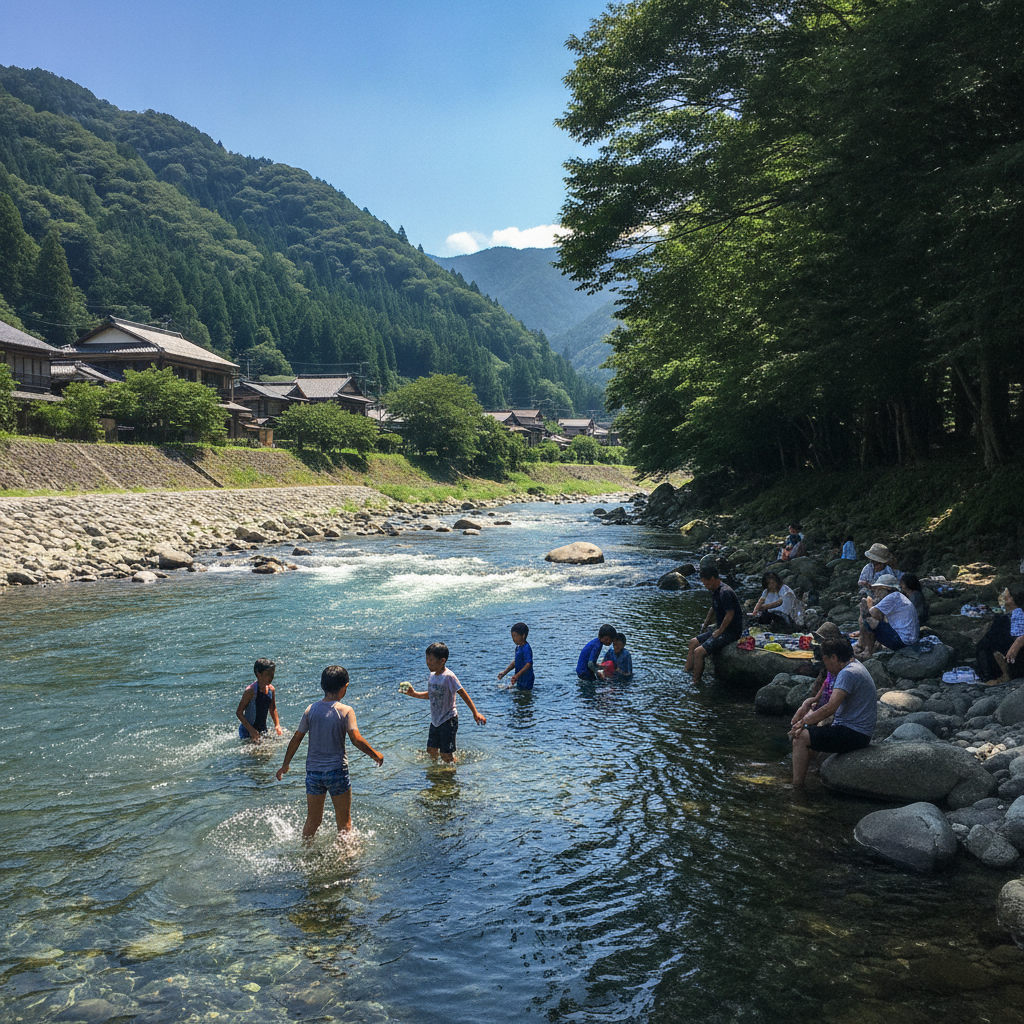
Just a short drive from Dorogawa, the crystal-clear waters of the Tenkawa River beckon. This is your first true water activity, a glorious respite from summer’s embrace. You park the 86 in a designated area, its engine ticking softly as it cools, and make your way to the riverbank. The moment your feet touch the water, a wave of exhilarating coolness washes over you. The Tenkawa is renowned for its purity, fed by underground springs and snowmelt from the distant peaks. The water gleams an impossible emerald green, reflecting the surrounding forest like a polished gem. You can wade into the shallows, the smooth river stones a gentle massage underfoot, or find a deeper pool for a more invigorating dip. The sound of the river, a constant, soothing murmur, is utterly hypnotic. Children splash joyfully, their laughter echoing softly against the rocks. The feeling of the current against your skin, the cool embrace of the water, is an immediate antidote to the summer heat. It’s a place of simple, profound joy, a testament to Nara’s natural abundance. For those seeking spiritual tranquility, a visit to Ryusenji Temple, nearby, offers serene gardens and a cool, contemplative atmosphere, further enhancing the sense of peace found in this sacred valley.
13:00 - 14:00: Lunch with a View in Dorogawa
After your refreshing dip, the mountain air and invigorating water will have sharpened your appetite. Return to Dorogawa Onsen for a leisurely lunch. Opt for a local eatery specializing in soba or udon, prepared with fresh, clear mountain spring water. The simplicity of these dishes belies their incredible flavor. The noodles are firm and springy, the broth light yet deeply savory, often accompanied by locally foraged wild vegetables or freshly caught amago (red-spotted masu trout). Imagine savoring a bowl of warm, comforting soba, steam gently rising, while gazing out at the verdant mountain slopes. The taste is pure, unadulterated mountain goodness. The atmosphere in these small, family-run restaurants is warm and welcoming, offering a glimpse into the unhurried pace of life in rural Japan. The hum of conversation is low, and the clinking of bowls against tables provides a gentle soundtrack to your meal. This is sustenance for body and soul, preparing you for the next leg of your journey.
14:00 - 15:30: The Winding Path to Mitarai Valley
With a satisfied stomach, you re-enter the cockpit of your 86. The route from Dorogawa to Mitarai Valley is another driver's dream, a series of increasingly dramatic twists and turns that demand your full attention and reward you with unparalleled vistas. The road here can be narrower, sometimes just wide enough for two cars to pass, flanked by towering cliffs on one side and a sheer drop into a forested gorge on the other. The 86's compact dimensions and exceptional visibility make navigating these challenging stretches a genuine pleasure, not a chore. You'll feel the car’s chassis dance beneath you, perfectly communicating the road surface. The engine, ever eager, delivers its power smoothly, allowing for precise control on the inclines and descents. This isn't high-speed racing; it's a ballet of precision and control, a testament to the joy of driving a well-engineered manual machine. The geological formations become more pronounced, with dramatic rock faces and ancient trees clinging precariously to the slopes. The air grows cooler still, carrying a hint of mist from the unseen waterfalls ahead.
15:30 - 17:00: Mitarai Valley's Emerald Embrace
Arriving at Mitarai Valley is like stepping into a postcard. This stunning gorge is renowned for its “emerald green” waters, so impossibly vibrant they seem to glow from within. The valley is crisscrossed by a series of wooden walkways and suspension bridges that offer breathtaking views of the waterfalls and rapids below. This is an ultimate cool spot, a natural air conditioner. The mist from the cascading waters, the dense canopy of ancient trees, and the sheer rock faces create a microclimate that offers profound relief from the summer sun. You can walk along the well-maintained paths, marveling at the geological wonders – the sheer forces of water and time that have sculpted this dramatic landscape. The “Mitarai Blue” of the water is mesmerizing, inviting you to dip your hands or even your feet into its invigorating coldness. The soundscape here is dominated by the roar of the waterfalls and the melodic gurgle of the river, punctuated by the cheerful chirping of cicadas high in the trees. It’s a place for quiet contemplation, for reconnecting with nature, and for marveling at the raw, untamed beauty of Nara. The 86, now resting quietly in the nearby parking area, awaits your return, a silent sentinel in this natural paradise.
17:00 - 18:00: Gentle Descent to Yoshino & Check-in
Reluctantly, you pull yourself away from the serene beauty of Mitarai Valley. The drive towards the Yoshino area for your overnight stay is a gradual descent from the higher mountains, offering different perspectives of the landscape you've traversed. The road is less challenging now, allowing for a more relaxed cruise, still engaging but less intense. The 86 purrs contentedly, a faithful companion. You'll pass through small hamlets, their traditional houses nestled into the hillsides, and expansive tea plantations, their perfectly manicured rows a vibrant green against the darker forests. As you approach your ryokan or guesthouse in the Yoshino/Tenkawa area, the setting sun casts long shadows, painting the sky in hues of orange and purple. The scent of woodsmoke might mingle with the fresh mountain air, a warm welcome. The check-in process at a traditional Japanese inn is often a delightful ritual in itself, marked by genuine hospitality. You shed your shoes, step onto tatami mats, and immediately feel a profound sense of peace. The room, perhaps overlooking a small garden or a distant mountain view, is a sanctuary.
18:00 - 19:30: Kaiseki Dinner & Local Flavors
The highlight of staying in a traditional ryokan is undoubtedly the dinner. Prepare for a multi-course kaiseki meal, a culinary journey that reflects the seasonality and bounty of Nara. Each dish is a work of art, meticulously prepared and exquisitely presented. Expect fresh mountain vegetables, delicate river fish (perhaps locally sourced ayu or amago), perfectly steamed rice, and seasonal delicacies. The flavors are subtle yet profound, celebrating the natural essence of each ingredient. The accompanying local sake or plum wine enhances the experience, warming you from within. Imagine the exquisite taste of fresh sashimi, the delicate crunch of tempura, the richness of a slowly simmered dish – each bite a revelation. The atmosphere is one of quiet refinement, a stark contrast to the casual eateries of the city. This is more than just a meal; it’s a cultural immersion, a moment to savor the unique culinary traditions of this mountain region. The sensory experience is complete: the taste of exquisite food, the gentle clinking of chopsticks, the hushed tones of fellow diners, and the comforting warmth of the inn.
19:30 - 21:00: Evening Stroll & Local Matsuri (Hypothetical)
After dinner, take a leisurely stroll through the quiet streets of your mountain village. The air is cool and refreshing, carrying the scent of damp earth and blooming night-flowering jasmine. In summer, many smaller towns and villages across Japan hold intimate local festivals, or “matsuri.” While large-scale fireworks may not be every night, you might be fortunate enough to stumble upon a local Obon dance (Bon Odori), a mesmerizing communal folk dance performed in a circle, or a small lantern festival where paper lanterns illuminate the streets and flow down a nearby river, carrying prayers and wishes. The rhythmic beat of taiko drums, the melodic strains of traditional Japanese flutes, and the cheerful chatter of locals in yukata (summer kimono) create an unforgettable atmosphere. It’s a chance to witness authentic local culture, far from the tourist crowds. If no formal festival is active, simply enjoy the profound tranquility of a mountain night, the sky ablaze with stars unobscured by city lights, the distant chirping of crickets a natural lullaby. This peaceful evening offers a perfect conclusion to a day of exhilarating driving and serene nature.
Day 2: Ancient History, Rural Charm & Fireworks Grandeur
08:00 - 09:00: Yoshino Morning & Farewell to the Mountains
Wake to the gentle sounds of the mountain, perhaps the chirping of birds or the distant rush of a stream. A traditional Japanese breakfast, featuring grilled fish, miso soup, rice, and various small dishes, will invigorate you for the day ahead. Savor the peacefulness of your surroundings, taking one last look at the mist-shrouded peaks before packing your bags. The 86 awaits, gleaming in the morning light, ready for another day of adventure. As you leave the Yoshino area, the roads wind down from the higher elevations, offering different perspectives of the valleys and forests you explored yesterday. The 86, now a familiar extension of yourself, handles the twists and turns with confidence. You're heading towards the historical plains of Asuka, a stark contrast to the rugged mountains, but equally rich in Japanese heritage.
09:00 - 10:30: Descending to the Cradle of Japan
The drive from Yoshino towards the Asuka region is a delightful transition. The roads gradually straighten, and the landscape opens up, revealing expansive rice paddies, neat rows of tea bushes, and charming rural villages. The 86, while a mountain carving specialist, is equally comfortable cruising through these gentle landscapes, its engine providing a relaxed but ever-present hum. The air changes too, becoming slightly warmer but still fresh, carrying the scent of rich earth and growing crops. This journey is a testament to the diverse beauty of Nara – from dramatic mountains to serene plains, all accessible within a comfortable drive. You'll pass by ancient burial mounds (kofun) subtly dotting the landscape, silent sentinels of a bygone era. These visual cues remind you that you are approaching the “cradle of Japan,” a region steeped in the very origins of the nation.
10:30 - 12:30: Asuka Historical Village & Cycling Through Time
Your destination is the Asuka Historical Village, a sprawling park dedicated to preserving and showcasing Japan's ancient capital. Instead of driving directly through, park your 86 near Kawa-no-Eki Asuka, a “river station” that serves as an excellent base for exploration. Here, you can rent bicycles – the perfect way to explore this ancient landscape. The feeling of the gentle breeze as you cycle through vast, open fields, past ancient stone carvings (like the “Kameishi” or Turtle Stone) and reconstructed historical buildings, is incredibly refreshing. This area is a cool spot not just for its open fields and breezes, but for its historical tranquility. You can cycle to various archaeological sites, including the Asuka-dera Temple, one of Japan's oldest temples, and the Ishibutai Kofun, a massive stone tomb with a dramatic interior. Along the way, you’ll find small, clear streams where you can cool your hands or feet, adding a gentle water activity to your historical exploration. The pace is slow, contemplative, allowing you to absorb the profound history embedded in every rice paddy and ancient mound. The simplicity of cycling through such a historically significant yet utterly peaceful landscape is a truly unique experience, a perfect counterpoint to the exhilarating mountain driving of yesterday.
12:30 - 13:30: Ancient Flavors in Asuka
For lunch, explore the charming cafes and restaurants scattered around the Asuka region. Many specialize in dishes made from locally grown organic produce, often embracing “ancient” or traditional cooking methods. You might find “Asuka Nabe,” a creamy chicken hot pot said to originate from the Asuka period, or simple yet delicious “kome-kome burger” (rice burger) using local rice. The atmosphere is relaxed and unpretentious, reflecting the rural charm of the area. Imagine enjoying a fresh, wholesome meal on a sun-dappled terrace, looking out over green fields where emperors once walked. The flavors are clean and vibrant, a true taste of Nara’s agricultural heartland. This culinary interlude provides another opportunity to slow down, savor the moment, and reflect on the profound history surrounding you.
13:30 - 15:00: Nara Park (Brief Interlude) & Fireworks Prep Drive
After lunch, it's time to briefly reacquaint yourself with the Toyota 86. We’ll make a strategic approach towards the outskirts of Nara City. While central Nara can be crowded, we’ll opt for a slightly less-trafficked, yet iconic experience. A brief stop at the fringes of Nara Park – perhaps a lesser-known entrance or a spot a little removed from the main tourist throng – allows you to experience the famed Nara deer. Walking among these gentle creatures, particularly in the cooler, shaded areas of the ancient park, is a classic Nara experience. The towering cedar trees and the cool air within the park offer a refreshing interlude. However, our main objective for the evening is fireworks, so this is a fleeting but memorable stop. As the afternoon progresses, you'll drive towards our designated fireworks viewing area. This drive will take you through more suburban areas, a different side of Nara, offering a glimpse into everyday life. The 86 handles the urban flow with ease, its precise controls making navigating traffic feel less like a chore and more like a fluid dance.
15:00 - 18:00: Securing Your Fireworks Vantage Point & Relaxation
The key to a truly unforgettable fireworks experience is securing the perfect vantage point, especially when traveling by car. For Nara’s summer fireworks, such as the renowned “Nara Tokae” (a lantern festival often accompanied by smaller fireworks) or other local “Hanabi Taikai” (fireworks displays) that occur throughout the summer, we’ll aim for a spot that offers both a great view and easy access. Consider areas along the Saho River, or elevated points on the outskirts of the city that provide an unobstructed panoramic view. This might involve parking the 86 in a strategic spot a little distance from the main crowds, allowing you to walk to a prime viewing location or even enjoy the display from the comfort of your car – a true luxury. Having the car means you can bring comfortable chairs, a cooler with refreshments, and blankets, turning a simple viewing into a personalized event. Use this time to relax, perhaps read a book, or simply enjoy the anticipation. The late afternoon light will begin to soften, casting a golden glow over the landscape. You’ll see locals gathering, a quiet buzz of excitement building. The smell of summer evenings – a mix of cut grass and distant cooking – fills the air.
18:00 - 19:00: Dinner Before the Grand Spectacle
Before the fireworks commence, grab a quick, satisfying dinner. Since you’re strategically positioned outside the most crowded areas, you might find a smaller, local restaurant or even a convenience store (konbini) where you can pick up a bento box or some onigiri (rice balls). Eating al fresco, perhaps by the river or in a small park near your chosen spot, adds to the relaxed, festival-like atmosphere. It’s a chance to refuel and soak in the pre-fireworks excitement. The chatter of anticipation, the gentle breeze, and the fading light create a magical setting. This casual meal allows you to remain flexible and fully focused on the main event – the incredible fireworks display that awaits.
19:00 - 20:30: Nara Summer Fireworks - A Sky Ablaze
As dusk settles and the first stars begin to twinkle, the sky above Nara prepares for its grand summer performance. The initial crackle of a distant explosion signals the start, and then, a series of magnificent bursts paint the heavens in a kaleidoscope of color. Japanese fireworks, or “hanabi,” are renowned worldwide for their artistry and precision. Each “shaku-dama” (large shell) erupts into perfectly formed chrysanthemum patterns, shimmering willow trees, or intricate, multi-layered designs that defy belief. The concussive roar of the explosions resonates through the air, vibrating through your chest, a primal thrill. Reflections dance on the surface of the river, doubling the spectacle. The air fills with the faint, sweet smell of gunpowder and the delighted gasps of the crowd. With your 86 strategically parked, you can enjoy this breathtaking display without the usual crushing crowds, allowing for a more intimate and profound experience. The lights of the fireworks reflect off the 86’s sleek surface, making it an honorary spectator. This is the culmination of your Nara summer adventure, a vibrant celebration of light, sound, and communal joy, creating memories that will last a lifetime.
20:30 - 22:00: Reflective Drive Back to Osaka
As the final “Grand Finale” blossoms across the sky, leaving lingering trails of smoke and the faint scent of charcoal, you begin your leisurely drive back to Osaka. The roads are less crowded now, and the night air is cool and invigorating. The 86, having performed flawlessly through mountains, plains, and urban outskirts, glides effortlessly. The powerful headlights illuminate the path ahead, but your mind is illuminated by the vivid memories of the past two days: the emerald waters of Tenkawa, the ancient calm of Asuka, the thrill of mountain passes, and the explosive beauty of the fireworks. The purr of the 86’s engine is a comforting, rhythmic backdrop to your thoughts. This final drive is a time for reflection, for savoring the quiet satisfaction of a journey well-traveled, a Japan truly discovered. You’ve unlocked “Secret Japan” not just through your destinations, but through the very act of driving, of engaging with the landscape on your own terms. The 86 wasn’t just a vehicle; it was your partner in this unforgettable adventure, connecting you intimately with every curve and vista of Nara’s summer.
奈良の夏, 水遊び, 涼しいスポット, 祭り, 花火-Expert Advice & Cultural Nuances

As someone who has navigated Japan's intricate road network for decades, both by rail and by tire, I can tell you that successful driving here is about more than just following signs. It's about understanding the nuances, embracing the culture, and savoring the journey.
The Michi-no-Eki: Japan's Roadside Sanctuaries
Forget the soulless rest stops of other nations. Japan's “Michi-no-Eki” (Roadside Stations) are institutions. These are not merely places to stretch your legs; they are vibrant hubs of local culture and commerce. Every Michi-no-Eki is unique, reflecting the region it serves. You’ll find meticulously clean restrooms, which are always a blessing on a long drive. But beyond that, they are treasure troves of local produce – think impossibly sweet peaches from Wakayama, artisan pickles from Nara, or freshly baked goods you won't find anywhere else. Many boast small restaurants serving regional specialties, often using ingredients sourced just kilometers away. They also feature local crafts, souvenirs, and even small museums or cultural exhibits. Take your time at a Michi-no-Eki. They are an integral part of the Japanese road trip experience, offering not just a break, but a genuine glimpse into the heart of rural Japan. Look for the distinctive green-and-white sign and pull over – you won't regret it.
Unearthing Hidden Gems: Go Where the Locals Go
The beauty of driving an 86 is the freedom to deviate. While this itinerary guides you to incredible spots, don't be afraid to explore. How do you find the true hidden gems? Keep your eyes peeled for places bustling with local cars, not tourist buses. Look for small, unassuming eateries that might only have a Japanese menu but are packed with families. Ask locals for recommendations – a friendly “Osusume wa nandesuka?” (What do you recommend?) paired with a sincere smile can unlock culinary secrets. Often, the best experiences are found down a narrow side street, or after an unexpected turn off the main road. These are the places that offer genuine, unvarnished Japanese hospitality and flavor. Trust your instincts, and let the spirit of adventure guide you to these secluded havens.
Driving Etiquette & Road Manners: A Cultural Symphony
Driving in Japan is an exercise in politeness and precision. The roads are generally well-maintained, and traffic flows with a surprising sense of order. Here are a few key points:
- Left-Hand Drive: Japan drives on the left, which might be an initial adjustment for some. Take your time, especially at intersections and roundabouts. The 86, being a RHD vehicle, will feel natural once you acclimatize.
- Speed Limits: Adhere strictly to posted speed limits. While they may seem low by Western standards, they are enforced.
- Polite Driving: Expect drivers to be incredibly courteous. Don’t be surprised if drivers flash their hazard lights quickly as a “thank you” after you let them merge. Return the favor!
- Parking: Parking can be tight, especially in urban areas. Always park in designated spots. Never block residential driveways or narrow streets.
- Pedestrians First: Pedestrians always have the right of way. Be extra cautious, especially in areas with schools or residential streets.
- Road Signs: While many major signs have English translations, familiarize yourself with key Japanese road signs before you go.
By respecting these unspoken rules, you’ll find driving in Japan an incredibly pleasant and stress-free experience, allowing you to focus on the breathtaking scenery and the sheer joy of the 86.
奈良の夏, 水遊び, 涼しいスポット, 祭り, 花火-Detailed Logistics & Pre-Trip Tips
Navigating Japan by car in 2026 is an experience refined by decades of meticulous infrastructure development. While technology continues to advance, the core principles of an unforgettable road trip remain rooted in preparation and appreciation for the machinery beneath you.
Modern Japanese Traffic & Road Infrastructure (2026 Perspective)
By 2026, Japan's road network continues to be among the best in the world. Expect impeccably smooth tarmac, clearly marked lanes, and efficient signage, much of it now featuring English translations alongside Japanese. While urban centers, especially around Osaka, can experience rush hour congestion, the mountain and rural roads of Nara remain largely free-flowing, offering exhilarating stretches for driving enthusiasts. Traffic management systems are highly sophisticated, utilizing real-time data to optimize flow. While electric vehicle charging stations are becoming more prevalent, especially along major highways and at Michi-no-Eki, for your JDM adventure in the 86, traditional gasoline stations are abundant and easily accessible. The focus remains on safe, smooth, and enjoyable travel, ensuring your journey through Nara is as seamless as possible.
ETC Card: Your Expressway Passport
For any significant road trip in Japan, an ETC (Electronic Toll Collection) card is an absolute necessity. These small cards, inserted into a reader in your rental car, allow for seamless passage through expressway toll gates without needing to stop and pay cash. Imagine the exhilarating feeling of maintaining momentum in your 86, gliding through the ETC lane while others queue up. Most rental car companies, including specialty JDM providers, offer ETC cards for a small rental fee. Ensure you request one when you book your vehicle. The convenience is unparalleled, saving you time and hassle, allowing you to focus on the road ahead and the thrilling connection with your 86.
Fueling Up: The “Mantan” Ritual
Japanese gas stations are an experience in themselves. They are typically immaculately clean, and the service, whether self-service (セルフ - serufu) or full-service (フルサービス - furu sa-bisu), is exemplary. When you pull up, if it’s full-service, an attendant will greet you with a bow. To request a full tank of regular gasoline, simply say “レギュラー満タンお願いします” (Regyura mantan onegai shimasu - Regular full tank, please). If you prefer high-octane for your performance-oriented 86, it’s “ハイオク満タンお願いします” (Haioku mantan onegai shimasu). The attendant will usually clean your windshield and sometimes even empty your trash. It's a testament to Japan's dedication to service. For self-service stations, follow the clear instructions on the pump, which often have English language options. Payment is usually via cash or credit card. Always ensure you’re selecting the correct fuel type – regular (red nozzle), high-octane (yellow), or diesel (green).
Parking Prowess: Mastering the Art of the Spot
Parking in Japan, especially in more urbanized areas, requires a bit of strategy. In major cities, coin parking lots (コインパーキング - koin pa-kingu) are ubiquitous. They are metered and typically pay-per-hour, often with a maximum daily rate. Look for signs indicating “P” for parking. In rural areas and at attractions like Michi-no-Eki or major temples, dedicated parking lots are usually available, sometimes for a flat fee. Always ensure you park in a designated space and avoid parking on residential streets unless clearly marked, as this can cause inconvenience to locals and may result in a fine. Your 86, with its compact and agile design, is a dream to park, fitting into spaces that larger vehicles might struggle with. Utilize your side mirrors and practice cautious maneuvering, and you'll find parking an effortless part of your Japanese adventure.
The Unparalleled Joy of Driving a JDM (MT Car)
This, my friends, is where the true magic lies. Driving an 86 or BRZ with a manual transmission through the mountains and plains of Nara is an exhilarating, almost spiritual experience. It’s not just about getting from A to B; it’s about the journey itself. The crisp, short throws of the shifter, the perfectly weighted clutch pedal, the immediate response of the naturally aspirated Boxer engine – every input creates an output that is directly communicated to your senses. You feel the road through the steering wheel, the subtle undulations, the texture of the tarmac. You listen to the engine, coaxing the perfect RPM for each corner, heel-and-toeing on downshifts to maintain balance. The 86 isn’t overwhelmingly powerful; it’s about balance, precision, and driver involvement. It encourages you to become a better driver, to truly engage with the machine and the environment. This isn’t merely transportation; it’s a dance, a conversation between man, machine, and road, unfolding against the backdrop of Japan’s breathtaking summer landscapes. It’s an addictive, joyous feeling that will etch itself into your memory long after the engine is turned off.
奈良の夏, 水遊び, 涼しいスポット, 祭り, 花火-Comprehensive FAQ
Do I need an International Driving Permit (IDP) to drive in Japan?
Yes, to legally drive in Japan, you need a valid International Driving Permit (IDP) issued under the 1949 Geneva Convention. This must be presented along with your valid domestic driver's license and your passport. Ensure your IDP is issued by the same country as your domestic license. Note that IDPs from countries like Belgium, France, Germany, Monaco, Switzerland, and Taiwan are not based on the Geneva Convention; instead, a Japanese translation of your domestic license from an authorized organization is required. Always carry all three documents while driving.
What about insurance for my rental car?
Reputable rental companies in Japan include basic insurance coverage with your rental. However, it is highly recommended to opt for additional coverage, often referred to as a “full waiver” or “non-operation charge (NOC) exemption” option. This typically covers deductibles for vehicle damage and prevents you from being charged for the vehicle's lost income if it requires repairs. Always review your insurance options thoroughly with the rental agency to ensure comprehensive coverage for peace of mind during your adventure.
I'm nervous about driving a manual transmission (MT) car in Japan. Should I be?
It's natural to feel a little apprehensive, especially if you're not used to driving MT regularly or on the left side of the road. However, Japanese roads are generally very well-maintained, and traffic flow is orderly and polite. The Toyota 86 is renowned for its user-friendly manual transmission, with a smooth clutch and precise shifter, making it an excellent car to reacquaint yourself with MT driving. Start slowly, practice in less congested areas, and let the car's engaging nature guide you. The satisfaction of mastering the manual on these incredible roads is immense and truly enhances the driving experience. Trust me, the 86 makes it an absolute joy.
What are the road conditions like in summer, especially in the mountains?
Summer road conditions in Nara are generally excellent. Roads are clear of snow and ice, which are only concerns during deep winter months. The main considerations are potential heavy rain or occasional typhoons, which can bring strong winds and reduced visibility. Always check the weather forecast before heading into the mountains. During clear summer days, expect dry, grippy roads, perfect for enjoying the 86’s handling. Some mountain roads can be narrow, but they are almost always paved and well-maintained. Always drive with caution, especially on blind corners, and be aware of potential wildlife. For a summer trip, icy roads or blizzards are simply not a concern, allowing you to focus on the joy of the drive.
奈良の夏, 水遊び, 涼しいスポット, 祭り, 花火-The Final Call: CTA
You’ve envisioned it, haven’t you? The thrill of the open road, the cool mountain air on your face, the roar of a perfectly executed downshift, and the awe of discovering Japan’s “Secret Side.” You’ve imagined the emerald waters, the ancient paths, and the sky erupting in a symphony of light and sound. This isn’t just a dream; it’s an achievable reality, an adventure waiting to be seized. And the key to unlocking this extraordinary journey? It starts with the right machine.
As someone who has lived and breathed Japanese vehicles, from the Kintetsu rails to the winding mountain passes in my own JDM machines, I can tell you there’s no substitute for a purpose-built driver’s car. To truly experience Nara’s summer, to make these memories your own, you need a partner that ignites your passion. That partner is waiting for you at Omoshiro Rent-a-Car Osaka Chuo branch. We’re not just a rental agency; we’re enthusiasts, built on a foundation of a former Kintetsu train conductor’s unwavering love for Japan and its incredible driving roads. Our fleet is meticulously curated, featuring manual transmission JDM legends like the Toyota 86 and Subaru BRZ, often with subtle enhancements that elevate the driving experience to another level. Forget generic rentals; this is your chance to connect with Japan, one exhilarating shift at a time. Your ultimate summer adventure in Nara begins here. Book your JDM legend today, and let the journey unfold.
