
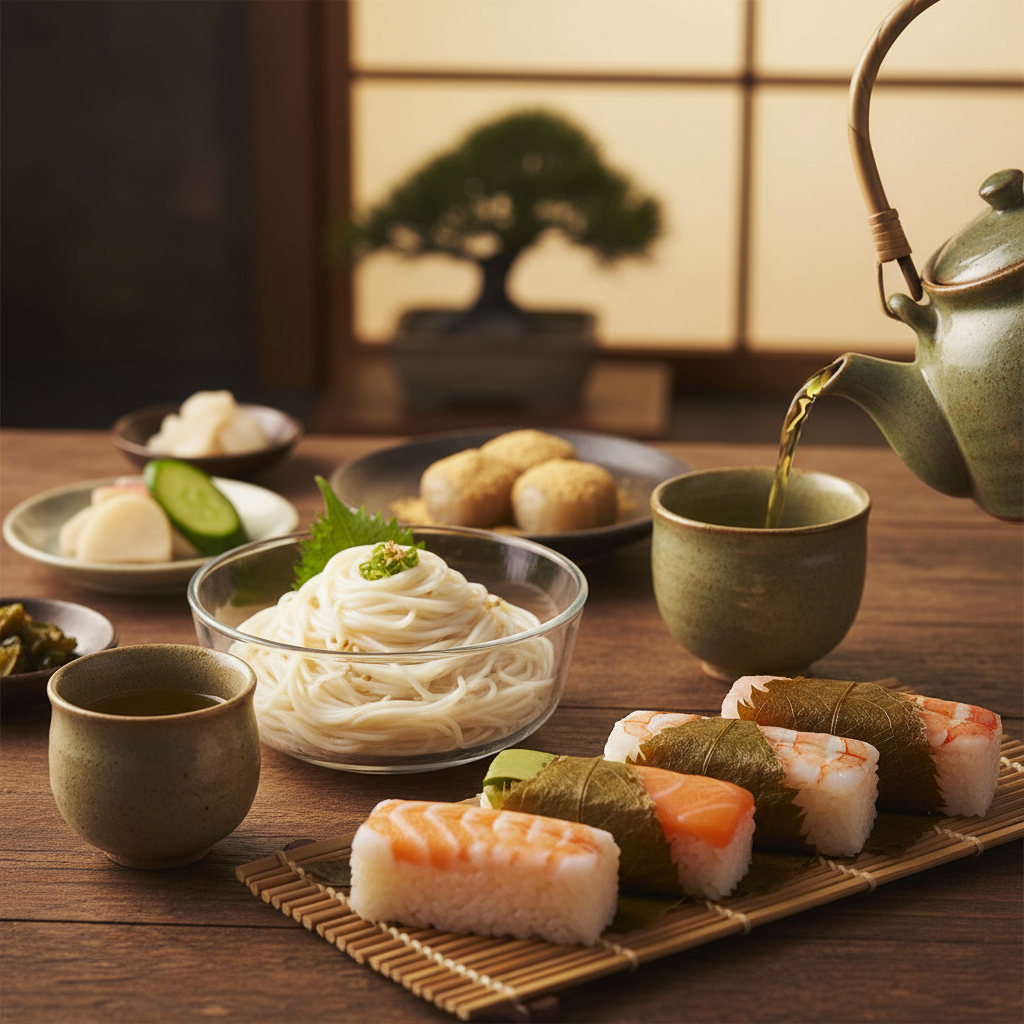
Nara Gourmet, Kakinoha Sushi, Miwa Somen, Yamato Tea, Narazuke, Food Hopping - The Philosophy of Driving in Japan
Ah, Japan. The land of bullet trains, immaculate efficiency, and perfectly punctual schedules. As a former conductor on the storied Kintetsu line, I can attest to the unparalleled precision and comfort of Japan's rail network. It's a marvel, an intricate dance of steel and speed that can whisk you from bustling Osaka to the ancient heart of Nara in mere minutes. But allow me to let you in on a secret, one whispered on the wind as you crest a mountain pass, or heard in the rumble of a finely tuned engine: the true soul of Japan, its most profound flavors, its most breathtaking vistas, and its most intimate cultural encounters, lie far beyond the reach of any train track. They demand a different kind of journey, one guided by the open road, a spirit of adventure, and the purring heart of a Japanese Domestic Market (JDM) legend.
From the vibrant pulse of Osaka, your gateway to the Kansai region, a vast tapestry of natural beauty and culinary wonders unfurls. Public transportation, for all its undeniable merits, is a grid. It connects major hubs, yes, but it inevitably forces you into predetermined paths, herding you along with the masses to the same well-trodden sites. While this is fine for a cursory glance, it actively denies you the exhilaration of discovery, the quiet thrill of stumbling upon a hidden gem, or the sheer joy of a spontaneous detour down a winding, cypress-lined road that merely looked inviting. This, my friends, is the realm of “Secret Japan.” It’s a Japan untouched by the guidebook hordes, a Japan where time seems to slow, and authentic experiences flourish in the most unexpected corners.
Imagine this: you're not confined to a schedule dictated by rail timetables. Instead, you're the master of your own destiny, the architect of your own adventure. With the responsive steering wheel of an 86 or BRZ in your hands, the road transforms from a mere means of transit into an integral part of the experience. The metallic snarl of the Boxer engine as you downshift for a tight corner, the precise feedback through the chassis as you carve through a forest road, the panoramic sweep of emerald rice paddies or mist-shrouded peaks unveiling themselves with every turn – this is a symphony for the senses that a train compartment, however luxurious, can never hope to replicate. It's about feeling the asphalt beneath your tires, smelling the fresh mountain air, and having the freedom to stop wherever your curiosity beckons. It's about connecting with the land, its people, and its unparalleled culinary heritage on your own terms. This is why, for the discerning traveler, the adventurer, and indeed, the car enthusiast, driving through Japan is not just a mode of transport; it's a philosophy, a deep dive into the heart of a nation that truly reveals itself only to those willing to seek it out, one winding road at a time.
Nara Gourmet, Kakinoha Sushi, Miwa Somen, Yamato Tea, Narazuke, Food Hopping - The 2-Day Itinerary: Deep Dive

Prepare to unleash your inner explorer, to awaken your senses, and to let the thrum of a magnificent JDM machine guide you through a Nara that few ever truly experience. This isn't just a trip; it's a pilgrimage into the heart of Japan’s ancient culinary traditions, a two-day odyssey meticulously crafted for those who yearn for the authentic, the exquisite, and the thrill of the open road. We start in the beating heart of Kansai, Osaka, and embark on a journey that will forever redefine your perception of Japanese travel. Our steed? A perfectly balanced 86 or BRZ, a machine purpose-built for connecting driver to road, turning every curve into an embrace, every straight into an invitation.
Day 1: From Osaka’s Concrete Embrace to Nara’s Gastronomic Soul
7:00 AM - The Osaka Dawn & The Call of the Open Road
The urban sprawl of Osaka stirs with the first hints of dawn, but you're already ahead of the curve. The cool, crisp air of the early morning greets you as you settle into the low-slung bucket seat of your 86. A deep breath, a twist of the key, and the Boxer engine awakens with a guttural growl, a promise of the adventure that lies ahead. The tactile sensation of the shifter, the precise clutch engagement – it’s a symphony of mechanical poetry. We'll navigate the still-quiet city streets, joining the nascent flow of traffic, the early risers, as we make our way towards the Hanshin Expressway. The city lights gradually recede in your rearview mirror, replaced by the rising sun painting the eastern sky in hues of orange and soft violet. The highway stretches before you, a ribbon of asphalt beckoning you eastward, towards the ancient lands of Nara.
8:00 AM - The Gateway to Green: Expressway Bliss & The Transition to Tranquility
The highway drive is swift and smooth, a chance to let the 86 stretch its legs, the engine humming a steady tune as you cruise. This is where the practical efficiency of Japan’s infrastructure truly shines. As we approach the boundaries of Osaka and Nara, the scenery begins its subtle, yet profound, transformation. Towering apartment blocks give way to more modest homes, then to scattered industrial parks, and finally, to rolling hills that hint at the mountainous interior. The air feels cleaner, lighter. We’ll exit the expressway, leaving the arteries of commerce behind, and begin our transition onto Prefecture roads, smaller arteries that pulse with local life. The initial drive is about shedding the city's skin, preparing your mind and spirit for the immersion into rural Japan.
9:00 AM - Deeper into the Heart: Yamanobe no Michi & Ancient Echoes
Now, the real driving begins. We'll head south, bypassing the immediate urban sprawl of Nara City itself, aiming directly for the Yoshino and Gojo regions – the ancestral home of Kakinoha Sushi. The roads here become a driver’s delight: gentle undulations, sweeping curves, and occasionally, tighter turns that demand a downshift and a precise line. The scenery is a painter's dream: verdant rice paddies reflecting the sky like mirrors, traditional farmhouses with their distinctive dark roofs, and towering cedar forests that line the roads, their ancient boughs whispering tales of centuries past. You might even catch glimpses of the ancient Yamanobe no Michi, one of Japan's oldest roads, snaking through the landscape, a path trodden by emperors and pilgrims. The 86 feels alive here, its balanced chassis and communicative steering making every turn a joy, a dialogue between you and the road. The sense of isolation grows, a comforting quiet broken only by the chirping of cicadas and the distant rush of a mountain stream.
10:30 AM - The Essence of Preservation: Unveiling Kakinoha Sushi’s Legacy
We arrive in the Yoshino/Gojo area, a region steeped in history, particularly famed for its connection to Emperor Go-Daigo and the Southern Court. But today, our quest is culinary. This area is the birthplace of Kakinoha Sushi, a culinary marvel born out of necessity and ingenuity. In ancient times, when refrigeration was a distant dream, the people of the mountainous Nara region needed a way to preserve their precious catches from the distant sea. The answer lay in the humble persimmon leaf. Known for its antibacterial properties and delicate aroma, the leaf became a natural wrapper for vinegared rice topped with cured mackerel or salmon. As you park your 86, perhaps under the shade of an old persimmon tree, you can almost taste the history. The aroma of the leaves, the sea-salt tang of cured fish, the subtle sweetness of vinegared rice – it’s a revelation. This isn't just food; it's a testament to human resourcefulness and a deep respect for nature's bounty. The geological context here, with its mountainous terrain and distance from the coast, underscores the genius of this preservation method. We'll find a traditional establishment, its dark wooden facade weathered by time, and step inside.
12:00 PM - A Taste of Tradition: Kakinoha Sushi Lunch
Lunch is a serene affair. You'll be presented with an array of Kakinoha Sushi, each piece a miniature work of art, meticulously wrapped. Gently unwrap a piece, inhaling the subtle, earthy fragrance of the persimmon leaf. The first bite is a revelation: the firm, succulent texture of the cured fish, the perfectly seasoned vinegared rice, and that inimitable, almost ethereal aroma imparted by the leaf. It's savory, slightly sweet, and utterly refreshing. There's a subtle umami that lingers, a testament to the quality of the ingredients and the centuries of refinement in its preparation. Enjoy it with a cup of warm, aromatic Yamato tea, further connecting you to the local terroir. This isn't fast food; it's slow food, savored in a timeless setting, far removed from the clamor of the modern world. The feeling of the 86 waiting patiently outside, ready for the next leg of the adventure, adds a subtle layer of anticipation.
1:30 PM - The Road to Miwa: Forest Whispers & Sacred Peaks
With satisfied palates, we set off again, this time heading north-northwest towards Sakurai City, the spiritual heartland of Miwa Somen. The journey takes us through a different kind of landscape: deeper into forested valleys, where sunlight filters through the canopy in dappled patterns, creating a mesmerizing play of light and shadow on the asphalt. The roads become more sinuous, inviting you to engage with the 86’s precise steering and responsive engine. The distinct hum of the Boxer engine reverberates off the ancient trees, a mechanical echo in a primeval setting. You’ll feel the car lean into each curve with an effortless grace, a true extension of your will. This region is home to Mount Miwa, one of Japan's oldest and most sacred mountains, revered as the dwelling place of a Shinto deity. Its conical peak often appears shrouded in a mystical haze, adding an aura of ancient sanctity to the drive. The geological history of these mountains, shaped by millennia of tectonic shifts and erosion, contributes to the pristine water sources essential for our next culinary discovery.
3:00 PM - The Silken Thread: Discovering Miwa Somen
We arrive in the Miwa region, where the air seems to carry a different kind of purity. This is the birthplace of Miwa Somen, exquisite thin wheat noodles that boast a history stretching back over 1200 years. Legend has it that the technique was brought from China, adapting to the unique climate and pristine waters of the Miwa area. The secret lies in the quality of the local wheat, the mineral-rich underground springs flowing from Mount Miwa, and the meticulous, labor-intensive process of hand-stretching the dough over many hours, often by artisans who have inherited the craft through generations. We'll seek out an establishment where you can witness, or at least appreciate, this dedication. You might see the delicate noodles drying on racks, resembling cascades of white silk in the sun. The focus here is on the delicate texture and the ability of the noodles to absorb the flavors of the accompanying dipping sauce without losing their integrity. The quiet dignity of these traditional workshops, tucked away from the main roads, is a stark contrast to the buzzing cities, further enhancing the sense of stepping back in time.
4:30 PM - The Art of Simplicity: Miwa Somen Experience
The experience of eating Miwa Somen is one of elegant simplicity. Often served chilled in summer, with a light dashi-based dipping sauce, or hot in a clear broth during cooler months, it’s a dish that highlights the purity of its ingredients. The noodles themselves are unbelievably fine, yet possess a satisfying chewiness. As you lift a bundle of these silken threads from the bowl, a delicate aroma rises. The taste is clean, refreshing, the subtle wheat flavor perfectly complemented by the savory depth of the dipping sauce. It’s a study in minimalism, yet profoundly satisfying, a culinary philosophy that mirrors the Zen aesthetic. Imagine savoring this, perhaps in a garden setting, with the gentle murmur of a nearby stream and the distant silhouette of Mount Miwa. It's a moment of culinary meditation, a connection to ancient traditions that sustain body and soul. The 86, parked nearby, seems to hum in appreciation of this quiet interlude, ready for the next leg.
6:00 PM - Sunset Drive & Rural Retreat
As the late afternoon sun begins its descent, casting long, dramatic shadows across the landscape, we embark on a scenic drive towards our overnight accommodation. We'll aim for a traditional ryokan or a charming guesthouse nestled in the Nara countryside, perhaps near the Asuka region or further into the serene foothills. The roads here are less traveled, winding through small agricultural communities and dense patches of forest. The 86's headlights begin to cut through the deepening twilight as the sky explodes in a riot of oranges, purples, and deep blues. This drive is pure magic: the engine note a gentle companion, the precise steering guiding you through each curve as the world outside transforms into a tapestry of fading light and emerging stars. The scent of damp earth and pine needles fills the air. It’s a moment of profound peace, a perfect culmination to a day of sensory exploration and driving pleasure. The thought of a warm bath and a traditional Japanese dinner awaits, a fitting reward for a day spent discovering 'Secret Japan'.
7:30 PM - Ryokan Rhapsody & Nara’s Night Flavors
Arriving at your ryokan, the transition from road warrior to serene guest is immediate. The soft glow of lanterns, the welcoming smiles, and the scent of tatami mats instantly relax you. After a rejuvenating soak in a communal or private onsen, prepare for a dinner that celebrates Nara's bounty. This will be a multi-course kaiseki-style meal, featuring seasonal vegetables, perhaps locally sourced river fish or freshwater eel, and certainly high-quality rice. You might encounter dishes incorporating elements of Yamato vegetables – unique local produce with deep, complex flavors. Each dish is a miniature edible landscape, a testament to the chef's artistry and respect for ingredients. This is not just sustenance; it’s an immersive cultural experience, a gentle winding down from the day's driving and culinary adventures, preparing you for the next day's discoveries. The crisp night air, the chirping of crickets, and the quiet hum of distant nature lull you into a restful sleep, dreaming of open roads and exquisite tastes.
Day 2: Emerald Fields, Ancient Preserves & Urban Bites
7:30 AM - Awakening in Rural Nara & Traditional Breakfast
Wake to the gentle sounds of the countryside – birdsong, perhaps the distant clang of a temple bell. The morning air is invigorating, carrying the scent of dew-kissed leaves. A traditional Japanese breakfast awaits: grilled fish, miso soup, perfectly steamed rice, an array of pickles, and perhaps tamagoyaki (rolled omelet). It’s a balanced and wholesome start, designed to energize you for another day of exploration. Sip on fragrant green tea, reflecting on yesterday's discoveries, and anticipate the new flavors that await. As you step outside, the 86 glistens in the morning sun, eager to get back on the road.
9:00 AM - The Emerald Kingdom: Driving to Yamato Tea Country
Our journey today takes us into the heart of Yamato Tea country, primarily the Yamazoe or Tsukigase areas, nestled in Nara’s eastern highlands. The drive is a feast for the eyes and a joy for the driver. The roads ascend gradually, winding through increasingly dramatic landscapes. You'll pass through quaint villages, over ancient stone bridges, and into expanses of rolling hills meticulously sculpted into vibrant green tea plantations. The sheer scale of these terraces, meticulously tended rows of tea bushes stretching as far as the eye can see, is breathtaking. The air here is noticeably cooler, infused with the fresh, slightly bitter scent of tea leaves. The 86, with its low center of gravity and responsive suspension, feels perfectly at home on these undulating roads. Each curve is an opportunity to appreciate its engineering, to feel the grip of the tires, and to hear the satisfying downshift that sets you up perfectly for the next ascent. The geological characteristics of these hills, with their well-drained soil and often misty mornings, provide the ideal microclimate for cultivating high-quality tea, resulting in a distinct flavor profile unique to Yamato Tea.
10:30 AM - The Subtle Art of Yamato Tea
We arrive in a serene tea-growing village. Yamato Tea, while perhaps less globally famous than Uji or Shizuoka teas, boasts a history that rivals them, dating back to the 9th century. Buddhist monks played a crucial role in its introduction and cultivation. What sets Yamato Tea apart is often its robust, yet nuanced flavor, a reflection of the hardy bushes grown in this slightly more challenging, mountainous terrain. It's tea with character, a hint of wildness, and a deep, earthy aroma. We'll visit a local tea house or a traditional tea farm where you can learn about the cultivation process, perhaps even observe the delicate plucking of the leaves if it's harvest season. The sense of calm and dedication that permeates these tea-producing communities is palpable. This isn't just an agricultural product; it's a way of life, passed down through generations.
11:30 AM - A Moment of Zen: Yamato Tea Tasting
Engage in a traditional tea tasting experience. Here, you'll have the opportunity to sample various grades and preparations of Yamato Tea, from invigorating sencha to the rich, frothy matcha. Observe the meticulous preparation, the steam rising from the delicate teacups, the vibrant green hue of the brew. The first sip is warm, comforting, and complex. You’ll notice hints of nuts, perhaps a touch of sweetness, and a pleasant astringency that cleanses the palate. It's a moment of quiet contemplation, a connection to the very essence of Japanese culture. The clean, pure taste, born from the unique terroir of Nara's mountains, is a perfect antidote to any lingering urban bustle. This isn't just a drink; it’s a living piece of history, an experience of pure, unadulterated flavor. The satisfaction is deep, holistic, and completely aligned with the journey of discovery you're undertaking.
1:00 PM - Descending to Ancient Capitals: The Road to Nara City
With a refreshed spirit and a refined palate, we begin our descent from the tea-laden hills, heading westward towards Nara City itself. The drive is a beautiful transition, as the dense forests and agricultural terraces gradually give way to more developed areas, though still retaining a charm unique to this ancient capital region. The roads become a mix of winding country lanes and broader avenues as you approach the city limits. The 86 handles this transition with aplomb, its agile nature perfect for both tight corners and smoother, faster stretches. You'll start to see glimpses of iconic Nara landmarks in the distance, perhaps the towering pagoda of Kofukuji or the expansive green of Nara Park. The feeling is one of returning to civilization, but a civilization steeped in a thousand years of history. The air here, while still fresh, carries a different energy, a subtle hum of ancient stories and modern life coexisting.
2:00 PM - The Elixir of Eternity: Narazuke Unveiled
We arrive in the heart of Nara City, specifically targeting the Naramachi district or the area surrounding the traditional shopping streets, where the profound aroma of Narazuke often wafts from traditional shops. Narazuke is a unique Japanese pickle, deeply rooted in Nara's history. Its origins date back to the 8th century, when it was prepared for the Imperial Court and for Buddhist monks. The process involves pickling vegetables – typically gourds like uri, cucumbers, or ginger – in sake lees (sake kasu) for an extended period, sometimes for several years. This slow, meticulous fermentation results in a pickle with an incredibly complex flavor profile: intensely sweet, savory, slightly alcoholic, and with a pronounced umami. The texture is often firm, almost crunchy, or wonderfully soft depending on the vegetable and age. You'll enter a traditional establishment, its interior often dimly lit, with row upon row of gleaming, dark pickles displayed. The scent is unmistakable, an intoxicating blend of sake, fermentation, and aged vegetables. This isn't just a food; it's an edible relic, a taste of Nara's enduring past.
3:00 PM - A Medley of Flavors: Narazuke Tasting & Food Hopping in Naramachi
Indulge in a Narazuke tasting. You might be offered small samples of different vegetables, aged for varying durations. The contrast in flavor and texture between a young, crisp uri Narazuke and an older, softer ginger Narazuke is remarkable. Each bite is an exploration of time and tradition. This powerful pickle is traditionally enjoyed as an accompaniment to sake or green tea, a small but potent burst of flavor. After this unique experience, we'll dive into the charming Naramachi district for some authentic food hopping. This area, with its beautifully preserved traditional machiya houses, offers a delightful blend of old and new. Here, you can wander narrow lanes, discovering small cafes offering wagashi (traditional Japanese sweets), mochi shops where the mochi is pounded fresh before your eyes, and perhaps a small izakaya serving local delicacies. The vibrant atmosphere, the mix of ancient architecture and modern artisanry, creates a captivating backdrop for a leisurely stroll. The joy of parking the 86 in a convenient spot and exploring on foot, soaking in the sights, sounds, and smells of this historic district, is a quintessential part of the 'Secret Japan' experience. Grab a freshly pounded mochi, its warm, chewy texture and sweet filling a perfect contrast to the savory Narazuke. Perhaps a small bottle of local sake or a handcrafted souvenir catches your eye. This is the beauty of driving: the freedom to immerse yourself in the local tapestry at your own pace, to truly become a part of the scene, not just an observer.
5:00 PM - The Homeward Stretch & Reflective Drive
As the late afternoon sun casts long shadows over the ancient city, it's time to begin our journey back to Osaka. The drive is a reflective one, a chance to process the kaleidoscope of experiences, tastes, and sensations of the past two days. The 86, a faithful companion, purrs steadily beneath you as you navigate the familiar roads back towards the expressways. You might choose a slightly different route for a change of scenery, perhaps catching a final panoramic view of the Nara basin from an elevated road. The subtle shift from the tranquil countryside back to the increasing dynamism of Osaka serves as a gentle reminder of the contrast you've just experienced. The city lights begin to glitter on the horizon as dusk gathers, a final, luminous farewell to Nara’s hidden gastronomic wonders. The memories of Kakinoha Sushi, the silken threads of Miwa Somen, the invigorating taste of Yamato Tea, and the profound depth of Narazuke linger on your palate and in your mind, indelible marks of a truly exceptional journey. The feeling of satisfaction, the quiet triumph of having truly explored, makes the return trip as fulfilling as the departure.
Nara Gourmet, Kakinoha Sushi, Miwa Somen, Yamato Tea, Narazuke, Food Hopping - Expert Advice & Cultural Nuances
Venturing beyond the well-trodden paths in Japan requires not just a spirit of adventure, but also an understanding of the subtle cultural nuances that define the Japanese experience. As your guide, honed by years navigating both train tracks and countless winding roads, I offer these insights to enrich your JDM-powered expedition.
The Michi-no-Eki: More Than Just a Rest Stop
Forget the soulless, standardized rest areas you might be accustomed to. Japan’s ‘Michi-no-Eki’ (道の駅), or roadside stations, are cultural institutions in themselves, indispensable to any great Japanese road trip. These aren't just places to stretch your legs and use the restroom (though their facilities are universally spotless, a testament to Japanese standards). Each Michi-no-Eki is a vibrant microcosm of its local region, showcasing the unique produce, crafts, and culinary specialties of the area. You’ll find farmers selling freshly picked vegetables, artisans displaying exquisite local pottery or textiles, and food courts serving delicious, authentic regional dishes that often can't be found anywhere else. Many boast stunning views, local museums, or even small hot springs. Think of them as curated pit stops, opportunities to discover unexpected treasures, support local communities, and gain a deeper appreciation for Japan's diverse regional identities. Pulling up in your 86 to a Michi-no-Eki buzzing with local activity is a uniquely Japanese pleasure, an essential part of the driving narrative.
Unearthing Hidden Gems: The Local's Secret
The beauty of driving a JDM car through regions like Nara's hinterlands is the unparalleled access it grants to the 'Secret Japan' I often speak of. This is where the magic truly happens, far from the tourist buses. How do you find these hidden gems? It requires a keen eye and an open mind. Look for establishments that primarily cater to locals: small, unassuming restaurants with simple, handwritten signs; shops that don’t have English menus but are packed with Japanese patrons; or even just a particularly well-maintained shrine tucked away down a narrow lane. The tell-tale sign is often a parking lot filled with domestic Japanese cars – a clear indicator that you've stumbled upon a local favorite. Don't be afraid to pull over and explore, to wander down a charming side street, or to simply follow your nose to a delicious aroma. While language can be a barrier, a friendly smile and a few basic Japanese phrases (like 'Kore wa nan desu ka?' – 'What is this?') can open doors to incredible culinary and cultural experiences. These are the moments that truly define an authentic journey, the serendipitous discoveries that public transport can never offer.
Navigating with Respect: Essential Driving Tips for Japan
Driving in Japan is, for the most part, a remarkably pleasant experience, but a few key points will ensure a smooth journey. Firstly, remember to drive on the left-hand side of the road. This takes a little adjustment for those from right-hand drive countries, but the precision and communicative nature of an 86 or BRZ will make the adaptation intuitive. Secondly, be mindful of speed limits; they are generally lower than in many Western countries, particularly on local roads, and strictly enforced. Japanese drivers are incredibly courteous and patient; mirror their behavior. Don't tailgate, always yield when appropriate, and avoid aggressive driving. Thirdly, watch out for narrow roads in rural areas. While your 86 is agile, some mountain passes or village lanes can be surprisingly tight. Take your time, especially around blind corners. Lastly, parking. In cities, coin parking is prevalent – look for signs with a 'P' symbol and a coin icon. In rural areas and at Michi-no-Eki, parking is often free but always use designated spaces. Never park illegally, even for a moment, as it's seen as highly disrespectful and can result in fines. Adhering to these unwritten rules not only ensures your safety but also demonstrates respect for the local culture, enhancing your entire Japanese driving adventure.
Nara Gourmet, Kakinoha Sushi, Miwa Somen, Yamato Tea, Narazuke, Food Hopping - Detailed Logistics & Pre-Trip Tips
Embarking on a JDM road trip through Japan is an exhilarating prospect, but like any grand adventure, it benefits from meticulous preparation. As someone who's spent countless hours traversing Japan's asphalt arteries, and as the proprietor of a specialist JDM rental service, I can offer the precise logistical insights you'll need for a seamless and unforgettable journey in 2026.
2026 Traffic & Road Conditions: Navigating Japan’s Network
By 2026, Japan's road network continues to be among the finest in the world. Expect impeccably maintained roads, clear signage (often bilingual on major routes), and a generally high standard of driving etiquette. Urban areas, particularly Osaka's periphery, can experience rush hour congestion between 7 AM-9 AM and 5 PM-7 PM, much like any major metropolis. However, once you venture onto the expressways and into the rural heartland of Nara, traffic density significantly decreases, allowing for more fluid and enjoyable driving. Mountain roads, while sometimes narrow and winding, are almost always paved and well-kept. Construction zones are clearly marked and efficiently managed. Always keep an eye on real-time traffic updates via your car's navigation system or a smartphone app, especially around holidays when domestic travel surges.
The ETC Card: Your Expressway Express Pass
For efficient and stress-free travel on Japan's extensive network of expressways, an Electronic Toll Collection (ETC) card is not merely a convenience – it's practically essential. While you can pay cash at toll booths, an ETC card allows you to glide through dedicated ETC lanes without stopping, significantly reducing travel time and hassle. The system automatically debits your account (or is linked to your rental car agreement). Most specialized rental car companies, including ours, offer ETC cards as an optional rental item. I strongly advise you to include one with your 86 or BRZ booking. It streamlines your journey, keeps the pace fluid, and allows you to focus on the road ahead and the scenery unfolding around you.
Fueling Up: "Mantan" and the Japanese Service Ethic
Japanese gas stations are a fascinating experience in themselves, often showcasing an unparalleled level of service. For your 86 or BRZ, which typically performs best on high-octane fuel, you'll want to ask for "Haioku Mantan" (ハイオク満タン), meaning "high octane, full tank." If you're unsure, "Regyura Mantan" (レギュラー満タン) is for regular unleaded. Many stations still offer full service: attendants will guide you to the pump, pump your fuel, clean your windows, and even check your tires, all with a polite bow and efficient grace. While self-service stations (セルフ - serufu) are becoming more common, the full-service experience is a charming cultural interaction. Don't be surprised if the attendant says "Mantan!" with a friendly smile as they finish filling your tank – it’s a small, authentic touch to your day. Having a few common phrases ready ("Haioku, onegai shimasu" – "High octane, please") will make the experience even smoother.
Parking Prowess: Finding Your Spot
Parking in Japan, particularly in urban centers, requires a bit of strategy. In major cities and popular tourist spots like Nara City, coin-operated parking lots (コインパーキング - koin paakingu) are abundant. They are typically well-marked and often have electronic displays showing available spaces. Always ensure you understand the payment system before parking – rates usually vary by time of day. In more rural areas, such as those we explored for Kakinoha Sushi, Miwa Somen, and Yamato Tea, parking is generally easier to find and often free at smaller establishments or Michi-no-Eki. Always park in designated spaces and never block traffic or private entrances. A compact and agile car like the 86 or BRZ makes navigating tighter parking structures and smaller village spaces far more manageable, adding another layer of convenience to your JDM experience.
The JDM (MT Car) Experience: A Driver's Communion
This is where the rubber meets the road, quite literally. Driving a manual transmission JDM car like an 86 or BRZ on Japan's roads is a visceral, exhilarating experience that transcends mere transportation. It's a communion between driver, machine, and asphalt. The precise throws of the shifter, the perfectly weighted clutch, the responsive throttle – every input translates directly into motion, allowing you to truly feel the road beneath you. As you carve through the winding mountain passes of Nara, the Boxer engine's distinctive growl echoing off the ancient forests, you'll understand why these machines are revered. The balanced chassis, the sharp turn-in, the feedback through the steering wheel – it's all designed to engage you, to make you an active participant in the journey. This isn't just seeing Japan; it's experiencing Japan, one perfectly executed heel-and-toe downshift at a time, transforming every kilometer into a cherished memory.
Nara Gourmet, Kakinoha Sushi, Miwa Somen, Yamato Tea, Narazuke, Food Hopping - Comprehensive FAQ
Embarking on a driving adventure in Japan naturally brings forth a host of questions. Here, I've compiled answers to the most common queries, ensuring you're fully prepared to hit the roads with confidence and excitement.
Do I need an International Driving Permit (IDP) to drive in Japan?
Absolutely. If you hail from a country signatory to the 1949 Geneva Convention, you'll need your valid International Driving Permit, your home country's driver's license, and your passport. For other countries, a translation of your license may be required. Always ensure you have all three documents. This ensures you're legally ready to hit Japan's roads.
What about insurance for my rental car?
All rental cars in Japan come with mandatory basic liability insurance. However, for complete peace of mind, I strongly recommend opting for comprehensive coverage (often referred to as CDW or full waiver insurance) offered by your rental company. This minimizes your financial responsibility in case of an accident, allowing you to focus on enjoying your drive rather than worrying about potential costs. Always confirm the specifics of your coverage before you depart.
I'm not used to driving a Manual Transmission (MT) car. Should I be worried?
While Japan has excellent automatic transmission (AT) cars, the thrill of a JDM road trip is undeniably amplified by a manual. If you're proficient with an MT, you'll find Japanese roads incredibly rewarding. If you're a bit rusty, consider a short practice session before your trip. Japanese roads, especially in rural areas, are generally well-suited for MT driving, with smooth surfaces and manageable inclines. The precise feedback and control offered by an 86 or BRZ will quickly build your confidence. The reward of perfectly executing a gear change on a winding mountain road is unparalleled – don't let a little apprehension deter you from this unique experience.
What are the road conditions like in winter?
For most of the Kansai region, including Nara, winters are generally mild with minimal snowfall, especially in the areas we've discussed for gourmet exploration. However, if your itinerary takes you into higher mountainous regions or further north during the winter months (December to March), you may encounter snow and icy conditions. In such cases, studded tires or snow chains are legally required and rental cars in those regions will be equipped accordingly. Always check the weather forecast and road conditions for your specific route if traveling in winter. For this Nara gourmet itinerary, winter driving conditions are unlikely to be a major concern.
What navigation options are best for driving in Japan?
Most modern rental cars in Japan come equipped with an in-car GPS system. While these are often primarily in Japanese, many can be switched to English or other languages. However, I highly recommend supplementing this with a reliable smartphone navigation app (like Google Maps or Apple Maps) which offers real-time traffic updates and often easier search functions for specific points of interest. Ensure you have a portable Wi-Fi device or a local SIM card for consistent connectivity.
Nara Gourmet, Kakinoha Sushi, Miwa Somen, Yamato Tea, Narazuke, Food Hopping - The Final Call: CTA
You’ve journeyed through ancient landscapes, savored flavors steeped in centuries of tradition, and felt the exhilarating pulse of Japan’s hidden roads beneath the tires of a truly remarkable machine. This isn't just a trip; it's an awakening. An immersion into a 'Secret Japan' that whispers its stories to those willing to listen, and reveals its culinary soul to those adventurous enough to seek it out. From the meticulously preserved Kakinoha Sushi to the silken elegance of Miwa Somen, the invigorating depth of Yamato Tea, and the profound complexity of Narazuke, every bite and every mile has been a testament to Japan’s unparalleled heritage. And through it all, your JDM 86 or BRZ has been more than just a car; it's been your partner in discovery, transforming every winding road into an unforgettable chapter in your adventure.
Are you ready to carve your own legend into Japan's asphalt? To taste the true essence of Nara, far from the well-worn tourist trails? The ordinary Japanese experience fades in comparison to the vibrancy and authenticity awaiting you on this journey. Your ultimate Nara gourmet adventure awaits, perfectly paired with the exhilaration of a true JDM machine. Experience the difference that only a specialist can provide. Head to Omoshiro Rent-A-Car Osaka Chuo branch. Let us equip you with the perfect 86 or BRZ, a car meticulously prepared and tuned for the roads of Japan by enthusiasts who truly understand the joy of driving. As a former Kintetsu conductor and now a JDM rental specialist, I know the roads, I know the cars, and I know how to unlock the 'Secret Japan' you've been dreaming of. Your unparalleled Japanese road trip begins here. Don't just visit Japan; drive it, taste it, live it. The keys to your next great adventure are waiting.
