
Nara Instagrammable Spots & Photo-Worthy Journeys: A JDM Drive Through Ukimido, Sarusawa Pond, and Nara Rurie for the Modern Adventurer - The Philosophy of Driving in Japan
For decades, my life in Japan was inextricably linked to the rails. As a former Kintetsu train conductor, I navigated the intricate network of steel, watching the landscapes of Kansai flash by in a rhythmic blur. There is an undeniable beauty to the punctuality, the efficiency, the silent glide through bustling cities and tranquil countryside that defines Japan's rail system. And yet, after I traded my conductor's cap for a steering wheel, a profound realization dawned upon me: the train, for all its marvels, keeps you on a fixed path. It reveals the Japan that it *wants* you to see. But the true, pulsating heart of this nation, its whispered secrets, its breathtaking, often untouched beauty – that, my friends, is exclusively discovered from behind the wheel of a car.
Consider Osaka, the vibrant, culinary capital of Kansai. It’s an electric hub, yes, but also the perfect launchpad for an automotive adventure that peels back the layers of conventional tourism. When you embark on a journey from Osaka by car, you're not just moving from point A to point B; you're orchestrating an experience. You’re choosing your pace, your detours, your soundtrack, and your companions. You're not merely a passenger; you are the architect of your own odyssey.
This is the essence of “Secret Japan.” It's not found in the crowded carriages of a bullet train, nor in the well-worn paths trodden by millions. Secret Japan is a winding mountain pass with cherry blossoms showering your windshield in spring, a forgotten coastal road where the Pacific glitters like a million scattered diamonds, a tiny village izakaya whose proprietor has never seen a foreign face but welcomes you with a warmth that transcends language barriers. These are the moments, the encounters, the vistas that public transportation, by its very nature, can never deliver. The rail lines are arteries, connecting major organs, but the roads are the capillaries, reaching every single cell, every hidden nerve ending of this magnificent country.
There's a raw, visceral joy in feeling the subtle undulations of the Japanese asphalt beneath your tires, hearing the finely tuned engine of a Japanese Domestic Market (JDM) car hum with precision as you navigate a perfectly banked curve. It's an intimate connection, a dialogue between driver and machine, between traveler and landscape, that simply doesn't exist when you're confined to a seat in a compartment, staring out a window. As an ex-conductor, I deeply understand the allure of the train. But as a professional travel writer and someone who has driven the length and breadth of this archipelago, I can tell you unequivocally: the car offers an unparalleled freedom, an immersive depth, and a gateway to authenticity that transforms a mere trip into an unforgettable journey.
This is particularly true for destinations like Nara, often seen as a “day trip” by train, where visitors flock to the main temple areas. But Nara, with its ancient forests, serene ponds, and mystical atmospheres, offers so much more than its well-trodden paths. It holds a quieter magic, a photogenic beauty waiting to be discovered by those willing to explore beyond the station and the main park. This is where your chosen chariot, a spirited Toyota 86 or Subaru BRZ, becomes more than just transportation; it becomes your partner in uncovering the truly Instagrammable, soul-stirring scenes that remain just out of reach for the typical tourist. Prepare to embrace a journey where every turn of the wheel is an invitation to discovery, where the road itself becomes part of the adventure.
Nara's Instagrammable Secrets & Photo-Worthy Journeys: A JDM Drive Through Ukimido, Sarusawa Pond, and Nara Rurie for the Modern Adventurer - The 2-Day Itinerary: Deep Dive
Day 1: Osaka's Urban Pulse to Nara's Serene Reflections
8:00 AM – The Morning Roar: Departing Osaka in Your JDM Dream Machine
The dawn breaks over Osaka, painting the city skyline in hues of soft pink and gold. The air is crisp, hinting at the adventures that lie ahead. Forget the impersonal hum of a taxi or the sterile confines of a train station; today, your journey begins with an electrifying thrill. You approach your chariot for the next two days: a pristine, finely tuned Toyota 86. Its low-slung profile, aggressive stance, and classic JDM lines exude an irresistible allure. You slide into the driver's seat, the bolstered bucket hugging you just right. The leather-wrapped steering wheel feels perfectly weighted in your hands, a direct conduit to the road. You press the start button, and the 2.0-liter boxer engine of the 86 barks to life with a satisfying growl, a promise of exhilarating performance. This isn't just a car; it's an extension of your spirit, ready to carve through the landscape and connect you intimately with Japan's hidden beauty. You check the mirrors, engage first gear with a reassuring click, and smoothly pull away from the city's embrace, the rumble of the exhaust a prelude to the symphony of the open road.
8:30 AM – Highway Harmony: The Kansai Expressway to Nara
Leaving the urban sprawl of Osaka behind, you merge onto the Hanshin Expressway, then transition seamlessly to the Nishimeihan Expressway, heading east towards Nara. The initial stretches are a testament to Japanese engineering, wide and smooth, designed for efficient transit. As the cityscapes recede, replaced by more open skies and rolling green hills, the 86 finds its rhythm. The precise steering offers immediate feedback, and the short-throw shifter makes each gear change a tactile pleasure. You feel the surge of power as you accelerate onto the highway, the engine singing its high-revving song. The landscape, once a concrete jungle, slowly transforms into a tapestry of lush forests and occasional glimpses of rural life. This drive isn't just a means to an end; it's the overture to your Nara experience, a chance to truly connect with your JDM machine before delving into ancient history.
9:30 AM – Scenic Detour: Embracing the Winding Roads to Nara's Periphery
Instead of heading directly to the city center, you take a slight detour off the main expressway, seeking out the scenic local roads that hug the gentle contours of the Yamato Highlands. The 86 truly comes alive here. The asphalt narrows, and the road begins to snake and climb, offering a delightful series of sweeping curves and tighter bends. The chassis, balanced and communicative, allows you to feel every nuance of the road surface. The low center of gravity and responsive suspension mean minimal body roll, letting you carry impressive speed through corners with confidence. This isn’t aggressive driving, but rather a dance with the machine and the landscape. The crisp morning air, filtered through the open windows, carries the scent of damp earth and pine. Sunlight dapples through the trees, creating a mosaic of light and shadow on the road ahead. This is “Secret Japan” revealing itself – the exhilarating, yet serene, journey to the heart of ancient Nara, a path that public transport simply cannot tread.
10:30 AM – Hidden Gem: The Whispering Forest of Kasugayama Primeval Forest & Mizuya Shrine
Your scenic drive leads you to the fringes of the Kasugayama Primeval Forest, a UNESCO World Heritage site that has been untouched by human hands for over a thousand years due to its sacred status as part of Kasuga Grand Shrine. Parking the 86 in a small, unassuming lot, you step out, and the immediate change in atmosphere is palpable. The air here is cooler, imbued with the ancient wisdom of towering cedar and cypress trees. The subtle rumble of the 86's engine is replaced by the gentle rustle of leaves and the distant chirping of unseen birds. This forest is a living museum, its geology rooted deep in the volcanic activity that shaped central Japan millennia ago, its towering trees standing sentinel over centuries of history. Take a moment to walk a short path — not too deep, just enough to feel the ethereal presence. Here, you'll find the secluded Mizuya Shrine, small and humble, almost swallowed by the verdant embrace of the forest. Its moss-covered stones and intricate wooden carvings offer a stark contrast to the grandeur of larger temples, providing incredibly photogenic, almost mystical, backdrops. The soft light filtering through the canopy creates a natural diffuser, perfect for capturing those contemplative, “lost in nature” shots that speak volumes. It's a tranquil prelude, grounding you in Nara's profound natural and spiritual heritage before the more bustling sights.
12:00 PM – Culinary Immersion: Authentic Yoshino Kuzukiri Lunch
After your forest stroll, you steer the 86 towards a local eatery known for its authentic Nara cuisine, a place tucked away from the main tourist drag. Today's culinary focus is kuzukiri from Yoshino, a delicate, translucent noodle made from kuzu starch, a specialty of Nara Prefecture. The restaurant itself is a traditional wooden machiya, its interior exuding rustic charm with tatami mat seating and minimalist decor. The dish arrives: thin, glistening strands of kuzukiri served chilled in a bamboo bowl, accompanied by a rich, dark sugar syrup (kuromitsu) and sometimes a sprinkling of roasted soybean flour (kinako). The texture is revelatory — incredibly smooth, almost ethereal, with a subtle chewiness. It's light yet satisfying, a refreshing contrast to the engine's growl and the road's embrace. Each bite is a delicate dance between the subtle sweetness of the syrup and the clean, pure taste of the kuzu. It's a taste of Nara's profound culinary heritage, a moment of peaceful indulgence that nourishes both body and soul, leaving you feeling invigorated for the afternoon's exploration. The quiet clinking of ceramic bowls, the aroma of roasted tea, and the sunlight streaming through the paper screens create an atmosphere that is truly “Instagrammable” in its simplicity and elegance.
1:30 PM – Reflective Beauty: Sarusawa Pond & Kofukuji Temple's Five-Storied Pagoda
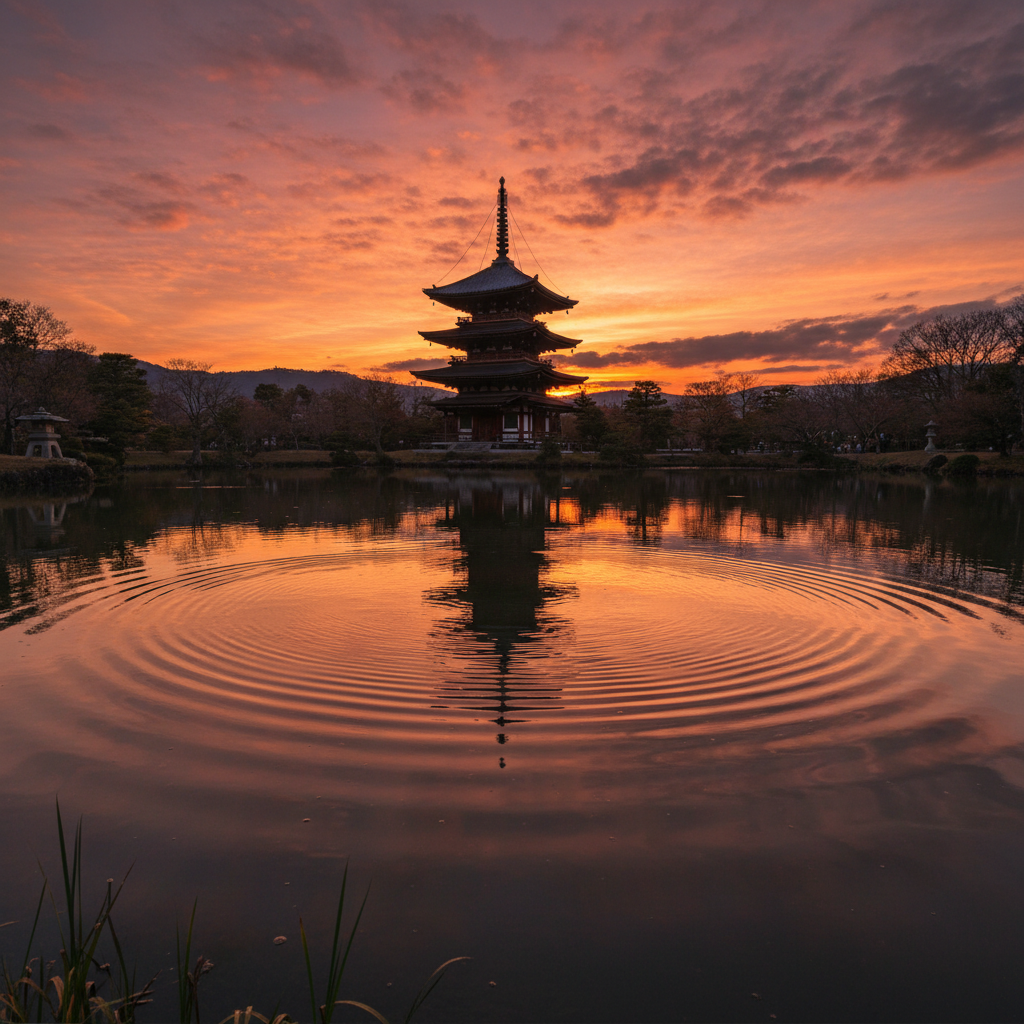
With a satisfied palate, you drive the 86 a short distance to the heart of Nara, parking in a convenient, yet slightly hidden, multi-story car park. A short walk brings you to the tranquil shores of Sarusawa Pond. This isn't just a pond; it's a mirror to Nara's soul. Historically, it was a reservoir for Kofukuji Temple, and legend has it that a court lady, distraught by an emperor's favor shifting, drowned herself here. Now, it’s renowned for its breathtaking reflections, especially of the majestic Five-Storied Pagoda of Kofukuji Temple, which rises dramatically above the treetops. The Pagoda itself, a national treasure, stands at over 50 meters, a testament to ancient Buddhist architecture, rebuilt several times over the centuries, with its current incarnation dating back to 1426. Its layered roofs and intricate wooden framework are a stark, elegant silhouette against the sky.
For photographers and “Instagrammable” seekers, Sarusawa Pond is a dream. Position yourself along the eastern edge of the pond for the classic shot: the pagoda perfectly mirrored on the glassy surface of the water, framed by lush greenery. On a still day, the reflection is so clear it blurs the line between reality and illusion. The pond’s surface itself often shimmers with iridescent greens and blues, reflecting the surrounding trees and the ever-changing sky. The quiet murmur of conversation, the distant ringing of temple bells, and the gentle breeze rustling through the leaves create a serene backdrop. Capture the soft light of the afternoon, the delicate play of shadows, and the timeless elegance of the scene. Look for angles that emphasize the pagoda's height and its relationship with the water — from a lower vantage point, the reflection appears even grander. This spot embodies Nara's harmonious blend of nature and ancient artistry, offering countless opportunities for truly stunning and contemplative photographs.
3:30 PM – Exploring the Kofukuji Grounds: A Glimpse into Ancient Power
While the focus remains on the photogenic, a brief exploration of the Kofukuji Temple grounds, located just north of Sarusawa Pond, provides crucial context. Kofukuji was once one of Nara's most powerful temples, serving as the family temple of the Fujiwara clan, a dominant political force during the Nara and Heian periods. You won't spend hours here, but appreciating the scale of the grounds, the remnants of its former glory, and the sheer antiquity of the structures — including the Eastern Golden Hall and the Kokuho-kan National Treasure Museum — deepens your understanding of Nara's historical significance. The rough-hewn stones of the temple foundations, the weathered wood of the ancient structures, all whisper tales of emperors, monks, and political intrigue. These textures and vistas offer unique photographic opportunities that capture the raw essence of Japan's past, providing a powerful contrast to the serene reflections of Sarusawa Pond.
5:00 PM – Ryokan Check-in & Pre-Dinner Stroll: Evening Serenity
As dusk begins to settle, you drive the 86 to your chosen ryokan – a traditional Japanese inn – situated in a quieter part of Nara, perhaps near the periphery of the park or a residential area to enhance the sense of local immersion. The ryokan, with its sliding paper doors, tatami mats, and futon bedding, offers a quintessential Japanese experience. After checking in and shedding the day's travel dust, you take a leisurely stroll. The streets are now bathed in the soft glow of streetlights and the warm light spilling from traditional homes. The air, cooler than during the day, carries the subtle scent of woodsmoke and evening meals. This is the Japan that truly breathes at night, a peaceful counterpoint to the daytime's vibrancy. It's a perfect moment for a casual “Instagram Story” — a quiet street, a lone lantern, the peaceful transition from day to night.
7:00 PM – Dinner: Nara's Kaiseki Delights or Local Izakaya Charm
Tonight, you have a choice: indulge in a meticulously crafted Kaiseki dinner at your ryokan, a multi-course culinary journey that is as much an art form as it is a meal, or venture out to a local izakaya for a more lively, authentic experience. If opting for Kaiseki, each dish is a masterpiece — seasonal ingredients, exquisite plating, and delicate flavors that awaken every taste bud. Imagine fresh sashimi glistening like jewels, perfectly grilled local vegetables, and savory broths. If an izakaya calls, the atmosphere is bustling, filled with the cheerful chatter of locals. You might savor yakitori (grilled skewers), Nara's local sake, and an array of small, delicious plates. The warm, inviting ambiance, the clinking of glasses, and the rich aromas are a sensory feast. Both offer unique “Instagrammable” moments — the elegant presentation of Kaiseki, or the vibrant, authentic energy of the izakaya.
9:00 PM – Enchantment of Nara Rurie (Seasonal: February Only) or “Night Views” Alternative
*Note: Nara Rurie is a winter illumination event, typically held in February. If your trip falls outside this period, fear not; Nara still offers captivating evening experiences.*
If your journey coincides with February, the Nara Rurie festival awaits — an absolutely breathtaking spectacle that transforms Nara Park and its surrounding temples into an ethereal wonderland of light and color. The chill in the evening air only adds to the magic. You stroll through illuminated pathways, where ancient trees are draped in twinkling lights, and the venerable Todai-ji Temple and Kofukuji Pagoda are bathed in a soft, mesmerizing glow. The “Rurie” refers to the deep blue color of a precious gem, and indeed, the lights often cast a sapphire-like radiance over the landscape. Every turn offers a new, stunning photographic opportunity: the silhouette of a deer against a backdrop of shimmering lights, the intricate details of a temple roof illuminated from below, pathways lined with glowing lanterns guiding your way. The reflection of these lights on any small puddles or the serene surface of Sarusawa Pond (if visible) amplifies the visual drama. The atmosphere is one of hushed wonder, a shared appreciation for beauty that transcends time. This is a prime “Instagrammable” moment, where the fusion of ancient heritage and modern illumination creates truly unforgettable images.
If you're visiting outside February, Nara's nights still hold a quiet charm. Consider an evening walk around the illuminated outer grounds of Todai-ji or Kasuga Grand Shrine. While not as elaborately lit as Nara Rurie, the subtle illumination of these ancient structures against the dark sky creates a deeply spiritual and atmospheric scene. The absence of crowds, the gentle play of light and shadow, and the profound silence allow for a more contemplative, perhaps even more personal, photographic journey, capturing the timeless essence of Nara after dark.
Day 2: Morning Mist & Lakeside Reflections – The JDM Homeward Bound

7:00 AM – Serene Awakening: Ukimido Pavilion in the Morning Mist
Rise early, before the world fully awakens, and make your way back towards Nara Park, just a short drive in your 86. Your destination: Ukimido Pavilion, nestled elegantly in the middle of Sagi-ike Pond. This is arguably Nara’s most photogenic spot, especially in the gentle embrace of the early morning. As you approach, the sight takes your breath away. The wooden pavilion, with its graceful, traditional architecture, appears to float on the still, often mist-shrouded surface of the pond. The air is cool and damp, carrying the faint scent of water and ancient wood. The geology of the pond — a natural depression fed by underground springs — contributes to the magical mist that often hovers just above the water's surface in the early hours. The only sounds are the chirping of early birds and the soft rustle of leaves.
This is a photographer's paradise. The soft, diffused light of dawn creates a painterly quality, enhancing the subtle greens of the surrounding trees and the muted tones of the pavilion. The reflections are astounding, often clearer and more profound than at Sarusawa Pond due to the sheltered nature of Sagi-ike. Capture Ukimido from various angles along the pond's edge — from the bridge that leads to it, from the walking paths, even through the branches of weeping willows. Look for the perfect “Instagrammable” shot where the pavilion seems to merge with its reflection, creating a perfect circle of beauty. If mist is present, let it frame your shot, adding an ethereal, dreamlike quality. The sheer tranquility of this moment, the timeless beauty of the pavilion, and the pristine natural surroundings make for images that are both stunning and deeply evocative. This is Nara at its most poetic, a scene of unparalleled serenity.
8:30 AM – Traditional Japanese Breakfast & Morning Coffee
After soaking in the sublime beauty of Ukimido, find a charming local cafe or return to your ryokan for a traditional Japanese breakfast. Imagine a delicate spread: grilled fish, fluffy tamagoyaki (rolled omelet), miso soup, steamed rice, and an array of pickled vegetables. The flavors are clean, subtle, and incredibly nourishing, a perfect complement to the tranquil morning you've just experienced. Or, for those craving a Western touch, a local “kissaten” (traditional coffee shop) might offer freshly brewed coffee and a light pastry, served in a setting that blends Showa-era charm with modern comfort. The aroma of roasted coffee beans mingling with the quiet morning sounds provides another perfect “Instagrammable” moment of serene indulgence.
10:00 AM – Nara Park's Quieter Corners & Deer Encounters (Mindfully)
While the main deer-filled areas can be bustling, Nara Park is vast. With your 86, you can access its quieter, less-explored fringes. Instead of the crowds around Todai-ji, seek out areas near the Kasuga Taisha Shrine approach or further into the wooded paths. Here, the deer are fewer, gentler, and the experience feels more intimate. These sacred animals, messengers of the gods, roam freely, adding to Nara's unique charm. Capture candid moments of deer grazing peacefully beneath ancient trees or peeking curiously from behind moss-covered stones. Remember to interact with them respectfully, and they will offer wonderful photographic opportunities. The lush green expanses, dotted with ancient lanterns and the majestic trees of the primeval forest, create a stunning natural backdrop. The feeling of driving just outside the main tourist area and walking into these peaceful corners offers a unique perspective on Nara's blend of nature and spiritual heritage.
12:00 PM – Lunch: Savoring Nara's Kakinoha-zushi & Regional Delights
For your final Nara lunch, seek out a specialty shop offering Kakinoha-zushi. This unique local delicacy consists of sushi rice and cured fish (often mackerel or salmon), traditionally pressed and wrapped in a persimmon leaf. The leaf imparts a subtle, earthy fragrance to the sushi, and historically served as a natural preservative. It's a taste deeply rooted in Nara's history, a reflection of its landlocked position and ingenious culinary traditions. Each bite is a harmonious blend of savory fish, perfectly seasoned rice, and the delicate aroma of the persimmon leaf. Alternatively, explore a noodle shop specializing in Somen — delicate wheat noodles often served cold with a dipping sauce during warmer months, or hot in a clear broth during cooler seasons. These are true tastes of Nara, often enjoyed in humble, traditional settings that offer a glimpse into local life, providing authentic “Instagrammable” food photography that tells a story.
1:30 PM – The Winding Road Home: Yamato Kogen & The Driver's Delight
With Nara’s treasures etched into your memory, it’s time to embark on the return journey to Osaka. But rather than retracing your steps on the main expressways, you opt for a more scenic, driver-focused route through the Yamato Kogen (Yamato Highlands). This region, characterized by its gently rolling hills, tea plantations, and tranquil rural landscapes, offers an exquisite driving experience in your 86. The roads here are a symphony of sweeping curves, elevation changes, and perfectly smooth tarmac. The 86's short wheelbase and precise steering allow you to flow through these turns with an almost intuitive grace. You feel the grip of the tires, the subtle communication from the chassis, the responsiveness of the accelerator as you modulate power through each corner. The engine, a masterpiece of balance and efficiency, sings a satisfying note as it revs through the gears. The scenery outside your window is a constantly changing canvas: emerald green tea fields meticulously sculpted into the hillsides, ancient farmhouses with smoke curling from their chimneys, and panoramic vistas of the distant mountains. The late afternoon light bathes everything in a warm, golden glow, creating breathtaking photographic opportunities right from your car window – the 86 framed against a backdrop of rolling hills, or a narrow, tree-lined road disappearing into the horizon. This is where the true joy of driving a JDM sports car in Japan truly comes alive, transforming the journey back into another chapter of your adventure.
3:30 PM – Coffee Break at a “Secret” Viewpoint – Farewell to the Countryside
As you descend from the highlands and gradually approach the Osaka urban area, you discover a small, unassuming viewpoint, perhaps marked by a simple wooden sign, that offers a final, sweeping panorama of the Kansai plain stretching towards the distant sea. Parking the 86, you take a moment to savor a hot coffee from a thermos, reflecting on the profound beauty and exhilarating drive of the past two days. The air here is still fresh, a contrast to the distant city haze. This quiet moment, watching the world unfold beneath you, is a perfect, reflective “Instagrammable” opportunity – the sense of accomplishment, the vastness of the landscape, and the sleek lines of your 86 bathed in the afternoon sun. It’s a final farewell to “Secret Japan” before rejoining the bustling reality of the city.
5:00 PM – Return to Osaka: The Urban Pulse Beckons
As the city lights of Osaka begin to twinkle in the gathering dusk, you merge back into the familiar rhythm of urban traffic. The 86, which felt so perfectly at home on the winding country roads, now navigates the city streets with ease, its compact size and responsive nature making it a joy even in urban environments. The adventure might be drawing to a close, but the memories — the serene beauty of Ukimido, the reflective magic of Sarusawa Pond, the exhilarating drive, and the unforgettable tastes of Nara — will linger long after the engine is turned off. You return to Osaka, not just as a tourist, but as an explorer, having experienced a side of Nara and Japan that few ever truly discover.
Nara's Instagrammable Secrets & Photo-Worthy Journeys: A JDM Drive Through Ukimido, Sarusawa Pond, and Nara Rurie for the Modern Adventurer - Expert Advice & Cultural Nuances
Navigating Japan by car, especially with a performance-oriented JDM like the 86 or BRZ, is an unparalleled experience that unlocks a deeper, more authentic understanding of the country. But it's not just about the drive; it's about embracing the unique culture of the road. As someone who's spent years traversing this nation, both by rail and by road, let me share some insider insights to elevate your adventure.
The Underrated Joy of Michi no Eki: Japan's Roadside Stations
Forget the sterile, standardized rest stops you might be accustomed to. Japan's "Michi no Eki" (道の駅), or roadside stations, are vibrant cultural hubs, each a miniature celebration of its local region. As you drive through the Yamato Kogen or other rural areas, keep an eye out for these gems. They are not merely places to refuel or use the restroom; they are destinations in themselves. Imagine pulling over and discovering a bustling market overflowing with hyper-local produce – perfectly ripe seasonal fruits, exotic vegetables grown just kilometers away, artisanal pickles, and unique regional snacks you won't find anywhere else. The aroma of freshly baked goods often fills the air, alongside the enticing scent of local street food – perhaps a perfectly cooked takoyaki with a secret sauce, or a regional specialty like kakinoha-zushi being prepared fresh. Beyond food, many Michi no Eki feature artisan crafts, unique souvenirs, and even small museums or art installations that tell the story of the area's history or natural beauty. Some even boast “ashiyu” (foot baths) fed by natural hot springs, offering a blissful respite for weary feet. They are a treasure trove of “Instagrammable” moments, from colorful displays of local bounty to charming, rustic architecture. Don't rush past them; a stop at a Michi no Eki is an essential part of the Japanese road trip experience, offering a genuine connection to the local community and its offerings.
Discovering Hidden Local Gems: Beyond the Tourist Trail
The beauty of driving your 86 or BRZ is the freedom to diverge from the well-trodden path. While this itinerary focuses on specific photogenic spots in Nara, keep an open mind for the unexpected. True “hidden gems” are rarely signposted in English tourist guides. They are the small, family-run soba noodle shops with only three tables, tucked down a side street, serving recipes perfected over generations. They are the serene, unlisted shrines nestled deep within a bamboo grove, where the only sound is the rustle of leaves and the gentle “clack” of a shishi-odoshi (bamboo water fountain). How do you find them? It's an art. Sometimes it's a keen eye for a bustling local parking lot (a good sign of delicious food!). Other times, it's asking a friendly shopkeeper for their “osusume” (recommendation) for something “local and delicious.” These places, devoid of tourist crowds, offer unparalleled opportunities for authentic cultural immersion and incredibly unique, candid “Instagrammable” photos – shots that capture the true, unvarnished beauty of daily Japanese life, far from the polished perfection of curated tourist traps. The charm lies in their authenticity, the warmth of the welcome, and the genuine surprise of discovery.
Navigating Japan's Roads: Practicalities for the Adventurous Driver
Driving in Japan is a remarkably smooth experience, thanks to excellent infrastructure and generally courteous drivers. However, there are nuances to be aware of.
- Left-Hand Drive: Japan drives on the left side of the road, and cars are right-hand drive. For those accustomed to driving on the right, it requires a period of adjustment. Take it slow, especially at intersections and roundabouts. The 86/BRZ, with its excellent visibility and compact size, makes this transition smoother.
- Narrow Roads: Outside of major arteries, many Japanese roads, especially in rural areas or within older towns, can be surprisingly narrow. Be mindful of oncoming traffic, cyclists, and pedestrians. Patience and careful maneuvering are key. The nimble nature of your 86 will be a distinct advantage here.
- Speed Limits: Japan has strict speed limits, typically 40-60 km/h in urban areas and 80-100 km/h on expressways. While the 86/BRZ might tempt you to push limits, adhere strictly to posted speeds. Japanese police are efficient and speed traps do exist.
- Courtesy on the Road: Japanese drivers are generally very polite. You'll rarely hear horns honked aggressively. Maintain a respectful distance, signal clearly, and be prepared for courtesy waves from other drivers – a nice touch of “omotenashi” (hospitality) on the road.
- Navigation Systems: Modern rental cars come equipped with excellent GPS systems, often with English language options. Inputting phone numbers or Mapcode (a specific Japanese addressing system) can sometimes be more accurate than street addresses for smaller locations.
Embrace these nuances, and your drive through Nara and beyond will be not just a journey, but a deeper exploration into the heart and soul of Japan's fascinating culture, all while enjoying the pure driving pleasure of a JDM legend.
Nara's Instagrammable Secrets & Photo-Worthy Journeys: A JDM Drive Through Ukimido, Sarusawa Pond, and Nara Rurie for the Modern Adventurer - Detailed Logistics & Pre-Trip Tips
Embarking on a JDM road trip through Japan requires a bit of savvy preparation. As a former Kintetsu conductor who's spent decades mastering Japan's transport and now runs a JDM rental car business, I can assure you that understanding the logistics will transform your trip from good to absolutely phenomenal.
Japanese Traffic: The 2026 Snapshot
As of 2026, Japan's traffic situation remains largely predictable. Major cities like Osaka experience rush hours, typically from 7:00 AM to 9:30 AM and 5:00 PM to 7:00 PM, where expressways can see congestion. However, once you're out of the immediate urban sprawl and heading towards destinations like Nara, traffic generally flows smoothly. The expressways are meticulously maintained, offering multiple lanes and clear signage. Rural roads, especially those winding through the Yamato Kogen, are usually very quiet, allowing you to truly enjoy the scenic drive and the responsiveness of your 86 or BRZ. Always factor in extra time for potential delays during national holidays (Golden Week in early May, Obon in mid-August, and New Year's) when the entire nation seems to take to the roads.
ETC Cards: Your Expressway Pass to Seamless Travel
An ETC (Electronic Toll Collection) card is an absolute game-changer for driving on Japan's extensive network of toll roads and expressways. Think of it as a Japanese equivalent to an E-ZPass or FasTrak. When you rent your JDM vehicle, ensure it's equipped with an ETC device and consider renting an ETC card from the rental company. The benefits are immense: you simply drive through dedicated ETC gates without stopping, avoiding queues at toll booths and the hassle of fumbling for change or credit cards. The toll fees are automatically deducted. Many rental plans even offer an “ETC Pass” for foreign visitors, allowing unlimited expressway travel within a specific region for a fixed price, which can lead to significant savings. It's a small detail that makes a huge difference in the flow and enjoyment of your road trip, keeping you focused on the road ahead and the thrilling drive in your 86.
The Gas Station Experience: “Mantan” and More
Refueling your 86 will likely be a uniquely Japanese experience. You'll encounter two main types of gas stations: “full-service” (staffed) and “self-service.”
- Full-Service Stations: These are a delightful throwback to a bygone era of attentive service. As you pull up, staff will often greet you, direct you to the pump, and even guide you into the spot. The common phrase you’ll hear (or say!) is “Mantan onegaishimasu!” (満タンお願いします!), meaning “Full tank, please!” If you need regular unleaded, you can say “Regyuraa manten onegaishimasu!” (レギュラー満タンお願いします!). While your tank is being filled, they might clean your windshield, empty your ashtray (even if you don't smoke!), and even offer you a small gift or tissue. It's a charming display of “omotenashi” and a unique cultural interaction.
- Self-Service Stations: These are more common in urban areas and along expressways. The pumps are clearly labeled with “レギュラー” (Regular unleaded, red nozzle), “ハイオク” (High octane, yellow nozzle, for cars like the 86/BRZ which typically prefer it), and “軽油” (Diesel, green nozzle). The touch screens usually have English language options. Payment is typically by credit card or cash. Always double-check you're selecting the correct fuel type, especially for your performance JDM!
The exhilarating growl of your 86 as you start it after a fill-up, knowing you’re ready for the next stretch of winding road, is part of the adventure.
Parking Prowess in Japan
Parking in Japan, especially in cities and at popular tourist spots like Nara, requires a bit of strategy. Multi-story car parks are common and often the most convenient option. Look for signs that say “P” or 駐車場 (chūshajō). Payment is usually automated: you'll take a ticket upon entry and pay at a machine before exiting. The machines often have English instructions. In smaller towns or at Michi no Eki, parking is generally plentiful and often free. For your Nara itinerary, I've factored in accessible parking near major attractions. Remember, the compact size and agility of your 86 or BRZ will make navigating tight parking structures much easier than a larger vehicle.
The Unmatched High of Driving a JDM (Manual Transmission)
For the true car enthusiast, driving an 86 or BRZ — especially one with a manual transmission (MT) — through Japan’s scenic routes is an experience bordering on spiritual. It's not just about getting from point A to B; it's about the journey itself. The feel of the gears engaging precisely, the perfectly weighted clutch, the direct connection to the engine's power delivery, the glorious roar as you downshift before a corner and perfectly match the revs — this is pure, unadulterated driving pleasure. The 86/BRZ is a driver's car, designed to communicate every nuance of the road directly to you. On those winding roads of Yamato Kogen, you're not just steering; you're dancing with the machine, becoming one with the asphalt, the landscape, and the very spirit of Japanese automotive engineering. This high-revving, rear-wheel-drive machine, with its balanced chassis and responsive handling, turns every curve into an invitation, every straight into a surge of joy. It’s an exhilarating, tactile, and deeply satisfying way to explore Japan, elevating your “Instagrammable” adventures far beyond mere sightseeing.
Nara's Instagrammable Secrets & Photo-Worthy Journeys: A JDM Drive Through Ukimido, Sarusawa Pond, and Nara Rurie for the Modern Adventurer - Comprehensive FAQ
Embarking on a JDM road trip in Japan is an exciting prospect, and it's natural to have questions. Here are answers to some of the most common concerns for our adventurous international drivers, particularly those eyeing a spirited Toyota 86 or Subaru BRZ.
Do I need an International Driving Permit (IDP) to drive in Japan?
Yes, absolutely. To legally drive in Japan as a foreign visitor, you need to possess a valid international driving permit based on the 1949 Geneva Convention, issued by a signatory country/region. You must carry your international driving permit, your original driving license from your home country, and your passport at all times while driving. For certain countries that are not signatories to the 1949 Geneva Convention but have a bilateral agreement with Japan (e.g., Germany, France, Switzerland, Belgium, Monaco, Taiwan), a Japanese translation of your national license is required in addition to your original license and passport. Always confirm the latest requirements for your specific nationality before your trip.
What about car insurance?
All rental vehicles in Japan are legally required to have basic liability insurance. However, for peace of mind, it's highly recommended to opt for additional coverage, often called "Collision Damage Waiver" (CDW) or "Extended Insurance." This typically covers potential damage to the rental car itself, reducing or eliminating your financial liability in case of an accident. Always check what your rental package includes and consider any optional extras for comprehensive coverage. Being fully insured allows you to focus on the joy of driving your 86 without unnecessary worry.
I'm nervous about driving a Manual Transmission (MT) car. Should I still rent an 86/BRZ?
The Toyota 86 and Subaru BRZ, particularly with their manual transmissions, offer an unparalleled driving connection. If you're proficient with an MT, you'll love the experience. If you're comfortable with MT but a bit rusty, Japan's generally smooth roads and respectful drivers provide an excellent environment to get back into the rhythm. Start slowly, practice in less crowded areas, and remember that patience is key. The short-throw shifter and forgiving clutch of the 86 make it a pleasure to operate. If you're genuinely apprehensive or have never driven a manual before, most rental companies also offer automatic transmission (AT) versions of these JDM sports cars, allowing you to enjoy the chassis and handling without the added complexity of shifting. The thrill of the 86/BRZ is undeniable in either configuration, but the MT elevates it to another level for those who embrace the challenge.
What are winter road conditions like in the Nara area?
While Nara itself doesn't typically experience heavy snowfall in its central areas, the surrounding mountains and higher elevations (like parts of the Yamato Kogen you might drive through) can see snow and icy conditions from late December to early March. If you plan a winter trip, it's crucial to confirm the weather forecast and road conditions. Rental companies will typically equip vehicles with studless winter tires (スタッドレスタイヤ) during these months for safe travel. Always check with your rental provider about winter tire availability and any specific instructions for driving in snowy or icy conditions. For a February trip focusing on Nara Rurie, central Nara is usually manageable, but be prepared for cold weather and consult local advisories if venturing into higher altitudes. Safety always comes first, even when chasing the perfect “Instagrammable” shot!
Nara's Instagrammable Secrets & Photo-Worthy Journeys: A JDM Drive Through Ukimido, Sarusawa Pond, and Nara Rurie for the Modern Adventurer - The Final Call: CTA
You've envisioned it. You've felt the exhilaration of the 86's engine note, tasted the delicate flavors of Nara, and seen the serene reflections of Ukimido Pavilion in the soft morning mist. This isn't just another tourist trip; it's a meticulously crafted odyssey into the heart of “Secret Japan,” a journey designed for the adventurer, the photographer, and the genuine car enthusiast. You've experienced Nara not through a train window, but through the panoramic windshield of a performance JDM, feeling every curve, inhaling every scent, and capturing every “Instagrammable” moment with an intimacy reserved for those who dare to drive.
The ancient spirits of Nara, the breathtaking beauty of its hidden corners, and the pure, unadulterated joy of driving a Japanese legend are now within your grasp. Don't let this dream remain a dream. Your extraordinary Japanese road trip awaits. We, at OmoiRO Rental Car Osaka Chuo, specialize in providing the very machines that make these adventures possible: impeccably maintained JDM cars, including the iconic 86 and BRZ, many available with manual transmissions for the purest driving experience. Our unique background, stemming from an ex-Kintetsu conductor's deep love for Japan and its roads, ensures that we understand what makes a truly unforgettable journey.
It's time to stop imagining and start driving. Visit OmoiRO Rental Car Osaka Chuo today. Let us equip you with the perfect JDM companion to unlock Japan's hidden beauty, transform your travel, and create memories that will echo with the exhilarating roar of an engine for years to come. Your Nara adventure, infused with passion and precision, begins with us.
