
Forget what you think you know about exploring Japan. For too long, the narrative has been dominated by the efficiency of the bullet train, the intricate dance of the subway lines, and the quiet contemplation of the local bus routes. As a former Kintetsu train conductor, I spent years navigating the steel arteries of this nation, witnessing its beauty from behind a glass pane, a world rushing by. But allow me to impart a truth whispered only among those who truly seek to understand Japan: the real magic, the 'Secret Japan' that few tourists ever encounter, is revealed not by rail, but by road.
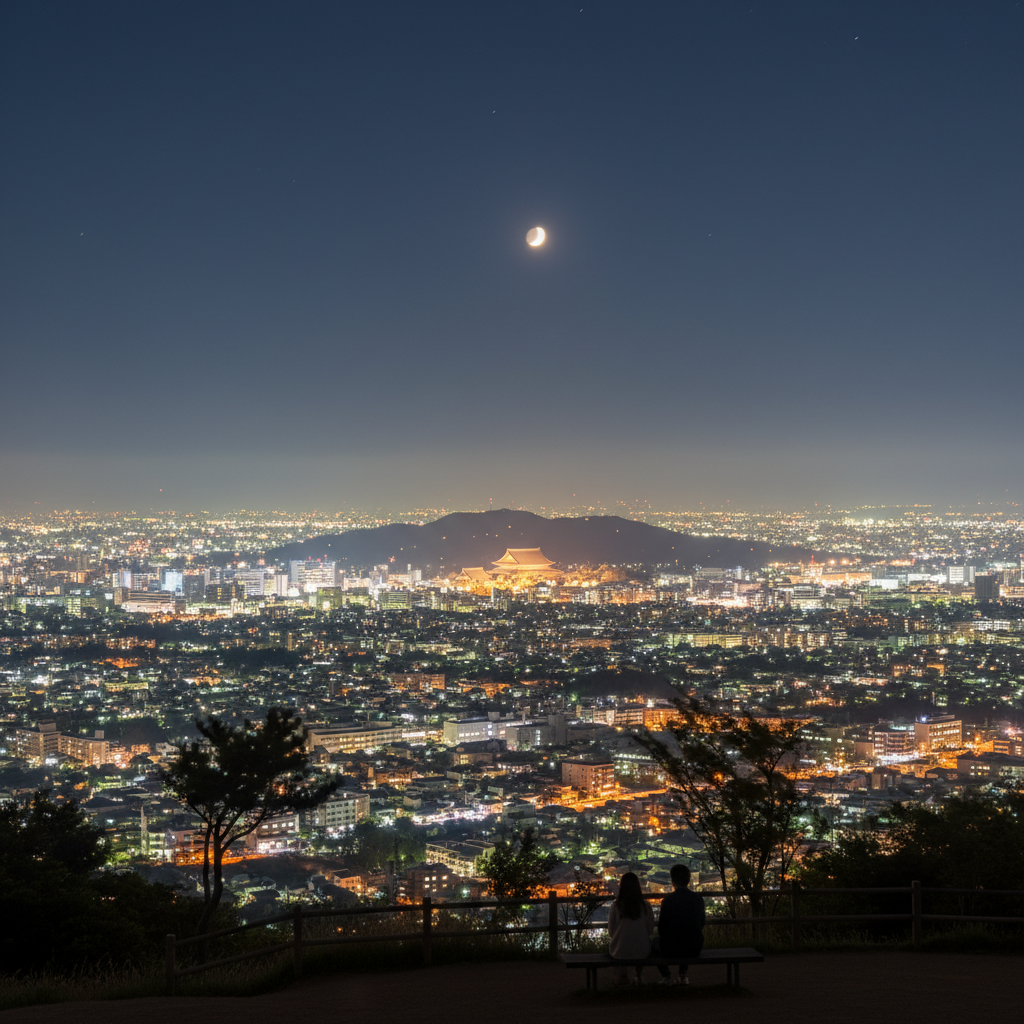
Nara Drive, Mt. Wakakusayama, Night View, Panorama - The Philosophy of Driving in Japan
There's an undeniable allure to the precise schedules and seamless connectivity of Japan's public transportation. It's a marvel of engineering and punctuality, a testament to Japanese efficiency. And yes, it will get you to the major temples, the bustling shopping districts, and the iconic landmarks. But what it won't do is lead you down a winding mountain pass as the sun dips below the horizon, painting the sky in hues of fiery orange and soft violet. It won't take you to that tucked-away ramen shop where the grandmother still kneads the noodles by hand, or to that secluded viewpoint offering a panoramic vista that simply takes your breath away. This is the domain of the automobile.
Driving in Japan, especially from a vibrant hub like Osaka, is more than just transportation; it's an act of liberation. It’s about reclaiming your itinerary, charting your own course, and letting serendipity guide your wheels. Kansai, with Osaka at its heart, is a veritable treasure trove of such experiences, but to truly unlock its potential, you need the freedom of four wheels. Public transport, by its very nature, herds you along predefined paths, often crowded and devoid of the intimate moments that define true travel. The 'Secret Japan' I speak of – the Japan of misty mornings in forgotten villages, of challenging mountain roads, of spontaneous detours to geological wonders – remains stubbornly off-limits to those confined to a timetable.
Imagine the sensory assault: the crisp, clean mountain air rushing through an open window, the satisfying growl of a well-tuned engine echoing through a tunnel, the visual feast of emerald forests giving way to sprawling rice paddies. This isn't just about reaching a destination; it's about the journey itself, the unfolding narrative of the road. It's about feeling the road through the steering wheel of a responsive machine, a connection that transforms a simple trip into an epic adventure. As someone who's crisscrossed this archipelago countless times, I can attest: to truly know Japan, you must drive it. You must feel its varied topography, inhale its diverse aromas, and let its hidden landscapes unfold before you, one kilometer at a time. The car isn't just a vehicle; it's your key to an unparalleled, deeply personal exploration of this incredible country. You are not merely a passenger; you are an active participant, a conductor of your own unforgettable symphony of travel.
Nara Drive, Mt. Wakakusayama, Night View, Panorama - The 2-Day Itinerary: Deep Dive
This isn't your typical rushed tour. This is an immersion, a deep dive into the heart of Nara's lesser-known grandeur, all from the exhilarating perspective of a high-performance JDM machine. We'll be navigating this odyssey in a Toyota 86 or Subaru BRZ – a testament to driving purity, offering an unparalleled connection to the road. This isn't just about sightseeing; it's about the symphony of engine, asphalt, and breathtaking views.
Day 1: Osaka's Urban Escape to Nara's Elevated Serenity
09:00 - 10:00: Osaka City Breakout – The Urban Prelude
The morning sun casts long shadows over Osaka's sprawling cityscape as you awaken, the anticipation a tangible hum in the air. This isn't a day for the Shinkansen; it's a day for the visceral thrill of the open road. Your weapon of choice? The Toyota 86, a balletic marvel of engineering, its low-slung chassis promising an intimate connection with the tarmac. As you settle into the snug embrace of its sports seats, the scent of fresh leather and high-octane anticipation fills the cabin. The initial minutes are a gentle dance through Osaka's arterial roads, the city slowly fading into your rearview mirror. The concrete canyons give way to wider avenues, and the initial jitters of driving on the left subside, replaced by a growing sense of freedom. The engine of the 86, a naturally aspirated boxer, offers a satisfying, eager growl, a promise of the winding roads ahead.
10:00 - 11:00: Highway Homage – The Kinki Expressway and Route 26
The journey truly begins as you merge onto the Kinki Expressway. The hum of the tires on the smooth asphalt, the effortless acceleration of the 86 as you glide past traffic – it's a meditation in motion. This isn't a mere transit; it's a testament to Japan's engineering prowess, both in its road infrastructure and its automotive masterpieces. The landscape transforms, urban sprawl gradually ceding to more suburban vistas, glimpses of verdant hills on the horizon. The 86 feels perfectly balanced, a confident companion. It's here, on these well-maintained arteries, that you appreciate the quiet competence of Japanese design. The crisp shift of the manual gearbox, the precise feedback from the steering wheel – it's an extension of your will, guiding you effortlessly towards your destination. The air conditioning hums softly, maintaining a perfect climate as the sun begins to climb higher.
11:00 - 12:00: Ancient Horizons – Approaching Nara's Outskirts
As you transition from the expressway onto general roads leading towards Nara, the pace softens, and the scenery becomes distinctly more rural. Paddy fields, their vibrant green a stark contrast to the blue sky, stretch out on either side. Traditional Japanese homes, with their dark tiled roofs and wooden facades, begin to appear, nestled amongst small family-run farms. This is where the true character of Nara Prefecture starts to reveal itself. The 86, despite its sporting pedigree, handles these local roads with remarkable grace, its nimble chassis absorbing imperfections while providing ample feedback. The engine note is a constant, reassuring presence, a gentle thrum that speaks of latent power. You might spot an ancient kofun (burial mound) peeking out from a grove of trees – a subtle reminder of the millennia of history that saturate this region. The air carries the faint scent of earth and growing things, a welcome change from the city's exhaust fumes.
12:00 - 13:00: Lunch Interlude – Omakase at a Hidden Gem
Before diving into the historical heart of Nara, we seek out a culinary oasis. Tucked away on a quiet side street, far from the tourist throngs, lies a small, unassuming restaurant. This isn't a place you'd find on a Google search; it's a whisper passed between locals, a testament to authentic Japanese cooking. Here, the concept of 'omakase' (chef's choice) reigns supreme. Seated at a polished wooden counter, you watch as the master chef, with decades of experience etched into his hands, meticulously prepares each dish. The flavors are subtle yet profound: delicate sashimi, perfectly crisp tempura, a deeply savory miso soup, each ingredient speaking of seasonal freshness and expert preparation. The silence is broken only by the gentle clinking of porcelain and the appreciative murmurs of fellow diners. It’s a moment of pure gastronomic bliss, a refueling of both body and soul, preparing you for the ascent to Wakakusayama. The humble, yet exquisite, fare offers a genuine taste of local Nara, reinforcing the beauty of seeking out the unconventional.
13:00 - 14:00: Cultural Teaser – Nara Park (Peripheral View)
While our ultimate destination is Wakakusayama's nocturnal splendor, a quick drive through the periphery of Nara Park is essential. The sight of the wild deer, considered messengers of the gods, wandering freely amongst ancient temples like Todai-ji, is an iconic image of Nara. From the comfort of your 86, you can observe this unique harmony of nature and history without getting lost in the dense crowds. The scent of pine and ancient wood drifts through the air, mixing with the earthy aroma of the park. It’s a brief, respectful nod to Nara's world-famous heritage before we veer off the beaten path. The smooth tarmac here is shaded by towering trees, providing a picturesque backdrop as the 86 glides through, its engine note a polite murmur amidst the tranquility. This quick drive offers a glimpse, a promise of the deeper historical layers that underpin this region, even as we chase the more ephemeral beauty of its landscapes.
14:00 - 15:00: The Ascent Begins – Towards Wakakusayama's Foothills
Leaving the immediate vicinity of Nara Park, the roads begin their gentle ascent. You're now on the fringes of the true Wakakusayama experience. The landscape changes from manicured parkland to more natural, forested slopes. The road, while still well-maintained, becomes more sinuous, a tantalizing preview of the winding passes to come. This is where the 86 truly begins to sing. Its low center of gravity and precise steering make carving through these gentle curves an absolute delight. You might notice the slight tilt of the terrain, the air growing perceptibly cooler and fresher with each meter gained in elevation. The engine, ever responsive, provides ample power for the climb without feeling strained. Glimpses of the Nara basin begin to appear between the trees, hinting at the panoramic views awaiting you at the summit. The road sign pointing towards Wakakusayama's scenic drive is your cue, a beacon towards the evening's main event.
15:00 - 16:00: Wakakusayama Drive – The Winding Path to Glory
This is where the rubber meets the road, quite literally. The Wakakusayama Drive itself is a revelation. It’s not just a means to an end; it’s an experience in itself. The road narrows slightly, becoming a ribbons of asphalt expertly laid out along the contours of the mountain. Each corner presents a new challenge, a new opportunity to feel the chassis of the 86 respond to your inputs. The suspension, tuned for spirited driving, communicates every nuance of the road surface without harshness. The trees press in closer, creating a tunnel of vibrant green, dappled sunlight filtering through the canopy. The scent of pine and damp earth is intoxicating. Geologically, Wakakusayama is part of a larger volcanic belt, though long dormant, and the subtle undulations and rocky outcrops visible through the foliage speak of millennia of geological activity. You'll encounter gentle hairpins that invite a precise downshift, the satisfying blip of the throttle, and then the smooth surge of acceleration out of the corner. This is a driver's paradise, a meditative dance between man, machine, and mountain. The further you ascend, the more expansive the views become, teasing you with what’s to come.
16:00 - 17:00: Pre-Sunset Perch – Securing Your Viewpoint
Having navigated the exhilarating twists and turns of the Wakakusayama Drive, you arrive at the designated parking area near the summit. The air here is noticeably cooler, crisp and clean. Take a moment to stretch your legs, to let the mountain breeze invigorate you. This is the optimal time to arrive, well before the crowds descend for the sunset spectacle. Find your ideal spot, a vantage point that offers an unobstructed panorama of the Nara basin, stretching out towards the distant mountains. The light at this hour is magical, a soft, golden glow that bathes the ancient city below. You can make out the distinctive rooflines of Todai-ji and Kofuku-ji, dwarfed by the sheer scale of the landscape. The geological history of this area, formed by ancient seismic shifts and erosion, is laid bare before you. The grasses of Wakakusayama, often burned in the annual Yamayaki festival, are now a lush emerald carpet, inviting a brief stroll to find the perfect photo opportunity. The silence is profound, broken only by the rustling of leaves and the occasional chirping of birds.
17:00 - 18:30: The Golden Hour Spectacle – Sunset Over Nara
This is the crescendo of the afternoon, a moment of profound beauty. As the sun begins its dramatic descent, the sky ignites in a breathtaking display of color. Fiery reds bleed into deep oranges, which in turn soften to delicate pinks and purples. The city below, initially bathed in golden light, slowly recedes into shadow, its prominent landmarks silhouetted against the vibrant canvas. The distant mountains become layers of deepening blue and violet. It’s a photographer’s dream and an artist’s inspiration. The scale of the panorama is humbling, offering a unique perspective on a city steeped in history. The geological formations of the surrounding hills become more pronounced in the raking light, their contours emphasized by the shifting shadows. The breeze carries a faint, sweet scent of mountain flora. It's a shared experience, yet intensely personal, a moment to reflect on the journey and the profound beauty of Japan. You'll want to capture this moment, but also to simply be present, letting the vastness wash over you. The air grows cooler still, a gentle reminder that twilight is approaching, and with it, the main event.
18:30 - 19:30: Twilight's Embrace – Anticipating the Nocturnal City
As the last vestiges of sunset fade, a deep twilight settles over the landscape. The sky above turns to a velvety indigo, and the first stars begin to prick through. Below, the city of Nara undergoes its own transformation. One by one, then in clusters, then in a sprawling network, the lights of the city flicker to life. Initially, they appear as scattered jewels, but rapidly coalesce into a shimmering tapestry. This transition period is often overlooked, but it's arguably as beautiful as the full night view. The fading natural light creates a soft, almost ethereal glow, providing a unique contrast to the emerging artificial brilliance. The distant outlines of the mountains are still visible, their dark forms providing a dramatic backdrop to the urban luminescence. The air is now distinctly cool, carrying a hint of the approaching night. This is the moment to find a comfortable spot, perhaps a bench, and simply observe, allowing the magic to slowly envelop you. The engine of the 86, now silent, waits patiently, a powerful memory of the drive up.
19:30 - 20:30: Nara’s Glittering Crown – Wakakusayama’s Night View
And then, it happens. The transformation is complete. Nara, once an ancient capital, now unfolds beneath you as a breathtaking galaxy of light. This is one of Japan's most celebrated night views, often referred to as one of the 'New Three Great Night Views of Japan.' From your perch on Wakakusayama, the entire Nara basin stretches out, a dazzling carpet of twinkling lights. The city’s grid patterns are picked out by streetlights, while clusters of brighter illumination mark commercial centers. It's an expansive, living masterpiece, constantly shifting as cars move along unseen roads, their headlights and taillights creating streaking patterns. The sheer scale is mesmerizing. The distant hum of the city, barely audible, adds to the atmosphere. It’s a view that speaks of human ingenuity, of countless lives lived, of history unfolding beneath a canopy of stars. The air is crisp and invigorating, urging you to breathe deeply and absorb every facet of this extraordinary panorama. This is why you drove, why you sought the road less traveled – for moments of pure, unadulterated awe like this. The 86, parked nearby, seems to glow softly in the reflected light, a silent partner in this extraordinary vista.
20:30 - 21:30: Descending with Serenity – The Drive to Rest
Reluctantly, you tear yourself away from the glittering spectacle. The descent from Wakakusayama, now under the cloak of night, is a different kind of exhilaration. The headlights of the 86 cut through the darkness, illuminating the winding road ahead. The corners, familiar from the ascent, now feel more intimate, more challenging. The precision of the steering, the responsive brakes, and the reassuring grip of the tires inspire confidence. The engine, a quiet companion, murmurs as you navigate each turn. The cool night air, mixed with the faint scent of damp earth and distant woodsmoke, adds to the atmosphere. You’ll pass fewer cars now, adding to the sense of exclusive exploration. The panoramic views, now dark and indistinguishable, are replaced by the intimate focus on the road, a dance between light and shadow. The drive is smooth, controlled, a perfect winding down after the visual feast. You're heading towards a traditional ryokan, a haven of peace and Japanese hospitality, for a well-deserved rest.
21:30 - 23:00: Ryokan Retreat – A Night of Traditional Luxury
Your destination for the night is a secluded ryokan, nestled on the outskirts of Nara, far from the urban bustle. This isn't a modern hotel; it's a sanctuary of traditional Japanese aesthetics. As you step out of the 86, the calm quiet of the surroundings envelops you. You're greeted by staff in kimonos, their warm smiles and impeccable hospitality a hallmark of Japanese service. Your room, a serene space with tatami mats, futon bedding, and a large window looking out onto a meticulously maintained garden, is an invitation to unwind. After a relaxing soak in the ryokan's onsen (hot spring bath), feeling the day's driving fatigue melt away in the mineral-rich waters, a traditional multi-course kaiseki dinner awaits. Each dish is a work of art, a symphony of seasonal ingredients, exquisite presentation, and delicate flavors. The silence, punctuated only by the gentle sounds of the garden and the rustle of the wind through the trees, is a stark contrast to Osaka’s vibrant energy. You reflect on the day's journey, the thrilling drive, the breathtaking views, and the culinary discoveries. The soft glow of the room's traditional lighting creates an atmosphere of peace and introspection. You drift off to sleep, the memory of Nara's glittering night view still dancing behind your eyelids, the hum of the 86's engine now a distant, pleasant echo.
Day 2: Morning Serenity and The Road Less Traveled Back to Osaka
07:00 - 08:00: Dawn's Embrace – Ryokan Breakfast and Garden Stroll
Awakening to the gentle rays of the morning sun filtering through the shoji screens, you're greeted by the tranquil sounds of the ryokan garden. A traditional Japanese breakfast, a delicate spread of grilled fish, miso soup, steamed rice, pickles, and fresh vegetables, is served. It’s a nourishing, comforting meal that perfectly balances the rich kaiseki of the previous night. After breakfast, a leisurely stroll through the ryokan's meticulously manicured garden is a must. The dew still clings to the leaves, and the air is fresh and invigorating. The carefully placed rocks, the trickling water features, the ancient trees – each element is designed to evoke a sense of peace and harmony. This moment of quiet contemplation is a perfect way to ease into the day, connecting with the natural beauty that surrounds this ancient region. The sounds of birdsong replace the distant hum of traffic, a reminder of the unique beauty found away from the city.
08:00 - 09:00: Cultural Detour – Horyu-ji Temple (External View)
Before beginning our return journey, we make a brief, respectful detour to Horyu-ji Temple, a UNESCO World Heritage site and one of Japan's oldest and most significant Buddhist temples. While we won't delve into a full exploration, driving past its iconic five-story pagoda and ancient wooden structures offers a profound sense of history. The drive there takes you through quiet, rural roads, the 86 gliding smoothly past rice paddies and small, traditional villages. The architectural grandeur of Horyu-ji, dating back to the 7th century, is awe-inspiring, a testament to enduring craftsmanship and spiritual devotion. Its geological location, set within a slightly elevated area, provides subtle vistas of the surrounding plains. The scent of ancient wood and damp earth from the temple grounds drifts in, a profound connection to the past. It’s a powerful reminder of Nara’s deep historical roots, a fleeting but impactful encounter with Japan’s ancient soul, before we embrace the modern thrill of the open road once more.
09:00 - 10:30: Scenic Routes Back – The Yagyu Kaido and Country Roads
Instead of retracing our steps directly on the expressway, we'll take a more scenic route, embracing the joy of driving on less-traveled roads. The Yagyu Kaido, a historic road once used by samurai, offers a delightful series of gentle curves and picturesque landscapes. The 86 truly comes alive here, its responsive steering and balanced chassis making light work of the road's undulations. You'll pass through small farming communities, their fields vibrant with seasonal crops, and dense bamboo groves that create a mesmerizing play of light and shadow. The engine's note is a constant, reassuring companion, a mechanical heartbeat as you navigate the winding path. This isn't about speed; it's about flow, about feeling the car move gracefully through the landscape. The geological features of the surrounding hills, with their distinctive green covering and occasional rocky outcrops, are a constant visual delight. The air is fresh and clean, carrying the scent of rich earth and growing things. It's a testament to the fact that even the return journey can be an adventure, a chance to uncover more of Japan's hidden rural beauty.
10:30 - 12:00: Roadside Refreshment – Michi no Eki Discovery
Our drive takes us to a 'Michi no Eki' (Roadside Station), a uniquely Japanese phenomenon that goes far beyond a simple rest stop. These stations are vibrant hubs of local culture, agriculture, and cuisine. Step out of the 86 and into a bustling market where local farmers proudly display their freshest produce: vibrant vegetables, sweet fruits, and artisanal products unique to the region. The air is filled with the aroma of freshly baked goods and local delicacies. You might find a small restaurant serving simple, hearty regional dishes, or a stall selling handmade crafts. This isn't just a place to stretch your legs; it's an opportunity to immerse yourself in the local economy and culture. The Michi no Eki are often designed to reflect the local architecture, adding to their charm. It's a perfect spot to grab a local snack, a refreshing drink, and perhaps a souvenir that truly captures the essence of rural Nara. The 86 waits patiently in the parking lot, a symbol of the freedom that brought you to this authentic local experience.
12:00 - 13:00: Lunch with a View – Overlooking the Kansai Plains
For lunch, we seek out a restaurant that, while perhaps not a Michelin star establishment, offers something equally valuable: a spectacular view. Perched on a gentle hill overlooking the sprawling Kansai plains, this eatery provides a panoramic vista that serves as the perfect backdrop to your meal. The menu features hearty, regional fare – perhaps a simple but delicious udon or soba, or a local set meal (teishoku) showcasing fresh ingredients. The taste is honest, unpretentious, and deeply satisfying. As you eat, you can trace the path of your journey, seeing the distant mountains you traversed and the faint haze of Osaka on the horizon. The landscape is a mix of urban development and vast expanses of green, a reminder of the blend of modernity and nature that defines this region. It’s a moment of quiet reflection, appreciating the journey you've made and the incredible sights you've witnessed. The engine of the 86 is still, but the memories of its performance on the winding roads are vivid.
13:00 - 14:00: The Home Stretch – Rejoining the Expressway
With satisfied appetites and renewed energy, it’s time to begin the final leg of our return to Osaka. We rejoin the expressway, a more direct route that allows for a steady, comfortable cruise. The 86, still eager, effortlessly maintains speed, its boxer engine a smooth, powerful presence. The landscape gradually transitions back to the familiar, more densely populated scenery of the urban periphery. But now, your perspective is different. You've seen the hidden beauty, experienced the intimate corners of Nara that few others do. The drive back is a time for reflection, for savoring the memories of Wakakusayama's breathtaking night view, the thrill of the winding roads, and the quiet charm of rural Japan. The journey has transformed from a simple drive into an unforgettable odyssey, etched into your memory with every shift of the gearstick and every turn of the wheel.
14:00 - 15:00: Osaka's Welcome Back – The Urban Embrace
As Osaka's skyline grows larger on the horizon, the city's vibrant energy begins to draw you back in. The roads become busier, the buildings taller, and the pace of life quickens. The 86, which so gracefully navigated mountain passes and country lanes, now asserts its agility in urban traffic, its compact size and precise handling making it a joy even in the city. You've experienced the full spectrum of driving in Japan – from the open highway to the challenging mountain roads, and now, the bustling city. The contrast between the serene vistas of Wakakusayama and the dynamic pulse of Osaka is striking, highlighting the incredible diversity of experiences Japan offers within a short driving distance. You arrive back, perhaps a little tired, but absolutely invigorated, your senses alight with memories, and a profound appreciation for the freedom and discovery that only a self-driven journey can provide. The keys of the 86 feel warm in your hand, a testament to an adventure well-lived.
Nara Drive, Mt. Wakakusayama, Night View, Panorama - Expert Advice & Cultural Nuances
Beyond the itinerary, a truly immersive Japanese driving experience demands an understanding of its unique cultural landscape, particularly regarding its roads and the delightful diversions they offer.
The Unsung Heroes: Japan's "Michi no Eki" (Roadside Stations)
From my days on the rails, I always envied the drivers who could stop at these incredible havens. A Michi no Eki is far more than a rest stop. It's a micro-hub of local culture and commerce, a vibrant testament to regional identity. Each one is distinct, reflecting the unique produce, crafts, and culinary traditions of its specific location. You won't find generic fast food here. Instead, expect to discover artisan breads, exquisitely fresh local vegetables and fruits (often picked that very morning), unique regional snacks (omiyage), and even small museums or art installations. They are fantastic places to stretch your legs, grab a delicious and authentic bite to eat – think local ramen, udon, or freshly made tempura – and interact with friendly locals. From my perspective, these are the true arteries connecting the heart of Japan to its body, offering a genuine taste of the country that public transport often bypasses. Always keep an eye out for their distinctive green and white signs; they are your gateway to unexpected delights.
Unearthing Hidden Culinary Gems: Where the Locals Eat
The best food in Japan often isn't found in guidebooks. It's in the unassuming eateries tucked away on side streets, the places with simple exteriors but bustling interiors and the comforting aroma of home cooking. As someone who's driven every backroad and byway, I’ve stumbled upon countless such treasures. How do you find them? Look for lines of local cars – a surefire sign of quality. Venture a few blocks away from major tourist attractions. Don't be afraid to peer into windows or follow enticing aromas. The Japanese approach to food is deeply rooted in seasonality and freshness, so expect menus that evolve with the calendar. These establishments, often family-run for generations, offer an authentic experience that mass-market restaurants simply cannot replicate. The language barrier might seem daunting, but a friendly smile and a pointing finger can work wonders. Often, their set lunches (teishoku) are incredible value and showcase local specialties. Trust your instincts and the wisdom of local patronage; your taste buds will thank you.
Navigating the Asphalt Etiquette: Essential Japanese Driving Tips
Driving in Japan is generally a pleasant experience due to well-maintained roads and disciplined drivers, but there are nuances:
- Left-Hand Driving: A fundamental difference for many. Take it slow, especially at intersections and roundabouts. The 86/BRZ, with its right-hand drive, will feel natural once you've adjusted.
- Speed Limits: Generally lower than in many Western countries (often 40-60 km/h in urban areas, 80-100 km/h on expressways). Strict enforcement means adhering to them is crucial.
- Pedestrians First: Japanese drivers are highly respectful of pedestrians, especially at crossings. Always give way.
- Toll Roads: Most expressways are toll roads. The ETC card (see below) is invaluable. Otherwise, look for green signs for ETC lanes and blue/white signs for cash/credit lanes.
- Parking: Can be tight, especially in cities. Look for designated parking lots (often coin-operated or multi-story). On-street parking is rare and usually prohibited.
- Horn Usage: Rarely used, almost exclusively for warning in emergencies. Avoid unnecessary honking.
- Lane Discipline: Drivers generally stick to their lanes and signal well in advance. Overtaking on the left is considered rude, though technically legal in some contexts.
- Road Signs: Primarily in Japanese, but major routes and tourist areas will have English translations. Learn basic road signs for 'Stop,' 'Yield,' and speed limits.
Embrace these courtesies, and your drive will be as smooth and enjoyable as the roads themselves. The 86's compact size and agile handling make it incredibly well-suited for Japanese roads, from tight city streets to winding mountain passes.
Nara Drive, Mt. Wakakusayama, Night View, Panorama - Detailed Logistics & Pre-Trip Tips
Preparing for your Japanese driving adventure in 2026 requires understanding a few key logistical elements. From the unique thrill of a JDM manual to the practicalities of fuel and parking, here’s what you need to know to ensure a seamless and exhilarating journey.
2026 Traffic Realities: Navigating Modern Japan
While Japan's infrastructure continues to evolve, the core traffic patterns remain. Major expressways, particularly around Osaka, can experience congestion during peak hours (morning and evening commutes, national holidays). However, the beauty of our itinerary is its focus on scenic routes and off-peak travel for the more critical segments. By mid-2026, Japan's road networks are even more integrated, with advanced real-time traffic updates readily available via car navigation systems and smartphone apps. While the thrill of the open road is paramount, being aware of potential bottlenecks allows for strategic detours, transforming what could be a delay into an opportunity to explore a charming side street or a local shop. The 86/BRZ, with its agile handling, is an absolute joy to pilot even in moderate traffic, its precise controls making stop-and-go less of a chore and more of an engaging exercise.
The Magic of ETC: Electronic Toll Collection
An ETC (Electronic Toll Collection) card is an absolute game-changer for navigating Japan's extensive expressway network. Instead of fumbling for change or credit cards at every tollbooth, the ETC card allows you to pass through designated ETC lanes seamlessly. A small device in your rental 86/BRZ will read the card, and tolls are automatically debited. This saves significant time, reduces stress, and keeps your journey flowing smoothly, especially on multi-leg trips. Ensure your rental includes an ETC card and the necessary reader unit. It’s an indispensable tool for efficient and enjoyable long-distance driving in Japan.
Fueling Up: "Mantan" and Japanese Service Stations
Japanese gas stations come in two main types: full-service (staff pump your gas) and self-service. While full-service stations are becoming rarer, they offer a uniquely Japanese experience – attendants will often clean your windows, check your tires, and even direct you out into traffic. If you encounter one, simply saying "Mantan" (満タン - pronounced 'man-tan') means "full tank." You can also specify the type of fuel: "Regular" (レギュラー - regyuraa), "High-Octane" (ハイオク - hai-oku), or "Diesel" (軽油 - keiyu). Our 86/BRZ will require "High-Octane." For self-service stations, look for touch-screen panels, often with English language options. Payment is usually by cash or credit card at the pump. Don't be surprised by the high level of cleanliness and efficiency at both types of stations – it’s a standard of service that reflects Japan’s meticulous nature.
Parking Prowess: Mastering Japanese Parking
Parking in Japan, particularly in cities and popular tourist areas like Nara, requires a bit of strategy. Spaces can be surprisingly compact, a challenge the 86's nimble dimensions are perfectly suited for. Look for designated parking lots (駐車場 - chūshajō), often multi-story or underground. Coin parking (コインパーキング - koin pāking) is common, where you take a ticket upon entry and pay at a machine before exiting. Rates are usually displayed clearly. Avoid parking illegally; fines are steep and enforcement is strict. At popular viewpoints like Wakakusayama, dedicated parking areas are provided, but arriving early, as per our itinerary, is wise to secure a good spot. Master the art of the tight turn and precise maneuver, and you’ll navigate Japan’s parking challenges with ease.
The Unmatched Exhilaration: Driving a JDM (MT Car)
For the true car enthusiast, there's simply no substitute for the raw, tactile engagement of a JDM (Japanese Domestic Market) manual transmission car. The Toyota 86 or Subaru BRZ, with its perfectly weighted clutch, short-throw shifter, and responsive throttle, transforms every drive into an event. It’s not just about speed; it's about control, about being an integral part of the machine. The satisfaction of a perfectly executed heel-toe downshift as you approach a hairpin turn on the Wakakusayama Drive, the visceral connection as you feel the engine's power surge through the rear wheels, the symphony of mechanical precision – these are the moments that define a truly unforgettable driving experience. This isn't passive transportation; it's an active partnership between driver and machine, unlocking a level of exhilaration that automatic transmissions, however efficient, simply cannot deliver. It's an ode to the pure joy of driving, a celebration of automotive passion on Japan's incredible roads.
Nara Drive, Mt. Wakakusayama, Night View, Panorama - Comprehensive FAQ
Planning an international driving trip can raise many questions. Here are clear answers to ensure you're fully prepared for your Japanese adventure:
Do I need an International Driving Permit (IDP) to drive in Japan?
Yes, absolutely. To legally drive in Japan as a foreign visitor, you need an International Driving Permit (IDP) based on the 1949 Geneva Convention. You must carry this IDP along with your national driving license and your passport at all times while driving. It's crucial that your IDP is issued by the same country as your national license. For example, if your national license is from the USA, your IDP must also be issued in the USA. Without all three documents, you will not be allowed to drive and will not be able to rent a car. Be sure to obtain your IDP in your home country before you travel to Japan, as they cannot be issued once you are in Japan. The IDP translates your national license into several languages, making it universally understandable.
What kind of insurance should I get for my rental car?
It is highly recommended to opt for comprehensive insurance coverage when renting a car in Japan. Standard rental agreements usually include basic liability insurance, but for peace of mind, consider adding Collision Damage Waiver (CDW) and Non-Operation Charges (NOC) waiver. CDW covers damages to the rental vehicle itself, reducing your financial liability in case of an accident. NOC is a charge levied by rental companies to compensate for lost revenue if the car is off the road for repairs. While typically an additional cost, these waivers significantly reduce your out-of-pocket expenses should an unforeseen incident occur, allowing you to enjoy your drive worry-free. Always read the fine print of your insurance policy.
I'm not used to driving a manual transmission (MT) car. Should I be worried?
While an MT car like the 86/BRZ offers an unparalleled driving experience, it does require familiarity with manual shifting. If you have some experience but are a bit rusty, consider practicing in your home country before your trip. However, if you have absolutely no experience with a manual transmission, it might be safer to opt for an automatic transmission vehicle. The roads in Japan, especially the winding mountain passes, demand confident and precise driving. Attempting to learn manual transmission driving on unfamiliar roads in a foreign country can be stressful. That said, if you're a keen learner and willing to take it slow, the reward of driving an 86/BRZ on Japan's incredible roads is immense. Start with easier routes and gradually build your confidence. The clutch and shifter in modern JDM sports cars are typically very forgiving and easy to engage.
What are the winter driving conditions like around Nara and Wakakusayama?
While Nara City itself doesn't typically experience heavy snowfall, higher elevations like Wakakusayama can receive light snow or icy conditions during the winter months (late December to early March). If you plan a winter trip, it's essential to check local weather forecasts just before and during your journey. Rental car companies in regions prone to winter conditions usually offer winter tires (スタッドレスタイヤ - sutaddoresu taiya) or snow chains (タイヤチェーン - taiya chēn) as an option, often for an additional fee. It is highly advisable to request these if there's any chance of snow or ice, especially for mountain drives. Even if the main roads are clear, shaded areas or higher altitudes can remain slippery. Always drive with extra caution in cold weather, reduce speed, and maintain greater stopping distances.
Nara Drive, Mt. Wakakusayama, Night View, Panorama - The Final Call: CTA
You’ve journeyed with me through the philosophy of Japanese driving, through the intricate hours of a breathtaking itinerary, and through the practicalities that make it all possible. You’ve tasted the freedom, envisioned the panoramic night views from Wakakusayama, and felt the exhilarating rumble of a JDM sports car beneath your hands. This isn't just a trip; it's an awakening, a challenge to break free from the conventional and truly immerse yourself in the 'Secret Japan' that waits beyond the train lines.
As a former Kintetsu conductor, I spent years watching the world from a window. Now, as someone who's driven every corner of this country and poured that passion into providing truly unique automotive experiences, I know that the most profound memories are forged on the open road. The 86 or BRZ isn't just a car; it's your chariot to discovery, a machine designed to connect you to the asphalt, the landscape, and the very soul of Japan.
The only thing left to do is make it a reality. Stop dreaming about the winding roads and the glittering night views. Stop imagining the feel of a precision manual gearbox. It's time to act. Your adventure begins not with a train ticket, but with the keys to a custom-tuned, high-performance JDM car, ready and waiting to unlock an unforgettable journey. When you’re ready to trade the ordinary for the extraordinary, to feel the thrill of a responsive engine and the freedom of the open road, my team at Omohide Rent-a-Car Osaka Chuo is here to equip you. We specialize in JDM, MT, and custom cars, ready to put you behind the wheel of your Japanese driving dream. Don't just visit Japan; drive it. Your adventure to Wakakusayama's panoramic night views and beyond awaits.
